Saturday, May 16, 2026

Extraordinary discovery in Pompeii: A doctor identified thanks to his instruments


By Fortunato Pinto
Published on 

Interdisciplinary work made it possible to identify the body of a doctor among the victims of the eruption of Vesuvius in 79 AD. The plaster cast held a case with the instruments used by doctors at the time

A doctor caught while trying to flee the eruption of Vesuvius in 79 AD, carrying the tools of his profession. The finding is the latest extraordinary discovery at the Archaeological Park of Pompeii, made more than sixty years after the excavation of the Orto dei Fuggiaschi.

The breakthrough came from the study of a small case hidden inside the plaster of a human cast, found during the investigations directed by Amedeo Maiuri in 1961. The area, then occupied by a vineyard, revealed casts were of fourteen people caught in the pyroclastic cloud in a desperate attempt to save themselves.

Recent analyses of the materials stored in the deposits of the Archaeological Park of Pompeii have brought to light an exceptionally interesting personal trousseau: a small box made of organic material with metal elements, a fabric bag with bronze and silver coins and a series of instruments compatible with a medical kit.
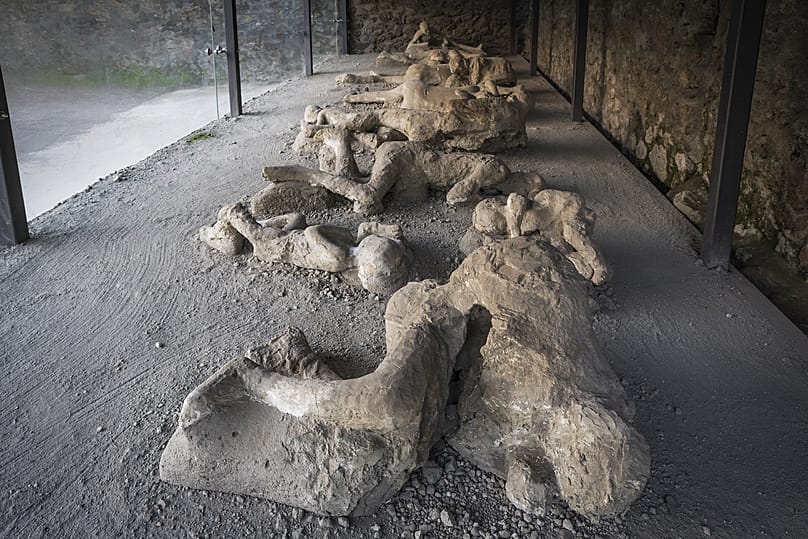
Archaeological Parks of Pompeii ANNASILVIAVACCA/ANNASILVIAVACCA

How the physician of ancient Pompeii was identified

Diagnostic investigations using X-rays and tomography at the Maria Rosaria Nursing Home have revealed a slate plate inside the case, -likely used for preparing medical or cosmetic substances - and small metal instruments that can be interpreted as surgical tools. These findings support the hypothesis that the victim was a doctor, offering a rare and valuable clue about his profession.

symbol
00:00
02:00
Read More

The use of advanced diagnostic technologies, including CT scans supported by Artificial Intelligence and 3D reconstructions, made it possible to analyse the content of the cast without compromising its integrity. This approach opens new possibilities for studying Pompeian casts and has also uncovered previously unknown details of the chest’s sophisticated mechanical design, including a toothed-wheel locking system.
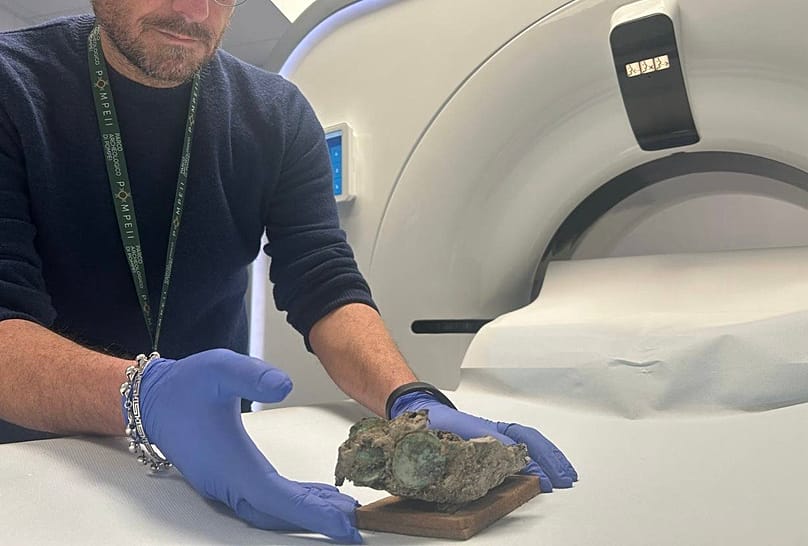
Find from the Archaeological Park of Pompeii l Parco Archeologico di Pompei


The research is the result of interdisciplinary work that has seen archaeologists, restorers, physical anthropologists, archaeobotanists, numismatists, radiologists, diagnostic technicians and digital modelling specialists working together, restoring not just an object, but an interrupted life story.

"Already two thousand years ago, there were those who were not just doctors during set hours, but doctors at all times—even in the moment of their escape from the eruption, cut short by the pyroclastic cloud that engulfed a group of fugitives attempting to leave the city through Porta Nocera." commented Park Director Gabriel Zuchtriegel.

"This man brought his tools with him to be ready to rebuild his life elsewhere, thanks to his profession, but perhaps also to help others. We dedicate this small but significant discovery to all the women and men who today continue to carry out this profession with a very high sense of responsibility and service to the community," Zuchtriegel concluded.

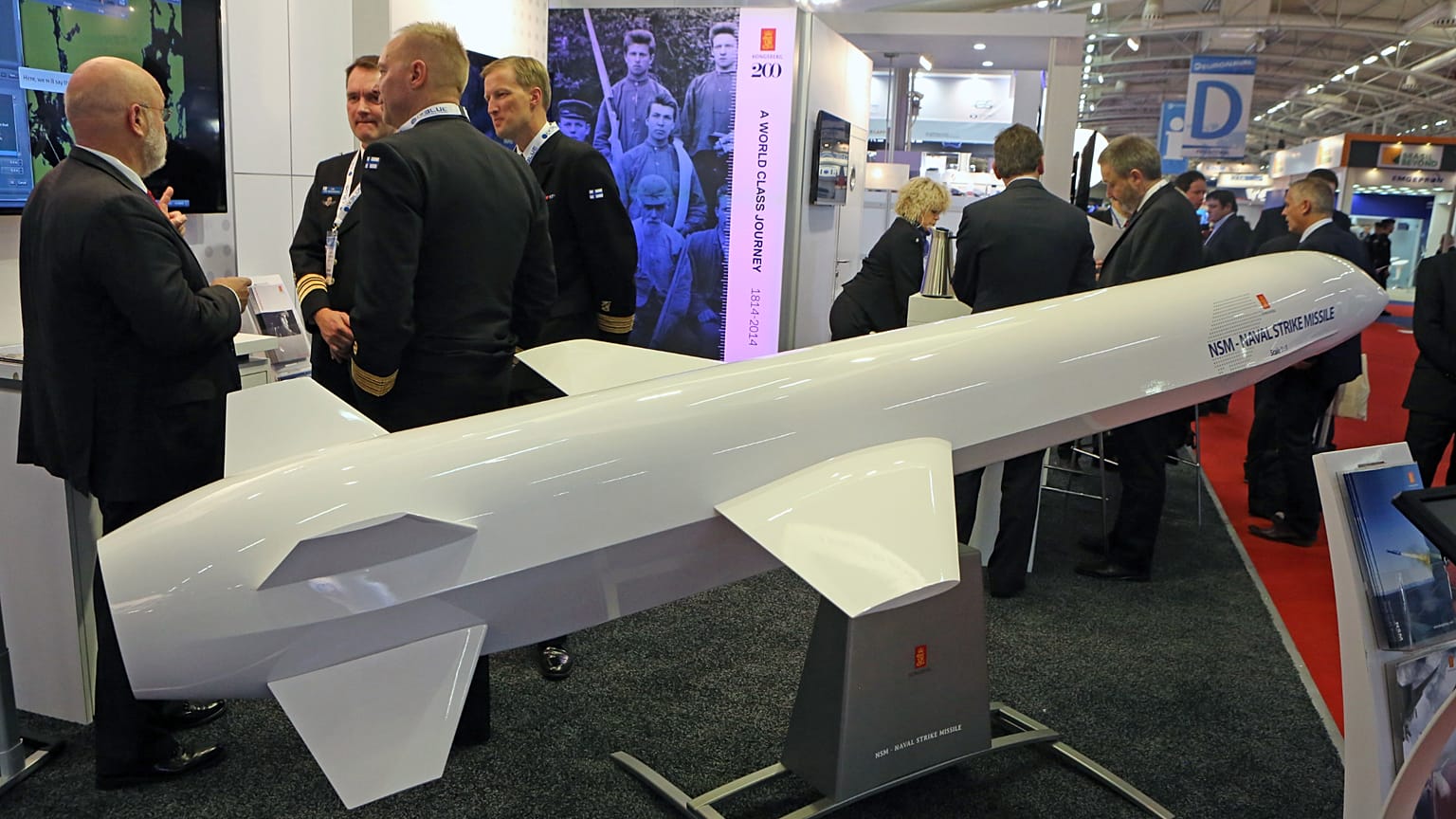
Norway defends move to cancel missile system sale following criticism from Malaysia

AP
Copyright AP Photo

By Nathan Rennolds
Published on 


Norway's foreign ministry said exports of some of Oslo's “most sensitive” defense technologies would be limited to its “allies and closest partners.”

Norway's foreign ministry has defended a decision to revoke export licenses linked to a naval missile system for Malaysia after Kuala Lumpur warned that the move could impact confidence in European defense suppliers.

The move had blocked delivery of the Naval Strike Missile system as well as launcher components that had been destined for Malaysia’s littoral combat ship program under the terms of a 2018 deal. The purchase had been planned as part of the Southeast Asian nation's wider naval modernisation efforts.

The Norwegian ministry on Friday said that while Oslo “greatly values its relationship with Malaysia,” it has increased oversight on defense technology and that exports of some of its “most sensitive" homegrown products would be limited to its “allies and closest partners.”

Malaysian Prime Minister Anwar Ibrahim had warned earlier this week that the decision could reduce confidence in European defense suppliers and may hurt Malaysia’s operational readiness.

Contracts are “not confetti to be scattered in so capricious a manner,” Anwar said. “If European defense suppliers reserve the right to renege with impunity, their value as strategic partners flies out the window.”

“Malaysia has honoured every obligation under this contract since 2018: scrupulously, faithfully and without equivocation,” he added.

Malaysia had agreed the deal for the NSM anti-ship missile system with Norway's Kongsberg Defense & Aerospace in 2018. Malaysian Defense Minister Mohamed Khaled Nordin has said that the government has already paid around 95% of the contract.

According to Kongsberg, the NSM is a subsonic missile that can be used to strike targets on both sea and land.

The missile also has sea-skimming capabilities and is equipped with "Autonomous Target Recognition," the company says on its website.


LA REVUE GAUCHE - Left Comment: Search results for PERMANENT ARMS ECONOMY


Average wages across Europe: Countries with the highest and lowest salaries

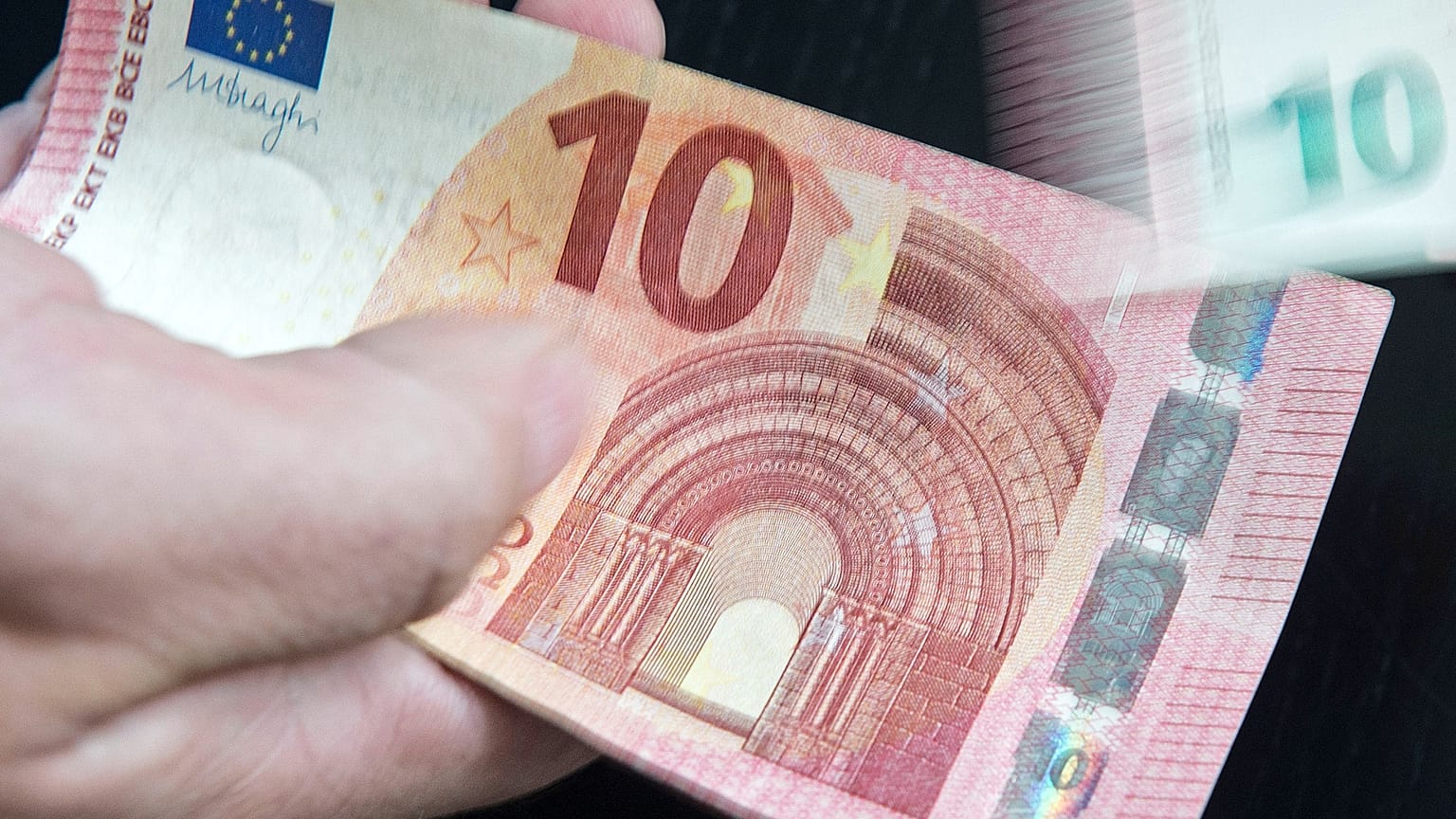
In this picture taken with a long time exposure a counterfeit money expert of the German Federal Bank enumerates new ten euro banknotes during a press conference at the branch
Copyright Copyright 2014 AP. All rights reserved.


By Servet Yanatma
Published on 

Euronews Business takes a closer look at annual gross average wages across Europe, based on the OECD's 2026 report. The figures reveal significant disparities both in nominal and purchasing power terms.

Average wages differ sharply across Europe in 2025. When purchasing power is taken into account, the gap narrows. But the divide between the continent's highest- and lowest-paying countries remains deep.

So, which countries pay the most? Where are the highest and lowest wages in Europe? How does purchasing power change the picture of salaries?

According to the OECD’s Taxing Wages 2026 report, the annual gross average wages range from €18,590 in Turkey to €107,487 in Switzerland. The data includes 27 European countries, 22 of which are EU members.

Switzerland is the only country where gross average wages exceed €100,000.

Iceland ranks second at €85,950. Luxembourg tops the EU with €77,844, placing third overall.

Denmark (€71,961) and the Netherlands (€69,028) complete the top five. Norway, at €68,420, is not far behind.

Among Europe's five largest economies, Germany leads with €66,700, closely followed by the UK at €65,340. The other three major economies fall significantly below.

France stands at €45,964, Italy at €36,594, and Spain at €32,678. Average wages in Germany and the UK are more than double those in Spain.

Austria (€63,054), Belgium (€62,348), Ireland (€60,258), Finland (€55,462) and Sweden (€50,338) fall between these two groups, all above €50,000.

Nine EU countries fall below the €30,000 threshold

Slovakia has the lowest annual wages in the EU at €19,590. Nine of the 22 EU countries in the list fall below €30,000.

Hungary (€21,257), Latvia (€21,321), Czechia (€23,685), Portugal (€24,254) and Poland (€24,490) are all below €25,000. Estonia (€25,603), Greece (€26,563) and Lithuania (€28,474) sit above that threshold but remain under €30,000.

In nominal terms, Northern and Western European countries dominate the upper end of the rankings. Southern and Eastern Europe cluster toward the bottom.

What drives wage differences between countries?

The International Labour Organization (ILO) experts who talked to Euronews Business say wage differences across Europe largely reflect three factors: productivity and economic structure, labour market institutions, and cost of living.

Countries with high-value-added sectors such as finance and technology tend to pay more, as do those with strong trade unions and collective bargaining. Higher price levels also generally push nominal wages up.

In purchasing power terms, the wage gap across Europe narrows compared to nominal figures.

Purchasing power parity (PPP) are the rates of currency conversion that equalise the purchasing power of different currencies by eliminating the differences in price levels between countries. The figures here are based on US dollars, as euro-based PPP data is not released yet.

In PPP terms, annual gross average wages range from 38,118 in Slovakia to 106,532 in Switzerland. Germany (93,985), Luxembourg (93,203) and the Netherlands (92,905) all exceed 90,000. Denmark (88,454) and Norway (87,722) follow closely.

Among Europe's five largest economies, the rankings are unchanged from nominal terms. However, the distances between them shift. The UK stands at 82,329 and France at 67,273, while Italy reaches 60,503 and Spain at 57,517.

Turkey and Germany the biggest winners in PPP rankings

When nominal and PPP rankings are compared, Turkey is the biggest mover, jumping nine places from last to 18th. Germany also rises five spots, from 7th to 2nd.

The biggest fallers are Iceland, dropping from 2nd to 9th, and Estonia, from 20th to 25th.

The average wage estimates refer to full-time employees working in selected industry sectors, mainly public. They cover most of the economy — including manufacturing, construction, retail, transport, finance, and other business services — but exclude agriculture, public administration, education, and health.

Personal income tax rates vary significantly across Europe, meaning net wages can look quite different from gross figures.

Could the EU’s next budget shrink civil society and NGOs?

THE CAPITALI$T STATE INCLUDES NGO'S

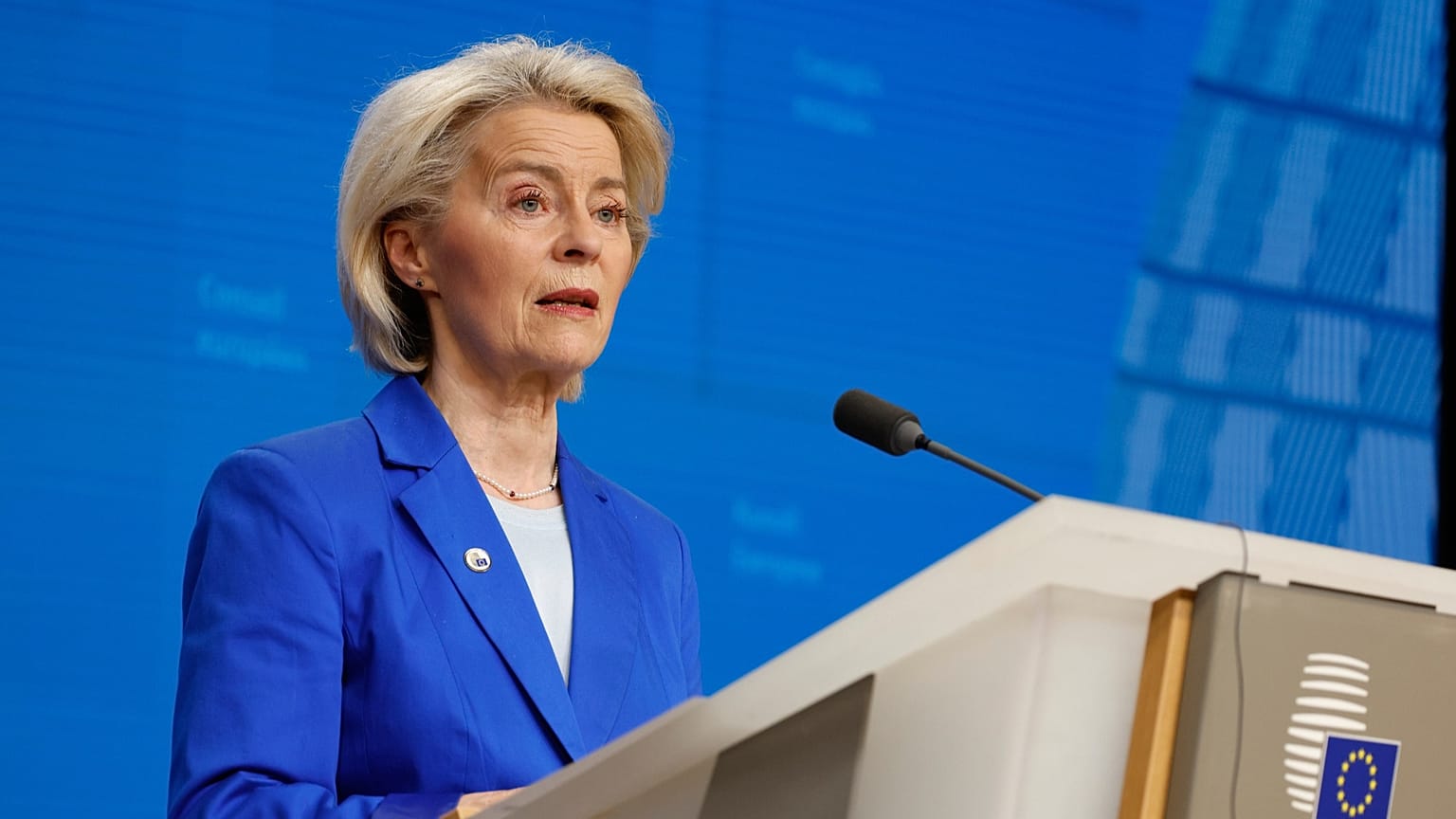
Belgium EU Summit
Copyright AP Photo


By Evi Kiorri
Published on 


The European Commission says its next long-term budget will strengthen democratic values. Civil society groups warn it could instead quietly weaken NGOs by removing protected funding and shifting control to national governments.

The Commission's €1.8 trillion budget proposal does not say "we are cutting NGOs." But, if cuts happen, they will come through structural design, fewer dedicated funding lines, weaker earmarks, and more money routed through national governments. Civil society coalitions warn it could be slow defunding dressed up as simplification.

No clear defenders

The MFF reorganises the EU budget from 52 programmes to 16, folding cohesion, social, and agricultural spending into 27 national partnership plans. The protected headings are defence, competitiveness, and digital and green transitions. Civil society is not one of them.

"We are in a moment of changing priorities and a changing environment for the union," says Eulàlia Rubio, Senior Research Fellow at the Jacques Delors Institute. "We have a lot of fragmentation inside the union. That makes it much more difficult and to a certain extent it is reflected in the negotiations."

Support for democracy and civic resilience, Rubio adds, is precisely the kind of heading "in which there are no big defenders among member states, no one is really seeing major cuts there."

A flagship with a structural gap

The Commission points to AgoraEU, an €8.58 billion programme merging CERV and Creative Europe, as proof of its commitment to civil society and media freedom. Nominally bigger than its predecessors, it has a critical omission. The draft regulation does not explicitly mandate operating grants, the multi-year funding that allows NGOs to do advocacy, watchdog work, and strategic litigation. Without a legal guarantee, future work programmes could simply drop them.

That precedent is already set. In 2025, the Commission discontinued operating grants for health NGOs under EU4Health and shifted to project-only funding. Health organisations filed a complaint with the European Ombudswoman. Civil society sees it as a template for what the MFF could formalise across the board.

The European Parliament has pushed back, calling for AgoraEU to reach €10.72 billion, 25% above the Commission's proposal, with operating grants explicitly protected. Over 500 organisations have signed an open letter in support of the increase.

The bigger risk lies in shifting social spending into national partnership plans controlled by member states. The social earmark drops from 25% under the current ESF+ to a broadly applied 14% target.

For NGOs working on rule of law or minority rights in Hungary or Slovakia, this is the difference between accessing EU funds directly, where no government can block them, and depending on authorities that may be hostile to their work.

EU NGO funding debate

Not all analysts agree that EU-level NGO funding is the right instrument. Zsolt Darvas, Economist and Senior Fellow at Bruegel, argues the budget should focus on what member states cannot do alone. "The EU budget spends only about 1% of EU GDP, while member states spend almost half," he says. "Supporting NGOs is more a national competency. National governments have ample fiscal power to support them if they deem it appropriate."

That logic assumes governments will use that power to support independent civil society. In several EU member states, the evidence shows otherwise.

A Scrutiny Working Group, established in June 2025 by the EPP, ECR, and Patriots for Europe, is investigating EU funding to NGOs. Left and centre parties boycotted it. The European Court of Auditors found no financial irregularities, only fragmented data.

Rubio calls it "dangerous." "There is a misleading approach of saying we have to control who receives the money. Entering into a logic of who is good or bad, that's a bit dangerous." The EU should instead target support strategically: "We have to be specifically good at supporting those in countries where the rule of law is under harm. And we have not been so good at that in the past."

The stakes

The EU Fundamental Rights Agency found in March 2026 that 75% of civil society organisations reported barriers to their work. CIVICUS downgraded France, Germany and Italy to "obstructed" civic space in 2025.

The MFF 2028-2034 is only an opening bid. But its structural choices, fewer dedicated lines, weaker earmarks, and no explicit operating grants already shift the risk onto civil society.


Hundreds of Hungarian roads may be contaminated with asbestos


By Rita Konya
Published on 

Measurements have shown that more than 300 sites in western Hungary have been covered with aggregates containing asbestos. There are currently no preventive regulations in place in Europe regarding natural asbestos.

Hundreds of road surfaces in western Hungary may be contaminated with asbestos. One of these areas is the Oladi plateau, a suburban part of Szombathely that is currently under construction, which may have been exposed to contamination for eight to ten years, when stones were transported there from Austrian mines.

Tamás Weiszburg, a geologist and former head of the mineralogy department at Eötvös Loránd University, explains to Euronews the dangers asbestos poses to the human body.

“On its own, it is just a piece of rock; it is the form that matters. It is a very fine fibre that can evade the body’s defence mechanisms and can therefore be a serious carcinogen,” he says.

“Like a snake, it enters the airflow and can travel down into the bronchi without being expelled. And because it is long, it cannot be properly ingested by phagocytes, which can lead to a permanent inflammatory state. A permanent inflammatory state can then, over time, develop into cancer.”

Tamás Weiszburg says that asbestos is a “slow killer”: asbestos-induced tumours can develop decades after inhalation of the mineral fibres.

If properly sealed, no harm done

Tamás Weiszburg stresses that the main problem is that roads built with asbestos-containing aggregates are often neither sealed nor asphalted. In western Hungarian counties, hundreds of kilometres of roads pose no risk because they have been properly sealed.

However, if these roads are ever dismantled for any reason, it will always be necessary to check whether the road base contains asbestos. If it does, workers must be protected with appropriate protective masks throughout the duration of the works, until the site is properly sealed again.

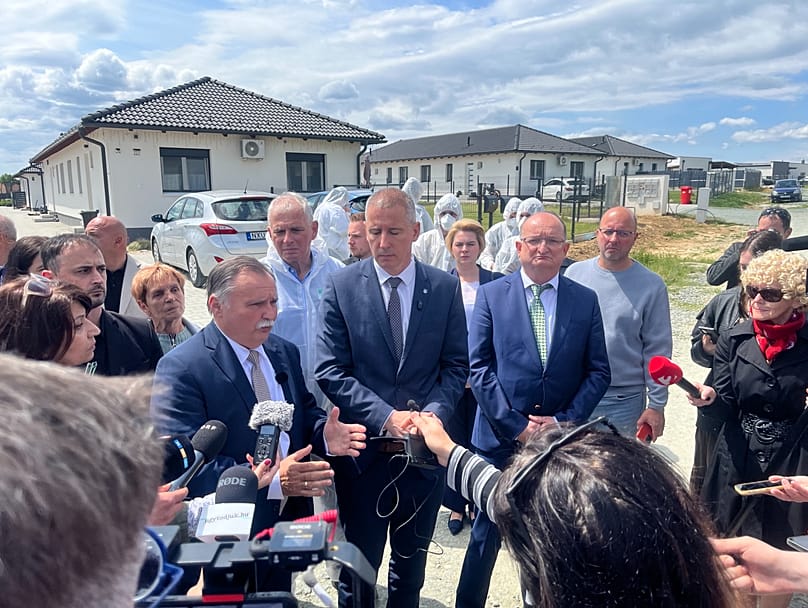
László Gajdos, Minister for the Living Environment and András Nemény, Mayor of Szombathely - Szombathely, 14 May 2026. Euronews/KR

The case will be presented to the government on Monday

Hungarian Environment Minister, László Gajdos visited the Szombathely district on Thursday, an area mainly inhabited by families with young children.

"By reducing the speed of cars, we have already made a lot of progress, they are less likely to kick up dust," András Nemény, mayor of Szombathely, told the minister. In addition, the area is being constantly watered.

László Gajdos confirmed that “three counties are affected”, but that the government still does not know “where the stones from Austrian mines, four of which have already been closed, were taken”.

“I think this issue should be discussed between ministries and a decision should be taken quickly. I will therefore submit the matter to the government on Monday,” the minister said during a press conference held on site.

Lack of preventive regulation

According to geologist Tamás Weiszburg, this contamination may have occurred due to a lack of knowledge and a legal gap: there are currently no preventive regulations in Europe concerning natural asbestos.

“It is possible for one side of the same mine to contain asbestos while the other does not. So this is not a case of deliberate environmental damage,” he explains.

“There is of course a legal loophole, and it is worth looking for those responsible, but it must also be understood that although it was scientifically and geologically known that some mines contained asbestos, it was neither possible nor desirable to ban mining in Austria, simply because there is no law governing this,” he said.

So far, contamination has been identified at more than 300 sites, with three counties being the most affected. In Szombathely, as well as in Sopron and Kőszeg, surfaces have been covered with gravel containing natural asbestos.

Search continues for bodies of Italian divers who died in Maldives

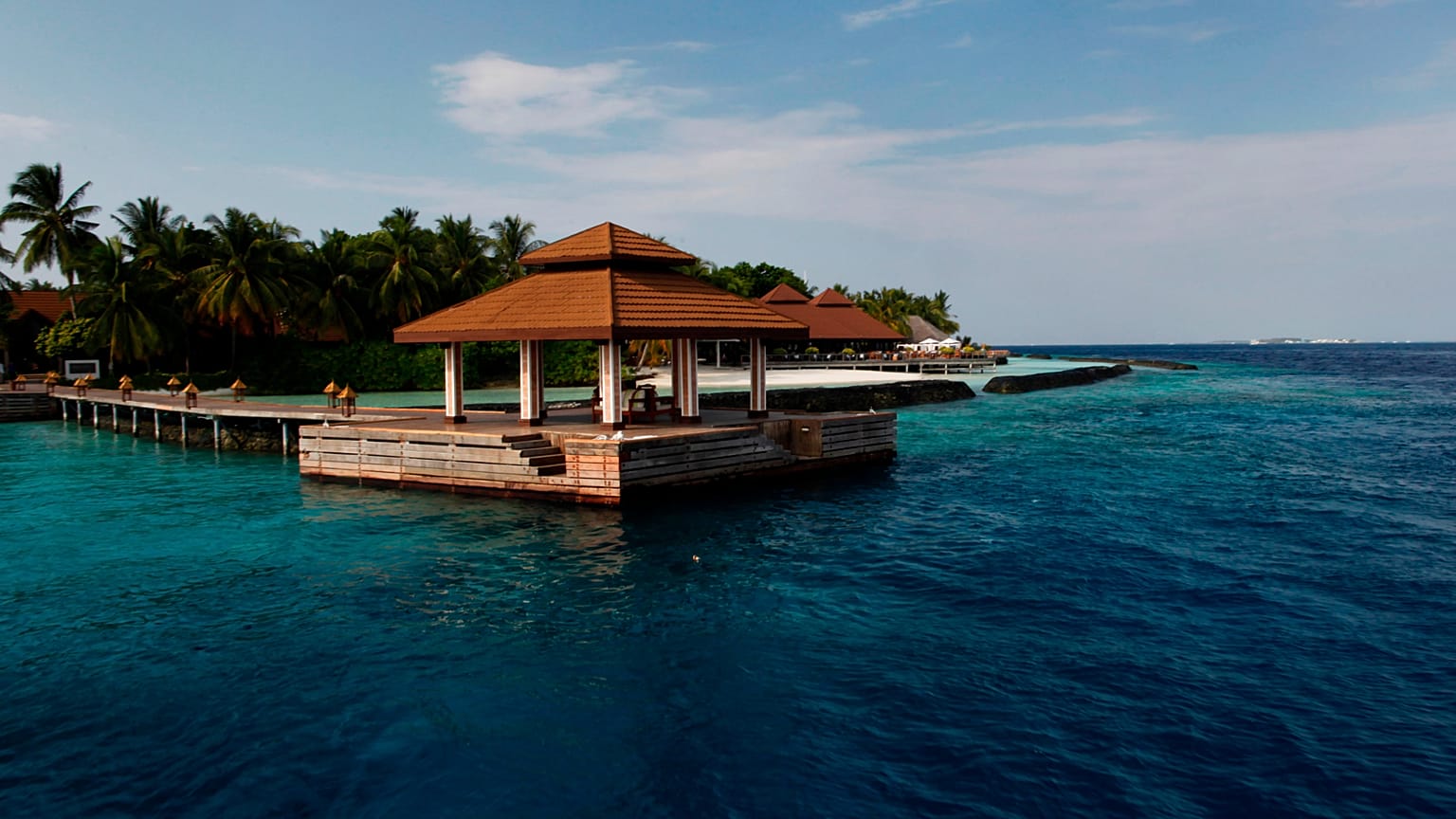
Resort in Malé, Maldives - archive image
Copyright AP


By Fortunato Pinto
Published on 

Five Italians died during the incident while reportedly "attempting to explore caves at a depth of 50 metres," the Italian Ministry of Foreign Affairs said earlier this week.

The Maldivian Coast Guard is working to recover the bodies of four Italian nationals who went missing following a fatal diving accident on Thursday.

Five Italians died during the incident while reportedly "attempting to explore caves at a depth of 50 metres," the Italian Ministry of Foreign Affairs said earlier this week, with one body already recovered.

According to the department, Minister Antonio Tajani is in contact with Italy’s ambassador in Colombo, Damiano Francovigh (who is also responsible for the Maldives), and the honorary consul in Malé, Giorgia Marazzi. They are on board the Coast Guard support vessel “Ghazee” to follow the recovery operations.

On Friday, severe weather forced authorities to temporarily suspend search operations, which involve eight Maldivian divers.

The first two, ministry sources confirmed, have already pinpointed and marked the entrance to the series of caves where the Italian divers disappeared.

The Rome public prosecutor’s office has opened an investigation into the incident.

Recreational dives in the archipelago are only allowed down to thirty metres, and diving to greater depths requires special permits.

The alarm was raised as soon as the group failed to return at the scheduled time after an hour-long dive, prompting witnesses to raise the alarm.

Local authorities are examining several theories to understand how the incident occurred. All the victims were highly experienced professionals with advanced diving certificates.

Some believe that the divers may have become disoriented inside the cave due to sand stirred up by the swell, or pointed to possible toxicity of the gases in their cylinders. Others think one of the divers may have become trapped and the others ran out of oxygen while trying to save them.

It also remains to be seen whether safety measures such as the “Ariadne’s thread” were carried out.