It’s possible that I shall make an ass of myself. But in that case one can always get out of it with a little dialectic. I have, of course, so worded my proposition as to be right either way (K.Marx, Letter to F.Engels on the Indian Mutiny)
Saturday, May 16, 2026
'Conversion therapy' is banned in eight EU countries – so why not the rest?
A decision by the European Union not to pursue a bloc-wide ban on so-called "conversion therapy" targeting LGBTQI+ people has divided campaigners and lawmakers. Brussels argues that a binding law could have taken up to 18 years to negotiate.
Instead of proposing legislation across all 27 member states, the European Commission on Wednesday said it would recommend that governments introduce their own bans – a strategy Equality Commissioner Hadja Lahbib told RFI was the fastest and most realistic path to action.
“To adopt binding legislation, unanimity would have been needed anyway,” Lahbib said.
“Rather than plunging into discussions that could have taken 10, 15 or even 18 years, we preferred this recommendation because we are convinced it will be much more effective.”
'Shameful' practice
Conversion practices seek to change a person’s sexual orientation or gender identity through sometimes violent methods.
United Nations experts have called for a worldwide ban, describing the practices as discriminatory, humiliating and a violation of bodily integrity.
More than one million people signed a petition last year calling on the EU to outlaw the procedures – which reportedly include physical aggression, exorcism, hormone therapy, electric shocks and spiritual retreats – across the bloc.
The campaign was backed by public figures including pop stars Angèle and Pierre de Maere, as well as former French prime minister Gabriel Attal.
“It is a shameful practice, an unacceptable practice. This is not healthcare – it’s violence in disguise. Nobody should have to go through this,” Lahbib said.
The European Commission argued that trying to introduce a binding EU law could have led to years of political deadlock.
A pride flag flew outside the commission headquarters in Brussels as the announcement was made on Wednesday.
“Conversion practices have no place in our union,” said European Commission President Ursula von der Leyen.
Eight EU countries have already outlawed conversion practices – Belgium, Cyprus, France, Germany, Greece, Malta, Portugal and Spain.
Possible future bans are also being discussed in Ireland, the Netherlands and Denmark, while other countries, including Slovakia, continue to resist.
Divided response
Reactions from gay rights groups and lawmakers were mixed.
Supporters of the commission’s approach argued that a recommendation could deliver quicker results than years of negotiations over an EU law.
Cianan Russel from LGBTQI+ rights network ILGA-Europe said the EU had taken the strongest action open to it.
“We are engaged in a long-term struggle and we want a viable and effective solution over the long term. The commission has taken the most effective measure possible,” Russel said.
Critics argued that Brussels had failed to act strongly enough at a time when homophobic rhetoric is growing internationally.
The campaign group Against Conversion Therapy, which launched the petition, called the decision “a missed opportunity”.
“In an international political climate where reactionary ideas are on the rise around the world, there is an urgent need for the European Union to act,” the group said.
At the European Parliament, lawmakers adopted a resolution in April supporting a ban.
Manon Aubry, a left-wing French MEP, described the commission’s decision as “shameful”.
Meanwhile Melissa Camara, a member of the parliament’s LGBTIQ+ rights group, told the French news agency AFP the commission’s move was “a step in the right direction” but “far too timid” given “the damage and trauma caused by these practices”. (with newswires and reporting from RFI in French)
Eurovision gears up for boycotted final, with fiery Finns favourites Vienna (AFP) – A fiery Finnish violinist-singer duo followed by an Australian star are the favourites to win Saturday's Eurovision grand final, with the contest hit by an unprecedented boycott over Israel's participation.
Issued on: 16/05/2026 - RFI
The overwhelming favorites in the final are violinist Linda Lampenius
This year in Vienna marks the 70th edition of the world's biggest televised music event, which despite the razzmatazz rarely escapes the politics in the background.
Five countries, including Spain, traditionally one of the Eurovision Song Contest's biggest financial contributors, are staying away over Israel's participation to protest against its war in Gaza.
Australian star Delta Goodrem has climbed to second place among the favourites
The overwhelming favourites in the 25-country final are violinist Linda Lampenius and pop singer Pete Parkkonen, who already set ablaze the immense circular stage of Vienna's Stadthalle concert venue in the first semi-final on Tuesday.
Australian star Delta Goodrem, who has sold nine million albums, climbed to second place among the bookmakers' favourites, after her performance in the second semi-final on Thursday that saw her soar into the air on a riser from the top of a glittering piano.
The final begins at 9:00 pm local time (1900 GMT) in front of some 11,200 spectators.
"It's going to come down to Finland and Australia," Fabien Randanne, a journalist at French news outlet 20 Minutes and a specialist on the contest, told AFP.
Internationally acclaimed violinist Lampenius, 56, got permission to use her 1781 Galliano live, to perform "Liekinheitin" ("Flamethrower") in Finnish with Parkkonen, 36.
Romania's Alexandra Capitanescu has managed to break into the top 5 favourites
Instruments featured on stage are typically pre-recorded.
"I will never be a wallflower," Lampenius, who has appeared on the cover of Playboy and in an episode of "Baywatch", told Austrian news agency APA ahead of the final.
The 41-year-old Goodrem, who had a string of international hits in the early 2000s, has raised hopes of a first win for her country with "Eclipse", a song evoking a romantic alignment of the planets.
Australia has appeared at Eurovision by invitation since 2015.
"The European public still has more or less conscious reservations about voting for Australia, wondering what the country is doing in the contest, but perhaps Delta Goodrem's star aura can spur them to rally around her," Randanne said.
Her rise in the odds has come at the expense of Greece, Israel, Denmark and France, which have slipped in the rankings.
Romania's Alexandra Capitanescu, 22, has managed to break into the top 5 thanks to an electrifying stage presence with her metal track "Choke Me".
Meanwhile, Sal Da Vinci, 56, could emerge as "the dark horse" with his love song "Per sempre si" ("Forever yes"), according to Sebastien Dias-das-Almas, a French journalist who has covered Eurovision since 2011.
A major figure on the Italian music scene, Da Vinci "could appeal to the traditional audience, who only follow the contest on television on the night of the event", Dias-das-Almas said.
Fans from 75 countries have flocked to Vienna for the spectacle.
Undeterred by the rain, many have taken musical cruises on the Danube and sang karaoke in the huge fan zone set up in front of the City Hall and aboard trams crisscrossing the city.
"We have nothing like this in America, and I think Eurovision is phenomenal because it brings everybody together," Tory Huflar, an American fan, told AFP after Thursday's second semi-final.
Some 166 million viewers watched the contest on television last year when it was hosted in Switzerland.
Austria hopes to match that figure despite the boycott by Iceland, Ireland, the Netherlands, Slovenia and Spain and a call by more than 1,000 artists not to watch Eurovision over Israel's participation.
Pro-Palestinian activists organised an alternative concert dubbed 'song protest'
Spanish Prime Minister Pedro Sanchez on Friday said he was certain his country was on "the right side of history".
Pro-Palestinian activists organised an alternative concert dubbed "song protest" on Friday in downtown Vienna, which has been under tight security all week.
"I'm Jewish, I support Palestine, and I don't want a platform to be given to Israel at Eurovision," Dalia Sarig, 57, wearing a keffiyeh scarf around her neck, told AFP.
France to probe Khashoggi killing after complaint against Saudi crown prince
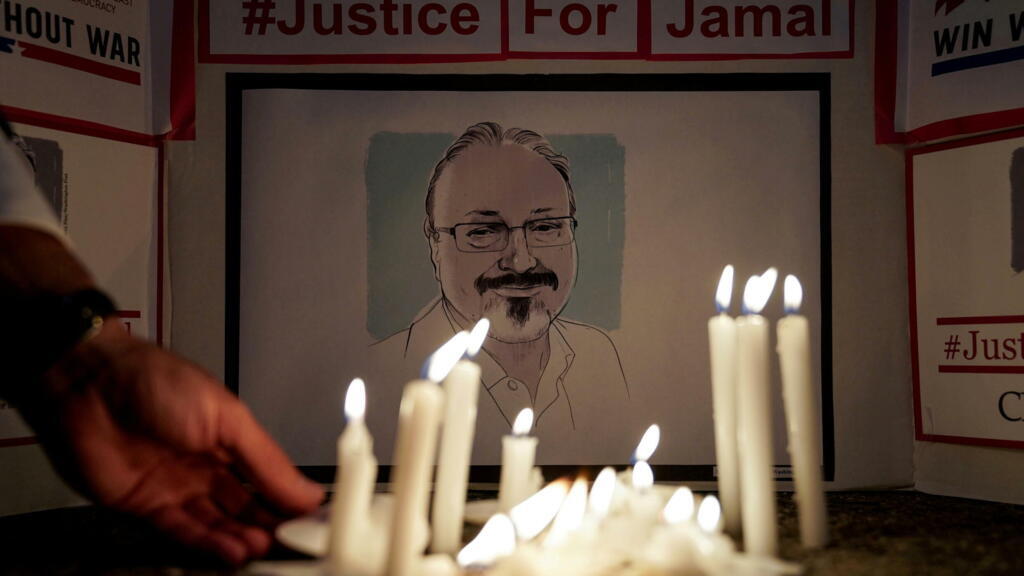
A Paris judge will investigate the 2018 assassination of Saudi dissident journalist Jamal Khashoggi after rights groups filed a complaint against Crown Prince Mohammed Bin Salman, French sources have told AFP.
Issued on: 16/05/2026 - RFI
The French probe will examine the extent of MBS' role in Khashoggi's killing at the Saudi embassy in Istanbul in 2018. REUTERS - Sarah Silbiger
Both Mohammed Bin Salman (MBS) and the kingdom faced intense international uproar over the assassination of Khashoggi in Saudi Arabia's consulate in Istanbul.
Khashoggi, a US resident who wrote critically about the oil-rich kingdom in The Washington Post, was strangled and then dismembered inside the consulate on 2 October, 2018.
In a 2021 report, US intelligence claimed the crown prince was directly responsible for the killing.
However President Donald Trump has since denied MBS' role saying the prince "knew nothing" about the journalist's murder.
Khashoggi's employer, Democracy for the Arab World Now (DAWN), and the rights group Trial International had petitioned the French courts on the matter during MBS' visit to France in July 2022.
They were subsequently joined by a complaint from press freedom watchdog Reporters Without Borders (RSF).
"An investigating judge from the crimes against humanity unit will now investigate the complaint" for torture and enforced disappearances, the National Anti-Terrorism Prosecutor's Office (Pnat) confirmed when contacted by AFP. An 'abominable crime'
It comes after years of legal wrangling, with the prosecutor's office opposed to opening a case in France on admissibility grounds.
But in a decision handed down on Monday, the court of appeal ruled in the rights groups' favour, which DAWN hailed as a key step towards obtaining justice for the journalist's killing.
"The crime of which Jamal Khashoggi was a victim is an abominable crime, decided and planned at the highest level of the Saudi state, which had a journalist executed who was a dissident and independent voice," said Emmanuel Daoud, a lawyer for RSF.
Trial International's lawyer, Henri Thulliez, said there "should no longer be any obstacle to opening a judicial investigation into the atrocious crime committed against Jamal Khashoggi".
In 2019, the UN High Commissioner for Human Rights Agnès Callamard (now head of Amnesty International), published a damning investigation into what the watchdog called “the unlawful death of Mr Jamal Khashoggi".
Based on interviews with Saudi personel, Turkish intelligence operatives, recordings of telephone conversations and security cameras, the report claimed Khashoggi’s murder constituted an extrajudicial killing, which the Kingdom of Saudi Arabia was responsible for.
Callamard said the assassination also constituted a violation of the Vienna Convention on Consular Relations, of the prohibition against the extra-territorial use of force in time of peace, an act of torture under the terms of the Convention Against Torture, ratified by Saudi Arabia.
The Saudi assembly Shura Council roundly rejected the report's findings.
(with newswires)
Famine looms in Somalia amid drought, dwindling aid and Middle East war Six million people in Somalia are facing crisis levels of food insecurity from a lack of rain and spiking food and water prices due to the Middle East war, United Nations-backed experts and humanitarian groups have warned.
Issued on: 15/05/2026 - RFI
Malnourished children seen at Banadir Hospital in Mogadishu, Somalia, 14 May 2025.
AP - Farah Abdi Warsameh
Almost a third of the population is affected by food insecurity, according to data published Thursday from the UN-backed group monitoring hunger and malnutrition, the Integrated Food Security Phase Classification Initiative (IPC).
Some 4.1 million people in Somalia are currently classified as being in the "crisis" phase of food insecurity and nearly 1.9 million people in the "emergency" phase – one step away from the "catastrophic" level, equal to famine.
The analysis found that Somalia's Burhakaba District, in the country's south, was at risk of famine in a "plausible worst-case scenario of failing Gu rains, soaring food prices and below expected delivery of humanitarian food security assistance".
The Gu rainy season from April to June is Somalia's most important period for crops and livestock.
Nearly 1.88 million children are now expected to need treatment for acute malnutrition this year, the IPC found.
A host of factors were driving the deterioration, the report found.
It cited the decline in value of the Somali shilling, due to its rejection by traders and service providers in the south, as well as displacement of people due to conflict and insecurity, and flood risks in river areas.
Humanitarian group Mercy Corps also warned on Thursday that the ongoing war in the Middle East is having a drastic effect on Somalia, with the cost of fuel, food, water and fertiliser rising.
Daud Jiran, country director for Somalia at Mercy Corps says that in some of the areas hardest hit by drought, a single jerrycan of water now costs up to $1.50, compared with just a few cents a year ago.
"For mothers already struggling to put even one meal on the table, basic necessities like water are becoming unaffordable."
'Preventable catastrophe'
Jiran insists that funding and early action could prevent the worst case scenario, as in 2022 when the country was pulled back from the brink of famine.
"Somalia is once again facing a preventable catastrophe," he said. "Only urgent action can stop this crisis from deepening."
However, the IPC report says humanitarian assistance is reaching just 12 percent of the 6 million people in crisis.
The UN's World Food Programme warned last week it would have to halt humanitarian assistance in Somalia by July if it did not receive new funding.
The UN has steadily reduced its Somalia aid programme from $2.6 billion (€2.2 billion) in 2023 to $852 million (€740 million) this year, since the United States slashed its contributions. So far, only 13 percent of this year's target has been raised.
"It's a toxic cocktail of factors... things are really, really desperate," Tom Fletcher, head of the UN's Office for the Coordination of Humanitarian Affairs, told French news agency AFP last month.
"Often we're having to choose which lives to save and which lives not to save."
Since its state collapsed in the early 1990s, Somalia has endured near-constant civil war, Islamist insurgencies, floods, droughts and episodes of famine.
The country also ranks among the world's most vulnerable to climate change, which scientists say is leading to more frequent and more intense incidences of extreme weather, such as droughts and floods.
(with newswires)
Turkey expands military footprint in Somalia as regional rivalries intensify
Issued on: 16/05/2026 - RFI
Turkey’s role in Somalia is under growing scrutiny, with the East African country embroiled in controversy over elections and Israel stepping up efforts to challenge Turkey in the region.
The flags of Israel and Somaliland, seen between the capital city of Hargeisa and the port city of Berbera, Somaliland, 19 February, 2026. AFP - TONY KARUMBA
Over the last two years Turkey has ramped up its economic and military presence in Somalia, building on decades of development. The East African country is home to Turkey’s largest overseas military base and this year it bolstered its military presence, deploying F16 fighter jets and tanks.
Turkey is also constructing a space port for its rapidly advancing missile programme, and the two countries have signed agreements to exploit potentially vast energy reserves.
But the deepening partnership is proving increasingly controversial, says Omar Mahmood of the International Crisis Group.
While five or 10 years ago there would have been "quite high praise" for Turkey's role, that's changed over the last two years. "Some of these [Turkish] contracts and projects have tipped into [a much] greater scale and that has raised questions" he noted.
A looming constitutional crisis is adding to the scrutiny of Turkey’s role in Somalia. The Somali government is insisting it has one year left of its electoral mandate, while the opposition claims elections should be held in May.
"The core issue is that the political elite are infighting about the system,” explains Mahmood. “So anytime that happens, those who are against the government wind up complaining and then also looking at who is supporting the Somali government."
Turkish President Recep Tayyip Erdogan’s authorisation of $30 million in cash aid to the Somali government, which coincided with an April visit to Istanbul by his Somali counterpart, Hassan Sheikh Mohamud, drew criticism from both the Somali and Turkish opposition.
“Turkey providing cash aid to the Somali government sparked the debate,” said African studies professor Elem Eyrice Tepeciklioglu, of the Social Sciences University of Ankara.
“It seems some people think Turkey supports the ruling government, and provides support to the ruling government because they benefit from the relationship.”
Ankara has strongly refuted accusations of interference in Somali politics. However, it could be paying the price for being too focused on Mogadishu in the past, given the diverse nature of Somalia's regions.
“Turkey has started to learn from its mistakes,” said Tepeciklioglu. “They have started to increase their involvement with different states, with different regions, and have started to increase their engagement with local people as well.” Rivalry in the region
Turkey is also facing a growing challenge in the region from Israel, which in April appointed an ambassador to Somaliland – becoming the first country to recognise the breakaway republic, which seceded from Somalia in 1991.
“It’s been useful probably for [Israel] to assert themselves against Turkey in an area where Turkey has firmly planted its flag,” said Norman Ricklefs of geopolitical consultancy, the NAMEA Group.
Israeli-Turkish relations remain strained over Ankara’s support of Hamas and Israel’s war against Gaza and Lebanon. The Israeli government has indicated it is considering a military presence in Somaliland, to counter the threat posed by the Houthis in Yemen.
“I don't think we're at that stage yet,” said Ricklefs. "But any Israeli military presence in Somaliland is going to raise angst amongst the neighbours – Somalia, Egypt, Turkey and potentially Saudi Arabia. Obviously, it's going to be destabilising.”
The Horn of Africa could be a potential new flashpoint if Israel deploys military assets in Somaliland, agrees international relations professor Serhat Guvenc of Istanbul’s Kadir Has University.
"The potential for conflict between Israel and Turkey is really high, because they're pursuing diametrically opposed objectives. If relations further deteriorate, then we may see tensions running high between the two countries because they would be in almost physical contact. Their military assets may run the risk of having dangerous encounters with each other."
Israeli-Turkish rivalry in the region threatens to exacerbate existing tensions in an already volatile area. For Turkey, which has invested more than €1 billion in development in Somalia over the past decade, and is also eyeing major financial returns from its energy exploration in Somalian waters, the stakes are high.
By:Dorian Jones
Why French law on returning looted artefacts is of ‘great importance’ to China
China has welcomed France's new law easing the restitution of colonial-era looted artworks – which could help it recover some of its treasures looted during the sacking of the Old Summer Palace in 1860 by British and French forces.
Issued on: 16/05/2026 - RFI
The destruction of the imperial gardens by British and French troops in 1860 is still regarded as a symbol of the aggression and humiliation inflicted on China by the Franco-British alliance.
A French law easing the restitution of artworks looted during the colonial era between 1815 and 1972 was published in the Official Journal last weekend, following its final approval by MPs.
“China attaches great importance to the bill recently adopted by the French National Assembly simplifying procedures relating to illegally acquired cultural property," said Chinese Foreign Minister Wang Yi during a meeting in Beijing with President Macron’s diplomatic adviser Emmanuel Bonne.
Yi added that he wished to "strengthen co-operation with the French side on this issue".
For Beijing, the new legislation raises hopes of recovering some of the thousands of objects looted during the sacking of the Old Summer Palace in 1860 by British and French forces – including items held in the collection of Empress Eugénie at the chateau of Fontainebleau south of Paris.
The Old Summer Palace, or Yuanmingyuan Park, was a vast imperial complex built in the 17th century around 15 kilometres north-west of Beijing’s Forbidden City. Its gardens were destroyed by British and French troops in 1860 during the Second Opium War.
The destruction remains a potent symbol in China of the humiliation inflicted by the Franco-British alliance. Domestic and foreign policy considerations
China’s growing interest in recovering some of the thousands of looted artefacts is closely tied to both domestic and foreign policy, says Emmanuel Lincot, research director at the Indo-Pacific Geopolitical Observatory (IRIS) and author of Geopolitics of Heritage.
“China paid very little attention to its ancient heritage in the past,” Lincot explained. “Quite simply because, until Mao’s death in 1976, the regime was atheistic – a Communist society that had completely broken with the past.
"From the 1980s onwards, however, and even more so since Xi Jinping came to power, we have seen a restoration of the legitimacy of the imperial period, very likely aimed at allowing the Communist Party to legitimise its own position by placing itself within a broader historical continuity.”
Lincot also notes that the shift comes as relations between China and Europe broadly, and France in particular, are increasingly strained.
“Contemporary Chinese nationalism is fundamentally fuelled by anti-Western resentment and by the demand for the return of these imperial artefacts,” he said. “Yet 60 years ago, the same Chinese Communist Party was encouraging the systematic destruction of this ancient heritage.”
The new law allows the French government to return artworks by decree, removing the need for a separate law for each individual object, as was previously the case.
The legislation applies only to property acquired between 20 November 1815 and 23 April 1972 – dates marking the start of the Second French Empire and the eve of the implementation of a Unesco convention on the transfer of cultural property.
Fans rioted after a disputed referee decision ended a Libyan league match in Tarhunah, with violence spreading to Tripoli where the Government of National Unity's headquarters was set on fire.
Clashes that erupted after a football match in a western Libyan town left several people injured, authorities said Friday, while a government building was set on fire in Tripoli.
Fights began in the town of Tarhunah, some 80 kilometres south of the capital, after a match between Tripoli's Al-Ittihad SCSC and Misrata's Asswehly SC on Thursday.
The match, which was part of the title play-off in Libya's top football division, was held behind closed doors.
It was suspended shortly before the final whistle after Al-Ittihad's players protested over a penalty kick they believed should have been awarded, Libyan news agency LANA reported.
The incident led to fights between supporters and security forces outside the stadium, according to the news agency.
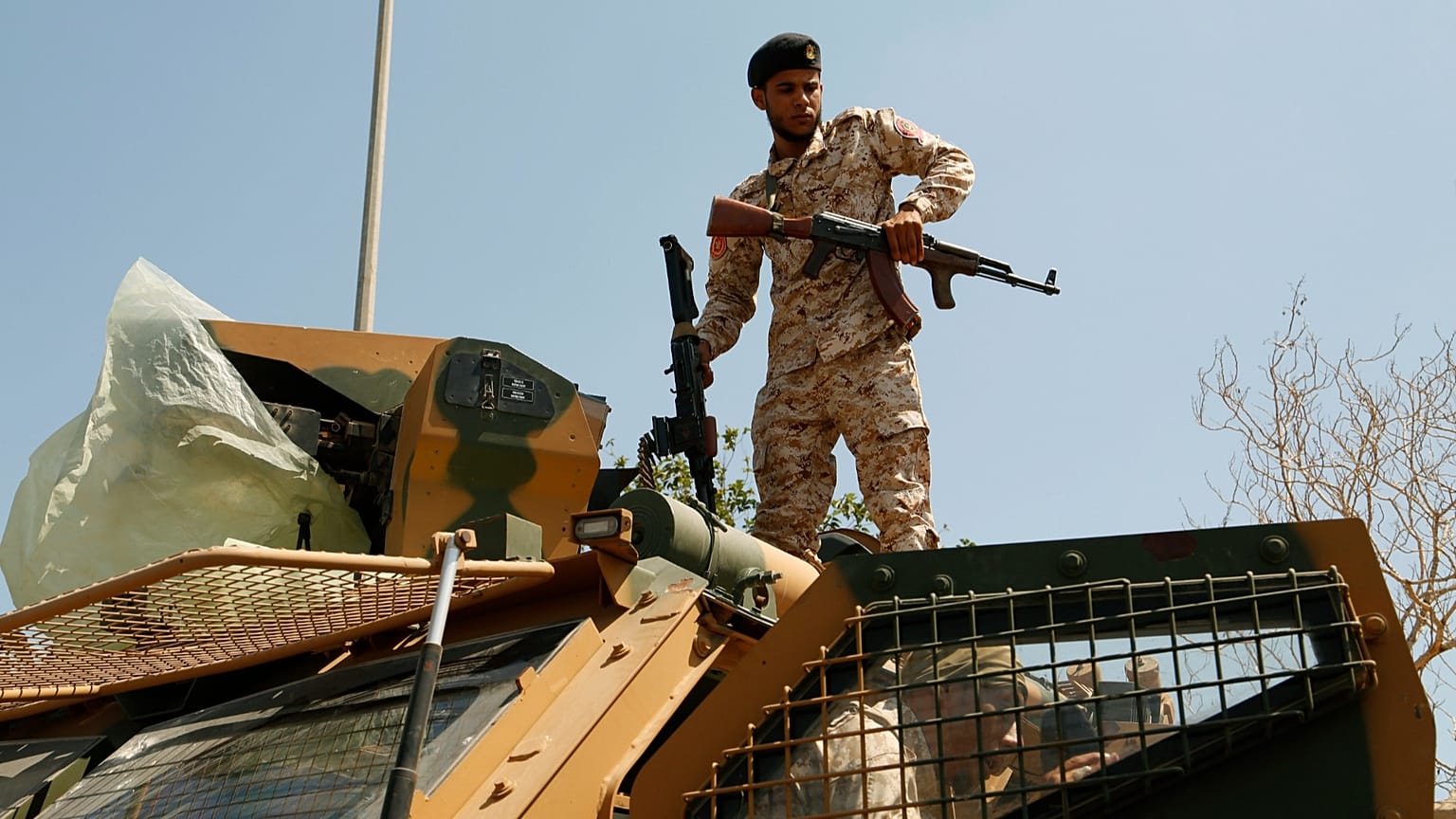
The Tripoli-based Government of National Unity deployed one of its most powerful armed factions, the 444th Combat Brigade, to contain the situation.
The brigade claimed one of its members had been killed by gunfire and confirmed its units fired live rounds at protesters, according to Arabic-language media reports.
The soldier's death was not confirmed by the authorities or independent news outlets.
Players and journalists covering the match were also among those injured, and several vehicles, including a Libyan sports channel's broadcast van, were burned.
The Libyan Presidential Council said people targeted the council of ministers' headquarters in Tripoli "with acts of sabotage and arson," with local media reporting that several offices inside the government compound were set on fire. The blaze was quickly contained, LANA said.
The council called for an investigation into the "unfortunate events", saying that feelings of injustice must be addressed legally and "not through violence".
The violence in Tripoli is the most serious civil disturbance in the Libyan capital in several months.
Earlier in May, armed clashes in the western city of Zawiya — also controlled by the Tripoli government — killed nine people and injured 23 others.
The 444th Combat Brigade was reportedly linked to the February killing of Saif al-Islam Gaddafi, son of the former Libyan leader Muammar Gaddafi, but has denied any involvement in the incident.
Congo’s new Ebola outbreak has caused 65 deaths and 246 suspected cases so far.
Africa’s top public health authorities have confirmed a new Ebola outbreak in Congo.
The new outbreak has caused 65 deaths and 246 suspected cases, the Africa Centres for Disease Control and Prevention said in a statement on Friday.
Here’s what to know about the health crisis:
Where did the outbreak start?
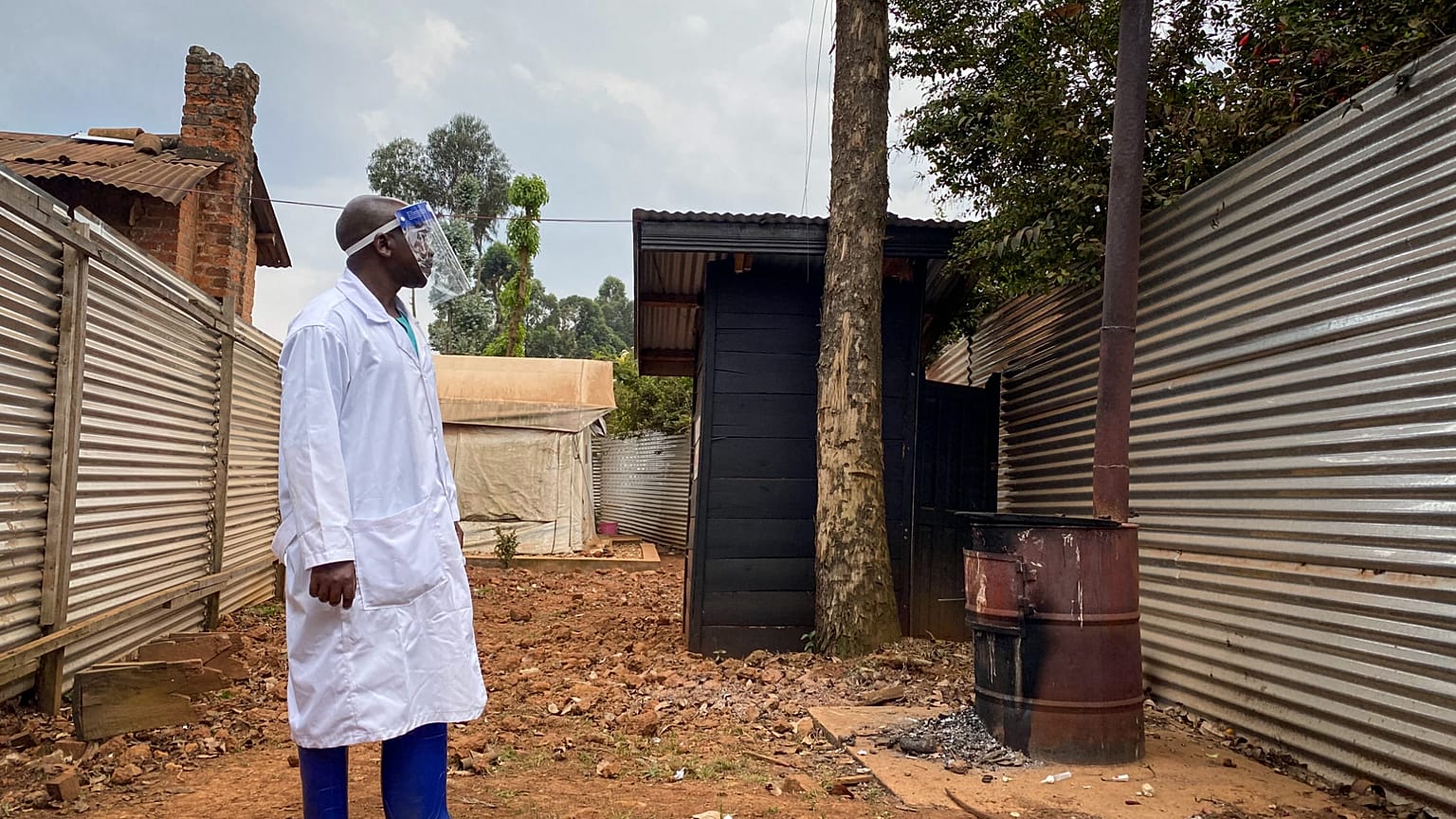
The suspected Ebola cases have mainly been recorded in Ituri's Mongwalu and Rwampara health zones. Suspected cases have also been reported in Bunia, the capital of Ituri province.
Ituri is in a remote eastern part of Congo with poor road networks, and is more than 1,000 kilometres from the nation’s capital, Kinshasa.
So far, only four of the deaths reported are laboratory-confirmed cases, but the new outbreak was confirmed after many suspected cases.
Authorities are worried about the risk of further spread
One major concern, the Africa CDC said, is the proximity of affected areas to Uganda and South Sudan. Bunia, Ituri's main city, is near the border with Uganda.
The agency said there's also a risk of further spread due to intense population movement, including that related to mining, and the security crises in affected areas. Attacks by armed groups have killed dozens and displaced thousands in parts of Ituri province in the past year.
There are also gaps in contact listing, the Africa CDC said, as local authorities race to find those who might have been exposed to the virus.
Relate
What is Ebola?
The virus was first discovered in 1976, near the Ebola River in what is now Congo. The first outbreaks occurred in remote villages in Central Africa, near tropical rainforests. Ebola disease is a severe, often fatal illness affecting humans and primates.
The virus is transmitted to people from wild animals such as fruit bats, porcupines and primates. Ebola spreads through direct contact with the blood, secretions, organs or other bodily fluids of infected people, and with surfaces and materials contaminated with these fluids.
Symptoms include fever, fatigue, headache, muscle pain, sore throat, vomiting and diarrhoea. Severe cases can progress to bleeding complications, multi-organ failure, and death.
The average Ebola disease case fatality rate is around 50%. Case fatality rates have varied from 25–90% in past outbreaks, according to the World Health Organization (WHO).
Is there a vaccine for Ebola?
“While Ebola remains a serious disease, outbreak prevention, response, and treatment have improved significantly over the past decade,” said Daniela Manno, clinical assistant professor at the London School of Hygiene & Tropical Medicine.
“There are now vaccines available for some viruses causing Ebola disease, which can help protect healthcare workers and reduce transmission when deployed rapidly around confirmed cases and their contacts in a strategy known as ring vaccination.”
However, access to the vaccines is not always easy in Congo due to structural barriers and a lack of funding.
During last year’s outbreak, which lasted three months, the WHO initially faced significant challenges in delivering vaccines, which took a week after the outbreak was confirmed.
Congo is Africa’s second-largest country by land area and often faces logistical challenges in responding to disease outbreaks due to bad roads and long distances between population hubs.
During the last outbreak, health officials were concerned about the impact of recent United States funding cuts.
The US had supported the response to Congo’s past Ebola outbreaks, including in 2021 when the US Agency for International Development (USAID) provided up to $11.5 million (€ 9.8 million) to support efforts across Africa.
Congo’s 17th Ebola outbreak
The latest outbreak is Congo’s 17th since the disease first emerged in the country in 1976.
It comes around five months after Congo’s last Ebola outbreak was declared over in December, after 43 deaths. Before then, the last outbreak, in the northeastern Equateur province in 2022, killed six people.
An Ebola outbreak from 2018 to 2020 in eastern Congo killed more than 1,000 people, the most deaths after the 2014-2016 outbreak in the West African countries of Guinea, Sierra Leone and Liberia that killed more than 11,000 people.
How can an outbreak be controlled?
“Non-pharmaceutical interventions are cornerstones of Ebola outbreak response,” said Anne Cori from the School of Public Health at Imperial College London.
“These interventions include active case finding and isolation, contact tracing, and safe burials, as Ebola is very deadly (about half of infected people die) and particularly infectious around the time of death,” she added.
The WHO identifies community engagement as key to successfully controlling any outbreak.
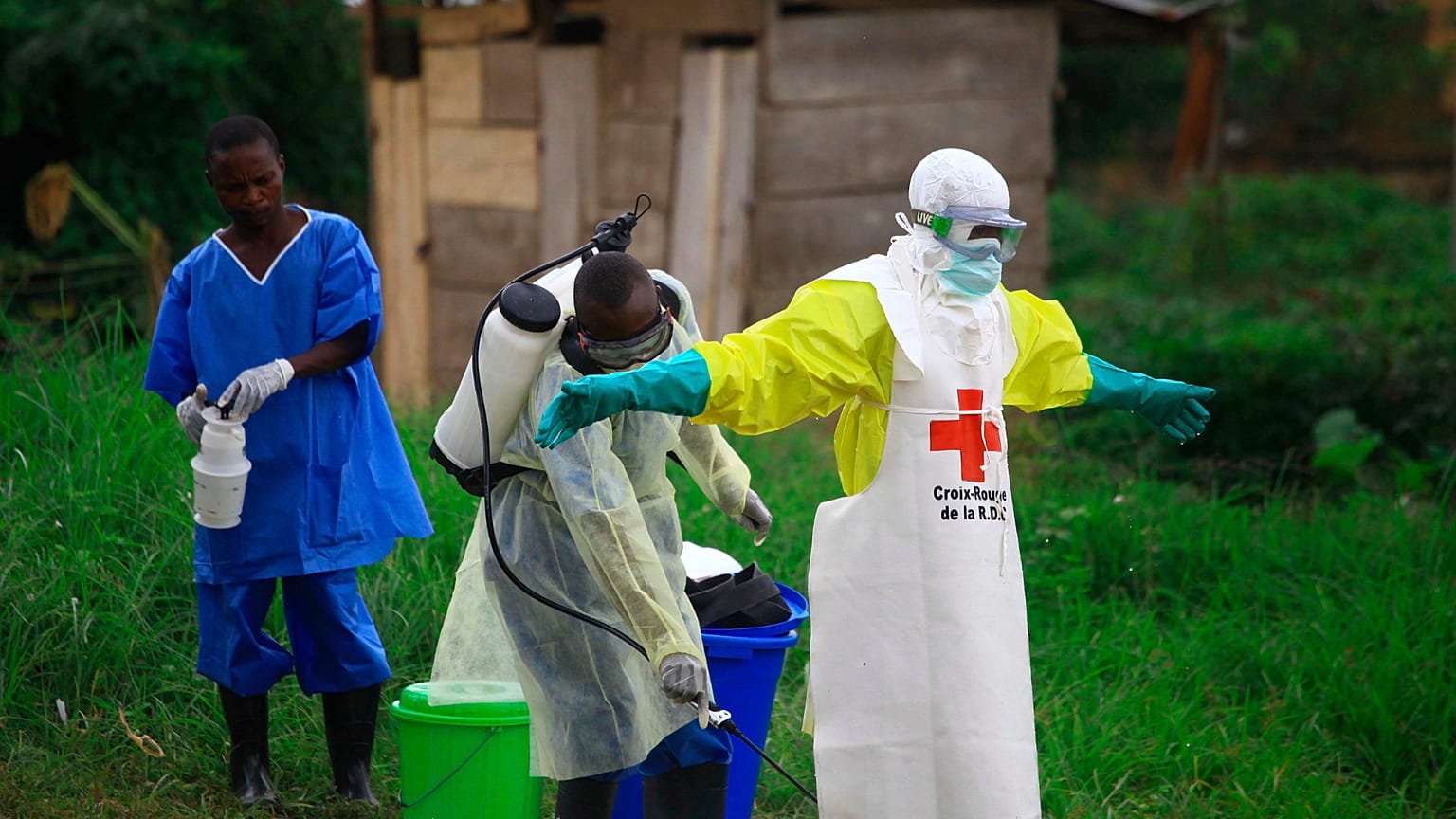
Outbreak control relies on using a range of interventions, such as clinical care, surveillance and contact tracing, laboratory services, infection prevention and control in health facilities, safe and dignified burials, vaccination, when possible, and social mobilisation.
New Ebola outbreak in remote Congo province leaves 65 dead, 246 infected
Congo is suffering a new Ebola outbreak with 246 suspected cases and 65 deaths recorded so far, according to the Africa CDC.
The Africa Centres for Disease Control and Prevention, the continent's top public health body, on Friday confirmed a new Ebola outbreak in Congo’s remote Ituri province, with 246 suspected cases and 65 deaths recorded so far.
The Ebola virus is highly contagious and can be contracted through bodily fluids such as vomit, blood, or semen. The disease it causes is rare, but severe and often fatal.
“Four deaths have been reported among laboratory-confirmed cases. Suspected cases have also been reported in Bunia, pending confirmation,” the agency said, referring to the capital of Ituri province, near the border with Uganda.
It said preliminary laboratory results have detected the Ebola virus in 13 of 20 samples tested.
While more tests are still needed to identify the strain, tests suggest that it is not the Zaire variant, which is one of the deadliest.
The latest outbreak comes around five months after Congo’s last Ebola outbreak was declared over after 43 deaths.
Ituri is in a remote eastern part of Congo characterized by poor road networks, and is more than 1,000 kilometers from the nation’s capital of Kinshasa.
Africa CDC said it is concerned about the risk of further spread due to intense population movement, mining-related mobility in Mongwalu, insecurity in affected areas, gaps in contact listing, and control challenges.
“Given the high population movement between affected areas and neighbouring countries, rapid regional coordination is essential. We are working with DRC, Uganda, South Sudan and partners to strengthen surveillance, preparedness and response, and to help contain the outbreak as quickly as possible,” said Jean Kaseya, Director General of Africa CDC in a statement.
The agency said it is convening an urgent high-level coordination meeting on Friday with health authorities from Congo, Uganda, and South Sudan, together with key partners, including United Nations agencies.
“The meeting will focus on immediate response priorities, cross-border coordination, surveillance, laboratory support, infection prevention and control, risk communication, safe and dignified burials, and resource mobilisation,” it said.
The health agency is urging communities in affected and at-risk areas to report symptoms promptly, avoid direct contact with suspected cases, and support response teams working to protect communities, and to follow guidance from national health authorities.
Congo has seen multiple Ebola outbreaks
This is the 17th outbreak in Congo since the disease first emerged in the country in 1976. An Ebola outbreak from 2018 to 2020 in eastern Congo killed more than 1,000 people.
An earlier outbreak that swept across West Africa from 2014 to 2016 also killed more than 11,000 people.
The new outbreak will create more worry for the Central African country, which has been battling various armed groups in the east, including the M23 rebel group, which launched a rapid assault in January last year and has since occupied key cities.
Ituri in particular is also battling violence from the Allied Democratic Force, an Islamic State-linked militant group which has killed dozens there and in other parts of the east.
Congo, Africa's second-largest country by land area, often faces logistical challenges in responding to disease outbreaks.
During last year's outbreak, which lasted three months, the World Health Organization initially faced significant challenges in delivering vaccines due to limited access and scarce funds.
When two become one: Old and new watchmakers collaborate to change perception of time
The bold move is part of Audemars Piguet CEO Ilaria Resta’s drive to push the boundaries of an industry whose reputation is often hampered by entrenched assumptions.
Swiss watchmakers Audemars Piguet have been creating timepieces since 1875.
The company has plenty of innovations on its resume, including developing the first skeleton watch in 1934 and manufacturing some of the thinnest watches around.
The firm’s latest challenge to convention is a collaboration with Swatch, known for creating playful, affordable watches.
The bold move is part of Audemars Piguet CEO Ilaria Resta’s drive to push the boundaries of an industry whose reputation is often hampered by entrenched assumptions.
She’s particularly passionate about breaking the narrative that watchmaking is a conservative, male-dominated art.
Historic watchmakers create pop art timepieces
Audemars Piguet and Swatch’s new Royal Pop collection “brings together creativity and audacity with haute horlogerie,” the companies write in a press release.
Inspired by Pop Art, the collaboration reinterprets the Royal Oak pocket watch, debuted by Audemars Piguet in 1972.
Purists will notice elements from the original Royal Oak are still present, including the “Petite Tapisserie” pattern, the octagonal bezel and eight hexagonal screws.
But beyond that, the design, available in eight variations, is disruptive: primary and pastel colours normally snubbed by the industry, polkadots reminiscent of Roy Lichtenstein and exposed mechanical elements.
Inspired by Pop Art, the collaboration reinterprets the Royal Oak pocket watch, debuted by Audemars Piguet in 1972. Audemars Piguet and Swatch
The pocket watch aims to be revolutionary in another way, too. It can be worn in multiple ways, including around the neck, in the pocket, as a bag charm or as an accessory.
This taps into trends favoured by younger generations, particularly the trend for whimsical, jewellery-inspired charms decorating purses.
“Why this collaboration? For the joy and boldness it represents,” says Resta. “Because audacity is often the starting point of innovation and new ideas. And because it invites a broader audience including the younger generations to experience mechanical watchmaking differently.”
Breaking an antiquated narrative
The new collection is a clear advancement of Resta’s desire to be part of new perspectives about the watchmaking world.
"It's a very vibrant time for watchmaking, although it's a tough moment for the broader industry, but we see lots of creativity,” she tells Euronews Culture.
“There is really the desire to continue pushing the boundaries of what we think is possible from a mechanical standpoint, but also from a decoration standpoint."
Resta is pushing to end the belief that the luxury watchmaking sector is conservative, overtly male-dominated and tangled up in old-fashioned traditions.
"Women have been working in watchmaking for centuries... Wrist watches were invented for women and if you look at the data for 2030, 45% of women will be buying mechanical watches," she says.
"We see women growing in the purchase of high-end complications. For me it's important also to break the narrative that there are watches for men, watches for women.”
As Africa rapidly goes digital, it becomes a prime target for hackers
A reported cyberattack on Senegal’s treasury highlights the vulnerability of African institutions to cybercrime. As parts of the continent go digital at breakneck speed, countries are struggling to build up their defences against hackers and fraudsters at the same pace.
This week, Senegal fell victim to the third cyberattack on a public institution in less than six months.
The government confirmed "an incident" began affecting IT systems at the Public Treasury on 10 May, with users continuing to report disruption days later. According to media reports, hackers claimed responsibility and threatened to release 70 gigaoctets of sensitive data.
In October 2025, the Senegalese tax authority's website was targeted by Black Shrantac, a cyber extortion group. The hackers alleged they had extracted nearly one terabyte of data and demanded a ransom of $10 million.
In January 2026, a department at the Interior Ministry responsible for issuing identity cards was reportedly targeted by hackers calling themselves the Green Blood Group
Claiming responsibility for the attack, they said they had stolen 139 terabytes from a database said to contain information on the entire Senegalese population – including identity records, biometric data, electoral information and immigration files. It published some of the data on the dark web.
Cybersecurity experts say Senegal is the latest African country to find itself in hackers' sights.
"Through its international visibility in football, the discovery of oil and gas resources, and the recent political transition, Senegal has become an attractive target for emerging cybercriminal groups seeking recognition and visibility," Dakar-based cyber defence specialist Gérard Joseph Francisco Dacosta told RFI.
Continent-wide pattern
Recent years have seen cybercrime on the rise across the continent.
A 2024 cyberattack on the Bank of Uganda cost it nearly $17 million in stolen deposits. In January 2025, a cyberattack on South Africa's national weather service knocked key systems offline, disrupting aviation and marine forecasts across the region.
According to research by cybersecurity software company Check Point, African organisations now face an average of 2,940 attacks per week – around 700 more than the average worldwide.
In its Global Threat Intelligence report for April, the company identified financial services, government, and consumer goods and services as the sectors in Africa subject to the most attacks.
"Rapid digitalisation combined with uneven security maturity have made the continent a target for hackers," said Lorna Hardie, Check Point's regional director for Africa.
On a continent where mobile money is widespread, individuals as well as institutions are victims of cybercrime.
The emergence of artificial intelligence has escalated the threat, experts warn, with Check Point identifying AI-generated deception as "the fastest-growing threat". Deepfake voice and video impersonations can trick users into approving payments, while AI tools allow fraudsters to launch attacks faster and more cheaply.
Across West Africa and East Africa, cybercrime accounts for more than 30 percent of all crime reported, according to Interpol’s Africa Cyberthreat Assessment Report 2025.
Online scams were the most frequently reported attacks, the international police organisation said, while ransomware, business email compromise and digital sextortion were also widespread.
In 2025, Interpol coordinated a joint operation involving 18 African countries that resulted in the arrest of 1,209 cybercriminals who had targeted nearly 88,000 victims.
The three-month crackdown, dubbed Operation Serengeti 2.0, also recovered $97.4 million and dismantled 11,432 malicious infrastructures.
Security expert Dacosta argues that the real question today is whether countries are resilient enough to detect attacks quickly, limit the damage and recover rapidly afterwards.
"This is where the issue of cyber resilience becomes critical, and on this matter, the situation still varies greatly across Africa," he said.
According to Dacosta, some African governments – such as Morocco and Rwanda – are already using protective measures including advanced antivirus solutions, endpoint threat detection and response, security information and event management, and next-generation firewalls.
He called for countries to invest in a comprehensive response to cybercrime. "Africa should not only consume foreign cybersecurity technologies," he insisted.
"The priority for African governments should be the construction of a true cyber-resilience architecture based on clear governance, modern legal frameworks, large-scale cybersecurity training, regional cooperation, critical infrastructure protection and the progressive development of sovereign cyber defence capabilities.
"They must also invest in cybersecurity operations centres that detect attacks in real time and national cyber emergency response teams."