Wednesday, June 17, 2026

AU

Singapore to launch gold clearing with JPMorgan, other banks


Singapore skyline at the Marina. Stock image.

Singapore plans to launch a gold-clearing system this year, with banks including JPMorgan Chase & Co. and Deutsche Bank AG set to participate in the city-state’s push to become a hub in the global bullion market.

The Singapore Exchange will establish the over-the-counter clearing mechanism by the end of 2026, with inter-bank trading expected to build up from next year, said Gan Kim Yong, the country’s deputy prime minister and chairman of the Monetary Authority of Singapore.

“We are not seeking to replace established centers of gold trading and liquidity,” he said at the Asia-Pacific Precious Metal Conference on Monday. “Instead, Singapore can serve as a trusted node in the global gold ecosystem – connecting regional demand with global liquidity and supporting market activity during Asian hours.”

Singapore’s latest move intensifies competition with Hong Kong to become a major regional hub for trading gold. In recent months, both cities have advanced plans to capitalize on strong demand for the precious metal, with many banks remaining bullish about the long-term prospects for an asset coveted by investors as an alternative store of wealth.

Hong Kong’s central clearing system is expected to be ready by July and the special administrative region has signed up five Chinese and six international banks.

The new clearing system in Singapore will serve as “a foundational layer for the clearing and settlement of gold flows during Asian trading hours,” said SGX Group chief executive officer Loh Boon Chye. “We are also exploring a physically deliverable gold futures contract to give the market an exchange-based tool for price discovery and risk management.”

In Singapore, DBS Group Holdings Ltd., Oversea-Chinese Banking Corp., United Overseas Bank Ltd. and ICBC Standard Bank Plc, as well as JPMorgan and Deutsche Bank, will take part as clearing members after signing a memorandum of understanding with the Singapore Exchange at the conference on Monday.

“As investor demand for global gold grows, we see Singapore playing a complementary role alongside other major hubs by supporting liquidity across time zones and meeting evolving client needs,” said Wai Mei Hong, JPMorgan’s Singapore senior country officer.

The clearing system will be aligned with the industry-standard London Good Delivery framework for large bars, as well as delivery and settlement standards for kilobars adopted by major exchanges in Chicago and Shanghai.

“The gold market works best when liquidity and infrastructure are connected across regions,” Deputy Prime Minister Gan said. “With an established clearing infrastructure and strong market ecosystem, Singapore can support a more seamless global market across time zones – from Asia, to Europe, to the Americas.”

MAS will also introduce central bank gold vaulting services by October this year, he said, and will allow foreign monetary authorities to actively manage bullion holdings with a select group of banks based in the city-state. Attracting sovereign reserves would significantly boost liquidity in the local market and strengthen Singapore’s standing as a global trading center.

The central bank is also set to expand tax exemptions for eligible funds and family offices investing into physical investment precious metals, Gan said, referring to a specific technical term on the purity and form of gold.

As the government pushes to strengthen Singapore’s gold sector, some local banks are also rolling out products to meet growing demand. DBS, the city-state’s biggest lender, will allow customers to hold tokenized gold in the second half of the year. Meanwhile, institutional and high-net-worth clients of OCBC can now trade and store gold with the bank.

(By Yihui Xie)

London gold market weighs earlier auction to suit Asian traders
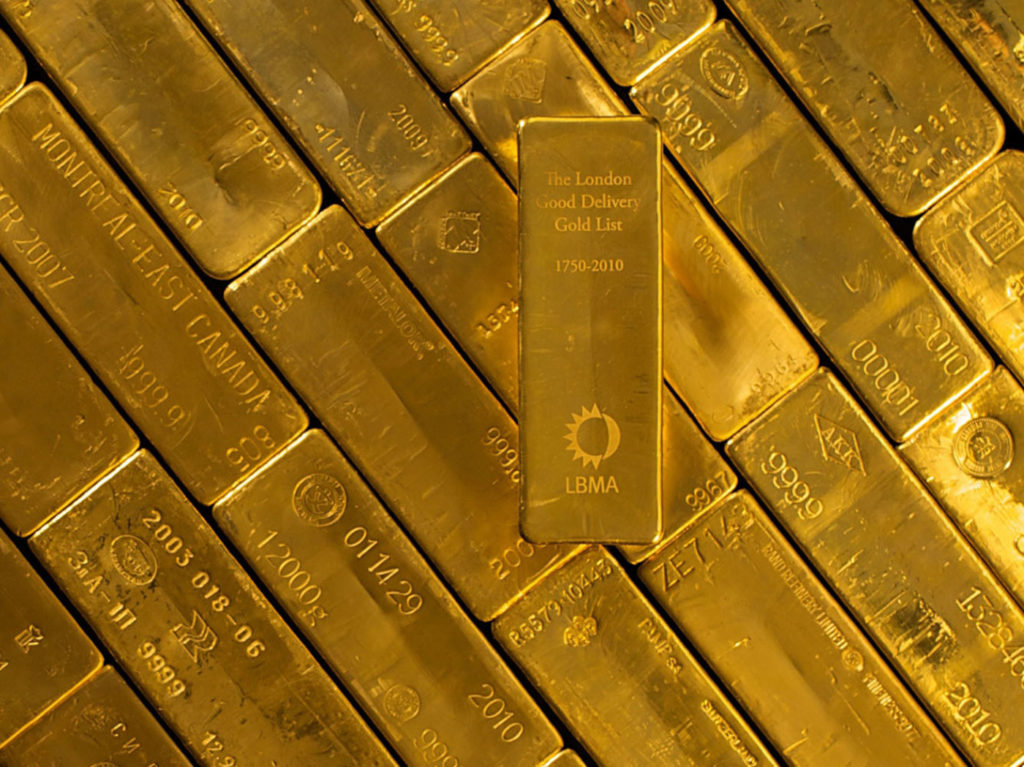

Credit: LBMA

The London Bullion Market Association is considering moving its morning gold auction to an earlier time to accommodate traders in Asia.

The potential shift would be “to reflect and to allow price discovery within the Asian time frame,” LBMA chief executive officer Ruth Crowell said on Monday. This is “something that I know the market has asked for for many years, but I think it comes at the right time,” she told the Asia-Pacific Precious Metal Conference in Singapore.

Crowell did not specify a new time or times under consideration, or say when the possible change might occur.


The LBMA Gold Price is currently set twice daily, at 10:30 a.m. and 3:00 p.m. London time, in US dollars on an electronic platform. The price is the benchmark used by miners, refiners, investors and central banks worldwide.

A daily London pricing auction was first introduced in 1919, with a second, afternoon auction added in 1968 to reflect growth in the US market. The current benchmarks replaced the old London Gold Fix, a telephone-based system that was discontinued in 2015.

The potential shift to an earlier London auction underscores the growing weight of Asian demand in the global bullion market. Gold has been thrust into the spotlight as geopolitical tensions and trade uncertainties drive central banks and investors toward the metal as a safe haven, with the spot price soaring to a record earlier high this year before retreating after the outbreak of the US-Iran war.

(By Yihui Xie and Preeti Soni)


Gold fever sends some vintage luxury watches to the melting furnace


Stock image.

Omega’s Constellation watch has been flashed in campaigns, movies and at the Met Gala by stars like George Clooney and Nicole Kidman, turning it into a symbol of luxury and glamour.

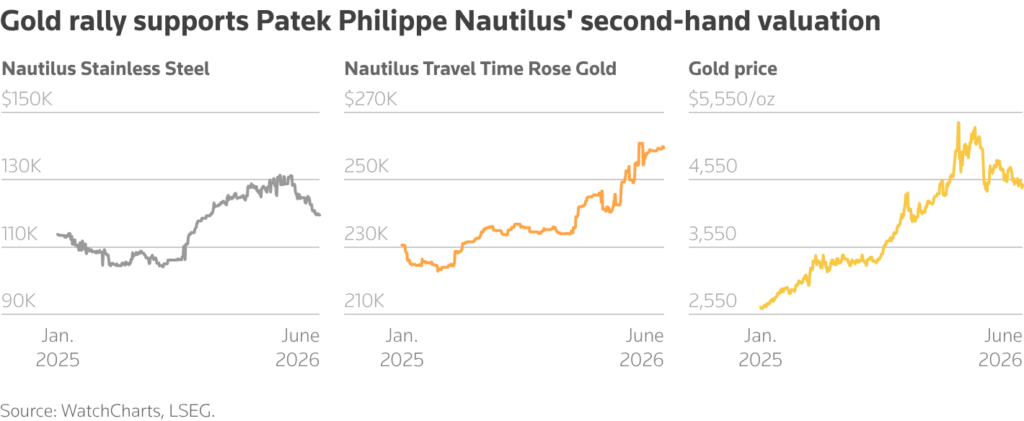
But with gold prices near record highs struck in January, some such classic watches are being melted down as the value of their metal content outstrips their resale worth.


Used models by the likes of Omega and LVMH’s TAG Heuer are most hit by the trend, according to Reuters interviews with over a dozen traders, industry experts, and investment advisers.

British dealer Jon White of Gold Traders melted down an 18-carat late-1970s Constellation in excellent condition in May, one of dozens of mainstream luxury watches he has had scrapped this year as demand for investment gold has risen.

“Beautiful watch. But in reality, had the customer consigned that to auction, what would they have achieved?” White, who also manages an auction house, told Reuters.

The gold content of the Constellation watch, one of many models produced by Swatch-owned Omega, was worth £5,750 ($7,749), 35% more than its estimated £4,000-4,500 auction value, White said.

James Lamdin, founder of Watches of Switzerland’s second-hand unit Analog Shift, said melting was “primarily happening with contemporary pre-owned and also with older vintage watches that are not already collectible.”

Spokespersons for Swatch and Rolex said they would not comment for this story. LVMH, Richemont, Patek Philippe and Audemars Piguet did not respond to requests for comment.

Liquid gold

Gold prices surged to a record $5,600 an ounce in January as geopolitical concerns and trade worries pushed investors towards safe-haven precious metals. Gold now hovers around $4,200 per ounce, almost double its 2024 average.

The market price for used watches has not moved in the same way, however.

“I find it very sad, because obviously once something has been melted, it’s gone forever,” said Adrian Hailwood, a specialist in horological history.

There are no official figures showing how many luxury watches are being melted. World Gold Council data shows overall gold recycling in the first quarter rose 5% to 366 tonnes, while gold jewellery demand rose 31% in value to $47 billion.
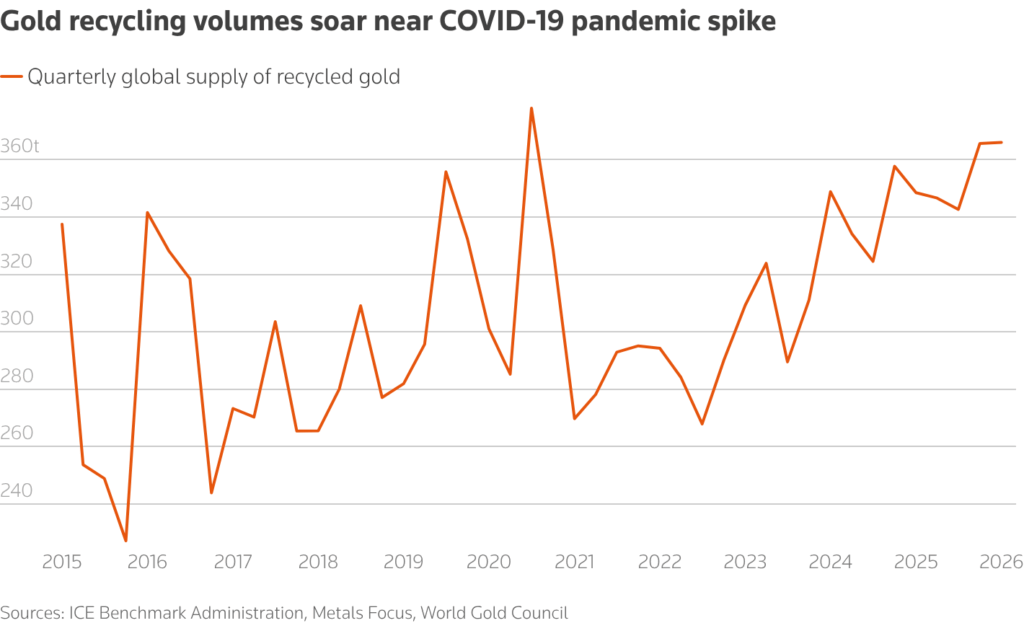
Watches can hold anything from a sliver of gold to more than 200 grams, meaning their scrap value can run into tens of thousands of dollars. In an Omega Constellation, the gold can be found in the case and the strap.


With gold expected to reach between $5,400 and $6,300 an ounce this year, the pressure to dismantle some watches will continue, especially as traders that resell them must cover costs and the expense of providing a warranty.

New watches that are over-produced might also be melted down.

“I’ve seen a lot of totally mediocre watches get melted down,” said Lamdin. “There’s a lot of unsold overstock in the Swiss market. And those watches are basically brand new, unworn, and they’re just getting stripped down… they made too many of them.”

“But when you have something that’s vintage and rare and has some story or some patina, that’s where it becomes a short-sighted tragedy.”

The resale trap

High-end brands that tightly manage new production like privately owned Patek Philippe and Rolex command the highest premiums over melt value, three industry experts said.

For some models “the wait lists are astronomical. You’re talking anything from two to eight years,” said Simon Lazarus, head of PR and content at online luxury watch platform Chrono Hunter.
Rolex accounted last year for 61% of the sales value of new Swiss watches priced above 3,000 Swiss francs ($3,770), up from 57% in 2023 despite lower volumes, according to Vontobel.

Less exclusive brands like TAG Heuer, Breitling and Omega struggle to command high new retail prices, however, as buyers can buy a second-hand timepiece for much less.

Models like Omega’s Speedmaster often depreciate sharply once sold, exposing them to scrapping, three experts said.

To sell or not to sell

Higher gold prices motivated retired New York engineer Mitchell Talisman to sell two gold watches and a chain containing a combined 35 grams of gold with 58% purity for $2,660 cash in December.

“I’d had a bunch of stuff sitting in a safety deposit box for over 10 years,” he told Reuters.

For some owners however, the idea of selling a watch only for it to be melted by a dealer is too much to bear.

“It may be a family piece, it may be their first watch,” said Hailwood.

“They don’t like the idea of it being destroyed, so they keep it.”

($1 = 0.7421 pounds)

($1 = 0.7873 Swiss francs)

(By Alessandro Parodi; Editing by Lisa Jucca and Alexandra Hudson)


Lobito railway receives first Congo shipment after flood repairs


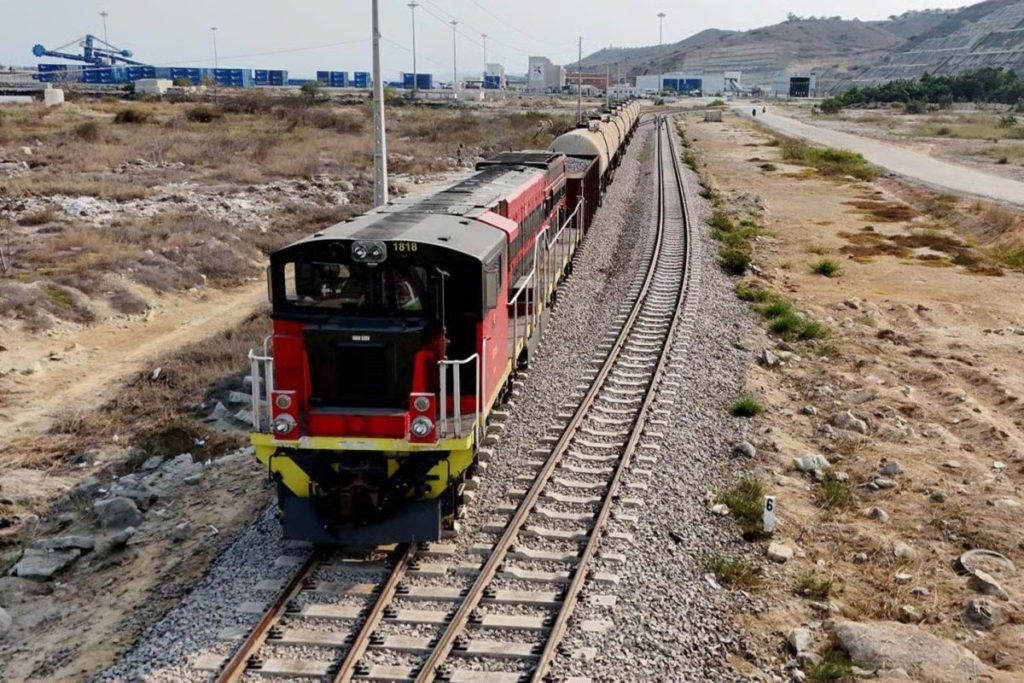
Lobito Atlantic Railway received its first copper shipment from the Democratic Republic of Congo since reopening a flood-damaged section of the corridor, restoring traffic on a key export route for central African minerals.

The link between the port of Lobito and Huambo, closed for about two months because of severe flooding, was restored after emergency repairs, the railway operator said in a June 13 statement.


“The arrival of this first international train from the DRC demonstrates the resilience of our operation and the extraordinary commitment of our teams,” LAR chief executive officer Nicholas Fournier said in the statement.

LAR said it maintained cargo flows during the disruption through a contingency plan that saw freight transferred between trains and trucks on either side of the flood-damaged section of the track.

The corridor is a key conduit for copper and cobalt exports from Congo to the Atlantic and forms part of Western-backed efforts to develop transport links for critical minerals.

(By Candido Mendes)

E.S.G./ NET-ZERO

Vale plans to invest $2.6 billion in decarbonization initiatives


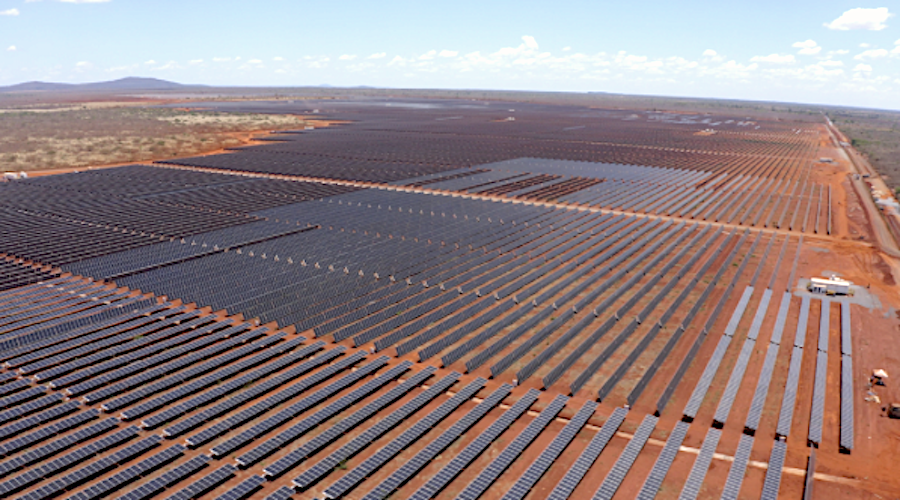
Sol do Cerrado solar complex in Minas Gerais. (Image courtesy of Vale.)

Brazilian miner Vale plans to invest up to 13 billion reais ($2.56 billion) in decarbonization initiatives to meet its voluntary emissions reduction targets and mitigate climate-related risks, a sustainability report showed on Monday.

The company did not specify the timeframe for the investment. The amount includes up to 4 billion reais for decarbonizing operations, with 24% invested in the medium term and 76% in the long term.

Another 8 billion reais is linked to building industrial complexes focused on low-carbon technologies, which includes steelmaking transition technologies and iron ore briquette development.

The remaining 1 billion reais would go for research and development, the firm said.

Vale invested 9 billion reais in decarbonization initiatives from 2020 to 2025.

Through these initiatives, Vale sees potential for financial and environmental returns for its business, Grazielle Parenti, executive vice president of sustainability, said in an interview with Reuters.

“Within Vale’s governance framework, all projects and decisions of this caliber are evaluated using an environmental, social, and governance matrix that identifies potential risks and opportunities for each one,” she said.

The company also warned on Monday it could face carbon costs of up to 22 billion reais at present value from carbon pricing mechanisms, with substantial impacts expected from 2030 onwards.

($1 = 5.0686 reais)

(By Marta Nogueira and Fernando Cardoso; Editing by Aurora Ellis)


India seeks rare earth samples from Rosneft-owned Siberian deposit


Stock image.

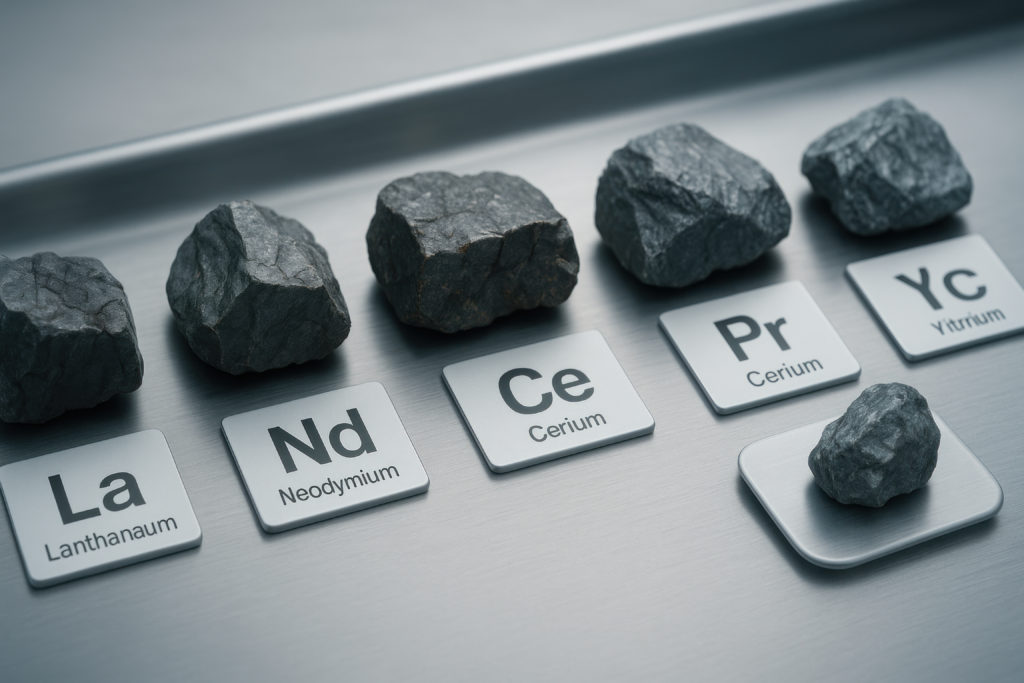
Indian miner IREL is in talks with Rosneft to source rare ‌earth samples from Tomtor, the Siberian deposit acquired by the Russian oil producer last year, as New Delhi seeks to secure supplies of critical minerals dominated by China, a source said.

The talks are taking place through government channels, ​said the source, adding that the samples would be processed in Russia before being shipped ​to India.


India is keen to study the mineral composition of the deposit before ⁠considering deeper engagement, said the source, who has knowledge of the matter and spoke on ​the condition of anonymity as the discussions are confidential.

State-backed IREL is at the forefront of India’s global ​outreach to secure rare earth supplies to meet rising domestic demand and wean itself off dependence on China, with ties between the two neighbours remaining frosty.

IREL, India’s Department of Atomic Energy, which oversees the state miner, the ​foreign ministry, the mines ministry and Rosneft did not respond to Reuters‘ requests for comment.

Tomtor is ​located in Russia’s Siberian region of Yakutia and is considered one of the world’s largest undeveloped rare earth deposits.

The ‌United ⁠States has imposed sanctions targeting Russia’s energy sector, with measures affecting Rosneft and Lukoil, to pressure Moscow over the war in Ukraine.

Rare earth elements are critical for making permanent magnets used in electric vehicle motors and a range of other clean energy and defence applications.

In November, New Delhi approved a ​73 billion rupees ($770.77 million) program ​to support rare ⁠earth magnet manufacturing.

India lacks commercial-scale facilities capable of refining and separating the full range of rare earth elements to high purity levels.

Last year, India was ​scouting rare earth samples from neighbouring Myanmar with the assistance of a powerful ​rebel group, ⁠Reuters reported.

IREL is also in talks with Japanese and South Korean companies on plans to manufacture rare earth magnets commercially, Reuters reported last year.

The company is also exploring rare earth mining opportunities in Argentina, Australia ⁠and Malawi, ​and plans to begin rare earth magnet production in 2029 ​to 2030, the source said.

India has the world’s third-largest rare earth reserves, estimated around 7.23 million metric tons, but does not currently ​produce rare earth magnets domestically.

($1 = 94.71 rupees)

(By Neha Arora; Editing by Mayank Bhardwaj and Christian Schmollinger)


Soaring scrap aluminum exports threaten UK defence, auto supply chains, industry group says


Stock image.

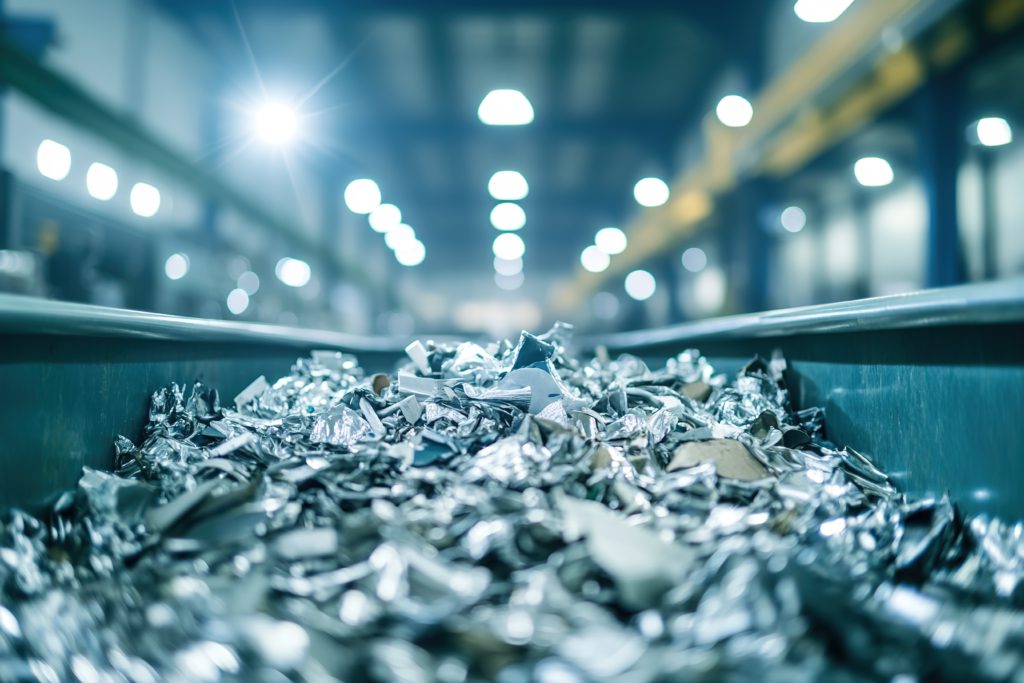
Soaring exports of aluminum scrap risk leaving Britain short of a critical material needed for defence, clean energy, digital technologies and the auto industry, manufacturing trade body Make UK said.

It warned the UK could face a crisis if more scrap continues to flow overseas, with industry moving abroad in search of better access to scrap markets. This risks jobs, investment and supply chain resilience.


Make UK said domestic industry could need as much as 6 million metric tons of available scrap for recycling by 2035 to help meet projected aluminum demand of 8 million tonnes under the government’s Critical Minerals Strategy and Modern Industrial Strategy.

“The size of the prize is significant, with UK aluminum (scrap) collection and sorting alone needing to grow by 25% each year,” said Daniel Paterson, director of sector specialisms at Make UK.

“But this important opportunity will be lost if the UK continues to export a critical material that our future economic growth sectors and national security and resilience depend on.”

Data from information provider Trade Data Monitor showed UK exports of aluminum waste and scrap at 624,314 metric tons last year, a 43% jump from 2016. Over the same period UK aluminum scrap shipments to India increased 94% to 198,779 tons.

UK aluminum scrap exports to the United States at 23,560 tons last year showed a jump of 989% from 2024.

“UK exports to the US increased dramatically after Section 232 tariffs excluded aluminum scrap from their scope,” Make UK said in a release.

US President Donald Trump imposed 50% tariffs on aluminum imports in June last year.

Make UK called for investment in domestic sorting and pre-processing capacity, stronger collection and enforcement standards and targeted measures to retain certain aluminum alloys in the UK. It also urged the government to engage urgently with the EU to secure equivalent treatment if Brussels introduces aluminum scrap export restrictions.

The European Commission is working on measures to curb aluminum scrap leaving Europe after warning that scrap exports risk leaving EU metals industries short of material needed for recycling and decarbonization.

(By Pratima Desai; Editing by Nia Williams)


Qamco confirms termination of Hydro aluminum marketing deal


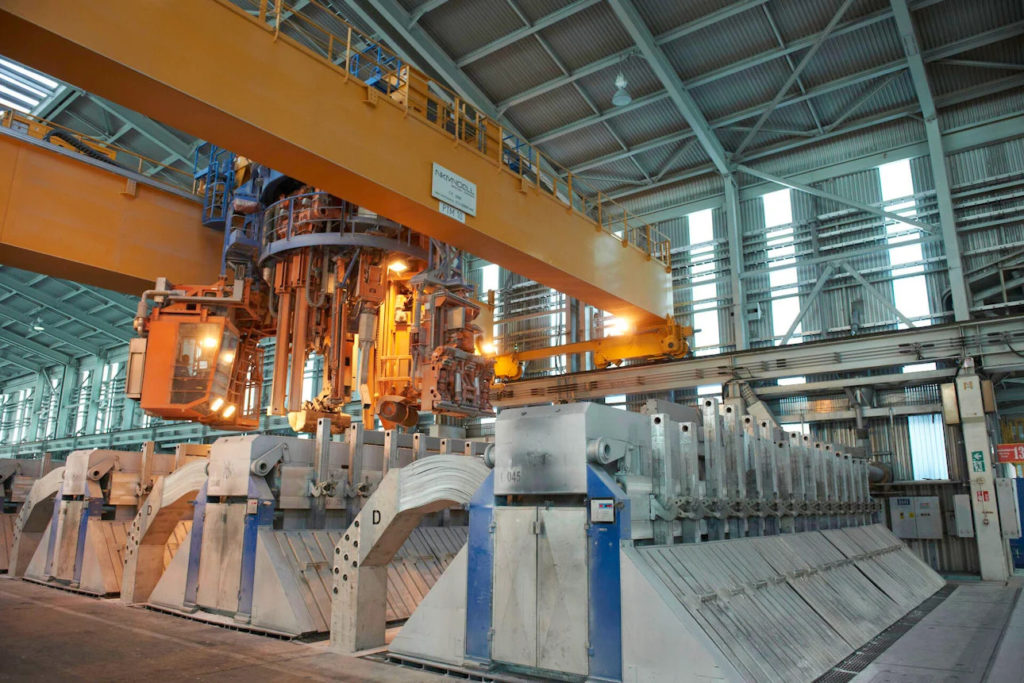
Potroom at the Qatalum aluminum smelter in Qatar. (Photo: Halvor Molland/Hydro)

Qatar Aluminum Manufacturing Co, known as Qamco, on Sunday confirmed partner Norsk Hydro’s role as marketing agent for their Qatalum aluminum joint venture had been terminated. It did not provide a reason.

“Following the termination, Qatalum will assume responsibility for the marketing and sale of its aluminum products on a provisional basis,” Qamco said in a statement, adding that it continued to engage constructively with Hydro to ensure an orderly transition.


Reuters reported on Friday that Qatalum had cancelled the commercial agreement under which the plant supplied metal to Hydro; Hydro issued a force majeure notice to customers.

Qamco does not expect any material adverse impact on financial or operational performance at 648,000-metric-ton-per-year Qatalum, which has only been operating at 60% of capacity since March after the outbreak of the Iran war.

Qamco said it was “investigating the circumstances” of the disclosure by Hydro, which it said was obliged to maintain confidentiality and coordinate on any public release of information.

Qatalum was founded in 2006 as a 50-50 joint venture between Hydro and state-owned Qatar Petroleum, now known as QatarEnergy; QatarEnergy holds 51% in Qamco.

(By Tom Daly; Editing by Tomasz Janowski)


BILLIONAIRE BUDDIES

Rinehart’s $1B SpaceX bet targets mining beyond Earth


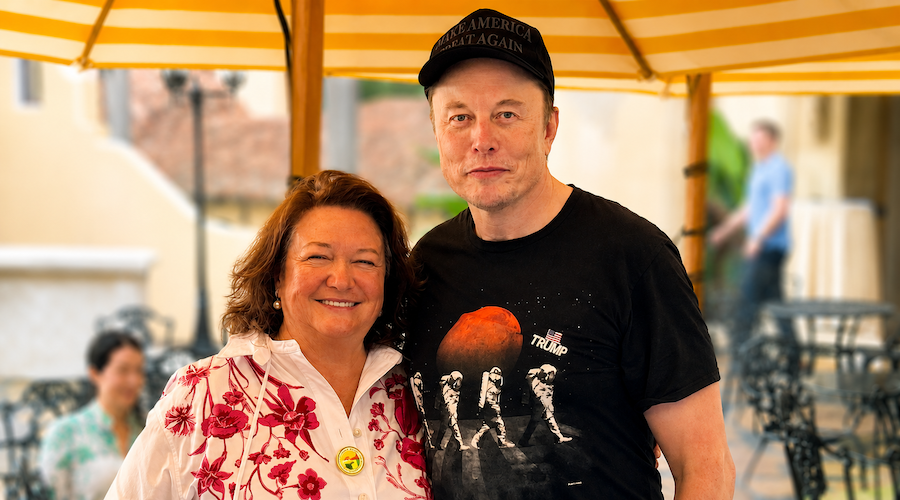
Gina Rinehart has backed Elon Musk with a massive investment in SpaceX. (Image: Hancock Prospecting.)

Australia’s richest person Gina Rinehart has taken a “significant stake” in Elon Musk’s SpaceX, betting that the world’s largest space company could become a major driver of demand for critical minerals and off-Earth infrastructure.

Hancock Prospecting said Monday it received an allocation of SpaceX shares in the company’s record-breaking initial public offering last week, though it did not disclose the size of the investment. 

The Australian Financial Review reported the stake is worth more than $1 billion. SpaceX, formally known as Space Exploration Technologies, raised $75 billion in the largest IPO on record and closed its first trading day up 19%.

“This is a significant investment for Hancock,” Rinehart said in the statement. SpaceX is “operating in sectors that are crucial and with long-term potential.”

The investment deepens ties between the mining and space sectors as governments and private companies increasingly explore how critical minerals, water and energy resources could support future activity beyond Earth.

Hancock has built one of the largest critical minerals portfolios outside China, including stakes in Lynas Rare Earths (ASX: LYC) and MP Materials (NYSE: MP), positioning the company to benefit if space development becomes a meaningful source of demand.

An investment exceeding $1 billion would rank among Rinehart’s largest holdings outside Hancock’s core iron ore operations in Western Australia. The billionaire has expanded aggressively into rare earths and other strategic minerals in recent years.

“We also see the possibility of mutually beneficial arrangements between SpaceX and Hancock Prospecting’s significant critical minerals investments,” Hancock CEO Garry Korte said in the statement. “We look forward to the potential of working with the SpaceX team on its exciting journey.”

Moon economics

Industry experts increasingly argue mining will need to expand into more challenging environments, from the Arctic and deep oceans to, eventually, the Moon and asteroids. NASA’s Artemis program aims to establish pilot processing facilities for lunar resources by 2032, initially focusing on water, energy and lunar soil before advancing toward metals and minerals.

Last week, NASA unveiled the crew of Artemis III and offered an optimistic update on the mission’s progress, but left unanswered a key question: whether the mission will be ready to launch next year. 


Much of Artemis III’s success depends on Musk’s SpaceX and Jeff Bezos’ Blue Origin, which are developing lunar landers designed to transport astronauts from lunar orbit to the Moon’s surface. Before that can happen, Artemis III must first demonstrate critical manoeuvres with versions of those spacecraft closer to Earth.

Lunar water is viewed as one of the most valuable resources because it can be separated into oxygen and hydrogen for life support and rocket fuel. That shifts the early economics of space mining away from metal production and toward building infrastructure for long-duration exploration missions.

Asteroids and lunar deposits are believed to contain nickel, iron and platinum-group metals, but extracting them remains a formidable challenge. Even as launch costs fall, operators would still need to identify targets, travel to them, extract material and either process it in space or return it to Earth economically.


Long road

Private companies are nevertheless advancing the sector. AstroForge recently raised $40 million for a mission designed to rendezvous with a metallic near-Earth asteroid, with future plans to extract and refine materials. The company also received the first commercial licence from the US Federal Communications Commission to operate in deep space, establishing an early regulatory precedent for private missions beyond Earth orbit.

The economics remain daunting. Using NASA’s OSIRIS-REx sample-return mission as a benchmark, analysts estimate iridium prices would need to rise roughly 140,000-fold for a comparable asteroid-mining venture to break even, highlighting how far the industry remains from commercial-scale returns.

The legal landscape is also unresolved. The Outer Space Treaty prohibits national sovereignty claims over celestial bodies, while ownership rights to extracted resources remain contested. China and Russia have not joined the US-led Artemis Accords, and the 1979 Moon Agreement lacks support from major space powers, leaving significant uncertainty over how future lunar and asteroid resources will be governed.


Mining’s next boom is off the map: Arctic ice, abyssal plains and asteroids


Image courtesy of OSIRIS-REx – NASA

Research firm BMI’s new Metals And Mining Megatrends To 2050: Navigating A New Era Of Technology, Geopolitics And Green Transformation argues that over the next quarter century, the mining industry will increasingly venture north of the 60th parallel, kilometres below the ocean surface and, eventually, beyond Earth’s orbit.

The pull towards the arctic, the seafloor and ultimately space has many drivers. Historic reserves are maturing, ore grades are declining and the energy transition and the trillion dollar data center build-out are creating supply bottlenecks from specialty materials like indium phosphide and samarium-cobalt through to everyday essentials like copper.

Robotics will be next decade’s metals chokepoint (look for a tipping point once humanoids start building humanoids) but physical AI and autonomy are already making it cheaper to operate and explore safely in harsh and high-cost environments.

AI and subsurface intelligence are helping miners deal with deeper deposits, lower grades and long development timelines, with one example showing how AI-supported geoscience can reduce uncertainty and improve permitting confidence.

Operational AI is also moving into plants and fleets, including Vale’s AI-powered processing plant in Minas Gerais, which lifted productivity by 25%, and autonomous drilling work between Sandvik and Rio Tinto.

Higher prices can also make difficult deposits look commercially viable and government support policies like on- near- and friend-shoring can push capital toward projects that previously looked too remote, too expensive or too risky – a $200 billion government war chest would do that.

The Arctic comes first

Of BMI’s three frontier themes, the Arctic is the closest to mainstream mining. Warming temperatures and changing ice conditions are opening seasonal access to parts of the region, while geopolitics is increasing the value of mineral deposits in Canada, the US, Greenland, Russia and Northern Europe.

Greenland is the clearest example. The island has urged the US and Europe to invest in its mining sector, warning that a lack of Western capital could leave it looking to China. The strategic case is obvious: Greenland’s mineral sector involves as many as 40 items on US and EU critical minerals lists, while China accounts for about 60% of global rare earth mine supply and nearly all rare earth refining.

But Greenland also shows why Arctic mining is difficult: deposits can be large, strategically important and still face long timelines because of remoteness, infrastructure gaps, permitting risk, local opposition and policy uncertainty.

Project momentum is building. Greenland approved the indirect transfer of the mining licence for Tanbreez after Critical Metals lifted its ownership to 92.5%, with the southern Greenland asset regarded as one of the largest undeveloped heavy rare earth deposits outside China. A preliminary economic assessment valued the project at about $3 billion, based on a 4.7-billion-tonne resource.

Critical Metals has also approved a $30 million program to accelerate Tanbreez, with first ore targeted for late 2028 or early 2029 and concentrate exports expected to follow in 2029. Offtake agreements already cover roughly three-quarters of expected rare earth concentrate output – an indication that many more Tanbreezes will be needed.

Greenland Resources secured a 30-year permit for the EU-backed Malmbjerg molybdenum project, which is expected to supply about 25% of the EU’s annual molybdenum demand over its first decade. Greenland Mines has also moved to buy the Sarfartoq rare earth project from Neo Performance Materials for $35 million.

Permitting is the Arctic’s first real test

Greenland’s Kvanefjeld rare earth project shows how quickly policy can change the investment case. Energy Transition Minerals has been told that Greenland intends not to renew the project’s exploration licence, a decision tied to the country’s 2021 Uranium Act, which effectively bans uranium prospecting, exploration and exploitation.

The move has put one of Greenland’s largest undeveloped critical minerals assets in doubt. The company has warned that Greenland’s actions amount to creeping expropriation as the dispute heads to court, while local opposition and shifting policy continue to cloud the project.

Canada’s North offers another warning. Nunavut has gold, diamonds, iron, cobalt and rare earth metals, and the territory now has more control over its resources after Canada formally gave Nunavut authority over its mineral reserves. But Nunavut covers 2.1 million sq. km, has a population of only about 40,000 and faces an almost complete lack of infrastructure, making operating costs exceptionally high.

The Mary River iron ore mine illustrates the approval risk. Baffinland’s proposed expansion suffered a major setback after the Nunavut Impact Review Board advised against the project on environmental grounds, citing potential effects on marine mammals, fish, caribou and Inuit culture. The review also followed community tensions, including a protest in which hunters from Arctic Bay and Pond Inlet blocked access to the mine over concerns about icebreaking and narwhals.

Infrastructure is another constraint. Canada’s remote Arctic diamond mines depend on seasonal ice roads, but milder winters are making those logistics less reliable. The Winter Road serving Ekati, Diavik and Gahcho Kué costs about C$25 million to operate for two months, and a shortened season could make exploration-stage projects harder to justify. The region’s infrastructure deficit is so large that the economics of new critical mineral mines can depend on whether roads, power and ports arrive first.

Alaska’s Ambler district shows the same tension in the US. Trilogy Metals’ Arctic copper-zinc project has been accepted into the FAST-41 permitting program, a step that could help streamline approvals for one of the highest-grade undeveloped polymetallic deposits in the US. But the 340-km Ambler access road remains highly contentious.

Federal permits for the road were blocked under the Biden administration, then reinstated under Trump. Opponents argue the route would cut through sensitive wilderness, cross rivers and streams, affect caribou migration and threaten subsistence lifestyles. Environmental groups and Indigenous communities continue to oppose the project, with the Sierra Club saying 89 Tribes and First Nations have formally opposed the road.

That is the Arctic problem in one sentence: the minerals are strategic, but the land is not empty. Faster permitting may help projects move, but it can also intensify legal challenges and protests. Canada’s broader push to accelerate resource approvals has already faced Indigenous and environmental opposition, with some groups threatening demonstrations and legal action over legislation designed to fast-track natural resource and infrastructure projects.

Deep-sea mining moves into the regulatory fight

Deep-sea mining is less advanced than Arctic mining, but it is moving quickly into the policy arena. BMI identifies three main resource types: polymetallic nodules at depths of roughly 4,000-6,500 metres, seafloor massive sulphides at 1,000-3,500 metres and cobalt-rich crusts at 800-3,000 metres.

The mineral appeal is clear. Polymetallic nodules contain manganese, nickel, copper, cobalt and trace minerals used in EV batteries, electronics and solar panels. President Trump signed an executive order aimed at boosting the deep-sea mining industry, with the administration seeking faster access to nickel, copper and other critical minerals in both US and international waters.

More than 1 billion tonnes of nodules are estimated to lie in US waters, and administration estimates put the potential economic impact at $300 billion over 10 years and 100,000 jobs. Overblown perhaps, but even a fraction of that will make a difference to meet future demand.

NOAA then moved to streamline deep-sea mining permitting under the Deep Seabed Hard Mineral Resources Act, consolidating parts of the process and shortening review timelines. That gives companies a US pathway that could move faster than the UN-backed International Seabed Authority, which is still negotiating rules for commercial extraction in areas beyond national jurisdiction.

The Metals Company is the most visible test case. The company is advancing plans for a US-based polymetallic nodule processing hub at the Port of Brownsville in Texas, with proposed capacity of 12 million tonnes per year. It has also signed a commercial agreement with Allseas to develop and operate what the companies describe as the world’s first commercial deep-sea nodule recovery system, targeting initial offshore recovery operations by late 2027.

Other entrants are moving as well. Deep Sea Minerals’ application under the US Deep Seabed Hard Mineral Resources Act has been deemed compliant by NOAA, putting the company into the federal review process for polymetallic nodule exploration and potential recovery across a proposed 150,000 sq. km Pacific concession.

The seabed rulebook is still unfinished

The richest international seabed areas sit beyond national jurisdiction. Under the UN Convention on the Law of the Sea, the deep seabed is treated as the common heritage of humankind, with the International Seabed Authority (ISA) responsible for regulating mineral activity there. The US has not ratified UNCLOS, and its move to permit seabed mining under domestic law has created a direct governance conflict.

That conflict is now central to the sector’s future. Trump’s seabed push has collided with the ISA framework, with critics warning that unilateral licensing in international waters could undermine multilateral ocean governance. The dispute is already visible in the clash between US permitting efforts and the UN ocean treaty framework.

The ISA also has unresolved internal problems. Legal experts argue that the authority cannot lawfully approve deep-seabed mining without benefit-sharing rules, because UNCLOS requires financial and economic benefits from mining beyond national jurisdiction to be shared equitably. That leaves seabed mining caught between pressure to commercialize and the still-unresolved question of who benefits from minerals taken from the global commons.

Environmental opposition is growing. Governments are weighing commercial mining against a global moratorium while the ISA negotiates a mining code, and about 40 countries support some form of moratorium or precautionary pause. The debate has reached a critical point as policymakers weigh whether the deep ocean should remain protected while science and regulations catch up.

The High Seas Treaty adds another layer. The agreement, formally known as the Biodiversity Beyond National Jurisdiction treaty, allows the creation of conservation zones in international waters and requires governments to cooperate with bodies such as the ISA. The treaty does not mention mining directly, but it is expected to increase scrutiny of seabed extraction and tighten the squeeze on deep-sea miners.

Norway shows how fast the politics can turn. The country became the first to open its waters to commercial deep-sea mining exploration, covering about 280,000 sq. km of Arctic seabed, but later paused its Arctic seabed mining plans after political pressure. WWF-Norway also sued the government, arguing that the opening decision failed to properly assess environmental consequences and breached national law. The lawsuit underlines how environmental groups are turning to courts to slow seabed mining.

The science remains a major hurdle. A deep-sea mining trial at 4,280 metres, using baseline data from 3,000 tonnes of polymetallic nodules, found that macrofaunal animal density fell 37% and species richness declined 32% within mining tracks over the study period. The findings added weight to concerns that commercial-scale seabed disturbance could have significant ecosystem impacts.

The industry can point to technical milestones. TMC and SGS produced the world’s first nickel sulphate from seafloor polymetallic nodules, a step toward battery-grade processing. But a successful flowsheet is not the same as a permitted, financed and socially accepted mining industry. Deep-sea mining still has to prove that it can operate commercially without triggering unacceptable ecological or legal costs.

Space remains the long-dated frontier

Lunar and asteroid deposits are thought to contain nickel, iron and platinum group metals. The challenge is that space is not remote in the ordinary mining sense. It is remote in a way that makes every kilogram, every manoeuvre and every failed component expensive.

Falling launch costs help (that SpaceX is the biggest IPO in history is not just luck), but they do not solve the whole problem. A commercial space-mining operation would still need to identify a target, reach it, dock or land, extract material, process or concentrate it, and either use it in space or return it to Earth. That is a very different business from putting satellites into low Earth orbit.

Private companies are still pushing ahead. AstroForge raised $40 million for a third mission planned as a ride-along on Intuitive Machines’ IM-3 moon mission, part of its plan to harvest precious metals from asteroids. Its Vestri probe is designed to dock with a metallic near-earth asteroid, while a later mission would attempt extraction, refining and return. The company’s roadmap shows how asteroid mining is moving from concept to early mission architecture.

AstroForge also received the first-ever FCC commercial license to operate in deep space, a precedent for private missions beyond earth orbit. The licence covered the company’s Odin mission and communications with ground partners, marking an important regulatory step for commercial activity outside the earth-moon system.

The Moon may become the first practical testing ground. NASA is looking to operate a pilot processing plant for lunar resources by 2032 under Artemis, beginning with energy, water and lunar soil before later moving toward minerals and metals. The first customers may not be metal buyers, but space operators seeking water, oxygen or fuel.

Lunar water is central to that logic. Ice trapped in regolith can be split into oxygen and hydrogen, supporting human presence and providing rocket propellant for deeper-space missions. That makes mining lunar water less of a metal-supply story and more of an infrastructure story for long-term space exploration.

Returning metals to earth remains a much harder commercial case. Using NASA’s OSIRIS-REx asteroid sample-return mission as a rough benchmark, iridium would need to rise roughly 140,000-fold for an asteroid-mining venture to break even. That does not rule out progress over several decades, but it shows why near-term asteroid mining economics remain extremely challenging.

The legal framework is also incomplete. The Outer Space Treaty bars sovereignty claims over the Moon and other celestial bodies, while private resource rights remain contested. The 1979 Moon Agreement has not been ratified by any major space power, and China and Russia have not joined the US-led Artemis Accords. That leaves major powers eyeing lunar resources in a legal environment full of gaps.

High risk, low carbon

AI-driven integration will matter because frontier projects need better exploration targeting, remote monitoring, autonomous systems, predictive maintenance and digital permitting evidence. Onshoring and supply chain diversification will matter because governments may be willing to support expensive projects if they reduce reliance on China or other concentrated suppliers.

Future-facing commodities will matter because copper, nickel, cobalt, manganese and rare earths are the metals most likely to justify frontier risk. Low-carbon mining will matter because Arctic diesel dependence, seabed ecosystem disturbance and space launch emissions will all be judged against tighter environmental standards.

China’s dominance is the strategic backdrop. The IEA sees limited progress in critical mineral supply diversification, with China leading the refining of 19 of 20 energy-related strategic minerals covered in its outlook and a potential 30% copper supply shortfall by 2035 under the current project pipeline. That explains why governments are backing new supply routes, including policy action to reduce critical mineral concentration and EU-US coordination on critical minerals supply chains.

Low-carbon operations will be part of the same competition. Fortescue’s Pilbara green grid, including solar, wind and battery storage, shows how major miners are starting to treat power systems as strategic infrastructure rather than a side issue.

The company expects to complete a system with 1.2 GW of solar, more than 600 MW of wind and 4-5 GWh of battery storage, highlighting how renewable power and storage can reduce exposure to diesel supply shocks. Frontier mines will face even greater pressure to solve that problem early.

Winners and losers

BMI’s likely winners are well-capitalized miners, first movers with strategic licences, advanced operators with data depth and specialist technology providers that can supply autonomous equipment, remote systems, subsea vehicles, vessels, sensors and low-carbon power solutions.

The likely losers are capital-constrained miners, companies tied to legacy portfolios with limited exposure to critical minerals, high-cost operators that cannot improve efficiency, and developers that underestimate permitting, Indigenous rights, environmental opposition or international law.