Thursday, July 02, 2026

CMA CGM deploys world's largest LNG-powered container ship on Asia-Europe route
CMA CGM Notre Dame
Copyright Doloresz Katanich/Euronews

By Doloresz Katanich
Published on

Europe is investing in ever larger, cleaner container ships at a time when maritime sovereignty and supply-chain resilience have become strategic priorities.

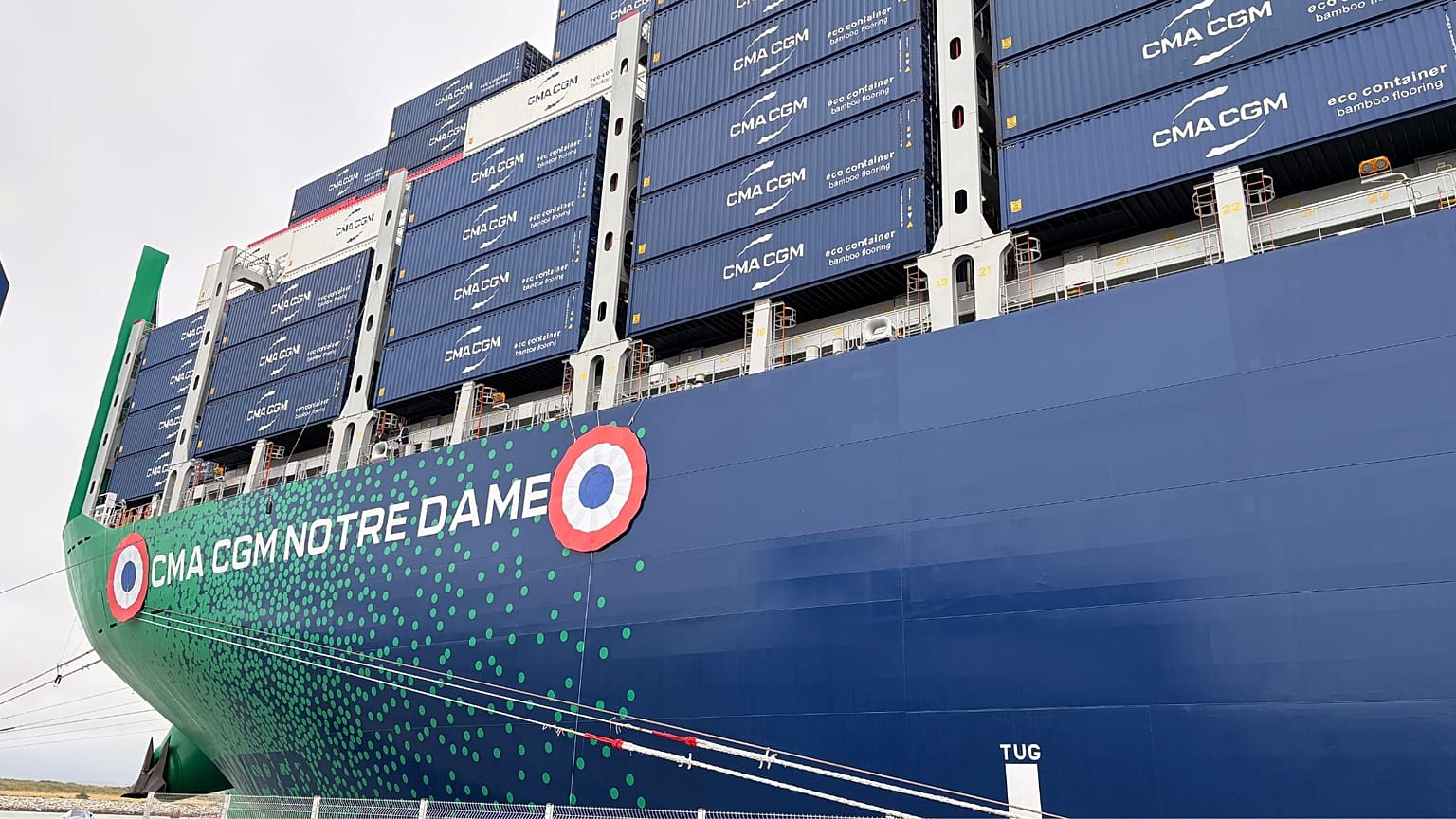
Europe's strategic push to strengthen maritime trade received a boost on Thursday as French shipping group CMA CGM inaugurated the CMA CGM Notre Dame, the world's largest LNG-powered container ship and the first of a new fleet that will operate on the company's flagship Asia-Europe trade route.

Stretching almost 400 metres—roughly the length of four football pitches—the CMA CGM Notre Dame dominates the quayside in Le Havre. Towering stacks of containers rise above the deck, carrying everything from trainers to cars as the vessel prepares to enter service on one of the world's busiest trade routes.

The vessel measures, which is more than 62 metres wide and can carry up to 24,000 containers, is powered by liquefied natural gas (LNG) and is the world's largest container ship using the fuel.

After its inaugural stop in Le Havre, the vessel is due to leave for Asia on Monday. It will call at Rotterdam, Hamburg, Antwerp, Tanger Med, Port Klang, Singapore, Yantian, Shanghai and Ningbo before returning to Europe, completing the round trip in just over 100 days.

On the voyage to Asia, it carries chemicals, food products, wine and spirits, pharmaceuticals, industrial machinery and luxury goods. On the return journey to Europe, it transports electronics, clothing, household appliances and a wide range of consumer goods. Depending on the cargo mix, the value of the goods on board can reach €2.5 billion to €3 billion.

The CMA CGM Notre Dame is the first of ten ultra-large container ships to sail under the French flag, with the remaining sister vessels scheduled for delivery between 2026 and January 2028.

CMA CGM says expanding capacity on the Asia-Europe route is essential to Europe's economic competitiveness, arguing that recent geopolitical crises have exposed vulnerabilities in global trade.

"There is a real risk that freedom of navigation could be challenged in other major global straits that underpin international trade—and for France, whose prosperity relies heavily on international exchange, this is a matter of competitiveness," CMA CGM Chairman and CEO Rodolphe SaadĂ© said during the inauguration.

Technology on board

Compared with conventional heavy fuel oil, LNG produces around 20–25% fewer carbon dioxide emissions, almost eliminates sulphur oxide emissions, reduces nitrogen oxide emissions by up to 85% and cuts particulate matter by around 95%.

However, LNG is not without controversy. It can produce so-called methane slip, where unburned methane escapes into the atmosphere, potentially offsetting part of its climate benefit.

The vessel's 80,000-horsepower engine has also been designed to operate on bio-LNG and synthetic e-LNG once those fuels become commercially viable.

According to Saadé, the ship features one of the "most efficient natural gas propulsion systems available, supporting our ambition to achieve carbon neutrality by 2050."

CMA CGM has committed to reaching net-zero carbon emissions by 2050, as the shipping industry comes under increasing pressure to decarbonise.
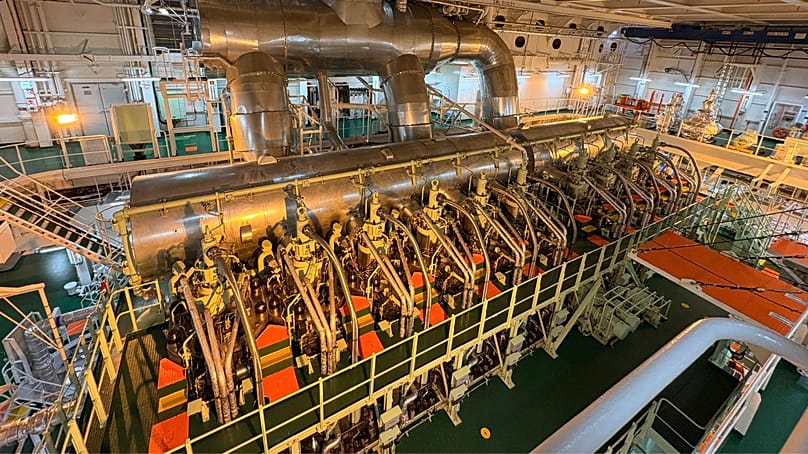
Engine of the CMA CGM NOtre Dame
Engine of the CMA CGM NOtre Dame Doloresz Katanich/Euronews

For ships calling at EU ports, including the CMA CGM Notre Dame, the EU's FuelEU Maritime regulation sets progressively stricter limits on the greenhouse-gas intensity of the energy used on board, to reduce it by 80% by 2050.

The vessel also makes extensive use of artificial intelligence, allowing real-time navigation adjustments, optimised energy consumption and improved environmental performance.

Across its fleet, CMA CGM says AI helps save around 600,000 tonnes of CO2 every year by creating digital twins of the vessel, simulating entire routes and selecting the most fuel-efficient options.

Shipping has become a strategic issue for Europe

Recent geopolitical crises, including the Iran war, have served as a reminder that around 80% of global trade by volume travels by sea. When shipping routes are disrupted, supply chains seize up, industries slow down, inflation rises and jobs come under pressure.

In March 2026, the European Union adopted two strategies aimed at strengthening a sector considered vital to the bloc's trade, economic growth, security and defence: the EU Ports Strategy and the Industrial Maritime Strategy. Together, they seek to reinforce strategic ports as energy, logistics and security hubs, strengthen supply-chain resilience, support the energy transition and digitalisation, and boost Europe's shipbuilding and maritime technology industries.

"If global trade has a backbone, it is maritime transport. Europe's ports handle around 75% of the EU's external trade, and the European maritime economy supports around 4.5 million jobs," European Commissioner for Sustainable Transport and Tourism Apostolos Tzitzikostas said during a keynote speech at the Transforming Transportation 2026 conference organised by the World Bank.

Although the CMA CGM Notre Dame was built in China using the French company's expertise, it sails under the French flag, a decision the company sees as reinforcing France's maritime tradition.

The inauguration was attended by France's First Lady, Brigitte Macron, alongside the vessel's godmother, Delphine Arnault, LVMH billionaire Bernard Arnault's daughter, the chief executive officer of Christian Dior Couture.

Arnaultpraised CMA CGM's decision "to sail this ship under the French flag. In an increasingly competitive international landscape, this decision reflects a strong conviction: that France must continue to rank among the world's great maritime powers."


CMA CGM Grows North American Logistics Buying FedEx Supply Chain for $1.4B
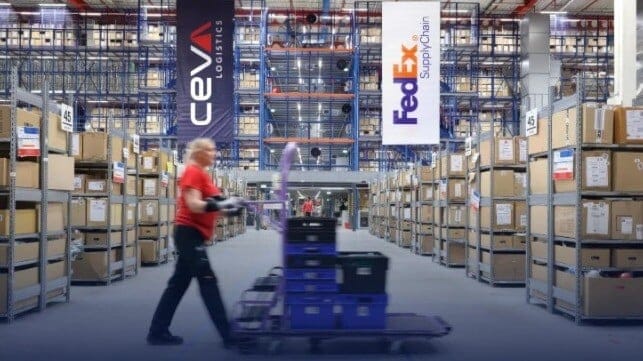
supply chain warehouse
CMA CGM will acquire FedEx Supply Chain to grow CEVA's North American logistics operations (CEVA)

Published Jul 1, 2026 4:57 PM by The Maritime Executive


CMA CGM, like other major shipping carriers, is continuing its efforts to transform its business into an integrated shipping and logistics operation. On July 1, it announced it had an agreement to acquire FedEx Supply Chain, a subsidiary of FedEx Corp.  

Valued at $1.4 billion enterprise value, the acquisition will nearly triple the size of the North American contract logistics operations of CMA CGM’s subsidiary CEVA Logistics. By integrating FedEx Supply Chain, CEVA Logistics will become a leading contract logistics provider in North America. It will have approximately 150 warehouses and a combined workforce of 20,000 people. 

Currently, CEVA Logistics is one of the top five global players, operating 1,000 warehouses. It handled 15 million shipments in 2025. The company was acquired by CMA CGM in 2019 and was assembled through acquisitions.

“We are strengthening our ability to provide customers with integrated supply chain solutions,” said Rodolphe Saade, Chairman and Chief Executive of the CMA CGM Group. “These deals also reinforce our long-term commitment to investing in the United States and supporting the resilience and efficiency of its supply chain.”

The acquisition will accelerate CMA CGM’s strategy to provide comprehensive end-to-end logistics solutions. It also expects to enter into multi-year commercial agreements related to air and ocean freight. CMA CGM will become a preferred ocean carrier for FedEx. The companies will also work together on select air cargo capacity solutions.

FedEx stated that the sale aligns with its strategy to focus on high-value verticals. It said it is streamlining its portfolio to better position the business. The sale of the logistics business follows the spin-off of FedEx Freight, completed last month.

The sale of FedEx Supply Chain is expected to close in 2026. The air cargo and ocean freight agreements are expected to be phased in between now and 2028.

CMA CGM has been working to expand its logistics and terminals businesses, growing CEVA. Additionally, Saade had promised Donald Trump during an Oval Office meeting in 2025 to invest $20 billion in the United States over a four-year period.

 

Gunsan Shipyard to Restart Shipbuilding After Nine Years

South Korean shipbuilder
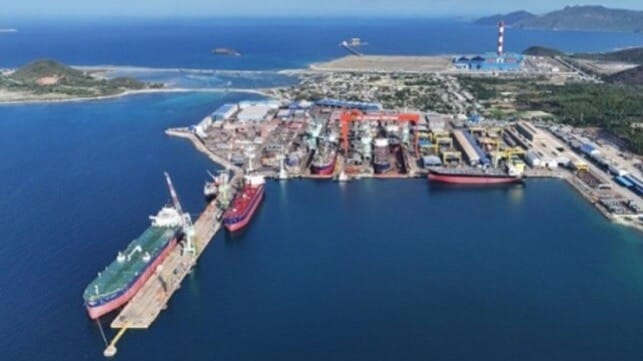
The large yard looks to resume building ships after a nine year hiatus (file photo)

Published Jun 29, 2026 5:10 PM by The Maritime Executive


Plans to fully relaunch the long-dormant Gunsan Shipyard in South Korea got a boost as the company signed a letter of intent to build its first ships in nine years. The contract was announced concurrently with the closing of the acquisition of the yard by an investment group from HD Hyundai.

The yard had fallen victim to a downturn in the shipbuilding industry nearly a decade ago and never achieved its full potential as an expansion for Hyundai’s shipbuilding operations. The company opened the yard in 2010 to increase capacity and used the yard until 2017, when it suspended the operation, citing the lack of orders. Partial work was resumed at the yard after five years, but it was only being used to build blocks for the main HD Hyundai shipyards.

As part of the reorganization of Hyundai’s shipbuilding operations that also saw it combine its Ulsan and Mipo yards, the company also reported in March that it had agreed to sell the Gunsan yard. The closing of the sale came on June 26 with the launch of a new company, J Ocean Heavy Industries. The company’s largest investor is Echo Prime Marine Pacific, which in turn is part of Dongbu Engineering & Construction. The companies are also investors in HJ Heavy Industries, which is also a partial owner of the new company.

The letter of intent calls for the construction of four 114,000-ton crude oil and petroleum product tankers. They identify the shipowner only as a company in Oceania.

The plan is to operate J Ocean alongside HJ Shipbuilding to provide a large increase in total capacity. HJ is a mid-sized yard that also undertakes repair work but is constrained on the size of vessels. The Gunsan yard has an approximately 700-meter (approximately 2,300-foot) dock and was designed to build 10 to 12 ships a year, including ultra-large vessels.

Under the terms with HD Hyundai, it will continue to build blocks for the company for up to three years. Hyundai is also providing technical support to the yard.

The new owners admit the yard comes with no backlog, which they are presenting as an opportunity for shipowners. While most yards have long waits for building slots, Gunsan has immediate capacity, providing quicker turnaround for orders.

Echo Parime Marine Pacific reports it has already had multiple inquiries for shipbuilders looking for fast delivery. It also comes as the United States continues to expand operations with South Korea. HJ is one of the yards certified to bid for US Navy auxiliary repair and maintenance contracts. It is currently conducting work on the USNS Amelia Earhart, a U.S. Military Sealift Command dry cargo and ammunition ship, and reports that it expects additional contracts to be put up for tender in the coming months.


China Deploys First 16MW Floating Offshore Wind Tension-Leg Platform

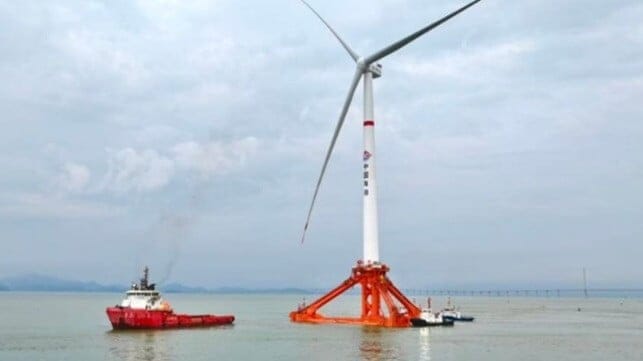
China floating wind platform and 16 MW turbine
China deployed its first 16 MW turbine on a floating tension-leg wind platform (state media)

Published Jun 30, 2026 5:38 PM by The Maritime Executive


China continues its developments, placing it at the forefront of the offshore wind energy sector. In the latest development, officials reported deploying the largest tension-leg floating offshore wind platform designed to hold a 16 MW turbine.

The platform was assembled at the Gaolan Port in Zhuhai, south China, and departed on June 28 for its deployment in the South China Sea. The structure stands more than 307 meters (1,007 feet) and weighs almost 8,000 tonnes. It is the largest of its kind, designed to support a single turbine. Once it is operational, it will generate around 54 million kWh annually. 

Officials said the deployment is part of China’s accelerated efforts to scale up and commercialize deep-sea floating offshore wind technology. The industry has already conducted several demonstrations, and it is ready to move forward with commercial deployments.

The deployment is also unique as the single turbine will be positioned near the Lufeng oilfield cluster. It is located approximately 250 km (155 miles) southeast of Hong Kong in the South China Sea. It is in an area with a water depth of 330 meters (1,082 feet), and it is prone to tropical cyclones.

The turbine will be providing power to the power grid for the oil field through subsea cables attached to the grid. Norway in 2022 launched a similar application on a smaller scale with an 11-turbine wind farm, Hywind Tampen, which uses 8.6 MW turbines supplying electricity to Equinor’s oil and gas fields Snorre and Gullfaks in the Norwegian North Sea. This will be China’s first installation where it is integrating renewable energy into oil and gas operations.

Chinese officials highlighted that they continue to lead the industry, having, as of May, surpassed a total installed wind power generation capacity of 660 million kilowatts. It is up more than 17 percent year-over-year.  The offshore component has reached 47 GW, giving China 78 percent of the newly added offshore wind generation capacity. It currently has more than half the global market in offshore wind power, and plans call for adding as much as 63 GW of additional offshore power generation capacity.


Duke Energy to Sell Back its North Carolina Offshore Wind Area Lease

offshore wind farm
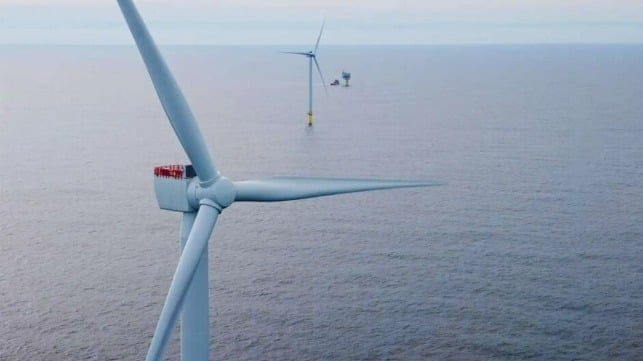
Trump administration has committed to returning $2.7 billion to buy back offshore wind leases (file photo)

Published Jun 29, 2026 3:43 PM by The Maritime Executive

Duke Energy is joining the growing list of companies selling back their offshore wind energy leases to the Trump administration. The company has agreed voluntarily to terminate an area on the North Carolina coast.

Under the terms of the agreement announced today by the Department of the Interior, Duke Energy will be partially reimbursed for its offshore wind lease, which was in a very early stage of development. The company has agreed to redeploy the funds from its Carolina Long Bay wind farm project to additional generating capacity that will serve customers in the Carolinas.

Duke had won the lease as one of two awarded as part of an Atlantic Outer Continental Shelf auction in May 2022, with the other going to TotalEnergies. The Department of the Interior reports the lease is valued at $129 million for the site, which is east of Wilmington, North Carolina. The company had said in 2022 that the area could support up to 1.6 gigawatts of potential offshore wind energy, and projected a timeline for operations between 2030 and 2032.

“Under the agreement, Duke Energy will reinvest nearly $129 million in additional generating capacity, which may include advancing new nuclear and natural gas generation, and grid enhancements to strengthen reliability, support continued growth in the Carolinas, and keep costs as low as possible,” said Kodwo Ghartey-Tagoe, Executive Vice President and Chief Executive Officer of Duke Energy Carolinas.

Unlike the deal with TotalEnergies for the other North Carolina lease and the deals for the leases in California and the northeast, Duke is not required to focus on fossil fuel energy and has to use the funds to benefit the Carolinas. California has been critical of the Trump administration's deals to buy back two of its offshore wind leases, as it notes the companies can redirect the investments to other parts of the country.

California has filed a lawsuit against one of the deals that the administration made to buy back an offshore lease and has begun challenging a second lease buyback deal. A coalition of New England states has also filed a suit challenging the administration’s buyback of TotalEnergies leases.

Today’s deal leaves North Carolina with just one proposed wind area, Kitty Hawk, which is split into two projects. The North site was acquired in 2024 by Dominion Energy from Avangrid and renamed Coastal Virginia Offshore Wind South. It is located approximately 40 miles offshore from North Carolina’s Outer Banks but adjacent to Dominion Energy’s under-construction project off Virginia Beach. Avangrid retained the rights to the southern portion of the lease. Combined, the total lease area has the capacity for up to 2.6 GW.

After losing battles in the courts, the Trump administration started this strategy of buying back the leases. In the middle of June, it announced a deal with Invenergy for four offshore wind leases located in the New York Bight, the Central Coast of California, and the Gulf of Maine, totaling $765 million. In April, a deal was struck with a division of BlackRock to buy back a lease off the New Jersey coast for $765 million and a California offshore wind lease from Ocean Winds for $120 million. The first deal was with TotalEnergies for $928 million for its Carolina Long Bays lease, as well as another off the coast of New Jersey.

The Trump administration has committed to returning $2.7 billion for the offshore wind leases. All the projects were in the earlier developmental stages.


STAX Engineering Gets Bain Capital Financing to Scale Emissions Capture

emission capture barge alongside in-service vessel

Published Jun 30, 2026 6:21 PM by The Maritime Executive

[By STAX Engineering]

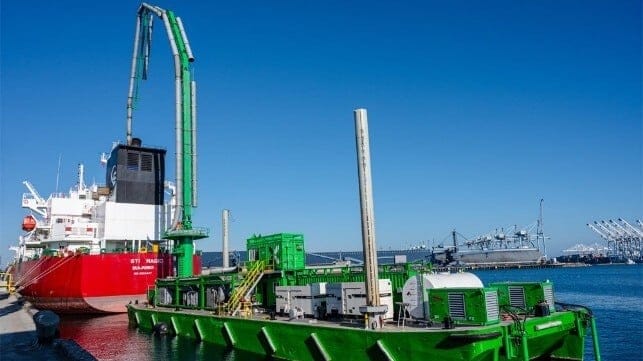
STAX Engineering, a pioneer in maritime emissions capture and control,  today announced a $150 million financing commitment from Bain Capital’s Private Capital Group to fund contracted builds through 2027 and accelerate deployment of its technology to ensure tanker operators have access to service capacity ahead of the January 1, 2027 tanker compliance deadline under the California Air Resources Board’s (CARB) At-Berth Regulation. The financing underscores growing demand for proven emissions-control solutions that can be deployed without operational interruption, building on STAX’s experience with tankers in Southern California since early 2025.

That demand is already materializing in Northern California. STAX’s newest agreement with IMTT will support emissions capture and control services at its Richmond terminal, a bulk liquid storage and logistics facility serving the Bay Area’s maritime energy and industrial supply chain. Together with STAX’s recent agreement with TransMontaigne covering its Richmond and Martinez facilities, the exclusive agreements expand STAX’s Northern California tanker footprint and are expected to support more than 6,400 at-berth service hours through 2031. The agreements reflect growing adoption as terminals move from compliance planning to signed contracts.

“We’re seeing strong momentum from tanker operators who are adopting emissions capture and control as their path to compliance,” said Mike Walker, CEO of STAX Engineering. “With over 2,700 completed vessel calls, STAX is already operating at scale and is the market leader in tanker emissions capture. With this financing, we can build the capacity needed to serve our Northern California tanker customers and continue scaling a solution that works.”

Bain Capital is serving as the sole financing partner on the transaction, which refinances STAX’s existing debt and provides new capital investment to complete contracted builds through 2027. Bain Capital’s backing brings STAX institutional support and deep growth-stage expertise as it moves toward broader infrastructure deployment across California’s ports, and provides near-term capital certainty while maintaining flexibility to scale funding as needs grow.

“We have been impressed by Mike and his team’s execution capabilities, the strength of STAX’s customer relationships, and the role its technology can play as ports and vessel operators invest in cleaner at-berth operations,” said David Healey, a managing director at Bain Capital. “STAX has demonstrated strong traction in a market facing increased complexity and we are pleased to support the company in this next phase of growth.”

With operations in the Ports of Benicia and Oakland since 2024, STAX is deepening its Bay Area presence through the new IMTT agreement at the Port of Richmond. The expansion positions STAX to serve a critical tanker corridor and establish a regional hub for emissions capture and control services in Northern California. The broader Carquinez Strait corridor accounts for roughly 400 tanker vessel visits and more than 9,600 at-berth hours annually, highlighting the need for emissions-reduction infrastructure that can work within existing port and terminal operations.

“As IMTT continues to invest and grow its renewable fuels portfolio, leveraging technology to control emissions will remain an essential element of our construction and operating strategies,” IMTT Vice President of Environmental, Health, Safety and Security Traci Johnson said. “Our agreement with STAX gives us added confidence that we can continue to grow and thrive in the energy transition and seamlessly meet California’s evolving compliance standards.”

While shore power supports many vessel types, tankers present a more complex challenge: sensitive cargo, non-standardized connection points, and explosion-proof electrical requirements can make plugging in difficult or impossible. STAX’s barge-based system was built for these operational realities, providing a path to emissions capture without vessel modifications, berth-specific infrastructure, or disruption to cargo operations. After beginning tanker service testing in early 2025, STAX received CARB’s tanker Executive Order in August 2025, making it the first emissions capture and control fleet authorized to service all three major vessel types in California: container ships, auto carriers, and tankers.

STAX already supports tanker operations in Southern California at the Ports of Long Beach and Los Angeles through agreements with customers including Olympus Terminals and Shell. By connecting directly to exhaust stacks from the water, STAX captures up to 99% of harmful emissions while allowing vessels to continue normal operations at berth.
 

The products and services herein described in this press release are not endorsed by The Maritime Executive.


Everllence Expands Training Center in Augsburg

Everllence
PrimeServ Academy nearly doubles space for hands-on training and new technologies

Published Jul 1, 2026 10:52 PM by The Maritime Executive

[By: Everllence]

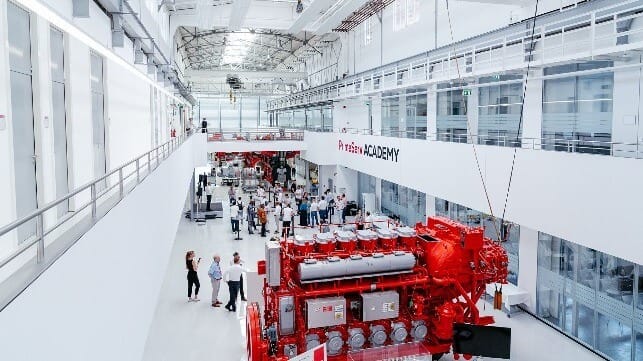
Everllence has unveiled the comprehensive expansion of the PrimeServ Academy at its Augsburg site. By increasing floor space from around 1,700 to approximately 3,000 square meters, the company is responding to the growing demand for training driven by new technological developments. The official opening took place as part of the Technology Fair, an annual customer event that Everllence recently held for the sixth occasion and that had 50 participants.

Uwe Lauber – CEO of Everllence – said: “With the expansion of this PrimeServ Academy, we are investing 6.5 million euros in the future of the site and strengthening Augsburg as a key training center for our customers and employees from the global, PrimeServ after-sales organization.”

Holger Gehring - Head of PrimeServ Academy Augsburg – said: “The extended PrimeServ Academy now also places a special focus on our expanded engine portfolio, which is increasingly shifting toward climate-neutral fuels such as green methanol and methane. New fuels bring new challenges for our customers. We support them, not just with our future-oriented technologies but also by working closely with them throughout our engines’ entire lifecycles with tailored training.”

Training center grows with demand
The PrimeServ Academy in Augsburg is the company’s hub for training on large, medium-speed engines and turbochargers and, in recent years, an average of around 1,500 people annually have participated in training there. Participants are evenly split between customers and employees from Everllence’s global, after-sales organization.

Demand for training has increased significantly in recent years, driven in part by technological developments in engines, automation and injection systems, and turbochargers, as well as by the growing use of climate-neutral fuels. At the same time, there continues to be strong demand for hands-on courses for older installations. As part of the expansion, a larger workshop, four additional training rooms and a dedicated area for online formats were added to existing facilities. This enables Everllence to offer training on new and future technologies while significantly increasing capacity for existing ones.

As part of the expansion, another building directly adjacent to the PrimeServ Academy and dating from 1888 was fully renovated and converted into a training center over the course of around one-and-a-half years. Everllence is thus continuing to invest in the Augsburg site and extending its activities within service and training.

The products and services herein described in this press release are not endorsed by The Maritime Executive.


Indian Coast Guard Aids Vessel Along the Coast that was Taking on Water

cargo ship flooding
Cargo ship reported flooding in multiple compartments (Indian Coast Guard)

Published Jun 29, 2026 4:02 PM by The Maritime Executive


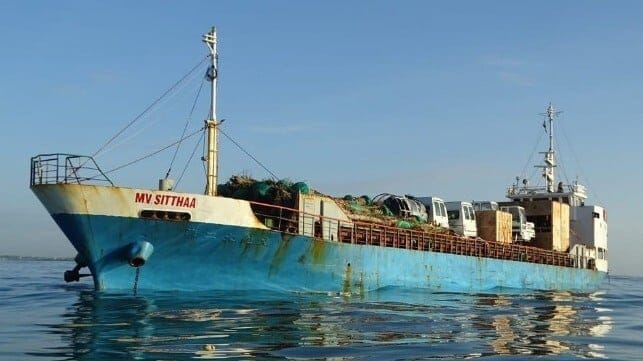
[Brief]  A small cargo ship operating along the Indian Coast reported on Saturday that it was taking on water in multiple compartments. The Indian Coast Guard dispatched its vessel Atulya to aid in getting the vessel stable and ultimately taking it to the port of Tiruchendur.

The cargo ship Sitthaa (649 dwt) was built in 1996 and is registered in Comoros. According to the Coast Guard, the vessel was taking on water in multiple locations. A specialized team boarded the vessel and coordinated with salvage experts. The situation and intake of water were monitored while emergency repairs and dewatering were underway. They were able to bring the flooding under control.


Records indicate that the vessel had been reported for multiple issues in 2025. A port state inspection identified 14 deficiencies, prompting a detention. Hull damage was identified that the inspection said was impairing the vessel’s seaworthiness. In addition, they identified issues with sewage treatment, fire detection, certificates, and labor.

After the situation was stabilized, the vessel was taken to the port of Tiruchendur. It will receive a survey and additional repairs.

The Coast Guard notes it is the latest in a series of challenging calls it has responded to recently.

OSHA Fines Terminal Operator $82,000 for Million-Gallon Acid Spill

Small subcontractor handed an additional $3 million fine

Cash

Published Jun 30, 2026 7:22 PM by The Maritime Executive

The U.S. Department of Labor has issued a combined $3.5 million in fines to the companies responsible for a sulfuric acid spill on the Houston Ship Channel last year. 

The spill occurred at the BWC Jacinto site in Channelview, one of 22 facilities that privately-held BWC Terminals operates around the U.S. The agency alleged that an unsafe chemical mixture caused the spill, some of which entered the shipping channel. "OSHA found that despite safety warnings, BWC Terminals mixed fresh and spent sulfuric acid, triggering a tank overpressure that ruptured a supply line releasing one million gallons of sulfuric acid resulting in multiple employee injuries," the agency alleged in a statement. 

For the cleanup, BWC hired Coastal Environmental Solutions and its subcontractor One Way Environmental Services, which supplied the labor for the post-casualty remediation effort. The overwhelming bulk of the fine ($3 million) was levied on One Way Environmental, a small local firm.

The subcontractor has a limited public presence. Its mailing address in the OSHA complaint appears to be an auto repair shop in South Park, a low-income, majority-minority neighborhood on the south side of Houston. 

One Way's ability to pay a multimillion-dollar fine is unclear. Its financial standing has been questioned by some of its workers, who told local Click2Houston in February that some of their handwritten paychecks bounced and that they had not been paid on time.

A group of One Way laborers gathered outside the house of the firm's owner February 4 to complain, causing enough of a disturbance that the police were called. The owner told the news outlet that a banking issue was responsible for the nonpayment of wages, with some workers claiming unpaid amounts of about $4,000 per person. The wages were paid in several days' time. 

OSHA alleges that during the process of the acid cleanup, One Way committed 18 willful, egregious violations of safety regulations, plus five serious violations. The agency claims that One Way didn't provide its laborers with the right training, safety measures or respirator fit tests before sending them to clean up a sulfuric acid spill.

BWC and Coastal received other penalties. OSHA alleges that BWC exposed its workers to chemical burns, did not provide hazmat training, and had deficiencies related to respirator use. The agency proposed a fine of about $82,000 as a penalty for the terminal operator's million-gallon release.


Report: Hibernia Platform Spill Could Have Caused Serious Casualty

Hibernia
Hibernia platform (press handout / Hibernia Management and Development Company Ltd.)

Published Jun 29, 2026 7:20 PM by The Maritime Executive


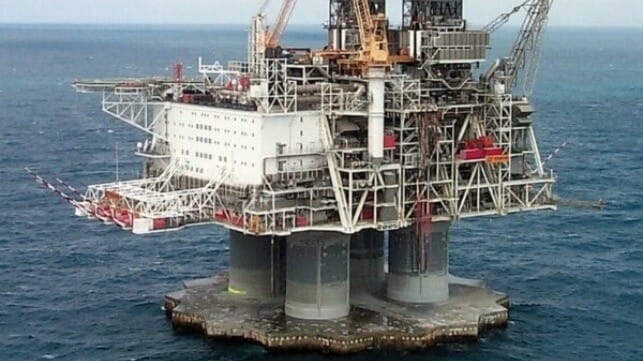
Offshore regulators say that a recent spill aboard the Hibernia oil platform off Canada's eastern shores caused no pollution or injuries - but the outcome could have been much more serious. 

On the morning of May 12, the Hibernia platform's crew were preparing to carry out a routine transfer of crude oil to a tanker. At about 1100 hours, workers noticed unusual vibration and noise coming from a utility shaft on the platform and went to investigate. They found that a sludge pump's low point drain had sheared off the pump, releasing about 400 gallons of crude oil into the interior of the platform.

The workers shut off the platform before anything more could happen, and there were no injuries or pollution effects. However, the regulator said that the incident had potential to cause a fire, explosion or fatality. 

The incident was reported May 12, and the platform's operator has submitted a preliminary report. The final investigation report is still pending. 

Hibernia is the world's largest oil platform by mass, thanks to the gigantic concrete-and-rebar gravity base structure (GBS) holding it in place. It can store about 1.3 million barrels of crude at a time in its storage tanks. It has been producing oil on the Grand Banks off Newfoundland and Labrador for nearly 30 years, and is near the end of its original design lifespan. Operator ExxonMobil says that its life will be extended by drilling new production wells and refurbishing its physical plant. It exports its oil by means of shuttle tanker to a nearby refinery. 

The installation has had incidents before, notably a 2019 spill that released 32,000 gallons of oil into the sea. Other, smaller spills include 580 gallons of oil-water mix in 2019 and 1,500 gallons of oil in 2013. The operator has paid various fines over the years for these pollution incidents. 

Famously, the exploration of the Grand Banks oil reservoirs came at a price. In 1982, the semisubmersible Ocean Ranger was working the area when it was sunk by an extreme storm, at the cost of the lives of all 84 crewmembers (and later, three salvage divers). 


Thieves Make Off With $1.4M Worth of Bronze Propellers at WA Storage Yard

Propellers
WA Police Force press handout via ABC

Published Jun 29, 2026 8:02 PM by The Maritime Executive


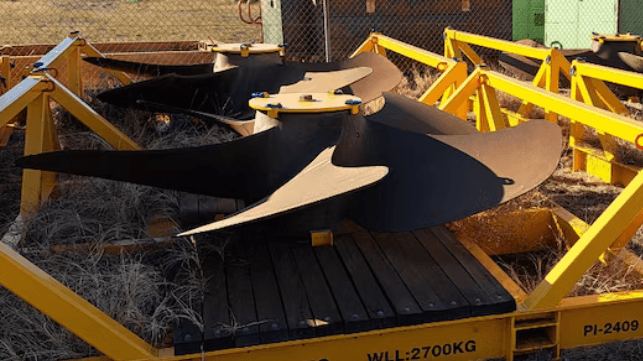
One tug owner in Western Australia is facing a significant insurance claim, reports ABC. Sometime over the southern-hemisphere winter, someone broke into a storage yard near Dampier and stole a set of very expensive tug propellers, with a total value in the millions. 

According to the WA Police Force, thieves appear to have made off with four tug propellers made of a high-spec bronze-nickel alloy from a yard on the remote Burrup Peninsula. The timeline of the theft is quite uncertain: it is believed to have occurred sometime between December 2025 and late May 2026. The owner did not report them missing until last month. 

The authorities believe that the suspects likely brought in heavy equipment to remove the goods, since the propellers weigh about two tonnes each. The $1.4 million consignment disappeared along with the storage racks used for shipping. 

The likely fate of the propellers is for a scrapyard. The alloy is high in copper, and the current boom market for the conductive metal - which is much in demand for electrical and electronic equipment - is driving a rash of copper theft across the continent. Current pricing in the Australian market runs at about US$14 per kilo for unadulterated copper, and measures to reduce buying at the point of purchase have had limited traction. Scrap metal theft has a comparatively low priority for enforcement when there are other, more serious crimes to be dealt with. 

At a small scale, the crime is often linked to drug consumption, and specifically methamphetamine.  Australia has the world's largest per-capita methamphetamine market. Organized heists may be conducted systematically by larger gangs. 


Hapag-Lloyd Continues to Invest in its Portfolio of Port Terminals

Hamburg Germany container terminal
Hapag's Hanseatic Global terminals is negotiating to acquire a 20% stake in Eurogate Container Terminal Hamburg (Eurogate)

Published Jul 1, 2026 7:15 PM by The Maritime Executive

Hapag-Lloyd, three years after launching a port terminal company, Hanseatic Global Terminals, is continuing to expand its portfolio. The company announced negotiations for investments in Hamburg, Germany, and Tangier Med, Morocco, for its portfolio as it works toward a goal of more than 30 terminals by 2030.

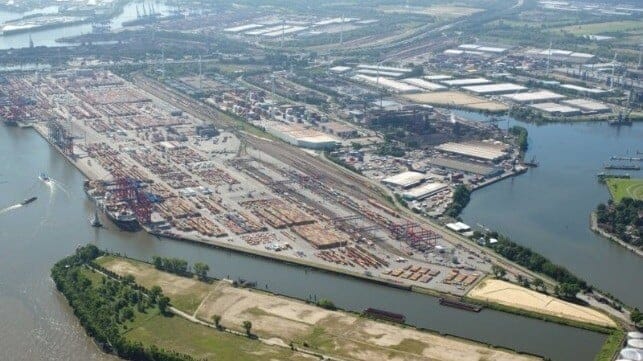
The company has completed a terms sheet outlining the key conditions for an intended investment in Eurogate Container Terminal Hamburg. It calls for Hanseatic Global Terminals to acquire a 20 percent stake in the operation from Eurogate.

The terminal is one of the major facilities in the Port of Hamburg, currently with an annual capacity of 2.5 million TEU. Hanseatic Global Terminals will be investing as efforts are underway for a planned western extension of the terminal and further modernization and automation. It is expected to further increase the capacity of the Hamburg location.

“The agreement marks another important step in strengthening our Terminal Portfolio in Europe. Together with our partners, we aim to support the further development of efficient, future-ready terminal infrastructure that benefits customers, ports, and global trade,” said Dheeraj Bhatia, CEO of Hanseatic Global Terminals.

It points to the opportunities for digitalization and increased automation at the terminal as well as the electrification of cargo handling. It looks to further develop Eurogate Container Terminal Hamburg to enhance its role as a logistics hub in Northern Europe.
  
Hapag highlights that it is also a further demonstration on its long-term commitment to the Port of Hamburg. It already holds a stake in Container Terminal Altenwerder, also in Hamburg. 

As part of the negotiations with Eurogate, Hanseatic Global Terminals would also increase its stake in the TC3 container terminal in the Moroccan port of Tangier. It calls for increasing its participation from 10 to 20 percent, acquiring the stake from Eurogate.

It highlights the importance that the Tangier Med port has taken on in the global routing. It serves as a key transshipment port for vessels coming from Asia and for access across the Mediterranean. 

Established in 2023, Hanseatic Global Terminals currently manages a portfolio of stakes in 26 terminals and logistic services in 13 countries. It participates with India’s J M Baxi, having increased its investment to a 50 percent stake earlier this year. It also entered Latin America in 2025 and continues to expand its investments. It recently took a 50 percent interest in a new greenfield port project in Brazil and took full ownership of the Florida International Terminal.