House Leaders Call for an End to White House's Jones Act Waiver
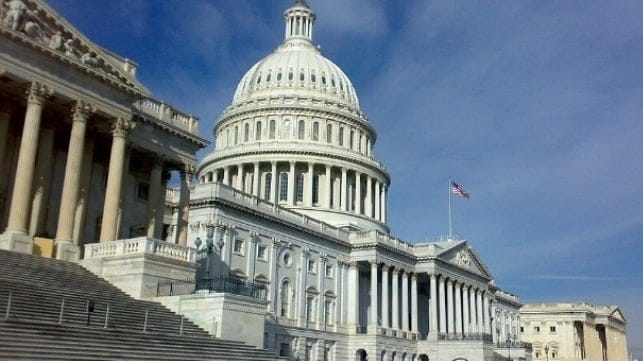
The Republican leaders of the House of Representatives have written to the White House to ask for an eventual end to the sweeping 150-day waiver of the Jones Act. The waiver is the longest and broadest in scope since at least 1950, and industry advocates say that it is already having damaging effects on the health of America's domestic maritime sector.
The petition's signatories include all relevant House decisionmakers, including House Speaker Mike Johnson (R-LA), House Oversight chairman Rep. James Comer (R-KY), House Majority Leader Rep. Steve Scalise (R-LA), Transportation Committee Chairman Sam Graves (R-MS), Maritime Transportation Subcommittee Chairman Mike Ezell (R-MS), and 47 other members of the chamber. Together, they have asked the White House to allow the waiver to expire at the end of its currently-scheduled lifespan - August 16 - and use other authorities to help reduce the cost of fuel at the pump.
The waiver has been quite controversial. The Jones Act shipping industry says that the use of foreign-flag tanker tonnage has not meaningfully affected gas prices, has had no impact on military operations (the only statutory reason for a waiver), and is causing harm to domestic shipping and shipbuilding. Anecdotal reports suggest that at least some Jones Act newbuild decisions have been slowed down in order to wait for long-term clarity on the Act's future, and that U.S. oil-industry charterers have used the threat of waivers to press U.S. tanker operators for day-rate discounts.
The House letter notes that about 95 percent of the waivered voyages benefit foreign operators that do not pay taxes and do not have to comply with U.S. immigration laws in order to crew their ships. "The Jones Act waiver has become a loophole exploited by adversarial countries to erode America’s maritime dominance, the authors concluded.
Foreign-flag shipping's lower operating costs - along with the far-lower capital cost of foreign-built hulls - make it difficult for American maritime operators to compete commercially, and the Jones Act provides them protection to sustain operations. "Our nation’s strongest shield against foreign exploitation of American waterways is the Jones Act," the congressmen wrote to the president. "We respectfully request that you allow the waiver to expire on August 16, 2026. Thank you for your consideration of this matter."
Jones Act opponents have noted that waivered voyages have delivered large quantities of fuel from Texas to California, the highest-priced fuel market in the lower 48 states. Administration officials have generally supported the waiver. Energy Secretary Chris Wright told the Atlantic Council in June that it has been "enormously helpful to suspend the Jones Act temporarily," and White House Council of Economic Advisors chairman Kevin Hassett told reporters that the waiver was "incredibly effective" for moving fuel from the Gulf to the West Coast. The editorial board of the Washington Post has hailed it as a "real-life experiment of what life would be like without the Jones Act," calling for the Act's permanent repeal.
The waiver's future is uncertain. Global oil prices have plummeted since the signing of the U.S.-Iran ceasefire MOU last month, and domestic fuel prices at the pump have fallen below the $4 per gallon mark. This means the end of the high-price situation that the waiver was created to address; though the underlying rationale has passed - at least for now - the White House has yet to signal whether it would sign another extension to keep the waiver in effect.

No comments:
Post a Comment