CU
Codelco debt and high costs hurt competitiveness, document says
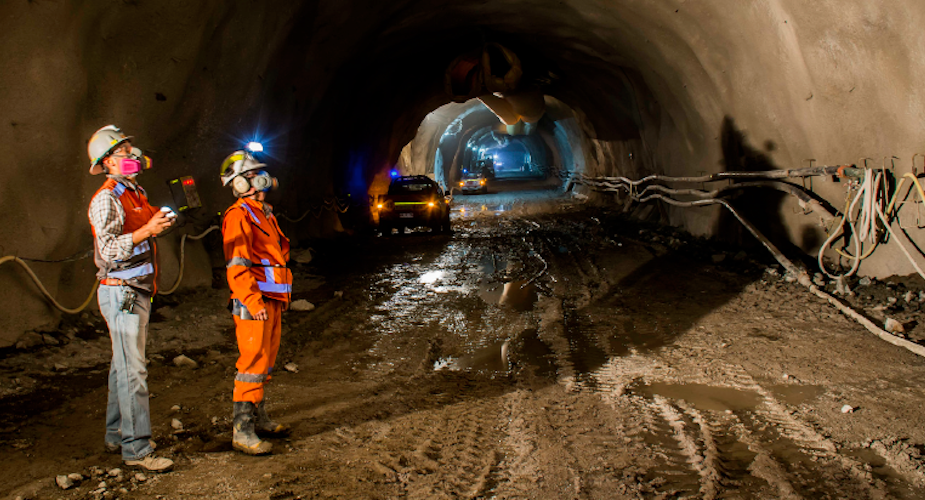
Chile’s state-run copper giant Codelco sees soaring costs, which are over one-and-a-half times above its global rivals, and heavy debt are the main challenges to the struggling company’s competitiveness, according to an internal document seen by Reuters.

The document said that, compared with industry rivals, Codelco has “significantly higher” costs, with a direct cost (C1) 57% higher than major international mining companies and 72% higher than the main national operations.
“The main competitive gap identified by the comparison is concentrated in operational costs, which remain significantly above international and national benchmarks,” the report said.
The analysis also highlighted that the company’s net debt to EBITDA is 3.8x, compared to 0.7x for global mining and 0.5x for the industry in Chile.
Despite losing its spot as world’s largest copper producer in 2025, the report showed that the quality of its mining resources weren’t the main detriment compared to competitors.
The document showed that Codelco’s average ore grade was 0.62% compared to 0.59% at its global counterparts, despite being below the 0.80% of other miners in Chile.
“Codelco’s main challenges are focused on increasing operational competitiveness, improving profitability and increasing the return on the significant investments made, rather than on its production scale or the quality of its resource base,” the report said.
It added that comparisons showed that there are “significant room for improvement in productivity, operational efficiency, and economic performance.”
In its latest earnings, the company said it faced rising costs across several of its mines for varying reasons, including the fatal accident in El Teniente, poor ore grade in Ministro Hales and maintenance costs in Chuquicamata, El Salvador and Gabriela mistral.
The results said costs also rose due to currency appreciation, the rising cost of materials and lower production.
After a scandal involving inflated production figures, Codelco’s new chairman, Bernardo Fontaine, has said he’s reviewing all the company’s operations and projects to restructure its investment and production plans.
Codelco, by law, must return all its profits to the state and debt has become its main source of financing. That debt has also ballooned due to its multi-billion mine expansion projects that were intended to counteract declining ore grades but have been plagued by missteps, cost overruns and accidents.
(By Fabian Cambero; Editing by Alexander Villegas and Nick Zieminski)
BHP seeks to restart Cerro Colorado mine with $1.5B investment
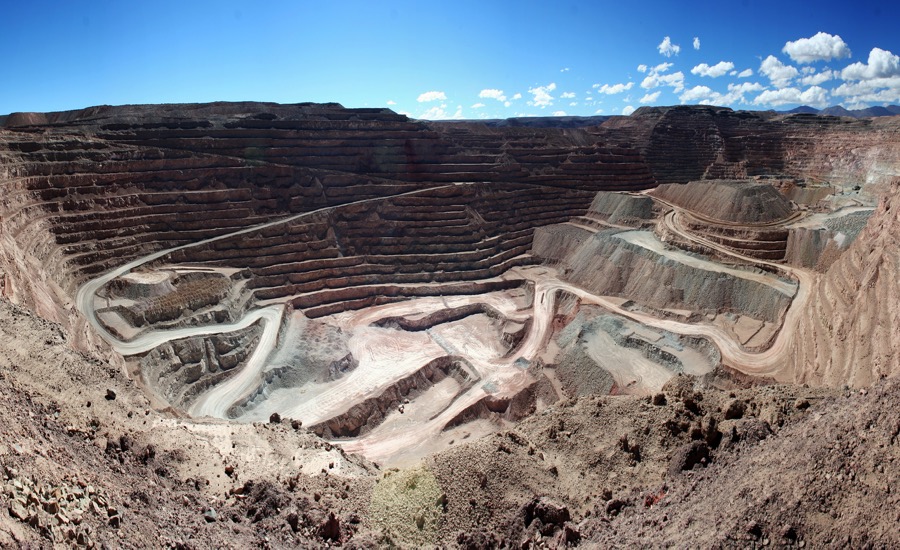
BHP (ASX: BHP) has begun the process to reopen the Cerro Colorado copper mine in Chile, targeting an investment of $1.5 billion to keep the operation running for 20 years.
On Wednesday, the Australian miner said it has applied for a new environmental permit for Cerro Colorado. Located in the Atacama Desert, the mine is part of BHP’s Pampa Norte division in northern Chile that also includes the Spence operation.
The copper mine has been closed since late 2023 after it was denied its water permit following protests by local communities.
In an attempt to restart the operation, BHP said it would explore the use of leaching technologies and desalinated water. Under its application, it laid out plans to use treated wastewater transported through a pipeline of more than 100 km from the municipality of Alto Hospicio to the mine site.
This initiative, according to the company, would enable the mine to run for 20 years. Its total cost is estimated at $1.5 billion.
BHP had previously planned to reboot the Cerro Colorado operation by the end of this decade. The mine represents a small part of its Chilean portfolio, in comparison to the giant Escondida mine and the nearby Spence growth project.
Antofagasta agrees spot-indexed copper ore sales with some Chinese smelters
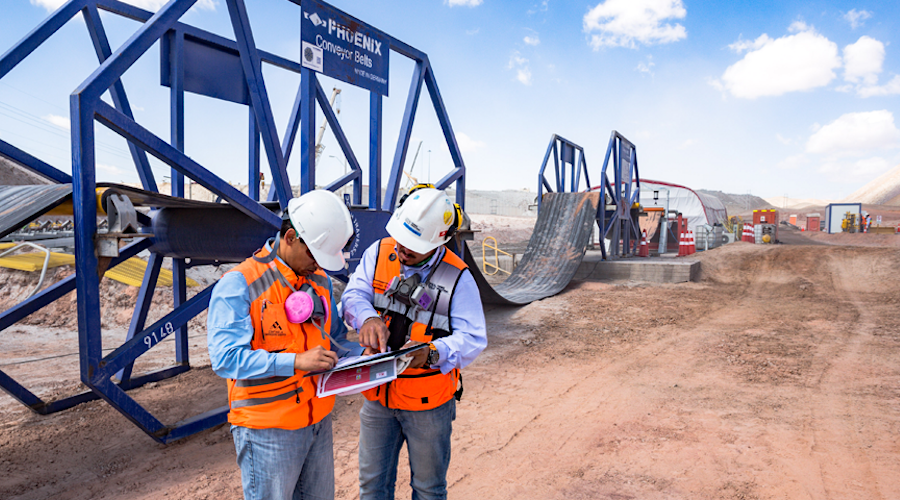
Chilean miner Antofagasta has agreed to sell term copper concentrate supplies to some Chinese smelters at spot-indexed prices with a guaranteed floor, industry information provider SMM reported on Wednesday.
The reported deal would mark a break with a decades-old practice under which miners sell term supplies at fixed treatment and refining charges (TC/RC) that serve as a global benchmark.
Antofagasta said its negotiations were confidential and it did not discuss them with third parties.
Miners typically pay TC/RCs to smelters to process copper concentrate into refined metal, but charges on the spot market have been deeply negative in recent months due to a shortage of ore.
That has left smelters paying to process material and increased pressure on the benchmark, which was set at zero for 2026 and has already been abandoned by some miners.
Chinese smelters had resisted Antofagasta’s proposal to switch to spot-indexed pricing in mid-year negotiations over term supply, arguing it would reduce pricing certainty.
However, after Antofagasta insisted on the change, the two sides reached an “innovative compromise” under which TC/RCs would be linked to an index while also being subject to a guaranteed floor, SMM said.
The arrangement means Antofagasta cannot sell term concentrate to smelters at TC/RCs below a specified level.
Spot TCs were around minus $126.80 a metric ton at the end of last week, according to Argus.
The SMM report did not say at what level the floor would be set.
(By Tom Daly, Lewis Jackson and Amy Lv; Editing by Mark Potter)
Chile’s copper output, manufacturing production plummet in May
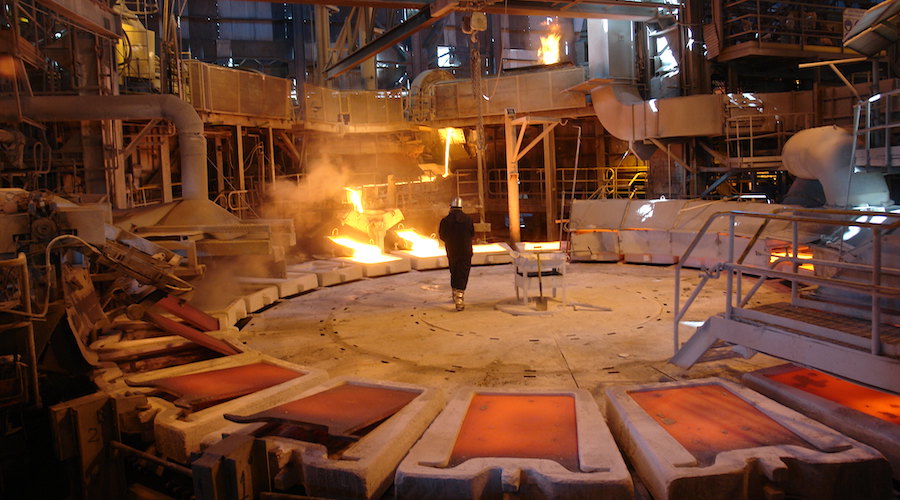 Chuquicamata smelter. (Image courtesy of Codelco | Flickr.)
Manufacturing production in Chile posted its largest decline in over three years in May, weighed down by weak data from the fishing industry, data from the statistics agency INE agency showed on Tuesday.
The country’s manufacturing output was down 7.2% in the month on a yearly basis, the sharpest decline since November 2022. The data also declined more than expected, economists polled by Reuters anticipated a 2.5% decrease.
The decline was largely driven by a 10.9% year-over-year drop in food manufacturing due to lower fish production, INE said in a statement.
The fishing industry has faced “adverse weather conditions that reduced the availability of biomass in the usual fishing areas,” the agency added.
Moreover, copper output in the Andean nation , the world’s largest producer of the metal, fell 12.9% year-on-year in May to 423,623 metric tons.
(By Natailia Ramos and Aida Pelaez-Fernandez; Editing by Chizu Nomiyama)
Manufacturing production in Chile posted its largest decline in over three years in May, weighed down by weak data from the fishing industry, data from the statistics agency INE agency showed on Tuesday.
The country’s manufacturing output was down 7.2% in the month on a yearly basis, the sharpest decline since November 2022. The data also declined more than expected, economists polled by Reuters anticipated a 2.5% decrease.
The decline was largely driven by a 10.9% year-over-year drop in food manufacturing due to lower fish production, INE said in a statement.
The fishing industry has faced “adverse weather conditions that reduced the availability of biomass in the usual fishing areas,” the agency added.
Moreover, copper output in the Andean nation , the world’s largest producer of the metal, fell 12.9% year-on-year in May to 423,623 metric tons.
(By Natailia Ramos and Aida Pelaez-Fernandez; Editing by Chizu Nomiyama)

No comments:
Post a Comment