Thursday, July 02, 2026


EGA ramps up recovery at aluminum complex damaged in Iranian strikes
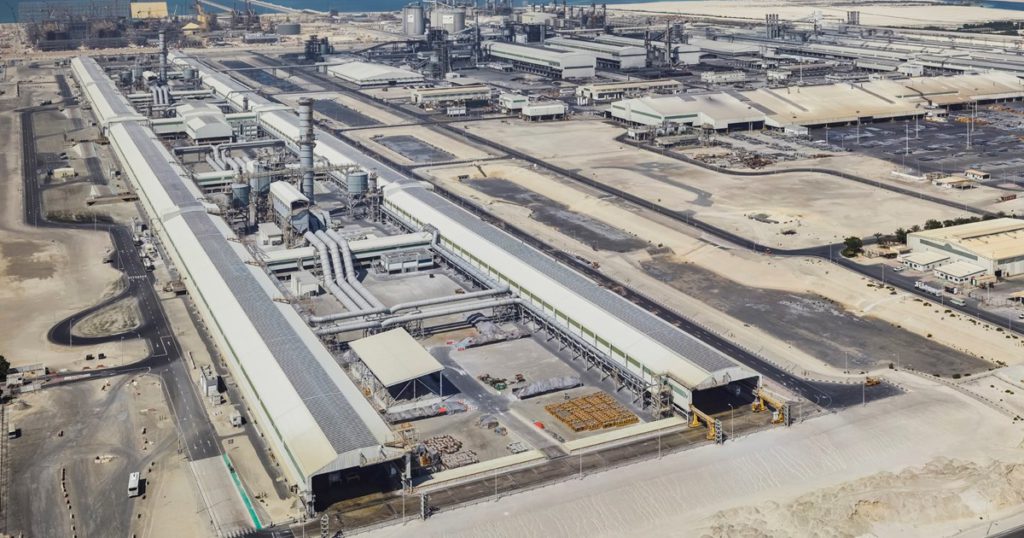

Emirates Global Aluminium’s Al Taweelah site. Credit: Emirates Global Aluminium

Emirates Global Aluminium said on Thursday it was restoring production sooner than expected at its Al Taweelah complex, which was damaged by Iranian missile strikes in March, although hot metal output may take up to a year to return to previous levels.

One of the world’s largest aluminum production sites, the complex suffered extensive damage when strikes hit the Khalifa Economic Zone Abu Dhabi on March 28, forcing an emergency shutdown.


EGA said two employees injured in the attack had left hospital.

The company said EGA must progressively restart each of the smelter’s 1,262 reduction cells to resume hot metal production.

Anode removal is complete across all cells, bath cleaning has been finished at around 90% of cells, and frozen metal has been cleared from more than 20%, the company said.

Since the first cell was restarted on May 26, 89 have now been brought back online, it added.

Cast metal production returning

The plant’s casthouse produced its first cast metal on May 4 and is remelting frozen metal recovered during the restoration alongside hot metal from restored cells.

The site’s recycling plant resumed cast metal production in early May, with full output expected within six months, subject to scrap availability.

First production is expected early in the third quarter at the Al Taweelah alumina refinery, with the pace of ramp-up dependent on bauxite supply chains.

EGA said hot metal output would not depend on the refinery reaching full production.

“All opportunities to accelerate the timeline further are being explored, and we will achieve our goal of emerging stronger than ever before,” CEO Abdulnasser Bin Kalban said in a statement.


EGA’s Jebel Ali site has continued operating at full capacity throughout the conflict. The company said it had secured sufficient raw material supplies for both Jebel Ali operations and the Al Taweelah restart, and is now selling more metal than Jebel Ali produces as it draws down inventories built up when outbound shipments were temporarily suspended.

The company did not disclose the financial impact of the damage or restoration costs.

Chief financial officer Pål Kildemo said stronger aluminum margins since the start of the year were helping offset losses from Al Taweelah’s reduced production, adding that the company’s financial position was very strong.

EGA is jointly owned by Abu Dhabi sovereign wealth fund Mubadala and the state company which holds Dubai’s most high-profile assets, Investment Corporation of Dubai.

(By Hadeel Al Sayegh; Editing by Kate Mayberry and Louise Heavens)

Magnitude 7 Metals plans partial restart of Missouri aluminum smelter
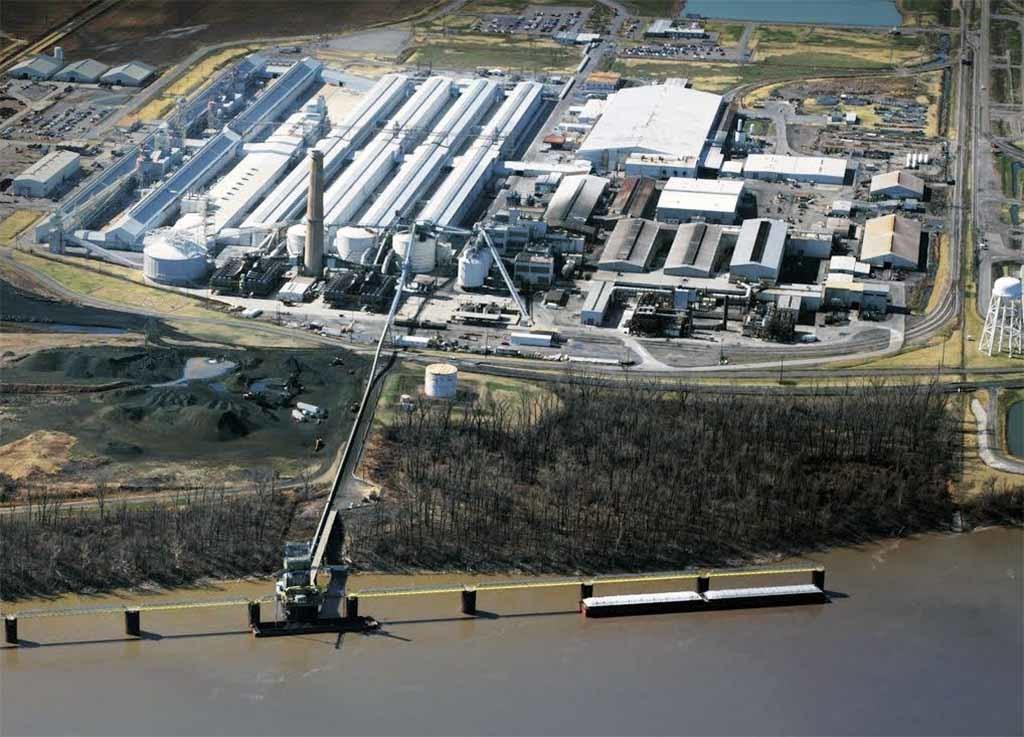
Magnitude 7 plant in Marston, Missouri. Credit: Magnitude 7 Metals | LinkedIn

Magnitude 7 Metals said on Wednesday it plans to restart the first potline at its aluminum smelter in Marston, Missouri after its closure in 2024.

The partial restart is expected to expand US primary aluminum capacity and restore some jobs in the state’s Bootheel region.

The smelter’s shutdown in January 2024 resulted in the layoff of 500 workers, severely impacting the economy of the Missouri Bootheel region.

The facility has faced repeated cycles of closures and curtailments over the last decade, including under previous owner Noranda in 2016, despite federal Section 232 tariffs aimed at shielding domestic producers.

In statements responding to the announcement, coalition groups, including Industrious Labs and Renew Missouri, urged Magnitude 7 Metals to modernize the facility with cleaner, more reliable energy systems to prevent future “boom-and-bust” cycles.

(By Dharna Bafna; Editing by Vijay Kishore)

Norsk Hydro’s Slovak aluminum smelter to partially restart production
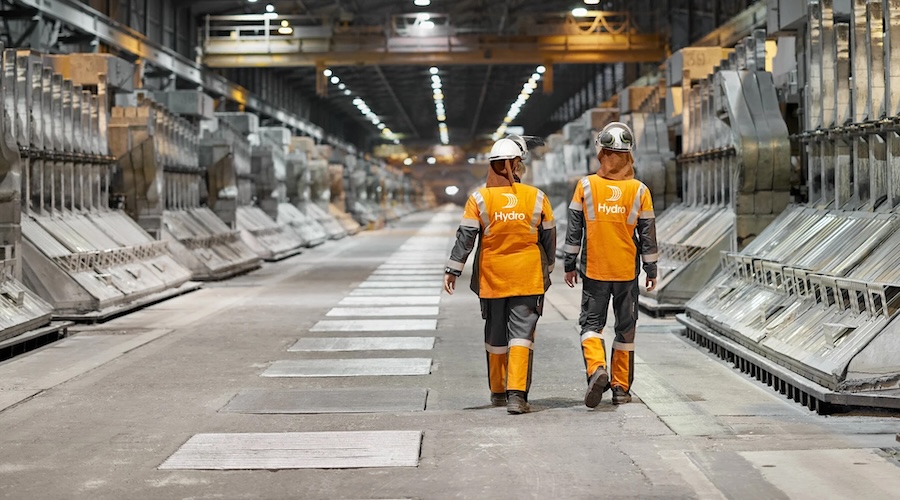

Norsk Hydro is one of the world’s largest aluminum producers.(Image courtesy of Norsk Hydro.)

Norsk Hydro said on Wednesday its Slovalco aluminum joint venture had reached an agreement with the Slovak government to partially restart production after a four-year shutdown, including a new long-term power supply contract.

The deal paves the way for the restart of 75,000 metric tons per year of smelting capacity, with production expected to resume in the fourth quarter of 2026, Hydro said.

Restoring the remaining 100,000 tons of capacity would depend on conditions beyond 2030 and additional power contracts, it added.

The resumption of primary aluminum production at the plant, in Ziar nad Hronom in central Slovakia, would be a boost for the European market, which has been left short of metal by the closure of the Mozal smelter in Mozambique, the EU’s new carbon tax and war-driven supply constraints in the Gulf.

Slovalco – owned 55.3% by Norway’s Hydro and 44.7% by Central Europe-focused Penta Investments Group – was forced to stop primary aluminium production in September 2022 as high power prices left the joint venture facing financial losses.

The deal sets out the “long-term framework conditions” for aluminum production, including a power purchase pact with state-owned hydropower utility Vodohospodarska Vystavba and a compensation scheme for indirect carbon costs under the EU Emissions Trading System (ETS), Hydro said.

Cutting import dependence

Slovalco will invest €100 million ($114 million) to resume operations, which will support more than 200 jobs, it added after a signing ceremony in Bratislava on Wednesday.

“With a production capacity of 175,000 tons per year, Slovalco has the potential to restore a meaningful share of the EU’s domestic primary aluminum production,” Hydro CEO Eivind Kallevik said in a statement.

“Restarting the smelter will strengthen Europe’s industrial resilience, reduce dependence on imports and supply European customers with aluminum carrying significantly lower carbon emissions than the global average,” he added.

In a televised press conference, Slovakia’s Prime Minister Robert Fico described Slovalco as a strategic supplier to the country’s automotive industry and blamed its long absence on “overly ambitious” EU climate targets.

These had led to higher aluminum imports from China, where the metal is produced with a greater environmental impact, Fico said, adding that Slovalco’s power supply contract was for 10 years.

($1=0.8777 euros)

(By Tom Daly and Jan Lopatka; Editing by Elaine Hardcastle, Clarence Fernandez and Louise Heavens)

South32 sells nearly all its aluminum business to Alcoa for $5.6B
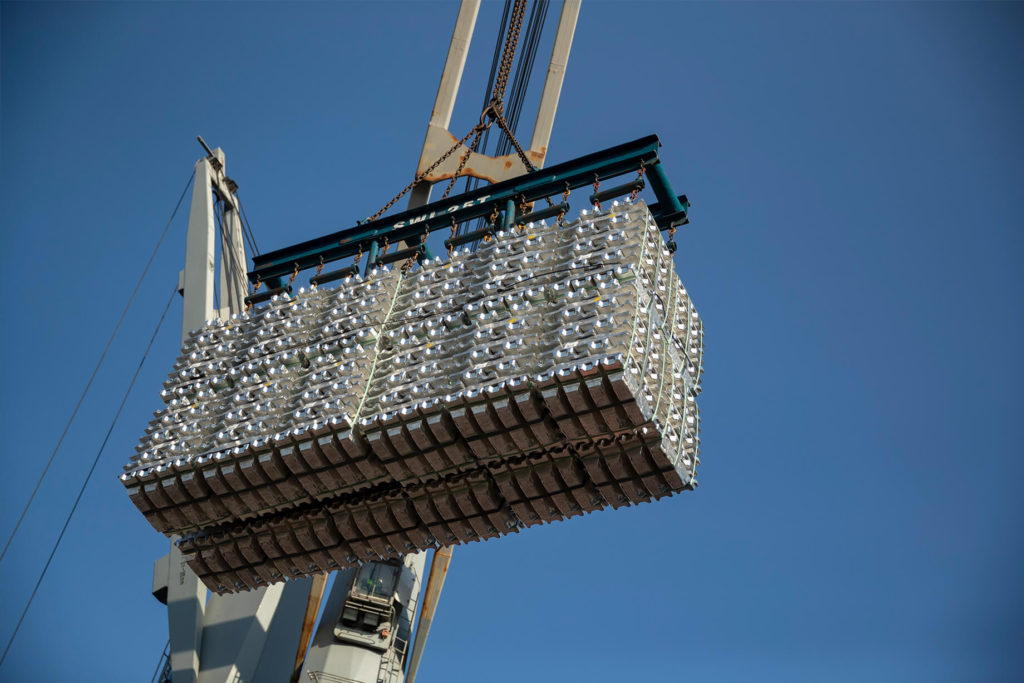

Hillside Aluminium (pictured) is the largest aluminum smelter in the southern hemisphere. Credit: South32

Australia’s South32 (ASX: S32) has agreed to sell nearly its entire aluminum portfolio to Alcoa (NYSE: AA, ASX: AAI) in a deal valued at up to $5.6 billion.

In an announcement on Wednesday, the Perth-based miner said it has entered into a binding conditional agreement to sell most of its global aluminum business, comprising interests in Worsley Alumina (86%), Hillside Aluminium (100%) in South Africa, and a trio of Brazilian assets — the MRN bauxite mine (33%), an alumina refinery (36%) and an aluminum smelter (40%).

The Mozal Aluminium operation in Mozambique, which is currently under care and maintenance, is excluded from the transaction, though its sale remains under active consideration, the company said.

As consideration, Alcoa will make an upfront payment of $3.1 billion in cash and $1 billion in stock equating to approximately 6% of its issued share capital.

The US aluminum giant would also assume around $750 million in liabilities related to the acquired assets, and could make a further $750 million payment tied to future aluminum prices to 2030.

Shares of Alcoa fell around 2% to just above $51 apiece during after-hours trading on the announcement, for a market capitalization of $13.75 billion. Earlier this month, the stock surged to a four-year high of $84.38, benefiting from the rise in aluminum prices driven by the US-Iran war.

South32 also fell 2% at market open in Australia, trading at a market capitalization of A$17.5 billion.

‘Simpler’ portfolio

The sale of the aluminum assets, says South32, allows the company to slim down its business to focus on the “high-margin copper, zinc, silver and lead operations” and to maintain its status as a major manganese producer.

The announcement also coincides with the official start of Matthew Daley’s tenure as the group’s new chief executive officer and managing director, succeeding Graham Kerr.

“This Transaction will unlock significant value for shareholders and repositions South32 as a leading upstream base-metals-focused company with high-margin assets and transformational growth,” Kerr said, as he departs from a role he has held since South32 split from BHP (ASX: BHP) over a decade ago.

“Following completion, our portfolio will be focused on high-quality, long-life assets leveraged to attractive market fundamentals, with approximately 85% of pro-forma EBITDA from base and precious metals,” incoming CEO Daley said.

“This will enable a leaner, lower-cost operating model that will deliver ongoing value through an anticipated $125 million per annum reduction in overhead costs as new support structures are implemented,” he added.

In the coming years, the company is expecting approximately a 55% growth in production from its Taylor zinc-lead-silver project in Arizona and a planned expansion at the Sierra Gorda copper mine in Chile.

$900M in synergies

For Alcoa, the transaction would “add a high-quality, low-cost, and globally diversified set of mining, refining and smelting assets, further strengthening Alcoa’s mine-to-metal platform,” it said in a press release.

The Pittsburgh-based company estimates that the assets are expected to generate significant synergies of approximately $900 million in net present value, further reinforcing its position as a leading pure-play upstream aluminum company.

“This is exactly the type of opportunity Alcoa is built to execute,” Alcoa CEO William Oplinger said. “These high-quality, globally relevant assets are a strong strategic fit within our portfolio.”

Alcoa currently holds positions in seven mines globally, including the Huntly mine in Australia, one of the world’s largest bauxite mines.

Congo plans first stock market as AI mineral boom draws interest

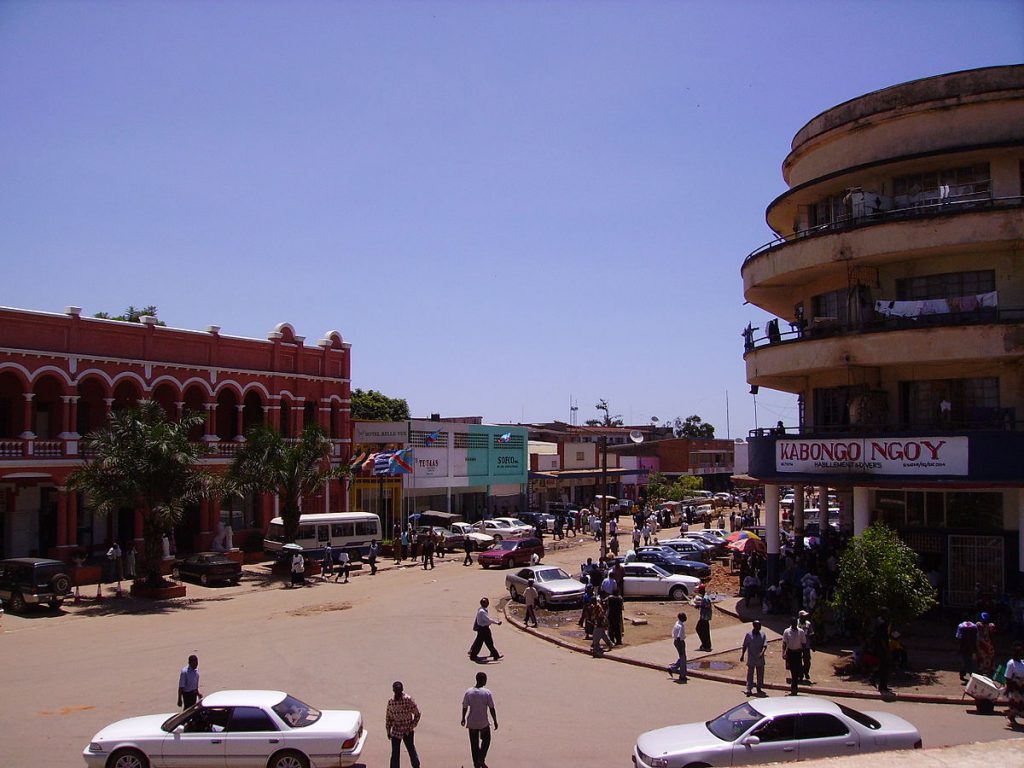
Downtown Lubumbashi, Democratic Republic of the Congo. Credit: Wikipedia.

The Democratic Republic of Congo is drawing up plans for its first stock exchange as it seeks to attract more investment to an economy that’s benefiting from soaring demand for minerals critical to the artificial intelligence buildout.

The new exchange will list securities denominated in both the Congolese franc and the US dollar, Finance Minister Doudou Fwamba Likunde Li-Botayi told Bloomberg News. In the meantime, the government is working with the International Finance Corp. to create a capital markets framework, he said.

The planned Kinshasa Stock Exchange is part of the government’s strategy to capitalize on growing foreign interest in Congo’s economy and broaden companies’ sources for capital, Li-Botayi said. Authorities also hope the dual-currency exchange will encourage greater use of the Congolese franc over time.

“The reality of our economy is that it is strongly dollarized,” Li-Botayi said in emailed comments, noting that more than 95% of total banking system deposits and over 80% of public securities are held in dollars. “We cannot design a stock exchange that ignores that reality.”

“We are building for the market as it exists today, while keeping sight of where we want it to go,” he added.

The move will add to other reforms the Central African nation has embarked on to spur wider market participation. They include liberalizing the mining sector, transforming state enterprises into commercial companies, opening the insurance market to private investors and creating a Treasury bond market, Li-Botayi said.

The International Monetary Fund said this week that the reforms are progressing well although an “accelerated pace is necessary.”

Congo is the latest African nation to try and establish an equity market, following launches in Ethiopia and Somalia in 2025. Prior to that, Zimbabwe set up an exchange in 2020 to allow trading in dollar-denominated securities.

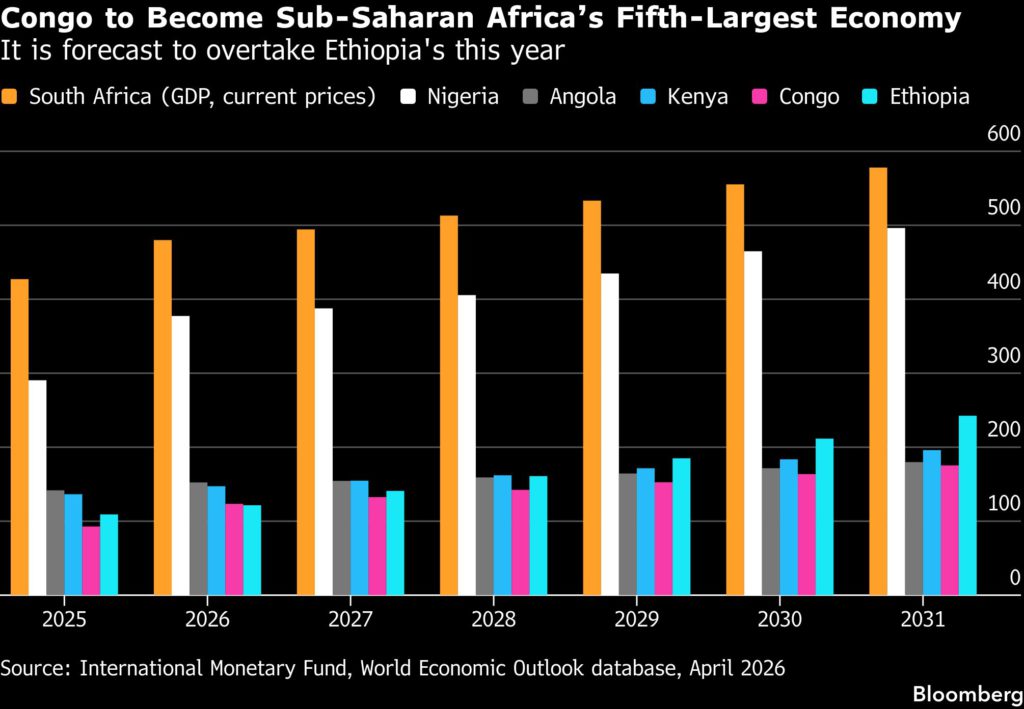
The timing may be in Congo’s favor. It is Africa’s largest copper producer and a major source of cobalt and lithium, all of which have spurred investor interest, amid rising demand for the minerals crucial for AI infrastructure. Booming metals exports are expected to make the economy sub-Saharan Africa’s fifth largest this year, according to IMF projections.

African stocks are also currently in vogue, benefiting from high commodity prices and inflows from investors keen to diversify from Asian technology heavyweights. Ghana, Nigeria, Zambia and Kenya all rank in the 20 best-performing indexes globally this year, adding to 2025’s stellar run.

The government is also on a drive to open its economy to foreign investors, striking deals with overseas firms for exploration and production. Its debut $1.25 billion eurobond in April was heavily oversubscribed and has handed investors returns of about 3% since, outperforming the emerging-market average. While the Congolese franc has weakened this year against the dollar, that comes after a 21% surge in 2025.

A finance bill establishing legal frameworks for markets is now before the country’s Senate and is expected to be signed off by year-end and the Finance Ministry is finalizing a decree to set up an independent regulator, which will license the exchange operator.

Li-Botayi identified mining firms as an priority target for stock-market listings, but said authorities will also work with the wider business community to build a pipeline of initial public offerings. While publicly traded companies will benefit from lower corporate income tax rates, the aim is also to boost public participation in markets.

“We want Congolese people to be able to own a piece of the companies that drive this country’s economy,” he said.

(By Ray Ndlovu)


Hudbay gains Peru approval to further increase Constancia mill throughput


Operations at Constancia copper mine. (Image courtesy of Hudbay Minerals.)

Hudbay Minerals (TSX, NYSE: HBM) says it has received approval from Peru’s environmental agency to increase the Constancia mill throughput by another 10%.

In a statement on Thursday, the copper miner confirmed that the National Environmental Certification Service for Sustainable Investments (SENACE) has issued an amended permit to the company that allows it to increase the Constancia mill’s processing capacity from 31 million tonnes per annum (mtpa) to 34 mtpa.

This represents the fifth amendment to the Constancia environmental permit, following further optimization of the mine plan, an extended operational life and the addition of new infrastructure, Hudbay said.

The most recent amendment came in March 2026, when Hudbay received permit approval to increase the mill throughput to 31 mtpa from 29.9 mtpa.

Hudbay said its efforts to increase mill throughput align with the Peru Ministry of Energy and Mines’ regulatory framework, which permits operational flexibility to operate up to 10% above nominal daily capacity. Over the past two years, the company processed 30.3 million and 31.9 million tonnes of ore, respectively. 

According to the company, the new permit would enable it to add more capacity — amounting to 34 mtpa along with the flexibility to handle daily increases of up to 10% above permitted levels — further optimizing Constancia’s operations to deliver strong copper production.

The open-pit mine, located in the Andes Mountains of the Cusco Region in southern Peru, has been in operation since 2014. Last year, it produced 85,155 tonnes of copper, along with 74,480 oz. of gold, 2.41 million oz. of silver and 1,282 tonnes of molybdenum.

Hudbay Minerals’ stock fell 2.5% on Thursday, in line with the decline in copper prices. The Toronto-based miner has a market capitalization of C$14.6 billion ($10.3 billion).


Almonty kicks off processing at Sangdong tungsten mine


Sangdong tungsten mine in South Korea. Image: Almonty Industries.

Almonty Industries (NASDAQ: ALM) (TSX, ASX: AII) says it has commenced processing plant throughput operations at its Sangdong tungsten mine in South Korea.

The company began in June feeding stockpiled run-of-mine ore through its newly commissioned processing plant to produce saleable tungsten concentrate — in what it says is “a pivotal milestone marking Sangdong’s transition from mine development into active, revenue-generating operations.”

Historical producer

The Sangdong mine in Gangwon province was historically one of the world’s largest tungsten producers before operations were suspended in the early 1990s following a prolonged downturn in commodity prices.

Since acquiring the project in 2015, Almonty has invested more than $100 million to redevelop the site as a modern underground mining operation with a newly constructed processing plant.

The Montana-based company exited the first quarter of 2026 with approximately 120,000 tonnes of ore stockpiled at an average grade of 0.24% tungsten trioxide (WO₃).

During the second quarter, the company mined an additional approximately 19,700 tonnes of development ore at an average grade of 0.35% WO₃, while advancing 214.6 meters of underground development, primarily along the Main Vein. This brought total stockpiled ore to approximately 139,700 tonnes at a blended grade of approximately 0.25% WO₃ ahead of the plant’s commissioning.

Almonty said it is using lower-grade throughput during the initial ramp-up phase and anticipates higher grades as the process advances, with Sangdong’s low-grade ore approximately three times higher than that of its Panasqueira mine in Portugal.

With throughput now underway, stockpiled ore is being introduced during the initial commissioning phase to optimize ore blending and maintain the consistent feed quality the plant requires as the operation ramps up. The Sangdong mine processing plant is designed to upgrade run-of-mine ore into a high-purity tungsten concentrate, the company said.

High-price environment

At prevailing tungsten prices, the contained tungsten in the current stockpile represents approximately 2.6 months of Phase I throughput feed with an illustrative gross in-process value of approximately $68 million.

“Our Sangdong processing plant is now up and running, with throughput finally underway in what is a highly beneficial tungsten pricing environment,” Almonty CEO Lewis Black said in a news release.

“This is the moment our team has worked toward for years; the transition from building and commissioning a mine to actually processing ore into saleable tungsten concentrate. After decades in which the West allowed its tungsten supply chain to atrophy, the Sangdong mine is once again producing one of the most strategically critical metals on earth.”

Sangdong has an expected mine life exceeding 45 years and an average ore grade of approximately 0.51% tungsten trioxide (WO₃), roughly three times the global average. At full capacity, Sangdong is expected to supply around 40% of the global tungsten demand outside China, Almonty has said.


US Department of Energy awards $75M to recover critical minerals from coal feedstocks

Stock image: by Parilov.

The US Department of Energy’s (DOE) Office of Critical Minerals and Energy Innovation has awarded $75 million to five projects using coal and coal-based feedstocks to produce rare earth elements and other critical materials.

The funding is part of a larger $275 million initiative announced in November to support pilot-scale opportunities for byproduct critical minerals and materials recovery at domestic industrial facilities.

Five projects have been selected as the first of two topic areas under funding consideration: Mines & Metals Pilots—Coal-Based Industry. The selected sites are:

  • The University of North Dakota in Grand Forks, North Dakota;
  • Valor Metals in New York, New York;
  • CONSOL Innovations LLC in Pennsylvania;
  • American Resources Corporation in Indiana;
  • Peabody Energy in Missouri.

These facilities will produce market-ready critical materials, including rare earth elements, and other minerals such as germanium, gallium and aluminum, the DOE said in a statement. The National Energy Technology Laboratory will manage the projects.

“American industrial facilities have the potential to produce valuable critical materials from coal and coal byproducts,” Assistant Secretary of Energy Audrey Robertson said in a news release. “By investing in these facilities, we can increase domestic critical materials production and help mitigate the financial risk of commercial deployment.”

Selections under the second topic area, Mines & Metals Pilots—All Industries, will be announced at a later date.

The selections stem from DOE’s August 2025 announcement of nearly $1 billion to advance and scale mining, processing and manufacturing technologies across key stages of the critical minerals and materials supply chains.

Recent announcements include the Rare Earth Elements Demonstration Facility Program.

The announcement, the DOE said, advances the Trump Administration’s efforts to strengthen the US coal sector, including nearly $700 million for coal infrastructure and operations, and reflects a broader commitment to unlock the value of coal and coal-based feedstocks as domestic sources of critical minerals and materials.


CU

Codelco debt and high costs hurt competitiveness, document says


Photo by Codelco

Chile’s state-run copper giant Codelco sees soaring costs, which are over one-and-a-half times above its global rivals, and heavy debt are the main challenges to the struggling company’s competitiveness, according to an internal document seen by Reuters.

The document said that, compared with industry rivals, Codelco has “significantly higher” costs, with a direct cost (C1) 57% higher than major international mining companies and 72% higher than the main national operations.

“The main competitive gap identified by the comparison is concentrated in operational costs, which remain significantly above international and national benchmarks,” the report said.


The analysis also highlighted that the company’s net debt to EBITDA is 3.8x, compared to 0.7x for global mining and 0.5x for the industry in Chile.

Despite losing its spot as world’s largest copper producer in 2025, the report showed that the quality of its mining resources weren’t the main detriment compared to competitors.

The document showed that Codelco’s average ore grade was 0.62% compared to 0.59% at its global counterparts, despite being below the 0.80% of other miners in Chile.

“Codelco’s main challenges are focused on increasing operational competitiveness, improving profitability and increasing the return on the significant investments made, rather than on its production scale or the quality of its resource base,” the report said.

It added that comparisons showed that there are “significant room for improvement in productivity, operational efficiency, and economic performance.”

In its latest earnings, the company said it faced rising costs across several of its mines for varying reasons, including the fatal accident in El Teniente, poor ore grade in Ministro Hales and maintenance costs in Chuquicamata, El Salvador and Gabriela mistral.

The results said costs also rose due to currency appreciation, the rising cost of materials and lower production.

After a scandal involving inflated production figures, Codelco’s new chairman, Bernardo Fontaine, has said he’s reviewing all the company’s operations and projects to restructure its investment and production plans.

Codelco, by law, must return all its profits to the state and debt has become its main source of financing. That debt has also ballooned due to its multi-billion mine expansion projects that were intended to counteract declining ore grades but have been plagued by missteps, cost overruns and accidents.

(By Fabian Cambero; Editing by Alexander Villegas and Nick Zieminski)


BHP seeks to restart Cerro Colorado mine with $1.5B investment

Cerro Colorado mine in Chile. (Image by Zwansaurio | Flickr Commons)

BHP (ASX: BHP) has begun the process to reopen the Cerro Colorado copper mine in Chile, targeting an investment of $1.5 billion to keep the operation running for 20 years.

On Wednesday, the Australian miner said it has applied for a new environmental permit for Cerro Colorado. Located in the Atacama Desert, the mine is part of BHP’s Pampa Norte division in northern Chile that also includes the Spence operation.

The copper mine has been closed since late 2023 after it was denied its water permit following protests by local communities.

In an attempt to restart the operation, BHP said it would explore the use of leaching technologies and desalinated water. Under its application, it laid out plans to use treated wastewater transported through a pipeline of more than 100 km from the municipality of Alto Hospicio to the mine site.

This initiative, according to the company, would enable the mine to run for 20 years. Its total cost is estimated at $1.5 billion.

BHP had previously planned to reboot the Cerro Colorado operation by the end of this decade. The mine represents a small part of its Chilean portfolio, in comparison to the giant Escondida mine and the nearby Spence growth project.


Antofagasta agrees spot-indexed copper ore sales with some Chinese smelters


Centinela copper mine. (Image courtesy of Minera Centinela.)

Chilean miner Antofagasta has agreed to sell term copper concentrate supplies to some Chinese smelters at spot-indexed prices with a guaranteed floor, industry information provider SMM reported on Wednesday.

The reported deal would mark a break with a decades-old practice under which miners sell term supplies at fixed treatment and refining charges (TC/RC) that serve as a global benchmark.

Antofagasta said its negotiations were confidential and it did not discuss them with third parties.


Miners typically pay TC/RCs to smelters to process copper concentrate into refined metal, but charges on the spot market have been deeply negative in recent months due to a shortage of ore.

That has left smelters paying to process material and increased pressure on the benchmark, which was set at zero for 2026 and has already been abandoned by some miners.

Chinese smelters had resisted Antofagasta’s proposal to switch to spot-indexed pricing in mid-year negotiations over term supply, arguing it would reduce pricing certainty.

However, after Antofagasta insisted on the change, the two sides reached an “innovative compromise” under which TC/RCs would be linked to an index while also being subject to a guaranteed floor, SMM said.

The arrangement means Antofagasta cannot sell term concentrate to smelters at TC/RCs below a specified level.

Spot TCs were around minus $126.80 a metric ton at the end of last week, according to Argus.

The SMM report did not say at what level the floor would be set.

(By Tom Daly, Lewis Jackson and Amy Lv; Editing by Mark Potter)


Chile’s copper output, manufacturing production plummet in May

Chuquicamata smelter. (Image courtesy of Codelco | Flickr.)

Manufacturing production in Chile posted its largest decline in over three years in May, weighed down by weak data from the fishing industry, data from the statistics agency INE agency showed on Tuesday.

The country’s manufacturing output was down 7.2% in the month on a yearly basis, the sharpest decline since November 2022. The data also declined more than expected, economists polled by Reuters anticipated a 2.5% decrease.

The decline was largely driven by a 10.9% year-over-year drop in food manufacturing due to lower fish production, INE said in a statement.

The fishing industry has faced “adverse weather conditions that reduced the availability of biomass in the usual fishing areas,” the agency added.

Moreover, copper output in the Andean nation , the world’s largest producer of the metal, fell 12.9% year-on-year in May to 423,623 metric tons.

(By Natailia Ramos and Aida Pelaez-Fernandez; Editing by Chizu Nomiyama)


Column: LME metals whipsawed by war and peace in first half of 2026


LME warehouse. Credit: Steinweg Group

(The opinions expressed here are those of Andy Home, a ​columnist for Reuters.)

The early-year euphoria that propelled both copper and tin to record highs was doused by the launch of Operation Epic Fury at the end of February.

The Iran war has dominated the headlines ever since, which has been challenging for traders because the headlines have been so confusing.

The Strait of Hormuz seems to have entered a quantum ​universe in which it can be simultaneously open and closed, depending on which protagonist is talking at any given point in time.

Schrödinger’s Strait “continues to reopen but it’s patchy, unpredictable, and not fully transparent,” according ‌to Vandana Hari, founder of oil market analysis provider Vanda Insights.

That is an equally good description of the current peace talks, which are taking place in Doha.

Amid the fog of war and peace, the LME Index, a basket of the six base metals traded on the London market, has swung from exuberance to dejection to resilience over the first half, ending the period somewhere in between.

LME Index YTD relative performance

Individual performances have diverged widely, depending on each metal’s sensitivity to the ebb and flow of the Gulf news.

LME Metals relative performance H1 2026

Aluminum hit

Aluminum has been a direct casualty of the ​war in the form of missile strikes on two Gulf smelters and constrained logistics at others.

Regional production dropped by an annualized 2 million metric tons between February and May, according to the International ​Aluminium Institute.

The unprecedented supply shock sent LME three-month aluminum to a four-year high of $3,787.50 per ton at the start of June.

The war premium has since almost completely unwound as ⁠the market prices in a return to some sort of normality.

LME aluminium stocks off and on warrant
LME aluminum stocks off and on warrant

Part of the new normal, however, is low LME inventory. Combined on- and off-warrant stocks have shrunk to just over 400,000 tons, most of it Russian metal.

Copper confusion

The ​war has injected another level of confusion into an already confused copper market.

At a macro level, the potential impact on global growth is negative for copper. But on a micro level, the closure of the Strait has created a ​sulphuric acid shortage, squeezing copper producers using leach technology.

The copper concentrates market, meanwhile, is dysfunctional, with smelter treatment terms collapsing to the point that processors are now relying on everything but copper to make money.

The refined metal market is still on tenterhooks, awaiting a decision on whether US President Donald Trump will impose tariffs. A decision is due any day.

The premium for US delivery continues to suck in metal from the rest of the world.

CME-LME copper arbitrage

Caught between conflicting signals, LME three-month copper has been treading water between $13,000 and $14,000 per ton since ​the middle of May.

Investors still like copper’s story of structural supply deficit, and there are plenty of super-bulls biding their time in the LME options market.

Zinc surprise

Zinc, which has little direct exposure to the war, has been the ​surprise performer among the LME pack so far this year.

LME three-month zinc hit a near four-year high of $3,658 per ton in early June and closed the month up 14% from the start of the year, the second-strongest price performance after tin.

The global zinc market was supposed ‌to be in ⁠a big supply surplus this year, but the latest assessment from the International Lead and Zinc Study Group is for a small deficit.

The shortfall is concentrated in the world outside China, where smelter production continues to under-perform. China itself is steadily lifting production and is on course to reach a state of self-sufficiency in the near future.

Nickel plays the Indonesian numbers game

Nickel trading has been all about Indonesia and the government’s attempt to rein in its runaway production sector.

Sharp reductions in this year’s mining quotas boosted the LME three-month nickel price to a two-year high of $20,000 per ton in May.

The sulphur squeeze emanating from the Gulf has piled more pressure on Indonesian producers using acid in ​leaching operations.

However, growing speculation that Indonesia is set to ​loosen its mining quotas has sent the price crashing ⁠back towards the $16,000-per-ton level.

While Jakarta weighs its options, surplus metal continues to accumulate. LME stocks have topped out, but Shanghai Futures Exchange inventory has just surpassed 100,000 tons for the first time since 2016.

Turbulent tin and oversupplied lead

Tin and lead have been wholly unaffected by events in the Gulf, allowing each to follow its own narrative path.

In ​the case of tin, this is a bull promise of structural supply deficit in the face of rising demand for the electronic soldering metal.

Tin has been pricing ​scarcity for many months and ⁠was the outperformer of the LME complex in the first half of 2026, with year-to-date gains of 27%.

LME stocks of lead, on and off warrant

Lead , by contrast, is a market weighed down by surplus metal and closed the first half with year-to-date losses of 7%.

Combined LME on- and off-warrant inventory has been hovering around the 500,000-ton mark since the start of the year.

Lead has assumed aluminum’s mantle as the market of choice for inventory financiers, with LME trading characterized by warehouse arbitrage and inventory rotation between on-warrant and off-warrant storage.

That, of ⁠course, also speaks ​volumes about how much aluminum dynamics have changed since the start of the Iran war.

(Editing by Marguerita Choy)

AU

Agnico Eagle suspends Quebec pit mining, flags production hit


The Canadian Malartic mine. (Image courtesy of former co-owner Yamana Gold.)

Agnico Eagle Mines (TSX: AEM) said on Thursday a rock mass movement occurred along the north wall of the Barnat open pit at its Canadian Malartic complex in Quebec, prompting a temporary suspension of mining operations.

The company said no injuries, equipment damage or environmental impact were reported as a result of the event.

Agnico said the area had previously been identified as geotechnically weaker and was under enhanced monitoring, adding that technical teams are conducting a detailed assessment.

Processing operations at the Canadian Malartic complex will continue in the near term using stockpiled ore, the company said.

The Barnat open pit was expected to be mined out by early 2029, and the company said the incident could reduce production by up to about 150,000 ounces of gold per year in both 2027 and 2028, pending the outcome of its assessment.

Agnico Eagle said Canadian Malartic output in the second quarter of 2026 was not affected, with production expected to be about 845,000 ounces of gold, slightly ahead of plan.

It expects production in the second half of 2026 to fall by roughly 60,000 to 80,000 ounces, which could push full-year output toward the lower end of its forecast range of 3.3 million to 3.5 million ounces.

The miner said it is advancing its assessment and planning a safe restart at Barnat, adding that the disruption does not affect the Odyssey mine or its long-term 1-million-ounce annual production target at Canadian Malartic.

(Reporting by Varun Sahay in Bengaluru)


Gold price rises as traders weigh Fed rate path after Warsh remarks

AI-generated stock image.

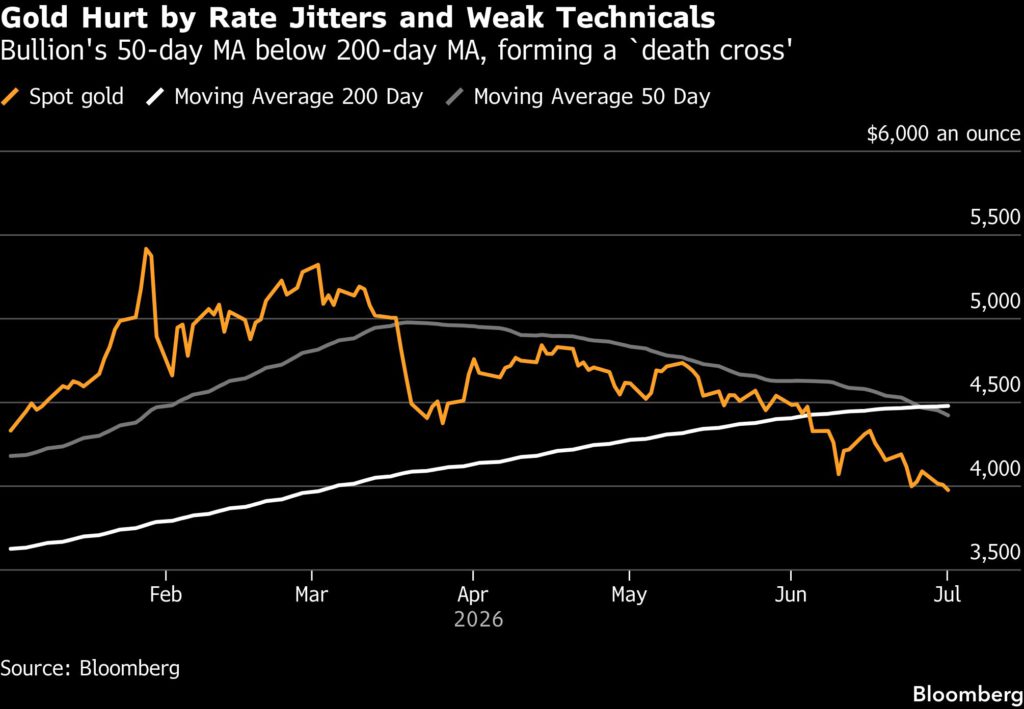
Gold rose as traders weighed the outlook for US monetary policy following Federal Reserve Chairman Kevin Warsh’s remarks at an annual central banker gathering.

Bullion climbed as much as 2.5% as the dollar and bond yields pared gains. Warsh repeated that he isn’t going to offer “forward guidance” with regard to upcoming rate policy, marking a step-change at the Fed, he said Wednesday at the European Central Bank’s annual Forum on Central Banking in Sintra, Portugal.

He also said price risks have come down in recent weeks, while repeating his determination to bring inflation back to the US central bank’s 2% target.

“Mr. Warsh is staying on message, which is helping gold. Gold traders were fearing that he may come in a bit more hawkish,” said Bart Melek, global head of commodity strategy at TD Securities.

After setting a record in January, the metal has been hurt by speculation that the Fed may hike rates this year to tackle sticky inflation, despite the declines seen in energy costs following the interim US-Iran peace deal. Higher borrowing costs are a headwind for non-yielding metals.

Spot gold traded 2.4% higher to about $4,103.98 an ounce at 10:23 a.m. in New York. The Bloomberg Dollar Spot Index, a gauge of the US currency, rose 0.1%. Silver gained 4%. Platinum and palladium advanced.

(By Yvonne Yue Li)


Guinea plans regional gold refining hub as West African race intensifies


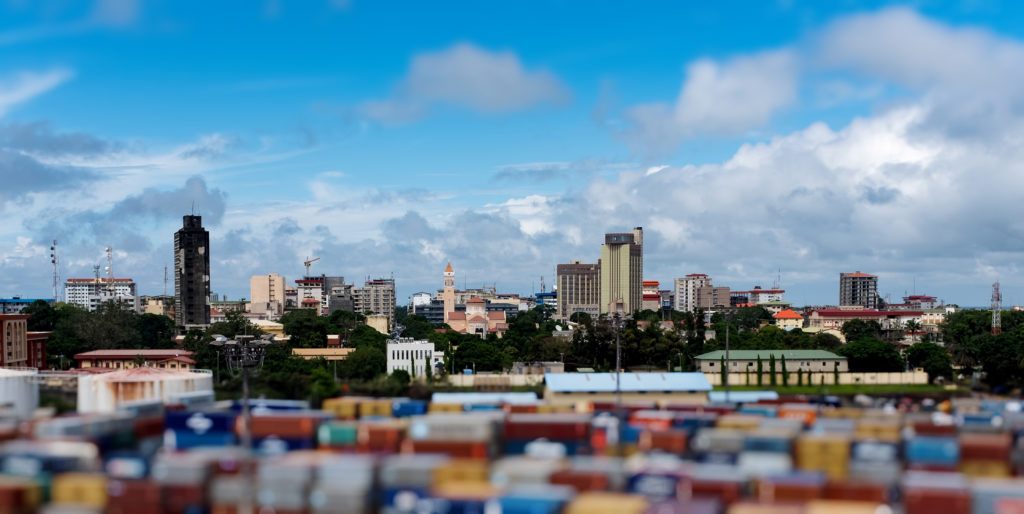
Conakry, Guinea. Stock image.

Guinea aims to become a regional gold refining hub, its mines minister said, joining a broader push by West African producers to process bullion locally rather than exporting it to the Middle East and beyond.

The move underscores efforts to retain more value at home as gold prices remain high.

“If each (West African) country has a refinery, there is no problem,” Mines Minister Bouna Sylla told Reuters over the weekend.

“If your refinery is not competitive, it will fail or succeed because of economics, not politics.”

President Mamady Doumbouya last week banned raw gold exports with immediate effect as the world’s top bauxite producer seeks to retain more value domestically.

Guinea refinery among Africa’s largest

Guinea has built a new refinery capable of processing output from across the region, Sylla said, describing it as among the largest in Africa.

Bangaly Steve Toure, deputy head of Guinea’s Mining Investment Fund, said separately the $30 million plant would initially process 530 metric tons (about 17 million ounces) a year, rising to 733 tons at full capacity. Commercial operations are expected in July following final approvals.

Africa’s top gold producer Ghana, along with Mali and Burkina Faso, is also racing to develop a domestic refining hub to capture more value from bullion.

Guinea’s industrial gold output is dominated by AngloGold Ashanti and Nordgold. West Africa produced about 11 million ounces in 2025, based on industry estimates.

Sylla said Guinea produced roughly 2.32 million ounces last year, worth about $7 billion, but retains less than 1% of that value domestically.

“It is not just about revenue and jobs,” he said. “Countries like the UAE do not produce gold but built refining capacity to stimulate broader economic growth. We want to create the same value chain.”

Guinea is preparing a decree to encourage local refining and plans reforms to formalize artisanal production and improve traceability by 2026, Sylla and Toure said.

The refinery, structured as a public-private partnership, is part of a wider push to develop downstream industries, mirroring similar efforts in Guinea’s bauxite sector, they added.

(By Maxwell Akalaare Adombila; Editing by Mark Potter)


Ferry Operator Cites EU ETS and Taxes in Plan to Sell Vessels, Stop Routes

Brittany Ferries
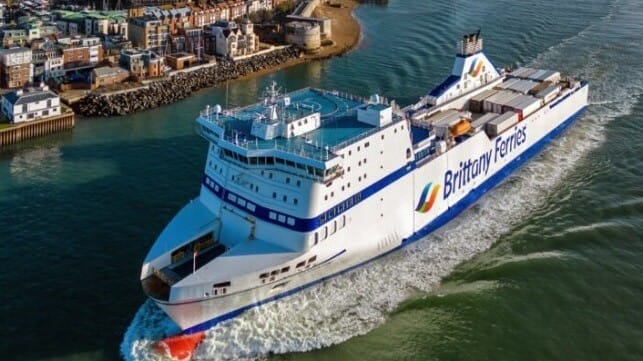
Citing the costs of the EU ETS, taxes, and COVID loans, Brittany Ferries will sell two vessels and end two routes (Brittany Ferries)

Published Jul 1, 2026 1:36 PM by The Maritime Executive

After more than 50 years of service for cargo and passengers between France and the UK, Brittany Ferries reports it must adapt and reallocate resources. The company reports it is facing large bills in 2026, coming in part from the European Union’s Emission Trading System, as well as a rising tax burden, and repayments of COVID loans.

The EU Emissions Trading System was extended to the maritime transport sector on January 1, 2024. It currently stands at 70 percent of emissions, with the final step-up to 100 percent scheduled to go into effect in 2027. Brittany Ferries highlights that it undertook a large fleet renewal project, including the introduction of two LNG-electric-hybrid ferries, Saint-Malo and Guillaume de Normandie, in 2025. 

The company claims to have the “greenest fleet” in the Channel, but it says it still faces significant bills and receives no allowances for the industry-leading investments already made in the fleet. Further, it notes that this is before the UK begins to introduce an equivalent emissions scheme for ships operating in British waters as of July 1. 

Brittany Ferries reports it faces a total bill of approximately £27 million (nearly $36 million) in 2026 from the ETS, taxes, and loan repayments. It notes it has already repaid half of the COVID-era loan it was provided when borders were closed in 2020 during the pandemic, while saying the “long tail of crisis continues.” It also cites “unfair competition on the Eastern channel,” and cost-of-living concerns among passengers.

“Brittany Ferries has a track record in adapting its business to long- and short-term challenges,” said Christophe Mathieu, CEO of Brittany Ferries. “We overcame Covid when borders were shut, we continue to wrestle with the consequences of Brexit, and we are taking steps to make a holiday in France or Spain as reasonable as possible.

The company is putting two of its older ferries, Barfluer (1992) and Cotentin (2007), up for sale. It said ships serving Guernsey, Poole, and Cherbourg would be allocated to a more efficient schedule starting November 1.

The route between Poole and Cherbourg will be closed as of November. It will provide daily service from Portsmouth to Cherbourg to make up for the closure. 

Citing the subsidized competition on the Dieppe to Newhaven route, the company said it is also looking to close its Portsmouth to Le Havre route as of October. It said it has continued to run the service as long as possible, with legal challenges still pending at the European Union in Brussels. Calling it unfair competition, it said it would have to close the route.

The company said it was working to limit the disruptions to customers and would make refunds available. However, it said it has to be realistic and adapt.