It’s possible that I shall make an ass of myself. But in that case one can always get out of it with a little dialectic. I have, of course, so worded my proposition as to be right either way (K.Marx, Letter to F.Engels on the Indian Mutiny)
Thursday, July 02, 2026
NUCLEAR NEWZ
Action needed to achieve tripling of global nuclear capacity target, says NEA
Meeting global aspirations to significantly increase global nuclear energy will require greatly accelerating the expansion of the nuclear workforce, supply chains and availability of finance, the OECD Nuclear Energy Agency has said in a new report.
The goal of at least tripling global nuclear capacity - currently almost 400 GWe - by 2050 has been endorsed by more than 30 countries since the United Nations Climate Change Conference (COP28) in Dubai in December 2023.
The Nuclear Energy Agency's (NEA's) analysis of future global nuclear capacity is built around four scenarios that describe how global installed nuclear capacity could evolve to 2050 and beyond, taking into account refurbishments and long-term operations of the existing nuclear reactor fleet, as well as new builds of gigawatt-scale and small modular reactors (SMRs). In the Low Scenario, global installed nuclear capacity falls to 347 GWe by 2050, as retirements in OECD countries offset new projects and recent momentum fails to translate into sustained deployment. In the Current Trends Scenario, global capacity reaches 619 GWe, driven largely by non-OECD planned and proposed projects. In the Ambitious Scenario, global capacity reaches 883 GWe, with a larger contribution from new build and SMRs. In the Transformative Scenario, global capacity reaches about 1,324 GWe by 2050, more than tripling global capacity - it requires deployment rates that far exceed recent experience and, in OECD countries, would require a major step change in project execution, industrial capability and financing.
Long-term operation of the existing nuclear fleet remains a key factor in meeting global nuclear capacity targets, the NEA says. Many reactors in OECD countries will reach the end of their initial licences before 2040. Extending operations to 60 years and, increasingly, 80 years could preserve reliable low-carbon capacity, support energy security and avoid the need to replace large volumes of firm generation at short notice. However, the report estimates that plants representing more than 50 GWe of OECD nuclear capacity have not yet secured licences to operate to 2040. "Renewing the licences of plants capable of continued operations is essential," it says.
Challenges related to supply chain and workforce capacity must also be overcome if higher deployment scenarios are to be delivered. In many OECD countries, limited new build over the past 25 years has weakened industrial capabilities and project delivery experience, the report says. "Meeting this challenge will require close co-operation among like-minded countries, stronger industrial partnerships and a shift from project-by-project approaches to programme-based deployment."
The NEA says financing will also be a decisive factor. Recent global capital expenditure on new nuclear has averaged about USD30 billion per year, mainly driven by China and Russia. "To meet higher deployment scenarios, this will need to rise sharply," it says. For OECD countries, annual capital requirements would need to increase from about USD12 billion per year over the last decade to an average of USD68 billion in the Ambitious Scenario and USD143 billion in the Transformative Scenario. During the 2030s, the Transformative Scenario could see OECD capital requirements approach USD200 billion per year. Mobilising private capital will be essential. "This will require bankable project structures, clear risk allocation, credible revenue models and government-backed mechanisms that reduce construction, market and political risks."
The NEA says the report "highlights that closing the gap between ambition and delivery will require concerted efforts by governments, industry and financial institutions. Only together can the existing barriers to deployment be overcome, and support for the next phase of nuclear energy's development secured".
"The future of nuclear energy will not be shaped by ambition alone, but by the ability to deliver projects successfully and at scale," says NEA Director-General William Magwood in the report's foreword. "By systematically tracking progress and identifying the opportunities and challenges ahead, this report aims to support informed decision-making and, ultimately, to help enable the future global expansion of nuclear energy."
In its inaugural World Nuclear Outlook Report, released in January, World Nuclear Association compiled national government targets and goals for nuclear capacity for 2050 and assessed them alongside plans for continued and extended operation of existing reactors, completion of those under construction, and realisation of planned and proposed projects. It found global generating capacity could reach 1,446 GWe by 2050 if governments hit their targets for new nuclear, far exceeding the 1,200 GWe goal set in the Declaration to Triple Nuclear Energy.
World Nuclear Association's report said that achieving the projected 2050 capacity requires scaling annual grid connections from 14.4 GWe per year in 2026-2030, to 22.3 GWe per year in 2031-2035, to 49.2 GWe per year in 2036-2040, 51.6 GWe per year in 2041-2045 and 65.3 GWe per year in 2046-2050. It noted that the required 65.3 GWe per year during 2046-2050 is "roughly double the historic peak build rate seen in the 1980s".
The U.S. Has More SMR Projects Than Its Four Closest Rivals Combined
The US has 28 SMR siting announcements, more than the next four countries combined, according to new data from Visual Capitalist and the National Public Utilities Council.
National laboratories lead US siting activity with seven announcements, while utilities, universities and SMR developers are tied with five each.
SMRs top out around 300 MWe versus 1,000 to 1,400 MWe for traditional reactors, making them a fit for data centers and remote sites where full grid connections are costly.
The U.S. is leading the world in small modular nuclear reactor (SMR) development with 28 siting announcements, as of 2026.
Only 78 of 129 SMR designs being tracked by the NEA are publicly reported in the digital dashboard. The rest have either requested not to be included or are not under active development.
Across the U.S., national laboratories lead in siting announcements (7), followed by a three-way tie among utilities, universities, and SMR developers (5 each).
Why Small Modular Reactors Matter
SMRs are a critical clean-energy technology that are cheaper and more flexible than traditional nuclear power generation.
Small: SMRs can produce up to 300 MWe, far less than traditional reactors, which typically produce around 1,000–1,400 MWe.
Modular: SMRs are designed for mass factory manufacturing to reduce cost and build time.
Reactor: The four main reactor types are light water reactors, fast neutron reactors, graphite-moderated high temperature reactors, and molten salt reactors.
Their compact, modular design enables easier transport and deployment ideal for data centers or remote sites where grid connection is costly or unnecessary.
The Role of SMRs in the Future of Power
As electricity demand accelerates, SMRs are becoming an increasingly important part of conversations around grid reliability, energy security, and clean firm power.
For utilities and policymakers, tracking where these projects are emerging can help inform planning, policy, and long-term strategy.
By Zerohedge
SGE-led team targets 14 BWRX-300 SMRs in UK
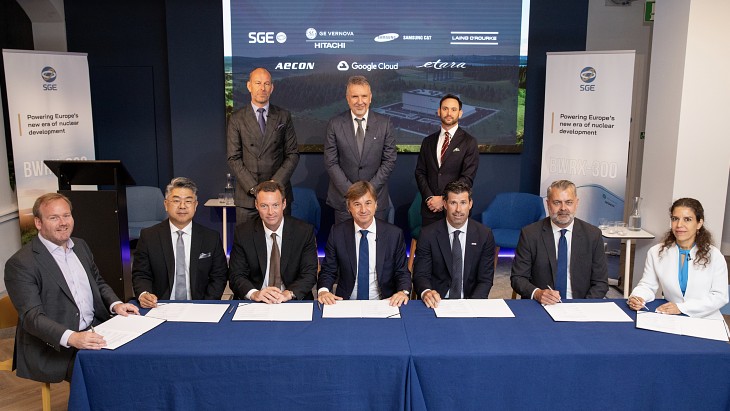
Poland's SGE and a deployment team including Samsung C&T, Laing O'Rourke, Aecon Group and Google Cloud, have outlined plans for the privately financed deployment of 14 GE Vernova Hitachi BWRX-300 small modular reactors across three sites in the UK.
(Image: SGE)
SGE (formerly Synthos Green Energy) submitted the application under the UK's Advanced Nuclear Framework for reactors which could provide 4.2 GW of capacity, equivalent to 11% of current UK power demand.
SGE, which has BWRX-300 projects under way in Poland and elsewhere in Europe, said it has already invested GBP50 million (USD66 million) to get to the stage of submitting the UK project application, which included more than 1,500 pages. It has established SGE SMR UK Ltd as its UK-based project vehicle.
At a signing ceremony before submitting the application, SGE said that its aim was for the project to enter the UK's Advanced Nuclear Pipeline in November, with site selection and government support scheme negotiations in the first half of 2027, a final investment decision in 2030 and commercial operation of the first unit targeted for 2034.
The plan is for the initial site to host six of the 300 MW small modular reactors (SMRs), with four each at two subsequent sites. The locations of the proposed sites, and the proposed operator of the units, are said to be going to be released "in the near future", pending final negotiations.
Michał Sołowow, founder of SGE, said: "We are focused on delivering efficient, safe, affordable, and clean nuclear energy power at fleet scale. The UK is home to one of the world's most experienced nuclear workforce and the British Government has provided a clear path to market with the Advanced Nuclear Framework. Because of this, I am confident we will set a new standard for nuclear development by combining our disruptive business model with the BWRX-300's tenth generation proven technology. We will rely strongly on the UK supply chain; it is a critical element for our project."
He stressed it was a commercial approach, saying they were not asking for money from the UK government, "we are asking for the opportunity", adding that it is "our risk, if we don’t deliver".
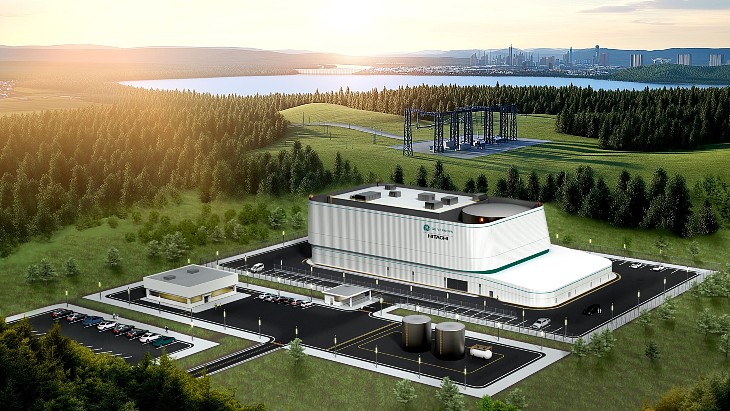
How a BWRX-300 could look (Image: GE Vernaova Hitachi)
Rafał Kasprów, CEO of SGE, said: "Standardisation, repetition, modularisation, and a fleet deployment strategy are the most effective ways to deliver new nuclear projects successfully, reducing costs, construction risk, and delivery times. We are committed to working with UK partners to provide secure, affordable, and clean electricity to millions of British households for generations to come."
Jason Cooper, CEO of GE Vernova Hitachi Nuclear Energy, said: "SGE's vision reflects the growing momentum behind new nuclear across Europe and the critical role SMRs can play in strengthening energy security while delivering reliable, lower-carbon electricity. With construction already under way at the Darlington New Nuclear Project in Ontario, Canada, the first commercial-scale SMR under construction in the Western world, the BWRX-300 offers the confidence that comes from real project execution."
John O’Connor, Group Commercial Director of Laing O’Rourke, said the company would bring nuclear experience and pioneering industrialised construction methods to the development of SMRs. Aaron Johnson, Senior Vice President, Nuclear, Aecon Group Inc, a leading partner on the Darlington BWRX-300 deployment in Canada, said "early involvement in this landmark project positions Aecon to leverage first-of-a-kind experience and tailor proven approaches for SGE in the UK and in other international markets".
Others involved in the project include Fermi Development, a UK-based developer with a decade of renewable energy development expertise, which says it has "screened more than 100 sites, with around 40 sites identified as potentially developable, enabling a fleet approach through application of a consistent model, which is central to schedule resilience, delivery and investor confidence".
Luba Kotzeva, founder and CEO of advisory and consultancy group Etara, whose team has had advisory roles on nuclear projects in 12 European countries, including the UK's Hinkley Point C, Sizewell C and Wylfa projects, said the proposed fleet-scale delivery was to capture learnings and to bring pricing down so "it is privately financeable and at affordable levels".
The project is proposing a Contract for Difference financing scheme - the type used for Hinkley Point C and preferred in European Union projects, but replaced by the regulated asset base model in the UK for the more recent Sizewell C project - which means an agreed price is set in advance for the electricity generated, with the power generator repaying the difference if the price goes above the agreed level, and the government subsidising the amount if the electricity price is below the agreed level. Under the Contracts for Difference system developers finance the construction of a nuclear project and only begin receiving revenue when the power plant starts generating electricity. Under the Regulated Asset Base funding model consumers contribute towards the cost of new nuclear power plants during the construction phase.
The project aims to learn from the experience of Contract for Difference schemes elsewhere in Europe and has proposed modifications to the Hinkley Point-style scheme to better enable private finance, with government asked to back provision of revenue support and risk sharing - including protection against future political changes of policy - "and for consumers providing a hedge for future power price shocks".
It is understood that the aim is for the level set for the Contract for Difference is to likely be in the same area as the current Hinkley Point C figure. The potential for power purchase agreements, which could also underpin financing, will also be included in the negotiations, as well as investment from the UK’s National Wealth Fund.
As to the likely cost per SMR, the project team aims that once they are in fleet mode, each SMR would cost about GBP2.2-2.5 billion (USD2.9-3.3 billion). There are plans to have some associated data centres with the SMRs, and although Google’s current role is as a technology partner SGE hopes they may become an investment partner on the data centre on the site.
Background
GE Vernova Hitachi's BWRX-300 small modular reactor is a 300 MWe water-cooled, natural circulation SMR with passive safety systems that leverages the design and licensing basis of GEH's ESBWR boiling water reactor. In December it passed Step 2 of the UK's Generic Design Assessment. The regulators said there are "no fundamental safety, security, safeguards or environmental protection shortfalls with the design that could prevent its deployment in Great Britain".
However before units could be built, the regulators would need to undertake a further period of detailed design assessment before safety-significant construction could begin and environmental permits could be issued. This assessment could be conducted on a generic basis with GE Vernova Hitachi, should the company choose to return to the GDA process to complete Step 3. Alternatively, it could be undertaken with a licensee or constructor as part of a site-specific development.
Orlen Synthos Green Energy applied to Poland's Minister of Energy last month for a Contract for Difference for the construction of a total of 14 BWRX-300 small modular reactors at three locations in Poland, the first phase of a broader OSGE programme, which ultimately includes the construction of 26 BWRX-300 units in line with the principal decisions obtained by the company from the Polish government. The aim is for the first unit to be operational in 2032.
The UK currently generates about 15% of its electricity from about 5.9 GWe of nuclear capacity. Most existing capacity is to be retired by the end of the decade, but the first of a new generation of nuclear plants is under construction at Hinkley Point C, and a final investment decision has been confirmed for a second plant at Sizewell C. Government plans call for up to 24 GWe of new nuclear capacity by 2050 to provide about 25% of electricity.
A selection contest was held for the UK government's first small modular reactor programme, which culminated last year with Rolls-Royce SMR being selected, with at least three and possibly eight of its 470 MW units set to be built at the Gwyndod site near the existing Wylfa site on Anglesey in North Wales.
State support needed to make new Swiss reactors viable, report says
The construction of new nuclear power reactors in Switzerland is not competitive under current conditions, but would become profitable with state subsidies, risk mitigation and significantly lower construction costs, according to a study from ETH Zurich and the Paul Scherrer Institute.
The Beznau plant (Image: ENSI)
The study investigated under which conditions the construction of new nuclear power plants may make financial sense for Switzerland's future energy system. The findings of the study are based on four different energy models. These models calculate which technologies Switzerland could use by 2050 to cover significantly higher electricity demand as cheaply as possible and in a carbon-neutral way.
Assuming that the state will continue to subsidise renewable electricity sources such as photovoltaics and wind as part of its target to expand power generation to 45 TWh and not provide any funding for the construction of new nuclear power plants, nuclear power would be too expensive under the majority of model calculations used in the study. This remains the case even with low to moderate construction costs of CHF5,000 to CHF8,000 (USD6,180 to USD9,890) per kW of installed capacity.
According to the study, however, new nuclear power plants are technologically compatible with a future energy system based primarily on solar and wind power. And in order for nuclear power to be economically competitive compared with the renewable electricity sources that are already being supported, three things are needed. Firstly, the government would have to decide to also support nuclear power as part of the 45 TWh target. Secondly, politicians would have to decide on risk reduction measures to lower the financing costs of new nuclear power plants from its estimated market rate of 8% to 5%, in line with the interest rate for other large-scale carbon-neutral plants. Thirdly, construction costs for new nuclear power plants must not be too high. With construction costs of CHF12,000 per kW, which are similar to costs recently observed in Europe and the USA, building new nuclear power plants will no longer be worth it in three of the four models – even if the government awards subsidies and bears a portion of the financial risk. But in the hypothetical scenario where construction costs of CHF5,000 per kilowatt could be achieved, it would be profitable to build between 2.6 and 4.9 GWe of new nuclear power plants. Even with moderate construction costs of CHF8,000 per kW, two out of four models still predict an installed power plant capacity of 2 GWe.
The study says Switzerland can achieve its net-zero target using existing and planned technologies without the need for new nuclear power plants with efficient electricity trading with foreign countries among the essential factors for the stability of a system that does not include nuclear. The models show that new nuclear power plants would reduce net electricity imports in winter overall, but not eliminate them entirely. Depending on the model, net electricity imports in winter could be reduced by 1 to 6 TWh - 3 to 20% of the electricity currently generated between October and March.
"Each of these models is based on a range of assumptions that are associated with uncertainties and simplify the complexity of the energy system," said André Bardow, Professor at ETH. "In cases where these models point in the same direction, there are robust findings that could form the basis for discussion by society and in the sphere of politics. As for whether to decide for or against nuclear power, this is ultimately a question for society."
Andreas Pautz, Head of the PSI Centre for Nuclear Engineering and Sciences, Professor of Reactor Physics and Systems Behaviour at EPFL and one of the study's authors said: "This goes to show how crucial construction costs are for nuclear power plants to be competitive. Prices for new nuclear power plants recently seen in the US and Europe can also be attributed to the fact that they are the first projects of their kind. At best, nuclear energy will only be competitive in Switzerland if manufacturers successfully learn the lessons of these cost overruns and limit the costs of future plants to around CHF8,000 per kW."
The Swiss Nuclear Forum welcomed the study, saying it shows "that new nuclear power plants can be part of a cost-optimised, climate-neutral Swiss energy system under certain economic and regulatory conditions".
Hans-Ulrich Bigler, President of the Swiss Nuclear Forum, said: "The study is not a rejection of new nuclear power plants. Instead, it shows under what conditions nuclear energy can be economically integrated into the future Swiss energy system. Ultimately, the framework conditions that will apply in the future are a political decision ... Lifting the legal ban on new construction is the right way forward. Those who want to make technology-neutral decisions shouldn't exclude one option by law today. Whether and when new nuclear power plants are actually built will be determined later by economic viability, willingness to invest, and future electricity demand."
Background
Switzerland currently has four nuclear power reactors - two at the Beznau plant and one each at the Gösgen and Leibstadt plants - generating about one-third of its electricity. They all have an unlimited operating licence and can be operated as long as they are safe.
A new Swiss energy policy was sought in response to the March 2011 accident at the Fukushima Daiichi plant in Japan. Two months later, both the Swiss parliament and government decided to exit nuclear power production. The Energy Strategy 2050 initiative drawn up by the Federal Council came into force on 1 January 2018 and calls for a gradual withdrawal from nuclear energy. It also foresees expanded use of renewables and hydro power but anticipates increased reliance on fossil fuels and electricity imports as an interim measure.
In August last year, Switzerland's Federal Council presented draft legislation that would remove the country's ban on the construction of new nuclear power.
The publication of the study by ETH Zurich and the Paul Scherrer Institute comes as the 'No to New Nuclear Power Stations' coalition - comprising the Greens, the Socialist Democrats, the Green Liberal Party and various other organisations - launched a popular initiative to block the construction of new nuclear power plants in Switzerland. Building new nuclear plants would make the country dependent on foreign energy, cost billions and hinder the development of renewable energy, according to the initiative committee. The committee has until 8 October to collect 50,000 signatures for the referendum to go ahead.
An online poll conducted in September 2024 found that 53% of the Swiss population supports the government's plan to remove the country's ban on the construction of new nuclear power plants.
Criticality for third US reactor ahead of 4 July deadline
Deployable Energy's Unity demonstration reactor has successfully achieved initial criticality at the National Reactor Innovation Center located at Idaho National Laboratory - which means the US has achieved the presidential goal set last year of three microreactors under Department of Energy authorisation to achieve initial criticalities by 4 July 2026.
Energy Secretary Chris Wright examines a fuel rod at INL during during preparations for the Unity demonstration reactor criticality test (Image: Deployable Energy)
Antares Nuclear's Mark-0 reactor became the first to do this, reaching initial criticality in early June, closely followed by Valar Atomics' Ward 250 reactor.
Antares' and Valar's reactors achieved their first criticality under the Department of Energy (DOE) Reactor Pilot Program. Deployable Energy completed the Unity criticality experiment under the Nuclear Energy Launch Pad, an initiative launched in March under the Idaho National Laboratory (INL)-based National Reactor Innovation Center to build on the Reactor Pilot Program, leveraging authorisation from the DOE - rather than the conventional US Nuclear Regulatory Commission licensing route - to expeditiously certify and construct first-of-a-kind advanced nuclear technologies for demonstration.
Unity was the first selection under the Launch Pad initiative, in April this year. Reaching the criticality milestone so soon has set a new benchmark for execution speed in the advanced nuclear sector, according to INL Laboratory Director John Wagner: "Achieving criticality in roughly 150 days is a remarkable accomplishment, and Idaho National Laboratory is proud to have provided the facilities and expertise that helped make this milestone possible," he said.
"Having instrumental partners in the Department of Energy, INL, and our suppliers has been crucial to the success of this criticality test," Deployable Energy co-founder and CEO Bobby Gallagher said. "This accomplishment demonstrates the dedication of our team and partners and moves us collectively one step closer to delivering reliable, resilient, and deployable nuclear energy solutions by leveraging the expertise and capabilities at INL and the existing fuel supply chain."
"Last week, I had the opportunity to see the Unity demonstration reactor firsthand and meet with the talented teams from Deployable Energy, INL and DOE whose work made this historic moment possible on the eve of our nation's 250th anniversary," Secretary of Energy Chris Wright said, describing the achievement as "a significant milestone on a timeline many thought was unachievable. Advanced nuclear technologies like Unity will help power the next generation of American industry, strengthen our energy security, and ensure the United States remains the world's nuclear innovation leader".
The Unity microreactor is envisaged by Deployable Energy as a compact, 1 MWe water-moderated, gas-cooled "nuclear battery" designed to provide reliable, carbon-free power where conventional energy infrastructure is unavailable, impractical, or vulnerable. It says the technology aims to support a wide range of applications, including remote communities, emergency response operations, defence missions, critical infrastructure resilience, and industrial energy needs.
Criticality is the point at which a nuclear reactor sustains a controlled, self-supporting chain reaction. Although the initial criticality was achieved with a full-scale core load, this was a zero-power criticality. Now this has been achieved, the next steps for Unity will be a phased testing programme that includes further validating reactor physics, load following, inherent safety, and full-power operations. These tests will provide additional data to verify reactor performance and support future licensing and commercialisation efforts, and to support continued system validation, performance optimisation, and future deployment planning.
Cameco shuts Cigar Lake mine on Orano mill disruption
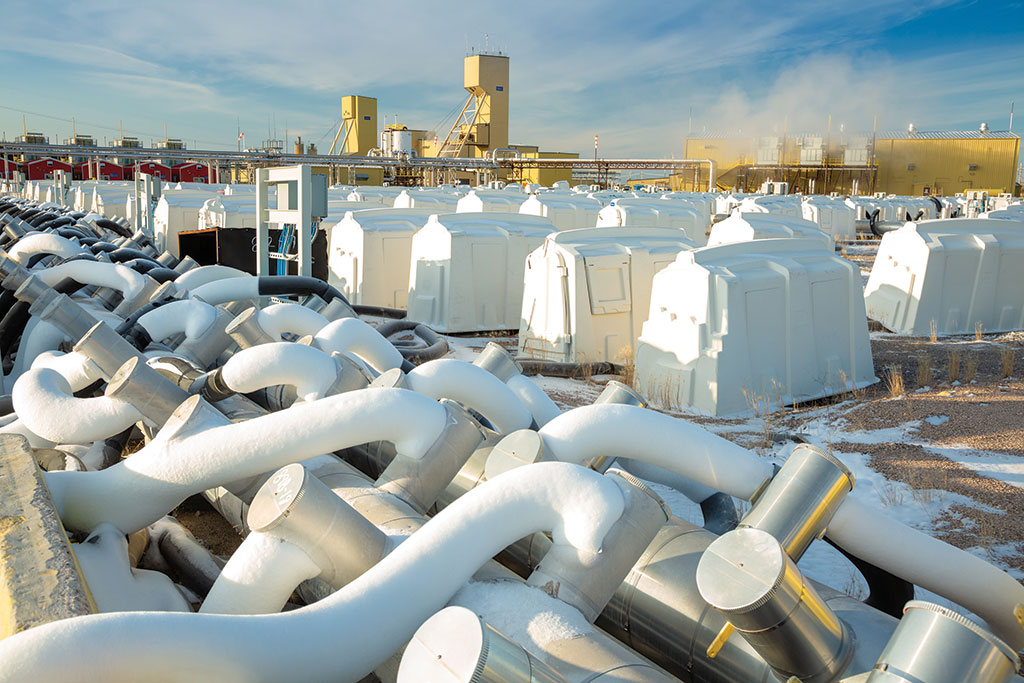
Cigar Lake is the world’s highest grade uranium mine and is located in northern Saskatchewan, Canada. Credit: Cameco
Cameco (TSX: CCO; NYSE: CCJ) says it has temporarily suspended operations at its Cigar Lake mine in northern Saskatchewan, citing disruptions at the McClean Lake mill operated by France’s Orano.
The McClean Lake mill, where the Cigar Lake ore is normally processed, has encountered operational challenges with its sulfuric acid plant that caused it to shut down in order to repair the issue, the uranium miner said in a press release on Wednesday.
Orano is currently working to bring the plant back online and is assessing options to obtain acid supply from an alternative source while it waits for replacement parts to complete the repair, Cameco added.
“With limited ore storage capacity at Cigar Lake, we have temporarily suspended mining activities until sufficient acid is available to allow processing to resume at McClean Lake,” Cameco’s statement reads.
Shares of Cameco were little moved during the early hours of trading despite the operational setback. Trading at about $102 a share in New York, the company has a market capitalization of $44.6 billion.
Two-week stoppage
The company expects the McClean Lake mill to resume in about two weeks and does not anticipate an impact on its 2026 production outlook for Cigar Lake, though it did not rule out a longer-than-expected disruption.
Depending on the duration of any additional delays, our 2026 production outlook could be impacted, it said.
McClean Lake represents one of the world’s largest uranium processing facilities, with an annual production capacity of 24 million lb. in concentrates. It is operated by Orano as its majority owner (77.5%) in partnership with Denison Mines (22.5%). The site is located 750 km north of Saskatoon.
Cigar Lake, situated 70 km southwest of the mill, is the world’s highest-grade uranium mine. Since commissioning in 2014, the operation has produced a total of 174.5 million lb. of yellowcake.
Supply chain challenges prompt Cigar Lake suspension
Cameco has temporarily suspended operations at the Cigar Lake mine in northern Saskatchewan due to challenges related to sulphuric acid availability at Orano's McClean Lake mill, where ore from Cigar Lake is processed.
The leaching circuit at McClean Lake (Image: Orano Canada)
"Orano's McClean Lake mill has encountered operational challenges with its sulphuric acid plant that caused it to shut down in order to repair the issue. Orano is currently working to bring the acid plant back online and is assessing options to obtain acid supply from an alternative source while it waits for replacement parts to complete the repair. With limited ore storage capacity at Cigar Lake, we have temporarily suspended mining activities until sufficient acid is available to allow milling to resume at McClean Lake," the company said.
Cameco said that at present, the mill is expected to return to operation in around two weeks, and the disruption is not expect to impact its 2026 production outlook for Cigar Lake. "However, there is a risk that the repairs to the acid plant take longer than planned and that mining at Cigar Lake is unable to resume on the expected schedule," the company notes - adding that additional delays could affect its 2026 production outlook.
Cigar Lake is the world's highest grade uranium mine, with an average ore grade of 16.33% U3O8. Cameco developed an innovative jet-boring technique specifically for the project, freezing the ground and using a high-pressure water jet to mine out cavities in the frozen ore. The mixture of ore and water is then pumped to underground grinding and processing circuits. Thickened ore slurry is pumped to the surface and transported in tanker trucks 70 kilometres to the McClean Lake mill - operated by Orano - where it is processed into uranium concentrate.
The McClean Lake mill was originally built to process uranium from the McClean Lake mine, with a grade of 2.4% U3O8, but was subsequently upgraded to process high-grade uranium: according to its 77.5%-owner, and operator, Orano, it is the only facility in the world capable of processing high-grade uranium ore without dilution, and can process ore grades more than 100 times the world's average grade.
Sulphuric acid is a key reagent used in the leaching, counter-current decantation, solvent extraction and yellowcake precipitation processes at the mill. The mill has its own acid plant, but globally, supplies of sulphuric acid have been impacted by the conflict in the Middle East and the closure of the Strait of Hormuz. According to the American Chemical Society's Chemical & Engineering News, about half of the seaborne trade in sulphur normally passes through the Strait of Hormuz. Since the start of war in Iran, sulphur shipments have almost completely stopped. And China - the world's largest exporter of sulphuric acid - has restricted exports since the beginning of May.
Cigar Lake produced 4.9 million pounds U3O8 (1885 tU) in the first quarter of 2026 (of which Cameco's share was 2.7 million pounds), with total production for 2026 expected to be between 17.5 and 18.0 million pounds in 2026.
US uranium project completes federal permitting process
The US Nuclear Regulatory Commission has issued a 20-year renewal of the source materials licence for enCore Energy's Dewey Burdock In-Situ Recovery Uranium Project, completing the federal part of the permitting process for the South Dakota project.
The Dewey-Burdock site (Image: BLM)
This follows an Environmental Assessment and a Finding of No Significant Impact in support of the licence issued by the commission earlier this month. The US Bureau of Land Management (BLM) has also recently authorised the start of construction of infrastructure on portions of bureau-managed public lands within the larger Dewey Burdock Project.
Dewey Burdock is described by enCore as an advanced-stage uranium project covering 10,580 acres (about 4,282 hectares), including 10,340 acres of private surface rights and 240 acres of Bureau of Land Management-managed surface rights. It was originally awarded a source and byproduct materials licence by the Nuclear Regulatory Commission (NRC) in 2014. The project became part of enCore Energy's portfolio on its acquisition of Azarga Uranium in 2022, consolidating the companies' assets which also included licensed in-situ production facilities at Rosita and Kingsville Dome, both in South Texas, and the Gas Hills project in Wyoming.
The project was approved in August 2025 for inclusion in the US Federal Permitting Improvement Steering Council's FAST-41 programme. (“Permitting Council”) on 28 August, 2025, with the NRC acting as the lead agency. Inclusion in the programme helps critical mineral projects to receive accelerated permitting review.
Permitting Council Executive Director Emily Domenech congratulated the NRC and enCore Energy Corp "for getting the Dewey Burdock ISR Uranium Project to the federal permitting finish line ... increasing the domestic production of uranium is critical to national security and energy dominance, and will play a pivotal role in accelerating the deployment of nuclear energy to meet growing electricity demand".
The company has commenced permitting efforts with the State of South Dakota, which are required before the Dewey Burdock Project proceeds to full operational status.
“FAST-41 has played an important role in securing federal permitting, and we look forward to finalising state permitting, beginning construction, and ultimately producing from this critical source of clean, reliable, and affordable uranium to fuel the rapidly expanding US nuclear energy needs," enCore Energy Executive Chair William Sheriff said. "This project should provide positive local and national economic impacts through development and ongoing operations."
EnCore plans to operate Dewey Burdock through its Powertech USA subsidiary by the in-situ recovery, or ISR, process, using an oxygen and water-based solution in the production wellfield to dissolve uranium minerals in place. (ISR is also sometimes referred to as in-situ leach).
The last large module - the CB20 containment water tank module - has been installed at unit 4 of the Haiyang nuclear power plant site in China's Shandong province, State Power Investment Corporation announced.
(Image: SPIC)
The CB-20 module will store more than 3,000 tonnes of water, which can be used to help cool the reactor in an emergency. The water can also be directed into the reactor's used fuel pool, while the tank itself can be refilled from water stored elsewhere on site. The tank is part of the plant's passive safety systems which require no operator actions to mitigate potential emergency situations, using natural forces such as gravity, natural circulation and compressed gas to achieve their safety function. In conjunction with other passive safety features, the CB-20 module can maintain unit safety for 72 hours without human intervention.
The module - consisting of two layers of cylindrical wall panels, a top plate, and a conical bottom plate - was hoisted into place on top of the nuclear island's shielding building on 29 June. It has an outer diameter of almost 26 metres, an inner diameter of 10.6 metres and a height of just over 10 metres, and a total weight of some 419 tonnes.
(Image: SPIC)
"This successful hoisting marks the full entry of the Haiyang Nuclear Power Plant Phase II project into the installation and commissioning phase," SPIC said.
The construction of two CAP1000 reactors - the Chinese version of the Westinghouse AP1000 - at each of the Haiyang, Sanmen and Lufeng nuclear power plant sites in China was approved by the country's State Council on 20 April 2022. The approvals were for Haiyang 3 and 4, Sanmen units 3 and 4 and units 5 and 6 of the Lufeng plant. The Sanmen and Haiyang plants are already home to two AP1000 units each.
(Image: SPIC)
Unit 1 of the Haiyang plant entered commercial operation in October 2018, with unit 2 following in January 2019.
The first safety-related concrete was poured for the nuclear island of Haiyang unit 3 in July 2022, and in March the outer steel dome of the nuclear island containment building was hoisted into place. Construction of Haiyang 4 began in April last year. The planned construction period for Haiyang 3 and 4 was 56 months, with the two units scheduled to be fully operational in 2027.
(Image: SPIC)
"Once all four units are in operation, the plant is expected to generate 40 billion kWh of electricity annually and reduce carbon dioxide emissions by approximately 30 million tonnes each year," SPIC noted.
The Haiyang plant is planned to eventually have six 1,000 MW reactors, with room for expansion of two more units, the company said.
Europe Isn't Anti-Air Conditioning. It's Just Calling It Heat Pumps
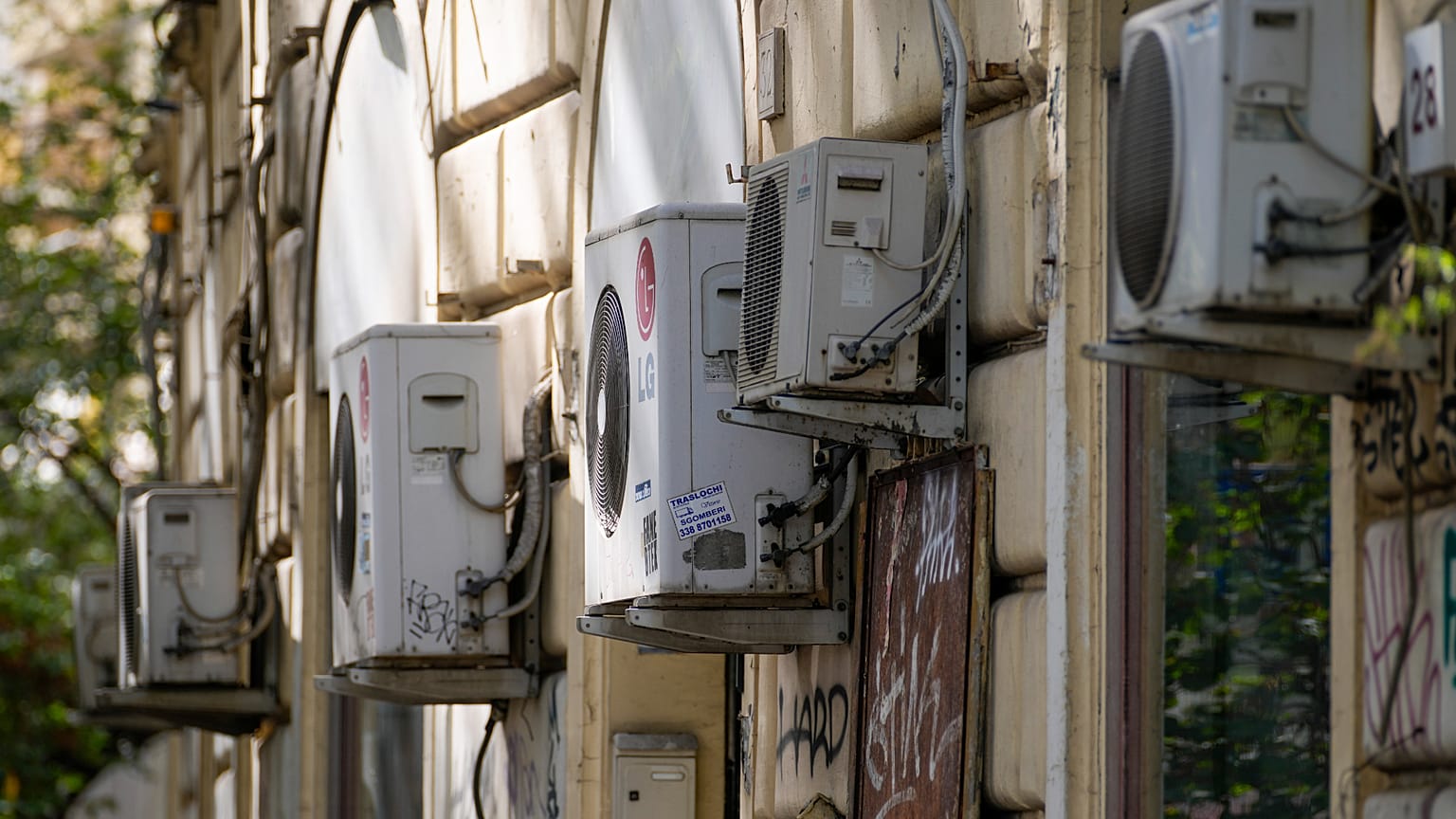
Europe isn't rejecting air conditioning—it is rapidly expanding cooling capacity through reversible heat pumps installed primarily as low-carbon heating systems.
Government subsidies for heat pumps are simultaneously advancing decarbonization, energy security, and climate adaptation by giving millions of homes efficient summer cooling.
The biggest cooling gap remains in older public buildings such as schools and hospitals, where costly retrofits have lagged behind residential upgrades.
Europe Isn't Anti-Air Conditioning. It's Just Calling It Something Else.
The recent heatwaves across Europe have reignited a familiar debate in parts of the American media. Articles in publications including The Washington Post and The New York Times have questioned why Europe continues to lag behind the United States in air conditioning, with some suggesting that Europeans remain culturally reluctant to embrace cooling or that governments have actively discouraged its deployment. As temperatures continue to break records, the implication is that Europe has failed to prepare its buildings for a warmer future.
At first glance, the argument appears persuasive. Residential air conditioning penetration in Europe is indeed considerably lower than in much of the United States, where mechanical cooling has become a standard feature of modern homes. Yet this comparison increasingly overlooks a fundamental shift that has been taking place across Europe over the past decade. The continent has not been rejecting cooling technology. Rather, it has been deploying it under a different name.
America Counts Air Conditioners. Europe Counts Heat Pumps
The discussion often begins with a comparison of air-conditioner ownership, but this is becoming an increasingly poor proxy for Europe's actual cooling capacity. Across the European Union, governments have spent years encouraging households to replace natural gas boilers, oil-fired heating systems and other fossil-fuel appliances with electric heat pumps. The principal objective has been decarbonising heating, which remains one of Europe's largest sources of greenhouse gas emissions and, since Russia's invasion of Ukraine, one of its greatest energy security challenges
What is often overlooked outside Europe is that the overwhelming majority of modern air-source heat pumps are fully reversible. The same refrigeration cycle that extracts heat from outside air during winter can simply operate in reverse during summer, removing heat from inside the building and providing highly efficient air conditioning. In practical terms, every household replacing a conventional gas boiler with a modern reversible heat pump is not merely installing a cleaner heating system. It is simultaneously installing an efficient cooling system.
The technology may not be marketed primarily as an air conditioner, and homeowners may well purchase it with winter heating in mind, but the cooling capability is already built into the equipment.
Europe's Cooling Capacity Is Growing Faster Than Many Realise
This distinction is important because it fundamentally changes how Europe is adapting to a warmer climate. Whereas the United States historically developed dedicated cooling systems alongside separate heating infrastructure, Europe's building stock evolved around the opposite principle. Heating dominated energy demand for decades, making investment in highly efficient heating systems economically rational while cooling remained a secondary consideration.
Electrification is now changing that equation. Every new heat pump installed under Europe's decarbonisation programmes simultaneously expands the continent's cooling capacity without requiring households to purchase an entirely separate appliance. Millions of homes are therefore acquiring air conditioning almost as a by-product of the transition away from fossil fuels.
This is reflected in policy as much as technology. From Germany and France to the Netherlands, Italy and the Nordic countries, governments actively subsidise heat pumps through grants, tax incentives and renovation programmes. These policies are designed to reduce emissions and improve energy security by replacing fossil heating systems with electricity, but the practical outcome is the rapid deployment of appliances capable of both heating and cooling. It is therefore difficult to reconcile claims that Europe is discouraging cooling technology with the reality that billions of euros are being invested to accelerate the adoption of equipment that performs exactly that function.
The Real Gap Lies Elsewhere
None of this suggests that Europe has solved its cooling challenge. There remain genuine shortcomings, particularly within institutional buildings. Many schools, hospitals, government offices, and older public buildings continue to rely on central gas-fired heating systems that offer no cooling capability. Retrofitting these buildings often requires installing dedicated cooling infrastructure alongside existing heating systems, making upgrades technically more complex and financially demanding than in residential buildings already transitioning to heat pumps.
This distinction helps explain why images of overheated classrooms and public offices frequently accompany discussions about European heatwaves. These buildings often represent some of the slowest segments of the building stock to modernise. Their experience, however, should not be mistaken for evidence that Europe as a whole is resistant to cooling technology. Rather, it highlights the challenge of upgrading ageing public infrastructure that was designed for a different climate and a different energy system.
A Question of Terminology More Than Technology
Much of the transatlantic misunderstanding stems from language rather than engineering. Americans typically think of heating and cooling as two separate systems combined within a broader HVAC installation. Europeans increasingly think in terms of replacing a boiler with a heat pump. Yet the underlying technology is often remarkably similar. Both rely on refrigeration cycles to move heat rather than generate it, and both can operate in reverse to provide cooling whenever required.
As a result, statistics that compare dedicated air-conditioner ownership increasingly understate Europe's actual ability to cool buildings. They fail to capture the millions of households whose primary heating system has quietly become their primary cooling system as well. Measuring only conventional air conditioners therefore risks overlooking one of the most significant changes currently taking place in Europe's residential building stock.
The Energy Transition Is Also Becoming Climate Adaptation
Perhaps the most interesting aspect of Europe's heat pump revolution is that it was never primarily intended as a cooling strategy. Governments promoted these systems to reduce greenhouse gas emissions, lower dependence on imported fossil fuels, and improve energy security following the disruption of Russian gas supplies. Yet in pursuing those objectives, they have also been laying the foundations for a more climate-resilient building stock capable of coping with increasingly frequent summer heatwaves.
Europe undoubtedly needs more cooling as temperatures continue to rise, particularly in schools, hospitals, and other public buildings where investment has lagged behind residential markets. However, portraying the continent as somehow opposed to air conditioning increasingly misses the bigger picture. Europe is not refusing to adopt cooling technology; it is simply deploying it through the rapid expansion of heat pumps rather than through dedicated air-conditioning systems alone.
The irony is that one of the largest cooling programmes currently underway in Europe is rarely discussed as such. Instead, it appears in policy documents under headings such as decarbonisation, electrification, and heat pump deployment. Yet for millions of European households, these investments are delivering something far more tangible than policy jargon. They are providing highly efficient heating in winter, highly efficient cooling in summer, and a building stock that is gradually becoming both cleaner and more resilient. Europe may not always call it air conditioning, but increasingly, that is exactly what it is installing.
By Leon Stille for Oilprice.com
Brussels supports air conditioning—but not as the main answer
Cooling Europe's cities will require a combination of measures, with air conditioning serving as just one element of a broader climate adaptation strategy, one EU official said.
European Commission officials privately acknowledge that air conditioning is essential during increasingly frequent heatwaves, as passive cooling measures such as shading and insulation will not always be sufficient.
But as cooling demand rises, they also argue that relying solely on air conditioning would drive up electricity consumption, require additional power generation and leave households facing higher energy bills, particularly given today's high electricity prices.
"Air conditioning is definitely one of the tools and a very necessary tool. In some cases, insulation or other passive strategies are not sufficient," one EU official said on condition of anonymity, after a brutal heatwave exposed Europe's lack of preparedness to cope with rising temperatures.
"At the same time, if you rely only on air conditioning, you may have to pay a lot for installation because you need a big generator to produce equally, but also you can end up with high energy bills," the EU official said.
Moreover, the widespread installation of air conditioners can worsen the urban "heat island" effect through waste heat, the EU official added, reinforcing the need for green spaces, shading, building orientation and better city design.
The EU official outlined the rationale behind the bloc's upcoming climate adaptation strategy, due in the fourth quarter of 2026, which will seek to shift governments away from disaster recovery towards prevention and resilience.
Overall, the Commission advocates a "holistic" approach that combines passive and efficient cooling technologies. Rather than encouraging mass installation of air-conditioning units, Brussels wants Europe to prioritise cooler buildings and cities through design, insulation and passive measures, using efficient air conditioning where it is genuinely needed.
Air-conditioning units vs fixed systems
EU officials acknowledge that portable air conditioners remain popular because they require no installation, but warned that they are considerably less energy-efficient than fixed systems.
The Commission noted that modern fixed units are "highly efficient", often operating as reversible heat pumps that can help decarbonise heating as well as provide cooling.
EU energy-labelling and eco-design rules have steadily improved their efficiency since 2002, with further regulatory updates planned, the EU official said.
However, the Commission noted that the installation of air-conditioning is typically regulated at regional or local level.
"You need urban premises to install a solar shading façade or to install air conditioning. And member states, regions, and municipalities really need flexibility and to decide the approach that works best for them," the EU official said.
Veteran lawmaker Pascal Canfin (France/Renew Europe) said that reducing the climate adaptation debate to "for or against air conditioning" was "simplistic".
"I believe schools and hospitals should be air-conditioned so that children, elderly people, or people who are ill aren't left alone to face heat that has become dangerous. But air conditioning isn't the answer to everything," Canfin told Euronews.
The French MEP noted that air-conditioning alone can't solve infrastructure vulnerability or declining agricultural yields, noting that it is "ineffective to systematically reject every technological adaptation solution as it is to rely on a single miracle fix".
Terry Reintke, co-president of the Greens/EFA in the European Parliament, said the "absolute priority" is to save lives, protect the most vulnerable and those without access to cooling.
"We need to reimagine our urban spaces: planting trees, restoring wetlands, and creating cooling zones with water features and green corridors. Nature-based solutions are not just aesthetic, they are life-saving infrastructure," Reintke told Euronews.
However, the German lawmaker noted that the latest heatwave was a "wake-up call to accelerate the transition away from fossil fuels", which she said are the root cause of this escalating danger.
"We must double down on renewable energy to power our cities without cooking the planet," Reintke added.
Trump administration launches a federal investigation into California’s Coastal Commission, escalating battles over offshore oil, wind power, and SpaceX launch approvals.
California is fighting back with multiple lawsuits as Washington pushes to revive offshore drilling, cancel wind projects, and redirect billions toward fossil fuel investments.
The growing legal showdown could reshape U.S. energy policy, state environmental authority, and the future of California’s clean energy ambitions.
For years, U.S. President Donald Trump has loomed large over California's energy and environmental sectors as he tries to promote fossil fuels and roll back the state’s climate initiatives, with varying degrees of success. Back in 2019, the Trump administration effectively revoked California's federal waiver under the Clean Air Act that allowed the state to set its own stringent greenhouse gas emissions standards. The president has been even more aggressive during his second term.Last year, Trump utilized federal agencies to mandate the reopening of the Sable Offshore platform near Santa Barbara which had been shut down following a major 2015 spill. This directive bypassed state-level environmental blocks, allowing the facility to resume pumping ~50,000 barrels of oil per day. The administration has also allocated well above $2 billion to buy out and terminate offshore wind leases off California's central coast, pivoting investments away from the green initiatives supported by state leadership to fossil fuel production.
And, he’s at it again: the Trump administration has launched a formal federal investigation into the California Coastal Commission, significantly escalating ongoing battles over offshore energy production, commercial space launches and environmental oversight along the Pacific coastline. The National Oceanic and Atmospheric Administration (NOAA) is executing a comprehensive performance evaluation of California’s coastal management program under the federal Coastal Zone Management Act. The federal Commerce Department has cited the Coastal Commission's "unfounded objections" to U.S. Air Force proposals which have threatened to delay or restrict increased commercial space launches by Elon Musk's SpaceX out of Vandenberg Space Force Base, impeding federal space and national security priorities.
Tensions stem from the commission's previous denials of SpaceX's requests to significantly increase Falcon 9 rocket launches at Vandenberg. While SpaceX subsequently filed a federal lawsuit alleging political bias against CEO Elon Musk--which the commission ultimately settled by issuing a formal apology--the Trump administration's current regulatory review seeks to permanently address the state's environmental oversight of space launches. The administration's defense of SpaceX comes despite a highly volatile history between Trump and Musk. The two men engaged in a fierce public feud over a federal spending bill, leading Trump to threaten the cancellation of SpaceX's multi-billion dollar government contracts and Musk to threaten to pull the Dragon spacecraft from NASA missions.
The federal probe follows critical court setbacks for oil interests. A California Appeals Court recently upheld a state injunction blocking Sable Offshore Corp. from repairing and restarting the Santa Ynez pipeline network along the Gaviota Coast. The pipeline has been out of service since the infamous Refugio Beach oil spill in 2015 after ~450,000 gallons of crude oil spilled onto the Gaviota Coast, heavily contaminating coastal ecosystems and forcing beach closures. While the Trump administration previously invoked the Defense Production Act to bypass state authority and restart production, California Attorney General Rob Bonta has so far successfully countered with lawsuits to defend state sovereignty.
In a separate but parallel clash, California is preparing to sue the federal government over its systematic unwinding of renewable energy. Last month, California sent a 60-day notice of intent to sue over Interior Department deals that canceled offshore wind projects and redirected developers to Gulf Coast fossil fuel investments. The state has already issued subpoenas to leaseholders, including Golden State Wind and Invenergy, to investigate the buyouts.
Previously, the Trump administration agreed to pay developer Invenergy $765 million to voluntarily terminate four offshore wind leases. This deal includes one project off the Central Coast of California (Morro Bay), two in the Gulf of Maine, and one in the New York Bight. Under the terms of the deal, Invenergy will redirect the funds toward building natural gas plants in Indiana, Wisconsin, Iowa, Kansas, and Missouri, as well as geothermal energy projects in the Western United States. Back in April, the Golden State Wind project, a 2-gigawatt floating offshore wind farm in California's Morro Bay Wind Energy Area, was officially terminated in April 2026 when developers voluntarily agreed to relinquish their leases. The U.S. Interior Department and Golden State Wind (a joint venture by Ocean Winds and Reventus Power) settled for a payout of approximately $120 million in refunded lease fees. Similar to the Invenergy deal, the reimbursement is strictly conditional, with Golden State Wind required to invest an equal amount in U.S. oil and gas assets, energy infrastructure or LNG projects along the Gulf Coast. Golden State Wind also agreed to abandon any future offshore wind development in the United States.
Finally, California, alongside a coalition of 12 other states, has also filed an ongoing lawsuit in the U.S. District Court for the Northern District of California against the U.S. Department of Energy (DOE) and the Office of Management and Budget. The coalition argues that the termination of $2.7 billion in clean energy and infrastructure awards--including $1.2 billion for California's ARCHES (Alliance for Renewable Clean Hydrogen Energy Systems) clean hydrogen hub--is an unconstitutional violation of the separation of powers and the Administrative Procedure Act. The states assert that because Congress holds the power of the purse and previously appropriated these funds, the executive branch cannot unilaterally terminate the congressionally mandated programs.
By Alex Kimani for Oilprice.com
Trump Administration Advances New California Oil Lease Plans
The Bureau of Land Management is giving California another chance to weigh in on oil and gas leasing—whether the state wants it or not.
On Thursday, the BLM opened a 30-day public scoping period for 50 federal oil and gas parcels covering roughly 36,000 acres across Kern, Kings, Fresno, and San Luis Obispo counties. The parcels could be included in a future federal lease sale, marking the latest step in the Trump administration's effort to revive domestic energy development on public lands.
If this feels familiar, that's because it is. Just last week, the BLM signed off on a broader leasing plan covering another 850,000 acres in California after years of lawsuits and bureaucratic limbo.
Today's action doesn't authorize drilling, but it does begin the process that could eventually lead to new federal leases in California's most productive oil-producing region.
Of course, leasing is just the first step, and companies must still obtain drilling permits, undergo environmental reviews, and navigate a regulatory maze before a single well is spudded.
But in California, even opening the conversation is enough to reignite a long-running political fight.
The Trump administration has made expanding domestic oil and gas production a central pillar of its energy agenda, while California continues pushing in the opposite direction, seeking to limit new fossil fuel development and accelerate its transition away from hydrocarbons. The two sides have already clashed over offshore drilling and federal authority over public lands, with several disputes still working their way through the courts.
The BLM argues that federal oil production remains economically significant. More than 95% of federal drilling in California occurs in established Kern County fields, generating more than $200 million annually in economic activity and producing between $65 million and $90 million in federal royalties each year. Roughly half of those royalties flow back to California.
Environmental groups are almost certain to oppose the latest leasing proposal, arguing that it conflicts with the state's climate goals and poses risks to air quality, wildlife habitat, and nearby communities.
_26566.jpg)


_65415.jpg)
_20852.jpg)

_80505.jpg)
_13976.jpg)
_48330.jpg)
_0e0cf56d.jpg)
_ad39b17c.jpg)
_abb5bbd2.jpg)