Saturday, July 18, 2026


Canada’s Churchill Port to Export Grain for the First Time in Six Years

Port of Churchill, Canada
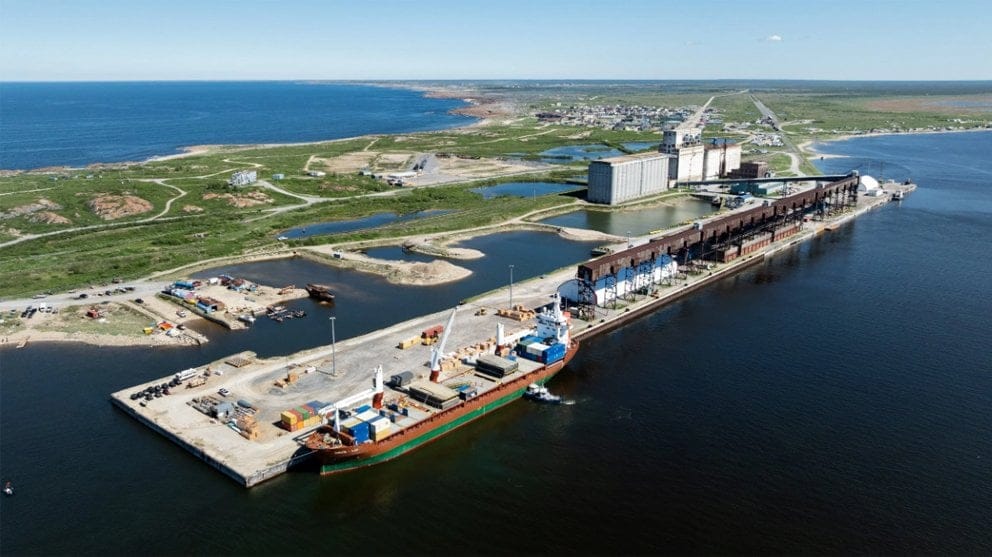
Located in the Far North, the Port of Churchill looks to grow as an export center (AGG)

Published Jul 16, 2026 5:36 PM by The Maritime Executive


Efforts to revitalize and expand Canada’s Port of Churchill, located in Manitoba in the reaches of the Arctic, are building momentum as shipments of prairie grain are again starting to move toward the port. For the first time since 2020, Churchill will serve as an export port for Canada’s grain crop as the owners of the port, Arctic Gateway Group, work to expand its operations.

The federal government of Canada and the province of Manitoba are supporting the efforts to expand the operations at Churchill. The Globe and Mail newspaper reports the governments have provided C$262.5 million (US$187 million) to support the efforts, including for planning, design, and upgrades to the port and the Hudson Bay Railway that moves cargo to the port in the Far North.

Arctic Gateway Group reports loading will begin on Friday, July 17, to bring grain from Manitoba on the Hudson Bay Railway to Churchill. It reports that multiple export vessels will ship the grain later in the summer to global markets.

Grain exports at the port had plummeted since 2021, when the Canadian Wheat Board ceased operations. Currently, the port exports small volumes of critical minerals, reports the Globe and Mail, and it is expected to also start potash exports from a small mine in Manitoba. In addition, Churchill handles cargo such as building supplies and hardware coming in for the communities and industry in the Nunavut territory, operated by the Inuit people.


Port of Churchill supports supply ships that transport material to the indigenous communities in the Far North (AGG)


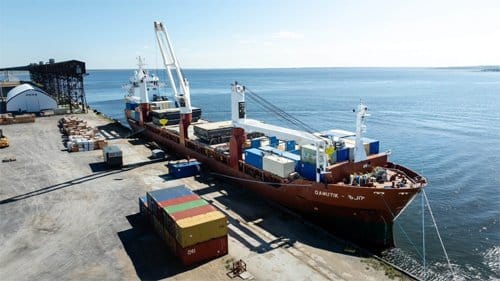
The first supply ship of the 2026 season for the Far North, Qamutik (12,760 dwt), departed Churchill on July 12. Company officials highlight that the ship, operated by Nunavut Eastern Arctic Shipping (NEAS), arrived on July 9, and they had been working hard to move materials on the railway. It departed, transporting a wide range of construction equipment, industrial supplies, trucks, and other goods.

Critics of the expansion efforts and the government financial support argue that the shipping season is too short to make Churchill a meaningful contributor to Canada’s exports. They also say that rail and insurance costs are very high, and the port lacks sufficient storage capacity.

Arctic Gateway Group, which is owned by the indigenous and northern communities, operates the port as well as the railway and the Churchill Marine Tank Farm. It acquired the railroad in 2018 and has been investing to upgrade its operations and capacity. 

“It’s a strong signal of the progress made to restore and rebuild this corridor, and of the opportunity ahead as we continue growing the business with a diversified mix of exports. In addition to grain, we will also this year export critical minerals and potash, as well as industrial goods, supplies and equipment to Nunavut - representing the most diversified mix of annual exports in the Port of Churchill’s history,” said Mike Spence, Chair of the Arctic Gateway Group and Mayor of Churchill.

The port is also promoted as a vital link for businesses in Saskatchewan. The supporters cite the growing potential of Arctic shipping, saying Churchill can provide a vital export link.

Company officials are promoting the restoration of grain exports as a “strong foundation” to continue to grow and rebuild long-term traffic through the corridor.


Canada’s first diamond mine to shut down  


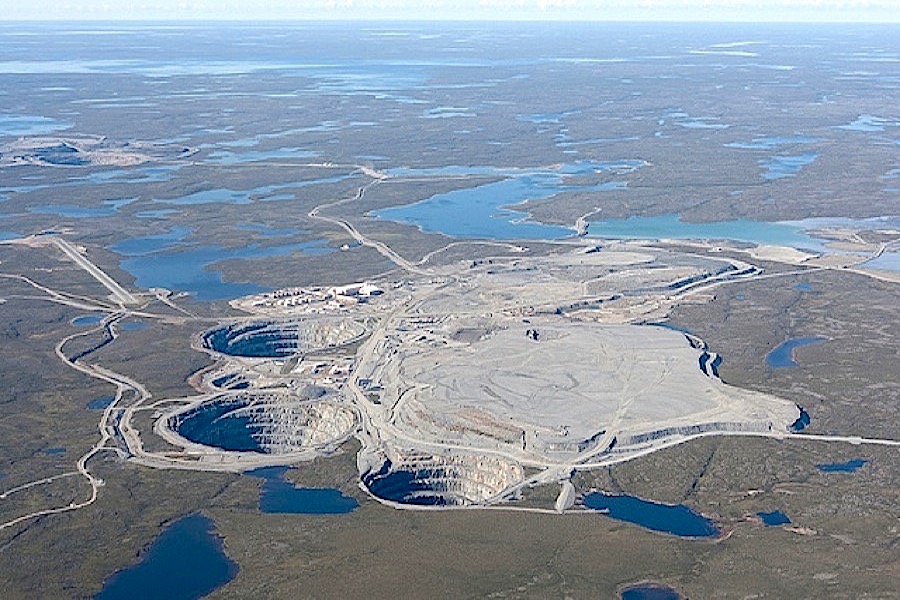
The Ekati mine site includes multiple kimberlite pipes some 300 km northeast of Yellowknife. (Credit: Arctic Canadian.)

Canada’s first diamond mine, Ekati in the Northwest Territories, will shut down following a Supreme Court of British Columbia ruling placed it into receivership this week.  

Arctic Canadian Diamond Company, a subsidiary of Australian-based Burgundy Diamond Mines operated the historic Ekati diamond mine approximately 300 km northeast of Yellowknife after it bought the asset from Dominion Diamond in 2021.  

Low global diamond prices compounded with tariffs, competition from synthetic stones, inflationary pressures, and supply chain bottlenecks were challenges too difficult to navigate.  

In December 2025, the government of Canada provided a C$115 million ($81.9 million) loan through the Large Enterprise Tariff Loan facility to help Ekati continue operations.  

But Arctic Canadian Diamond Company, incorporated in British Columbia,  filed for insolvency protection under the Creditors Arrangement Act (CCAA) in May.  

Northwest Territories gov’t assumes responsibility  

The government of Northwest Territories (GNWT) said it will take responsibility for Ekati as the company enters receivership.  

The GNWT made an application to appoint a Receiver to assume responsibility of the mine site’s assets and activities and said it will advance funds to the Receiver, PricewaterhouseCoopers, using the companies’ reclamation security to fund the reclamation and closure of the site. 

The Receiver, GNWT said, is on-site at Ekati and is overseeing activities to ensure site stability, safety and environmental protection. 

“The GNWT will continue to uphold its responsibilities to protect the land, water and public interest.” Minister of Environment and Climate Change Jay Macdonald said in a press release.  

“Environmental and regulatory obligations remain in place, and we will continue to work through the appropriate legal and regulatory processes to ensure those obligations are managed.” 

Ekati’s impending shutdown follows the closure of the nearby Diavik diamond mine in March, which was operated by Rio Tinto.  

Canadia’s only other diamond mine, Gahcho KuĂ©,  owned by De Beers, and Mountain Province, is expected to close by 2028. Mountain Province plans to voluntarily delist its shares from the Toronto Stock Exchange, signaling possible financial troubles, the CBC reported Thursday.  


BC, Simpcw First Nation sign consent agreement for Trekor Metals’ Yellowhead copper project


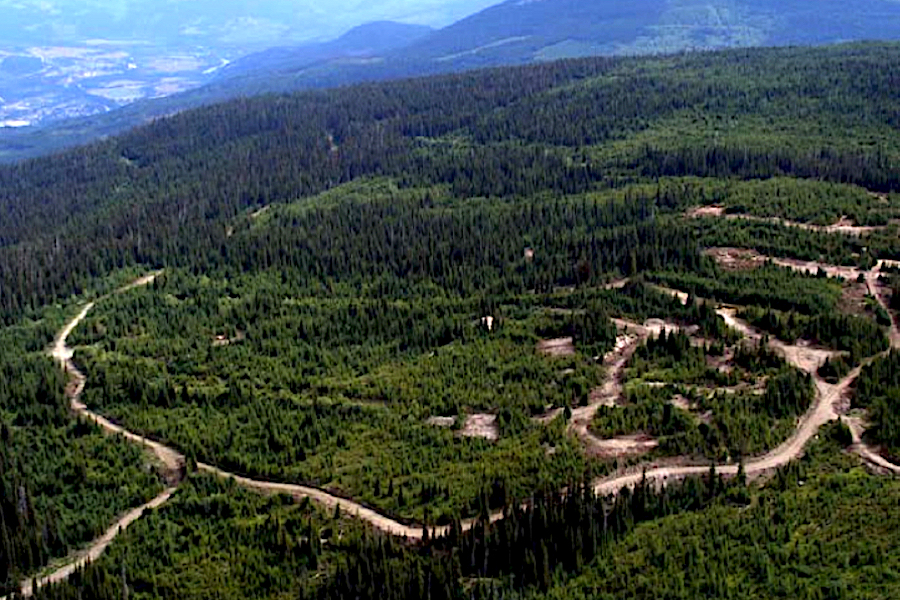
The Yellowhead Project has potential to be one of the most significant copper mines in North America. Credit: Taseko Mines

The Province of British Columbia and the Simpcw First Nation have entered into a consent-based agreement for the environmental assessment and review of Trekor Metals’ Yellowhead copper project in Simpcwul’ecw (Simpcw) Territory. 

The agreement was signed by Simpcw Ku̓kwpi7 (Chief) George Lampreau; Tamara Davidson, Minister of Environment and Parks; Spencer Chandra Herbert, Minister of Indigenous Relations and Reconciliation; and Jagrup Brar, Minister of Mining and Critical Minerals. 

Last week, Trekor Metals (TSX: TKO; NYSE American: TGB) said a Detailed Project Description for the Yellowhead project was submitted to the BC Environmental Assessment Office, providing more information about the proposed project, incorporating additional technical work and community feedback received during the early engagement Phase of the EA process.   

The company also released an economic impact study evaluating the potential impact of the construction and operation phases of the Yellowhead project. 

The company envisions the Yellowhead as a 90,000-tonne-per-day open pit mine that would run for 25 years, producing 178 million lb. of copper annually at cash costs of $1.90 per lb. Over the first five years, average production could reach 206 million lb. at $1.62 per pound. 

Last year, the company released a technical report that more than doubled the value of the project. CEO Stuart McDonald said at the time it “establishes Yellowhead as a world-class copper project in a tier one jurisdiction,” with potential to become one of the largest on the continent. 

“This marks the first time Simpcw has applied our consent process to a major project, and it is an important milestone for our Nation,” Simpcw Chief Lampreau said in a statement. 

“This agreement advances the exercise of Simpcw’s governance and decision-making responsibilities, while strengthening our relationships with the Province and project proponents,” Lampreau said. “This agreement is not just about one project — it is about establishing how decisions on new mining projects will be made in our territory going forward, in a way that respects Simpcw’s governance, our people and our responsibilities to future generations.”  

“Since 2024, Trekor has been advancing the Yellowhead project through the Simpcw process, an Indigenous-led, consent-based decision-making model, and in 2025 initiated the B.C. environmental assessment process,” McDonald said in Thursday’s statement. “We believe the agreement announced today can contribute to a more co-ordinated, efficient and transparent assessment process that benefits the Yellowhead project and all people in British Columbia.”


Panama bids for full ownership of strategic oil terminal

Panama Canal. Stock image.

Panama’s government will buy the remaining 41% private stake in Petroterminal de Panama, the ​economy and finance ministry said on Friday, handing ‌the state full ownership of a strategic energy and logistics asset in a move aimed at tightening national control over critical infrastructure.

The acquisition ​will give Panama 100% ownership of Petroterminal, which ​the government described as a key platform for the ⁠country’s logistics and energy development and an asset with ​broader strategic importance.

The government said the deal would be financed ​through the company’s own cash flow and was a contractual purchase under an existing legal right dating back to 1977, rather than an ​expropriation. Officials said the option was established in the company’s ​association contract and accepted by all shareholders.

The purchase price will be calculated ‌using ⁠a pre-agreed formula based on Petroterminal’s audited financial statements, the ministry said. It added that the transaction would not require funding from the national treasury, would not add to ​public debt and ​would not ⁠affect spending on public works, social programs or other state investments.

President Jose Raul Mulino’s administration ​said full ownership would allow Panama to capture ​more ⁠of the value generated by the company, support investment in the energy, logistics and maritime sectors and reinforce sovereignty over a ⁠strategic ​national asset.

Economy and Finance Minister Felipe ​Chapman said the company would be managed under international standards of efficiency, transparency ​and corporate governance.

(Reporting by Elida Moreno; Editing by Natalia Siniawski)

BAN DEEP SEA MINING

US proposes lease of seabed mining blocks off American Samoa coast


American Samoa. Stock image.

The U.S. Interior Department has proposed a lease of more than 31 million acres off the coast of American Samoa for seabed mining, part of President Donald Trump’s broader push to boost U.S. critical minerals production.

The waters around the Pacific Ocean territory are estimated to contain large amounts of potato-shaped rocks known as polymetallic nodules filled with the building blocks for electric vehicles, weaponry and electronics.

The department’s Marine Mineral Administration (MMA) said on Thursday it aims to lease two blocks, one of 16.3 million acres and the other 15.1 million acres, in federal waters off the eastern coast of Tau, one of the territory’s seven islands.

Last year, Trump signed an executive order aimed at boosting the industry to offset China’s control of minerals markets.

The MMA is proposing the auction for November 19 at BOEM’s offices in Camarillo, California. It will be closed to the public but livestreamed on MMA’s website. Minimum bids are $3 million.

Royalty rates would be 2% of the value of mineral production for the first five years and 5% thereafter.

Pulaali’i Nikolao Pula, American Samoa’s governor and an opponent of deep-sea mining, will have 60 days to respond to the proposed lease. The MMA will need to give a final notice of the lease sale in October.

Supporters of deep-sea mining say it would lessen the need for mining operations on land, which are often unpopular with host communities. Detractors say more research is needed to determine how the practice could affect ecosystems.

Matt Giacona, acting MMA director, said the proposed lease “is an important step toward building a secure domestic critical minerals supply chain.”

Oceana, a marine conservation organization, said the proposed lease “is yet another instance of this administration not only disregarding long-term damage to the environment but ignoring both science and the will of the people.”

(Reporting by Ernest Scheyder; Editing by David Gregorio)


Malaysia probes Lynas’ Pentagon rare earths supply deal


Australia’s Lynas is the only major producer of separated rare earths outside China. (Image courtesy of Lynas Rare Earths.)

Malaysia is scrutinizing Lynas Rare Earths’ (ASX: LYC) $96 million supply agreement with the US Department of Defense after a parliamentary committee reviewed whether the deal could affect the country’s support for the Palestinian cause and future rare earths policy.

The parliamentary special select committee on international relations and international trade, chaired by MP Wong Chen, met on July 16 to examine the Australian company’s role in the US defence supply chain, according to a statement released Friday

The committee heard from government officials, non-governmental organizations and Lynas executives. It recommended the government develop a clearer foreign investment policy to protect Malaysia’s national interests and sovereignty and issue an official position on the matter within two weeks.

“The committee convened this proceeding to examine and assess the impact of the supply agreement, which is viewed as potentially affecting Malaysia’s reputation as a steadfast supporter of Palestine,” the committee said.

The review follows growing domestic pressure over Lynas’ four-year Pentagon agreement. More than 20 Malaysian civil society organizations, including Greenpeace Malaysia, urged greater oversight of the country’s rare earths supply chain, arguing the agreement supports the US military, which backs Israel in its war against Hamas in Gaza.

Muslim-majority Malaysia has long supported the Palestinian cause and has no diplomatic ties with Israel.

The committee said its findings will help shape Malaysia’s rare earths policy as the country seeks investment to expand its domestic industry.

Lynas, the world’s largest rare earths producer outside China and operator of the world’s largest rare earths processing facilities in Malaysia, did not immediately respond to requests for comment.


IEA Warns Copper Supply Outlook Has “Worsened Considerably” Amid Sulphuric Acid Crisis

By Penny Langford


The International Energy Agency (IEA) has issued a stark revision to its near-term copper projections, warning in its Global Critical Minerals Outlook 2026 that the supply landscape for the "metal of electrification" has deteriorated significantly. While the long-term project pipeline has shown modest improvement, the immediate horizon is clouded by a burgeoning crisis in the sulphuric acid market: a critical, often overlooked reagent that accounts for a substantial portion of global refined copper production.

The agency highlights that while the 2035 structural deficit has narrowed slightly from previous estimates, the "worsened considerably" tag for the near-term reflects a convergence of geopolitical tensions, logistics chokepoints, and protectionist trade policies. With copper currently trading near $6.32/lb ($13,933/tonne), the industrial world is facing a reality where the transition to clean energy is increasingly tethered to the availability of a caustic chemical byproduct.


The Sulphuric Acid Chokepoint: An Invisible Catalyst

Sulphuric acid is the lifeblood of hydrometallurgical copper production, specifically the Solvent Extraction and Electrowinning (SxEW) process. Approximately 15% of the world’s copper is produced this way, particularly from oxide ores that cannot be easily processed through traditional smelting.

The current shortage is driven by two primary factors:

  1. Geopolitical Friction in the Middle East: Tensions surrounding the Strait of Hormuz have disrupted the global trade of elemental sulphur, the primary feedstock for acid production. The Middle East is a pivotal sulphur-exporting hub, and any perceived threat to shipping lanes immediately ripples through the chemical supply chains of major mining jurisdictions.
  2. China’s Export Ban: In a move that has sent shockwaves through the market, China recently implemented a ban on sulphuric acid exports, scheduled to remain in place through the end of 2026. Given that China typically supplies nearly 25% of the sulphuric acid required by the rest of the world, this policy shift has effectively orphaned SxEW operations that lack integrated acid plants.

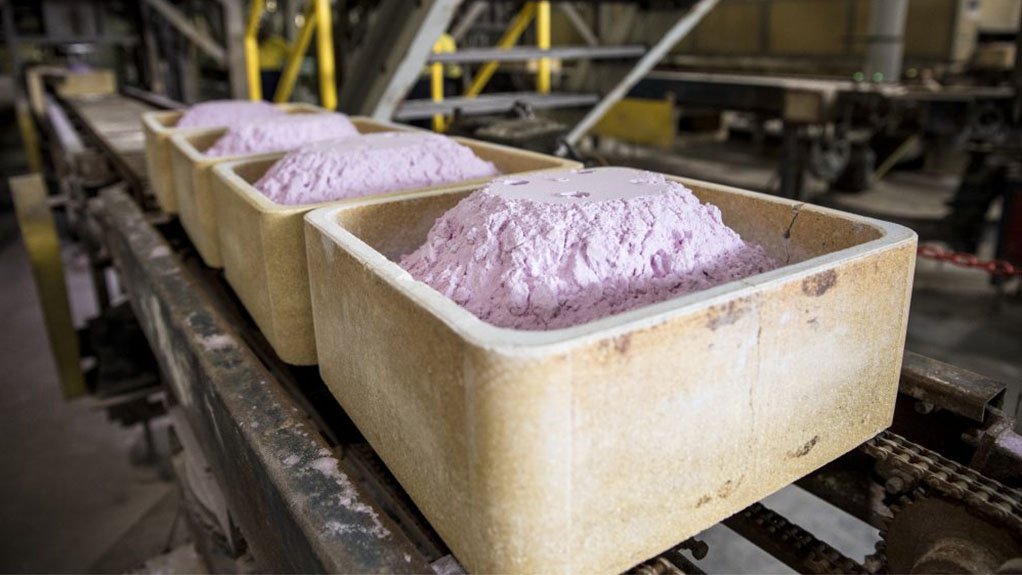
Solvent extraction and electrowinning (SxEW) plant at a copper mine featuring leaching ponds.

-

Regional Vulnerabilities: DRC and Chile Under Pressure

The Democratic Republic of Congo (DRC) and Chile, the world's leading copper producers, find themselves most exposed to this chemical squeeze. In the DRC, where copper output has been a rare bright spot in global supply growth, roughly 45% of production: equivalent to 1.5 million tonnes: relies on sulphuric acid leaching. For many Congolese operators, acid now accounts for up to 20% of total cash costs.

Chile faces a similar "acid crunch." Approximately 1.2 million tonnes of Chilean leached output are currently at risk. While majors like Codelco and BHP have historically managed integrated supply chains, the tightening market is forcing smaller and mid-tier operators to compete for increasingly scarce and expensive acid shipments. This vulnerability echoes recent warnings in Pakistan’s copper crisis, where local disruptions are compounding a tight global market.

The crisis is not limited to leaching. On the smelting side, China’s top copper producers have already signaled a collective production cut of more than 10%. This decision stems from a dual pressure: a shortage of copper concentrates (raw ore) and the environmental and economic complexities of managing the sulphuric acid byproduct during a period of restricted exports.

When smelters cannot export or profitably store excess acid, they are often forced to throttle back their primary copper smelting operations to avoid environmental non-compliance. This creates a "double-bind" for the market: less refined copper from smelters and less reagent available for SxEW plants.


Market Snapshot: 2026 Copper Fundamentals

MetricCurrent Estimate (2026)2035 Outlook
Current Copper Price~$6.32/lbN/A
Sulphuric Acid Dependency15% of Global OutputIncreasing (Oxide depletion)
DRC Exposed Production~1.5 Million Tonnes~2.2 Million Tonnes (Est.)
China Smelter Production Cut>10%Variable
Global Supply Gap (IEA)"Worsened Considerably"25% Structural Deficit

Copper Deficit Impact 2026: Grids, EVs, and Data Centers

The copper deficit impact 2026 is expected to manifest most acutely in the rollout of energy infrastructure. The IEA notes that while global investment in critical minerals rose 10% in 2025, it remains insufficient to meet the stated goals of the Paris Agreement.

The primary drivers of this demand are relentless:

  • Power Grids: Massive expansions of transmission and distribution networks to accommodate renewable energy.
  • Electric Vehicles (EVs): Despite a plateauing growth rate in some regions, the copper intensity of EVs (up to 4x that of internal combustion engines) continues to drain available stocks.
  • Data Centers: The rise of AI and high-performance computing has led to a surge in specialized copper-heavy cooling and power delivery systems.

As supply falters due to chemical shortages, these sectors face the prospect of project delays or significantly higher capital expenditures.

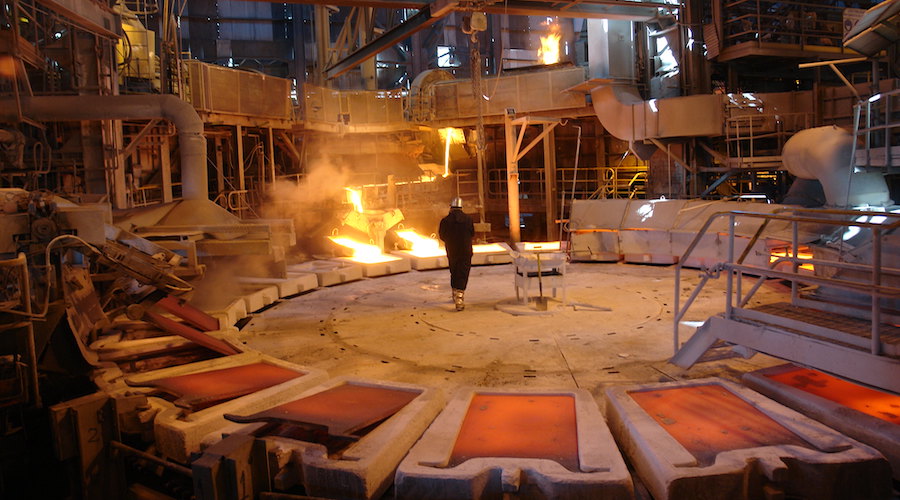
Heavy industrial machinery inside a copper smelting facility.

Copper Price Forecast 2026: Drivers and Cases

Analysts are recalibrating their copper price forecast 2026 to account for the acid-induced supply shock. The consensus suggests that the "floor" for copper has shifted higher.

  • Base Case: Prices remain in the $5.80 – $6.50/lb range. This assumes a partial easing of China's export ban and no further escalation in the Middle East.
  • Bull Case: Prices surge toward $7.20/lb ($15,800/tonne). This scenario is triggered if the Strait of Hormuz faces a sustained closure or if Chilean production downgrades exceed 500,000 tonnes due to acid shortages.
  • Bear Case: Prices retreat to $4.80/lb. This would likely require a global recession significant enough to decouple copper demand from the energy transition, a scenario many analysts view as unlikely given the structural nature of current demand.

Similar to the silver price forecast 2026, the copper market is being driven by industrial necessity rather than purely speculative interest.

Analyst Perspectives: The "New Normal" for Copper

"We are moving from a world where copper was constrained by geology to a world where it is constrained by chemistry and logistics," says Marcus Thorne, a senior commodities analyst. "The IEA report confirms what many in the field have feared: the green transition is not just about having the metal in the ground; it's about having the entire chemical supply chain synchronized."

The IEA’s revised 2035 shortfall of 25% (an improvement from the 30% projected in 2025) offers little comfort for the current year. The improvement in the long-term outlook is largely credited to new projects in the DRC and Zambia, such as CMOC's Kisanfu expansion. However, if these projects cannot secure acid, their projected 650,000 tonnes of additional capacity by 2035 will remain theoretical.

Chemical tanker ship representing logistical challenges in the Middle East.

Conclusion

The IEA’s 2026 Outlook serves as a reminder that the mining industry does not operate in a vacuum. The convergence of the sulphuric acid crisis and copper production highlights a critical vulnerability in the global supply chain. For investors and operators, the focus must shift beyond the mine gate to the broader logistics and chemical dependencies that underpin production.

As we noted in the Skillings Mining Intelligence July 15 update, the "investment edge" now lies in identifying companies with integrated chemical supplies or those operating in jurisdictions less reliant on external acid imports. While BHP iron ore production hits records, the copper sector remains the volatile heart of the energy transition, beating to the rhythm of a global chemical market in turmoil.
Copper price slides as monster storm bears down on Chile and Iran flare-up rattles metals

Chuquicamata smelter in Chile. (Image courtesy of Codelco | Flickr.)

Copper retreated in after-hours trading on Thursday as an escalation in US-Iran hostilities sparked a broad selloff across metals. Damage to copper prices was more limited than gold and silver as a powerful storm sweeping across Chile kept supply risks squarely in view.

Copper for September delivery settled little changed at $6.342 per pound ($13,980 a tonne) on the Comex, holding near three-week highs, before sliding 1.1% to $6.27 a pound in evening trade as of 9 p.m. in New York.

The most-active contract is now trading about 6% below the all-time high above $6.60 a pound set in early June. In London, three-month copper ended the midweek session at $13,585 a tonne, with LME cash copper up nearly 8% so far this year.

The late-session pressure came after the US struck an oil tanker near Iran’s main export terminal for the first time since the restart of the blockade, driving the dollar and bond yields higher and rekindling expectations that the Federal Reserve may need to hike rates to contain oil-fuelled inflation. Gold fell 2.1% to below $4,000 an ounce and silver dropped almost 4%, while the S&P 500 lost 0.5%.

Category 5

Copper’s relative resilience owes much to Chile, where a major winter storm — classified as a potential Category 5 atmospheric river, the highest rating for such events — began sweeping across the country on Thursday, knocking out power and damaging homes in the south before an expected hit on the central copper heartland with as much as 150 millimetres of rain.

“We are going to have power outages,” Interior Undersecretary Máximo Pavez said Thursday. “We are doing everything possible so that authority coordination means a swift restoration of service, but with the wind we have, that service will be affected.”

The government convened emergency talks with mining industry representatives earlier this week and is coordinating with miners to make infrastructure, equipment and machinery available for the response, according to a Mining Ministry statement. The country’s largest copper export terminals remain largely operational.

The storm threat lands on an already stretched supply picture. Antofagasta reported this week that first-half copper output dropped 9.5% to 285,000 tonnes on lower production at two key mines, BHP has flagged declining Chilean output for next year, and the IEA warned just today that constraints on sulphuric acid supply have left the copper market facing a near-term outlook that has “worsened considerably”.

Chile’s own government underscored the tension on Wednesday: it cut its 2026 economic growth forecast to 1.8%, citing “elevated uncertainty associated with the conflict in the Middle East” — while raising its 2026 copper price assumption to $5.90 per pound from $5.46, joining a lengthening list of upgraded copper forecasts.

Miners caught in the selloff

Copper equities took the Iran news harder than the metal. Freeport-McMoRan (NYSE: FCX) fell 4% and Ivanhoe Mines (TSX: IVN) lost 4.9%, while Antofagasta (LSE: ANTO) gave up 4.1% after its production report and Southern Copper (NYSE: SCCO) shed 3.2%. BHP (ASX: BHP) slipped 2.3% on the day of its full-year results.


Diana Gives Genco Shareholders Two More Weeks on the Tender Offer

bulker at sea
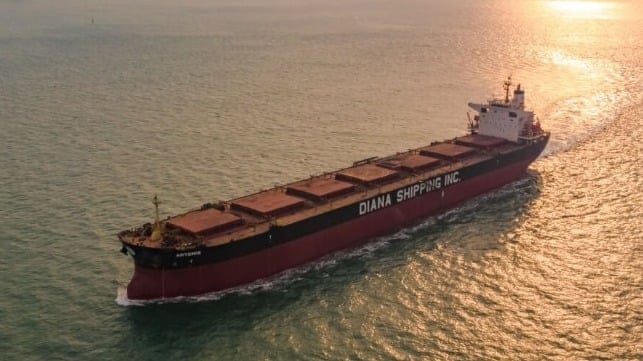
Diana added two more weeks to the tender as it continues to seek control of Genco (Diana file photo)

Published Jul 13, 2026 6:28 PM by The Maritime Executive

Diana Shipping is continuing its battle to acquire Genco despite having been rebuffed by Genco’s board and losing in its attempt to put new directors on the board of directors. The company reports that nearly 30 percent of Genco’s shares have been tendered, and it has now extended the tender deadline from July 10 to July 24.

“We are pleased that additional shareholders have tendered their shares, but this transaction cannot move forward through a tender offer alone,” commented Semiramis Paliou, Diana’s Chief Executive Officer of Diana Shipping. “To unlock the compelling value of this combination, both of our leadership teams and advisors must come together to negotiate in good faith, with a shared commitment to delivering full value for Genco shares at a high point in the shipping cycle.”

The two companies agree that dry bulk shipping is on the upswing, but disagree on how to realize value for the shareholders. The merger would create a leader in the dry bulk space with a fleet that could top 80 vessels. 

Diana asserts it is offering a 53 percent premium to Genco’s share price before it went public with the merger proposals last November. It also asserts it is offering a six percent premium to net asset value (NAV) while noting that values are near or at 15-year highs for the segment.

Diana says it is offering $24.80 in cash per share plus one share of its stock. It reported that 29.7 percent of the shares had been tendered as of the close of business on Friday, July 10. In addition, it continues to own more than 14 percent of Genco’s shares, making it the largest shareholder.

Genco’s board, however, reiterated its assertion that Diana is misleading, as the tender offer has not been revised to add the one share for each shareholder. It says the tender currently is only the $24.80 per share in cash. 

The board calls Diana’s offer ”inadequate” and says it has already unanimously rejected the offer. It has said it is reviewing the higher offer but is waiting for Diana to revise the tender offer.

It repeated its position that the offer “continued to meaningfully undervalue the company and its assets.” The board contends it is below the net asset value and still says it does not include any control premium. Genco’s board points to the strength of the market and, assuming the forward freight rate curve for the balance of the year, notes shareholders would receive a dividend of possibly $2.50 per share this year.

The two companies remain entrenched in their positions, showing no movement or opportunities to discuss a potential agreement. Shareholders are left to decide where they think the best true potential is for their investment.