Saturday, July 18, 2026

Creator defends AI ‘actor’ Tilly Norwood after feature film backlash


Published:

Tilly Norwood, a computer-generated 'actress', is set to star in the feature-length film 'Misaligned.'

LONDON - The founder of the studio behind AI “actor” Tilly Norwood has defended the character amid backlash from parts of the entertainment industry, saying she aims to spark debate and showcase possibilities rather than replace human performers.

“Tilly was made to be a talking point,” said Dutch actor-producer Eline van der Velden, who founded London-based AI production studio Particle6 in 2015. “I’m glad that she’s entertaining people, whether it’s positively or negatively.”

Criticism has intensified after Particle6 announced this month that Tilly Norwood would lead a feature film, “Misaligned.” Set in a digital realm called the “Tillyverse,” the comedy-drama follows an AI being “with no real body, no childhood and no lived experience.”

The project is in early development. Particle6’s tools can currently only generate up to 30 seconds of video, but van der Velden said she hopes to complete it within 12 months.

She rejected critics’ claims that her work will cut actors out. “People think, just because AI is here, all the traditional stuff is going to go away,” she said. “Just because photography is here, doesn’t mean we don’t paint anymore.”

After Particle6 introduced Tilly Norwood at a Zurich film industry conference in September, SAG-AFTRA, the U.S. union representing about 160,000 performers and other media workers, condemned replacing humans with “synthetics.” It also warned that AI characters may be built on systems trained on performers’ work without permission or compensation.

Van der Velden said Tilly Norwood was built with publicly available tools, acknowledging limited visibility into their training data. “I think we just have to accept that it’s been trained on all of us,” she said. “What’s important going forward is a strong AI policy.”

She added that Particle6 bars uploading copyrighted content to its systems without consent and forbids copyrighted trademark references in prompts.

Particle6 is working with a number of “very well-known Hollywood directors, writers, actors” to teach them how to use AI. Their identities are being kept private because of potential backlash, van der Velden said.

She rejected claims audiences won’t empathize with an AI actor. “We’ve empathized with animated and all sorts of made-up characters,” she said. “It’s just a storytelling vehicle.”

Particle6 has increased its workforce six-fold in the past six months, and plans to build “a whole roster of characters.”

“I hope to create lots of amazing jobs for creatives,” van der Velden said.

Reporting by Francesca HalliwellEditing by Nick Zieminski

Two Years After CrowdStrike, We Are Still Afraid Of The Wrong AI Apocalypse – OpEd


July 19, 2026 
By Burak Oktenli

Key Takeaways
:

The 2024 CrowdStrike outage (July 19, 2024) that crashed ~8.5 million Windows machines worldwide demonstrates real-world catastrophic risk: a single defective update from one trusted vendor caused global disruption without any attacker or malicious AI.

Popular AI doomsday scenarios (worldwide shutdown, grid takeover, rogue nuclear launch) are overstated; they confuse computational capability with real-world authority and permissions, which are gated by human decisions, credentials, and physical systems.

The real danger lies in eroding human oversight: we are automating critical systems while reducing manual fallback competence. Defense requires human-approval gates, clear inventories of automation permissions, and maintained manual procedures — the unglamorous discipline of limiting what machines are allowed to touch.


This Sunday marks two years since the morning the modern world stuttered. At nine minutes past four Coordinated Universal Time on July 19, 2024, a routine software update from a single security company began crashing Windows machines, roughly 8.5 million of them. Flights were grounded, emergency rooms went to paper, broadcasters went dark, and the federal government issued alerts as the disruption spread. There was no attacker and no malevolent intelligence. There was a defective file, pushed automatically to millions of computers configured to trust whatever that one company sent them.

That morning explains more about catastrophic risk in the age of AI than any disaster movie. The anniversary is a good moment to say so. Our public imagination is stuck on three scenarios that are vivid, terrifying, and mechanically wrong: an artificial intelligence that switches off every device on earth, one that escapes into the power grid, and one that seizes the nuclear arsenal and launches on its own.

All three rest on the same confusion. They mistake what a system can compute for what it is permitted to touch. An AI model can generate plans, code, and persuasion, but turning any of that into action in the physical world requires a chain of intermediaries: interfaces, credentials, integrations, and standing permissions that people decided to grant. The scarce resource that converts capability into consequence is not intelligence but authority.


Hold that key and the myths deflate one by one. There is no universal off-switch to press, because the world’s devices do not share one. The power grid moves energy, not instructions; electricity cannot carry a stowaway. And the nuclear scenario collides with the documented architecture of nuclear command: the 2022 Nuclear Posture Review commits to a human in the loop for all actions critical to informing and executing the President’s nuclear employment decisions, and launch runs through procedures, people, and physical authentication that no model can talk its way past.

The nuclear domain does hold a real lesson, just not the cinematic one. In September 1983, a Soviet early-warning system reported American missiles inbound. The duty officer, Stanislav Petrov, judged his own instruments more likely to be wrong than the United States to be attacking, and he was right. The danger was never a machine that decides to launch. The danger is humans who trust a confident machine that is wrong. What saved the world that night was a person still willing and able to doubt the screen.

The incident record since then confirms the pattern. When attackers cut power to roughly 225,000 Ukrainians in 2015, operators restored it within hours by switching to manual operations, driving to substations and throwing breakers by hand. When ransomware hit Colonial Pipeline in 2021, it reached the billing systems; the company itself shut the pipeline as a precaution. The CrowdStrike outage ended the same way, with humans at millions of keyboards rebooting machines and deleting one file. Real failures are bounded, they travel through doors we built, and every recovery has run through people who could still operate things manually.

Which points at the quiet danger the myths obscure: we are automating away exactly that layer. Each year there are fewer operators who can run the grid, the pipeline, the hospital, or the trading floor by hand, and manual competence is the thing that has saved us every single time.


So the defense against the AI catastrophe is duller than the movies and entirely available. Put human-approval gates on consequential automated actions. Inventory what your automation is actually permitted to touch, because that inventory, not the model’s IQ, is your real risk surface. And treat manual fallback as critical infrastructure: document it, staff it, and drill it, the way we once drilled fire escapes.

The machine is not going to wake up. But somewhere right now, someone is granting an automated system standing permission to act on infrastructure that people depend on, without a gate, without an inventory, and without a fallback. Two years after the morning the world stuttered, what deserves marking is not our fear of smarter machines but the unglamorous discipline of deciding what they may touch.


About Burak Oktenli

Burak Oktenli holds an MBA and a Master of Professional Studies in Applied Intelligence from Georgetown University. His research addresses the governance of authority in autonomous and AI-enabled systems, and his writing has appeared at the Modern War Institute at West Point, RUSI, RealClearDefense, RealClearMarkets, and Geopolitical Monitor.
View all posts by Burak Oktenli

China’s Moonshot unveils world’s largest open AI model, closing in on U.S. rivals


Published:

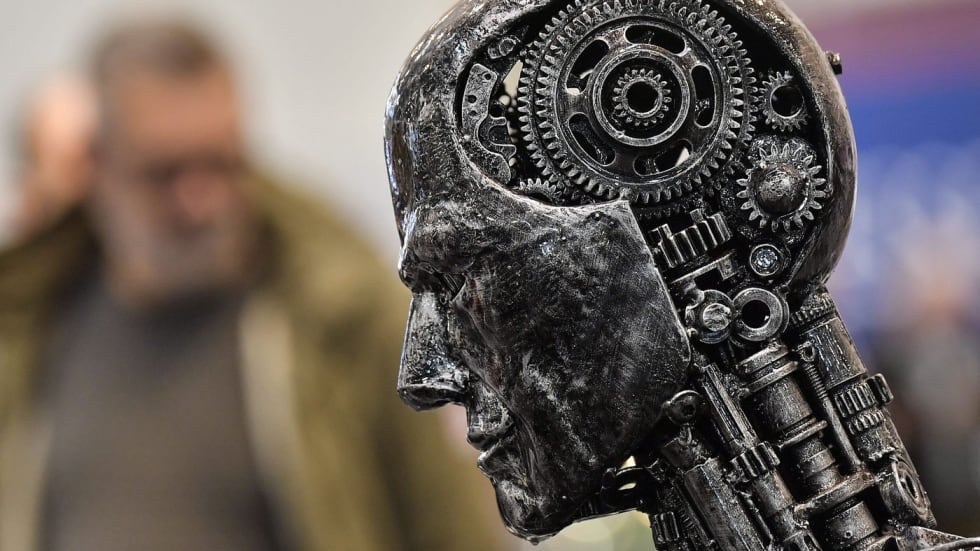
A metal head made of gears symbolizes artificial intelligence, or AI, at the Essen Motor Show in Essen, Germany on Nov. 29, 2019. (THE CANADIAN PRESS/AP/Martin Meissner)

Chinese AI startup Moonshot on Friday unveiled Kimi K3, a 2.8 trillion-parameter model that it said is the world’s largest open-weight AI system and delivers performance approaching U.S. giant Anthropic’s frontier Fable model.

The launch, which comes a month after Anthropic’s Fable and Mythos models were abruptly withdrawn by the U.S. government due to security concerns, underscores how quickly China’s open AI ecosystem is narrowing the gap with the most advanced U.S. systems.

Companies including Moonshot, Z.ai and MiniMax are releasing increasingly powerful models at sharply lower cost, challenging long-held assumptions in the West that Chinese developers trail their American peers by months.

Moonshot said Kimi K3 is the first open-weight model to approach the 3 trillion-parameter mark and is designed for advanced reasoning, long-horizon coding and knowledge work. The model features a 1 million-token context window, allowing it to process and retain substantially more information than earlier generations in a single prompt.

Open-weight models allow users to download, run and customize the underlying systems, ​unlike proprietary, closed-source models.

Kimi K3 “performed competitively with Fable 5 (with fallback) and substantially outperformed Anthropic’s Opus 4.8, GPT 5.6 Sol, and GPT 5.5” in terms of GPU kernel optimisation, the company said. The term refers to techniques that maximize AI hardware utilization and minimize latency.

The model has also posted strong results in third-party evaluations.

Arena.ai ranked Kimi K3 first in a benchmark assessing web interface-building capabilities, while Vals AI placed it second overall behind Fable 5 and ahead of GPT-5.6 Sol. Artificial Analysis said the model delivered performance comparable to OpenAI’s GPT-5.5 and Anthropic’s Claude Opus 4.8, particularly on tests measuring complex, multi-step tasks.

The Moonshot news drove shares of domestic AI competitors Zhipu and Minimax sharply in Hong Kong; just before market close, they were down 27.7 per cent and 16.5 per cent, respectively.

Faster release cycles

Chinese AI firms are accelerating their model release cycles as the global AI race intensifies. The shift follows the debut of Z.ai’s GLM-5.2, which stunned industry observers by scoring near top U.S. closed-source models on benchmark tests, undermining a consensus among Western analysts that Chinese AI models were at least six months behind.

Lian Jye Su, chief analyst at Omdia, said Chinese models were gaining traction because they could be deployed far more cheaply than leading U.S. systems.

“They can be run at a fraction of the cost that OpenAI charges its clients,” he said, but cautioned that Kimi K3’s scale didn’t “doesn’t necessarily mean you have the best performance by default.”

Kimi K3’s size also means few users are likely to host it themselves despite its open-weight release.

Ryan Fedasiuk, a fellow at the American Enterprise Institute, said in a LinkedIn post that running a 2.8 trillion-parameter model locally would require hundreds of thousands of dollars of computing equipment.

Trillion-parameter systems

Parameters are the internal variables a model learns during training and are often used as a rough measure of scale, though not necessarily capability.

Before Kimi K3’s release, Meituan’s LongCat-2.0 and DeepSeek’s V4-Pro led China’s AI industry ​with 1.6 trillion total ​parameters, while several ⁠other domestic rivals have passed the trillion-parameter threshold.

But a direct comparison with U.S. frontier models is difficult because companies such as Anthropic and OpenAI do not disclose the parameter counts of systems including Fable, Mythos or GPT-5.5.

Moonshot said Kimi K3 incorporates two significant architectural upgrades that improve computing efficiency and enable it to complete long-horizon coding tasks with minimal human supervision.

Backed by giants like Alibaba and Tencent, Moonshot has been heavily expanding its capabilities and capital to remain at the forefront of the AI sector.

Bloomberg reported last month that the startup was seeking US$2 billion in fresh funding at a valuation of about US$30 billion ahead of a potential Hong Kong listing.

---

Reporting by Laurie Chen; Editing by Eduardo Baptista and Shri Navaratnam


Xi positions China to challenge US grip on global AI rules

Xi positions China to challenge US grip on global AI rules
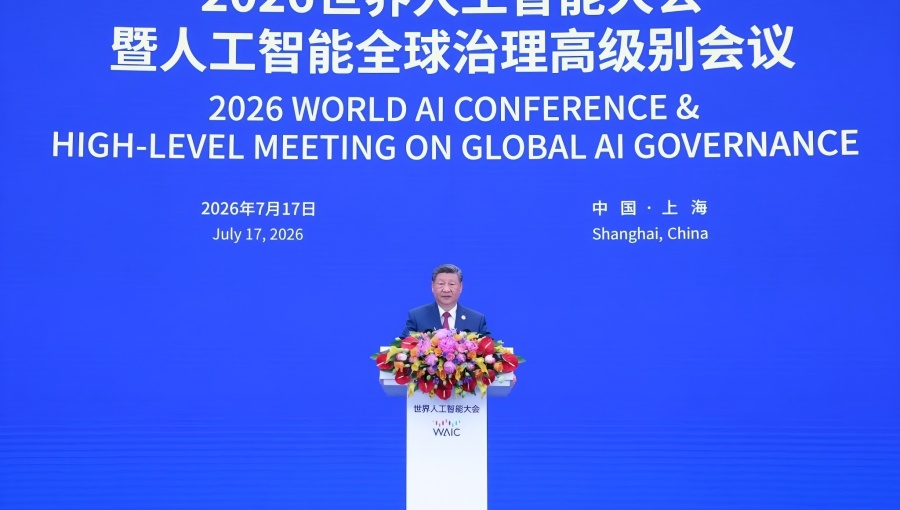
The address followed the signing on July 16 of an agreement establishing the World Artificial Intelligence Cooperation Organisation (WAICO), a Shanghai-headquartered body that will count 29 founding members including Russia, Pakistan, Indonesia, Brazil. / xinhuaFacebook
By bne IntelliNews July 17, 2026

President Xi Jinping used the opening of China's flagship AI summit on July 17 to portray Beijing as an alternative rule-setter for artificial intelligence, unveiling a new intergovernmental body and a package of aid for developing nations and dealing yet another direct blow to Washington's long-standing leadership of the sector.

Speaking at the opening ceremony of the 2026 World AI Conference and High-Level Meeting on Global AI Governance in Shanghai, Xi called on countries to seize what he described as a "rare historic opportunity” presented by open-source AI, and cautioned that unequal access to the technology risked creating fresh injustices between rich and poor nations, according to an official readout of his remarks issued by the Chinese government.

The address followed the signing on July 16 of an agreement establishing the World Artificial Intelligence Cooperation Organisation (WAICO), a Shanghai-headquartered body that will count 29 founding members including Russia, Pakistan, Indonesia, Brazil, Cuba and Venezuela, according to state news agency Xinhua. Chinese Foreign Minister Wang Yi signed on Beijing's behalf, while UN Secretary-General António Guterres attended the ceremony.

Xi called WAICO an "important milestone in the history of AI development" that answered calls from Global South nations for a greater say in the governance of the technology, the government readout said. Over the next five years, Beijing pledged to give developing countries access to 5,000 places on AI-related courses and seminars, to establish AI application co-operation centres with the African Union, the Association of Southeast Asian Nations, the Arab League, the Latin American and Caribbean bloc CELAC, the Shanghai Cooperation Organisation and BRICS, and to extend its AI-powered weather-warning system, known as MAZU, to 30 countries.

Brazil's government said in a joint statement from its science, foreign affairs and innovation ministries that WAICO was intended to narrow gaps in access to AI technologies and to give member states a platform to coordinate strategy, share best practice and pursue joint scientific work, including on open-source systems.

The initiative sets up a direct rivalry with Washington's AI Opportunity Statement, which the US last month signed with 35 countries. A person familiar with the Trump administration’s position told Reuters that Kazakhstan is the sole country to have signed up to both schemes, an overlap so small that it points to broad reluctance among Washington's partners to also back the Chinese-led body.

The conference also highlighted China's advances in open-weight AI models. Beijing-based Moonshot AI used the event to unveil Kimi K3, which it billed as the world's largest open AI model by parameter count, weeks after the US government suspended access to Anthropic's most advanced models over security concerns, Reuters reported. Huawei separately showcased its Atlas 950 SuperPoD, a system for linking chips to boost computing power for large-scale data centres and model training, CNBC reported.

On safety, Xi urged countries to keep AI systems under human oversight at all times and to build early-warning and emergency-response mechanisms against the risk of autonomous systems evading human control, according to the government readout. He also called for countries to avoid stretching the concept of national security in the AI field or prioritising one country's security over another's, remarks widely interpreted as an implicit criticism of US export controls, though he stopped short of naming Washington.

China's industry ministry released an action plan on international AI ethics governance at the conference, framed within the United Nations' Global Digital Compact, calling for tiered risk controls, more agile governance mechanisms and greater support for developing countries' governance capacity, state broadcaster CGTN reported.

The conference, running from July 17 to 20, comes just ahead of the first formal AI discussions to be held between Beijing and Washington at government level since Donald Trump returned to the presidency. Kazakh President Kassym-Jomart Tokayev, Cambodian Prime Minister Hun Manet, Thai Prime Minister Anutin Charnvirakul and Guterres also addressed the opening ceremony, praising China's contribution to AI governance and calling for the technology's benefits to be shared equitably across the Global South.


Brazil coffee faces El Niño headwinds, but crops more resilient

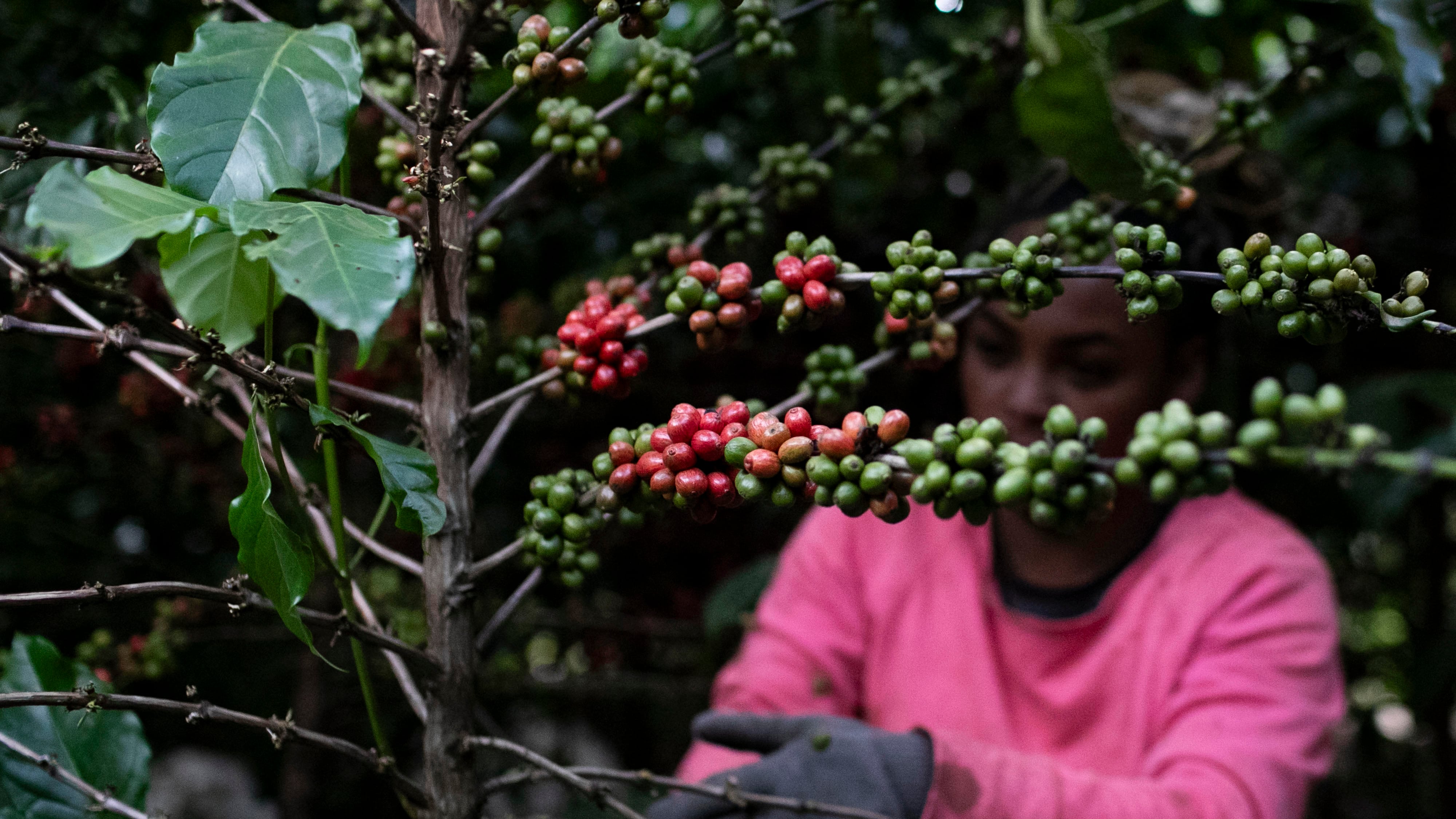
Worker Hellen Vitoria harvests coffee beans on a plantation in Porciuncula, 
Rio de Janeiro state, Brazil, Thursday, July 17, 2025. (AP Photo/Bruna Prado)

SAO PAULO — El Niño could cut Brazil’s expected record harvest by up to a fifth, according to the Brazilian Coffee Industry Association (Abic), as excessive heat and irregular rainfall threaten production.

For this year, state crop agency Conab forecast a bumper total output of 66.7 million 60-kilogram (132.3 lb) bags of arabica and canephora beans, with the latter including varieties like robusta and conilon.

But deteriorating weather conditions amid an El Niño weather cycle could dramatically reduce production, said Abic executive director Celirio Inacio da Silva.

“We are now talking about a crop loss of 15 per cent to 20 per cent, which in a normal year would be within expectations. But in the current scenario, that is very bad news,” he said in an interview.

Despite the gloomy outlook, coffee growers are better prepared than during previous El Niño episodes thanks to technological advances producing a more climate-resistant crop.


“We’ve made significant advances and today we’re able to plant and harvest more efficiently,” said Silva.

Coffee farmers in recent years have shored up their ability to mitigate climate risks by rapidly expanding irrigation systems, investing heavily in such technology to reduce their dependence on increasingly erratic rainfall driven by climate change.

Even so, El Niño is expected to disrupt the crop’s biological cycle, particularly during the flowering period in the second half of 2026. Excessive heat and irregular rainfall can lead to uneven and unsuccessful flowering, specialists said.

“Irregular ripening creates quality problems and makes harvesting more challenging,” said Wellis Caixeta, coffee purchasing manager at Minas Gerais-based cooperative Expocacer.

The 2023/24 El Niño, combined with heatwaves and irregular rainfall, cut Brazil’s 2024 coffee crop from an initial government forecast of 58.8 million to 54.2 million 60-kg bags. Despite arabica’s positive biennial cycle, output rose just 0.2 per cent, while conilon productivity fell 5.9 per cent.

El Niño may already explain some anomalies, such as unusual rainfall in southeastern Brazil over the past month.

Expocacer estimates that rainfall exceeding 50 millimeters in arabica-growing regions about 40 days ago delayed the harvest and caused a significant amount of coffee cherries to fall to the ground, hurting bean quality.

Espirito Santo, Brazil’s largest producer of canephora coffees, has also faced irregular weather this year, with longer intervals between rainfall and shorter, more intense downpours, said Luiz Carlos Bastianello, president of Cooabriel, Brazil’s largest canephora cooperative.

Growers in the state are concerned El Niño could prolong dry periods and excessive heat through January 2027, disrupting bean filling, Bastianello said.

While conilon production in the state is expected to decline by 15 per cent this year due to conilon’s natural biennial cycle - which alternates between high- and low-yield years - Bastianello said it would be too early to forecast the impact of El Niño in 2027.

“Heat is the biggest risk for severe crop loss. Above 27 degrees Celsius (80.6°F), Canephora slows its metabolism, and at 35°C (95°F) it stops altogether. The damage is often greater than from the lack of water itself,” he added.

Conditions have been more favorable in northern Brazil, where temperatures and rainfall have remained largely within seasonal norms this year. In Rondonia state farmers expect a record harvest of 3 million 60-kg (132.3 lb) bags, above crop agency Conab’s forecast of 2.77 million bags.

Heat and drought associated with El Niño are unlikely to have the same impact on Rondonia’s robusta crop as on arabica-producing regions, said Juan Travain, president of state coffee association Caferon.

“Coffee is highly sensitive to temperature fluctuations, but virtually all robusta plantations are irrigated, and some also use water-based cooling systems. Many arabica farms, by contrast, still lack irrigation,” he said.

(Reporting by Victoria Pacheco; Editing by Oliver Griffin)