Sunday, July 19, 2026

Greentech New Deals in the Cities
Source: Originally published by Z. Feel free to share widely.

In Trump’s America the Greentech Revolution is being waged from below.

Although Trump’s attacks have slowed the advance of fossil-free technologies in the US, they have not prevented communities, cities, and states from creating their own Greentech New Deals. They are taking advantage of the enormous reduction in the cost of renewable energy and of technologies that use it despite Trump’s attempts to obliterate them.

Alongside the widespread pro-democracy resistance to Trump and MAGA, there is a constructive program being developed and implemented from below, utilizing the Greentech Revolution to make Green New Deals practical and affordable. Greentech and climate protection are at its core. But it also includes the full range of pro-people, pro-social programs represented by the Green New Deal.

Back in 2007, Xcel Energy won backing from the governor of Minnesota for a gas power plant in Becker, near Minneapolis, designed to replace coal-fired generators scheduled for shutdown in the mid-2020s. But clean energy advocates campaigned for better and cheaper alternatives, and regulators eventually baulked at the $1 billion price tag. Xcel gave up on the gas plant plan and instead proposed the Sherco Energy Hub, a 710-megawatt solar facility which includes a 600-megawatt storage system, the largest battery energy storage system in the Midwest. An Xcel spokesperson said, “Batteries help us store energy when it’s inexpensive to produce and dispatch it when needed, allowing us to continue delivering reliable electricity to customers while keeping bills low.” The site will also provide grazing for nearly 2,000 sheep, reducing mowing costs while also letting local sheep farmers expand their herds. Xcel also announced plans to close all its remaining coal fired plants in the region. Sherco’s solar plant will start producing electricity in 2026.

Sherco shows how Greentech’s reduction in the cost of energy and facilitation of battery storage opens the door for communities and governments to demand that fossil fuels be replaced by renewable energy. As climate journalist Tina Casey commented on CleanTechnica, the Sherco facility “demonstrates how community efforts and basic economics can push the needle on the energy transition.”

Manchester Public Schools is a suburban school district outside of Hartford CT with 17 schools, four of which are Title I schools serving low-income communities. While the state had many solar programs, by 2020 private solar developers had concluded that Manchester would “never do a project.” But in 2022, with support from the Connecticut Green Bank, solar panels were installed at 6 of Manchester’s 17 public schools, adding 1.6 MW to the town’s solar energy capacity. Now Manchester has three net-zero energy school buildings and is adopting cutting-edge technologies like ground source heat pumps. Manchester also has additional ongoing investments in net-zero buildings, including a new library. Solar installations are projected to save the Town of Manchester approximately $100,000 annually. Beyond financial savings, these renewable energy systems are now valuable educational tools, reportedly sparking curiosity and environmental awareness among students.

In Seattle, drayage trucks contribute significantly to air pollution, disproportionately impacting low-income communities along freight corridors in the Duwamish Valley. According to Seattle’s then-mayor Bruce Harrell, “Seattle’s port is the backbone of our economy, but diesel drayage trucks that transport goods are some of the Duwamish Valley neighborhoods’ heaviest polluters.” Seattle has now developed a Heavy Duty Electric Trucks Pilot to provide incentives for purchasing electric drayage trucks. The program results in part from interviews conducted with drayage truck drivers who pointed out electric trucks were too expensive for them to buy. The drivers’ insights helped shape a new approach that, according to the city’s Office of Sustainability and Environment, “centers equity to ensure a just transition for truck drivers, particularly independent owner-operators, who are critical to our region’s supply chain and who bear disproportionate environmental and economic burdens.”

Funding for the program comes from Seattle’s JumpStart Payroll Expense Tax on extremely high salaries. The funding was recommended by Seattle’s Green New Deal Oversight Board, which develops budget and policy recommendations for environmental initiatives in partnership with communities. Said then-Mayor Harrell, “Through the Heavy Duty Electric Trucks Pilot, we’re investing in the technology that will ultimately reduce emissions in frontline communities while also supporting drivers to ensure they have real opportunities in the zero-emission economy.” The trucks are expected to be in operation by the end of 2026.

The drayage truck program is only one small component of Seattle’s much broader community participation climate effort. For example, Greenspace, Seattle’s Office of Sustainability & Environment, partnered with Seattle’s Green New Deal Oversight Board, the Martin Luther King Jr. County Labor Council (MLK Labor), and the Urban League of Metropolitan Seattle to pilot “climate community assemblies” that included union members and workers, community members, and social justice and youth advocates to make decisions, influence government, and shape solutions. The Urban League’s neighborhood-based assembly focused on climate preparedness for BIPOC and working-class community members. MLK Labor, a labor council representing more than 100,000 workers in King County, led a worker assembly focused on workplace safety, green job standards, and improving public infrastructure to be ready for extreme weather. A follow-on project will turn ideas developed by the assemblies into policies for the city. And future community assemblies will help shape Seattle’s Climate Action Plan Update.

On the site of an abandoned psychiatric hospital in Southeast Washington, DC, a renewable energy project called Sycamore & Oak has just opened a “microgrid” — a self-contained system that includes energy generation and consumption. Solar panels provide electricity during daylight hours and charge batteries that continue to provide electricity during the night. The project’s workforce development program trained a cohort of 10 local residents, most of whom are from Ward 8 where the project is located, for the installation. According to Jordan Taylor of GRID Alternatives, the nonprofit that provides solar installation and workforce development for the project, “Ultimately the Black-owned businesses that are supported by Sycamore & Oak get to receive lower-cost power.” With fuel-based energy, “you’re emitting fossil fuel pollution into the local community,” which is “usually a low-income or disadvantaged community.” Taylor said that improvements in building science are not only better for the environment, but more cost-effective. These range from construction techniques to long-term energy usage over the lifetime of a building. “We can build the same structure for 90% less energy consumption. That’s both a cost-savings measure, as well as an energy efficiency and ecologically friendly one.”

In June 2026, Montgomery County MD announced 20 clean energy and energy efficiency projects. According to the Montgomery County Executive, the initiatives will “support practical projects that improve energy efficiency, strengthen emergency preparedness, and create more resilient public spaces, particularly in communities that are more vulnerable during extreme weather events. These investments will lower long-term operating costs for taxpayers while helping the County make meaningful progress toward our climate goals.”

The projects have a strong Greentech element. They include solar-powered backup systems at seven recreation centers; an agrivoltaics demonstration project at the Agricultural History Farm Park; and building automation system upgrades. County official David Dise says, “We are proudly advancing Montgomery County’s climate goals through innovative green energy solutions, including microgrids and resilience hubs.”

In the Bryant community in Ann Arbor MI, a quarter of residents spend more than a third of their incomes on utilities. After years of campaigning by local energy activists, 80% of Ann Arbor voters approved a new Sustainable Energy Utility. Operating alongside the existing privately-owned utility, the SEU will purchase, install, and maintain solar panels, battery backup systems, and other fossil-free energy infrastructure in residents’ homes. Those who choose to join pay a small monthly fee – far less than they save from their free solar installation. The city will own the facilities, but residents can sell whatever electricity they don’t need themselves. The plan will pilot in Bryant and spread to other locations in the city. The SEU could also build its own microgrids, for example putting solar panels on schools to provide power during school hours and then supplying other SEU users when school is out. Derrick Miller of the nonprofit Community Action Network says, “When we started having a conversation about how to decarbonize the neighborhood about four years ago, it felt outlandish. Now, it doesn’t feel like anyone can stop us.”

Alongside the Cow Palace arena just south of San Francisco, construction has begun on the Cormorant Energy Storage Project, whose 250-megawatt capacity will make it the largest battery array in any major US urban area. It will supply energy to MCE, a community choice aggregator which purchases electricity on behalf of local residents as an alternative to for-profit utilities. The battery will bring $73 million of property tax revenue to Daly City; the developer will donate $1.5 million in community benefits.

These are only a small sampling of the Greentech-facilitated programs in American cities, but they illustrate the diversity of such initiatives. They show that Greentech-facilitated programs are in place in every region of the country, in jurisdictions large and small, and in localities blue and red, exhibiting myriad forms of both energy production and energy consumption.

Such initiatives have been retarded by Trump’s attempts to wipe out Greentech. They have also met resistance from local MAGA and NIMBY forces. But as these examples show, they are continuing to bloom.

These initiatives are significant for several reasons. They directly improve the lives of the people they affect and reduce the emission of climate-destroying greenhouse gases. They demonstrate concretely how climate protection, racial and economic justice, grassroots democracy, and quality of life can be combined. They show that people acting together can overcome Trump’s anti-Greentech counter-revolution. And looking forward, they lay a foundation for the triumph of a Greentech New Deal once Trumpian resistance is overcome.

Source: Originally published by Z. Feel free to share widely.

While Trump conducts his war against Greentech, many US states are forging ahead with energy expansion based on sun, wind, and water. Greentech’s slashing of the cost of renewable energy production and use has made states turn to it not only to protect the climate but to make energy affordable for their people.
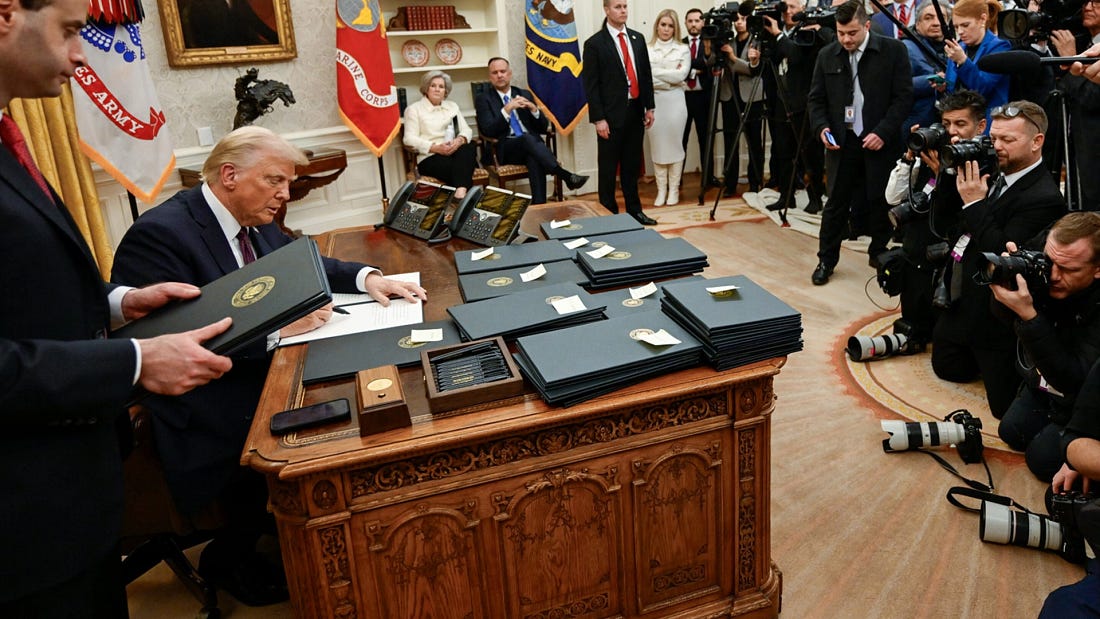
A photo of Donald Trump in the Oval Office with several of his Executive Orders, January 20, 2025. Photo credit: The White House, public domain.

The US federal system gives states a powerful position in energy policy. States regulate electric generation, local distribution of electricity, and infrastructure siting. They can set policy in myriad other areas from urban planning to public transit to housing that can help shape the utilization of climate-protecting Greentech.

Meanwhile, recent headlines have publicized retrenchment in state climate policies. New York state abandoned its commitment to reduce greenhouse gas emissions by 40% from 1990 levels by 2030, substituting weaker and squishier targets. California also relaxed requirements for emission reductions – although the change continues to be contested in the state legislature. In both cases energy affordability was given as a reason, although advocates of both changes acknowledged that they would not bring down energy prices any time soon. Both New York and California changes were preceded by heavy fossil fuel industry lobbying.

Such retreats register the reality that Trump’s attacks are restricting the development of the Greentech New Deal. Federal defunding of climate-protecting initiatives has made them more expensive; regulatory changes and subsidies have advantaged fossil fuels; and legal attack has undermined the Greentech revolution. But these retreats should not conceal the advances the Greentech Revolution has made in US states even during the first year-and-a-half of the Trump era.

Today’s Greentech advances in the states typically combine climate protection with affordability. That’s possible because Greentech has made production and use of renewable energy so much cheaper – rendering fossil fuels non-competitive.

California–Two steps forward, one step back?
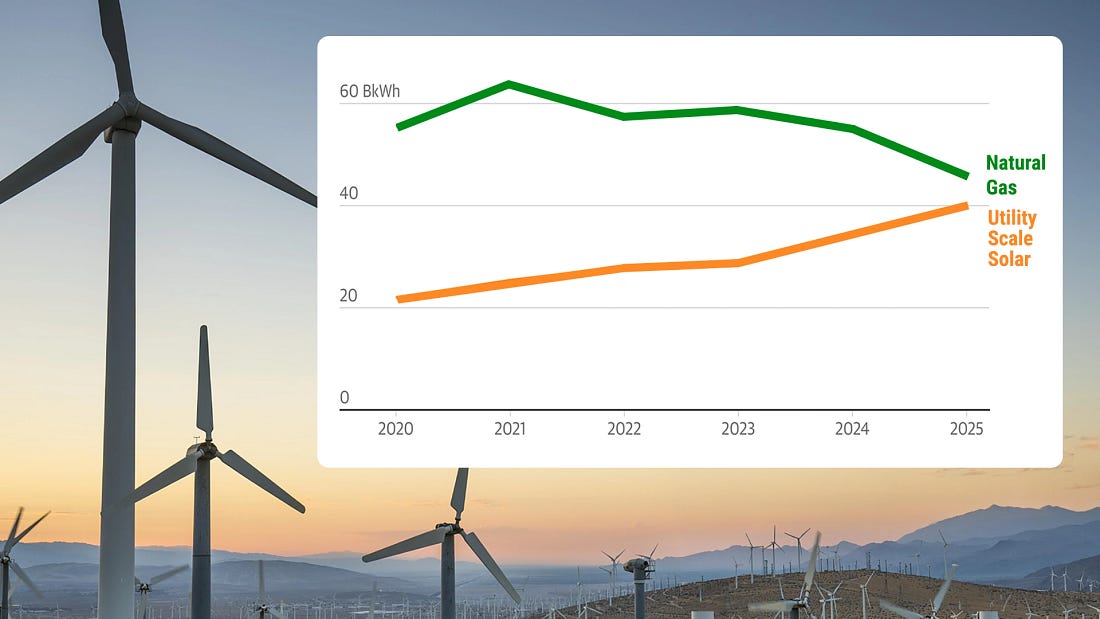
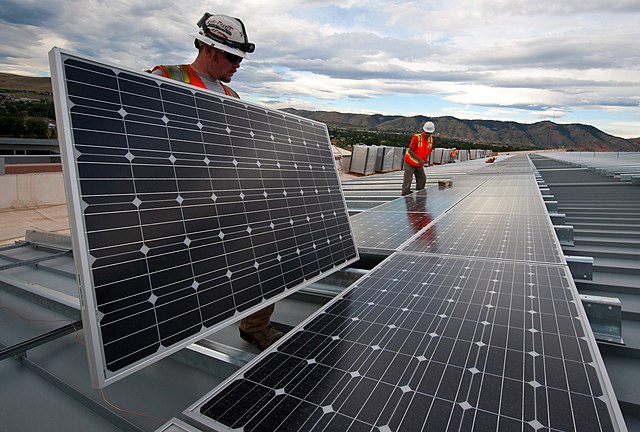
California’s electricity is increasingly coming from solar. Photo credit: Tom Brewster Photography, Wikimedia Commons, CC BY 2.0. Data Source: US Energy Information Administration

California, now the world’s fourth largest economy, illustrates the collision of the irresistible force of the Greentech Revolution with the immovable object of the Trumpian fossil fuel counter-revolution. In recent years it has faced devastating heatwaves, droughts, storms, wildfires, and other extreme weather conditions resulting from global warming. Not surprisingly, an overwhelming proportion of Californians worry about climate change and back policies to fight it. In 2006 California passed AB 32, the Global Warming Solutions Act, which set targets for greenhouse gas emissions and sets a declining limit on total emissions by the state’s major polluters. Over the next twenty years California substantially raised its targets and implemented many other climate protection policies. From 2001 to 2019, California reduced its carbon emissions by 25%, leaving a typical Californian emitting only half as much as other Americans.

In 2024, California’s natural gas generation fell by 8%; coal is expected to soon be eliminated entirely from its electrical supply. By the end of 2025 the state had 2.5 times more battery storage available than it did in 2022.

As soon as Trump was inaugurated president, he began a massive attack on California’s climate protection efforts. For example, he attacked the state’s first-in-the-nation ban on the sale of new gas-powered cars by 2035. The state sued to preserve the ban. In 2025 it extended the cap and trade program, renamed cap and invest, by 15 years. Then Governor Newsom, under heavy lobbying from California’s oil industry, announced a new plan which offers free pollution permits worth as much as $4 billion to oil refineries and other major polluters. Legislative leaders are refusing to accept the plan, however, and have refused to fund many of Newsom’s other programs until he abandons his plan. Contested negotiations are expected to continue until the legislative session ends in September. The result is hanging in the balance.

Other states go Greentech

The California climate drama should not obscure what is happening in other states.

Soon after Trump’s inauguration, Massachusetts Gov. Maura Healey issued an executive order that directs the state to procure 10 GW of clean energy and 5 GW of battery storage by 2035. The governor’s office projects up to $10 billion in savings for residents and businesses. Massachusetts also announced $180 million in immediate utility rate reductions. This cut residential electricity bills by up to 25 percent for two months.

Upon her inauguration, New Jersey Gov. Mikie Sherrill declared a state of emergency on utility costs. An executive order directed the New Jersey Board of Public Utilities to pursue rate relief by pausing new hikes and delivering residential bill credits. Another ordered rapid expansion of solar and battery storage and streamlining of the permitting process. In March, the BPU approved the expansion of the state’s community solar program, adding 3 GW of new capacity, with low-income households guaranteed a discount of at least 25 percent on their bills. According to American Progress, this expansion was the largest of a state-run program in the country’s history, and the program has already delivered more than $70 million in bill credits to households across the state. The governor also signed a measure that increases transmission-scale storage across the state, helping store low-cost clean energy and deploy it during peak demand to reduce price spikes and improve reliability.

In Pennsylvania, the PA EDGE (Pennsylvania Economic Development for a Growing Economy) creates tax credit programs for billions of dollars in energy and advanced manufacturing investment, including clean energy technologies. In June 2026 the Pennsylvania House put a cap on profits from utility company investments in infrastructure and eliminated nearly $1.7 billion in taxes that electricity companies now pass along to consumers as part of their bills.

In Virginia, a clean energy package includes streamlining solar siting, expanding storage connections to the grid, limiting carbon-emitting backup generators at data centers, and expanding virtual power plant programs that let utilities draw on distributed clean energy sources such as rooftop solar and home batteries.

The obstacles fall

One of the main objections to renewable energy has always been that it becomes unavailable when the sun doesn’t shine or the wind doesn’t blow. This objection has been largely overcome by Greentech’s radical reduction in the cost of energy storage. As a result, the most recent wave of state programs has put battery storage front and center.

Illinois’s Clean and Reliable Grid Affordability Act instructs the state to procure three gigawatts of new battery storage by 2030 to help stabilize electricity prices. It also includes a “storage for all” program that provides incentives for income-qualified households and businesses to install battery systems co-located with solar projects. The Illinois Power Agency expects the act to save customers $13.4 billion over two decades.

Pennsylvania is investing $22 million to help battery manufacturer Eos Energy Enterprises expand battery manufacturing operations in the Pittsburgh area. The expansion is expected to create 735 new jobs in Allegheny County. Last year the workers at Eos Energy voted to join the United Steelworkers Union. Eos also announced a plan to develop energy storage projects across Pennsylvania.

New technology doesn’t always mean greater complexity. Witness the emergence of small solar systems that hang on a balcony and plug right into a wall socket. More than a million homes in Germany now have such “balcony power plants,” but they are forbidden in the US. Last year the Utah legislature voted unanimously to let residents use plug-in collectors. 23 other state legislatures are now considering similar bills. According to the New York Times, such legislation would “eliminate one of the technology’s biggest barriers in the United States”: homeowners or renters could install plug-in systems “without approval from their local utility.”

A common complaint against large-scale solar projects is that they use up land that would otherwise be available for agriculture. However, solar projects are now actually supporting agriculture by the new techniques known as agrivoltaics. State policies are now promoting agrivoltaics. Last year, the New Jersey Board of Public Utilities launched a new dual-use pilot project to organize and accelerate agrivoltaics development in the state. The three-year pilot program calls for up to 200 megawatts of solar power, with Rutgers University applying its agrivoltaics research to develop best practices and guidelines. Connecticut, Maryland, and Virginia also have agrivoltaics programs under way.

Renewable energy projects can also contribute to improved land use by utilizing currently degraded spaces like landfills and contaminated industrial sites. An example is New Jersey’s Brownfields Redevelopment Incentive Program, accompanied by a Landfill to Solar online guide for local governments and solar developers, created by the Governor’s Office of Climate Action and the Green Economy. An already completed example is the Toms River project, the largest solar power plant in New Jersey and also the largest solar array on a Superfund site anywhere in the US.

Beyond the blue
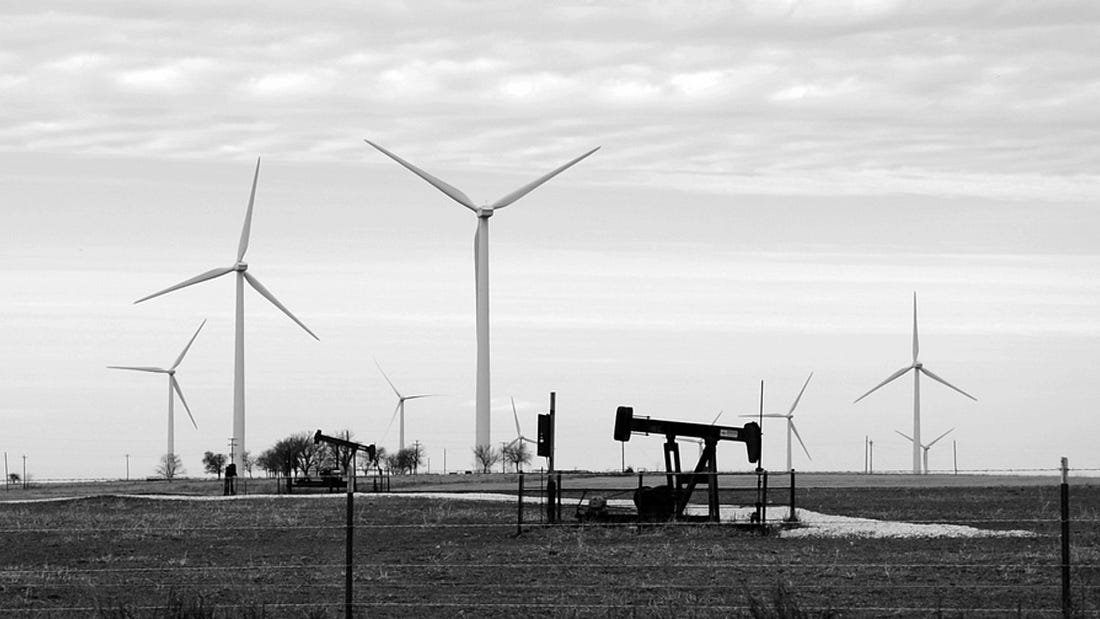
Wolf Ridge Wind Farm in Muenster, Texas. Photo credit: Ben (Out with the Old, In with the New), Wikimedia Commons, CC BY-SA 2.0.

The expansion of Greentech in the Trump era has by no means been limited to blue states. Some of the most extensive installations of Greentech are in red states – witness Texas. Utility-scale solar plants produced 45 terawatts from January through September, 2025, up 50% from 2024 and nearly four times what they generated in 2021. Wind power also continued to climb, producing 87 terawatts through September – a 4% increase from 2024 and 36% more than in 2021. Together, wind and solar supplied more than a third of Texas’ electricity in the first 9 months of 2025. Battery use is also growing. Three of the four largest US battery storage projects scheduled to open in 2026 are in Texas. Solar collection and battery storage are now being systematically combined: one dual project is adding 837 megawatts of solar power and 418 megawatts in battery energy storage capacity.

In Nevada, generally regarded as a “purple” state, a third of all energy demand is now met by solar panels. The state has the highest solar electricity generation per capita in the country, as well as the most solar-industry jobs per capita. The goal of producing half of its electricity from renewables by 2030 is enshrined in the state’s constitution. The Las Vegas region has the highest concentration of residential rooftop solar in the continental US. The city’s chief sustainability officer attributes this in part to the city’s easy permitting. “You’re pretty much in and out of our office with a permit in 30 minutes.”

In the absence of federal support, states are reaching out to each other to create regional alliances to implement Greentech. For example, thirteen states have formed the Geothermal Power Accelerator collaboration to rapidly expand geothermal power development. Another example: The California State Legislature passed Assembly Bill 825 to begin the process of establishing a regional electricity partnership across the West. In late June, the state of Washington joined the partnership along with California and Quebec. And, after briefly withdrawing, Virginia rejoined the 11-member northeastern Regional Greenhouse Gas Initiative.

In some states like Texas, the Greentech boom is occurring without much attempt to reap its potential social benefits. But in many states, as we will see in a subsequent commentary in this series, the Greentech revolution is enabling a broader program for jobs and justice that embodies the principles of the Green New Deal. That in turn is laying the basis for a national Greentech New Deal to come.

Looming over recent climate politics has been the issue of energy affordability. Because Greentech has made the production and use of renewable energy so much less costly than fossil fuel energy, states have accelerated their introduction of it. But the energy cost squeeze on consumers has in some cases also led states to shortsightedly reduce investment in Greentech and unleash fossil fuels.

These dynamics are now being exacerbated by the escalation in fossil fuel prices and the threat of energy insecurity that have accompanied the Iran war. The relative expense and unreliability of fossil fuel energy is likely to accelerate Greentech in the states. States that don’t want to render their economies “stranded assets” should go all out for the Greentech revolution right now.


This article also appears in Jeremy Brecher’s STRIKE! newsletter.


Email
avatar

Jeremy Brecher is a historian, author, and co-founder of the Labor Network for Sustainability. He has been active in peace, labor, environmental, and other social movements for more than half a century. Brecher is the author of more than a dozen books on labor and social movements, including Strike! and Global Village or Global Pillage and the winner of five regional Emmy awards for his documentary movie work.

Trump admin gives wildlife 'one-way ticket to extinction' with new policies: expert

Julia Conley,
 Common Dreams
July 18, 2026 


Dolphins swim in front of a boat in the Pacific Ocean outside Long Beach, California, U.S. July 17, 2026. REUTERS/Mario Anzuoni

“Yet again, the Trump administration has sold out our endangered wildlife to the highest bidder,” said one biodiversity advocate after the US Department of Interior, in a Friday news dump, issued two new policy changes that would weaken the Endangered Species Act and make it easier for corporate polluters to prioritize their own bottom lines over habitat protection.

The US Fish and Wildlife Service (FWS) rescinded a policy that has been known as the “blanket rule” since 1975, which has given threatened species the same protections from illegal killing, trapping, harassment, and other forms of “take” under the ESA, as species that are officially designated as endangered.

The rollback would apply to species that have been newly declared as threatened, including the Florida manatee, the Pygmy rabbit, the Aztec Gilia, and Clover’s Cactus—which could now go for years without protections despite their habitat loss and declining populations.

“Today’s decision represents a profound failure by Interior Secretary [Doug] Burgum and his department, and it amounts to an utter abdication of the federal government’s responsibility to protect America’s wildlife,” said Sara Amundson, president of the Humane World Action Fund. “The department’s role is to faithfully implement—and certainly not to dismantle—the Endangered Species Act.”

The other policy change will require the FWS to consider the economic impact on various industries of designating areas as “critical” habitats in order to protect threatened and endangered species. The agency has previously had discretion over whether to consider economics when making habitat protection decisions.

Under President Donald Trump’s new rule, said the Center for Biological Diversity, the FWS will be forced “to accept at face value claims by corporations and landowners of economic impacts from designating critical habitat, which could greatly limit the amount and quality of habitat protected for imperiled wildlife.”

“The way this is written, a landowner could falsely claim they planned to build the next Disneyland on their property, so designating critical habitat would supposedly cost them tens of millions of dollars,” said Noah Greenwald, CBD’s endangered species co-director. “This rule is clearly intended to prevent the protection of the wild places that endangered animals and plants need to survive. It’s a despicable move that cheapens the value of our most imperiled wildlife so corporations can make more money. Anyone can make outrageous claims about how much their property is worth, but that shouldn’t be taken as gospel.”

Advocacy groups said both policy changes amounted to giveaways to the logging, mining, drilling, and cattle ranching industries. The latter industry has long lobbied against land being designated as a critical habitat for the ‘I’iwi bird in Hawaii, Clay Samford, an attorney with the environmental legal group Earthjustice, told The Washington Post.

“It’s part of this administration’s push to reduce protections for public lands and wildlife that are enjoyed by all Americans, in favor of narrow business interests,” Samford told the newspaper.

A senior attorney for the group, Elizabeth Forsyth, said in a statement that “the Trump administration is turning the law on its head by letting extractive industries dictate where critical habitat can be destroyed.”

“This prioritization of industry interests over science is fundamentally at odds with the clear purpose of the Endangered Species Act,” said Forsyth. “We won’t let this dangerous giveaway go unchallenged.”

There is currently a backlog of more than 500 species awaiting consideration for listing as threatened or endangered, and the rule changes, along with the Trump administration’s 18% reduction in the FWS workforce, are expected to leave imperiled species waiting even longer for protections.

“In the midst of an extinction crisis, with hundreds of species like the Florida manatee and the wolverine desperately needing stronger protections for their habitats, the Trump administration is gutting protections to benefit industry interests,” said Ryan Shannon, a senior attorney at Defenders of Wildlife. “Where we see our nation’s irreplaceable wildlife, they see dollar signs. But our federal lands and waters, and the species they support, belong to all Americans, not to the logging, drilling, and mining industries that oppose all limits on maximizing their private profits.”

In a statement, Interior Secretary Doug Burgum asserted that the ESA has long been “weaponized to stop almost any new project in America, driving up costs for families, weakening our competitiveness, and undermining our national security,” continued Secretary Burgum.

He added that the endangered species list has “fallen short,” with 97% of listed species remaining designated as endangered, and called for “species recovery and delisting.”

But Defenders of Wildlife noted that the ESA “has succeeded in preventing extinction for 99% of listed species.”

“Public support for protecting our native wildlife remains overwhelmingly high, with 84% of voters supporting the ESA, according to nationwide polling conducted by Defenders of Wildlife,” said the group.

The rules announced on Friday came days after the Interior Department proposed a new rule under which management of threatened grizzly bears would be transferred from the federal government to the states, where Republican leaders have pushed to end protections for the species.

The administration also exempted oil and gas companies from having to protect endangered species in the Gulf of Mexico, and earlier this month changed the regulatory interpretation of the word “harm” in the ESA.

“These rules are a one-way ticket to extinction for our most imperiled animals and plants, from monarch butterflies to giraffes to alligator snapping turtles,” said Greenwald. “Trump is bending over backward for corporate polluters by ripping away the blanket that protects so many struggling wildlife species as well as the air we breathe, the water we drink, and the natural places where we seek peace of mind. This is the last thing we need in the middle of an extinction crisis, and we’ll fight it with everything we’ve got.”
Climate Crisis-Denying Trump Threatens Canada With New Tariffs Over Wildfire Smoke

“When wildfires hit America, Canada sends firefighters,” said one journalist. “When wildfires hit Canada, America sends tariffs.”


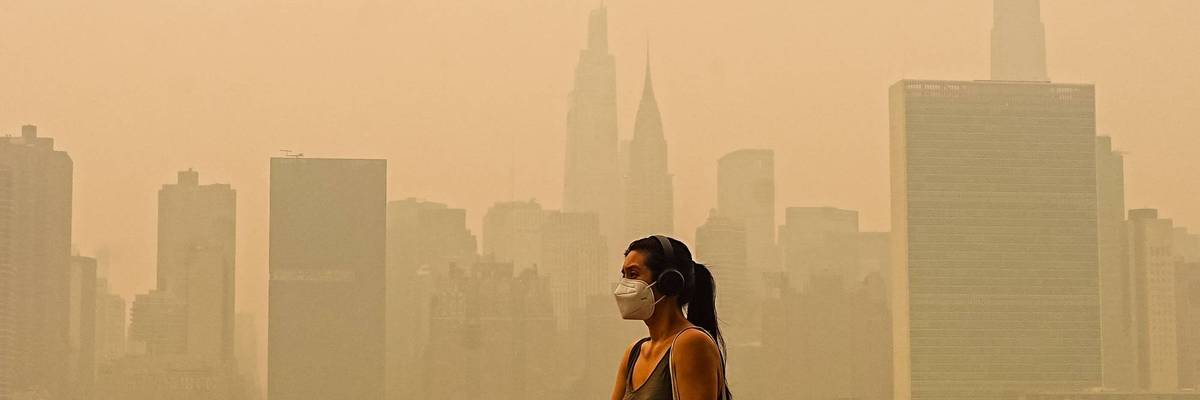
Smoke from massive wildfires in Canada engulfed the New York City skyline on July 16, 2026.
(Photo by Selcuk Acar/Anadolu via Getty Images)

Jessica Corbett
Jul 17, 2026
COMMON DREAMS

A day after a Republican senator pledged to introduce legislation sanctioning Canada for the wildfire smoke impacting various US communities this week, President Donald Trump on Friday threatened the United States’ northern neighbor with new tariffs.

“We are holding Canada responsible for the fact that they are not properly maintaining their Forests, and Brush therein, and the United States is being unnecessarily invaded by filthy, polluted, and unhealthy air, the quality of which is dangerous, and totally unacceptable!” Trump wrote on his Truth Social platform. “I will call the Prime Minister during the day to find out what they are going to do about it.”


Out-of-Control Canadian Wildfires Prompt Calls for ‘Nuremberg Trials for Big Oil’


“The cost is incalculable! Canada has refused to engage in basic Forest Management and Debris Removal, knowing that such refusal will lead to exactly this result,” Trump continued. “This is Willful Negligence, and becoming a yearly occurrence, costing the United States Billions of Dollars, which cost of this pollution must of necessity be added to the TARIFFS Canada is currently paying.”


Melanie D’Arrigo, a campaigner for single-payer healthcare in the United States, responded, “So can Canada hold US oil companies, their lobbyists, and the congresspeople they bribe for the climate crisis that increases droughts and the risk of these wildfires?”

“When Trump talks about increasing tariffs on Canada, he’s talking about Americans paying more for the things they need—because the increased costs are paid by American consumers,” she also stressed.

According to the Canadian Broadcasting Corporation, when asked for a comment on Trump’s post, a spokesperson for Canada’s Embassy in Washington, DC only said Ambassador Mark Wiseman has “engaged directly with key administration and Hill officials regarding the wildfire emergency in Canada, our efforts to address it, and the impact of wildfire smoke on Canada and the US.”

CBC noted that a day earlier, four Michigan Republicans in the US House of Representatives had made similar statements in a letter to Prime Minister Mark Carney, who didn’t address the missive when asked about it, but told reporters in French that “climate change is everyone’s responsibility—truly everyone’s—including the United States.”

Big Oil-backed Trump has notably rejected scientific conclusions about the fossil fuel-driven climate emergency on the world stage and, throughout both terms, made various policy decisions that serve industry polluters—even as his own government continues to publish climate science.

While Carney has publicly embraced climate science, the Liberal leader has also recently faced criticism for “pouring fuel on the flames of the climate emergency” by “expanding tar sands and the fracked gas industry.”


Meanwhile, the fires raging across Canada—and prompting air quality alerts across the US Midwest and Northwest—have spurred calls for “Nuremberg trials for Big Oil,” given that the burning of fossil fuels has made the blazes more extreme and frequent.

Despite the science, Republicans on Capitol Hill seem hell-bent on strictly blaming Canadian forest management. Sen. Bernie Moreno (R-Ohio), a key ally of Trump and the fossil fuel industry, said Thursday on the social media platform X that “I’ll be introducing a bill next week to sanction Canada and the responsible Canadian government officials for this atrocity.”

Replying to the post, climate reporter Kate Aronoff wrote that a “major function of this site during climate-fueled disasters now is providing a space for right-wingers to beta test increasingly insane talking points for avoiding the obvious.”

More Perfect Union producer Jordan Zakarin also fired back on X, writing, “The United States sanctioning another country, much less Canada, for pollution and environmental destruction is the stuff of bad satire.”


Fossil Free Media director Jamie Henn said, “How about sanctioning the companies fueling the climate crisis that’s making these fires more frequent and intense?”

Democrats in Washington, DC “should introduce a Make Polluters Pay bill that taxes oil and gas companies’ record profits and uses the revenue for wildfire relief, air purifiers, and all the adaptations we need to... deal with these climate disasters they helped create,” he proposed.

Sen. Bernie Sanders, a Vermont Independent who caucuses with Democrats, also took aim at Republican climate lies in a lengthy social media post on Thursday, noting that “in both the United States and Canada, this heat and drought is driving longer and more intense wildfire seasons, including the more than 800 wildfires across Canada and northern Minnesota that are currently causing dangerous levels of air pollution for at least 115 million people across 20 states.”

“NO, Mr. President: Climate change is not a hoax. It is reality. And your ignorance is putting our kids and grandkids at risk in exchange for the short-term profit of your billionaire friends in Big Oil,” Sanders said. “Our job: Reject President Trump’s lies and take on the crisis of climate change and the greed of the fossil fuel industry by transitioning our energy system to energy efficiency and sustainable forms of power. When we do that, we cut carbon emissions, reduce energy bills, and create millions of good union jobs.”


Cassidy DiPaola, communications director for the Make Polluters Pay campaign, charged that “blaming Canada for these wildfires is like blaming a homeowner when an arsonist sets their house on fire. Canada is choking on the same smoke we are, and sanctioning our closest ally doesn’t clear a single acre of burned forest or stop the next fire from starting.”

“If Republicans actually wanted to hold someone responsible, they’d go after the fossil fuel companies whose executives knew what their products were doing to the planet and buried the science anyway,” she argued. “Instead, Congress is moving in the opposite direction, weighing legislation that would grant the fossil fuel industry total immunity from climate liability. And if Republicans wanted policies that actually protect their constituents’ health, they’d support climate superfund bills that fund public health programs, help wildfire survivors rebuild, and prepare communities for the risks still ahead.”

Moreno’s bill, she added, “is a shameless attempt to make sure the blame lands anywhere but on the fossil fuel industry, and everyday Americans will pay the price for that misdirection while the companies that caused this crisis walk away untouched.”

Canadian premier calls Trump’s threat to add wildfire pollution costs to tariffs ‘unacceptable’

Molly English, Sydney Bishop, 
CNN
Sat, July 18, 2026 


National Guardsmen patrol the Lincoln Memorial as the sun, obscured by wildfire smoke, rises above the Washington Monument and the Reflecting Pool, in Washington, DC, on Friday. - Julia Demaree Nikhinson/AP


The leader of Canada's Ontario province on Saturday lashed out at President Donald Trump over his threat to add "the cost of pollution" from that country's wildfires to US tariffs.

Trump said Friday that he's holding Canada responsible for wildfire smoke hovering over much of the Midwest and the eastern United States and vowed to call Prime Minister Mark Carney "to find out what they are doing about it." He suggested that the cost of dealing with pollution from the fires that continued to blanket large swaths of the US on Saturday could be added to the tariffs that Canada is already paying.

"We are holding Canada responsible for the fact that they are not properly maintaining their Forests, and Brush therein, and the United States is being unnecessarily invaded by filthy, polluted, and unhealthy air, the quality of which is dangerous, and totally unacceptable!" Trump wrote in a Truth Social post.

On Saturday, Doug Ford, the premier of Ontario, where there are 191 active wildfires, expressed frustration with Trump's comments. He noted that Canadian rescue workers helped fight wildfires in Southern California last year.

"I find it a shame the administration in the US and Congress people (are) writing these letters and blaming us," Ford said during a news conference. "They have a very short, short memory. We had the water bombers, everyone ready, going over to California. It was last year."

"That's what neighbors do, right? You don't get on and start threatening and criticizing, because, guess what? One day, it's going to be your turn," he continued. "And we're going to be down there without hesitation to support our neighbors."

More than 100 million people in 18 states and the District of Columbia have been under air quality alerts. "Very unhealthy" and "hazardous" air quality stretches from northeast Minnesota to southeast Virginia.

"This is Willful Negligence, and becoming a yearly occurrence, costing the United States Billions of Dollars, which cost of this pollution must of necessity be added to the TARIFFS Canada is currently paying," he added.

Tensions are already thick between the two countries.

After the Supreme Court ruled that Trump could not use emergency powers to levy tariffs, the president has resorted to using other statutes that require investigations and public comment periods. Although that has slowed the tariff process, the administration has committed to getting America's effective tariff rate back to where it was earlier this year before the Supreme Court's consequential ruling.

Canada, however, has long been a thorn in Trump's side, and Trump has saved some of his highest tariffs for America's northern neighbor. He has accused the country of unfair lumber trade and stealing US auto jobs. Despite Trump's particular animosity toward Canada, the country has been largely insulated by the USMCA trade pact that Trump himself negotiated in his first term. That exempted thousands of goods that otherwise would have been subject to some of the highest tariffs the administration charged.

The Trump administration, however, declined to renew USMCA in its current form earlier this month.

Ford said on Saturday that "Americans love Canadians" and "Canadians love Americans." But, he added, Trump's comments were "absolutely unacceptable."

Massachusetts Gov. Maura Healey has called Ford, offering Ontario assistance with the wildfires, he said. Ford said he also spoke to Minnesota Gov. Tim Walz, but state officials there have "their hands full."

CNN's David Goldman contributed to this report.

We’re Choking on Smoke—Where Do We Go From Here?

Everyone needs to consider spending at least some time every year doing what they can to improve the climate or soon events like this week’s convergence of bad global warming outcomes will become both commonplace and unstoppable.


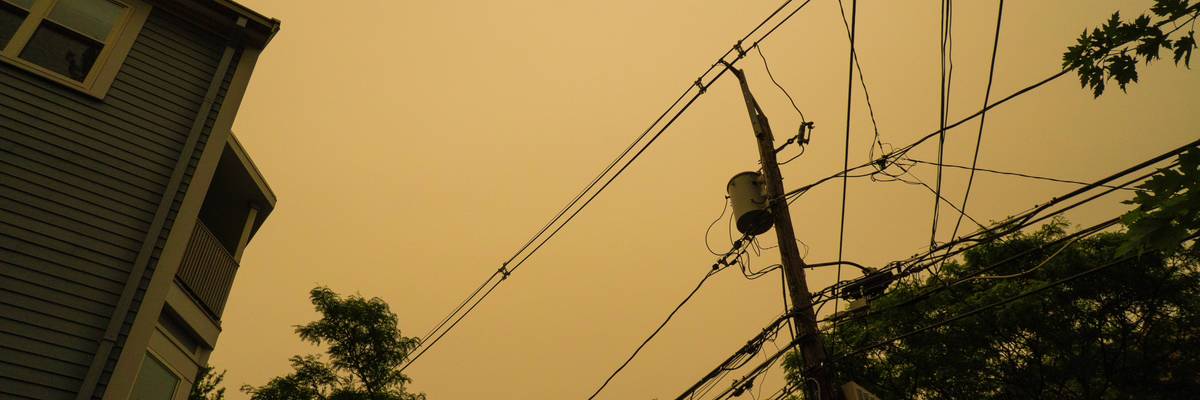
Yellow sky is seen over Boston on July 15, 2026.
(Photo by Jason Pramas)


Jason Pramas
Jul 18, 2026
Common Dreams

Many older environmentalists, myself included, have been trying to warn our fellow human beings about the danger of global warming since the 1980s.

Back then, there were fewer signs that what the vast majority of climate scientists were already saying about the then-looming crisis would come true.

Over the years, we’d be more likely than people around us to worry about summers getting hotter than they had been in our childhood. Or storms getting more intense. Or getting less rain where there used to be more and more rain where there used to be less. And so on. But the real dangers were still in the future, and many people have trouble processing dangers that are not in the present, we understood.

And we did what we could for 40 years.

We have a Republican administration, working more directly for the fossil fuel industry and other related destructive and antiquated industries than any other to date, that seems determined to do as much damage to the planet as it possibly can while in power.

And it wasn’t enough.

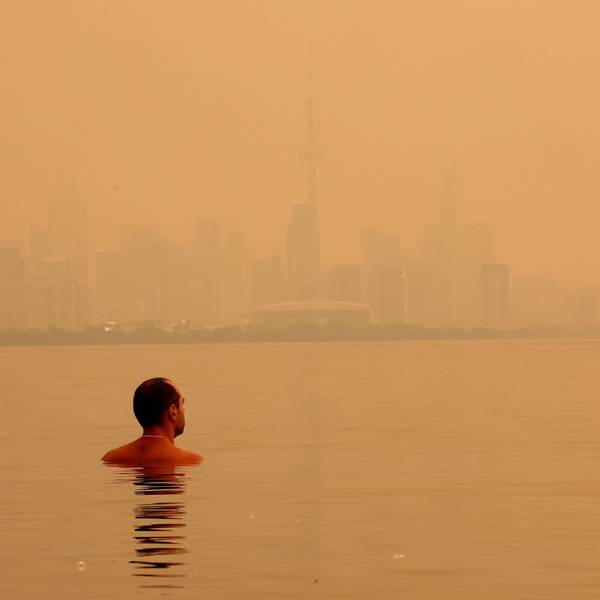
And now global warming is definitely here. And it’s gotten so bad so fast that this week many of us on the East Coast were treated to two major manifestations of the climate crisis that is upon us like a wolf burying its fangs in our collective neck: Another of the increasingly frequent “heat domes” that translate to increasingly horrendous heatwaves plus terrible smoke from wildfires in Ontario.

And the smoke was so bad that it actually mitigated the heatwave. Something so messed up that few of us who aren’t, say, trained geophysicists have ever conceived that such a thing could happen outside of a major volcanic eruption in our hemisphere… like the big one in Iceland in 2010.

So where do we go from here? Well, things aren’t looking good.

We have a Republican administration, working more directly for the fossil fuel industry and other related destructive and antiquated industries than any other to date, that seems determined to do as much damage to the planet as it possibly can while in power. We have a Democratic Party that is better on global warming, but not that much better, hoping to retake the federal government. We have other political forces more committed to bringing the “drill baby drill, burn baby burn” crowds to heel—like the Green Party and Democratic Socialists of America. But they remain very small relative to the population (outside of DSA’s impressive base in New York City thus far) and hemmed in on every side by the major parties. And most of the largest environmental organizations have simply run out of steam.

Major advances in several areas of science and technology are likely sufficient to allow humanity to at least blunt the worst effects of global warming. And some countries are funding such research and working to meet self-imposed climate targets. But most are not, least of all the United States. Which “is the second-highest climate polluting country, responsible for around 12% of global emissions,” according to Yale Climate Connections. The highest being China, a nation that is also doing much more to remediate global warming than the US. Nor is the best science useful if it’s not deployed. Even as the pollution responsible for warming continues to get worse year by year.

Do I know some magic path out of this morass? No. But I will tell you this: Everyone needs to consider spending at least some time every year doing what they can to improve the climate or soon events like this week’s convergence of bad global warming outcomes will become both commonplace and unstoppable.

Just like all of us environmentalists have been saying all along. In the public interest. Not for personal gain. Unlike what the climate scofflaws profiting from the destruction of human civilization have all-too-successfully propagandized far too many Americans into believing.

Mull that over while you wait for the smoke to clear and heat to subside… until the next “smokewave” and the next heatwave.

And the next and the next and the next and the next…

The original version of this article ran on July 17, 2026 at BINJ.News.

Our work is licensed under Creative Commons (CC BY-NC-ND 3.0). Feel free to republish and share widely.


Jason Pramas
Jason Pramas is executive director of the Boston Institute for Nonprofit Journalism and editor-in-chief of BINJ.News.
Full Bio >


Threats fly as Trump loses it over wildfire smoke 'invading' US skies

Nicole Charky-Chami
July 17, 2026 
RAW STORY


Donald Trump holds a cabinet meeting at the White House in Washington. REUTERS/Jonathan Ernst


President Donald Trump was furious with Canada on Friday as wildfires and smoke prompted major air quality concerns for the Midwest and Northeast.

Trump dropped threats in a post on his Truth Social platform.

"We are holding Canada responsible for the fact that they are not properly maintaining their Forests, and Brush therein, and the United States is being unnecessarily invaded by filthy, polluted, and unhealthy air, the quality of which is dangerous, and totally unacceptable!" Trump wrote.

He said he planned to call Canadian Prime Minister Mark Carney to "find out what they are going to do about it."

"The cost is incalculable! Canada has refused to engage in basic Forest Management and Debris Removal, knowing that such refusal will lead to exactly this result," Trump wrote. "This is Willful Negligence, and becoming a yearly occurrence, costing the United States Billions of Dollars, which cost of this pollution must of necessity be added to the TARIFFS Canada is currently paying. Thank you for your attention to this matter!"

Trump wasn't the only Republican leader to lob frustration at America's northern neighbor.

Rep. Lisa McClain (R-MI) took to X Thursday to complain about poor air quality as more than 890 fires burned across Canada. Her frustration was met with backlash, as critics online pointed out how Canada had offered the United States help in January 2025 as wildfires ravaged southern California.


'We exist in hell': Trump's 'unforgivable' threats against US neighbor spark outrage

Bennito L. Kelty
July 17, 2026 
RAW STORY

Trump's tariff threats against Canada because of its wildfires drew online outrage as critics jumped to the neighboring country's defense.

On Friday, Trump went after Canada in a Truth Social post because of smoke from its wildfires, which he said is "costing the United States Billions of Dollars." He warned that the "cost of this pollution must of necessity be added to the TARIFFS Canada is currently paying."

Trump's attack drew swift condemnation on social media.

"Such a neighborly thing to do," reacted Democratic strategist Leslie Marshall.

"America's mad king is now threatening Canada with additional tariffs because of the wildfire smoke," Canadian journalist Geoffrey P. Johnston wrote. "America is kicking us when we are down. This is unforgivable. Canada & USA will never be friends again after this. Too many Americans are going along with Trump's insanity."

"He is such a d— embarrassment!" national opinion columnist Sophia A. Nelson described Trump.

"Trump is a climate science denier," writer Matthew Todd pointed out. "He's aggressively heating the planet - and then blaming Canada. This is all so intolerable. How are we meant to exist in this hell?"

"Man you gotta be kidding me," reporter Mike Freeman reacted.

The popular account Republicans against Trump pointed out, "higher tariffs on Canadian goods mean higher prices for American consumers."

Others pointed out that Canada has sent firefighters to the U.S. to help combat wildfires. MeidasTouch, a political news network, noted, "When fires ravaged Southern California, Canada sent firefighting crews to help battle the blazes."

"When wildfires hit America, Canada sends firefighters," wrote journalist Aaron Parnas. "When wildfires hit Canada, America sends tariffs."


MAGA lawmaker's wildfire threat gets brutal fact-check: 'Idiotic self-centered comment'

Nicole Charky-Chami
July 17, 2026 
RAW STORY


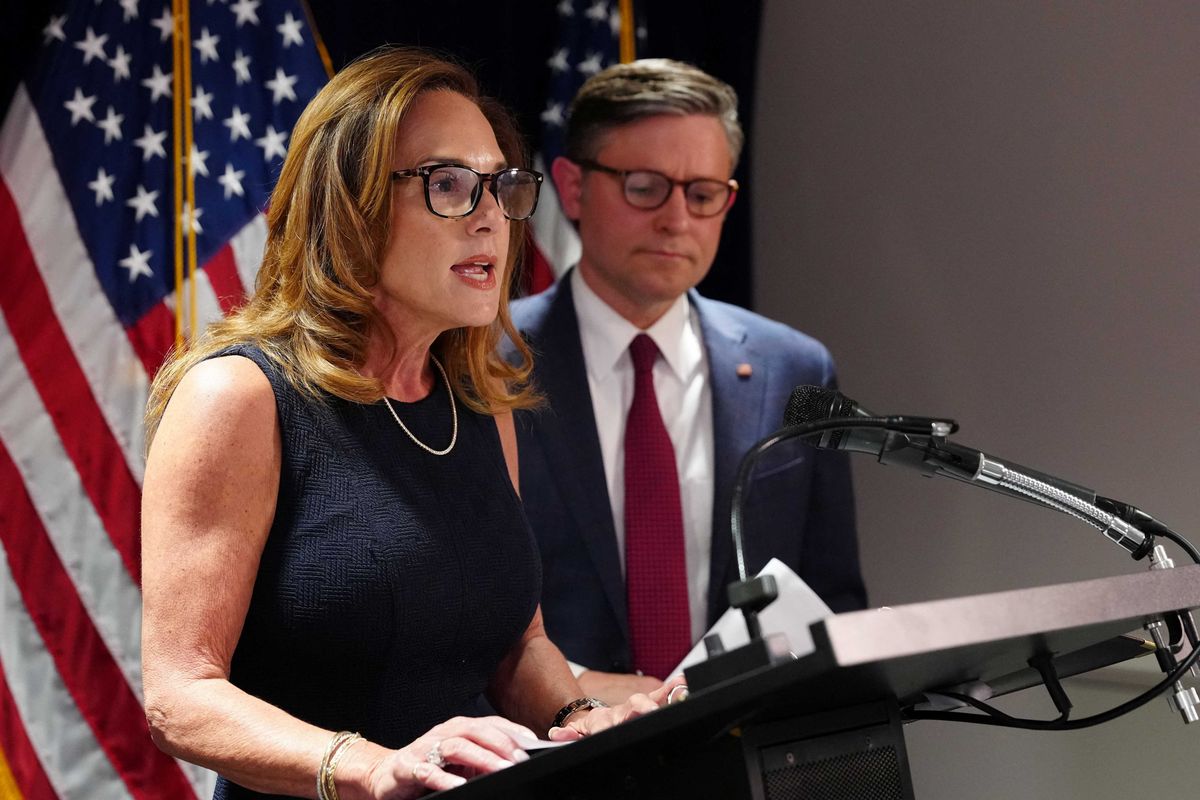
House Republican Conference Chair Lisa McClain (R-MI), next to House Speaker Mike Johnson (R-LA), addresses reporters on the day of a House Republican Conference meeting on Capitol Hill in Washington, D.C., on July 14, 2026. REUTERS/Ken Cedeno

A Republican lawmaker was called out on Friday for her remarks about Canada's wildfires and smoke — comments critics said overlooked Canada's help fighting California's own fires, the Daily Beast was first to report.

Rep. Lisa McClain (R-MI) took to X Thursday to complain about poor air quality as more than 890 fires burned across the Canada and smoke hit the Midwest and Northeast.

“Michiganders shouldn’t have to breathe Canada’s negligence,” she wrote on X. “YEAR AFTER YEAR the smoke crosses the border while Canada does nothing. Stop exporting your smoke into our skies. Enough is enough!”

This comment stands in stark contrast to that made by the Canadian government in January 2025 as wildfires ravaged southern California.

"The Government of Canada and all Canadians express their deep sadness at the devastating wildfires currently impacting southern California," the statement read.

"Team Canada stands ready to reciprocate that support during this time of need.... We have left no stone unturned and are exploring all avenues to offer our support to the people of California."

Social media users were quick to make the MAGA congresswoman aware of this point.

"The most idiotic self centered comment," Dave Mac, a member of the Directors Guild of Canada, wrote on X. "When California was burning who was there ? CANADA "

His comment had nearly 4,000 likes on the platform as of Friday morning.

Other users echoed this comment and mentioned the hypocrisy.

User AJ Punk, a political commentator, struck a sarcastic tone when he wrote on X, "How dare Canada burn their country down and ruin America's summer!"

Progressive commentator David Ro wrote, "When Michigan and Ontario were hit with disastrous Tornados and storms that came From the U.S. mid West. Canada did not complain or threaten the U.S. Instead they sent hundreds of hydro crews to Michigan to get the lights back on. That’s what friends do."
Record-breaking heatwave in Europe: Does the continent have a new climate?

Friday 17 July 2026, by Edward Chen


As Europe experiences its second [now the third] unprecedented heatwave of the year, breaking temperature records, many are asking the same questions: Is this the new normal? Has Europe’s climate changed radically? Asia’s oceans are also breaking heat records: What does this mean for extreme weather events?

Scientists who spoke to Nature say that a European heatwave lasting four or five days, with London approaching 40°C, is an anomaly. "It’s simply phenomenal," says Sarah Perkins-Kirkpatrick, a climate scientist at the Australian National University in Canberra. But researchers also say that people in Europe can expect to see more of these phenomena in the future as global warming continues.

"Heat waves are here to stay, until we turn off the tap of global emissions," says Samantha Burgess, deputy director of the Copernicus Climate Change Service at the European Centre for Medium-Range Weather Forecasts in Reading, UK. "They are more frequent, more intense, and last longer."
The risks are serious. In France – which this week recorded its hottest day ever, with 44.3 °C in the town of Pissos – at least 54 people have died from heat or from drowning in water flows while trying to cool off.

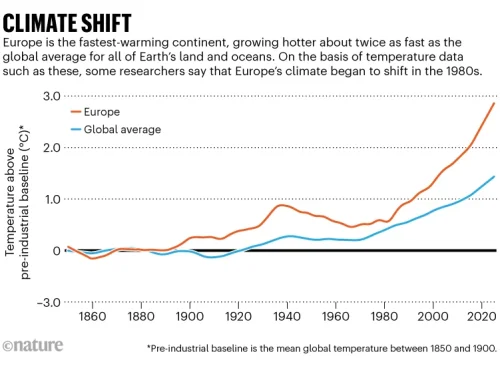
What researchers do not necessarily agree on is the speed with which Europe’s climate has gone from cool and pleasant summers, in which residents could leave their windows open, to one dominated by extreme heat and doubts as to whether to buy an air conditioner.

New maximums

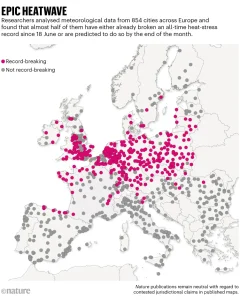
An study published on June 26 examined temperatures in 854 cities across Europe – home to 30% of the population – and revealed that almost half of them have broken or will break their historical heat stress records this month. According to the analysis, conducted by the World Weather Attribution group (an international organisation that studies extreme weather phenomena), all the cities analysed in the Czech Republic, Lithuania and Luxembourg have recorded unprecedented highs.

"What was once rare has become a common occurrence," says Erich Fischer, a climate scientist at the Swiss Federal Institute of Technology (ETH) in Zurich. Temperature records "are being broken constantly, everywhere, and in fact are being surpassed by wide margins." According to him, these records in Europe would be unthinkable in the sporting field: it would be like a high jumper "under the effects of steroids" breaking a record by half a metre, instead of by one or two centimetres.

So what is causing the current heat wave? Like the previous ones, it has been triggered by air circulation patterns that carry heat from the equator to the icy North Pole, explains Lara Wallberg, a climate modeller at the Max Planck Institute for Meteorology in Hamburg (Germany). Although this air circulation is not fully understood, some scientists believe that when sea surface temperatures in the North Atlantic drop, as is happening now, warm air from North Africa and the Sahara Desert can become temporarily trapped over Europe, explains Stefan Rahmstorf, a climate scientist at the University of Potsdam in Germany.

"Obvious beyond belief"

According to researchers, climate change is also influencing the intensity of this particular heat wave. Furthermore, the high temperatures caused by global warming have dried out the soil and reduced evaporative cooling in Europe, says Clair Barnes, a researcher at Imperial College London, specialising in extreme weather events. Cloud cover, which would normally reflect the sun’s heat back into space, has also decreased in Europe, due to a combination of drought conditions and stricter air quality laws since the 1980s, which have reduced aerosol pollution, Barnes adds. (Aerosols can act as scaffolding for cloud formation.)

In fact, some scientists believe that Europe began its transition to a different climate in the 1980s. "In Europe, especially since 1980, there has been a huge uptick in global temperatures," says Zeke Hausfather, a climate scientist at Berkeley Earth, a California-based nonprofit organisation that tracks global temperatures. "It’s pretty clear in the data."

Source: Ref. 1/World Weather Attribution

June 26 2026

Translated by David Fagan for International Viewpoint from vientosur.

References
Keeping, T. et al. Las emisiones de combustibles fósiles han agravado rápidamente las olas de calor en Europa en tan solo unas décadas (World Weather Attribution, 2026).

Krüger, J., Kjellsson, J., Kedzierski, R. P. y Claus, M. *Tellus* 75, 358–374 (2023).

Servicio de Cambio Climático de Copernicus y Organización Meteorológica Mundial. Informe sobre el estado del clima en Europa 2025 (ECMWF y OMM, 2026).

Boboc, L., Dima, M., Vaideanu, P. e Ionita, M. Weather Clim. Extrem. 49, 100794 (2025).

Zhang, R., Sun, C., Zhu, J., Zhang, R. y Li, W. npj Clim. Atmos. Sci. 3, 7 (2020).