Monday, July 20, 2026


‘Almost one in three people cannot afford a healthy diet’, UN warns

‘Almost one in three people cannot afford a healthy diet’, UN warns
Copyright Cleared/Canva

By Marta Iraola Iribarren
Published on

Nearly three billion people globally are unable to afford a healthy diet, as the cost of eating healthy has spiked in recent years.

The global cost of a healthy diet has increased 25% over the past five years, exceeding the extreme poverty line — living on less than $3.00 (€2,62) a day — the United Nations warned.

“As a result, 2.69 billion people, almost one in every three people in the world, still cannot afford a healthy diet,” said Máximo Torero Cullen, chief economist of the Food and Agriculture Organization (FAO) at the United Nations, speaking to reporters ahead of the launch of the State of Food Security and Nutrition in the World report on 21 July.

He added that the current cost of a healthy diet, one that meets all nutritional needs, is 4.28 per person per day, adjusted for differences in the cost of living between countries, which is over the extreme poverty line —an international standard to measure absolute poverty – which is set at$3 (€2,62) per person per day.

Most of the expenditure does not go to getting enough calories but to having nutrient-rich foods in the diet.

“Calories are relatively inexpensive,” Torero said, “but nutrition is not.”

Staple foods, the main foods people eat every day, such as grains and root vegetables, make up most of a person's daily calories and represent only 13% of the cost of a healthy diet.

“In contrast, fruits and vegetables provide only 5% of the calories but account for 16% of the cost, so significantly more expensive than cereals, and animal source foods account for almost 30% of the cost,” Torero noted.

Therefore, the challenge “is not to produce enough calories but to make nutrient-rich foods more affordable,” he said.

An unhealthy diet is one of the leading risks for the global burden of disease, mainly for noncommunicable diseases such as cardiovascular diseases, diabetes, and cancer, according to the World Health Organization (WHO).


Why this summer's heatwaves could raise your supermarket bill next year

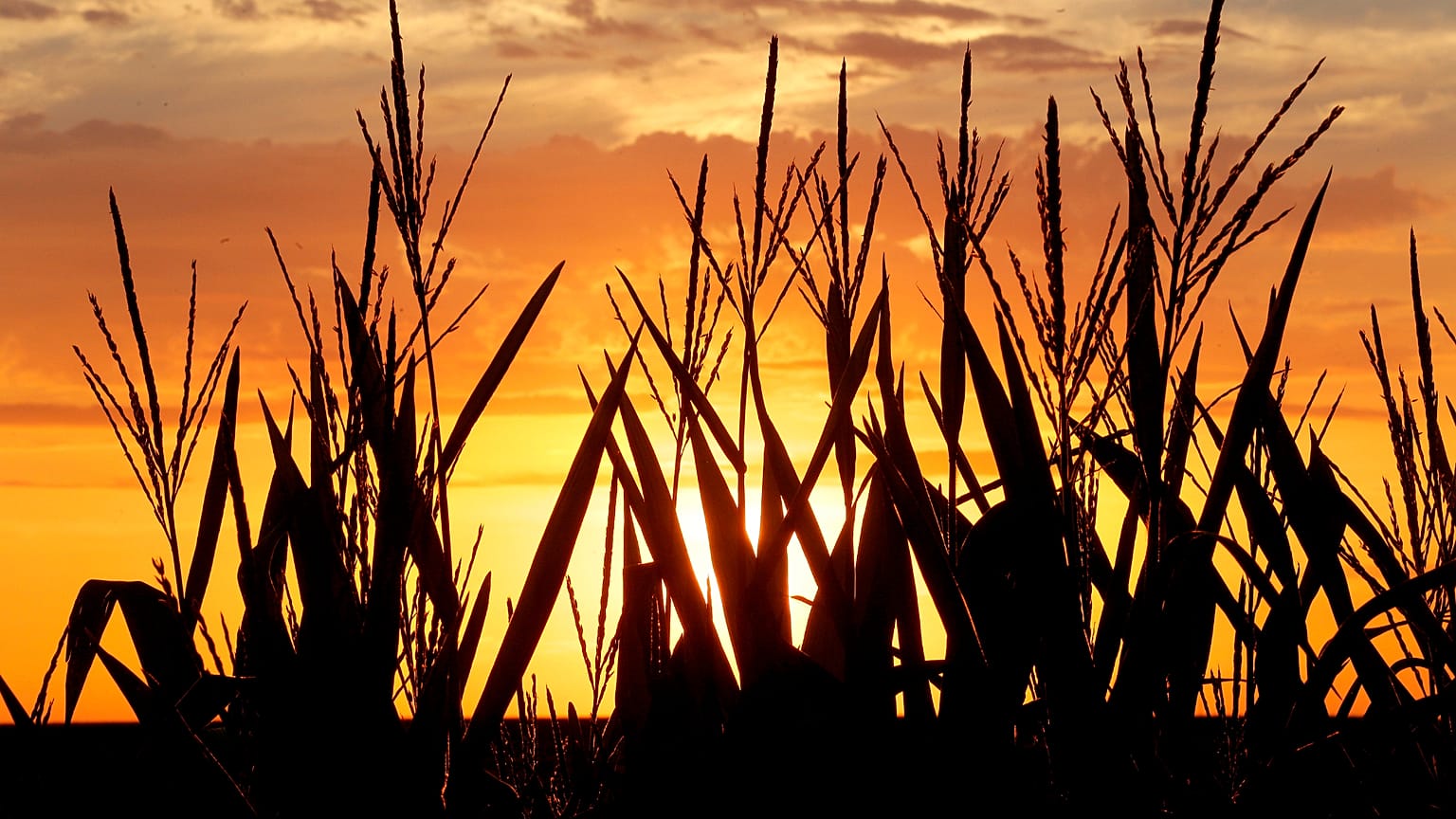
File - Corn stalks are silhouetted by a setting sun Friday, 22 July 2016, in Pleasant Plains, Ill., US.
Copyright AP Photo/Seth Perlman

By Doloresz Katanich
Published on

While food inflation has eased across the eurozone, economists say this summer's extreme heat is now a bigger threat to next year's supermarket prices than the recent Iran war, as damaged harvests could outweigh the fading impact of higher oil and fertiliser costs.

Food inflation has finally begun to ease across the eurozone, offering some relief to households after years of rising grocery bills.

But economists warn the respite may not last.

Instead of the recent Iran war, this summer's extreme heat is now emerging as the biggest risk to food prices next year, with droughts and heatwaves threatening harvests across Europe and beyond.

"We think this summer’s heatwaves will be a stronger upward driver of food prices next year than the war", said Tomas Dvorak, senior economist at Oxford Economics, in a new report.

The warning comes despite fears earlier this year that higher oil and fertiliser prices triggered by the conflict between Israel and Iran would quickly feed through to supermarket shelves.

Those concerns have eased as oil and fertiliser prices have fallen back following the ceasefire. Economists say global commodity shocks typically take around a year to reach consumers, meaning the earlier spike could still add modest upward pressure to food prices in 2027.

Economists at Oxford Economics and Deutsche Bank expect food price inflation to pick up again next year as higher commodity prices feed through the food supply chain.

Higher energy and fertiliser costs feed into food prices through two main channels. First, energy is used across the food supply chain — from tractors and transport to processing, packaging and refrigeration — making production more expensive. Second, fertiliser prices rise with natural gas costs, increasing farmers' expenses. These costs take time to reach supermarket shelves: energy prices can affect fertiliser within weeks, but lower fertiliser use or changes in crop planting typically push up food prices only after the next harvest.

Oxford Economics estimates the combined impact of higher oil, fertiliser and agricultural commodity prices could add around 0.5 percentage points to eurozone food inflation over the coming year. The effect is expected to build gradually, affecting fresh food before processed products.

However, the bigger uncertainty now is the weather. High temperatures and drought can reduce crop yields, pushing up prices for fruit, vegetables, grains and other agricultural products. Oxford Economics estimates the weather effect alone could add up to one percentage point to food inflation next year, helping lift eurozone food inflation to around 3% in 2027.

It estimates that the weather effect alone could add up to one percentage point to food inflation next year.

Economists at Deutsche Bank found that, despite oil and fertiliser prices falling back from their peaks, the March-June commodity shock could still lift food prices by around 1.3% in the UK and 0.8% in the euro area over the next year. That would add roughly 0.1 to 0.15 percentage points to overall inflation.

Why food inflation is still slowing

Eurozone food inflation has declined from 2.5% year on year in December 2025 to 1.6% in June 2026, according to Eurostat's flash estimate. This marks the lowest reading for harmonised food inflation since mid-2021.

Leading indicators suggest food price inflation could remain subdued for the rest of the year. The slowdown has been supported by a strong grain harvest in 2025 and an oversupply of raw milk, which has reduced dairy prices.

Earlier global shocks have also eased, with chocolate, cocoa and coffee prices stabilising after surging in 2025. Meanwhile, olive oil prices continue to fall from their record highs in 2022, while lower energy costs have reduced food processing costs.

Oxford Economics expects these factors to keep food inflation subdued in the coming months and has lowered its forecast for food, alcohol and tobacco inflation to 2.1% in 2026. "But we think food price inflation is still poised to accelerate, just with a longer lag than we previously assumed," the report says.

Deutsche Bank economists also point to easing price pressures. Futures markets suggest energy prices should decline gradually over the coming months, while global food and fertiliser prices have largely stabilised. Farmgate and wholesale prices also continue to signal subdued food inflation.

Nevertheless, they caution that renewed geopolitical tensions could reverse that trend.

Why this summer's heatwaves could raise food prices next year

This summer's heatwaves and unusually warm, dry conditions could have a greater impact on food prices than the commodity shock itself. Damage to crops is already considered unavoidable, while further heatwaves could reduce harvests further, pushing food inflation higher in 2027.

A strong El Niño event could also be intensifying extreme weather, increasing the risk of further disruption.

"The adverse weather impact could build further due to the particularly strong El Niño this year. We estimate it will add up to 1 percentage point to food inflation next year, and we will raise our 2027 forecast to around 3%," Oxford Economics said.

The expected jump in prices is forecast to appear in the first half of 2027 before easing gradually in the second half of the year.

Long-term cost of heatwaves

Oxford Economics refers to a 2023 ECB working paper that found rising temperatures keep pushing food prices and overall inflation higher over time, with the strongest effect on food. It also found that higher temperatures can continue to affect inflation for up to 12 months after the initial weather shock

The ECB working paper estimates that, by 2035, global warming could raise global average annual food inflation by 0.92 to 3.23 percentage points, depending on the climate scenario. It also found that Europe's 2022 heatwave raised European food inflation by 0.67 percentage points and eurozone food inflation by 0.78 percentage points, with the largest effects in southern Europe.

But future heatwaves could have an even bigger impact on food prices. Under continued warming, the inflationary impact of extreme summers is expected to increase. The ECB estimates that if a heatwave similar to the one in 2022 occurred under 2035 climate conditions, it would raise European food inflation by around one percentage point, compared with 0.67 percentage points today. The researchers argue that as the climate warms, crops become more vulnerable to heat stress, meaning the same heatwave is likely to cause greater harvest losses and stronger food price pressures.
Wildfires Sweep Across Thousands Of Hectares In Spain

Wildfire in southern Spain on July 10, 2026. Photo Credit: Wcdde2, Wikipedia Commons


July 20, 2026 
By EurActiv
By Emma Pirnay


Key Takeaways:

Major wildfires in central and northern Spain have burned tens of thousands of hectares, including over 13,000 hectares near Guadalajara (north of Madrid) and 15,400 hectares near Zaragoza, forcing hundreds of evacuations and described as “difficult” by authorities.

No casualties have been reported so far, but the fires have damaged natural parks and prompted statements from Prime Minister Pedro Sánchez, who linked the blazes to the climate emergency and praised emergency responders.

The incidents come amid a broader European context of worsening wildfire seasons driven by climate change, with the EU preparing an adaptation plan and noting record burned areas in previous years.


(EurActiv) — Several wildfires have scorched tens of thousands of hectares of land across central and northern areas of Spain, forcing hundreds of evacuations.

A wildfire raging 100 kilometres (60 miles) north of Madrid has spread, burning more than 13,000 hectares and forcing several hundred people to evacuate, local authorities announced on Sunday.

The fire that started on Thursday in Guadalajara province, which includes the Sierra Norte Natural Park, has not caused any casualties so far but has been described as “difficult” by regional president Emiliano García-Page and local authorities on X.

Another, located near Orés in Zaragoza province, has burned approximately 15,400 hectares.

Spanish Prime Minister Pedro Sánchez said on X that he was “closely following the evolution of the Guadalajara fire” and was in “full recognition to those working tirelessly to protect lives and contain the fire.”

“Denying the climate emergency does not make it disappear. It only makes us more vulnerable,” he added.

The effects of wildfires are not immediately apparent. Small airborne particles (PM2.5) in wildfire smoke increase the risk of respiratory and cardiovascular disease, especially for the elderly, vulnerable groups and outdoor workers.

The EU is getting ready to present a climate adaptation plan by the end of year, including better preparation ahead of wildfire season, which is getting longer.

Crisis commissioner Hadja Lahbib said in early July that last year saw the “highest ever recorded” hectares burned, around one million, which triggered 19 requests for assistance through the EU’s Union Civil Protection Mechanism.

“This year, the wildfire season started unusually early,” she said.

It’s not the only incident this week. In France, Fontainebleau, a major forest and biodiversity hotspot south of Paris, was scorched by fires that have been contained since Tuesday.

Meanwhile, Greece is bracing for its first heatwave of the year.

Scientists say human-driven climate change is increasing the length, intensity and frequency of heatwaves, which dry out vegetation and contribute to the likelihood of wildfires.


Major wildfires continue as Spain's burned area reaches 70,000 hectares this year


By Jesús Maturana
Published on

The La Mierla wildfire has scorched nearly 13,000 hectares and forced the evacuation of 16 villages in central Spain. Another 15,400 hectares have burned near Orés in northeastern Spain, bringing the country's wildfire toll to around 70,000 hectares this year.

Two major wildfires remain active in north-eastern and central Spain, with emergency services focusing on a blaze near La Mierla in Guadalajara province and another near Orés in Zaragoza province. Together, they are already among the country’s most destructive fires this year.

The fire near La Mierla, around 100 kilometres north-east of Madrid, began on Thursday and has burned almost 13,000 hectares, according to the latest official figures.

During the early hours of Sunday, firefighters concentrated on two areas. Crews directly attacked the southern edge of the blaze near Gascueña de Bornova, while others worked to protect the villages of Navas de Jadraque and Bustares.

Authorities have now evacuated 16 villages and surrounding areas, including communities near the Beleña reservoir.

Officials in the Castilla-La Mancha region said the fire was displaying extreme behaviour, driven by strong south-westerly winds. They said the flames were advancing at more than 60 metres per minute, well above the level at which a wildfire is considered difficult to bring under control.

Spain’s Civil Guard is investigating the cause. Authorities believe the fire may have started during agricultural work involving a combine harvester.

Second wildfire grows as Spain's devastating fire season worsens

Meanwhile, the wildfire near Orés in Spain's north-eastern Zaragoza province has burned more than 15,400 hectares. Fire officials said the blaze showed favourable behaviour overnight, allowing crews to deploy additional aircraft and ground teams as weather conditions were expected to be less severe than in recent days.

The villages of Orés, Asín, Luesia, Malpica de Arba and Uncastillo remain under evacuation orders, while residents in Sos del Rey Católico, Navardún, Urriés and Castiliscar have been placed on alert.

Around 450 firefighters and emergency personnel are involved in the operation, closely monitoring changing winds to prevent flare-ups and protect nearby communities and the Sierra de Santo Domingo natural area.

Aragón's 112 emergency service also dismissed online rumours that tractors were needed to help tackle the Orés wildfire, saying the claims were false.

The two blazes are part of what has become one of Spain's most severe wildfire seasons in recent years. Around 70,000 hectares have burned across the country so far this year, with authorities recording 18 major wildfires, almost three times the area affected during the same period in 2025.

Several other fires remain active. In the northern province of Huesca, firefighters continue to battle a blaze near the town of Plan, although its spread slowed overnight. Another wildfire near Fiscal has been largely stabilised.

In southern Spain, firefighters are also tackling blazes near Laujar de Andarax, in Almería province, and Purullena, in Granada province, with officials reporting favourable progress at the latter.

Elsewhere, residents evacuated from the village of Árchez in Málaga province have been allowed to return home after a nearby wildfire was stabilised. Authorities in the Madrid region have also brought a wildfire near Lozoyuela under control after it burned more than 700 hectares.

Trump Under Fire for Diverting Disaster Relief Workers to Immigration Policing

Trump administration officials were notably absent from a House hearing on reforming FEMA this week.
July 16, 2026

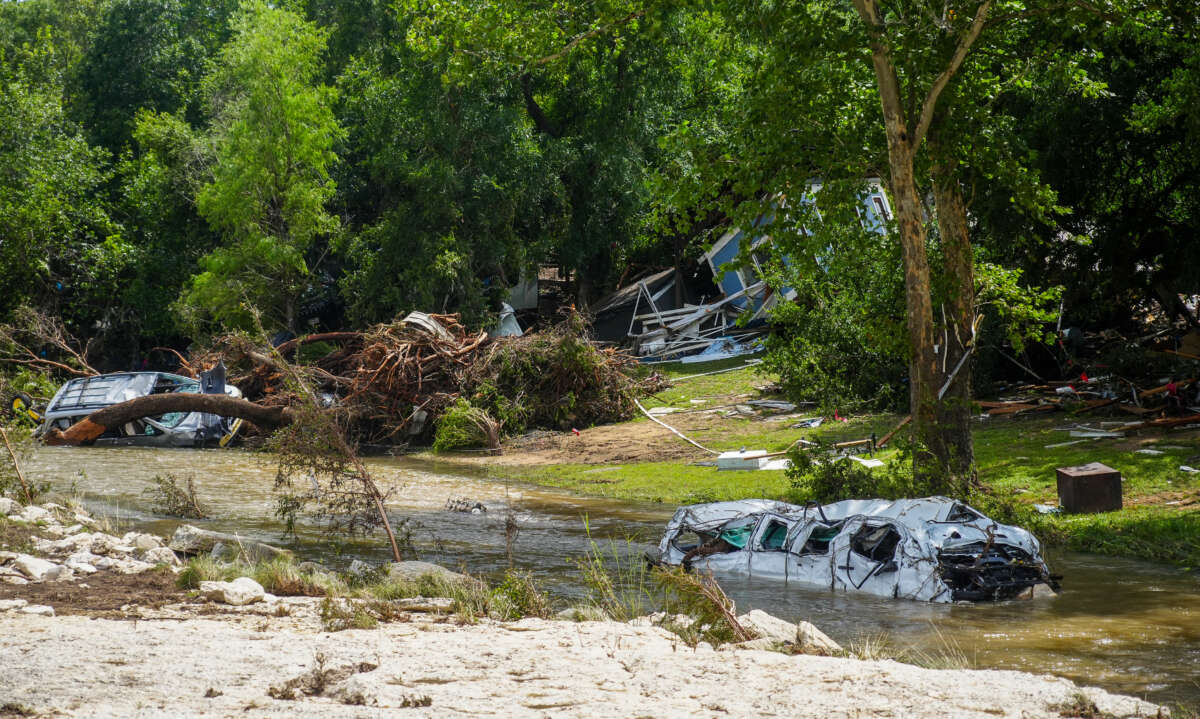
Destroyed vehicles sit in floodwaters as volunteers clean up and recover belongings on July 7, 2025, following a weekend flash flood that devastated homes in Leander, Texas. A new report from House Democrats claims the Trump administration left the U.S. unprepared for disasters by directing relief workers to support immigration enforcement.Ricardo B. Brazziell / Austin American-Statesman via Getty Images

Floods, storms, wildfires, and other disasters can strike in every state and district, and members of Congress in both parties have incentives to improve the Federal Emergency Management Agency (FEMA), the nation’s premier disaster relief outfit. However, current FEMA officials in the Trump administration were notably absent from a House Transportation and Infrastructure Committee hearing on bipartisan legislation to reform the agency, despite broad support for the bill among Republicans.

During the July 15 hearing, Democrats slammed President Donald Trump for politicizing FEMA by denying federal disaster relief to blue states and diverting personnel and resources to bolster his deadly mass deportation campaign. Instead of assisting disaster victims, FEMA employees were directed to help immigration enforcement agencies recruit new officers, plan raids and patrols, and process arrestees at notorious prison camps in apparent violation of federal law, according to an investigative report submitted by House Democrats.

Not a single administrator attended the hearing to provide a response on behalf of FEMA or the White House. FEMA also did not respond to inquiries from Truthout by the time this story was published.

“The politicization of FEMA by the president and his minions is absolutely wrong, and this committee ought to hold the administration to account on that as well as to these other issues,” said Rep. John Garamendi, a Democrat from California. “It’s got to stop.”

Hearings on federal agencies virtually always include current administrators alongside expert witnesses, in order to allow Congress to perform its constitutional oversight duties. FEMA has been a consistent source of embarrassing headlines for Trump, who initially moved to eliminate the agency in 2025 before backing off.

Instead of assisting disaster victims, FEMA employees were directed to help immigration enforcement agencies recruit new officers, plan raids and patrols, and process arrestees at notorious prison camps.

“No one currently working for FEMA is here to talk about how we reform FEMA,” said Rep. Hillary Scholten, a Democrat from Michigan, where recent floods destroyed homes.
 “That’s a critical point.”

Beginning in August 2025, the Trump administration “activated a sustained deployment” of FEMA personnel to assist Immigration and Customs Enforcement (ICE) and Customs and Border Protection (CBP) carry out Trump’s deadly mass deportation campaign across multiple states, according to an investigation released by Democratic Rep. Greg Stanton of Arizona on July 10.

The deployment followed the deepest reduction of FEMA’s workforce in the agency’s history. FEMA lost 5,000 personnel since January 2025 as part of the broader purge of federal workers by the White House and Elon Musk’s “Department of Government Efficiency” or DOGE — but contracts for certain workers were automatically renewed if they agreed to work for ICE and CBP, creating what the report called a “coercive dynamic.”

Flush with cash from Congress, the Trump administration in 2025 engaged in a massive buildout of immigration jails and detention camps to fill with undocumented people while rapidly recruiting thousands of new ICE and Border Patrol agents to conduct violent raids and mass roundups. One witness quoted in the report described FEMA as the “operational backbone” of Trump’s effort to jail and deport as many noncitizens as possible, telling investigators that “ICE could not have done this work without FEMA.”

FEMA told federal watchdogs its employees assisted ICE and CBP with data entry; operational planning support for arrests, raids, and patrols; and the logistics for managing the “physical flow of detained noncitizens from arrest to deportation,” according to the report. FEMA has also helped transport personnel from other agencies, and its employees are “physically stationed within detention centers,” the report says.

A spokesperson for the Trump administration pushed back on the report in a statement to the Federal News Network:

There are NO, and have been, NO FEMA employees coordinating or supporting massive raids, arrests, or deportations anywhere in the United States … Claims to the contrary are simply false. However, under the Biden administration, FEMA employees were deployed to the border for countless humanitarian missions, including activities such as babysitting and playing with unaccompanied minors at the border.

President Joe Biden angered Republicans by deploying FEMA to help with the operational response during times when large numbers of migrant children arrived at the U.S. southern border, which may have set a precedent that Trump is exploiting today. Still, Democrats point out that FEMA was created for such humanitarian work, not law enforcement.

One witness described FEMA as the “operational backbone” of Trump’s effort to jail and deport as many noncitizens as possible, telling investigators that “ICE could not have done this work without FEMA.”

“The people tasked with responding to disasters in the U.S. were diverted to provide support for executing arrests, raids, and patrols for ICE and CBP — the same ICE and CBP that killed Lorenzo Salgado Araujo in Houston, and Joan Sebastian Guerrero in Maine, and Silverio Villegas González in my district in Chicagoland, and Alex Pretti and Renee Good in Minneapolis, and others over the last year and a half,” said Rep. Jesús “Chuy” García (D-Illinois) during the hearing.

The Trump administration’s prioritization of politics over disaster response and preparedness predates the deployment of FEMA personnel described in the report. For example, a call center supporting a FEMA helpline collapsed due to an expired contract shortly before flash floods claimed dozens of lives in Texas in July 2025, leaving FEMA workers overwhelmed by a spike in calls.

“That meant that disaster survivors, some of whom had just lost everything, were waiting hours and hours all day just to talk to someone, or the phone never got answered at all,” said Abby McIlraith, a FEMA disaster aid manager and whistleblower, in a call with reporters in February.

Trump Politicizes Disaster Aid


Instead of a current FEMA administrator, the Republican-led hearing this week featured testimony from Craig Fugate, a former FEMA administrator who served during the Obama administration. Asked about reports suggesting that Trump is denying federal disaster relief to states with Democratic leaders, Fugate said current law does indeed give the president such authority.

“Unfortunately, the law gives discretion to the president and never precluded that,” Fugate told lawmakers. “Nobody ever anticipated you would [have weaponization] of disaster declarations.”

A Politico analysis released in March found Trump had approved 89 percent of applications for emergency disaster relief from Republican-run states compared to only 23 percent for states with Democratic governors and two Democratic senators. More recent data collected by the Urban Institute suggest that a community hit by a disaster in a state Trump won in 2024 is more than twice as likely to receive federal aid than a community in a state won by Democratic nominee Kamala Harris.

Trump recently rejected $227 million in aid requests from four blue states — New York, New Jersey, Massachusetts, and Rhode Island — for help recovering from a major blizzard in February. However, on June 30, Trump announced more than $846 million in disaster aid for nine GOP-leaning states while lavishing praise on Republican leaders and candidates.

Rafael Lemaitre, a former public affairs director at FEMA who works with the watchdog group Sabotaging Our Safety, said Trump clearly denied aid to the four blue states for partisan reasons, and one week later, “not a single administration official showed up to answer for it” at the House hearing.

“If the White House believes its record is defensible, it should send someone to defend it,” Lemaitre told Truthout in an email. “Until then, Congress should draw the obvious conclusion: disaster relief cannot be left to the political whims of any president.”

The Push to Fix FEMA

Lemaitre and Fugate support the FEMA Act of 2025, bipartisan legislation considered by the committee that would streamline disaster relief payments and make FEMA an independent, cabinet-level agency. Along with ICE and CBP, FEMA is currently part of the Department of Homeland Security (DHS). Former DHS Secretary Kristi Noem was ousted from that role in March after mishandling funds and delaying relief to communities struck by natural disasters, including deadly flash floods in Texas last summer. Immigration agents under her purview also perpetrated multiple high-profile killings while she was in office.

Although the FEMA Act of 2025 would remove FEMA from under the DHS umbrella, the bill would not change decades-old rules that require state governors to ask the president for an emergency disaster declaration in order to receive federal aid. Still, as a high-ranking member of the president’s cabinet, the FEMA director would have major influence over disaster declarations and be shielded from the political influence of DHS, which has become Trump’s preferred vehicle for meting out state violence. Like other cabinet members, the FEMA director would be nominated by the president and confirmed by the Senate.

FEMA has seen a rotating cast of leaders under Trump and remains without a congressionally confirmed director. In May, Trump nominated former acting administrator Cameron Hamilton for the role after firing him in 2025 for publicly disagreeing with the president’s proposal to abolish the agency. However, Hamilton did not attend the July 15 hearing.

Trump replaced Noem as DHS director with Republican Sen. Markwayne Mullin earlier this year. Along with Trump’s aggressive purge of federal workers and slashing of agency budgets, Fugate said Noem and her controversial adviser Corey Lewandowski created a climate of fear and inertia at FEMA during the first year of the new Trump administration.

“People at FEMA were so scared in the first part of the administration with the way the secretary operated that it was paralysis,” Fugate said during the hearing, pointing to Noem’s policy of personally approving expenditures over $100,000. “Of all the damage that occurred in that first part, I’d say it was the morale and fear at FEMA [among] just people doing their jobs. It has more impact than people realize.”

A group of FEMA whistleblowers who warned that Trump’s disaster policies put the nation in danger were suspended last year before having their jobs reinstated this spring ahead of hurricane season.

“If you are going to cut staff you can cut stuff — [but] not the way they did it,” Fugate said, in reference to the mass firings the Trump administration conducted last year.

Fugate said morale is likely improving at FEMA under new leadership. However, FEMA has yet to be tested by a major, large-scale disaster during Trump’s second term.

“The answer is an independent, cabinet-level FEMA, so that whether a family gets help after a flood or a fire never again depends on how their state voted,” Lemaitre said.
PRESS FREEDOM

French journalist warns of press freedom crackdown as court revives source hunt


A French court has ordered the reopening of an investigation into journalist Ariane Lavrilleux over the highly sensitive "Egypt Papers" investigation, reviving a case that press freedom groups say could have major consequences for the protection of confidential sources in France.


Issued on: 19/07/2026 - RFI

Ariane Lavrilleux delivers a speech before a sign reading "Journalist arrested, democracy in danger" after she was summoned in January 2025 over the Egypt Papers investigation. AFP - ANNA KURTH

By: Alison Hird


The publication of the Egypt Papers investigation by French non-profit investigative journalism site Disclose in 2021 prompted France's defence ministry to file a legal complaint against its co-author, journalist Ariane Lavrilleux, for allegedly disclosing classified information.

In 2025, following three years of judicial proceedings, anti-terrorism judges ruled there were no grounds to prosecute her, saying the reporting was in the public interest.

But on 8 July, the Paris Court of Appeal ordered the investigation to be reopened, following a request from the Paris public prosecutor's office.

"We thought all this was behind us, after 40 hours in police custody, months of extraordinary surveillance and geolocation tracking," Lavrilleux told RFI. "Now we're starting another battle.


Press freedom organisation Reporters Without Borders (RSF) said the case signals a worrying trend – the "criminalisation of journalism".

Lavrilleux, a defence specialist and deputy editor at Disclose, agrees that the court decision could affect investigative reporters across France.

"What happened to me could now happen to my colleagues," she said. "It's deeply worrying."

Her lawyer, Christophe Bigot, says the appeal court has adopted an exceptionally broad interpretation of the protection of journalistic sources.

"Today we have judges calling for a news organisation's sources to be tracked down," Lavrilleux said. "That's extremely serious because it goes far beyond my own case or Disclose."

Ariane Lavrilleux, deputy editor at Disclose, in RFI's studios. © RFI / Frédérique Genot


'Enormous resources' deployed to intimidate

The Egypt Papers investigation revealed how information from a French counter-intelligence operation – codenamed Sirli and launched in Egypt in 2016 – was turned away from its original purpose.

Officially, Sirli was intended to help Egypt combat terrorism by monitoring movements along its border with Libya.

But Lavrilleux and her fellow journalists discovered that the Egyptian state was using it for a campaign of arbitrary killings against smugglers rather than to identify terrorists.

Once identified they were bombed by Egyptian forces, and civilians were killed.

French military personnel repeatedly raised the alarm in reports sent to the authorities, including presidents François Hollande and Emmanuel Macron, she said.

"But the mission continued. That's the state scandal at the heart of this case."

Lavrilleux notes that the French authorities never challenged the authenticity of the documents Disclose revealed.

Jean-Yves Le Drian, then armed forces minister, ordered an internal inquiry, saying the revelations raised legitimate questions.

However, that investigation concluded within three months that there had been no wrongdoing. It remains classified.

Meanwhile, the criminal investigation aimed at identifying the sources behind the reporting has continued.

"The justice system has deployed enormous resources to intimidate Disclose and identify those who provided these documents," Lavrilleux said. "At the same time, those responsible for, or complicit in, these state crimes have not been investigated."

Rights groups condemn arrest of French journalist over Egypt spy report
Anti-terrorism resources used to track journalists

Lavrilleux was subject to extensive surveillance over three years, including tracking through geolocation technology.

In September 2023, anti-terrorism officers searched her home. Her notebooks, computer and phone were seized and she spent almost 40 hours in police custody.

She discovered the extent of the surveillance nearly a year later, after gaining access to the case file.

"There were hundreds of pages covering my bank accounts and my train journeys since 2020," she said. "You ask yourself how anti-terrorism resources could have been diverted to target a journalist who goes to the supermarket, teaches journalism and meets friends for a drink."

She also says officers from France's domestic intelligence agency, the DGSI, kept watch outside Disclose's Paris newsroom.

"Seeing so many resources deployed against journalists made me very angry, and that anger still gives us the strength to keep fighting."

Although Disclose remains determined to continue its investigations, Lavrilleux fears the case could discourage whistleblowers and journalists working on defence and national security.

"The Egypt Papers case could do real damage to press freedom in France. [But] if we win, we could strengthen protection for journalists and their sources".

France sees ratings plunge in global freedom of expression report
Protecting sources

Lavrilleux believes the case has exposed weaknesses in France's 2010 law protecting journalistic sources.

While the legislation prevents journalists being forced to reveal confidential sources, it allows investigators to identify those sources through surveillance, searches and police custody whenever there is an overriding public interest.

"The problem is that nobody has ever defined what that [public interest] means," she said.

And yet protecting sources, including whistleblowers, remains paramount to her profession.

"Protecting sources is essential," she said. "People contact journalists because they have confidential but crucial information about lies, crimes or injustices. Because they take risks, we have to protect their anonymity."

Together with RSF and nearly 110 professional organisations, she is calling for the law to be rewritten.

The government began discussions on reform but hasn't acted on the proposals.

France accused of aiding 'bloody' Egyptian repression through arms sales

Lavrilleux believes attitudes towards reporting on defence and national security have hardened.

"Many journalists before me, and before Disclose, revealed classified defence information without being prosecuted or even summoned for questioning, because governments accepted that, in a democracy, journalists have to investigate – including stories that embarrass those in power – because that's essential for informing the public and for democratic debate."

In 2018, after Disclose revealed that French-made weapons were being used in Yemen against civilians, the journalists involved were summoned by investigators and intelligence.

"They were effectively told, 'Don't do it again' – it was a warning."

Despite the latest court ruling, Lavrilleux says Disclose will continue fighting to make sure the Egypt Papers case does not set a legal precedent. "We can't stop doing our job of informing the public."
France’s controversial Ripost public disorder law faces final test

France’s controversial “Ripost” law, aimed at strengthening the state’s response to urban unrest and public disorder, is set to face a decisive test on Monday when a joint parliamentary committee will study versions adopted by the National Assembly and the Senate.


Issued on: 20/07/2026 - RFI

A French gendarme stands guard at a water reservoir construction, one day ahead of a planned march against mega-basin water reservoirs, in Sainte-Soline, 18 July, 2024. 
AFP - PHILIPPE LOPEZ

The bill was introduced in March by Interior Minister Laurent Nuñez, and aims to curb public order issues including violence in stadiums, illegal street races, fireworks and the recreational use of nitrous oxide.

Named "Ripost" – an acronym for "immediate response to phenomena that disturb public order, security and tranquility of our citizens” – the bill was approved by the Senate on 26 May, with the National Assembly approving a modified version on 15 July.

A total of 366 MPs voted in favour and 182 against, with the far right joining the government to push the text through against united opposition from the left.

The bill will now go to a joint parliamentary committee made up of senators and MPs, who will try to hammer out a compromise text. Its conclusions could be put to a final vote as early as Tuesday.

Sharp criticism

The law has drawn criticism from civil society and human rights organisations and France’s political left.

The Paris-based Human Rights League warned that the proposed measures "risk expanding administrative powers too far” while "weakening protections for protest".

In an open letter to senators, it and three other partners wrote that the Ripost law would “restrict the freedom of peaceful assembly protected by the European Convention on Human Rights".

The hard-left France Unbowed party called the bill a "catch-all text" that "provides for expanding the scope of administrative bans" of groups of fans during football matches, as well as "movement restriction measures that depend on the arbitrary decisions of prefectures".

The clause on stadium bans was eventually removed in the current reading.

However, one of the bill’s flagship articles targeting urban rodeos was adopted, as was another aimed at the misuse of nitrous oxide, commonly known as laughing gas.

The Ripost law would propose a one-year prison sentence and a €3,750 fine for inhaling nitrous oxide “outside a medical setting" – while transporting and selling the substance could carry heavier sentences.

(with newswires)
Interview 

Many Call Authoritarianism “Un-American.” 250 Years of History Show Otherwise.

A group of Indigenous scholars are countering erasures in US history in Rebecca Nagle’s new “First America” podcast.
July 18, 2026

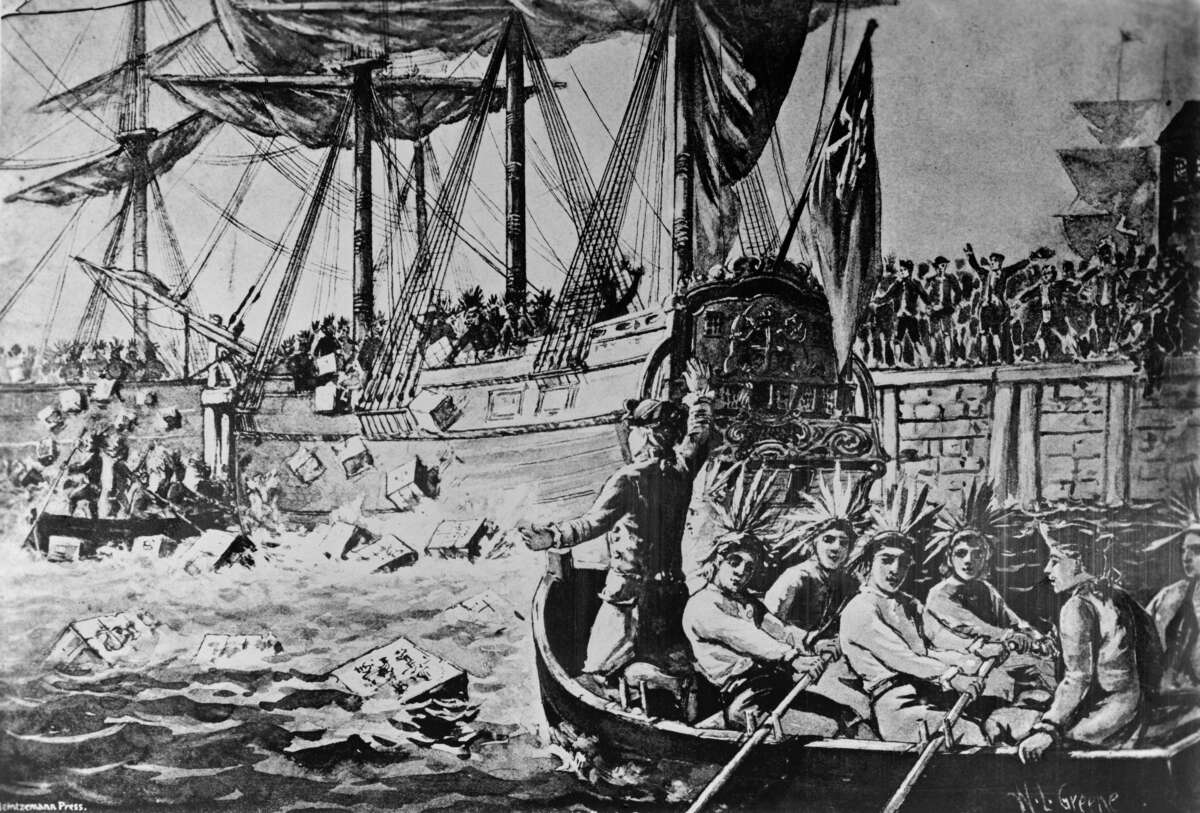
A wash drawing by W.L. Greene depicts the Boston Tea Party. “When colonists threw tea into Boston Harbor to protest an unjust tax, they dressed up as Native people,” says Rebecca Nagle.Bettmann / Contributor via Getty Images

The United States turned 250 this year, and the document officiating its birth, the Declaration of Independence, is famous for its opening lines proclaiming the nation’s freedom from England and the rights of men. But Rebecca Nagle, a journalist and citizen of the Cherokee Nation, frames the document differently, describing it as a list of grievances growing in ascending order, where Native people, smeared as “merciless Indian savages,” are the founders’ biggest “problem.”

This characterization rendered Native Americans as less than human and as part of the natural world, over which settlers believed they had God-given dominion, justifying genocide and land theft. The Declaration of Independence in 1776 reflected a general sense of antagonism toward Native peoples. Yet three years earlier, during the Boston Tea Party, Nagle notes, settlers dumped tea into the harbor while wearing Native clothing. This raises questions about whether early Americans wanted to get rid of Indigenous people — or become Indigenous themselves.

Nagle’s new podcast “First America” asks how the American public missed this tension. The project features a group of Native scholars, including Maggie Blackhawk (Fond du Lac Ojibwe), Ned Blackhawk (citizen of Te-Moak Tribe of Western Shoshone), Phil Deloria (Standing Rock and Yankton Sioux Tribes), and Nick Estes (Lower Brule Sioux Tribe).

In the interview that follows, Nagle discusses how colonists have appropriated Native identity, how Indigenous diplomacy exerted real influence over American founding documents, and how we can find authoritarianism in U.S. history.

This interview has been lightly edited for clarity.

Related Story


Petala Ironcloud: You say the founders’ final grievance in the Declaration of Independence was “merciless Indian savages.” Why do you think that’s been erased from how we teach the Revolution, and what changes once you put it back in?

Rebecca Nagle: We like to tell the story of the Revolution as David standing up to Goliath — England is the more powerful bad guy, and our founders were brave, loved freedom and liberty and democracy, and threw off the king to establish a better form of government. Even people who are critical of the founders, who’d say obviously they weren’t including everyone in that vision of democracy, still want to hold on to the kernel of democratic hope the Revolution represents.

The founders were saying Indigenous people were something less than human. There’s deep racial animus in that line.

When you bring Native people into focus, it’s really different. The founders weren’t just fighting England; both leading up to the Revolution and during the war itself, the Revolution was also about land, about who would control the continent of North America. The part of the Declaration we like to teach is “all men are created equal,” and “life, liberty, and the pursuit of happiness.” But there’s also a line about “merciless Indian savages.” Savages is a word the founders used on purpose — in the late 1700s, it meant someone was less than human, that they didn’t have the same rights as “civilized” people, as the people of Europe. Alongside those Enlightenment ideas, the founders were saying Indigenous people were something less than human. There’s deep racial animus in that line, and it doesn’t fall out of the sky.

England, having financial problems, couldn’t afford to keep fighting wars with Indigenous nations. After an Indigenous uprising sacked a string of British forts in North America, the Crown decided to make peace — which meant telling colonists they couldn’t move further west. The king drew a line down the Appalachian Mountains. That really angered the colonists, who wanted to expand and saw that land as already theirs. The hunger for Indigenous land, and England’s refusal to let colonists take more of it, is one of the main reasons the Revolution happened in the first place.

You argue the founders built both a democracy and an empire, and that the two can’t coexist. What does that tension look like today?

The mythical version of the founding — the “No Kings” version — is that the founders threw off monarchy and tyranny and created a democracy instead. But almost immediately, they got busy building an empire with colonial forms of government not that different from England’s. They were conscious of it — they called it an “empire of liberty.” As they mapped how the U.S. would expand into what’s now the Great Lakes region, they called it “America’s first colony.” The same summer they were writing the Constitution, they were drafting a blueprint for American colonialism.


The hunger for Indigenous land, and England’s refusal to let colonists take more of it, is one of the main reasons the Revolution happened in the first place.

How is American colonialism different from American democracy? In the colonial system, there are no elections, no constitutional rights, no due process. Every iteration of American government since has governed the people it colonized through top-down structures. You can call it colonialism, call it empire — what it reminds me of most is authoritarianism: government that rules through force instead of consent, that isn’t accountable to the people it governs, that uses extreme violence to enforce what it wants. That’s how the U.S. governed Indigenous people and dispossessed us of our land.

So when people ask how the rise of authoritarianism could be happening in the United States — how this could be “un-American,” “unprecedented” — it’s not. Part of our government has always been authoritarian. The mistake Americans have made for a long time is believing those two things could coexist and stay separate. That’s just not how it works.

You’ve said you set out to make a history podcast and kept ending up in the present. Can you walk through a moment when researching the 1700s directly explained something happening in 2026?

I had a profound moment with historian Nick Estes, a citizen of the Lower Brule Sioux Tribe, who helped conceive this project. We were visiting Fort Snelling in Minneapolis — used in the 1860s as a concentration camp to detain Dakota people, part of a broader act of ethnic cleansing pushing Dakota people out of Minnesota. While we were there, Nick got a call: ICE had just killed [Renee Good]. The next day I was back on the Fort Snelling campus — not to visit the fort this time, but to report on a protest at ICE headquarters, which sits on that same campus because it’s still federal land, land that was once a military reservation. The past and present kept echoing.

Another moment: One of the later episodes covers the first war the U.S. fought after the Revolution, against what’s sometimes called the Northwest Confederacy — an alliance of Great Lakes tribes led by the Miami. That 10-year war shaped the U.S. military in lasting ways, but one striking thing about it is that it was never formally declared by Congress. In this moment — with Trump bombing Iran, invading Venezuela, bombing boats in the Caribbean, and all this debate over what war powers the president actually has — the U.S. has been fighting undeclared wars since the George Washington administration.

The Boston Tea Party episode reframes colonists dressing as Mohawk as identity, not disguise. What does that episode argue about “playing Indian” as an American tradition, and where do you still see it today?

Something I didn’t know until I encountered the work of historian Phil Deloria: when colonists threw tea into Boston Harbor to protest an unjust tax, they dressed up as Native people — put on a costume and “played Indian.” People often assume it was for disguise, so British officials would blame Native people instead of the colonists. But it wasn’t really a secret who’d thrown the tea. It wasn’t disguise — it was costume, because of what dressing as a Native person represented to early Americans.


When people ask how the rise of authoritarianism could be happening in the United States — how this could be “un-American,” “unprecedented” — it’s not.

Early Americans were in an awkward, unformed place. For a long time, they’d thought of themselves as English; suddenly they were fighting a war to no longer be English, but they weren’t yet American either. They needed a new national identity. Part of building it — saying we are no longer European, we are of this land, we are of this place — was appropriating Native identity, pretending to be Indian. It wasn’t just the Tea Party. The symbolic figure of “the Indian” showed up on pamphlets, guns, ships. In political cartoons from the era, England is represented by a white woman, and the colonists — not actual Indigenous people, but the white colonists — are represented by the image of a Native woman. Native people, or rather the idea of Native people in the colonial imagination, came to represent freedom and liberty in the early republic.

Americans have never really stopped doing this. You see it now at global scale — in the headdresses showing up at the last two World Cups, the way certain NFL teams banned headdresses at games years ago with no equivalent conversation yet at FIFA. I think the reason Americans still play Indian today is different from, but not unrelated to, what early Americans were doing. It’s still about identity, about a kind of alienation in modern life that makes people feel like their own culture is inauthentic — so they go looking for something that feels real, deep, connected, and think they find it in Native culture. You see that in what hippies wore, in New Age sweat lodge ceremonies, in mascots. That shift starts in the early 1900s — also from Phil’s work — and we’re still living in it: Americans searching for an imagined Native figure untouched by modernity, living purely in the woods.

What’s harmful is that the Native people of Americans’ imaginations get far more love and attention than actual, living, breathing Native people. When someone says a mascot or a land acknowledgment is “honoring” Native people, it’s often the opposite — it reinforces stereotypes to the detriment of real Native people. I look white, which comes with real privilege in this country, but I still encounter people questioning or outright challenging my Native identity because I don’t fit their stereotype. Native people who are Black and Brown experience that plus forms of racism I never have to. Non-Native people have invested so much of their own identity and self-actualization in this imagined stereotype that when they’re confronted with living Native people who don’t fit it, they don’t want it — and that leaves less space for us to just be seen and respected as we are.

What does the series argue was actually broken about the Articles of Confederation, and how does that connect to federal Indian policy?

Everyone agrees the Articles of Confederation weren’t working — they were dead on arrival. Most people don’t realize the Constitution we live under isn’t the country’s first form of government. Around the time of the Declaration, the founders created a different government to hold the colonies together, since they were separate British colonies needing some kind of unified structure. It looked very different from what we have now — no president, no Supreme Court, Congress ran everything, and Congress was so ineffective that sometimes not enough members even showed up for quorum.

One of the main reasons the framers built a new, more centralized government was expansion. There was constant infighting between states over land, and real tension over whether the federal government or individual states had the right to make treaties with tribes — Georgia and North Carolina, for instance, insisted they could simply take Native land even where federal treaties said otherwise. It was a mess, and the U.S. wanted to expand but needed to get that expansion under control.


People keep looking to Hungary, to Putin’s Russia, even to Nazi Germany to understand how authoritarianism takes hold. We don’t have to leave our own country to find those examples.

What’s especially interesting — and something the series gets into later — is that some of the core concepts in the Constitution itself come from our ancestors. One is the supremacy of treaties. At the time of the founding, the Treaties of Hopewell had been signed with the Cherokee, Choctaw, and Chickasaw at the end of the Revolutionary War. Southern states treated those treaties as invalid and kept violating them as tribes dealt with white encroachment. So tribal delegates actually traveled to the Constitutional Convention in Philadelphia and met with George Washington, Benjamin Franklin, and other framers, asking that states be bound to follow treaties — that treaties carry legal weight under the new federal government. What you get in the Constitution is the Supremacy Clause, placing treaties on essentially the same legal footing as the Constitution itself. At the founding, Indigenous treaties were taken that seriously. That’s a genuinely beautiful moment of Indigenous resistance, organizing, and diplomacy — at a time when our ancestors weren’t citizens, couldn’t vote, and were still exerting real influence over the shape of the new government.

How did you choose which scholars to center, and did any of them push back on your framing?

The project started as a conversation between me and Nick Estes — we were frustrated with how Indigenous people get left out of the story of America and wanted to build a corrective. We called up Phil Deloria, Ned Blackhawk, and Maggie Blackhawk and asked if they wanted to participate, and to my surprise, they all said yes. We got together at Yale in 2022 and hashed out the big ideas. At the time we thought it would be a magazine essay series — but between the state of print journalism and where the ideas kept taking us, it became a podcast instead. The series relies heavily on their scholarship throughout; you can see it clearly in episode two, which draws on Phil’s book Playing Indian to explain both the Tea Party and the present day.

This is timed to the 250th anniversary. What do you want it to counter-program against?

We’re in a moment of real debate over who we are as a country, where we come from, how we started — and I see both sides of that debate leaving Native people out of the story. Without Indigenous people, the founding story of the United States is simply wrong. We don’t actually know what happened if we leave us out.

I think that omission is at the root of the current political crisis. People keep asking how authoritarianism could be rising in the United States — how this could be happening here. I don’t think we know how America got here as a country, because we don’t know how it started. That failure to see is part of how we ended up in this moment. This isn’t about guilt, and it isn’t about diversity and inclusion — it’s about accuracy, about having a true and honest account of what the U.S. is and how it began. People keep looking to Hungary, to Putin’s Russia, even to Nazi Germany to understand how authoritarianism takes hold. We don’t have to leave our own country to find those examples. Presidential war powers, the bombing of Iran, the detention of migrant families, deploying the National Guard to U.S. cities, challenging birthright citizenship — the way this administration justifies all of it goes directly back to federal Indian law. The current administration is building on a foundation that’s already there. Most Americans just don’t know that foundation exists, and that makes it much harder to understand what’s happening right now.

For a listener who thinks this is just history — who feels like “those were somebody else’s ancestors, it’s sad, but I’m not responsible” — what’s the one contemporary policy fight you’d point them to as proof it isn’t?

What I want to shift isn’t whether people feel responsible for what our government did to Native people. I want them to see that it affects them. The government that rounded up families and put them in a concentration camp in Cherokee Nation, that put 15,000 people in open-air stockades in a single month, that drove a pregnant woman to her death in those camps — that government is still our government. It’s not just the government of Native people. It’s everybody’s government.

Maggie Blackhawk has a line in the podcast: We forged a knife out of metal, and that weapon can hurt anybody. There’s nothing specific to Native Americans that makes us uniquely susceptible to these tools of state violence — they can be, and have been, used on anyone. Maggie’s research found that some of the first Japanese incarceration camps during World War II were actually operated by the Bureau of Indian Affairs, on reservations — because the BIA already had the infrastructure and expertise to detain families and communities intergenerationally. They simply took what they’d built to do that to Native people and applied it to another group.

What we’re seeing now is that same set of tools being turned on an ever-broader portion of the population — increasingly, anyone not aligned with those in power. Have armed federal officers, members of the military, ever been deployed onto what’s now Minnesota to round up civilians? Yes. Has the military been used against civilians on U.S. soil? Yes. Our government has done all of this before, and we’ve never gone back and rewritten that government to say: genocide is a crime, and it can never happen again. We’ve never had that reckoning as a country. Compare that to Canada, which has at least paid some lip service to reckoning — ours has mostly been forced silence. At the U.S.’s 150th anniversary, people were literally celebrating what our government did to Indigenous people. Later generations just forgot. We’ve never reckoned with it.


This article is licensed under Creative Commons (CC BY-NC-ND 4.0), and you are free to share and republish under the terms of the license.


Petala Ironcloud

Petala Ironcloud is a Native writer and strategist whose work explores federal Indian law, environment, technology, and art. They have written for The New York Times, Time, The New Republic, MIT Technology Review, ARTnews, and other publications.


Taiwan chipmaker TSMC to invest another $100bn in Arizona fabs

AFP
July 16, 2026
TSMC’s net profit for April to June surged 77.4 percent year-on-year to NT$706.6 billion (US$22 billion), smashing analyst estimates of NT$624.4 billion – Copyright AFP/File I-Hwa Cheng

Taiwanese chipmaker TSMC will invest an additional $100 billion in the US state of Arizona, the company said Thursday, as it reported a record quarterly net profit on the back of massive demand for AI hardware.

TSMC, the biggest contract maker of microchips used in everything from Apple phones to Nvidia processors, has been a major beneficiary of the global AI race.

Governments and tech giants are pouring huge sums into building data centres that can train and run AI tools such as chatbots, image generators and agents that can execute tasks.

This has turbocharged business for chipmakers such as TSMC, creating shortages and sending prices soaring.

“The AI megatrend continues to drive the need for more and more computation,” chairman CC Wei told an earnings call.

“We now expect our full-year 2026 revenue growth to be slightly above 40 percent year-over-year in US dollar terms.”

TSMC’s net profit for April to June surged 77.4 percent year-on-year to NT$706.6 billion (US$22 billion), smashing analyst estimates of NT$624.4 billion.

The result also beat its previous quarterly record of NT$572.48 billion in the first three months of 2026.

Quarterly revenue rose 36 percent to NT$1.3 trillion.

TSMC will spend an additional $100 billion building “four or more” fabs in Arizona, taking the company’s total investment plans in the United States to $265 billion.

“This is to build several or more semiconductor logic wafer fabs for 2-nanometer and below technologies as well as advanced packaging fabs,” Wei said.

Chief financial officer Wendell Huang said TSMC will increase its 2026 capital expenditure budget to between $60 and $64 billion “as we continue to invest heavily to support our customers’ growth”.

Ahead of the results, Counterpoint Research senior analyst William Li said TSMC’s surge in revenue showed “AI infrastructure investment remains exceptionally strong despite macro uncertainty.”

“Demand for AI GPUs, AI ASICs and advanced packaging continues to exceed expectations,” Li told AFP.

Li said: “EUV (extreme ultra-violet lithography tools) supply constraints and overseas fab investments may limit capacity expansion and weigh on margins in the near term.”

Concerns about overstretched valuations in the tech sector have fuelled fears of a market bubble, along with questions over when the eye-watering sums being spent on AI will reap returns.

But Omdia principal analyst Simon Chen said those fears were “overstated”.

“The demand we see is structural, backed by massive, tangible capital expenditures from hyperscalers,” Chen said.
Opposition to data centres grows in cramped urban Japan

AFP
July 17, 2026
Japan, with some of the most densely populated cities among advanced economies, has a shortage of suitable urban space to build data centres – Copyright AFP Yuichi YAMAZAKI

The more Yoriko Kitagawa learns of a massive data centre to be built near her home in Hino on the outskirts of Tokyo, the more she worries.

“This is a terrible plan,” the 94-year-old told AFP.

The explosion in resource-hungry data centres — housing the hardware “brains” of artificial intelligence — is fuelling unease worldwide, with New York State and Australia the latest jurisdictions to announce new rules.

Opponents of data centres in the United States have called for a “national day of protest” on Saturday to “protect our hometowns, our wallets, and our way of life.”

Japan, with some of the most densely populated cities among advanced economies — 80 percent of the country is mountains — has a particular problem: a shortage of suitable urban space to build the facilities.

One centre is even planned next to the famous Tokyo Tower.

In Hino, the height of two of the three planned buildings has been cut by a fifth to 63.5 metres (208 feet), but they still will tower over nearby houses, blocking the sun for some.

“As someone who lives next to the site, I’m most worried about a fire that could be triggered by the massive amount of batteries,” said 69-year-old campaigner Yasuo Yamazaki.

“Heat from the data centre is also worrisome, as well as noise,” he told AFP.

He also frets about a potential explosion due to a stockpile of fuel on site for a backup generator.

Developer Mitsui Fudosan plans a “green buffer zone” of up to 78 metres with trees and a stream, reducing the noise, the heat and the “oppressive feeling”, said project manager Toshitsugu Jouzuka.

“One approach is to set the building back from the street and… to arrange greenery so that, at eye level, its presence doesn’t feel so overwhelming,” Jouzuka told AFP.

– AI-friendly –

Trillions of dollars are being spent on data centres to train and run AI models and provide cloud storage for humanity’s zettabytes — a unit equivalent to a trillion gigabytes — of digital information.

Japan has big plans in the field, including for 10 million AI robots operating by 2040, aiming to become “the most AI-friendly country in the world”.

It wants to develop its own sovereign AI models and infrastructure to avoid over-reliance on the United States and China, the sector’s runaway leaders.

Partly to meet a projected increase in power demand from AI, Japan is moving to revive its nuclear power sector, 15 years after the Fukushima disaster.

But despite being a large and politically stable economy with good telecoms infrastructure, Japan has “important constraints”, said Trung Ghi, energy and utilities consultant at Arthur D. Little.

“Suitable large-scale land near demand centres is limited, particularly because Japan is mountainous and major demand is concentrated around dense urban areas,” Ghi told AFP.

Having data centres near end-users is important — not least for the ultra-speed of response needed for financial trading, streaming or gaming.

According to real estate company JLL, around 90 percent of Japan’s data centres are concentrated in the greater Tokyo and greater Osaka areas.

Electricity is key though, and over time the “winning locations” may not be closest to cities but where there is “reliable, affordable and increasingly low-carbon power at speed”, said Ghi.

“Power, grid, cooling, land-use, fibre, regulation and community engagement need to be planned together,” he said.

– ‘Feeling of oppression’ –

Elsewhere, Tokyo commuter town Inzai already has at least 10 data centres including one used by Google, but residents have launched legal action against a proposed new facility.

The lawsuit says that locals’ “peaceful daily existence… will be destroyed by violations of their right to sunlight, the ruin of the landscape, a feeling of oppression, noise, vibrations, hot air, traffic hazards, and large-scale construction work”.

Contacted by AFP, the defendant Japan ERI, which granted the certificate for the construction plan, declined to comment.

Critics say Japan also differs from many other countries by having out-of-date building regulations that can classify data centres as offices and not industrial facilities.

Japanese law “is not catching up with the situation”, said Satoshi Oikawa, a lawyer for Inzai’s residents.