World Nuclear News
University launches nuclear fission and fusion control room simulator
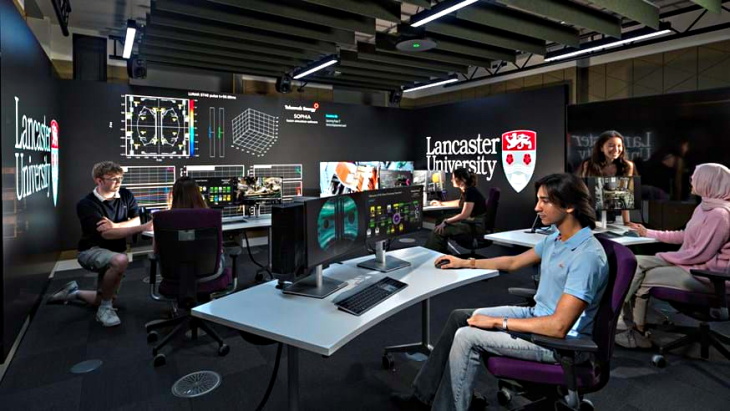
The university said the simulator was the first of its kind in the UK and would support the country's clean energy goals and help enhance future nuclear safety.
Funded through a GBP2 million (USD2.7 million) grant from the Office for Students, the Lancaster University Nuclear Operations Simulator includes a wraparound screen across three sides of the new facility, which, along with software similar to that found across a range of nuclear reactors, provides an immersive experience for students. It includes what is described as a highly reconfigurable design and software for different reactor types including pressurised water reactors, small modular reactors, and tokamak fusion reactors, with software codes developed by GSE Solutions, Westinghouse, Norway's Institute for Energy Technology, and Tokamak Energy.
Tokamak Energy said it has installed its SOPHIA software programme into the simulator, which was originally developed to predict, simulate and validate experiments in the company's record-breaking ST40 fusion machine. It said the software allows scientists and engineers to get maximum gains from every experiment without needing to test multiple scenarios in the physical machine – which reaches plasma temperatures six times hotter than the centre of the sun – removing human error and fast-tracking results.
"This is a fantastic initiative by Lancaster University that we are extremely proud to support," said Ross Morgan, Tokamak Energy's Fusion Managing Director. "Young people are more aware than ever that the world needs a new supply of clean, secure energy. We hope our tokamak simulator SOPHIA will inspire students to pursue a career in fusion energy and help make the world a better place for future generations."
The simulator also includes leading-edge audio-visual equipment that can be used to flexibly configure different scenarios and record student interactions in the simulation environment to support student feedback. It has also been designed so that furniture can be reconfigured to represent different control room layouts.
The facility will be ready for teaching students at the university from the next academic year.
Lancaster University currently hosts the only single honours Nuclear Engineering undergraduate programme in the UK and has one of the country's strongest nuclear science and technology research communities with expertise across the fission and fusion fuel cycles, nuclear medicine, nuclear security and safeguards.
Rebecca Lingwood, Deputy Vice-Chancellor at Lancaster University, said: "This fabulous new facility will augment Lancaster's long-established strength across disciplines such as nuclear engineering and cyber security, providing our students with a truly excellent learning experience. Lancaster University plays a vital role as an economic anchor institution in north-west England and this facility will further enable us in helping to deliver a new generation of young people equipped with the skills needed to support a low-carbon energy sector vital for national energy security, as well as a critical sector for the region's economy."
Paul Smith, Chair in Networking and Principal Investigator of the initiative, said: "This high-fidelity simulator will enable us to create simulations of scenarios where nuclear facilities are cyber attacked, providing valuable in-depth learning experiences for our cyber security students, some of which may become future cyber security professionals protecting our critical national infrastructure."
Samuel Murphy, Director of Studies for Nuclear Engineering at Lancaster University, added: "This exciting and deeply immersive new facility will greatly enhance the experience and learning opportunities for students on our Nuclear Engineering programmes, helping to maintain Lancaster's position as a leading provider of nuclear education in the UK."
Georgia nuclear power plant cleared for 80-year operating life
The two boiling water reactor units at Georgia Power's Edwin I Hatch plant have been cleared by the regulator to operate until the mid-2050s.
_76490.jpg)
Hatch unit 1 began commercial operation in December 1975, with Hatch 2 following in September 1979. The units were originally licensed to operate for 40 years, with the NRC approving a previous 20-year licence extension in 2002. The plant is operated by Southern Company subsidiary Southern Nuclear on behalf of its co-owners Georgia Power, Oglethorpe Power Corporation, the Municipal Electric Authority of Georgia and Dalton Utilities.
Over the last 20 years, the Hatch units have undergone major improvements, including the replacement of cooling towers at unit 2; replacement of key components such as large transformers, plant service water pumps, feedwater heaters; and the identification and elimination of single point vulnerabilities across the site. Recent investments have included the construction of an energy education center and a second onsite simulator to train reactor operators: according to Georgia Power, the plant supports hundreds of highly skilled, long-term jobs and contributes millions of dollars of property taxes each year, as well as maintaining strong community partnerships. The plant's property is also a protected ecosystem.
Georgia's population has more than doubled since Hatch unit 1 - the first nuclear power plant in the state - entered service, and now stands at more than 11 million people. Today, nuclear power from Hatch and the four-unit Vogtle plant, built by the same co-owners, provide nearly 30% of Georgia Power's overall energy production. Georgia Power's latest integrated resource plan approved in July 2025, envisages capacity uprates at four of those units, including at Hatch.
"At Georgia Power, our commitment to our customers is to ensure that the reliable, affordable energy they expect is there when they need it. Our nuclear facilities provide reliable energy around the clock at a stable, predictable cost, and are central to how we deliver on this commitment," said Kim Greene, chairman, president and CEO of Georgia Power.
The US Nuclear Regulatory Commission (NRC) completed its review of the licence renewal application in less than 12 months - it accepted for docketing plant operator Southern Nuclear's application on 20 June last year. This is the second nuclear power plant licence renewal the regulator has completed within the 12-month target for licence renewal reviews under Executive Order 14300: the first was Duke Energy's Robinson nuclear power plant in South Carolina, which received its subsequent licence renewal in April.
The regulator said it completed its safety and environmental reviews using a streamlined process for licence renewals, applying lessons learned from earlier reviews to work more efficiently without compromising safety standards.
"The NRC continues to demonstrate we can reach timely decisions while maintaining our strict safety oversight," Director of the NRC's Office of Nuclear Reactor Regulation Anna Bradford said. "The staff's ability to focus on key factors necessary for long-term plant performance and to implement continuous learning enabled us to efficiently secure another 1.8 gigawatts of power on the grid for 20 more years."
Hatch unit 1 is now licensed to operate until August 2054, and unit 2 to June 2058.
Fourth application for Swedish state support for new nuclear
_54245.jpg)
The Ministry of Finance said the application states that the project involves two large-scale reactors that are estimated to generate 2,500 MW of power.
The ministry said that receiving an application means work can begin on making a decision on providing state support. This includes negotiations between the government and the company on the terms and scope of the support as well as ongoing dialogue with the European Commission to ensure that any support is compatible with the European Union's state aid rules.
"Sweden needs more stable electricity production," said Minister of Financial Markets Niklas Wykman. "It is therefore positive that interest in investing in new nuclear power continues to be high."
The two ABB-designed boiling water reactors (BWRs) at Barsebäck, about 30 kilometres from Malmö in southern Sweden, shut down in November 1999 and May 2005, respectively. The two 600 MWe reactors - which began operating in 1975 and 1977 - were shut down early because of political pressure from neighbouring Denmark.
In January this year, the Municipality of Kävlinge and Nordic Nuclear Energy (NNE) - part of the same group as Nordic Baseload Power - signed a joint letter of intent regarding cooperation to potentially establish a boiling water reactor in the area where the Barsebäck nuclear power plant is currently being dismantled.
"Kävlinge Municipality is in a unique position in that there is an existing local development plan that allows for additional nuclear power production at Barsebäck," Annsofie Thuresson, Chair of the Municipal Executive Board, said at the time of signing the letter of intent. "Through this cooperation, we now want to examine whether there are conditions for establishing new, modern nuclear power in the area of the former Barsebäck plant."
NNE CEO Göran Engberg said: "We are looking at several sites, but consider Barsebäck to be one of the most interesting, not least because energy demand is so high in electricity price area 4."
NNE's primary development and commercial focus is BWR-N, an evolutionary Nordic boiling water reactor designed for large-scale, fossil-free baseload power and adapted to Nordic regulatory requirements and industrial needs. The design builds on the proven Nordic reactor tradition represented by Forsmark 3 and Oskarshamn 3. The company says its objective is to develop BWR-N as a series-built reactor platform. The company’s initial target is four reactors, with two in Sweden and two in Finland, reflecting the economics of series deployment over one-off construction.
In parallel, NNE is developing micro-modular reactor solutions for local and industrial applications where smaller, flexible and dispatchable energy production is required.
Background
In October 2022, Sweden's incoming centre-right coalition government adopted a positive stance towards nuclear energy. In November 2023, it unveiled a roadmap which envisages the construction of new nuclear generating capacity equivalent to at least two large-scale reactors by 2035, with the equivalent capacity of up to 10 new large-scale reactors (which may include small modular reactors) coming online by 2045. A new act on state aid entered into force on 1 August 2025, since when interested companies have been able to apply for the aid.
The Swedish government received the first such application in December to support proposals for either five GE Vernova Hitachi BWRX-300 reactors or three Rolls-Royce SMRs to provide about 1,500 MW capacity at Ringhals on the Värö Peninsula. The application came from Videberg Kraft AB, a project company owned by Vattenfall AB and backed by a series of industrial firms via the Industrikraft i Sverige AB consortium.
In early June this year, Blykalla submitted an application for government financing for its planned power plant in Norrsundet, Gävle, in east central Sweden, comprising six SEALER reactors, which will have a total generating capacity of up to 330 MWe.
Earlier this week, Studsvik submitted an application for state support for up to 1,400 MW of new nuclear power, featuring small modular reactors, in the southern part of the country, with options at Valdemarsvik and Nyköping forming the basis of the application.
Reactor pressure vessel installed at Indian nuclear plant
The 320-tonne vessel which will house the core of unit 5 at the Kudankulam Nuclear Power Plant in India was lifted by crane into place in a precision operation as the VVER-1000 construction project enters its next phase.
_91865.jpg)
The pressure vessel, which was manufactured at the Atommash plant of Rosatom's Machine Building Division in Volgodonsk, in Russia, was delivered to the construction site in 2025. The installation was carried out using the "open top" method, using a heavy-duty crane to lift it into the building before the reactor dome is closed, the Russian company said. This method was previously used by the Russian-Indian team during the construction of Kudankulam units 3 and 4.
With the reactor vessel installed, the main equipment of the nuclear steam supply system - steam generators, main circulation pumps, main circulation pipeline units, pressure compensator, and emergency core cooling system tanks - can now be installed.
“А recipe for the success of the Kudankulam NPP project is the long-standing and efficient cooperation between India and Russia. Indian specialists are constructing and commissioning four power units based on the Russian design, with two more power units generating electricity for over 10 years," Mikhail Novikov, Atomstroyexport Director of Projects in India said.
_1408ff65.jpg)
The vessel was lifted into place in a precision operation (Image: Rosatom)
The Kudankulam nuclear power plant project is being implemented under an intergovernmental agreement between India and Russia dating back to 1988. The first two Russian-supplied VVER-1000 pressurised water reactors, which are owned and operated by the Nuclear Power Corporation of India Ltd (NPCIL), were connected to the Indian grid in 2013 and 2016, respectively. According to Rosatom, by April 2026 they had generated more than 127 billion kWh of electricity.
Four further VVERs are under construction: work started on the second phase of the Kudankulam project, units 3 and 4, in 2017, and on units 5 and 6 in 2021. Once all six units are in operation, Kudankulam's output will cover a significant share of the electricity demands in Tamil Nadu, a state of 72 million, as well as being distributed in other states on India's southern grid, according to Rosatom.
"The milestone reflects the strong collaboration and coordinated efforts between NPCIL and Atomstroyexport ... Kudankulam stands as a cornerstone of India’s clean energy ambitions. With Units 1 & 2 already generating power at rated capacity and having produced nearly 130 billion units of electricity, the project has already helped avoid approximately 112 million tonnes of CO₂ emissions -a significant contribution to environmental sustainability," NPCIL said.
A fourth phase comprising two VVER-1200 reactors - Kudankulam 7 and 8 - has been proposed.
Swedish new nuclear project selects Rolls-Royce SMRs
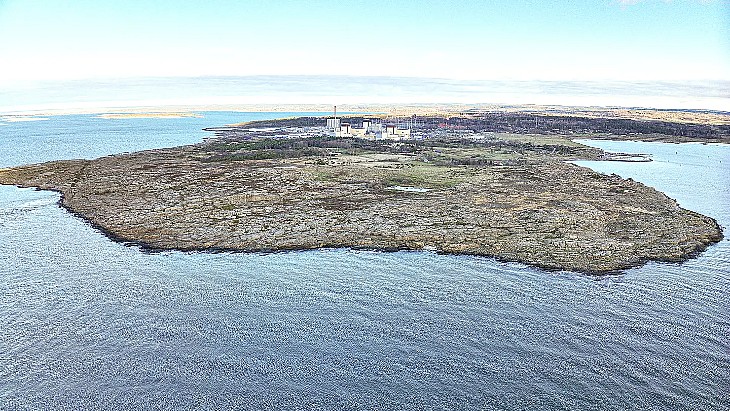
Nuclear project company Videberg Kraft - owned by Vattenfall and Industrikraft, with the Swedish state due to become majority owner - selected Rolls-Royce SMR after a three-year process, which involved assessing 75 different options. The final choice was between Rolls-Royce SMR and GE Vernova Hitachi's BWRX-300.
The Videberg Project will be Sweden's first nuclear power plant in more than four decades and will ultimately add about 1.5 GW capacity to the grid. The project is targeting a first operating unit in the mid-2030s.
Sweden has become the third European country to select Rolls-Royce SMR technology, joining the Czech Republic and the UK.
Desirée Comstedt, acting CEO of Videberg Kraft, said: "Rolls-Royce SMR offers a robust network of subcontractors, the majority of which are located in our geographical vicinity. By choosing to move forward with Rolls-Royce SMR, Videberg Kraft and its owner companies also become part of a European programme, where we can benefit from shared experience."
Chris Cholerton, Rolls-Royce SMR CEO, said: "We are delighted to have been selected by Videberg Kraft as its partner to bring new nuclear power to Sweden. This is a strong endorsement of our transformational approach to delivery of a standardised fleet of SMRs … [and] further demonstrates growing market confidence in our technology."
Anna Borg, Board member of Videberg Kraft and CEO of Vattenfall, said: "Overall, the board’s assessment is that Rolls-Royce SMR is the supplier that can give Videberg Kraft the best pre-requisites for delivering a successful project. The reactor, a pressurised water reactor (PWR), is the same type used at Ringhals today and is a well-proven technology. Moreover, Rolls-Royce SMR has a commercially attractive contractual set-up."
Tom Erixon, Board member of Videberg Kraft and Industrikraft, and CEO of Alfa Laval, said: "Rolls-Royce SMR offers an efficient and industrialised concept that reduces the risk of delays. Videberg Kraft, together with Rolls-Royce SMR, is now paving the way for a new nuclear power on the Värö peninsula - something that would not have been possible without a historically unique collaboration between Swedish industry and the energy sector."
Background
The Rolls-Royce SMR is a 470 MWe design based on a small pressurised water reactor. It will provide consistent baseload generation for at least 60 years. Ninety percent of the SMR - measuring about 16 metres by 4 metres - will be built in factory conditions, limiting activity on-site primarily to assembly of pre-fabricated, pre-tested, modules which significantly reduces project risk and has the potential to shorten build schedules.
In October 2024, Rolls-Royce SMR was selected by ČEZ to deploy up to 3 GW of electricity in the Czech Republic, and ČEZ took a 20% stake in Rolls-Royce SMR. The plan is for the first SMR to be deployed in the area of the Temelín site (which already has two gigawatt-scale VVER-100 units), with futher projects being developed for coal-fired power plant sites, including Tušimice.
In June 2025 Rolls-Royce SMR was selected as the UK government's preferred technology for the country's first SMR project. A final investment decision is expected to be taken in 2029. In November the UK government announced that Wylfa on the island of Anglesey, North Wales, would be the site to host the three Rolls-Royce SMR units. It said the site - where a Magnox plant is being decommissioned - could potentially host up to eight SMRs.
In October 2022, Sweden's incoming centre-right coalition government adopted a positive stance towards nuclear energy. In November 2023, it unveiled a roadmap which envisages the construction of new nuclear generating capacity equivalent to at least two large-scale reactors by 2035, with the equivalent capacity of up to 10 new large-scale reactors (which may include small modular reactors) coming online by 2045. A new act on state aid entered into force on 1 August 2025, since when interested companies have been able to apply for the aid.
The Swedish government received the first such application in December, from Videberg Kraft for its scheme. Earlier this month Blykalla submitted an application for government financing for its planned power plant in Norrsundet, Gävle, in east central Sweden, comprising six SEALER reactors, which will have a total generating capacity of up to 330 MWe. And last week Studsvik submitted an application to the Swedish government for state support for up to 1,400 MW of new nuclear power, featuring small modular reactors, in the southern part of the country.
Rolls-Royce joins UK-Japan HTGR development agreement
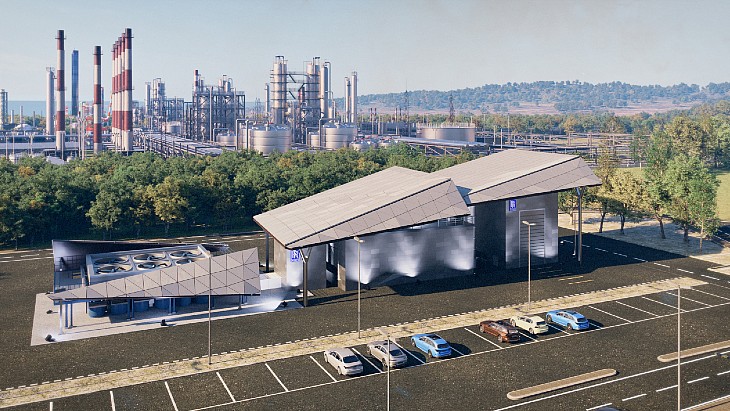
The agreements were signed during a visit to the UK by Japanese Prime Minister Sanae Takaichi. They cover what are termed High-Temperature Gas-Cooled Advanced Modular Reactor technology and expand on previous agreements between the UK's National Nuclear Laboratory (UKNNL) and Rolls-Royce, and between UKNNL and Japan's Atomic Energy Agency.
The high temperature reactors are seen as a potential way to "deliver energy resilience and enable decarbonisation across civil, defence and industrial applications" and "represent a compact and rapidly deployable nuclear energy solution for off-grid customers who require flexible heat and power that is safe, secure and reliable".
Rolls-Royce, which is part owner of Rolls-Royce SMR, whose small modular reactor has been selected for the first UK government-backed small modular reactor project in the UK, said it was "looking to broaden its nuclear portfolio and explore opportunities in the advanced modular reactor market. Differentiated in reactor technology, size and power output from the Rolls-Royce SMR, the Rolls-Royce AMR still benefits from the same innovative modular design and build certainty".
Rolls-Royce says its advanced modular reactor (AMR) "is a compact nuclear power solution designed to meet increasing demand for clean, scalable and reliable power across civil, defence and industrial sectors … perfectly placed to offer the benefits of a nuclear power solution to the sub-50 MWe scale markets".
The company says its reactor would have "a power output of up to 25 MWe/ 75 MWth per unit and can be combined in multi-unit micro-grids to meet higher power site demands".
Masanori Koguchi, Japan Atomic Energy Agency President, said of the agreements: "I hope that through our expertise in High Temperature Gas Reactor technologies, this collaboration will lead to their early deployment, a significant step towards net-zero."
Chris Cholerton, Group President, Rolls-Royce, said: "Strengthening existing relationships between our nations and combining our broad nuclear capability, will enable us to jointly address technical challenges and accelerate the development of advanced modular reactors and their advanced coated particle fuel, to deliver industrial growth, skilled jobs and energy security for our nations."
Julianne Antrobus, CEO of the UK’s National Nuclear Laboratory, said: "Advanced nuclear technologies have the potential to deliver clean, safe and reliable energy, stimulating economic growth while supporting the decarbonisation of industries that millions of people work in. The UK government’s Advanced Nuclear Framework exists to give industry a clear route to access the world-class expertise that UKNNL offers. Being contracted by Rolls-Royce to support this vital work is a strong signal that the framework is delivering and that UKNNL is playing its part in bringing the sector together."
Antrobus said it was a chance to turn "decades of research and international collaboration into real-world deployment".
The UK uses the term Advanced Modular Reactor (AMR) for the next generation of nuclear reactors. In December 2021 the government announced that the technology focus for the programme would be High Temperature Gas Reactors (HTGRs).
The HTGR is seen as a good fit for the UK, which founded its nuclear power sector with two generations of domestically designed gas-cooled reactors: the 26 Magnox reactors deployed in the 1960s and 1970s and the 14 Advanced Gas-cooled Reactors (AGRs) deployed in the 1970s and 1980s. The Dragon Reactor, operated from 1965 to 1975, was one of the world's first reactors to use what is now widely regarded as next-generation nuclear technology. UKNNL’s Preston laboratory has the UK’s only facility for manufacturing CPF kernels and has new coating equipment, which means it can produce coated particle fuel at scale.
Japan, through the Japan Atomic Energy Agency's High Temperature Engineering Test Reactor, has gained world-leading expertise in this field for decades.
In December 2022, the UK government announced funding of GBP60 million (USD77 million) for research into HTGRs, aimed at helping to get a demonstration project up and running by the end of the decade.
In September 2023, UKNNL and the Japan Atomic Energy Agency signed a memorandum of cooperation in the field of HTGRs, as well as a memorandum for collaboration on the next stage of the UK HTGR Demonstration Reactor programme. At the time it was said that JAEA was collaborating with UKNNL to demonstrate Japanese HTGR technology outside of Japan and to promote its social implementation with the aim of returning the decarbonisation technology to Japan.
UKNNL said that the three-way agreements "draw on the best of both nations' capabilities and position the UK and Japan to lead as global interest in advanced nuclear technology deployment grows".
Dome lifted into place on Ningde 5
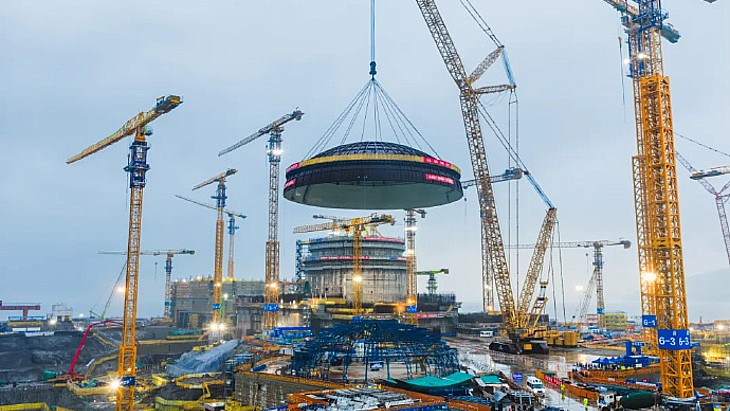
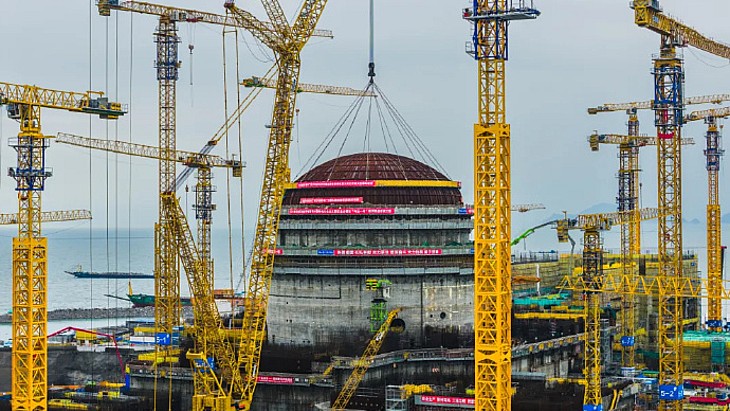
The lifting and installation process for the 45-metre-diameter dome took a total of two hours and forty-five minutes and was completed at 08:02 local time.
It means that the HPR1000 (Hualong One) nuclear power unit transitions from the civil construction phase to the equipment installation phase, China General Nuclear Power Group (CGN) said.
"The nuclear island dome is the core safety barrier of the reactor building, bearing the crucial mission of ensuring the structural integrity, airtightness, and radioactive containment of the reactor building. The dome of Ningde Nuclear Power Unit 5 is a hemispherical hyperboloid shell structure, precisely assembled from main steel plates, angle steel keels, studs, and various internal supporting components," CGN said.
A large crawler crane was used for the manoeuvre, lifting the dome as high as a 20-storey building, before it was fitted precisely into place.
(Image: CGN)
The construction of Ningde units 5 and 6 was approved by China's State Council on 31 July 2023. First concrete for the nuclear island of Ningde 5 was poured on 28 July 2024. It is scheduled to enter operation in 2029.
The Ningde plant currently comprises four 1,018 MWe CPR-1000 reactors, which began commercial operation between April 2013 and July 2016.
