Saturday, May 24, 2025

  European Court of Human Rights

Council of Europe rejects political pressure on ECHR in Meloni response

Alain Berset, Secretary General of the Council of Europe
Copyright Copyright 2025 The Associated Press. All rights reserved.


By Fortunato Pinto
Published on 

Council of Europe Secretary Alain Berset defends the independence of the European Court of Human Rights, emphasizing the importance of preserving its impartiality amid ongoing debates on migration.

"Debate is healthy, but politicising the Court is not. In a society governed by the rule of law, no judicial body should be subject to political pressure," Council of Europe Secretary General Alain Berset said in a statement on Saturday.

The Council of Europe's reply is in response to the letter that Italian Premier Giorgia Meloni's government signed together with eight other European countries calling for an amendment to the European Convention on Human Rights.

"On 22 May 2025, at the initiative of Denmark and Italy, nine member states of the Council of Europe - including Austria, Belgium, Czechia, Estonia, Latvia, Lithuania and Poland - published a joint letter calling for a 'new and open conversation' on how the European Court of Human Rights interprets the European Convention on Human Rights," writes Berset in the message.

"Their concern relates to judgments on migration. These are complex challenges and democracies must always remain open to reflection through the appropriate institutional channels. But clarity is essential,' Berset explains.

The secretary then states that the European Court of Human Rights is not an external body. It is the legal arm of the Council of Europe - created by the member states, established by sovereign choice and bound by a Convention that all 46 members have freely signed and ratified.

"It exists to protect the rights and values they have pledged to defend. The defence of the Court's independence and impartiality is our foundation," Berset adds.

"Debate is healthy, but politicising the Court is not. In a society governed by the rule of law, no judicial body should be subject to political pressure. Institutions that protect fundamental rights cannot bend to political cycles. "

"If they do, we risk eroding the stability that they themselves must guarantee,' the secretary writes: 'The Court must not be used as a weapon, neither against governments, nor by them'.

Berset then recalls that in 2025 the Convention will be 75 years old and that the Court has brought its principles to life, guiding European states through threats to judicial independence, political turmoil and even war.

"The European Court of Human Rights is the only international court that judges human rights violations in the context of Russia's war of aggression against Ukraine. This should never be compromised," Berset adds.

"In facing today's complex challenges, our task is not to weaken the Convention, but to keep it strong and relevant - to ensure that freedom and security, justice and accountability, are kept in balance. This is the legacy we receive. And it is the duty we share,' the letter concludes.






REST IN POWER

Sebastião Salgado's Genesis: humanity and nature through the lens of a photographic giant

Sebastião Salgado died on Friday 23 May, 2025. 


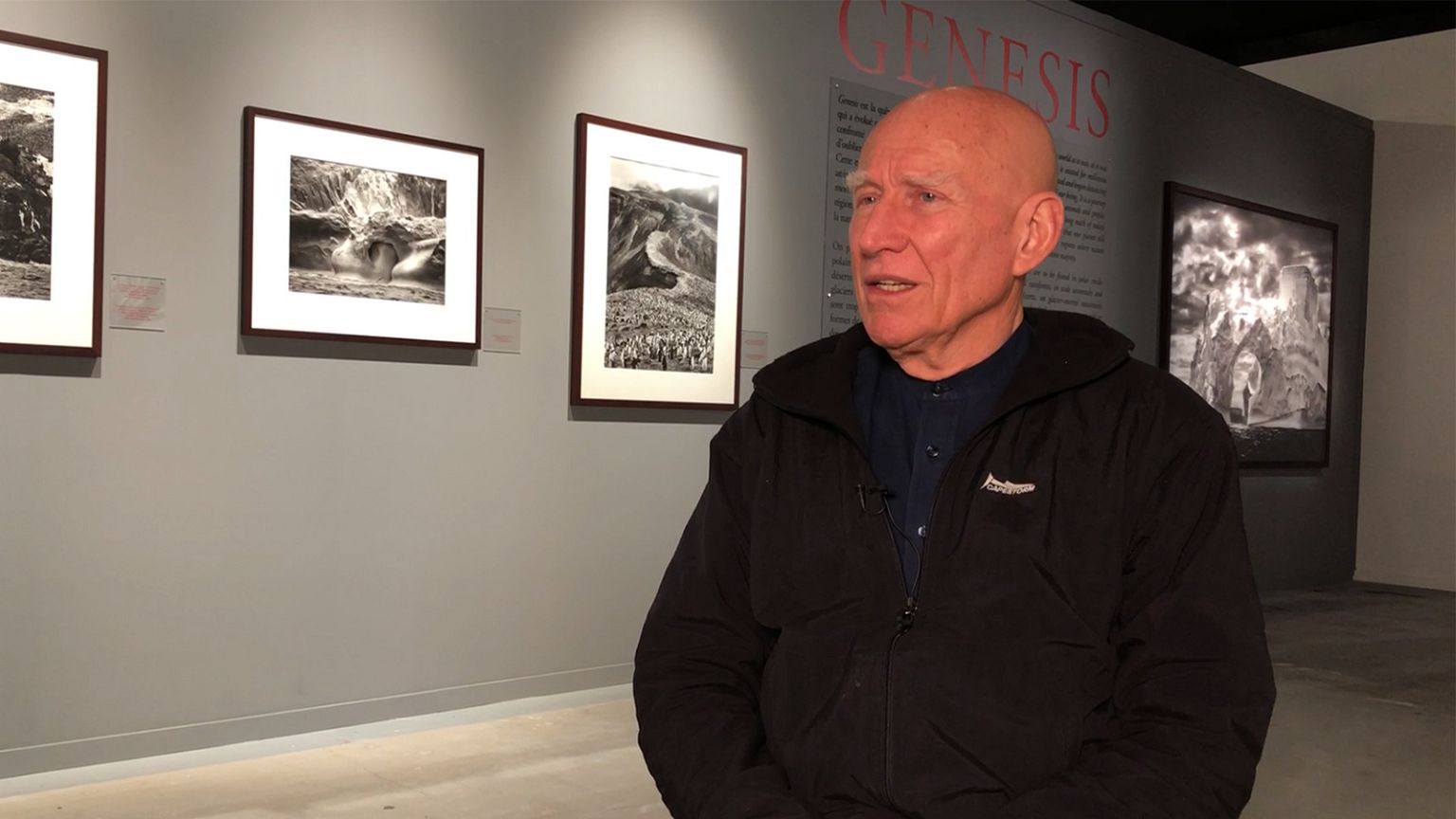
Following the death of Sebastião Salgado, we look back at Genesis, the Franco-Brazilian's global exhibition that paid tribute to the planet by showcasing more than 200 of his stunning black and white photographs, the result of eight years work and some 30 trips around the world.


Copyright euronews

By Judith Prescott
Published on 24/05/2025

The famous Franco-Brazilian photographer Sebastião Salgado’s exhibition Genesis toured the world for more than six years - a sign of its popularity but also the impact of his incredible work.

Euronews Culture caught up with the photographer when the spectacular show was on display at La Sucrière de Lyon, a former sugar factory and warehouse that has now become an exhibition space.

Genesis is a photographic tribute to the planet comprising more than 200 black and white photographs. It was the result of eight years work and some 30 trips around the world.

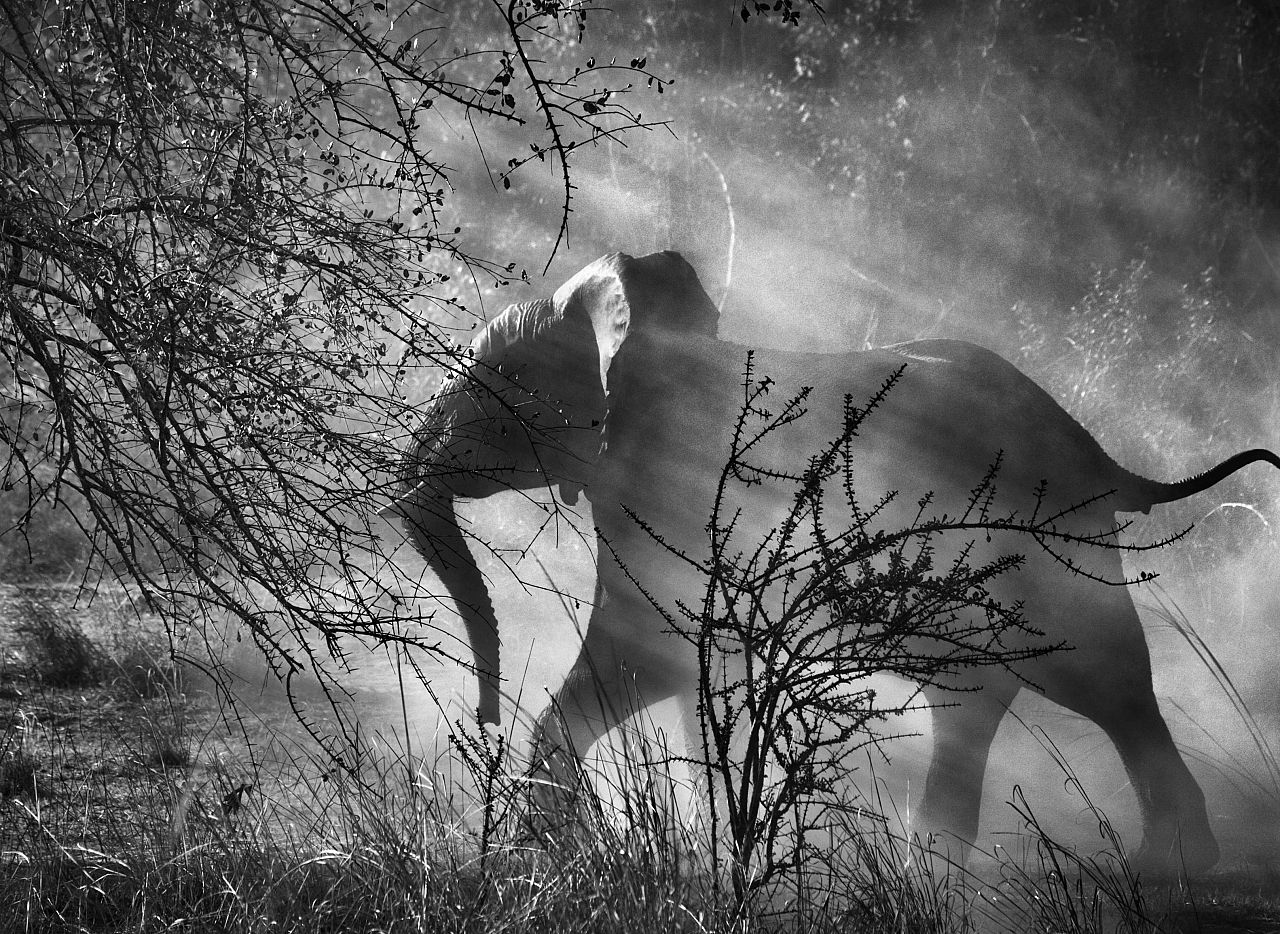
Kafue National Park, Zambia. 2010
© Sebastião SALGADO / Amazonas images

Raised on a farm in Brazil, Salgado had a deep love and respect for nature. But he was also particularly sensitive to the ways in which human beings are affected by their often-devastating socio-economic conditions

He produced numerous works over a career spanning many decades, such as the long-term project Workers (1993) which documented the vanishing way of life of manual labourers across the world. Or Migrations (2000) - a tribute to mass migration driven by hunger, natural disasters, environmental degradation and demographic pressure. And then Genesis, his “love letter to the planet”.
Rediscovering mountains, deserts and oceans

The exhibition was the result of an epic eight-year expedition to rediscover mountains, deserts, oceans, and the animals and peoples that had, up to that point, escaped the imprint of modern society. It depicted the land and life of a still-pristine planet. The project, along with the Salgados’ Instituto Terra, are dedicated to showing the beauty of our planet, reversing the damage done to it, and preserving it for the future.

Mankind, he's an animal of this earth, an animal like any other, we're in the animal kingdom.
Sebastião Salgado

Salgado travelled by foot, light aircraft, seagoing vessels, canoes, and even balloons, through extreme heat and cold and in sometimes dangerous conditions to create a collection of images showing nature, animals, and indigenous peoples in breath-taking beauty.

Using only black-and-white photography, he created a visual ensemble with such an extreme precision, that even the smallest details seem to infinitely develop.

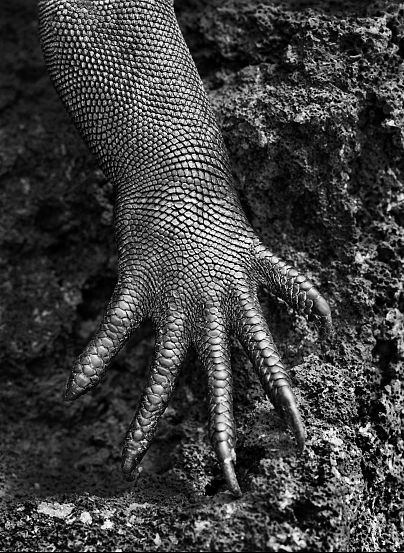
Marine iguana. Galapagos. Ecuador. 2004.
© Sebastião SALGADO / Amazonas images

"You know, when you look at an exhibition like Genesis, it's really the earth, the animals connected to the earth and also Man" explained Sebastião Salgado. "I'm still taking photographs of humankind. I've just finished seven years working in the Amazon with indigenous communities. Mankind, he's an animal of this earth, an animal like any other, we're in the animal kingdom."

Black and white photography has become the photographer's trademark. He explained why he decided not to use colour photography.

"In 1986, I did a story in Brazil which was published in 1987 about a gold mine there, it was because of this gold mine story that all magazines went back to doing black and white," he said.

"This story was so strong, it was widely published by large magazines, which increased my visibility to such an extent that at the time there was a big return to black and white photographs. I have much to be grateful for this return to black and white, because I've stayed in black and white ever since and never returned to colour."

Back to nature


If the environment is now on everybody’s radar, for Salgado, little has changed. He believes Mankind needs to go back to nature and make a spiritual return to the planet. He says efforts so far to save the planet have been resoundingly unsuccessful.

"We have COP 21 that took place in Paris five years ago and despite everything that was put forward, nothing was done," he says. "Do you know why? Because we don't invite real people, we don't invite people who are linked to the earth, to the planet, it's a meeting of urban people."
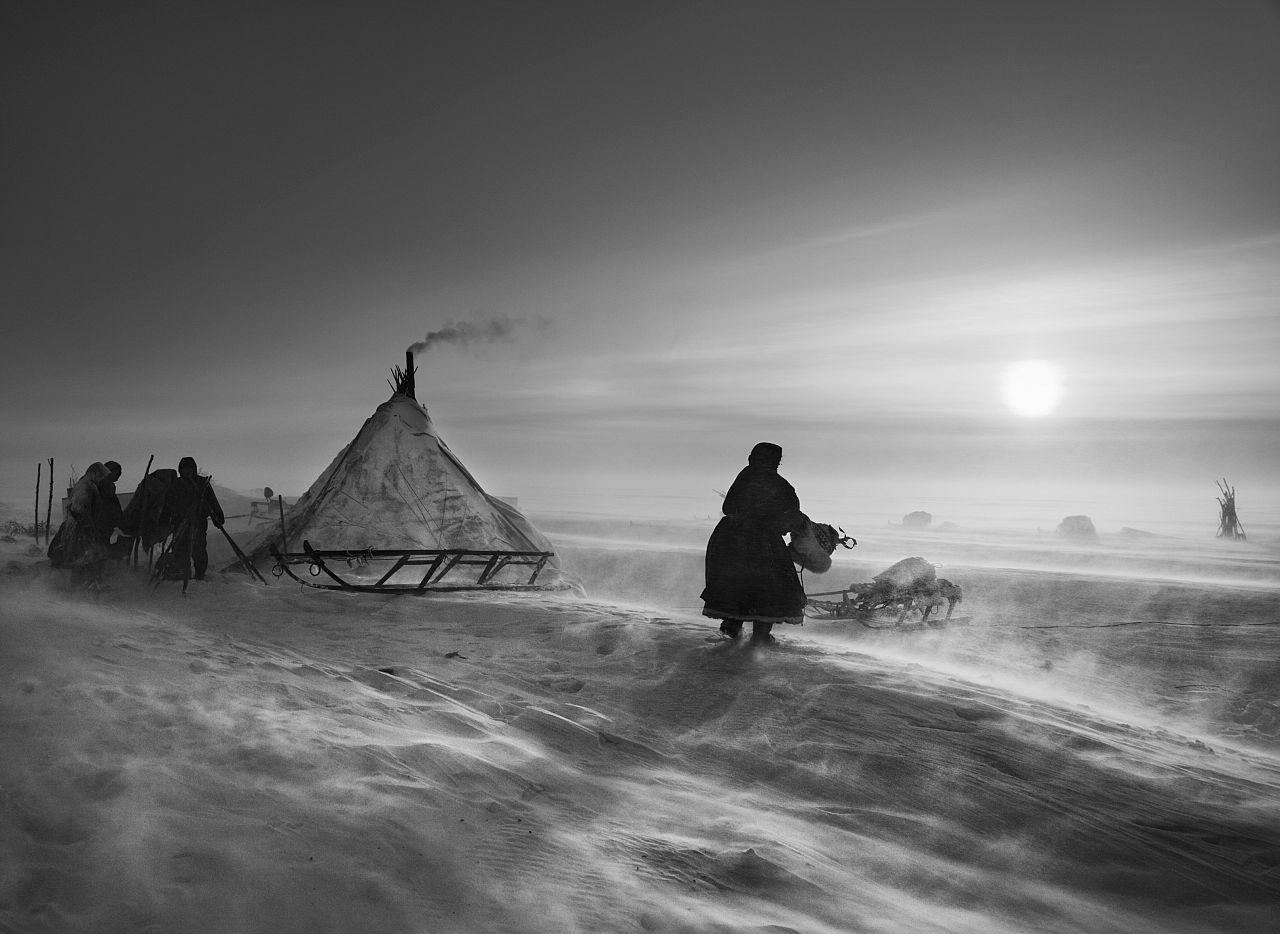
When the weather is particularly hostile, the Nenets and their flock can stay several days in the same place. North of the Ob. Arctic Circle, Yamal Peninsula. Siberia. Russia. 2011.© Sebastião SALGADO / Amazonas images
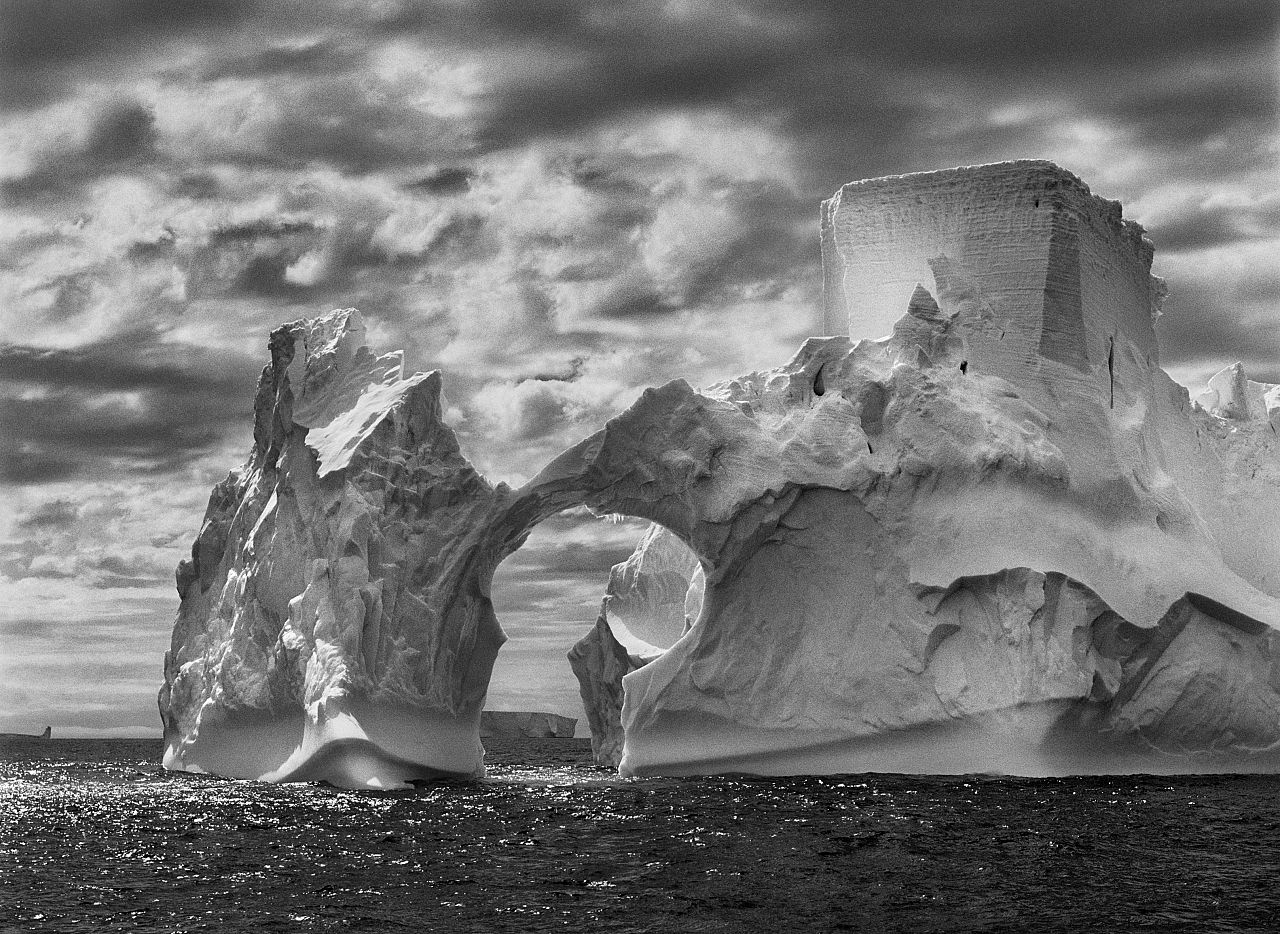
Iceberg between Paulet Island and the South Shetland Islands in the Weddell Sea. Antarctic Peninsula. 2005.© Sebastião SALGADO / Amazonas images

The Amazon remains his favorite territory. With his wife Leila, who is also the curator of 'Genesis, he took on a colossal challenge 20 years ago. He decided to replant the trees that had disappeared from the 750 hectares of his father’s former farm. He wanted to revive the ecosystem in a region hit by deforestation and intensive land use.

"We planted 2.5 million trees, even a little more maybe 2.7 million trees and we are now preparing to plant one million more trees, in addition to those already planted," he explains. "Because, you know, before the land was tired, dead, destroyed and now the land is rich again. It's time to plant trees that will be there for 500 years, 1,000 years, trees that need good soil, and shade to grow."
Mexican photographer Graciela Iturbide wins Princess of Asturias Award for the Arts 2025

Mexican photographer Graciela Iturbide will this year collect Spain's most prestigious honour, the Princess of Asturias Award for the Arts, consolidating her position as one of the most influential figures in contemporary Latin American photography.


Copyright Por Jacobo Caso - Trabajo propio, CC BY 4.0, https://commons.wikimedia.org/w/index.php?curid=147709379


By Jesús Maturana
Published on 24/05/2025 

Born in Mexico City in 1942, Graciela Iturbide has for more than five decades developed a photographic oeuvre that transcends the boundaries of conventional art.

Her work is characterised by a deep sensitivity to ancestral cultures and an exceptional ability to capture the essence of communities in transition.

She conceives photography as a tool for cultural knowledge, exploration and research, creating images that reveal both the fragility and resilience of age-old traditions.

Her distinctive style, predominantly in black and white, succeeds in conveying the complex interaction between nature and culture, while exploring the symbolic dimension of landscapes and everyday objects transformed by her artistic gaze. This approach has made Iturbide an indispensable visual chronicler for understanding the socio-cultural evolution of Mexico and Latin America.


Iconic work and international recognition

Among Graciela Iturbide's most renowned works is her extraordinary 1979 photographic record of the Seri Indians of the Sonoran Desert, a series that exemplifies her ability to document cultures at risk of disappearing with respect and artistic depth. Equally celebrated is her series on Frida Kahlo's bathroom in Coyoacán, where she captures the intimacy and symbolism of the iconic Mexican painter's personal space.

Her work has transcended geographical boundaries, portraying not only indigenous peoples in Mexico, but also communities in Panama, Madagascar and Cuba. This geographic breadth demonstrates her commitment to the visual preservation of diverse cultures and her ability to find commonalities in the human experience.


Work by Graciela Iturbide Fundaciónmapfre.org

Her work has been recognised and rewarded around the world in prestigious exhibitions such as the Centre Georges Pompidou in Paris, London's Barbican Art Gallery, the Hokkaido Museum of Photography in Japan and the San Francisco Museum of Modern Art. These exhibitions have positioned her work in the canon of fine art photography worldwide.
Princess of Asturias for the Arts: tradition and prestige

Iturbide's selection represents royal recognition of photography as an artistic discipline and specifically the social and cultural documentation that characterises her oeuvre.

It also underlines the growing importance of Latin American photography in the global art scene.

Iturbide's award is the fourth in the XLV edition of the Princess of Asturias Awards.** Previously, the Communication and Humanities Award went to the South Korean-born German philosopher Byung-Chul Han, the Literature Award to the Barcelona writer Eduardo Mendoza, and the Social Sciences Award to the American sociologist and demographer Douglas Massey.

Over the next three weeks, the remaining categories will be awarded: Sports on 28 May, Concordia on 4 June, Scientific and Technical Research on 12 June, and International Cooperation on 18 June.


Cannes awards its Palme d'Or trophy to Iranian revenge drama 'It Was Just an Accident'

Director Jafar Panahi, winner of the Palme d'Or for the film 'It Was Just an Accident', at the 78th international film festival, Cannes, southern France, Saturday, 24.05.2025
Copyright Natacha Pisarenko/2025 Invision


By Euronews with AP
Published on 

Iranian dissident filmmaker Jafar Panahi’s revenge thriller “IT WAS JUST AN ACCIDENT" won the Palme d'Or at the Cannes Film Festival on Saturday, handing the festival's top prize to a director who had been banned from leaving Iran for more than 15 years.

Cannes has awarded its top prize, the Palme d'Or, to the Iranian revenge drama It Was Just an Accident.

The win continues an extraordinary run for indie distributor Neon, which has now backed the last six Palme d'Or winners. Neon picked up It Was Just an Accident for North American distribution after its Cannes premiere, following earlier wins with ParasiteTitaneTriangle of SadnessAnatomy of a Fall, and Anora.

Cate Blanchett presented the award to Panahi, who was imprisoned in Iran three years ago and went on a hunger strike. For over 15 years, he has made films in secret in his home country, including This Is Not a Film, shot in his living room, and Taxi, set entirely in a car.

The audience gave him a loud standing ovation. Panahi threw up his arms and leaned back in disbelief, then applauded his team and those around him. On stage, he was welcomed with cheers by Cannes jury president Juliette Binoche, who had once held up his name at the festival in 2010 while he was under house arrest.

As Panahi took to the stage he said what mattered most was freedom in his country.

“Let us join forces,” said Panahi. “No one should dare tell us what kind of clothes we should wear, what we should do or what we should not do. The cinema is a society. Nobody is entitled to tell what we should or refrain from doing.”

“Let’s continue to hope,” he concluded.

Despite Panahi's cry for freedom, he has said life in exile is not for him. He planned to fly home to Tehran on Sunday.

The festival’s closing ceremony came shortly after a major power outage hit southeastern France on Saturday, which police believe may have been caused by arson. Power was restored in Cannes just hours before stars began arriving on the red carpet.


Energy bills across Europe: What share of the cost is made up of tax?

Radiator.
Copyright Canva.


By Servet Yanatma
Published on 

European countries apply different tax policies to consumer energy prices. This leads to significant differences in the share of energy taxes and VAT in electricity and gas bills.

Rising energy prices after Russia's invasion of Ukraine hit households hard, especially low-income families. Although prices have stabilised somewhat, energy bills are still a burden for many.

Taxes make up a large part of gas and electricity costs, and these vary widely across Europe. Some countries offer subsidies or allowances to support households. In those cases, taxes can even appear as negative values.

So, how much of your energy bill goes to taxes — including energy taxes, levies, and VAT?  In which countries do people pay the most in total taxes? And where do governments step in with subsidies or support schemes?

The Household Energy Price Index (HEPI), compiled by Energie-Control Austria, MEKH, and VaasaETT, tracks residential electricity and gas prices in European capital cities. Besides energy and distribution costs, the breakdown shows energy taxes and VAT.

As of April 2024, the average share of total taxes in household electricity prices across EU capitals was 22% — made up of 8% energy taxes and 14% VAT. This share ranged from -26% in Amsterdam to 49% in Copenhagen, followed by 41% in Stockholm. The average for EU capitals stands at 22%.

Negative tax in Amsterdam and Luxembourg City

In Amsterdam, energy taxes stood at -43%, while VAT was 17%, resulting in a significant negative overall tax share. Excluding this effect, VAT accounts for 17% of the price breakdown.

According to the HEPI report, since January 2020, a typical consumer in Amsterdam pays zero energy tax due to the increased amount of tax credit, which exceeds the indicated energy tax amount. On the contrary, they receive a refund on the exceeding tax credit amount. The goal is to encourage electrification and a shift away from gas heating and appliances.

A similar case is seen in Luxembourg City, where energy tax is -13% and VAT is 7%. The policy there aims to stabilise prices at 2022 levels.

In Valletta, Nicosia, and Dublin, the share of taxes in electricity bills is also relatively low — 11% or less.

Besides the two Nordic capitals, the share of total taxes exceeds 30% in several other cities, including Brussels (37%), Berlin (34%), Oslo (33%), and both Madrid and Helsinki (32%).

Gas taxes exceed electricity taxes in EU capitals

For residential end-user gas prices, the average share of taxes across EU capitals is 28%, which is higher than for electricity. It ranges 5% in Zagreb to 49% in Amsterdam. 

In the Dutch capital, energy tax for a residential natural gas user makes up around 32% of the end-user price.

Residents in Berlin (40%), Vienna (32%), Rome and Stockholm (both 31%), and Paris (30%) face the highest total gas taxes, after Amsterdam.

In contrast, following the Croatian capital, Athens (9%), Belgrade (9%), and London (11%) recorded the lowest overall tax shares in residential gas prices.

In Vilnius, a typical household receives a tax refund on energy, resulting in a negative energy tax share of -5%.

Key factors behind energy tax differences

“Energy taxes depend on national policies, environmental plans and different market structures in general,” Rafaila Grigoriou, HEPI project manager & head of VaasaETT's Greek office, and Ioannis Korras, senior energy market analyst at VaasaETT, told Euronews Business. 

For example, they noted that Denmark has utilised high energy taxes as a tool for the green energy transition, subsidising renewable energy systems (RES) investment and promoting energy efficiency, making the country a leader in wind energy. 

The role of national policies in energy taxation is especially clear in some cases. Grigoriou and Korras emphasised that consumers in Amsterdam pay the highest taxes on natural gas in Europe, driven by a national climate policy aimed at reducing gas consumption. On the contrary, households receive a significant tax rebate on their electricity bills.

“This is intended to incentivise a shift away from gas heating and promote electrification,” they added. 

Tax shares vs nominal costs

When comparing cities or countries, it's important to distinguish between the share of taxes in energy bills and the actual amount paid. These are different indicators, as the total tax amount depends on the underlying energy price.

For example, the tax share for electricity is 21% in both Rome and Budapest. However, this doesn't mean consumers pay the same in absolute terms. In Budapest, 21% equals 1.92 c€/kWh, while in Rome, it amounts to 6.8 c€/kWh — a significant difference.

Electricity and gas prices across Europe

Household end-user electricity and gas prices differ significantly across Europe. 

According to HEPI, in April 2025, electricity prices ranged from 9.1 c€/kWh in Budapest to 40.4 c€/kWh in Berlin. The gas prices varied from 2.5c€/kWh in Budapest to 34.1 c€/kWh in Stockholm.

When comparing energy prices, it's also important to consider purchasing power standards (PPS). Our article, "Electricity and Gas Prices Across Europe," takes a closer look at prices both in nominal terms and PPS-adjusted values, and explains why these can differ significantly across countries.

Deep discoveries, landmark lawsuits and rising renewables : Positive environmental stories from 2025

Eco anxiety is very real, so we share this year's most uplifting stories to prove there’s hope for our climate.


Copyright Alex Ingle / Schmidt Ocean Institute & Canva

By Euronews Green
Published on 24/05/2025 -

Do you share our anxiety about the state of the planet? As green journalists, we are all too familiar with what climate anxiety, climate doom, and even environmental existential dread feel like.

These terms all describe the same thing: the negative feelings, such as stress, fear, anger and grief, that come up when we are confronted with the reality of a warming Earth. With almost daily stories of lives lost or ruined by extreme weather, it’s hard to escape the consequences of climate change.

It’s easy to feel helpless and dejected. But as many experts agree, we can use some of those feelings of despair and turn them into action.

At Euronews Green, we know we play a key role in combatting climate doom. While it’s our job to be truthful and accurate in our reporting and not downplay or greenwash the situation, we also want to highlight that there is always hope.

This is why, for the past three years, we’ve kept track of all the positive environmental news stories throughout the year. Every year we write hundreds of good news stories, from eco-innovations and green breakthroughs to climate wins and feel-good reports on nature.

We hope to continue our efforts and keep doubling our numbers each year - because surely that’s a good sign of momentum.

As climate activist Tori Tsui says, "I think the beautiful thing about climate action is that everyone has a role, whatever that looks like to you".

Here are this year's top positive stories so far - including the small and local, the silly that made us smile - and the enormous and potentially world-changing.

If you came across a great, positive story that we haven't covered, please reach out to us on Instagram or X to share your ideas.

Positive environmental stories from May 2025

Coral gardens and volcano vents: See what scientists found in the icy depths of the Southern Ocean

Scientists on board a deep-sea expedition to the South Sandwich Islands near Antarctica have returned with a treasure trove of photos of previously unseen marine life.

They found coral gardens, hydrothermal vents and many suspected new species while exploring around the island chain, including in the deepest trench in the Southern Ocean.

Indigenous women in India make 'dream maps' to protect lands from climate change

Indigenous women have surveyed and mapped out resources to show what is dwindling and what needs restoring. They have created what are known as dream maps, showing their villages in their ideal states. The most prominent of their bright colours is green.

'Lost' gecko species thought to be extinct rediscovered in South Africa

Researchers who were dropped off by helicopter in a largely inaccessible and remote canyon in South Africa say they have discovered a type of gecko that hadn't been seen in more than 30 years and was thought to be extinct - or maybe to have never existed at all.

Can community engagement create real support for renewables?

The spread of disinformation and anti-renewables rhetoric is hampering Europe’s transition to green energy, often with ambiguous motivations.

But a new approach based on community involvement in wind and solar projects could help to ease people's concerns.

Positive environmental stories from April 2025

Inside the new seal rescue centre caring for injured pups in the Netherlands

The World Heritage Centre can treat around 70 seals at a time and has 12 intensive-care units for animals with serious injuries who are able to recover in special enclosures which offer a calm environment.

The new building, which cost over €40 million, with financing provided by local and regional governments as well as charitable organisations, tells more than just the story of the seas.

Landmark ruling should encourage more cities to ban fossil fuel ads

A ban on fossil fuel adverts in The Hague has been upheld by a Dutch court, in an “historic ruling” that campaigners hope will embolden other cities to take action.

In a decision last September, The Hague became the first city in the world to write into law a ban on ads that promote fossil fuels, including petrol cars, air travel and cruise ships.

Scientists say they can now calculate the trillions in climate damage caused by fossil fuel giants

Experts believe the research could help bolster climate laws and make polluters pay for their role in global warming.

It is part of an effort to make it easier for people and governments to hold companies financially accountable, like the tobacco giants have been.

Mazhar Botanic Garden is a natural remedy to Cairo’s notorious air pollution

The garden plays a pivotal role in protecting rare and endangered plant species globally.

Alongside protecting biodiversity, it promotes environmental sustainability by increasing carbon dioxide absorption rates.

Mazhar Botanic Garden surpasses the Orman Garden in its ability to absorb pollutants, removing the equivalent of four times the amount absorbed by Orman from Greater Cairo.

Scientists generate electricity from falling droplets

Rain could one day become a source of clean electricity, according to a group of scientists in Singapore.

Their experiments have been able to generate power from water droplets falling through a tube. They say this could be a model for harnessing larger amounts of electricity from falling rain in the future.

Scientists film colossal squid alive for the first time

One hundred years after the colossal squid was identified, scientists have filmed a live specimen in the wild for the first time, marking a milestone in deep sea exploration.

During a research expedition in March, a team aboard the Schmidt Ocean Institute’s Falkor (too) vessel encountered the elusive creature near the South Sandwich Islands, in the frigid depths of the southern Atlantic Ocean.

This zoo in Spain is helping elderly animals to age gracefully

At the Barcelona Zoo, a 40-year-old African elephant places her foot through the metal barrier where a zookeeper gently scrubs its sole. The beloved pachyderm gets her “pedicure,” along with apple slices every day.

The treatment is part of the zoo’s specialised geriatric care for ageing animals that cannot be reintroduced into the wild as zoos worldwide increasingly emphasise lifelong care.

Lego says new factory in Vietnam will make toys without without emissions

Lego opened a $1 billion (€906 million) factory in Vietnam in April that it says will make toys without adding planet-warming gas to the atmosphere by relying entirely on clean energy.

The factory in the industrial area of Binh Duong, close to Ho Chi Minh City, is the first in Vietnam that aims to run entirely on clean energy. Lego says it will do that by early 2026.

World surpasses 40% clean electricity with Europe leading as a 'solar superpower'

The world generated more than 40 per cent of its electricity from low-carbon sources last year, according to analysis from clean energy think tank Ember. That’s a record not broken since the 1940s, when the global electricity system was 50 times smaller than it is today, and hydropower did the heavy lifting.

Now, it’s solar energy that is soaring in a targeted race to build an entirely clean electricity system

Meet the teen duo that won this year’s Earth Prize Europe

Two teenagers have been named as the European winners of The Earth Prize 2025 for their groundbreaking innovation that promises safer drinking water for all.

18-year-old Tomáš Čermák from Czechia and 19-year-old Anna Podmanická from Slovakia developed a unique filtration device they call PURA.

They are the first from either Czechia or Slovakia to win the Earth Prize.

Finland ‘ahead of schedule’ on coal phase out

The closure of a coal power plant in Finland today brings the country to the brink of a full coal phase-out - four years ahead of schedule.

Power utility company Helen officially decommissioned its Salmisaari plant in Helsinki on 1 April, dropping coal to a less than 1 per cent share of the country’s energy mix.
Positive environmental stories from March 2025

Massive Attack concert made history by slashing greenhouse gas emissions by 98%

Last year, a concert by UK trip-hop collective Massive Attack made history - not for the music, but for its environmental footprint.

The group collaborated with climate researchers to stage the gig, and it broke the world record for the lowest carbon emissions ever produced by a music event.

Five lions traumatised by war in Ukraine settle in to their 'forever home' at UK sanctuary

Five traumatised lions rescued from the war zone in Ukraine settled into a new home in England after an international effort to bring them to safety.

Male African lion Rori and lionesses Amani, Lira and Vanda arrived in March at the Big Cat Sanctuary after a 12-hour journey by road and ferry from temporary homes at zoos and animal shelters in Belgium.

Renewables stepped up to meet surge in energy demand from rising temperatures in 2024

Record temperatures around the world contributed significantly to the annual 0.8 per cent rise in global CO2 emissions to 37.8 billion tonnes.

But the deployment of solar and wind energy, nuclear, electric cars and heat pumps since 2019 now prevents 2.6 billion tonnes of CO2 each year, according to the IEA. That’s equivalent to 7 per cent of global emissions.

More good news from the report includes how the expanding supply of low-emissions sources covered most of the increase in global electricity demand in 2024.

Scientists were in Antarctica when a giant iceberg broke free. Here’s what they found in its shadow

Giant sea spiders, ice fish and octopuses are among the surprisingly abundant creatures scientists have found in a stretch of sea that used to be covered by ice.

An international team onboard the Schmidt Ocean Institute’s Falkor (too) research vessel were on a trip around Antarctica earlier this year, studying “the interface between ice and sea” when a rare opportunity suddenly opened up.

On 13 January, an iceberg the size of Chicago named A-84 broke away from the George VI Ice Shelf, one of the massive floating glaciers attached to the Antarctic Peninsula ice sheet.

EVs set to save Europe 20 million tonnes of CO2 this year

One in five new cars sold in the EU this year will have zero tailpipe emissions. How did we get here? A surge in the uptake of electric cars will save Europe 20 million tonnes of CO2 this year, according to analysis from campaign group Transport & Environment (T&E).

That’s equivalent to the emissions pumped out by eight coal power plants and represents one positive trend within a notoriously difficult to decarbonise sector.

How a fish doorbell in the Netherlands is helping with migration

‘Fish doorbell season’ officially began on 3 March for the fifth year in a row. This camera shows live footage, allowing viewers to let the lock keeper at the Weerdsluis lock know when fish are waiting to swim upstream so they can open the gate.

Linda Voortman, alderwoman for Utrecht, says each year the fish doorbell is received with enthusiasm by the people of the city and far beyond.

“In fact, last year there were almost three million unique visitors who together helped thousands of fish through the Weerdsluis gates in Utrecht,” Voortman says.

Scientists discover more about how sea otters come to the rescue of undersea forests

It’s well known that sea otters help make kelp forests more abundant, by eating the sea urchins that nibble away at the plant. But scientists were puzzled as to why the impact of otters on kelp – particularly along the coastlines of islands in Southern California and British Columbia – varied by location.

Now, new research has found that sea otters’ level of influence on how quickly kelp forests grow back depends on what other species the mammals interact with.

Czechia's €1m dam built for free by beavers

A family of beavers made global headlines earlier this year when they built a dam exactly where authorities had been planning one in Czechia, saving taxpayers around CZK 30 million (€1.2 million). The project had been held up by bureaucracy but they cut the red tape overnight.

These industrious animals are doing good work across Europe with England approving releases into the wild in February. But how do they know where to build their dams?
Positive environmental stories from February 2025

Scientists in Hawaii are training ‘hungry’ marine fungi to eat ocean plastics

In a world that relies on plastic, the time it takes to break down is a major problem. But scientists at the University of Hawaii have found a possible solution - marine fungi.

Researchers at the University of Hawaii (UH) in Mānoa believe it is a “promising and largely untapped” solution to the removal of plastic waste from both on land and in our waters.

‘Humans helping humans’: Tree surgeons are the unsung heroes when storms cut off power

Dubbed the storm of the century, Storm Eowyn produced record-breaking gusts of 184 km/h and made headlines worldwide. At its peak, it left 750,000 homes without electricity. The west of Ireland was hit especially hard.

Tree surgeons came to the rescue, clearing fallen trunks, logs and branches to allow emergency crews who flew in from around Europe to help Ireland’s Electricity Supply Board (ESB) in restoring power.

Activist hopes 48 hours of non-stop tree-hugging will inspire others to love nature

Truphena Muthoni attempted a new world record with a tree-hugging marathon. The 21-year-old hugged a single tree in a public park in downtown Nairobi, Kenya for almost 48 hours.

The Kenyan revealed that she wants to set the record to help others understand the link between nature and good mental health.

Tree-hugging has been a protest activity by environmentalists for almost 300 years, and there are now even world championships in the pastime.

India doubles tiger population in a decade due to conservation efforts

India doubled its tiger population in a little over a decade, a study found in early February. It has done so by protecting the big cats from poaching and habitat loss, ensuring they have enough prey, reducing human-wildlife conflict, and increasing living standards for communities near tiger areas.

In the early 2000s, experts were warning that tigers could soon go extinct. But over the last 25 years, India's national animal has seen a remarkable recovery.
Positive environmental stories from January 2025

How the Arctic tundra is keeping seeds safe for future generations

Tucked beyond the Arctic Circle, the Svalbard Global Seed Vault sits proudly in a former coal mine and stores fruit and vegetable seeds from all over the world.

Holding over 6,297 crop species, last year saw the highest numbers of depositing genebanks and the highest number of newcomers in the history of the vault, proving that cooperation on conserving seeds is flourishing.

How the Scottish whisky industry is inadvertently tackling overfishing

A love of the oceans inspired one man to create a sustainable alternative to Omega-3 supplements for both humans and farmed fish.

Previously, Omega-3 has relied on wild fish, which takes vital food from coastal communities. The solution also cleans up a problem within Scotland’s most popular industry.

Whisky wastewater usually ends up in the ocean, but the company MiAlgae uses nutrient-rich byproducts to create dried algae powder through a giant renewable-powered fermentation process. This is then used as aquafeed for farmed fish and pet food.

Tile whipping: The eco-friendly sport taking over the Netherlands

The Dutch have created a national sport out of tile-whipping to help make the Netherlands ‘climate-proof’.

Tile whipping - or ‘tegelwippen’ - sees residents try to remove the most paving slabs from their gardens, ensuring that urban spaces are greened and rewilded. This also eases pressure on drainage systems.

Winning communities receive a golden shovel with prizes going to the ‘whipper of the month’.

How deaf educators put tricky climate change terms into sign language

Researchers at the University of Edinburgh wanted to ensure a new generation could be part of climate conversations.

This was no mean feat, but British Sign Language has now expanded its vocabulary to include terms such as greenhouse gases, carbon footprint, and sustainability.

‘Keep at it’: At 74, anti-whaler Paul Watson continues to fight

After being released from prison and into the care of the French government, Paul Watson, the founder of the Sea Shepherd Conservation Society, a direct action group focused on marine conservation activism, spoke to Euronews Green in early January.

Watson, who began protecting whales in 1974, highlighted that very few nations still hunt whales, with Norway, Iceland and Japan the only exceptions, and is increasingly confident about the future of these gentle giants.

And so Watson should be, as Euronews Green reported on multiple sightings of the magnificent humpback whale seen by people living along the UK coast - likely due to humpback whale populations having recovered extensively over the past half a century after whaling bans.

Scientists transform waste into batteries that could power grid

Scientists discovered a way to turn previously useless industrial waste into a vital material used in batteries that could power our future.

Discovered by scientists at America’s Northwestern University, the redox flow batteries use a chemical reaction to pump energy back and forth between electrolytes.

They could be an invaluable solution for energy storage on the scale of an electricity grid and help smooth out the current issue of troughs and peaks in wind and solar supply.

Tiny British island is now home to the world’s most remote EV charger

The island of St Helena in the British Overseas Territory has installed the world’s most remote public EV charger in its capital Jamestown.

In a trial supported by Norwegian charging company Easee and Japanese car brand Subaru, the hope is that by improving the infrastructure for electric vehicles, more people on the island will ditch their petrol and diesel-powered vehicles and adopt EVs.

Italy, Albania and UAE agree deal to share renewable energy

Three countries signed a clean energy cooperation deal that means they will share wind and solar energy across the sea.

The UAE is lending its technology and expertise to develop Albania’s renewable energy. Some of the energy produced from these new technologies will then be transferred to Italy via an underwater cable across the Adriatic Sea.

Researcher fired for refusing to fly wins monetary compensation

Sticking to your morals does eventually pay off, at least for the Italian climate researcher Dr Gianluca Grimalda, who was fired by his employers for refusing to fly back from a research trip.

In a bid to follow his beliefs of reducing greenhouse gas emissions by avoiding flights and instead adopting slow travel, the researcher went viral on social media when he publicly shared his story in early 2024.

Grimalda filed a lawsuit for unfair dismissal, and in January, a settlement was agreed. €75,000 of the severance payment will be donated to environmental and climate protection and climate activism.

Solar grazing: Why sheep are the perfect partner for photovoltaics

Dubbed nature’s best lawnmowers, farmers in the USA are waking up to the benefits of keeping sheep on solar farms.

Known as agrivoltaics, solar farms now realise the benefits of making good use of the ground underneath solar arrays. Not only is it grazing sheep and other livestock, but also growing crops, and keeping bees.

Euronews Green shares some of the European projects that have been doing this for ages - and the benefits are numerous.

Dutch court orders government to cut nitrogen pollution by 2030

A Dutch court ruled that the government was failing to address critically high levels of nitrogen oxide pollution, mostly from farming and transport, in a case brought by Greenpeace.

Nitrogen pollution degrades soils and inadvertently fertilises trees, grasslands and tolerant species, putting them at high risk.

This is a huge win as nitrogen pollution is the third most influential driver of human-caused biodiversity loss after habitat destruction and greenhouse gas emissions.

Oil and gas workers will be helped to find green jobs in the UK

The UK is helping oil and gas workers switch to green energy careers by providing them with a ‘skills passport’ so that people working in the fossil fuel industry can make informed decisions about their jobs and future.

Research has found that around 90 per cent of fossil fuel workers have skills that are relevant to the clean energy transition.

The UK government has announced that regional skills investments worth almost £4 million (€4.7m) will help people make the move into clean energy jobs.

Solar energy outshines coal in a first for EU energy

Solar provided more power than coal did to EU countries for the first time last year, marking a new milestone in the unstoppable rise of renewables.

The EU's electricity transition has moved faster than anyone could have hoped for, as the sunlight-soaking renewable generated 11 per cent of EU electricity in 2024, overtaking the dirtiest fossil fuel, coal, which dropped below 10 per cent.

For more good news on the environment from last year, check out all of Euronews Green's positive environmental stories from 2024.


DEI

AI Fairness: Designing Equal Opportunity Algorithms – Book Review


By 

With the ever-growing presence of artificial intelligence (AI), algorithms are the invisible hands shaping decisions about housing, loans, healthcare, employment, and even criminal justice. As AI systems become more integrated with work and life, a fundamental question arises: Are these systems fair?


Derek Leben, in his new book AI Fairness: Designing Equal Opportunity Algorithms (MIT Press, 2025), tackles this pressing issue, offering a philosophical framework to evaluate and mitigate the inherent biases of AI. Leben draws inspiration from the work of the philosopher John Rawls, proposing a theory of algorithmic justice built upon core principles including autonomy, equal treatment, and equal impact. These principles, he argues, should guide the design and deployment of AI systems, ensuring they meet a “minimally acceptable level of accuracy,” avoid irrelevant attributes, and provide equal opportunity.

The book explores the challenges of measuring fairness in AI algorithms, using case studies like the Apple Card and the COMPAS criminal risk assessment tool to illustrate the problem of choosing appropriate metrics. These metrics are often incompatible with each other, and may also produce trade-offs in performance. Companies must decide which fairness measurements to use, and how they will mitigate AI systems to satisfy ethical demands for fair treatment and impact.

At a deeper level, big data and machine learning also create more fundamental questions about what counts as a “protected” feature and why. Beyond just legally protected categories like age, race, gender, and disability, we now need to ask whether other features like how long a person charges their cell phone at night and their parent’s highest level of education should or should not be used in making predictions about that person’s behavior.

Leben’s analysis goes beyond abstract principles, acknowledging the importance of performance and efficiency in AI development. Moreover, the book addresses complex issues like algorithmic affirmative action, the trade-off between fairness and accuracy, and ethical considerations in algorithmic pricing.

In one section, Leben addresses the challenges of image generators built by companies like OpenAI and Google. In Google’s case, they mitigated their image generator to be more fair with respect to race and gender, but it produced absurd results. Many companies might interpret this story as a cautionary tale about fairness interventions. However, Leben writes, “The problem was not that Google and OpenAI used fairness mitigations on their genAI systems, it was that they used the wrong ones.”


In AI Fairness, Derek Leben provides a vital contribution to the ongoing conversation about the ethics of artificial intelligence. His work serves as a guide for navigating the complex terrain of algorithmic bias, urging us to build a future where AI reflects our aspirations for a just society.


Eurasia Review

Eurasia Review is an independent Journal that provides a venue for analysts and experts to disseminate content on a wide-range of subjects that are often overlooked or under-represented by Western dominated media.