How NASA, Microsoft and the EU use AI to speed up post-quake rescues in Venezuela
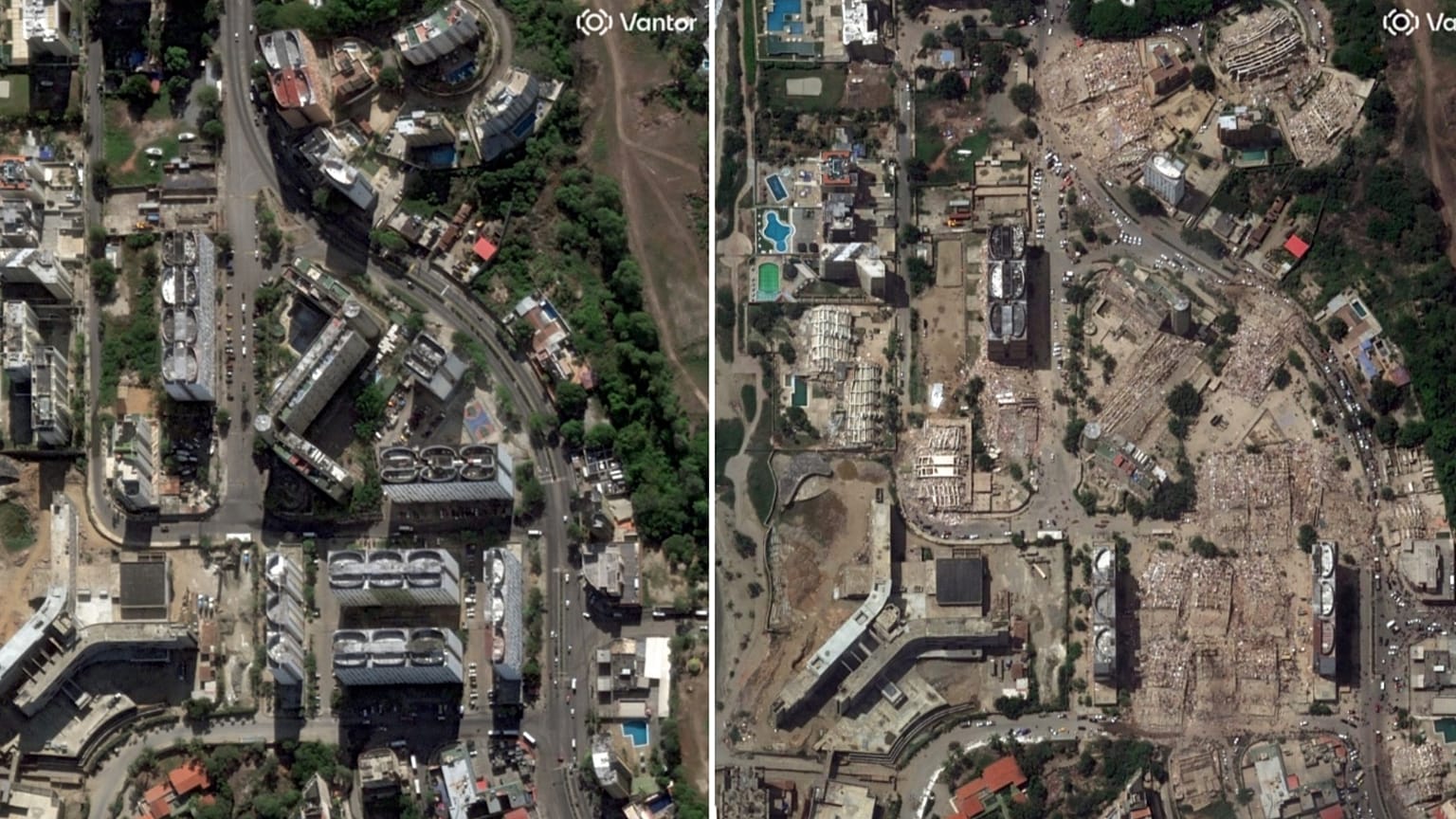
Artificial intelligence is now a key ally for emergency crews. Space agencies, tech firms and international bodies use satellite images and AI to map the areas hardest hit by the quake.
As rescue teams continue to search for survivors in the rubble of the twin earthquakes that struck Venezuela, another race is under way from space. Space agencies, tech companies and international organisations have activated a network of artificial intelligence and geospatial analysis tools to identify, within hours, the areas most likely to have been devastated and to help direct emergency resources where they are needed most.
One of the key players is NASA, which has activated its disaster response programme together with researchers at Oregon State University. Their task is to analyse radar images captured before and after the quake to detect abrupt changes in the ground and in buildings. Using this system, scientists estimate that nearly 59,000 buildings may have been damaged or destroyed, a preliminary figure that helps to steer the initial rescue efforts.
undefined
However, those images would not be possible without the European Copernicus programme. The Sentinel-1 satellites, operated by the European Union and the European Space Agency, supply the high-resolution radar imagery that makes it possible to measure ground movements of just a few centimetres and to spot buildings whose shape has changed after the earthquake. That information is the raw material on which the artificial intelligence algorithms work.
Microsoft has joined that effort through its AI for Good lab. The company has developed computer vision models capable of automatically analysing thousands of satellite images to classify buildings according to the likelihood that they have been damaged. Rather than replacing teams on the ground, these models help set priorities and highlight which neighbourhoods should be inspected first.
All that information ultimately reaches those who need it thanks to the United Nations Centre for Humanitarian Data (HDX), the platform where Microsoft publishes its damage maps so that governments, NGOs and rescue teams can consult them almost in real time. This way, different organisations work from the same database and can better coordinate the humanitarian response.
undefined
Experts stress that none of these tools replaces inspection on the ground. The maps generated by artificial intelligence provide probabilistic estimates, not a definitive diagnosis. But when thousands of buildings may have been affected and every hour counts in the search for survivors, having an almost instant snapshot of the disaster can make the difference between arriving in time and arriving too late.
Security guard rescued from building basement eight days after Venezuela earthquakes
An international rescue team saved a 43-year-old man from a collapsed shopping centre in Venezuela's La Guaira on Thursday, eight days after back-to-back earthquakes devastated the coastal region. Rescuers first made contact with the survivor, Hernán Alberto Gil Flores, at the weekend and were able to pass him water and liquid nutrients through a narrow shaft as they navigated the complex rescue operation.
Issued on: 02/07/2026
By: FRANCE 24

Rescuers pulled a 43-year-old security guard alive from a collapsed basement early Thursday, ending a grueling days-long operation that became a symbol of hope after the devastation of twin earthquakes that struck Venezuela eight days earlier.
Hernán Alberto Gil Flores was extracted safely after being trapped since June 24 under the rubble in the basement of the Galerías Playa Grande shopping center in the coastal town in La Guaira. Rescuers initially made contact with him over the weekend.
Teams carrying flags from across the world cheered as rescuers carried Gil on a stretcher covered in an orange tarp through throngs of people into a Red Cross ambulance. A group of men in red Costa Rican Red Cross uniforms embraced and laughed in relief.
Gil Flores, who worked as a night-shift security guard at the complex, was inside his small security cabin when the first violent tremor struck. While the surrounding concrete structure collapsed around him, his workstation cabin held ground, shielding him from crushing debris and creating a vital pocket of air.
“When we found him, he asked us not to tell his wife that he was alive, just in case he wouldn’t make it,” Costa Rican Red Cross rescuer Minyar Collado told The Associated Press.
A specialized team from the Costa Rican Red Cross first detected signs of life and established contact with him on Sunday.
His wife, Gusbimar González, told the AP, that she had days of despair before rescuers made contact, but that then “when I learned he was alive, I saw a ray of light in the darkness.” The couple has two children, ages 8 and 10.
The operation was coordinated by an urban search and rescue team of Chilean firefighters, who worked around the clock with specialized teams from the United States, Portugal and Mexico, among others.
“We (were) never going to leave him here,” Collado said before the rescue.
Rescuers navigated highly unstable structural conditions, torrential rain and persistent aftershocks to tunnel down to the survivor. They used a telescopic camera to maintain constant contact with Gil Flores, passing water and liquid nutrients through a narrow shaft to keep him hydrated during the final three days of the extraction.
María Paz Campos, a veteran firefighter from Chile, talked him through the entire operation, and kept him calm during the final excruciating hours of Thursday.
In a video published by the Chilean firefighters in the hours before the rescue, Gil Flores is seen drawing, seemingly to pass the time. Campos then gently tells him to look at the camera and to wear protective goggles.
“I need that you keep the goggles on, for the small particles that are falling, to avoid them getting into your eye,” Campos told the Venezuelan survivor.
The collapse of the building was triggered by two back-to-back earthquakes on June 24 that registered magnitudes of 7.2 and 7.5, respectively. The shallow, violent tremors damaged or destroyed tens of thousands of buildings across northern Venezuela, killing more than 2,200 people, injuring over 11,000 and leaving La Guaira state as the hardest-hit region in the country.
(FRANCE 24 with AP)
All members of Venezuelan nu-metal band Van Der Dijs confirmed dead in devastating earthquakes
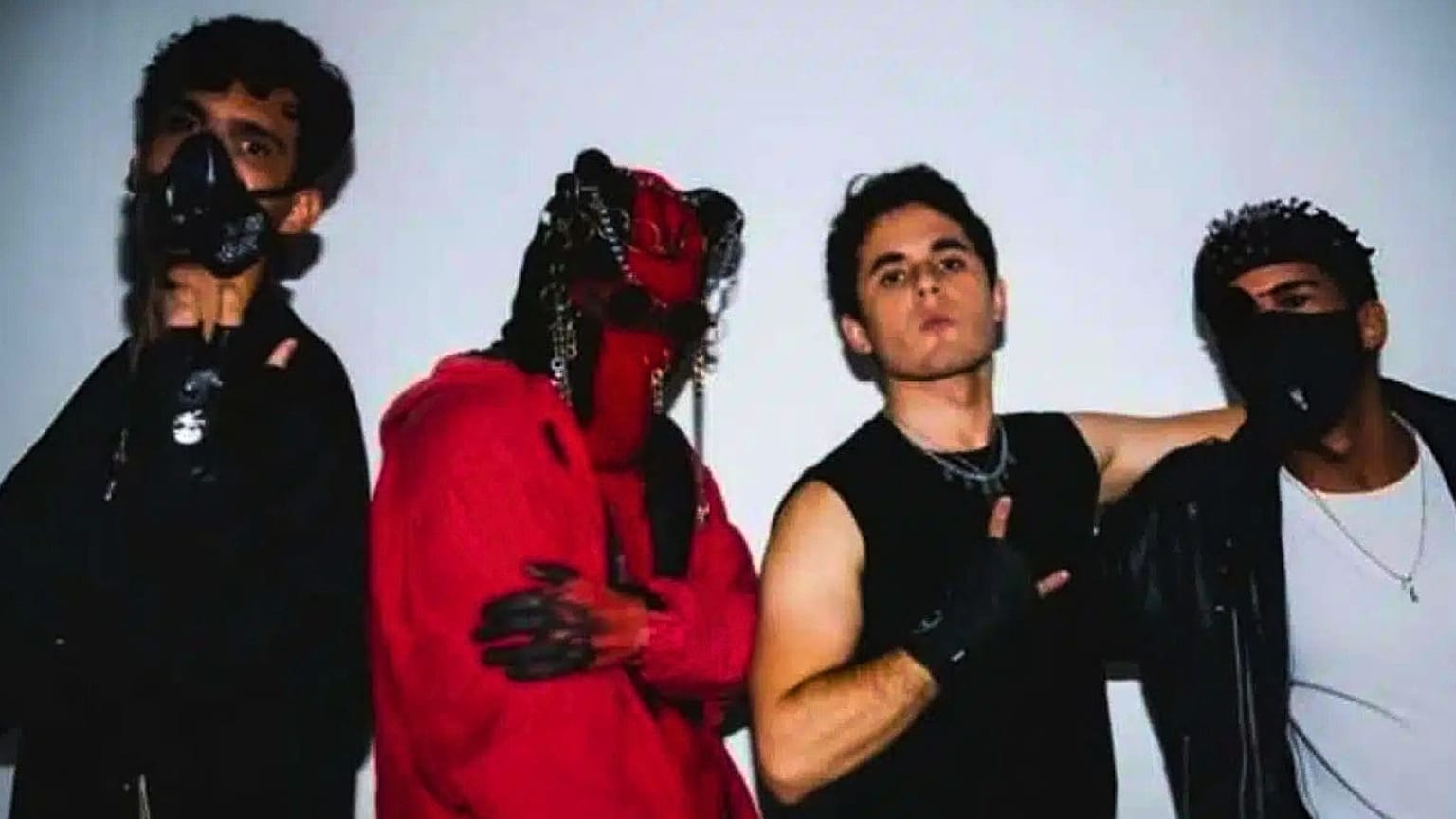
The band Van Der Dijs were in their rehearsal space at the time of the natural disaster.
All four members of Venezuelan nu-metal band Van Der Dijs have died following the devastating earthquakes that struck the country on 24 June.
According to Venezuelan outlet Últimas Noticias, vocalist Manuel van Der Dijs, guitarist Gabriel Gómez, bassist Xander Hernández and drummer Abraham Foucault were killed after the Costamar II building where they were rehearsing in the coastal state of La Guaira collapsed.
La Guaira has been among the areas worst affected by the disaster. Their bodies were later recovered from the rubble by rescue teams.
Van Der Dijs were an emerging nu-metal band in Venezuela’s rock scene. They formed in 2024 and released their first single, 'Nemesis', later the same year. They released more singles, the latest being this year’s '15 Minutos' – released just one month ago
They had played a sold-out show at the Centro de Arte Moderno in La Castellana, Caracas, on 19 June, and their official Instagram page was promoting upcoming dates around the country.
The earthquakes that hit Venezuela registered magnitudes of 7.2 and 7.5 and caused widespread destruction across the country. They have left Venezuela facing a major humanitarian crisis. Hospitals are overwhelmed and rescue teams are continuing to search through collapsed buildings.
More than 2,290 people have been confirmed dead, with thousands more injured and many still missing.