Thursday, July 23, 2026


Brussels slaps €890 million fine on Google despite looming new US tariffs
The Google logo is seen at the Google headquarters in Brussels.
Copyright AP Photo/Virginia Mayo

By Luca Bertuzzi
Published on
Brussels fined Google €890 million under its Big Tech rulebook for favouring its own services in search results and restricting app developers, despite Washington preparing a fresh set of trade tariffs as current ones are expiring.

The European Commission announced a €890 million fine against Google on Thursday over alleged self-preferencing practices and unfair treatment of app developers, just as the Trump administration prepares a fresh round of trade duties.

The fine caps an investigation the Commission launched in March 2024 under the Digital Markets Act (DMA), a law setting out a list of dos and don'ts for large tech companies that dominate key digital markets.

The flagship element of the case, leading to a fine worth €460 million, concerns Google's search engine allegedly giving systematic preferential treatment to its own services — Google Shopping, Google Hotels, Google Flights — while downgrading competitors in search results.

Self-preferencing first took centre stage as a legal theory in the landmark Google Shopping antitrust case, confirmed by the EU Court of Justice in 2024, more than a decade after the investigation was formally opened in 2010.

The DMA later codified the concept, with the explicit aim of speeding up enforcement and stripping out many of the evidential hurdles required under traditional antitrust law.

The second strand of the case, amounting to the remaining €430 million, concerns accusations from app developers that Google prevents them from telling consumers how to leave its ecosystem, for instance by promoting cheaper offers available outside its app store or flagging alternative payment systems.

Decision's implications

Beyond the monetary sanction — and arguably more consequential for Google — the Commission has ordered the company to end its non-compliance: treating third-party services without discrimination and letting app developers communicate freely with users.

Google must comply with the Commission's decision within 60 days or face periodic penalty payments of up to 5% of its worldwide turnover.

Google, for its part, argues its services are designed to optimise the user experience, and that changing its search results or app store policies would harm the European digital ecosystem.

"This isn't fair competition; it's product degradation driven by a small group of self-serving complainants, with European businesses and consumers taking the hit. Regulation should improve products, not make them worse," said Google President of Global Affairs Kent Walker.

Google has already begun testing changes to its search service and app store. The Commission says it will continue to monitor their implementation, and considers some of them significant progress towards compliance.

Google did not confirm whether it intends to appeal the decision.

The conclusion of the probe is, on paper, the product of a largely bureaucratic assessment of whether the tech giant breached the bloc's prescriptive rules for fairer, more contestable digital markets. But it risks becoming another point of contention in transatlantic tensions.

US trade tensions

A major fine against an American corporation is set to become another flashpoint with Washington. The Trump administration has repeatedly made clear it views EU digital rules as a trade "irritant," at times equating such fines with commercial tariffs.

A year ago, Brussels and Washington struck a trade deal known as the Turnberry agreement to resolve their trade dispute, under which the EU agreed to remove duties on most US industrial products and accept a 15% US tariff on its own exports.

The Trump administration was forced to adopt new tariffs on a different legal basis after the US Supreme Court ruled the duties it had imposed in 2025 illegal.

That new regime is set to expire this week, and the White House is weighing additional duties expected to target forced labour and overcapacity, following a Section 301 investigation touching on German drug pricing.

EU-US trade tensions have already shaped how Brussels decided to sanction American tech giants in the past. Last September, a fine against Google over its digital advertising business was shelved amid pressure from within the Commission and from the US government.

Trade Commissioner Maroš Šefčovič emerged as the main internal opponent of issuing sensitive sanctions before a deal with Washington was finalised. After that internal rift became public, the Commission went ahead with the fine — but the episode showed how susceptible the EU's investigations were to outside political pressure.


The EU versus Big Tech, and sanctions package approval
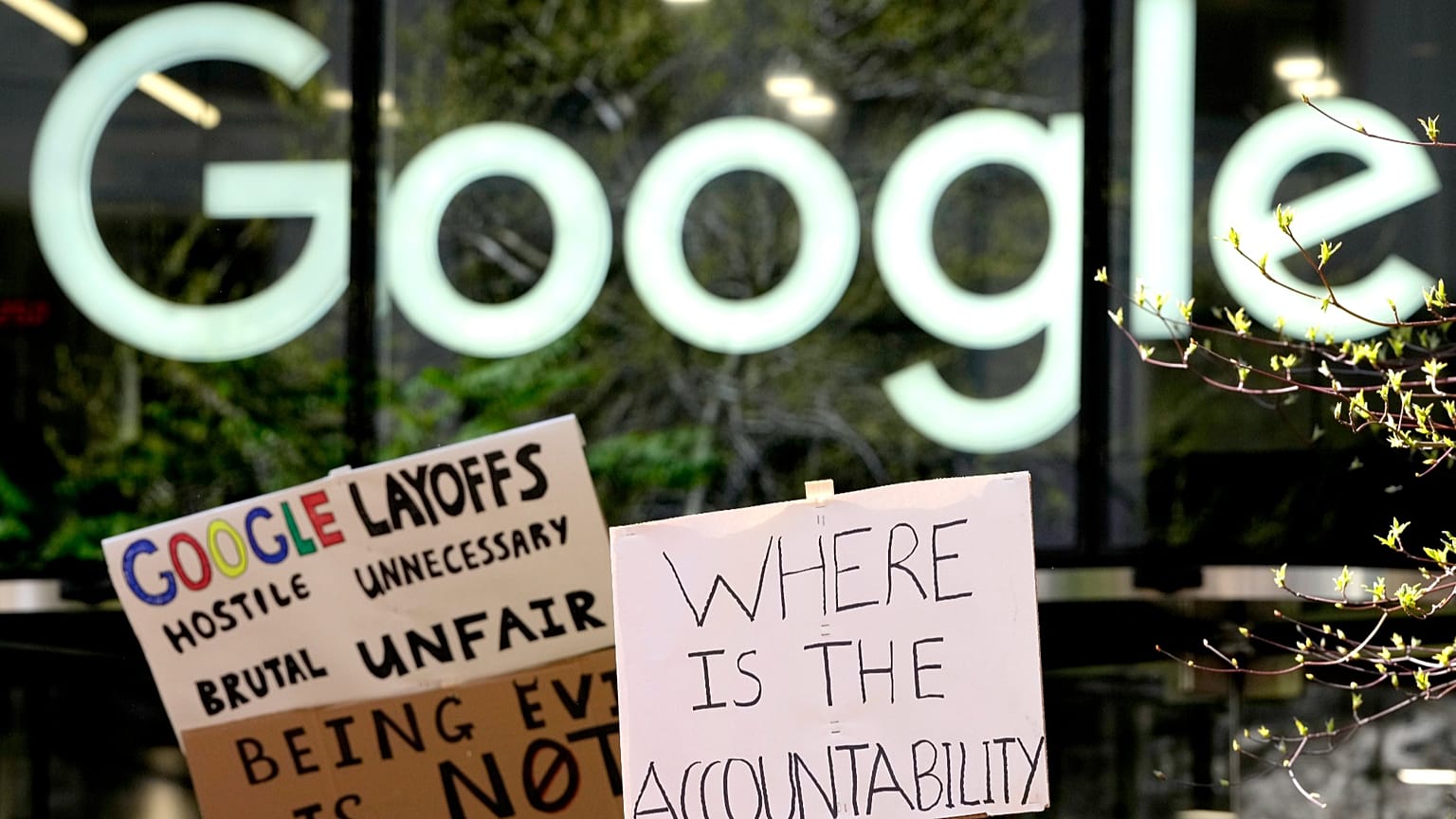
Google employees hold signs during a protest outside Google headquarters in London, 4 April, 2023.
Copyright AP Photo

By Angela Skujins
Published on

In today's newsletter: A potential fine is on its way for a US technology company in breach of the bloc's digital fairness rules, and the EU's 21st package of sanctions finally gets over the line amid criticism from a Baltic head of state in exclusive comments to Euronews.

Hello and good morning. Angela Skujins penning your Thursday dispatch, with some hot news.

We just heard that after marathon talks EU ambassadors early Thursday morning approved the EU's 21st package of sanctions against Russia.

The previous hold out? As my colleague Jorge Liboreiro reports, maritime heavyweight Greece previously clung to its veto due to issues regarding a ban on Russian liquefied natural gas (LNG) and its transport. We expect further reporting from Jorge today regarding the play-by-play of how this deal finally got done.

But before we go there, Latvian leader Andris Kulbergs said in exclusive comments on Euronews’ flagship morning news programme Europe Today that European politicians should ask themselves two major questions during the debate. Do they want Ukraine to win, or, "Do they want to earn money?"

"There's a choice. It's not both. So the sanctions has to be implemented," he said. Watch.

Back to Big Tech. As my colleague Luca Bertuzzi reports, the Commission's potential fine for Google rumoured to be handed down today follows a two-year investigation into how the company promotes its own services in search results, and how it stops app developers from directing users to deals outside its app store and payment system.

Why today? German financial newspaper Handelsblatt spoke to two anonymous high-ranking EU officials, who pointed to Thursday on the calendar as it follows a meeting chaired by the European Commission President Ursula von der Leyen, where the fine would reportedly be rubber-stamped.

Pay the price. Fines for violating the Digital Markets Act (DMA) can reach up to 10% of a company's total worldwide annual turnover. With Google's parent company, Alphabet, reporting a record annual revenue of $402.8 billion (€353.08 billion) in 2025, the maximum penalty imposed by the European Commission could theoretically run into the tens of billions of dollars.

But Google isn’t the only party to potentially suffer. If the DMA fine for the American-based company comes to fruition, the EU risks attracting the ire of US President Donald Trump.

American retaliation? Washington has previously accused Brussels of unfairly targeting American companies through its digital policies. For example, in January, the Republican leader threatened to impose 100% tariffs on any European country that imposed a tax on digital services on US companies.

Right now, Brussels is walking a tightrope of tense transatlantic relations. Outside of the battle over big tech, the US government is preparing fresh import duties on the bloc as the current ones are due to expire this week.

The EU executive is expected to bow to these fresh import levies after the current regime lapses, according to Peggy Corlin, but many are concerned there could be additional retaliation following the DMA dispute.

“Toxic” Putin. Ukrainian President Volodymyr Zelenskyy stated in his nightly address that his country’s frontline gains and mid-range strikes are creating a “toxic” atmosphere around Russian President Vladimir Putin. But does this stench waft from Moscow to Manila?

Russian state-run news agency TASS confirms that Russia’s Foreign Minister Sergey Lavrov is meeting with his American counterpart Marco Rubio on the sidelines of the ASEAN (Association of Southeast Asian Nations) Foreign Ministers meeting in the Philippine capital. The meeting is scheduled to take place during the morning of 23 July.

In Manila, Rubio said the US remains open to playing a role in ending the conflict, “if that opportunity presents itself”. He did admit, however, the efforts have “fallen off a little bit over the last few months”.

Washington's attention has increasingly shifted to the Middle East following the conflict with Iran, particularly with news coming in overnight that the US announced a landmark nuclear deal with Saudi Arabia.

The framework allows the country in the future to produce enriched uranium, a key ingredient for nuclear fuel as well as nuclear bombs.

Fighting for peace. Kallas used her time speaking at the ASEAN forum in Manila to reiterate to partners, as well as observers, to “join the calls” that Russia should stop its full-scale invasion of Ukraine. Her team confirmed to Euronews yesterday that she had no scheduled meeting with Lavrov herself.

Some extra news: a major blow to proponents of migration crackdown**.** The European Commission on Thursday refused to register a controversial European Citizens’ Initiative spearheaded by far-right activists due to “discrimination grounded on race and ethnic origin”.

The document calls on the Commission to temporarily stop all “non-Western immigration channels” including study and family reunification visas. On top of this, irregular and regular migrants who have not integrated into European society should swiftly be returned to their country of origin, the document states.

EU set to bow to fresh US tariffs after current regime lapses

The European Union is preparing to accept new tariffs the United States is expected to impose in the coming days over forced labour, as long as they do not exceed the 15 percent cap agreed under the Turnberry agreement, the European Commission said.

As Peggy Corlin reports, the White House said in early June that it would impose fresh duties on its global trading partners, arguing that insufficient efforts to curb trade in goods produced using forced labour were harming US commercial interests.

The current US tariff regime expires on Friday, and US Trade Representative Jamieson Greer said on Tuesday that implementation of the forced labour duties was imminent.

European officials are closely monitoring the level of the new tariffs, as an EU-US trade agreement signed in July 2025 in Turnberry, Scotland, by US President Donald Trump and Commission President Ursula von der Leyen caps US duties on EU goods at 15 percent.

Read more of Peggy’s analysis to understand what's at stake.

More from our newsrooms

Could Gianni Infantino really become UN Secretary General if Trump puts him forward?

US President Donald Trump can recommend the boss of FIFA, Gianni Infantino, to lead the United Nations, but not impose him over the other candidates — and the other permanent members of the Security Council would need to endorse him. Vincenzo Genovese explains.

Hungary's prosecutor resigns under pressure in political win for Magyar

Hungary's Prosecutor General, Gábor Bálint Nagy, has resigned amid mounting political pressure as Prime Minister Péter Magyar seeks to replace Orbán-era officials. The move follows allegations of political bias by lawyers for detained Ukrainian cash couriers in a cross-border cash seizure case. Sandor Zsiros and Rita Konya have the latest.

Energy and fertiliser crisis due to war will continue to drive up food inflation, UN says

Rising energy and fertiliser prices are likely to continue contributing to food inflation globally, the UN warned in its latest report. This in turn can drive up the cost of a healthy diet and threaten progress against global hunger. Read more about this story by Indrabati Lahiri.

We're also keeping an eye on

  • ​EU foreign policy chief Kaja Kallas continues her trip to Manila for the ASEAN summit, and will meet with Gilbert Teodoro, Secretary of National Defence of Philippines, as well as other leaders.
  • The European Central Bank (ECB) holds its Governing Council meeting in Frankfurt, with President Christine Lagarde delivering a press conference at 2:45 pm.
  • European Commissioner for Defence Andrius Kubilius to deliver a speech at the EU Defence Night in Washington, US.

That’s it for today. Luca Bertuzzi, Vincenzo Genovese and Jorge Liboreiro contributed to this newsletter.

 

EU online child safety push holds platforms firm and lets parents off easy

FILE - Social media applications are displayed on an iPhone, March 13, 2019, in New York.
Copyright (AP Photo/Jenny Kane, File)

By Egle Markeviciute, EU Tech Loop with Euronews
Published on

Regulators are cracking down on platforms, design flaws and age verification — but bypassable tech, privacy risks and absent parental accountability are quietly undermining the whole effort.

Teenagers’ use of social media and digital services is a popular subject among politicians worldwide, including those in the European Union (EU).

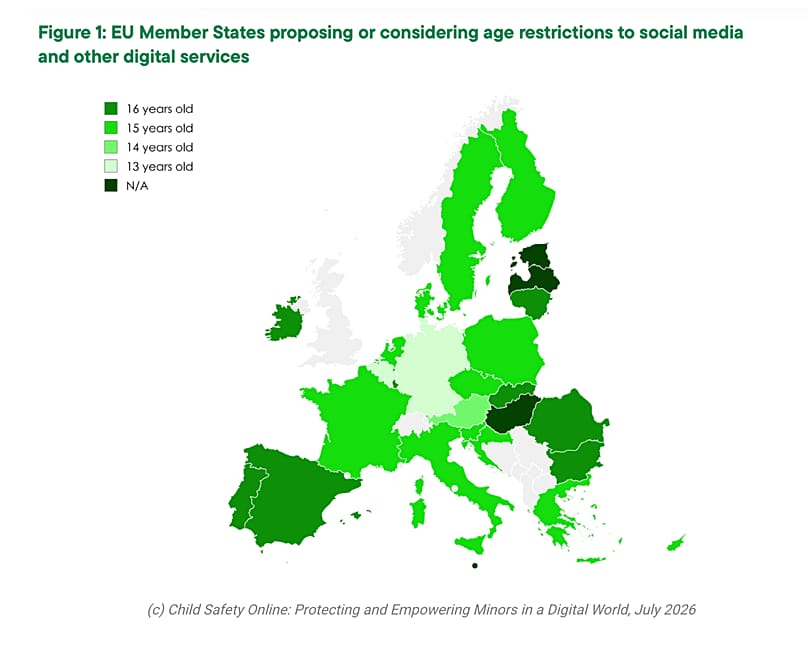
While some countries are currently considering bans up to age 16, others are considering more modest approaches with lower thresholds.

Meanwhile, a digitally advanced Estonia openly rejects the idea of an EU-wide minimum age for social media use, emphasizing the importance of digital literacy among minors, teachers and parents, as well as stronger enforcement of existing legal frameworks, such as the Digital Services Act (DSA).

(c) Child Safety Online: Protecting and Empowering Minors in a Digital World, July 2026.
(c) Child Safety Online: Protecting and Empowering Minors in a Digital World, July 2026. Euronews courtesy of EU Tech Loop

A few weeks ago, a special expert panel, led by Prof. Dr. Jörg M. Fegert and Dr. Maria Melchior, presented a report on child safety online, offering actionable recommendations.

While the report is overall balanced and recognizes that not all minors under 18 should be treated the same, it leaves significant room for interpretation for EU policymakers, also echoing the Commission's focus on new platform obligations while relying largely on soft measures for parental involvement.

Current legal frameworks in action

The conversation on the matter is quite simplistic at the Member State level, focusing primarily on the minimum age of use for social media and other digital services.

Additionally, countries like France have recently banned smartphones in schools.

While the topic is easy to communicate and yields significant political dividends, the technical details and institutional capacity needed to enforce such requirements are rarely part of the discussion.

The conversation on protecting minors online at the EU level is neither new nor ignored.

Previously, the EU outlined numerous provisions across various laws meant to protect children online.

The Digital Services Act (DSA), for example, is used to assess platforms’ design features that might be harmful, the General Data Protection Regulation (GDPR) outlines protections to safeguard children’s personal data and consent online, and the Audiovisual Media Services Directive (AVMSD) was recently expanded to cover new forms of audiovisual content and video-sharing platforms.

The list continues with the Artificial Intelligence Act (AI Act), the Unfair Commercial Practices Directive (UCPD), the Consumer Rights Directive (CRD), the Unfair Contract Terms Directive (UCTD), the General Product Safety Regulation (GPSR), the Product Liability Directive (PLD), the Political Advertising Regulation (PAR), the widely criticised Chat Control 1.0 and proposals for Chat Control 2.0, along many more guidelines, cooperation mechanisms, strategies, political statements and digital literacy programs.

Much like other discussions surrounding online consumer protection, the current debate on protecting minors focuses on introducing new regulatory layers and mechanisms rather than better enforcing existing rules.

To this end, the EU has launched its age-verification app, will likely soon propose an EU-wide minimum age for social media, along with additional platform obligations, and is advocating for ex-ante design requirements, such as banning infinite scrolling.

Complications: bypassing, data security and fragmentation

The UK’s and Australia's negative experiences of teenagers bypassing local restrictions through various means, including VPN use or migration to fringe and less regulated platforms, have significantly complicated the political conversations.

EU policymakers now have to consider real-world examples from abroad and outline precautionary measures to prevent a similar scenario from happening in Europe.

So far, the effort has not been successful: earlier this year, the EU Commission unveiled an age-verification app, however, it drew criticism for being unreliable, as AI agents could bypass it "within minutes".

Additionally, the EU must respect the European data protection and data minimization principles, especially given the increasing number of data leaks across both private digital platforms and public services.

Lastly, the fragmented approach to the minimum age of use among EU Member States may complicate efforts to reach an EU-wide agreement on the matter.

Countries that have rushed to introduce their own versions of such laws will likely resist the expert panels’ recommendation to focus on restricting access for minors under 13 years old, citing the very same report stating that "countries may prefer to adopt a higher threshold than 13 years".

Building resilience: involving parents and caregivers

The report says that minors' safety online is primarily a responsibility of social media and digital services providers, putting parents and caregivers into a secondary role:

"Social media and other digital services providers retain primary responsibility for keeping minors safe on their services. In addition, parents and caregivers have important roles in supervising children’s and adolescents’ time online, and in guiding minors in addressing the risks they face in social media+ environments together."

It is true that the role of parental supervision decreases as the child develops, becomes more autonomous, and is increasingly influenced by peers.

It is also true that sometimes parents do not have the means, time or digital literacy to make use of existing parental control tools.

However, the cultural change that the EU Commission and many local politicians envision will only be possible if regulatory and literacy measures are combined and accompanied by better parental involvement.

Especially given that parents themselves are sometimes enablers of rule-bypassing and of giving their own children unrestricted access to the digital world.

There is very little data on European parents using existing parental control options, however, the survey from 2020 conducted by the EU Kids Online Network states that, on average, only 22% of European parents used existing parental control tools.

Only the French and Maltese parents were somewhat more involved, while only 12% of Lithuanian parents and 14% of Czech parents used parental control mechanisms back in 2020.

The special expert panel takes a relatively soft approach to parental involvement, focusing on digital literacy, guidelines, and supportive tools.

However, meaningful cultural change usually requires combining soft measures with hard obligations — not just for digital platforms, but for parents as well.

While the EU maintains a comprehensive child protection framework enforced by local agencies, the current political conversations on minors online lack direct incentives or accountability mechanisms for parents.

Without clearly defined parental responsibility to curb excessive screen time, cyberbullying and online abuse towards other children, many parents may remain passive, relying entirely on local or EU-wide regulations rather than taking proactive ownership of their children’s digital well-being.

This story was originally published on EU Tech Loop and has been shared on Euronews as part of a syndication agreement.


Super El Niño arrives more than a month early

Super El Niño arrives more than a month early
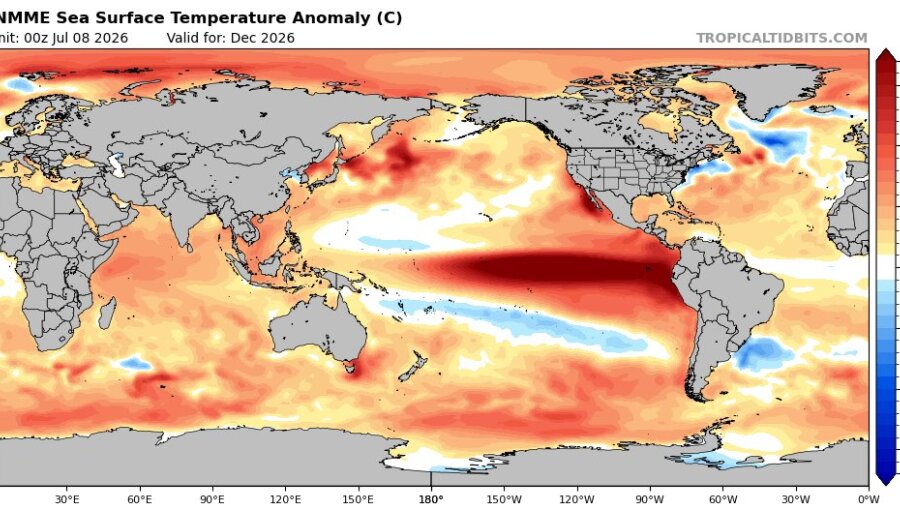
The Niño 3.4 Pacific benchmark has already blown past the threshold for a "super" event, weeks earlier than the two previous record years of 1997 and 2015, as extreme heat sets records from the Red Sea to Egypt and costs Europe's economy billions. / bne IntelliNewsFacebook
By Ben Aris in Berlin July 22, 2026

Sea surface temperatures in the Niño 3.4 region of the tropical Pacific have remained above the +2.0°C threshold for a "super" El Niño for more than a week, reaching an anomaly of around +2.1°C by mid-July — more than a month earlier than the 1997/98 and 2015/16 events that mark the previous benchmark super El Niños, according to climate data tracked by analysts including climate scientist Zeke Hausfather. No El Niño since 1982 has warmed this fast by July.

As IntelliNews reported on July 13, the planet's seas are on track to be as warm as bath water in places, arriving on top of a climate system already running hot: the world is on course to blow past the Paris Agreement's goal of capping warming at 1.5-2C above pre-industrial levels, heading instead for an increase of 2.7-3.1C by 2100 without drastic emissions cuts — a trajectory that could leave three billion people in barely habitable heat zones by 2070.

The early arrival of the super El Niño is compounding what is shaping up as the hottest year on record. Europe's June heatwave was already the most severe ever recorded, IntelliNews reported, and records are falling elsewhere too: Yenbo, on Saudi Arabia's northwest Red Sea coast, hit 51.0C — the first time the 50C and 51C marks have ever been recorded there — while Abu Simbel and Shalatin in Egypt logged their hottest nights on record, with minimum temperatures of 34.4C and 32.4C respectively.

Ocean temperatures more broadly have pushed into "uncharted territory", IntelliNews reported, part of what has become an annual "disaster season" of extreme summer weather that IntelliNews has tracked getting worse year after year.

The heat is also inflicting a mounting economic cost. Extreme heat could wipe $638bn off the four largest EU economies by 2030 — including $240bn from France, $147bn from Italy, $131bn from Germany and $120bn from Spain — according to analysis by Allianz Trade reported by Fortune. Allianz Trade estimates climate-related losses could shave 5-7% off the EU's cumulative GDP between 2026 and 2030, while the UK's June heatwave alone cost an estimated GBP2.36bn, according to think tank Verdant.

The super El Niño is also rippling through emerging markets. Analysts at UBS have warned it threatens to fuel inflation and complicate rate cuts across Latin America, while in the Middle East forecasters have flagged it as a risk that could compound the inflationary shock from the Iran war.


Climate change, not dams, driving Caspian Sea shrinkage, researcher says

Climate change, not dams, driving Caspian Sea shrinkage, researcher says
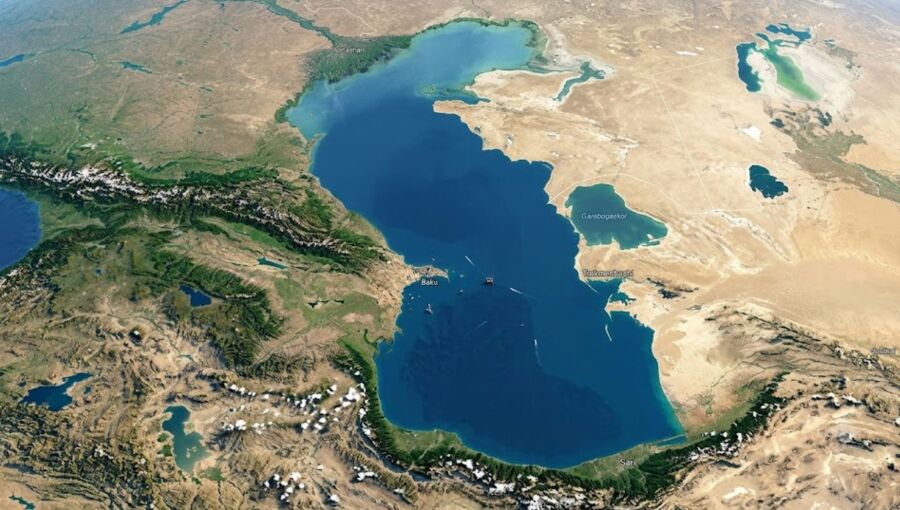
Climate change, not dams, driving Caspian Sea shrinkage, researcher says. / bne IntelliNewsFacebook
By bnm Tehran bureau July 22, 2026

Climate change is the dominant force behind the falling water level of the Caspian Sea and outweighs human intervention such as upstream damming, water policy researcher Anoush Nouri Esfandiari said on July 22.

The world's largest enclosed body of water, surrounded by Azerbaijan, Iran, Turkmenistan, Kazakhstan and Russia, has been losing surface level for years in a sustained decline that can no longer be attributed to natural fluctuation alone, a trend that carries consequences for the shipping, fisheries and coastal tourism economies of the five littoral states, including Iran's northern provinces.

Esfandiari, secretary of the Iranian Water Policy Research Institute, does not deny that abstraction from Russian rivers feeding the Caspian affects the decline, but holds that the role of climate change is greater than human intervention.

"Water abstraction from the rivers flowing into the Caspian Sea certainly affects the falling water level and shrinkage of this sea, but as far as I know, the Volga river, which supplies more than 80% of the Caspian's inflow, mostly has dams that function for navigation, and abstraction from it is limited," Esfandiari said.

"For this reason, in my view climate change is still the more decisive factor in the shrinking and falling level of the Caspian Sea, and its role is more prominent compared with other factors," he said.

On measures Iran has taken to prevent the sea shrinking, Esfandiari said the country had built numerous dams on the rivers feeding the Caspian, in particular the Sefidroud and its tributaries, and had brought a large part of the flow under control. "But the share of these rivers compared with the Volga is not very large, so the effect of these measures at the scale of the whole Caspian Sea will be limited," he said.

More than 80% of the inflow comes from the Volga River, which is extensively dammed and regulated along its course in Russia. These structures, numbering in the dozens, hold back substantial volumes of water for hydropower, irrigation, and industrial use before the river reaches its delta in the Astrakhan region. Additional outflows through the Volga-Don Canal further reduce water available to the sea's basin.

Water-intensive agriculture and industry in Russia, Azerbaijan a has been further exacerbating the problem. Since 2022, Russia has expanded irrigation along the Volga basin in an effort to boost domestic grain production. The increased use of the Volga river for agricultural needs was driven by Russia's invasion of Ukraine and the resulting sanctions on Moscow, which led to trade disruptions and food import restrictions.

Zaur Shiriyev, a nonresident scholar at the Carnegie Russia Eurasia Center, noted in an article published by Carnegie Endownment that these changes have intensified demand for water upstream, limiting outflow to the sea.

"One of the important problems we face today is the pollution of the Caspian's coastal waters," he said. On efforts to reduce coastal pollution, he said schemes to collect and dispose of sewage were being implemented, but that the projects had dragged on for years and had not yet reached full operation. "With the rising population in the northern provinces, in particular Mazandaran, pollution of coastal waters has become one of the serious challenges of this region," he said.

On the state of Tehran's groundwater despite last year's rainfall and rain earlier this year, Esfandiari said no marked change had occurred. "There may have been a slight easing of pressure on the aquifers from this year's rainfall, but groundwater resources are not restored over a short period, and rapid improvement cannot be expected," he said.

Asked whether incentive and penalty policies for subscribers could help manage water consumption, he said: "Not really, because in many residential complexes water consumption is calculated on an aggregate basis, and these policies have no direct effect on the behaviour of individual subscribers."

On the main drivers of high water use in the case of Tehran which hosts 10mn residents, Esfandiari said consumption was not limited to the domestic sector, with industry, green spaces and losses in the distribution network accounting for a significant share. He said treated wastewater had been intended to irrigate green spaces and much of the infrastructure had been built, but that the plan had stalled because of a lack of coordination between the municipality and the water company.

"As far as I know, the use of treated wastewater to irrigate green spaces remains unresolved," he said. "It was expected that the city council would play a more active role and, as a mediator, create the basis for agreement between the responsible bodies." He said resolving the treated-wastewater issue could serve as a suitable model for other large cities.

On drought across Iran's central plateau this year, Esfandiari said conditions were not uniform. "Conditions across the entire central plateau are not the same. The southern parts have had better rainfall than average this year, but in many areas no marked change has occurred," he said. "A single assessment cannot be given for the whole central plateau, because in some areas conditions have been better and in others no significant change has been observed."

US announces landmark nuclear deal with Saudi Arabia


By Evelyn Ann-Marie Dom
Published on

The Trump administration did not release details of the deal, but the framework could potentially provide Saudi Arabia with a facility that would allow it to enrich uranium.

The United States and Saudi Arabia signed a nuclear agreement that would allow the kingdom to develop a civilian nuclear programme.

The Trump administration did not release details of the deal, but the framework could potentially provide the kingdom with a facility that would allow Saudi Arabia to enrich uranium.

US Energy Secretary Chris Wright and Saudi Minister of Energy Abdulaziz bin Salman formally signed the agreement, along with "bilateral safeguards" against non-proliferation.

“These agreements reflect our two nations’ shared commitment to strengthening US-Saudi commercial relations, delivering prosperity at home and security to our allies abroad,” Wright said in a statement.

“Rest assured, these agreements uphold the highest standards of nuclear safety and nonproliferation, while relying on the world’s best nuclear technology and scientists, designed right here in the United States.”

Uranium enrichment can produce fuel for nuclear power plants, but the same technology can also be used to build nuclear weapons. Because of this, US lawmakers from both parties have voiced opposition to the idea of a civilian nuclear project for Saudi Arabia.

Earlier, Secretary of State Marco Rubio sought to head off emerging criticism when asked by reporters about the risk of the agreement.

“The US is not going to reach any agreement with any country in the world that leads to the risk of proliferation,” he said, while travelling in the Philippines on Wednesday.

The deal is expected to last 30 years and would involve using American technology to develop the programme.

It does not include the International Atomic Energy's Agency's (IAEA) Additional Protocol, which would allow for more monitoring, inspections and verification, according to a person familiar with the case.

The deal will now be sent to Congress for review, where it is expected to face some opposition. However, Trump's Republican party controls both chambers, and so lawmakers are unlikely to prevent its implementation.

The announcement of the agreement comes as the US, alongside with Israel, launched a war against Iran that began in part over Washington's concerns over Tehran's nuclear capabilities. Iran has repeatedly insisted its nuclear enrichment programme is peaceful.


'No enrichment!': Saudi deal reportedly

threatened by Trump's sudden Truth Social

demand


Tom Boggioni
July 23, 2026 
RAW STORY


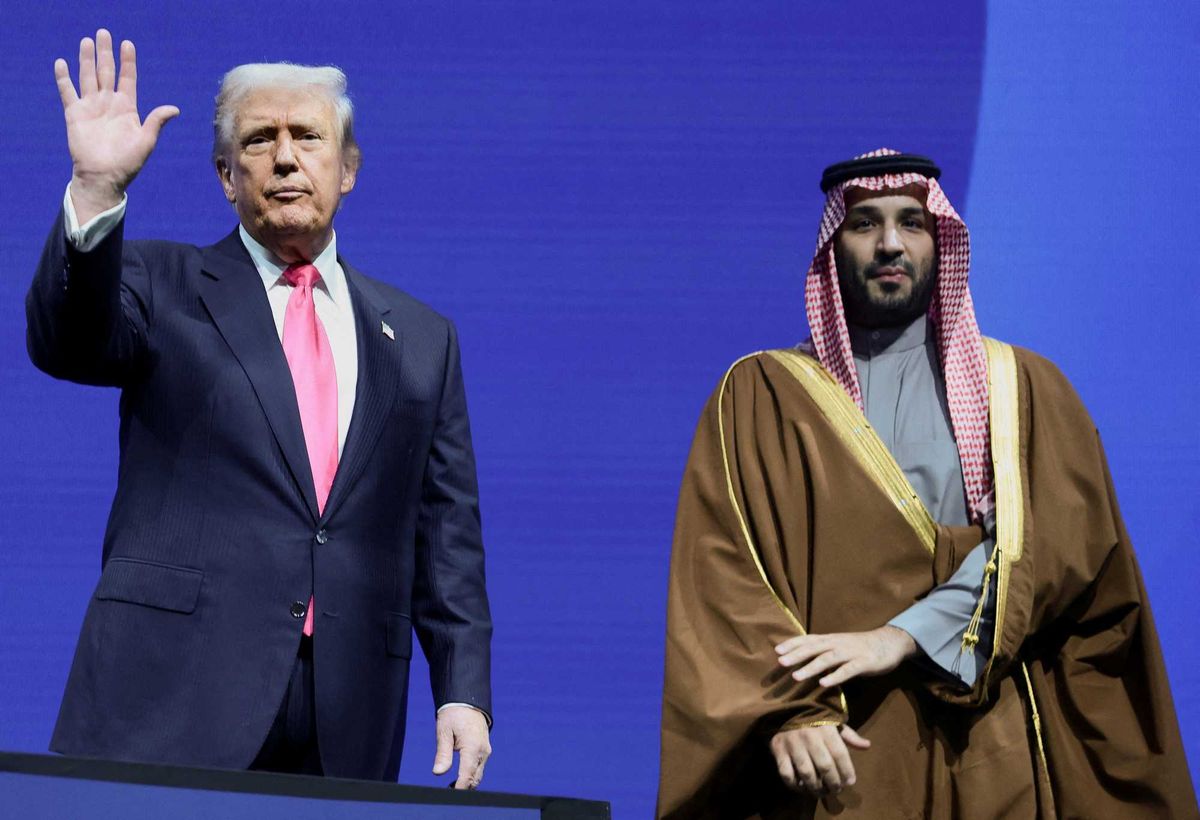
President Donald Trump and Crown Prince and Prime Minister Mohammed bin Salman of Saudi Arabia attend the U.S.-Saudi Investment Forum in Washington, D.C., on Nov. 19, 2025. REUTERS/Evelyn Hockstein

President Donald Trump's controversial nuclear deal with the leadership of Saudi Arabia is now in doubt after the president threw the Middle Eastern nation a curve on Thursday morning.

Trump abruptly inserted a bombshell condition into a nuclear agreement that was supposedly finalized just 24 hours earlier: Saudi Arabia must normalize relations with Israel to receive U.S. nuclear technology, The Washington Post is reporting.

The move has thrown the entire agreement into chaos, according to the report.

Trump announced via Truth Social that the civil nuclear deal—which would allow Saudi Arabia to develop nuclear power plants and pursue enrichment programs—is "totally subject" to Saudi Arabia joining the Abraham Accords, the initiative from his first term designed to normalize Israeli-Arab relations.

“The Civil Nuclear Deal (There will be no enrichment of material!) being made between the United States Department of Energy and Saudi Arabia, which pertains only to non-military use such as the ones that Iran and UAE (and others) already have, will be approved,” Trump wrote on Truth Social Thursday.

“But is totally subject to Saudi Arabia joining the very respected and successful Abraham Accords.”

The problem is monumental: Saudi Arabia has consistently refused to join the Abraham Accords and shows no signs of capitulating now.

According to the Post, "That attaches a major string to the deal. Saudi leaders were nearing a normalization agreement with Israel in 2023, just before the Hamas attack on Israel on Oct. 7 of that year. Since then, however, talks have been paused. Saudi leaders have said they would want guarantees of an eventual Palestinian state, and Saudi public opinion has soured toward Israel because of its handling of Gaza. Any nuclear deal tied to Saudi-Israel diplomatic breakthroughs has seemed remote."

The nuclear technology deal itself has generated controversy in Congress. Lawmakers worry that expanding enrichment programs across multiple nations increases proliferation risks and could eventually result in more countries possessing nuclear weapons capabilities.

Trump's sudden new condition transforms an already contentious agreement into a political landmine—potentially derailing both the nuclear deal and his broader Middle East diplomatic agenda.


Media silence as Kushner's $2B tie to Saudis slips under cover of Trump deal: analyst

Nicole Charky-Chami
July 23, 2026 
RAW STORY


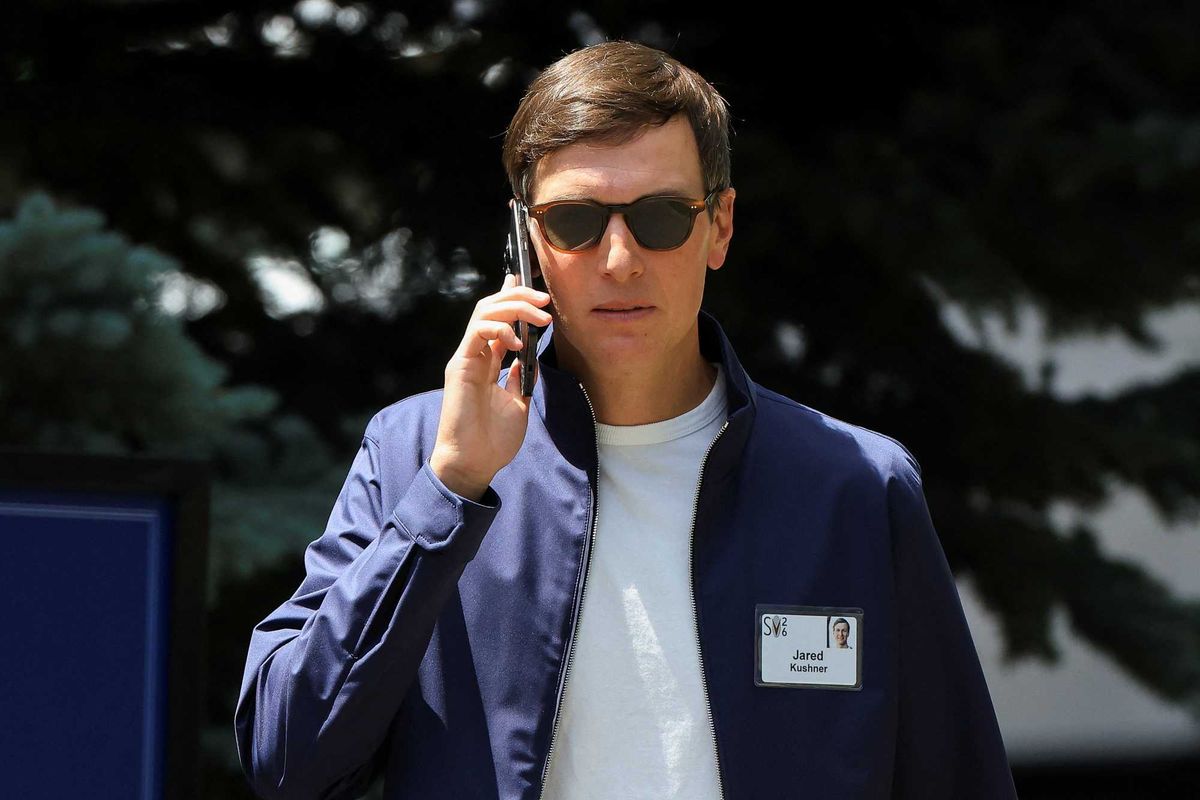
Jared Kushner attends the annual Allen and Co. Sun Valley Media and Technology Conference at the Sun Valley Resort in Sun Valley, Idaho, on July 9, 2026. REUTERS/Brendan McDermid

White House spokesperson Karoline Leavitt should be fielding questions about Jared Kushner's $2 billion tie to Saudi Arabia, a media expert fumed Thursday.

Judd Legum, founder of the Substack Popular.info, took to social media to share his disgust after Leavitt was grilled about President Donald Trump's controversial nuclear deal at a White House press conference.

His frustration appeared in the form of a list of news outlets that covered the US-Saudi nuclear deal without mentioning that Jared Kushner, Trump’s senior White House aide, is getting paid by the Saudi government."

Legum's list included The Wall Street Journal, The New York Times, Associated Press, Reuters, CNN, NBC, ABC, CBS, The Guardian, Semafor, The Washington Post, Fox News, The New York Post, BBC, Newsweek, and MS NOW.

Kushner launched his private equity firm Affinity Partners shortly after leaving the White House in 2021 after Trump's first administration, reports show.

The Florida-based company received a $2 billion investment from Saudi Arabia's Public Investment Fund, chaired by Crown Prince Mohammed bin Salman, multiple reports show.

The deal drew scrutiny from ethics watchdogs given Kushner's role shaping U.S.-Saudi relations, including his involvement in defending MBS after the killing of Washington Post journalist Jamal Khashoggi.

On his Substack, Legum dubbed the coverage, "A media blackout for Kushner’s corruption."