Thursday, July 23, 2026

Royals emerge from Tardis to begin Commonwealth Games opening ceremony

23.07.2026, 21:54 Uhr


Photo: Andrew Milligan/PA Wire/dpa


King Charles III and Queen Camilla made a dramatic entrance to the Glasgow Commonwealth Games, as they strode out of the Tardis at the beginning of the opening ceremony.

As the 11-day sporting extravaganza gets under way, Charles and Camilla had a prominent role in the show at the Hydro arena in Glasgow.

More than 3,000 athletes from 74 nations and territories will compete across 10 sports and six Para sports.

During the pre-show ahead of the opening ceremony in Glasgow, unicorn mascot Finnie entertained the crowd and Scottish wrestler Grado made an appearance in a teacake costume.

The show then began with a clip of Doctor Who’s famous telephone box going on a journey around Scotland.

The Tardis was piloted by cycling star Chris Hoy and actor Greg McHugh.

The Seventh Doctor, Sylvester McCoy, was somewhat confused by their efforts.

It eventually reaches Balmoral Castle, after visiting several famous Scottish landmarks.

The Tardis then materialized inside the Hydro arena, appearing on an onstage garden.

Charles and Camilla emerged from the Tardis, making their way down a ramp before taking up seats in the royal box.

Charles will formally open the games in his role as Head of the Commonwealth, the ceremonial leader of the association of 56 nations.

Earlier, the king attended a reception where he met baton bearers representing the regions of the Commonwealth.

Prime Minister Andy Burnham and his wife Marie-France Van Heel also attended the reception, as did Scottish First Minister John Swinney and the Prince Edward.

The Glasgow Commonwealth Games is not the first time a monarch has made a memorable entrance to a major sporting event’s opening ceremony.

Queen Elizabeth II famously took part in the London 2012 Olympics opening ceremony, appearing to skydive into the stadium from a helicopter with James Bond actor Daniel Craig, after he escorted her from Buckingham Palace.

Her stunt double leapt above the arena in a dress with sown-in Victorian-style bloomers and a large zip at the back to accommodate his parachute.

The late queen also appeared in a comedy sketch with a digitally animated Paddington Bear to mark her Platinum Jubilee, in which she revealed that she kept marmalade sandwiches – Paddington’s favourite treat – in her handbag.


Former UK water company CEO charged over alleged water test fraud

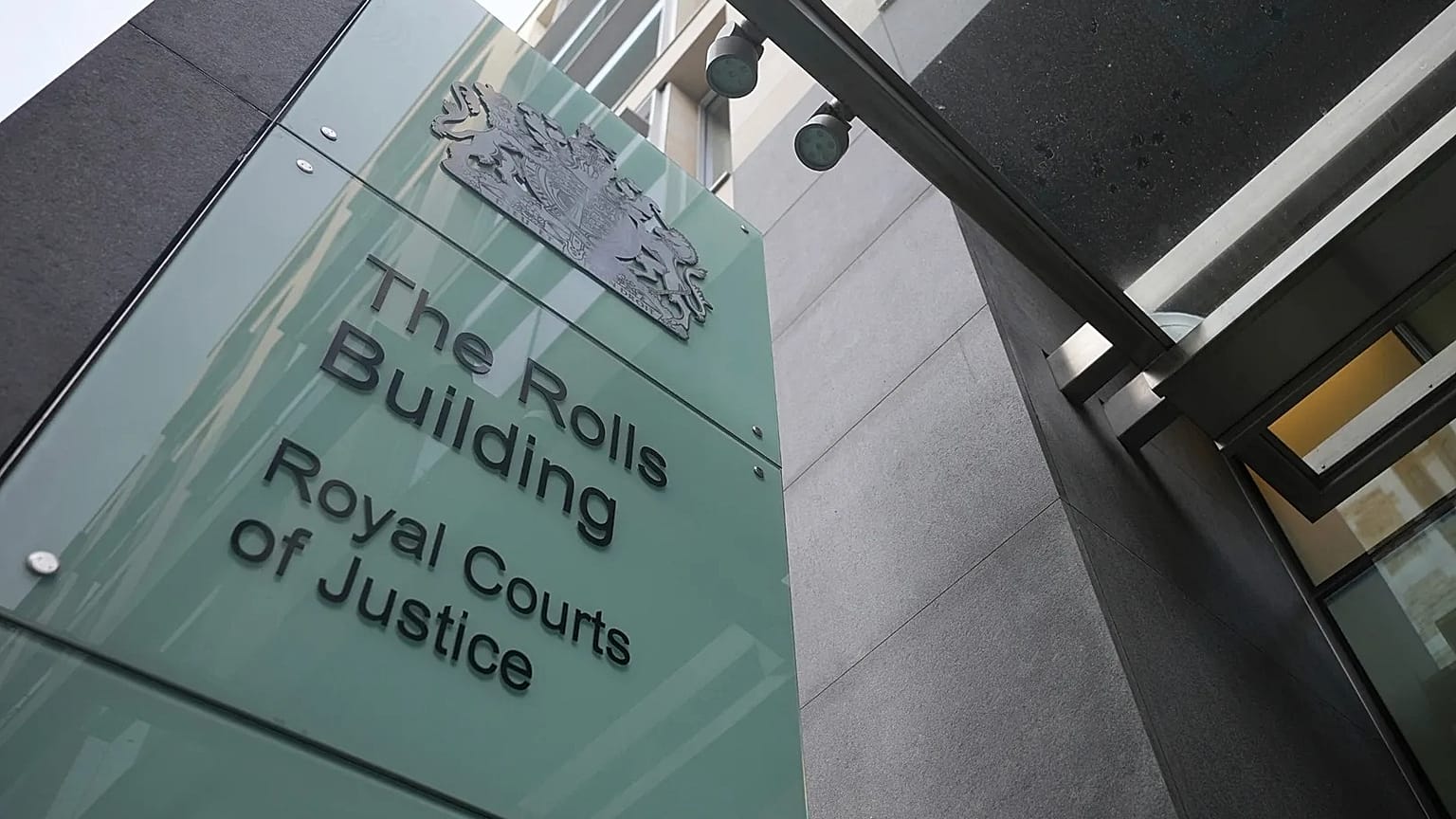
A general view of the High Court
Copyright AP Photo

By Greta Ruffino
Published on

Under UK law, intentionally altering wastewater flows during regulatory sampling is a criminal offence. If convicted, Wright faces a maximum sentence of 10 years in prison.

The former chief executive of UK water company Southern Water has been charged with conspiring to "manipulate" water quality tests, British authorities said on Wednesday.

Matthew Wright, who previously led the company supplying water and wastewater services to millions of people across southern England, is accused alongside three others of conspiring to defraud the Environment Agency and water regulator Ofwat between 2012 and 2017.

Prosecutors allege the defendants deliberately manipulated wastewater flows before mandatory water quality tests to influence the results.

The charges were made public on Wednesday after the Hgh Court rejected the defendants' bid to block the prosecution, in what the Environment Agency described as a "significant judgment."

In the written ruling, Judge Andrew Popplewell said the allegations involved "carefully planned and extensive fraud and dishonesty at a high level".

Wright faced "very serious allegations of criminal misconduct," he said.

The Environment Agency alleges former company employees deliberately ensured there was no wastewater flow when they believed a site might fail a regulatory test, according to the High Court judgment.

Southern Water also faces separate charges of breaching environmental permits linked to the same allegations.

The case comes as the UK government tightens oversight of the water sector following years of public outrage over sewage pollution in rivers and coastal waters.


New UK PM touts 'cost of living government' with VAT cut and bus fare cap


By Quirino Mealha
Published on

Andy Burnham has used his first days in Downing Street to scrap the 5% VAT charged on household electricity bills and cap single bus fares in England at £2, telling his new cabinet that Britain now has a "cost of living government".

Two before-breakfast announcements on consecutive days set the tone for the new UK prime minister, who entered 10 Downing Street on Monday after winning the Labour leadership unopposed following Keir Starmer's resignation.

The cost of living dominated Andy Burnham's first speech, and on Tuesday he told his newly assembled ministers they would form a "cost of living government" whose job was to convince households "that help is coming".

The same day, the British government said it would remove the 5% VAT from household electricity bills from October until the end of the financial year next April, expected to knock an average of £45 (€53) off yearly household bills.

The cut is to be paid for by scrapping the digital ID programme, prompting questions over whether that money had ever been set aside.

Downing Street insisted the measure was "fully funded" as departments were to absorb the digital ID scheme from existing budgets and will now redirect those savings.

Wednesday brought the second initiative.

Single bus fares in England outside London, currently capped at £3 until the end of March 2027, will instead be capped at £2 from 1 January through to the end of next year, cutting the maximum fare by a third and heading off a spring price jump.

The previous £2 cap generated an estimated 30 million extra bus journeys in ten months, and without one, single fares on the most expensive routes could climb above £10.

The £454 million (€533mn) cost was found in the energy department's budget by switching cash earmarked for international climate finance projects into loans.

"I've done it before and I will do it again now: a £2 cap on bus fares for millions across the country," Burnham said, arguing no one should be priced out of essential transport and invoking his first-day pledge to build "a country for everyone, everywhere".

The cap echoes Greater Manchester's Bee Network, where fares have been held at £2 for four years under his mayoralty.

Giveaways now, hard sums later

The constraint on all of these policies is fiscal.

Burnham surprised observers by handing the Treasury to John Healey, a former defence secretary with Treasury experience under Gordon Brown, whose appointment is read as reassurance that Labour's promise to bring down debt will hold.

Healey inherits public debt above 95% of GDP, its highest since the 1960s, with interest costs of £111.2 billion (€130bn) last year, or 8.3% of government spending, according to the UK budget watchdog.

Growth has averaged under 1.5% a year since 2009, half its pre-crisis pace, a stagnation that helps explain why Burnham is the seventh prime minister in a decade. Post-crisis occupants of 10 Downing Street have lasted barely two years, on average.

Meanwhile, Britain's pledge to raise defence spending to 3.5% of GDP by 2035 will cost about £36 billion (€42.3bn) a year, according to the Institute for Fiscal Studies.

Burnham's ambitious growth agenda, which envisions reindustrialisation beyond London, tackling the UK's housing shortage and support for small firms providing six in ten private-sector jobs, will face hurdles if he plans to also increase pensions according to the triple lock which follows either higher inflation, earnings growth or a set 2.5% increase while avoiding an increase in taxes for average citizens.


Could Gianni Infantino really become UN Secretary General if Trump puts him forward?

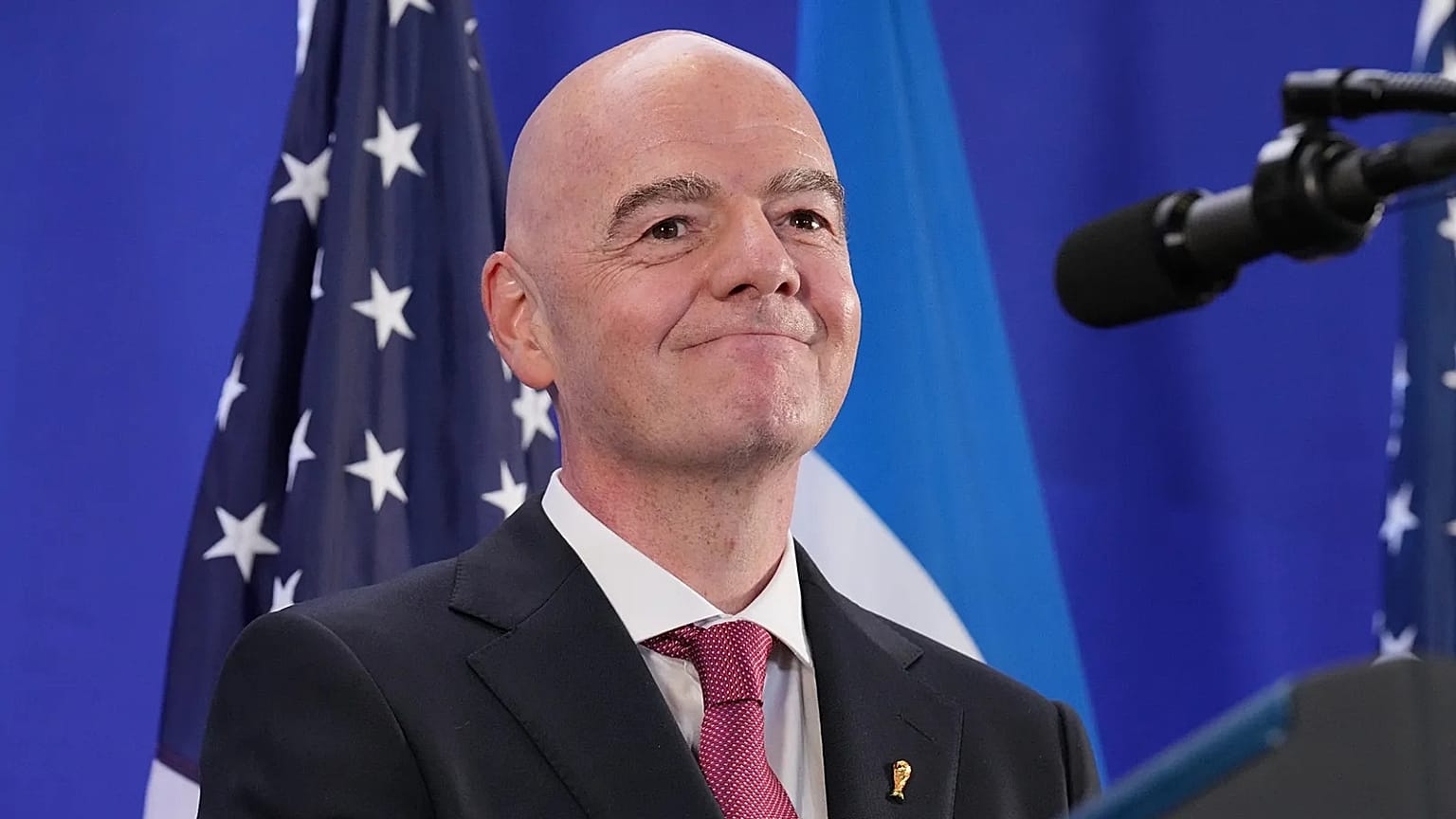
Gianni Infantino has been president of FIFA since 2016
Copyright Copyright 2026 The Associated Press. All rights reserved.

By Vincenzo Genovese
Updated

US President can push FIFA’s boss to lead the United Nations, but not impose him over the other candidates – and the other permanent members of the Security Council would need to endorse him.

Gianni Infantino would not have a clear path to become the next Secretary General of the United Nations, even with Donald Trump’s backing.

According to a report from The New York Post, the US President sees FIFA’s boss as a "respected" potential candidate, with a "special ability to bring people together" demonstrated by the success of the 2026 World Cup.

But in any event, his endorsement alone would not be enough to push to the world's most powerful diplomatic job a person who is not even a career diplomat.

Neither Trump nor Infantino have confirmed a candidacy, which, if submitted, would put him into a challenging and politically fraught selection process.

Infantino would need the support of many countries to win the post, and he could not afford to alienate Russia, China, France and the United Kingdom, each of which could stop him thanks to their permanent positions on the Security Council.

How the UN chooses its Secretary General

The UN Secretary General is appointed by the 193-member General Assembly following a recommendation from the Security Council.

This means the candidate is actually selected by a restricted group of 15 countries, including ten rotating members and five permanent ones, in a closed-door negotiation.

All the candidates have to be nominated by one or more UN member states and present their vision in public hearings, answering questions from ambassadors and civil society.

The Council then conducts a series of confidential straw polls before agreeing on a single candidate to recommend. Any of the five permanent members – the US, China, Russia, France or the UK – can kill a candidacy with a veto, making geopolitical acceptability as important - and even more - than diplomatic credentials.

The following approval of the General Assembly is regarded as a largely procedural step. The Assembly could, in theory, vote against the recommended candidate, but this has never happened so far in the UN's history.

With António Guterres leaving office at the end of this year after two terms, the race is in full swing and Council is expected to start considering candidates at the end of July. A debate entitled “UN Town Hall: The Next Secretary-General”, will take place on Thursday afternoon in New York, with all the current candidates.

However, there is no binding deadline to present a candidate, and the US or any other country could submit Infantino’s nomination while the process is ongoing.

Six candidates for the top job so far

Seven names have been put forward so far to be the next UN Secretary General, and one has already dropped out: Virginia Gamba, former UN special representative for the protection of children in armed conflict, was initially proposed by the Maldives, but her candidacy was later withdrawn.

One of the best-known candidates is Michelle Bachelet, the left-wing former Chilean president and ex-UN High Commissioner for Human Rights. She is a distinguished politician with decades of diplomatic experience, but could nonetheless prove divisive thanks to her outspoken criticism of authoritarian governments.

Chile's conservative new government, led by José Antonio Kast, withdrew its support for her, but Bachelet remains in the race, as her candidacy is still backed by the like-minded leaders of Mexico and Brazil.

Also among the more famous candidates is the current director general of the International Atomic Energy Agency, Rafael Grossi, nominated by his home country Argentina, mainly thanks to his diplomatic role in the talks to ensure the safety of the Zaporizhzhia Nuclear Power Plant amid the war in Ukraine.

Other candidates are the former Senegalese president Macky Sall, nominated by Burundi; Rebeca Grynspan Mayufis, the boss of the UN Trade and Development department, nominated by his home country Costa Rica; and former foreign ministers of Ecuador (María Fernanda Espinosa Garcés) and Guyana (Carolyn Rodrigues Birkett), both nominated by their respective governments.

A difficult race for Infantino

According to an informal tradition of geographical rotation, the position of UN secretary-general is assigned to representatives from different continents – meaning that as a European, the Swiss-Italian Infantino would have few chances to succeed Portuguese Guterres.

Many governments are also arguing that a woman should hold the post for the first time, since the ten UN Secretary Generals to date have all been men.

Despite the UN Charter not requiring the UN leader to have diplomatic experience, Infantino also could face accusations of being unfit for the role, with his history of governance controversies at FIFA and his close relationship with Trump both major strikes against him.

His critics have repeatedly accused him of centralising power at the football association and overlooking human rights concerns linked to World Cup tournaments in Russia and Qatar.

Any supporters might argue that he has expanded football's global reach and managed one of the world's largest international organisations, with even more members than the UN.

A formal nomination by the US would kick off for him a difficult, but still open, contest.

The United Nations, FIFA and the European Commission refused to comment on the issue.

'Completely ridiculous': GOP's 'shameful' Jeffrey Epstein stunt torn to shreds on CNN

Robert Davis
July 23, 2026 
RAW STORY


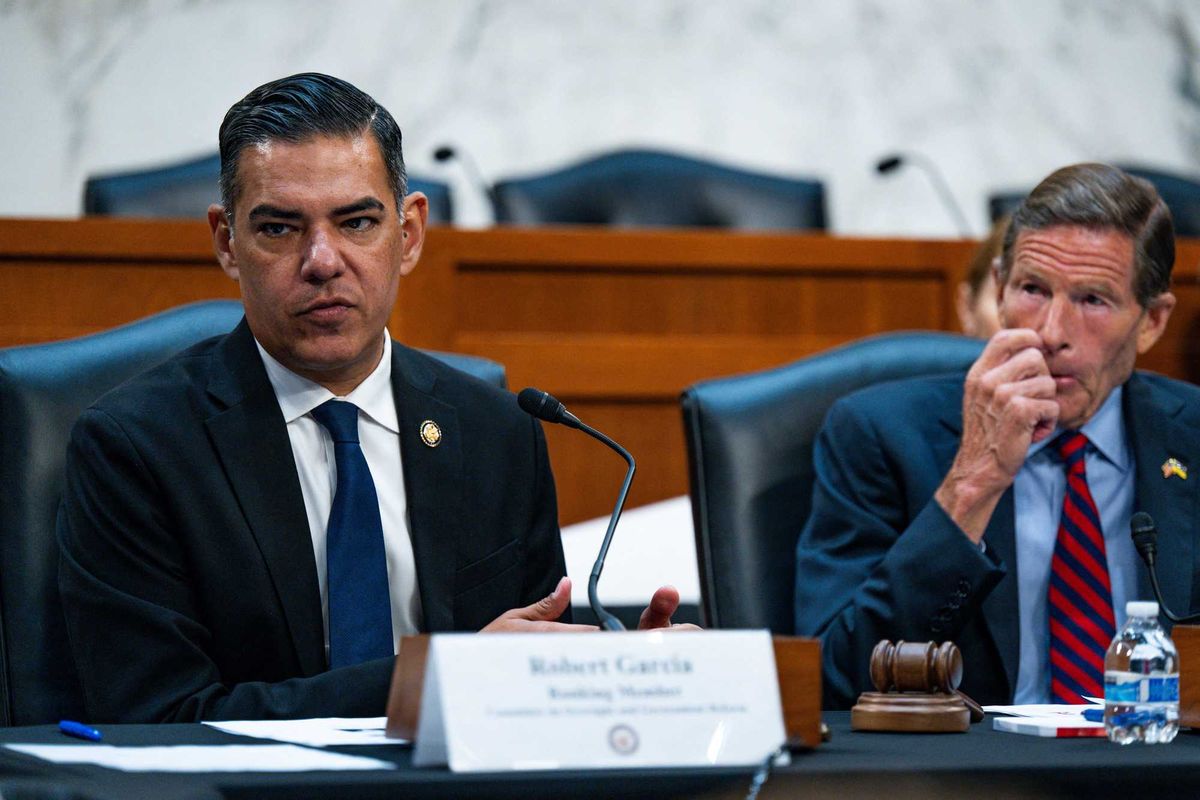
Rep. Robert Garcia (D-CA) speaks at a Democratic forum on projects initiated by President Donald Trump on Capitol Hill in Washington, D.C., U.S., July 21, 2026. REUTERS/Annabelle Gordon

One Democratic lawmaker is fed up with how the GOP is handling the investigation into the crimes committed by disgraced financier and convicted sex criminal Jeffrey Epstein.

Rep. Robert Garcia (D-CA), ranking member of the House Oversight Committee, joined CNN's Brianna Keilar on "CNN News Central" to discuss an ongoing interview of former Barclays CEO Jes Staley before the committee on Thursday. Garcia said that Staley was untruthful with the committee during the interview, a problem that was created by the way committee chairman Rep. James Comer (R-KY) structured the interview.

"[Staley] is denying having any sort of close relationship or friendship with Epstein, which is completely ridiculous," Garcia said. "And all we have to do is read exchanges where literally there is reference to a best friendship there."

Garcia noted that the committee possesses thousands of pages of documents outlining Staley's relationship with Epstein, which Garcia characterized as "close."

However, the committee seemed to have problems with getting Staley to be forthcoming about their relationship because he was not under oath, meaning there are few, if any, ways for lawmakers to hold him accountable for lying.

"He, like others that we've interviewed, is not under oath, and, I think, is empowered to not be fully honest with the committee," Garcia said. "And so what we have said is ... we're going to bring back [these witnesses] under oath to answer these questions. It's ridiculous and, quite frankly, shameful on the investigation that Chairman Comer continues to not have witnesses under oath."


Todd Blanche implicated during testimony from a member of Epstein's inner circle

David Edwards
July 23, 2026
RAW STORY


Acting U.S. Attorney General Todd Blanche testifies before a Senate subcommittee on the Justice Department's proposed 2027 budget, on Capitol Hill in Washington, D.C., U.S., May 19, 2026. REUTER/Evelyn Hockstein

Acting Attorney General Todd Blanche was implicated in a cover-up, lawmakers concluded on Thursday as a member of Jeffrey Epstein's circle evaded questions from a House committee.

Former Barclays CEO Jes Staley appeared before the House Oversight and Government Reform Committee as part of its investigation into the late convicted sex offender Epstein. The session was voluntary — Staley was not under oath — and Democrats said that alone told the story.

Rep. James Walkinshaw (D-VA) said Staley "stood at the center of Jeffrey Epstein's inner circle" and immediately turned the hearing into a fight over Blanche's pending Senate confirmation as attorney general.

"The wealth, the power, and the privilege that individuals like Jeffrey Epstein and Jes Staley enjoyed have shielded them from accountability," Walkinshaw said.

Blanche has served as acting attorney general since April, NPR reported. His Senate confirmation for the permanent post remains uncertain, with Democrats unified in opposition.

Walkinshaw said Blanche had the power to reopen the Department of Justice's investigation into Epstein and pursue individuals like Staley, who face what the congressman called "credible accusations of rape and sexual abuse" — but "refuses to do it."

"Any member of the United States Senate who votes to confirm Todd Blanche is complicit in the cover-up of the Epstein files," Walkinshaw said.

Rep. Melanie Stansbury (D-NM) echoed that charge, calling the voluntary format a deliberate shield.

"This is a failure by the majority to conduct a real investigation under oath," Stansbury said.

Lawmakers said Staley claimed inside the hearing room that he could not remember the details of his sexual encounters with women connected to Epstein.

"He could not recall," Stansbury said. "Over and over again, he could not recall."

Rep. Yassamin Ansari (D-AZ) described an email exchange in which Staley told Epstein he needed something while in London. Shortly after, she said, a woman received an email from Epstein containing the address of Staley's hotel room.

"There are clear fact patterns here that Mr. Staley is conveniently not recalling," Ansari said, "because he is not under oath, because he is not compelled to answer, because of the agreement that he has with the Republicans."

Staley first met Epstein in 2000, when he ran JPMorgan Chase's private bank and Epstein was a client, according to Reuters. He later became CEO of Barclays, but resigned in 2021 after U.K. regulators launched a probe. Last year, a British court upheld a ban barring him from the U.K. financial industry, ruling he had misled investigators about ties regulators found went "beyond professional."

"I don't know how else to feel besides disgusted — by both humanity and what we are calling a justice system, led by Todd Blanche, who is engaging in this cover-up," Ansari said.


French modelling scout linked to US sex offender Epstein found dead outside Paris

Daniel Siad, a French modelling scout with links to sex offender Jeffrey Epstein, was found dead at his home outside Paris, prosecutors said on Wednesday morning.


Issued on: 22/07/2026 
By: FRANCE 24


Model scout Daniel Siad, mentioned in the declassified documents related to the Epstein case. © Screengrab via FRANCE 24


A French modelling scout with close ties to the late US financier Jeffrey Epstein has been found dead at his home outside Paris, prosecutors said on Wednesday.

Under investigation in France, Daniel Siad, 69, was one of several French men accused of aiding Epstein to traffic and abuse women.

Siad had not yet been questioned by investigators, but had denied the allegations, saying he wanted to be heard and give his version of events.

"An investigation to determine the cause of death was opened on Monday evening following the discovery," the Nanterre prosecutor's office said.

An autopsy will be carried out as part of the probe.

Targeted by several complaints, including allegations of rape, Siad was the subject of an investigation conducted by the office specialising in combating human trafficking.


Cover image: THE 51 PERCENT © FRANCE 24
14:42


Siad's name appeared in more than 1,000 documents released as part of the declassified Epstein files.

He likened his efforts to recruit women to fishing.

"In This busyness I feel like fisherman some time I cache quick, some time no fish," Siad wrote to Epstein in 2014.

Siad had insisted that the American convicted sex offender had "taken advantage of his trust".

French authorities in 2020 arrested modelling agent Jean-Luc Brunel after allegations he procured women for the US billionaire. He was found dead in prison in 2022.

Epstein died in prison in 2019 while awaiting trial for sex trafficking.

(FRANCE 24 with AFP)

French model recruiter with links to Epstein found dead near Paris

French modelling scout Daniel Siad, 69, who had close ties to convicted American sex offender Jeffrey Epstein, has been found dead at his home outside Paris, prosecutors and his lawyer have said.

Issued on:23/07/2026 - RFI

Daniel Siad was an alleged procurer for Jeffrey Epstein. 
AFP - BRENDAN SMIALOWSKI

Daniel Siad's body was found on Monday evening at his home in Colombes, near Paris, the Nanterre public prosecutor's office confirmed on Wednesday, corroborating a report by Le Parisien.

Under investigation in France, Siad was one of several French men accused of aiding the convicted sex offender to traffic and abuse women.

He had not yet been questioned by investigators, and had denied the allegations, saying he wanted to be heard and give his version of events.

"An investigation to determine the cause of death was opened on Monday evening following the discovery," the prosecutor's office said.

An autopsy will be carried out as part of the investigation.

Strong links to Epstein

French investigators had been investigating Siad over allegations including rape and human trafficking, as Siad was an alleged procurer of women for Epstein.

Siad's name appeared in more than 1,000 documents released as part of the declassified Epstein files. He likened his efforts to recruit women to fishing.

Siad's lawyer Menya Arab-Tigrine said, however, that her client had requested to give his side of the story before he died. "He is dead and he was innocent," she told French news agency AFP.

"If he died of a heart attack, the unbearable waiting, the pressure and the anxiety he suffered every day will have had something to do with it," she added.

Siad had insisted that Epstein had "taken advantage of his trust".

For victims, Siad represented a possible avenue to finally "shed light on what happened" in relation to Epstein in France, said Juliette G., a former French model who says Siad recruited her in 2004 to introduce her to Epstein.

"Another link in the chain has disappeared that could have helped uncover the truth and identify those responsible," said the woman, who has asked to withhold her surname to protect her privacy.

Former Swedish model Ebba Karlsson, now in her fifties, filed the first complaint against Siad in February, accusing him of raping her when she was 20.

"It's very frustrating," Karlsson told AFP. "He was very close to being arrested. We worked so hard for this, trying to get justice."

'Urgently investigate'

Karlsson has also accused Siad of introducing her to Gérald Marie, the former European head of the Elite modelling agency, whom she has also accused of rape.

Several women have accused Marie of rape and human trafficking and urged France to investigate him for possible links to Epstein. He has repeatedly denied any wrongdoing.

Ex-BBC journalist Lisa Brinkworth, who co-founded a collective to support victims of model industry abuse, said she was shocked by the news of Siad's death.

"It feels like victims are being denied justice," said Brinkworth, who has accused Marie of sexually assaulting her in the 1990s.

"The failure of the Paris public prosecutor's office to act in the knowledge that Siad was a close associate of Epstein and facing multiple rape and trafficking allegations is beyond comprehension," she said.

"I urge the public prosecutor to now urgently investigate all individuals connected to Epstein and who are facing similar allegations."


\Sex trafficking in fashion: 'Outrageous that French legal system hasn't done anything by now'

Issued on: 22/07/2026 - FRANCE24


François Picard is pleased to welcome Dana Thomas, Paris-based journalist, specialising in fashion and culture, and author of "Deluxe: How Luxury Lost Its Luster". For decades, allegations of sexual exploitation in the fashion industry, spanning the globe, have resurfaced, often surrounding powerful figures whose deaths have complicated any semblance of accountability. In the wake of Daniel Siad's sudden death, Thomas offers a scathing indictment of the systemic failures within French law enforcement, the modelling industry, and the highest echelons of power.


India's angry Gen Z protesters say Modi must fix accountability

New Delhi (AFP) – Student protests in India demanding education reforms grew on Thursday despite Prime Minister Narendra Modi vowing a crackdown following a string of exam paper leaks.


Issued on: 23/07/2026 - FRANCE24

Sahil, 28, says he has joined India's student protests to 'demand accountability'
 © Sajjad HUSSAIN / AFP


Five Gen Z protesters at the main protest site in the capital New Delhi spoke to AFP about what was driving them to join the movement initiated by the online Cockroach Janta Party (CJP).

The protests have emerged as one of the biggest challenges to Modi's government since his re-election in 2024.
'Speak up'

Madhu, 21, said the medical entrance exam paper leak that forced more than two million candidates to sit for a retest, provided the initial spark.


"The paper leak was the spark and the CJP provided a platform for people to protest," she said.

"But now it has become a forum to talk about our many problems, from unemployment to the lack of freedom to speak up under this government."

She attributed the outpouring of support for the protests to "years of repressed frustration".

"It has been a long time since this government last spoke to us in good faith," she said while cleaning up the protest site.

Madhu said her parents feared for her safety -- she had her face covered with a surgical mask and gave only her first name -- but that she felt obliged to be part of the movement.

"Sometimes you have to overcome your own fears."

- 'Just sack him' -


Aarohi Singh's sister was forced to resit the leaked medical entrance exam, but did not pass © Sajjad HUSSAIN / AFP

Aarohi Singh has travelled from the northern city of Lucknow on an overnight train, a duffel bag in tow and no return ticket -- a trip made with her family's blessing.

"My parents told me to go and mark our presence," said the 23-year-old who runs a beauty salon. "I don't have a place to stay, but that's fine -- at least I have the company of thousands of people."

For the Singh family, the movement is personal. Her younger sister was forced to resit the medical entrance exam but did not pass.

"I know how much money my parents spent on her preparation, but after the paper leaked she was demoralised and broken," she said.

Singh said she was "aghast" at the government's reluctance to sack the education minister, the protesters' main demand.

"There's the people of the country on one side and the minister on the other," she said. "Why can't the prime minister just sack him?"

- 'Demand accountability' -


Sahil, 28, a corporate employee, has been coming to the protest every day since Monday after calling in sick at work.

On Thursday, he was coordinating hundreds of food deliveries sent by well-wishers from across the country.

"I am part of this because I can relate to what the affected students must be going through," said Sahil, who asked to be identified by only one name.

"I am here to demand accountability."

Sahil said he had seen the movement grow into a broader expression of anger.

"It began with students and education, but people are coming and raising their own set of problems," he said.

"People are protesting against what they feel is wrong in the country."

- 'Hope' -


Yuvraj, a 24-year-old protester, says he has joined because 'some things are bigger than you' © Sajjad HUSSAIN / AFP

Engineering student Kunal Suryavanshi, from a small town in the central state of Madhya Pradesh, said the protest was an opportunity to be among people who dared to speak up.

"We live in a deeply unequal country where every protest is crushed with brute force," said the 17-year-old.

"I have come to be part of something that will hopefully lead to change."

Suryavanshi said he planned to stay in the capital for a while, spending his days at the protest site and sleeping at a nearby Sikh temple.

"But if I don't get space there, the pavement is just fine," he said, his face half-covered by a handkerchief.

"All I have brought with me is hope."

'Broken' system

Yuvraj, training to be a lawyer in northern Punjab state, sported a Spiderman mask but could barely conceal his anger.

"We live in a surveillance state," the 24-year-old said, giving only one name.

"The state is watching us, so we cannot afford to take a chance."

But not coming "would have been the biggest regret of my life", he said.

"We have to protest because the system is completely broken and some things are bigger than you."

Yuvraj said the entrance test for a government job he had applied for last year was also found to have been compromised.

"You prepare for years for an exam only for the paper to be leaked, and then you're told to try again next time," he said.

"It is just not acceptable. There has to be some accountability."

© 2026 AFP


Modi vows 'stringent punishment' for exam fraud fuelling India's youth-led 'Cockroach' protests


Indian Prime Minister Narendra Modi on Thursday vowed to punish those involved in a leaked exam papers scandal that has sparked mass student protests. His promise came a day after thousands of protesters, led by the social media-driven Cockroach Janta Party, demonstrated in New Delhi, sparking fresh clashes with police. The snowballing protests have become one of the biggest challenges to Modi since his re-election for a third term in office in 2024.


Issued on: 23/07/2026 
By:
FRANCE 24


Protesters at a demonstration demanding educational reforms as part of the Cockroach Janta Party's ongoing protest movement in Mumbai, India, on July 22, 2026. 
© Rafiq Maqbool, AP


Indian Prime Minister Narendra Modi vowed on Thursday "stringent punishment" for those involved in exam fraud that has fuelled student anger, in his first direct comments tied to major protests challenging his government.

The comments came after thousands of protesters, led by the social media-driven Cockroach Janta Party (CJP) movement, rallied in New Delhi on Wednesday, triggering fresh clashes with the police.

"Nothing is more important than the welfare and future of our youth," he said in a social media post, promising to set up fast-track courts to punish those involved in question paper leaks.


"Those who try to harm the future of our youth will not be spared," he added.

The protesters, mostly young students, have been demanding the resignation of the education minister over exam paper leaks since last month.

Protests snowballed on Monday after police fired tear gas and baton-charged tens of thousands of demonstrators as they tried to march to parliament on the opening day of the monsoon session.

As tensions escalated, protesters responded by hurling stones, marking the largest street rally in the capital in about five years.

At least 178 people, including security personnel, were injured in the violence, according to the police.

'Cockroach Janta Party' takes India by storm
Cover image: 'Cockroach Janta Party' takes India by storm. 
© FRANCE 24

The CJP, which has millions of followers on social media, emerged in May initially as a satirical response to Chief Justice Surya Kant reportedly likening young people to "cockroaches" and "parasites" during a court hearing.

The movement has since broadened its agenda to include concerns over unemployment, opportunities for young people and what it describes as Modi's increasingly authoritarian style of governance.

The protests have emerged as one of the biggest challenges to Hindu-nationalist Modi since his re-election for a third term in office in 2024.

A series of exam irregularities have undermined trust in India's testing system, including the leak of a medical entrance question paper that forced more than two million candidates to retake the test.

Another dispute involving the online marking of examinations taken by nearly two million high school students has further fuelled public anger.

(FRANCE 24 with AFP)


Supporters flood India's 'cockroach' protesters with food

New Delhi (AFP) – Supporters from across India are literally feeding "cockroach" education-reform protesters camped in the capital, sending a deluge of pizzas, burgers, sandwiches and tea.

Issued on: 23/07/2026 - RFI

Supporters across India are sending food to education reform activists camped in New Delhi © Arun SANKAR / AFP

As activists gather beneath tarpaulin sheets in New Delhi, often holding all-night political debates, singing or reciting poetry, delivery drivers from online platforms weave through the barricades.

The supplies are being dispatched by supporters from as far as thousands of kilometres away who cannot join the protesters but are determined to help them.

Since police moved to crack down on tens of thousands of protesters in Delhi on Monday, the food has barely stopped arriving at the camp, tagged Jantar Mantar after a nearby astronomical observatory.

"Thank you to everyone who is not here but sending food and water," volunteer Vuyom Chabbra, 26, told AFP.

"There is just so much of it," he said, gesturing toward piles of food parcels at the protest site in the Indian capital.

"But please send things that are more necessary. Yes, food is necessary, but if you see fans, masks, goggles, these are also very important right now."

The mostly young demonstrators have occupied the protest site since last month to demand the resignation of India's education minister over exam-paper leaks.

But what began as a grievance over the exam system has swelled into a broader expression of frustration among young Indians, drawing thousands onto the streets and triggering the biggest protests seen in Delhi in around five years.

The protests are being led by the social media-driven Cockroach Janta Party (CJP) movement which was launched in May by public relations graduate Abhijeet Dipke, 30.
Takeaways

Tensions escalated on Monday after police fired tear gas and charged demonstrators with batons as they attempted to march on parliament during the opening day of the session.

Food deliveries are helping India's education-reform activists in New Delhi
 © Arun SANKAR / AFP

Protesters responded by throwing stones, turning parts of the capital into scenes of running clashes.

Yet, at the bustling Jantar Mantar itself, the atmosphere is often festive.

Groups sit in circles debating politics through the night. Speakers take turns addressing crowds while also belting out protest songs and poems.

Near one corner of the site, volunteers distribute meals.

"You will see fast food, Indian breads and curries, desserts, and whatever else people have been sending," said Kaanita, a 21-year-old student.

"(But) food is a very small part. The biggest issue for us remains the resignation of the education minister," she added.

The abundance of takeaway meals has become one of the movement's more unusual features.

Joginder Singh, a 45-year-old businessman volunteering at the camp, said supporters from Mumbai, Chennai and Punjab had been placing delivery orders directly to the protest site.

"We distribute everything, giving people whatever they want," Singh said.

"Some want pizza, others burgers. These kids are the fast-food generation, and obviously like it over Indian breads and curries.

"When we feed them what they want, they will fight with twice the vigour," he said with a grin.

Managing the deliveries is not always straightforward.

Police barricades, intermittent internet connection and security checks mean volunteers often struggle to locate arriving orders.

Despite the hurdles, Akhil, a delivery rider, said he had delivered at least 50 orders since Tuesday.

"Many ordered it from outside Delhi and phoned to tell us to deliver it at the protest site," Akhil, 26, told AFP.

"The moment I finished one delivery, I received an order to deliver the next one at the same site."

According to Akhil, around a dozen riders have collectively delivered hundreds of orders in recent days.

"Our group has easily delivered about 500 orders, enough to feed at least 10,000 people at Jantar Mantar."

© 2026 AFP


India's police accused of exercising 'absolute brutality' against peaceful protesters


Issued on: 23/07/2026 - FRANCE24

Indian Prime Minister Narendra Modi has vowed "stringent punishment" for those involved in exam fraud that fuelled student anger. Those are his first direct comments tied to the major protests challenging his government. Meanwhile, the movement has spread from the capital city to other major cities. FRANCE 24's Sarah Jacob tells us about the latest.

Video by:  
Sarah JACOB


Indian youth 'not scared anymore': Modi and BJP party's 'architecture of fear has met its match'


Issued on: 23/07/2026 
FRANCE24


Angela Diffley is pleased to welcome Anish Gawande, National Spokesperson for the Nationalist Congress Party (NCP). According to Mr. Gawande, India's student protests represent a generational rupture in Indian politics: the emergence of a politically fearless youth challenging a decade-long "architecture of fear" under Narendra Modi's government. He contends that the movement is about accountability rather than education policy, exposing a widening gap between a government accustomed to political dominance and a generation unwilling to accept opacity or state intimidation.


Video by:  
Angela DIFFLEY


How the student 'Cockroach' movement grew its influence across India

Issued on: 23/07/2026 - FRANCE24


Young Indians are keeping up the pressure - continuing their demands for the Education Minister Dharmendra Pradhan - to step down. This as their online satirical group the "Cockroach People's Party" grows in stature and support. It won millions of followers on social media and tens of thousands of sign-ups since its launch in May.

Video by: Catherine Viette


India's 'Cockroach' movement spreads to Mumbai after violence in New Delhi

Issued on: 23/07/2026 - FRANCE24

Indian Prime Minister Narendra Modi has finally broken his silence on the student protest movement known as the “Cockroach Janta Party”. The protests have spread from the capital New Delhi to other large cities including Mumbai and Bengaluru. Clashes with the police have occurred in several cities as well.

Video by:
Ava LUQUET


India–Norway Green Partnership: Diversifying Energy, Deepening Decarbonization – Analysis


Key Takeaways:

India and Norway’s new Green Strategic Partnership expands cooperation on LNG, renewables, and decarbonisation, helping India diversify energy supplies while advancing its long-term energy transition.

India’s dependence on West Asian LPG and LNG has exposed supply vulnerabilities amid regional instability. Closer energy cooperation with Norway can strengthen resilience through diversified imports and clean technologies.

The India–Norway Green Strategic Partnership combines energy security with climate goals by advancing collaboration on offshore wind, carbon capture, and clean energy innovation for long-term decarbonisation.


India and Norway elevated their bilateral ties to a ‘Green Strategic Partnership’ during Prime Minister Narendra Modi’s official visit to Norway in May. The Partnership aims to strengthen cooperation between the two countries on climate and environmental issues, with both sides affirming mutual support for achieving their respective climate goals. It encompasses joint research and development (R&D) and knowledge sharing across energy security, the green transition, decarbonisation, and the blue economy.

This Partnership comes at a time when the West Asia crisis has made India’s dependence on the region for energy supplies more vulnerable, exposing twin challenges: the need to diversify supplies and to accelerate the domestic energy transition. Norway, with its robust renewables sector and established oil and gas industry, is looking to expand its markets beyond Europe. The Partnership, then, rests on this mutual need.


Though no energy deals were signed during the visit, the Partnership adds a new dimension toIndia’s energy security strategy and enhances the prospects for its energy transition and climate goals. Its implications for LPG and natural gas trade, renewable energy, and decarbonisation warrant closer examination.
Enhancing Natural Gas and LPG Trade

The two countries discussed Norway’s potential supply of Liquefied Natural Gas (LNG) to India. Norway is the world’s fourth-largest natural gas exporter and the fifth-largest Liquefied Petroleum Gas (LPG) exporter. However, most of its LNG and LPG exports are earmarked for Europe. Oil and gas comprise 57 percent of its total exports, making them a major pillar of its economic growth. In the wake of sanctions on Russian oil and gas following its conflict with Ukraine, Norway has sought to compete and fill the vacuum, while also looking for new markets beyond Europe.

India imports 90 percent of its LPG and 60 percent of its LNG from West Asia, a dependence whose risks have been laid bare by the recent escalation in the region. For New Delhi, this presents not only an energy security risk but also a socio-political quagmire, since LPG is used as cooking fuel by millions of poor households, while LNG is indispensable for fertiliser and petrochemical production. Recent disruptions at the world’s largest LNG production facility in Qatar’s Ras Laffan City, and its consequent shutdown, only make the need to diversify more acute.


Both countries recognise this mutual need, as evidenced by the agreements signed between them to date. In February 2024, Norwegian energy giant Equinor entered into a 15-year LNG supply agreement with Indian fertiliser and petrochemical company Deepak Fertilisers. In February 2025, Equinor also entered into a one-year agreement with state refiner Bharat Petroleum, undertaking to supply LPG. Norwegian infrastructure company Crown LNG has committed US$1 billion for an LNG regasification terminal to be built in Kakinada, Andhra Pradesh.

The Partnership can build on this foundation to enable comprehensive long-term energy trade. Though Norwegian fuels cannot be a substitute for their West Asian counterparts in terms of price and scale in the short term, they augment India’s ongoing efforts to expand its supply basket. For Norway, the reduced export capacities of Qatar and Russia — the former disrupted by the Ras Laffan shutdown, the latter constrained by sanctions — create an opening to become a stable supplier for markets beyond Europe, at a time when it is expanding its own domestic gas production capacity
Collaboration on Renewable Energy and Decarbonisation

The Partnership outlines the scope of collaboration on renewable energy and decarbonisation technologies, with several bilateral agreements signed to conduct joint R&D and strengthen academic cooperation. Norway is a global leader in renewable energy, producing over 90 per cent of its electricity from renewable sources, and has also made strides in deploying carbon capture systems. India, by contrast, is gradually expanding the share of renewables in its electricity mix, which currently stands at 19 percent.


While India leads in solar energy production, Norway leads in wind energy deployment. Norway has pioneered floating offshore wind (FLOW) technologies: in 2023, it commissioned a 94.6 MW floating offshore wind farm — the world’s largest — in the North Sea, which powers oil and gas fields in the region. FLOW involves mounting wind turbines on buoyant platforms rather than on the seabed, allowing the turbines to float in deeper waters and harness higher marine wind speeds. India has recently been collaborating with other countries to commence offshore wind (OFW) operations in blocks identified off the coasts of Maharashtra and Tamil Nadu, with the aim of powering its coastal industrial hubs. In this regard, the Partnership could also facilitate the use of Norwegian expertise for joint feasibility studies and R&D on FLOW systems, which offer wider coverage than fixed OFW plants.

Agreements were also signed to collaborate on carbon capture, utilisation, and storage (CCUS) technologies—currently the only known technology capable of reducing emissions from hard-to-abate sectors such as steel, cement, power, and fertilisers. CCUS is a major pillar of Norway’s decarbonisation strategy. Since the late 1990s, the country has deployed carbon capture and storage (CCS) projects to capture CO₂ from natural gas and oil operations in the North Sea. More recently, the Norwegian government operationalised the US$2 billion Project Longship, which aims to establish a full-scale CCS value chain in which CO₂ will be captured from multiple industrial sources, liquefied, transported via pipelines, and stored in subsea wells beneath the North Sea. The project is expected to store 1.5 million tonnes of CO₂ annually and has received investments from oil marketing companies (OMCs).

India is the third-largest CO₂ emitter in the world. It aims to reduce the emissions intensity of its GDP by 47 percent from 2005 levels by 2035 and achieve net-zero emissions by 2070. In 2025, the government launched the R&D Roadmap for CCUS, which will create CCUS test beds in select industrial locations. The Union Budget 2026-27 also earmarked INR 20,000 crore for CCUS scaling across five sectors: power, steel, cement, refineries, and chemicals. In this regard, the Indo-Norwegian partnership can enable both R&D and technology transfer. Norway’s experience in establishing full-scale CCUS chains can boost India’s commercialisation goals as it progresses along its own decarbonisation pathway.
What the Future Holds for the Partnership

This cooperation builds on the India-European Free Trade Association (EFTA) trade agreement — of which Norway is a member — signed in 2025. The synergy created by that agreement can be leveraged for deeper engagement in the energy and renewables sectors. At the same time, it also holds potential for broader collaboration in the sectors that power the energy transition. Norway, which is home to some of the world’s largest deposits of rare earths, graphite, and quartz, could be a prospective supplier for India’s growing battery and chip manufacturing industries. These are crucial components for several clean technologies, such as EVs, solar cells, and wind turbines. Wider engagement on critical minerals exploration and processing would, therefore, make this green partnership more synchronised and comprehensive.


About the author: Aadya Chaturvedi is a Research Assistant with the Centre for Economy and Growth at the Observer Research Foundation.

Source: This article was published by the Observer Research Foundation.

About Observer Research Foundation
ORF was established on 5 September 1990 as a private, not for profit, ’think tank’ to influence public policy formulation. The Foundation brought together, for the first time, leading Indian economists and policymakers to present An Agenda for Economic Reforms in India. The idea was to help develop a consensus in favour of economic reforms.
View all posts by Observer Research Foundation →


EU gives conditional green light to Paramount's Warner Bros. Discovery deal


By Greta Ruffino
Published on

Paramount's bid still faces hurdles across the Atlantic after a federal judge in California ordered the companies to temporarily pause their merger this week.

The European Union on Wednesday conditionally approved Paramount Skydance’s $110 billion (€94 billion) takeover of Warner Bros. Discovery.

Citing concerns over the deal's impact on film distribution in Europe, Brussels said Paramount must terminate its stake in United International Pictures, a joint venture with Universal, in the European Economic Area (EEA), which includes the EU's 27 member states.

European regulators said Paramount must not, for 10 years, directly or indirectly enter into any agreement with Universal to jointly distribute films in the European Economic Area (EEA).

"These commitments fully address the competition concerns identified by the (European) Commission by ensuring that the films of the merged entity will not be distributed jointly with those of Universal or Disney," the EU said.

"Under the supervision of the commission, an independent trustee will monitor their implementation," it added.

The EU said the deal was unlikely to harm competition in film production, citing the presence of major competitors such as Disney, smaller US studios including Amazon MGM, and European film producers.

The deal still faces legal hurdles in the United States after a federal judge in California temporarily paused the merger this week.

A hearing on a preliminary injunction is scheduled for 3 August, which could prevent the transaction from closing before a final ruling.

The planned merger has sparked significant opposition, with critics warning it could fundamentally reshape Hollywood.

If completed, it would reduce the number of major US film studios to four. Opponents argue the deal could lead to widespread job cuts, fewer films being produced and released, and less competition across the industry.