Thursday, July 23, 2026


Russia's jet-powered drones outpace Ukraine's interceptors

Russia's jet-powered drones outpace Ukraine's interceptors
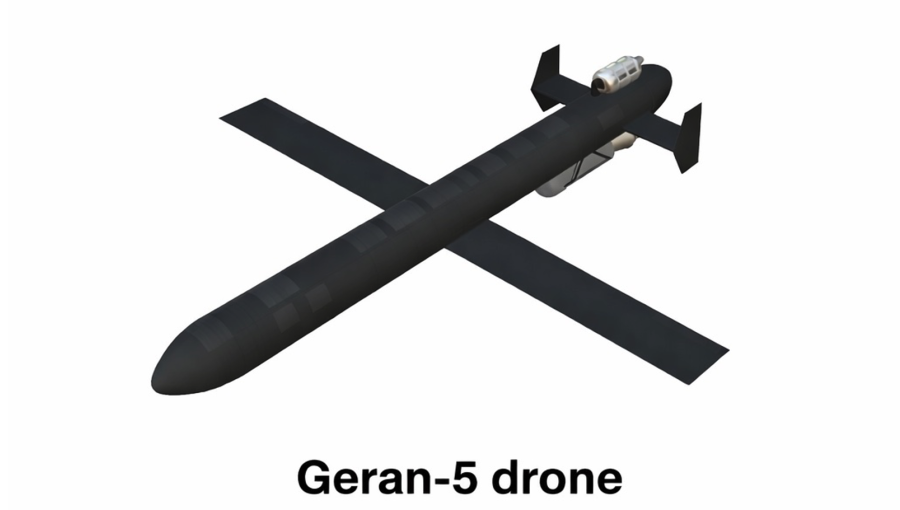
New Geran-5 and Dan-M drones reaching up to 750 km/h are flying faster than Ukraine's 300 km/h interceptors can catch, Kyiv's air force says — the latest edge in a missile-and-drone arms race where Russia already vastly outguns Ukraine. / bne IntelliNews
By Ben Aris in Berlin July 22, 2026

Russia is increasingly deploying jet-powered strike drones with speeds far beyond the reach of Ukraine's own interceptor drones, Ukrainian Air Force spokesperson Yurii Ihnat said, as Moscow's newest models close in on the performance of cruise missiles.

In the escalting tit-for-tat missile war, an arms race between Russia and Ukraine is in full swing with neither side taking a decisive lead. Russia has scaled up product at its drone factory in the Alabuga Special Economic Zone in Tatarstan and continues to innovate with the latest model of the Geran-5 sporting a jet engine and new sophisticated radar and communications gear. Ukraine has countered with new medium- and long-range drones that are laying hell with Russia’s supply lines behind the frontline and has hit every single one of Russia’s 30 large oil refineries, some of them thousands of kilometers from the border.

Ihnat said the jet-powered drones can reach up to 500-600 km/h, while Russia's newest model, the Dan-M, has been clocked at up to 750 km/h, Euronews reported. Ukraine's own interceptor drones top out at around 300 km/h, leaving mobile fire groups and heavy machine guns largely unable to stop them; Ihnat said such targets now require anti-aircraft systems or air-launched missiles instead.

As IntelliNews reported in May, the jet-powered drone threat builds on Russia's "Banderol", a hybrid drone-cruise missile Moscow began fielding as it continues to expand and modernise its missile programme despite Western sanctions — while Ukraine developed its first long-range cruise missiles only in the past year.

The stakes are high because Ukraine has largely run out of Patriot interceptors to counter Russian ballistic and cruise missiles, leaving cheaper interceptor drones as one of its last lines of defence against aerial attack. IntelliNews reported this month that record civilian deaths in Ukraine are being driven less by a shift in Russian targeting than by the shortage of Ukrainian air-defence interceptors, with Moscow using long-range strikes to disrupt logistics, energy and port infrastructure alongside its bombardment of cities.

Ukraine is racing to respond in kind: its manufacturers are developing high-speed, jet-powered interceptors capable of more than 450 km/h, with the air force's deputy commander saying some already reach 700 km/h — turning them, in effect, into makeshift air-defence missiles.

US, Ukraine Reach Breakthrough Agreement On Drone Cooperation

A Ukrainian-designed Magura -- a combat-proven marine drone that will soon also be produced in the United States. (RFE/RL file photo)

July 23, 2026
RFE RL
By Alex Raufoglu


Key Takeaways:

Historic US-Ukraine Drone Cooperation Agreement Signed: The two countries have signed a bilateral statement of intent allowing Ukrainian combat drones to be exported to the US for military testing and evaluation — the first formal framework of its kind — potentially leading to joint manufacturing on American soil.

Focus on Ukrainian Battlefield Innovation: The deal gives the Pentagon rapid access to Ukraine’s advanced, low-cost, combat-proven drones (land, air, maritime) developed during over four years of war with Russia, supporting the US “Drone Dominance” initiative.

Growing Defense-Industrial Partnership: The agreement builds on momentum such as the UFORCE-ReconCraft MoU for producing MAGURA maritime drones in the US, aiming to integrate Ukrainian combat experience with American industrial capacity and supply chains.


Ukraine and the United States have signed a bilateral statement of intent that lays the groundwork for an unprecedented defense partnership, allowing Ukrainian combat drones to be exported to the United States for military testing, according to two sources familiar with the agreement who spoke to RFE/RL.

“The deal has been sealed,” one official told RFE/RL, while a second source confirmed that the document had been “signed by both sides.”

The bilateral statement of intent establishes the framework for future drone cooperation and represents the first agreement of its kind between the two countries, the sources said, speaking on condition of anonymity.

The move marks a significant breakthrough after months of negotiations over deeper defense-industrial cooperation, as the Pentagon seeks rapid access to Ukrainian battlefield innovations developed during more than four years of full-scale war with Russia.

The agreement is expected to create a formal pathway for Ukrainian land, air, and maritime drones to be exported to the United States for military testing and evaluation, potentially informing future Pentagon procurement requirements.

While the statement of intent is not itself a production contract, it is seen as the first concrete step toward broader cooperation that could eventually include joint manufacturing of Ukrainian-designed combat drones on US soil.

The agreement comes as the Pentagon accelerates efforts to strengthen its unmanned capabilities under its emerging “Drone Dominance” initiative.

According to background information obtained by RFE/RL, the planned framework would enable the US military to request specific Ukrainian drone platforms for testing and assessment rather than operational deployment.
‘A Giant Leap Forward’

The initiative follows more than four years of rapid wartime innovation that has transformed Ukraine into one of the world’s leading developers of low-cost, combat-proven unmanned systems, including interceptor drones, electronic warfare platforms, and maritime attack drones.

Analysts said the agreement could significantly expand military-industrial ties between the two countries.

“This is a giant leap forward for American defense,” Dan Rice, president of American University Kyiv and former special adviser to the commander in chief of Ukraine’s armed forces, told RFE/RL. “I’ve been saying for five years that the US needs to make a cultural change to learn from Ukraine. This is the first step.”

Daniel Balson, advocacy director at the nonprofit Razom for Ukraine, said Ukrainian drone technology had become one of the country’s most valuable military exports.

“Ukrainian drones are among the best in the world. They are battle-tested, combat-proven, and the product of some of the most innovative minds in modern warfare,” he told RFE/RL.
Ukrainian Maritime Drone Maker Expands To US

The signing of the statement of intent comes as US-Ukrainian defense-industrial cooperation gathers momentum.

On July 21, the Ukrainian Embassy in Washington announced the signing of a memorandum of understanding between Ukrainian autonomous systems developer UFORCE and US shipbuilder ReconCraft.

The agreement will bring the combat-proven MAGURA family of autonomous maritime drones to the United States while expanding cooperation on unmanned aerial, maritime, and ground systems.


Ukrainian Ambassador to the United States Olha Stefanishyna said she was confident the agreement would “encourage many other companies to follow its example and deepen US-Ukraine defense industrial cooperation.”

The UFORCE-ReconCraft partnership comes after US forces used unmanned surface vessels in combat for the first time earlier this month during strikes on Iranian naval targets.

Under the agreement, the Oregon-based ReconCraft will work with UFORCE to manufacture the 24-foot MAGURA maritime drones in the United States, with production eventually expected to reach hundreds — and ultimately thousands — of vessels for potential US Navy procurement.

Sean Plankey, chief executive of UFORCE’s American operations, described the project as a model for combining Ukrainian combat experience with American industrial capacity, which would “help ensure these proven autonomous capabilities become available to the US.”

For Washington, the agreement offers access to rapidly evolving, low-cost drone technologies developed under high-intensity combat conditions at a time when the Pentagon is seeking scalable unmanned capabilities amid growing concerns over threats from Russia, China, and Iran.

For Ukraine, it represents another step toward integrating its defense industry into Western procurement and production networks while opening new opportunities for Ukrainian manufacturers to enter long-term allied supply chains.


Alex Raufoglu is RFE/RL’s senior correspondent in Washington, D.C.


About RFE RL
RFE/RL journalists report the news in 21 countries where a free press is banned by the government or not fully established.
View all posts by RFE RL →


US 'not willing to put pressure on Russia' despite wanting progress in Ukraine

Issued on: 23/07/2026 - FRANCE24

Russia's foreign minister Sergei Lavrov met with US Secretary of State Marco Rubio on the sidelines of the ASEAN Summit on July 23, in a first since September 2025 as Washington has shifted its focus from Ukraine to the war in the Middle East. FRANCE 24's Kethevane Gorjestani tells us what to expect from those talks.


Russia strips rights of citizens abroad in sweeping new 'traitor' law

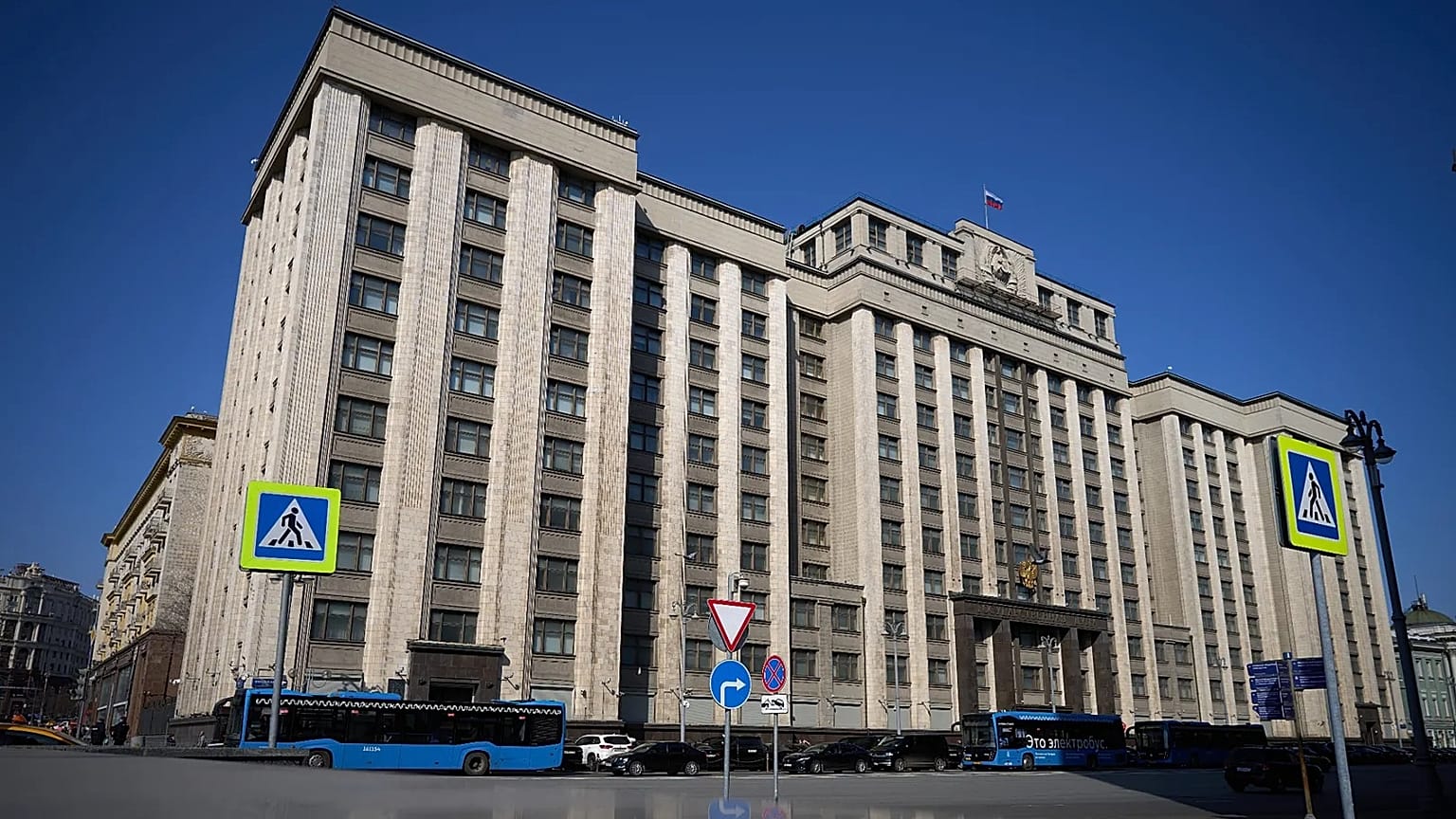
Russian State Duma, Moscow, 25 July 2026
Copyright AP Photo

By Irina Aleksandrova
Published on

The Duma approved measures that freeze accounts, seize property and block consular services including passport renewal for Russians abroad who are evading charges at home. Lawyers said the law meant "de facto loss of citizenship," with political activists and journalists among those most at risk.

Russia's parliament passed a law on Wednesday that will strip the property rights, bank accounts and consular services of Russians living abroad who face prosecution at home on political grounds, in measures lawyers say amount to the de facto revocation of citizenship.

The State Duma approved the bill in its second and third readings simultaneously. State Duma Speaker Vyacheslav Volodin made no effort to obscure who the law was aimed at.

"We are talking about those who harm our country," he said before the vote. "About extremists, traitors to our homeland. Those who for years have tried to do everything to destroy our state. Who justify Nazism and insult our soldiers and officers, while hiding from punishment in other states."

Under the legislation, Russians living abroad who are evading criminal prosecution at home will face a sweeping set of restrictions inside Russia: bank accounts will be frozen, property and vehicles cannot be sold, licences and accreditations will be suspended, banking app access will be blocked, and state and consular services — including the right to obtain an international passport or have documents such as wills and powers of attorney certified — will be refused.

The law also applies to Russians who have already been sanctioned administratively for violations of Russia's foreign agents law, for calling for sanctions against Russia, for calls to violate Russian territorial integrity, for discrediting the armed forces, or for involvement in organisations Russia has designated as undesirable.

The law takes effect upon official publication with no transition period.

Tightening the screws

Wednesday's legislation is the latest in a sustained expansion of Russia's legal toolkit for suppressing dissent that began before the full-scale invasion of Ukraine but has dramatically accelerated since February 2022.

In the first week of the full-scale invasion, the State Duma passed two key laws within days of each other.

The first criminalised the spread of what the state deems "knowingly false information" about the armed forces, carrying a sentence of up to 15 years. The second made "discrediting" the army a criminal offence, with penalties rising to five years for first-time offenders.

Russia's communications regulator simultaneously ordered media outlets to stop using the words "war," "invasion" or "assault," a directive that prompted the closure or self-imposed suspension of most remaining independent Russian media.

Russia's foreign agents law, originally passed in 2012, has been repeatedly amended since 2022 to allow authorities to designate individuals, not just organisations, as foreign agents, which carries wide-ranging restrictions on public life, banking and travel.

Russian authorities had blocked more than 25,000 websites by mid-2025, a figure that represents only a fraction of the total content removed since February 2022.

Estimates of the number of Russians who left the country in the first year after the full-scale invasion range from 500,000 to over 1 million. Wednesday's law is designed to extend the state's reach into that population.

'De facto loss of citizenship'

Lawyers from the First Department, an open community of Russian legal professionals and human rights defenders, said the cumulative effect amounted to "de facto deprivation of citizenship."

"A person who left for political reasons and has been recognised as 'evading' acquires the status of an internally 'cancelled citizen'," the group said in an analysis.

"Everything connected with the Russian Federation — property, accounts, business, consular services — can be used against them, while they themselves are practically deprived of any opportunity to use this in their own interests," it added.

Independent human rights media project OVD-Info said those at greatest risk included people on Russia's foreign agents register, defendants in criminal or politically motivated administrative cases, political activists, journalists, lawyers, and participants in projects or organisations that the Kremlin has labelled as "extremist," "undesirable," or "terrorist".

From the full-scale invasion in 2022 to September 2025, at least 692 people faced criminal prosecution under the "false information" and "discreditation" laws alone, according to OVD-Info.

In total, at least 1,299 people had faced criminal prosecution for opposing the war by late 2025, with 373 still imprisoned.


No one wants to be the boss: Why is Gen Z turning down promotions?

Young workers no longer dream of moving into management roles
Copyright flutie8211 / Pixabay

By Jan Bolanowski
Published on

Fewer young employees aspire to management roles and if businesses fail to develop new leaders and encourage Gen Z to take on managerial roles, they may find it increasingly difficult to maintain organisational effectiveness.

For Generation Z, career success is no longer defined by promotion, with many prioritising work-life balance over greater responsibility and longer hours.

This trend is becoming a growing challenge for businesses, many of which are already struggling to develop their next generation of leaders.

“Looking at global research, only around 6% of Generation Z want to take on senior management roles and become bosses. For organisations and their structures, that is a very big problem,” Tomasz Szklarski, CEO of Enpulse and an expert on workplace engagement, told Euronews.

According to the expert, young workers' reluctance to take on managerial roles is driven above all by the growing responsibilities that come with the job.

In recent years, the number of employees reporting to a single manager has increased significantly, with the average team size doubling from around six to twelve people.

This is putting managers under increasing pressure. On the one hand, they are accountable to boards and senior executives for meeting business targets. On the other, they are expected to support the development, motivation and wellbeing of increasingly larger teams.

“Generation Z has carefully weighed what work-life balance means against the sacrifices required to become a boss. Young people can clearly see the burden that comes with management. A manager is accountable both to their superiors and for increasingly large teams that require constant support,” Szklarski said.

A problem that could hit Europe particularly hard

The declining interest in managerial roles is not just a problem for individual companies, it is a global trend that could prove particularly challenging for Europe, where demographic change is already shrinking the workforce.

"There will be fewer and fewer people working, especially in Europe. If we do not train a new generation of managers and prepare people to take responsibility for teams, we will face growing challenges in maintaining organisational efficiency," the expert warned.

Although AI is making ever deeper inroads into the business world and automating many processes, Szklarski believes it will not solve the shortage of managers.

The expert argues that it remains unclear whether employees would be willing to take instructions from algorithms or whether AI could effectively fulfil the role of a manager.

Leading teams still require skills that are difficult to replace, including empathy, relationship-building, motivating employees and making decisions that take the human side of an organisation into account.

Silence Surrounds Wartime Rape Of Kosovo’s Ethnic Minorities – Analysis


Balkan Insight
By Serbeze Haxhiaj


Key Takeaways:

Roma, Ashkali, and Egyptian Women Overlooked as Wartime Rape Survivors: While over 2,100 victims of sexual violence from the 1998-1999 Kosovo war have been officially recognized, ethnic minorities (Roma, Ashkali, Egyptian) make up only ~4% of cases, with many excluded from public discourse and support due to stigma, fear, and lack of awareness.

Double Trauma and Barriers to Recognition: Many survivors faced rape by both Serbian forces during the war and Albanian perpetrators afterward, followed by ostracism, poverty, and health issues. Post-war rapes (after June 20, 1999) are not covered under current law, leaving victims without compensation or support.

Calls for Expanded Recognition and Justice: Activists urge extending recognition deadlines, removing post-war cutoffs, and addressing institutional gaps. No cases involving minority women have reached court, highlighting systemic neglect despite years of advocacy.


The Roma woman was 19 years old when she and her cousin were raped by three Serbian policemen on February 25, 1999, at the height of the Kosovo war.

They had been waiting for a bus from the southern city of Prizren to their home in Decan/Decani, when a police patrol approached, asked to see their documents, and then told them had to go to the police station.

“We got in the car with three police officers,” the woman told BIRN. “They didn’t take us to the police station, but to a forest, where they raped us.”

“We arrived home at night. Our family understood what had happened, even though I insisted that they had only beaten us.”

Today, she lives in poverty in a village near the western town of Gjakova/Djakovica, an unemployed mother of five who suffers from depression. Only recently did she apply for recognition as a survivor of wartime sexual violence, having worried for years about how to explain to her husband the 230-euromonthly payments she should receive.

“He doesn’t know about it,” the woman said of the rape. “How do I tell him about the money?”

Her plight will be familiar to many wartime rape survivors from Kosovo’s Roma, Ashkali and Egyptian communities.

BIRN spoke to eight about the neglect and ostracism they face, and how a fear of being rejected by their family, societal stigma, and a lack of awareness about their rights have stopped many from ever seeking help. They all spoke on condition of anonymity.

“Reparation, especially justice, remains largely lacking for minority women,” said Bashkim Ibishi, a Roma activist and director of a Pristina-based NGO dealing with minority issues.
Excluded from public discourse

Survivors of wartime sexual violence in Kosovo were officially recognised in 2018, much later than other categories of war victims and only after years of advocacy by women’s rights NGOs.

According to the Governmental Commission tasked with verifying applications for recognition, there are more than 2,100 recognised victims of wartime sexual violence in Kosovo, of whom all but four per cent are Albanians.

“The Government Commission does not request data on the ethnicity of victims during the verification process, and there is no discrimination,” Commission head Leonora Selmanaj told BIRN.

Minority rights groups say the suffering of ethnic minority victims of wartime sexual violence are often overlooked in public discourse around the issue.

“Roma, Ashkali and Egyptian victims of sexual violence are entirely excluded from public discourse,” said Roma activist Diana Shaka.

Shehrije Balaj, a Roma woman, testified before a court in Belgrade in 2013 to the rape she suffered on May 6, 1999, at the hands of Serbian forces who went on a killing spree in four villages near Peja/Pec, western Kosovo. Balaj, who was 29 at the time, died in September 2018 before her application reached its destination.


In 2019, BIRN reported on her story, and in 2021 she was posthumously decorated for bravery by then Kosovo President Vjosa Osmani.

In her application, seen by BIRN, Balaj described being raped a second time by two Albanian men on July 29, 1999, after the war had ended. She and her family fled the next day and spent the next 13 years in Montenegro. Her son, Haxhi, only found out about his mother’s ordeal when she testified before the court in Belgrade.
Little support

A second woman interviewed by BIRN, a member of Kosovo’s Egyptian minority, was 24 years old when she was raped in an empty house in Rahovec/Orahovec by three Serbian policemen.

It was June 1998, amid a growing insurgency against Serbian rule by Kosovo Albanian guerrillas. She had been with her husband when they were stopped by police; he was taken away, and she was raped. “I was covered in blood,” she said.

Her husband was never found. Her father-in-law’s treatment of her and her three children worsened after he found out what had happened; she eventually took them away and sought help from an NGO.

“Exclusion and shame from the community made me leave the city with my children,” the woman told BIRN.

Today, she says she suffers from depression, anxiety, and a thyroid condition. The 230 euros she receives from the state as a recognised victim of wartime sexual violence does not even cover her medication.

“Most survivors have not had access to employment or economic empowerment public initiatives,” said Roma human rights activist Shpresa Agushi.

A third woman told BIRN about being raped in May 1999 in her home in Gjakova/Djakovica by two members of a Serbian paramilitary unit. She tried to hang herself the next day, but her mother stopped her. Two months later, after the war ended, NATO-led peacekeeping troops saved her from another attempted rape, this time by an Albanian man.

For more than two decades, the woman had no access to psychological or other healthcare support.

She cannot read or write and has struggled to find work.

In 2020, she received recognition from the state and is now one of the few survivors from minority communities receiving psychosocial services from an NGO in her hometown.

The 230-euro monthly payment she now receives does not cover her and her husband’s medical expenses. They live in a single room with their two children.
‘Nobody mentions us’

Those who fled and never returned often have no means of applying for recognition as survivors of wartime sexual violence.


That includes a fourth woman interviewed by BIRN, who was 29 years old when she was raped twice by uniformed men in the police headquarters in Gjakova/Djakovica in March and April 1999. A cleaner in the building, she fled when the war ended out of fear of being targeted for revenge as a former employee of the Serbian state.

The woman now lives in the Montenegrin capital, Podgorica, but does not possess Kosovo documents.

“Living in a refugee camp for a long time, we didn’t have food, let alone a psychologist,” she told BIRN. “Sometimes I bought sedatives when I had a few dinars.”

When the war ended, ethnic minorities were targeted for revenge by Kosovo Albanian guerrillas and civilians.

Speaking to BIRN, an Egyptian woman from a village near Peja/Pec recalled five armed men entering her house on July 27, 1999, one of them in a T-shirt featuring the symbol of the guerrilla Kosovo Liberation Army, KLA. Her husband was beaten and she was dragged into the woods. “One of them raped me, and my husband was unable to help.”

The men later went next door, where they raped the woman’s neighbour.

Three days later, the family left Kosovo. Her case was documented in a 1999 reportby the Belgrade-based Humanitarian Law Centre. In the report, she says: “When they came, they asked me to find two other women and go with them. I told them I could not find any and begged them to let me go because I was a mother with small children. One of them threatened to kill my husband if I did not comply. Crying, I went there. They left me there, crying and dishonoured.”

However, Kosovo’s Law on the Status and Rights of Martyrs, Invalids, Veterans, Civilian Victims, and Victims of Sexual Violence only provides for recognition of survivors of wartime sexual violence between February 1998 and June 20, 1999, i.e. roughly a week after Serbian forces pulled out of Kosovo and the war ended.

The woman said she doesn’t “need” recognition. “But I am frustrated that nobody mentions us,” she said. “Egyptian Roma women have also been raped here.”

Agushi, the Roma rights activist, said rape survivors from minority communities barely feature in public discourse surrounding the war and wartime sexual violence; those raped after the official cessation of hostilities are doubly discriminated against.

“They are even more marginalised, and those who were victims of sexual violence after June 20, 1999, are particularly discriminated against because they are not legally recognised and remain in the shadows.”
Campaign of terror

A 2024 study of the long-term consequences of war rape in Kosovo, by Cologne-based Medica Mondiale and Medica Gjakova, found that incidents of sexual violence committed by Kosovo Albanians, while less frequent, occurred in particular after the end of hostilities and mainly targeted women from ethnic minorities.


Fatmire Haliti of the Pristina-based Kosovo Rehabilitation Centre for Torture Victims, KRCT, said there is “ongoing advocacy to extend the deadline beyond June 20, 1999, as well as to remove the deadline for applications for recognition of the status of victims of sexual violence”.

BIRN identified at least three Roma women who were victims of sexual violence twice, first at the hands of Serbian forces and then, after the war, Albanians.

Some accounts suggest rape was used as part of a campaign of terror to force Roma families to abandon their homes.

“It was a situation in which postwar Kosovo became prey to uncontrollable armed gangs that committed an increasing number of crimes,” said Jean-Christian Cady, Head of Justice at the UN Mission in Kosovo from 2000 to 2004.

One, for example, was 30 years old when she was raped on July 3, 1999, weeks after the end of the war, at her in Mitrovica by two men. Her family was forced to leave their home, which was then occupied by other people. She currently lives in the northern Serbian city of Novi Sad.

Another was 14 when she was raped on June 12, 1999, the day after the war officially ended.

She never reported the rape, but in August 2004, a former KLA guerrilla was arrested in Montenegro and extradited to Serbia, where he was sentenced to 13 years in prison for killing two Serbs and a Roma in June 1999 after the war officially ended.

Today, the woman has four children and lives in a shelter for displaced people. She suffers from diabetes and depression. After initially being denied, she was finally recognised as a victim of wartime sexual violence.

“I was afraid to apply earlier because my case became public during the trial,” she said.

Not a single case concerning wartime sexual violence against Roma, Ashkali or Egyptian women has ever reached court in Kosovo, nor is there any open investigation.


About Balkan Insight

The Balkan Insight (formerly the Balkin Investigative Reporting Network, BIRN) is a close group of editors and trainers that enables journalists in the region to produce in-depth analytical and investigative journalism on complex political, economic and social themes. BIRN emerged from the Balkan programme of the Institute for War & Peace Reporting, IWPR, in 2005. The original IWPR Balkans team was mandated to localise that programme and make it sustainable, in light of changing realities in the region and the maturity of the IWPR intervention. Since then, its work in publishing, media training and public debate activities has become synonymous with quality, reliability and impartiality. A fully-independent and local network, it is now developing as an efficient and self-sustainable regional institution to enhance the capacity for journalism that pushes for public debate on European-oriented political and economic reform.
View all posts by Balkan Insight →


Cost of pay gap in the EU: Women earn €3,900 less than men a year

In this Monday, May 11, 2020 file photo, a woman and man walk past each other on a main shopping street in Antwerp, Belgium.
Copyright Copyright 2020 The Associated Press. All rights reserved

By Servet Yanatma
Published on

Women working in the EU lose €358 billion a year due to the gender pay gap, amounting to almost €3,900 per person, as several European countries missed the bloc's Pay Transparency Directive deadline.

The gender pay gap in the EU is real, and it is costly according to the numbers.

Women's gross hourly earnings are on average 11.1% less than men's per Eurostat, meaning that for every €100 a man earns in the bloc, a woman only earns €88.9.

Annualised, the gap becomes clearer as the average woman is paid almost €3,900 less than men a year in the EU according to estimates from the European Trade Union Confederation (ETUC), also based on Eurostat data.

That means the 92.5 million women working in the EU are collectively losing more than €358 billion a year.

"The cost of pay transparency measures are small for companies but this analysis shows that inaction by national governments will cost women workers billions in lost wages,” ETUC General Secretary Esther Lynch stated.

The EU's Pay Transparency Directive covers businesses with at least 100 employees, so this estimate reflects that female workforce, which includes 43 million women.

Luxembourg is the only country in the EU where women are paid more than men, earning roughly €474 more per year.

The average employed woman loses more than €5,000 a year in Finland (€7,592), Austria (€6,854), Germany (€6,049) and Sweden (€5,116), based on 2025 data.

The annual loss is also above the EU average (€3,881) in Estonia (€4,967), France (€4,536), Czechia (€4,499) and Ireland (€4,129), all above the €4,000 level.

The estimated losses are €3,684 in the Netherlands, €3,487 in Slovakia, €3,405 in Cyprus, €3,181 in Hungary, €2,856 in Latvia, €2,591 in Greece, €2,404 in Lithuania, €2,245 in Slovenia and €2,005 in Spain.

The lowest amount is in Belgium, at just €322. It's also below the €1,000 threshold in Romania and Poland.

Among the EU's Big Four, Italy has the lowest level, at €1,557.

The EU’s Pay Transparency Directive can make a difference

The EU's Pay Transparency Directive aims to boost salary transparency and tackle the gender pay gap. It was due to take effect by 7 June 2026, but most member states missed the deadline.

"This is completely unacceptable when women have already suffered decades of pay discrimination. Time is up on the culture of secrecy which has allowed male dominated boardrooms to get away with pay discrimination for so long,”Lynch stated.

ETUC estimates show the impact would be significant, even a 10% smaller gap would make a big difference as the average employed woman would then earn around €672 more a year.

The highest gain would be in France, at €1,069, followed by €1,033 in Ireland.

An employed woman would also be paid more in Finland (€963), Germany (€867), Italy (€847) and Denmark (€802).

The annual gain would be lowest in Poland, at €221, as the gender pay gap is smaller in that country.

ETUC Deputy General Secretary Isabelle Schömann also said that any government which continues to avoid their legal responsibility to put this directive into action can expect to be taken to court.

The gender pay gap within the EU varies significantly, ranging from -0.8% in Luxembourg to 18.8% in Estonia.

Outrage in France as Macron appoints senator who fought gay marriage to key rights job

ANALYSIS

French lawmakers on Tuesday narrowly approved President Emmanuel Macron’s candidate to serve as Défenseur des droits (human rights ombdusman), despite vehement opposition from groups arguing that Senator François-Noël Buffet’s views run counter to the mission of defending the rights of the most vulnerable.


Issued on: 21/07/2026 
FRANCE24
By: Benjamin DODMAN

French Senator François-Noël Buffet opposed a bill legalising marriage for same-sex couples but says his views have since "evolved". © Lou Benoist, AFP

France has a new human rights ombudsman – tasked with defending certain rights that he previously fought in parliament.

Lawmakers in the lower house National Assembly and the Senate on Tuesday narrowly backed right-wing Senator François-Noël Buffet to become France’s new Defender of Rights, approving President Emmanuel Macron’s nominee by 43 votes to 39.

The 62-year-old lawyer by training replaces former journalist Claire Hédon, a frequent critic of racial discrimination and police brutality, whose six-year term expired on Monday.

A human rights watchdog acting independently of government, the Défenseur des droits is responsible for defending citizens whose rights are infringed and ensuring the equal protection of legal rights in France. Critics say such duties are incompatible with the political views of a politician with a track record of opposing equal rights for some of France’s most vulnerable communities.

François-Noël Buffet pictured during his Senate hearing on July 21, 2026. © Lou Benoist, AFP

Buffet, a senator from the Rhône department around Lyon, notably campaigned against extending marriage rights to same-sex couples and more recently opposed legislation allowing medically assisted reproduction for single women and lesbian couples.

His appointment as defender of such rights is “both absurd and scary”, said Nicolas Faget, a spokesperson for the Association of Gay and Lesbian Parents and Future Parents (AGPL).

“One of the bulwarks shielding same-sex parents and their children from discrimination is at risk of being undermined by someone who does not believe in those rights,” he said.

“It’s frankly alarming.”

A troubling record

Buffet’s long-rumoured nomination was quietly confirmed in an Elysée Palace statement on July 7, the day the nation’s eyes were riveted on a court hearing that would determine far-right leader Marine Le Pen’s political fate.

In interviews with investigative website Mediapart, staff at the office of the Defender of Rights had previously expressed their “dismay” and “shock” at the prospect of him taking over. One worker voiced disbelief that a politician “whose recent views are so starkly at odds with the institution’s recommendations” was even considered for the job.

Buffet is a close ally of hardline former interior minister Bruno Retailleau, a candidate in next year’s presidential election for the conservative Les Républicains party. He served as minister for overseas territories in the short-lived Michel Barnier government in 2024 and then worked with Retailleau at the interior ministry under former PM François Bayrou.

Described by critics as an archconservative, Buffet took part in protests against same-sex marriage in 2013 and voted against extending medically assisted reproduction to single women and female couples in 2021. He also abstained during a landmark 2024 vote on enshrining the right to abortion in the French constitution.

The senator favours cutting back on state-funded medical care for undocumented migrants – a growing demand of the political right, which health workers described as an ethical aberration and a risk to public health.

His political views are “very worrying, as they lead us to doubt that he will pay as much attention to respecting the rights of foreign nationals as previous Defenders have done”, Charlotte Kwantes, advocacy manager at Utopia 56, an organisation that defends the rights of foreign nationals, told French daily Libération on the eve of the vote in parliament.
Tense hearing

Buffet faced a tense hearing before the National Assembly’s Legal Affairs Committee last week, which saw a leftwing lawmaker accuse him of a history of “racist and homophobic votes”.

In response, the senator stated that he had “evolved” on “a number of issues” and promised “total independence”.

When grilled about his opposition to a bill legalising same-sex marriage in 2013, he said: “I did something stupid; I had my doubts about the consequences, but not about the principle itself.” In 2014, however, he was one of several candidates in local elections to sign a charter vowing to “preserve the father-mother-child family unit”.


Ten years of gay marriage in France: Same-sex couples reflect on a decade of change
Cover image: FOCUS © FRANCE 24
06:45


Buffet also side-stepped questions when quizzed about a controversial bill carried by his party instituting a “presumption of legitimate defence” for police officers making use of their firearms. Critics have labelled the bill a “license to kill” and the outgoing Defender of Rights has described it as deeply problematic.

Macron’s nominee highlighted other parts of his record, noting that he tabled a Senate bill on improving conditions for prison inmates and that he improved accessibility for people with disabilities in the town of Oullins near Lyon, where he served as mayor for two decades until 2017.

He added that the “president could have found a better candidate, though he could perhaps have found a worse one, too”.

Rolling back progress

The AGPL spokesperson begged to differ.

“It’s hard to think of a less suitable candidate to uphold our rights than one who doesn’t believe in them,” Fagetsaid, warning of a potentially huge step back for minority rights after years of working hand in hand with Buffet’s predecessor.

While the rights ombudsman has neither judicial nor legislative powers, their word carries considerable weight both in courtrooms and in citizens’ disputes with public authorities.

“It’s a critical instrument to uphold rights and combat discrimination,” said Faget, citing the ombudsman's role in helping same-sex parents who are denied paid parental leave or face obstacles in registering their children with local authorities.

“The Defender of Rights is one of the key bulwarks of the rule of law, and a vital source of redress for victims of discrimination,” the Inter-LGBT advocacy group said in a statement, describing the choice of Buffet as “yet further evidence of the Élysée’s contempt for LGBTQIA+ people”.

Critics of the appointment have linked it to political horse-trading at a time when Macron is seeking to obtain plum jobs for his close allies before leaving the Elysée Palace next year. Faget said it followed the president's pattern of appointing conservative politicians to key posts, including the ministries for health, gender equality and the fight against discrimination.

“Macron delivered on his pledge to extend medically assisted reproduction rights to all, but his recent appointments have baffled us,” he said. “Whether it’s networking, cronyism or political wheeling and dealing, it’s certainly not helping those who most need the Defender of Rights.”


Germany approves factory use for controversial French-Russian nuclear project


German authorities on Wednesday gave the green light to a controversial French-Russian nuclear project which will use a factory based in Germany for production, and which critics fear will enable spying and sabotage by Moscow.


Issued on: 23/07/2026 - RFI

Germany's Lingen plant has its own legal status and licences. 
AFP - INA FASSBENDER

The planned joint venture by a subsidiary of French company Framatome and Russia's state-owned nuclear power agency Rosatom will produce fuel rods used in Russian-designed reactors – at Framatome's fuel rod assembly facility in the town of Lingen in the German state of Lower Saxony.

Germany closed the last of its own nuclear reactors in 2023, but has not abolished all nuclear-related industrial activity.

The Lingen fuel plant is treated as a separate facility with its own legal status and licences.

The state's environment ministry said in a statement on Wednesday it had "decided to approve" the project, adding that “so far, Russia’s nuclear sector and the import of Russian uranium into the EU have not been subject to sanctions, despite Putin’s criminal war of aggression against Ukraine".

Rosatom has been exempted from the successive rounds of European Union sanctions imposed on Russia after its full-scale invasion of Ukraine in February 2022.

The Kyiv-based Dixi Group, a think tank that focuses on energy, warned against the cooperation in 2024, urging the Lower Saxony government to deny Framatome permission to expand its production facility in Lingen.

Dixi, along with German anti-nuclear organisations – including AgiEL, a group that focuses on Lingen’s nuclear facilities – is warning of "potential risks to Germany’s nuclear and internal security, particularly concerning Rosatom’s possible access to critical infrastructure".

Roderich Kiesewetter, a prominent member of Chancellor Friedrich Merz's centre-right CDU party, said the federal government should intervene to prevent the project in Lingen from going ahead.

The decision by Lower Saxony was "dangerous to security and must be reversed," Kiesewetter told the Politico news site.

Germany is Ukraine's biggest backer in its war with Russia and has been on high alert for signs of "hybrid warfare" directed by Moscow.

(with newswires)


South Korean-US Partnership For Floating SMR Platform

Samsung Heavy Industries Partners with Sargent & Lundy: The South Korean shipbuilder signed an MoU with the US engineering firm to jointly develop a standardised floating small modular reactor (FSMR) platform, enabling flexibility for multiple reactor types and supporting early commercial deployment.

Focus on US and Global Markets: The collaboration covers development, licensing, construction, and deployment strategies, with emphasis on meeting US and international regulatory standards amid rising electricity demand from AI data centers and coastal/island regions.

Builds on Prior Certification: The partnership leverages Samsung Heavy’s 2025 Approval in Principle from the American Bureau of Shipping for a floating platform using two KAERI SMART100 SMRs, with adaptability for other SMR designs.


South Korean shipbuilding company Samsung Heavy Industries announced it has signed a memorandum of understanding with USA-based engineering firm Sargent & Lundy for the development of a standardised floating small modular reactor platform.

Under the MoU, Samsung Heavy Industries and Sargent & Lundy (S&L) plan to develop a standard floating small modular reactor (FSMR) platform for multiple reactor types “thereby providing versatility to enable the installation of various types of reactors and offering flexible options to shipowners and customers”, Samsung Heavy Industries said. In addition, the two companies agreed to cooperate in key stages of loating small modular reactor commercialisation, such as development, licensing support, construction planning, and sea area deployment strategies, in order to visualise the early commercial deployment of the loating small modular reactor standard platform.

“Furthermore, we plan to improve the technical completeness of FSMR to meet changing international and US regulatory standards,” Samsung Heavy Industries said. “This agreement targets the global market, including the United States, and is expected to be a key step in advancing the FSMR project, currently at the conceptual design stage, to the actual commercial deployment stage.


“With the recent surge in electricity demand across all industries alongside the expansion of artificial intelligence data centres, it is attracting attention as an effective energy infrastructure for coastal island regions where securing onshore production sites is difficult or power grid connectivity is limited.”

“The collaboration between S&L and Samsung Heavy Industries on FSMR development will be a significant step forward for the future of clean energy in the United States,” said Shiven Sulkar, Chief Nuclear Officer (Vice President) of S&L. “We expect that the combination of S&L’s nuclear engineering leadership and Samsung Heavy Industries’ proven offshore platform expertise will accelerate the development of FSMRs tailored to the US market and provide power utility companies, coastal states, and federal agencies with a flexible pathway for nuclear power adoption.”

Kim Kyung-hee, Head of Samsung Heavy Industries’ Future Business Division, added: “Cooperation with S&L, a global leader in nuclear power plant design and engineering, will be a milestone that takes Samsung Heavy Industries’ FSMR technology to the next level. We will accelerate the advancement of FSMR technology, a next-genration growth engine, to lead the global offshore nuclear power market.”


Samsung Heavy Industries received Approval in Principle from the American Bureau of Shipping in December 2025 for a floating marine nuclear power platform featuring two SMART100 small modular reactors developed by the Korea Atomic Energy Research Institute (KAERI). Under the certification process, Samsung Heavy Industries was responsible for the integration of the SMRs with the floating structure, the overall design of the nuclear power generation facilities, and the development of a multi-barrier reactor containment system. KAERI, meanwhile, adapted the land-based SMART100 SMR for offshore applications.

Although the Approval in Principle granted by the ABS is for a floating platform incorporating two SMART100 reactors, Samsung Heavy Industries said at the time that the concept can be adapted so that different SMR designs can be used.


About World Nuclear News
World Nuclear News is an online service dedicated to covering developments related to nuclear power. Established in 2007, WNN has grown rapidly to welcome over 40,000 individual readers to the website each month, while its free daily and weekly emails both reach more than 16,000 people. These figures represent a broad audience that includes not only nuclear professionals but also journalists, researchers, opinion leaders, policy-makers, and the general public.
View all posts by World Nuclear News →


Volkswagen’s Chinese branch doubles down on self-driving technology

This is the Volkswagen logo on the front of the 2025 Volkswagen ID. Buzz on display at the Pittsburgh International Auto Show in Pittsburgh, Feb. 14, 2025.
Copyright AP Photo/Gene.J. Pushkar

By Indrabati Lahiri
Published on


Amid rising competition in the self-driving technology market, especially in China, Europe’s biggest auto company plans to make some big moves to catch up.

German carmaker Volkswagen will be focusing more on self-driving technology in China in the coming months.

The company revealed on Wednesday that its automated driving branch CARIZON, based in China, would be strengthening its tie-up with Horizon Robotics, according to Yahoo Autos.

This is in an attempt for Volkswagen to develop its own sophisticated self-driving technologies more quickly, by using Horizon Robotics’ artificial intelligence model.

This includes Level 3 autonomous driving technologies, where drivers can take their eyes off the road, and Level 4 technology, which will be driverless robotaxis.

The company plans to introduce its first Level 3 autonomous driving vehicles to the Chinese market in 2027, as global competition in the self-driving technology market quickly heats up. These cars are expected to let drivers cede full control to the vehicle under specific circumstances, such as on motorways.

Deliveries for the Level 3 cars are due to start in the second half of next year.

Volkswagen will also start rolling out Level 2++ technology cars in the Chinese market this year, which will be for urban assisted driving. These vehicles can handle traffic lights, stop signs, roundabouts and automated turns.

According to the company’s CEO, Oliver Blume, this move would help strengthen Volkswagen’s competitiveness in China and usher in new opportunities in certain foreign markets.

The German auto company has also tied up with Xpeng, a Chinese electric vehicle manufacturer, to further solidify its position in the regional market and develop a new electronics platform for its Chinese models.

This will work closely with the AI-assisted self-driving technology and allow more consumers across Central and Southeast Asia, as well as the Middle East, to adopt the system as Volkswagen attempts to export more from China to these markets.

German carmarkers still under pressure from China

The last few years have been especially rough for German car companies, as falling sales, changing European regulations and the COVID-19 pandemic all hit at once.

Rising competition from Chinese auto manufacturers, especially EV makers, also added significantly to this turmoil.

EU-China trade and tariff tensions have also made this situation much worse. China has pulled back a lot of benefits for German car companies like Volkswagen, Mercedes, Audi, BMW, which had manufacturing operations in the country in recent years. These included cheaper land and lower tax rates, among other benefits.

Now, these European companies are also under increased pressure from China’s faster technology rollout for mass-market vehicles, with several Chinese cities already having fully driverless robotaxi services.

Many European consumers are also turning towards Chinese EV companies like BYD, for their relatively more affordable prices, sleek designs and modern features.

On the other hand, companies like Mercedes-Benz and BMW have suspended their Level 3 offerings in some flagship models after a short stint.

Volkswagen has also faced additional scrutiny lately due to considering a historic restructuring plan that could see up to 100,000 jobs slashed and close four plants across Germany.