Thursday, July 23, 2026

THE NEW HUAC

Press Freedom Groups Warn ‘No Newsroom in America Is Safe’ After House GOP Subpoenas Left-Wing Outlet

“BreakThrough News is not the first, nor will it be the last, to come under official attack,” said one press freedom advocate.
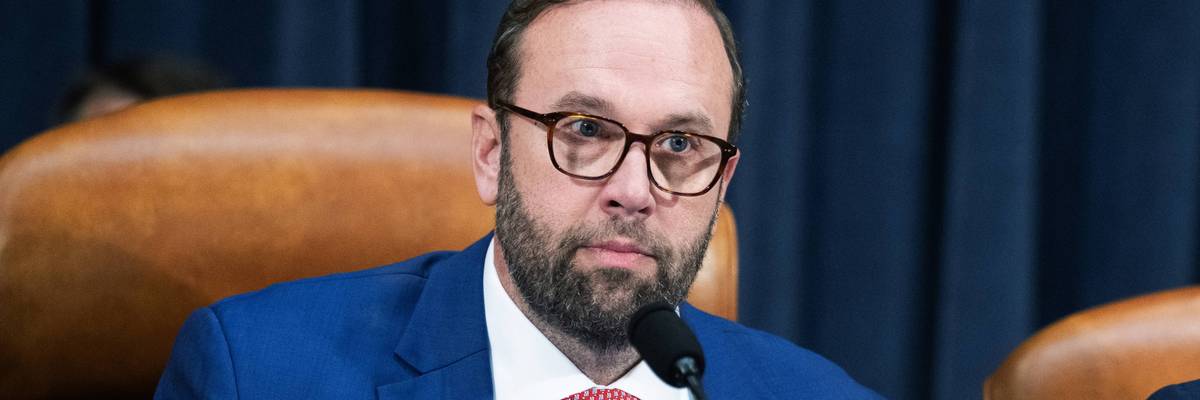

US House Ways and Means Committee Chair Jason Smith (R-Mo.) conducts a hearing on June 4, 2026, at the US Capitol in Washington, DC.
(Photo by Tom Williams/CQ-Roll Call, Inc. via Getty Images)

Stephen Prager
Jul 23, 2026
COMMON DREAMS


Press freedom groups are issuing dire warnings on Thursday that House Republicans’ efforts to subpoena the nonprofit left-wing news organization BreakThrough News represent a dangerous new step in a McCarthyite war on political dissent.

On Wednesday, Fox News reported that BreakThrough, a New York-based outlet, was one of three nonprofits that had been issued subpoenas by the GOP-controlled House Ways and Means Committee as part of an investigation into $39 million worth of donations from tech mogul Neville Roy Singham, a self-described socialist who has used his wealth to fund left-wing nonprofits.

In letters sent Tuesday, the committee, led by Rep. Jason Smith (R-Mo.), said that BreakThrough, as well as two other organizations—the People’s Forum Inc., a New York-based activist hub, and Tricontinental: Institute for Social Research—had not turned over any documents that had been requested as part of an investigation into whether rules around tax exempt status for nonprofits should be tightened to protect against foreign influence.

The committee has accused Singham, an American who now lives in Shanghai, of exploiting the tax code and using shell companies and donor-advised funds to hide foreign money that has been used to promote the interests of the Chinese Communist Party. It does not, however, make any specific accusation of legal wrongdoing.

The subpoena requires BreakThrough News to turn over records about its finances, foreign donors and grant recipients, fiscal-sponsorship arrangements, and communications with Singham and any foreign entities.

In a statement on Wednesday, BreakThrough News said it was “under attack.”


“For years, Republican lawmakers have painted a target on our backs, falsely claiming that our political views and reporting are part of some foreign plot,” the outlet said. “Now, the MAGA-dominated House Ways and Means Committee has issued us a subpoena—demanding internal communications, financial records and more. Make no mistake, this is a flagrant abuse of power, and a direct attack on our work as journalists and on the First Amendment generally.”

BreakThrough said it does not receive any funding from foreign governments or institutions and that it already complies with all the tax and public reporting requirements that nonprofits have to follow.

“We are not charged with any crime, because our only ‘crime’ has been to tell the truth–by covering the activities of the Palestine solidarity movement, unmasking the truth of ICE’s terror in our streets, and exposing Washington’s crimes around the world, from Cuba to the Congo,” the outlet said. “That’s the journalism they want to shut down. Their goal is to saddle us with legal proceedings and hostile media to drain our resources and stop this important work.”

While the committee stated that they are investigating BreakThrough over its financing rather than its politics, letters sent to the organization have treated the content of its reporting as circumstantial evidence of malign foreign influence, referring to it as “anti-American” and claiming that its negative coverage of Israel was “sowing division within the United States.”

Chip Gibbons, the policy director of the free speech advocacy group Defending Rights & Dissent, told Common Dreams that the subpoena of BreakThrough was a “deeply chilling assault on the First Amendment.”

“Such tactics are, quite literally, a throwback to the House Un-American Activities Committee, which today is mostly viewed as a disgrace,” Gibbons said. “I say mostly, because just three days ago [Secretary Marco] Rubio’s State Department released a report preposterously attacking the US left, including some of these groups, as Cuban fronts that cited old HUAC reports.”

He further emphasized in a press release that there was “no plausible need” for a news organization to provide documents as part of a broad congressional inquiry.

“The only thing these groups are accused of is essentially receiving donations from a US citizen who has been the subject of an intensive campaign of demonization,” Gibbons said. “It is lawful for Americans to donate to activist causes and media projects while holding views disfavored by Congress. This is clearly not a valid legislative inquiry at all, but an attempt to intimidate and chill dissenting opinions.”

Seth Stern, the chief of advocacy for the Freedom of the Press Foundation, agreed that “Congress shouldn’t be using a tax investigation as a pretext to dig through a newsroom’s internal communications or financial records.

“Freedom of the press,” he said, “applies to al
l journalists, regardless of whether politicians like their editorial slant or their politics.”


In what it has portrayed as a fight against “left-wing terrorism,” the Trump administration has increasingly blurred the lines between violent activity and protected political speech that they claim “incites” violence.


National Security Presidential Memorandum 7, signed by Trump in September, designates large swathes of left-wing viewpoints on race, gender, immigration, and other topics as “indicators” of domestic terrorism that have been used to link entire groups of people to violent acts they themselves did not commit.

Rubio said last week that the administration would soon be designating more left-wing organizations as terrorist groups, while senior Trump adviser Stephen Miller said that the full force of the state would be used to “disrupt, identify, defund, de-bank, arrest, prosecute” those deemed to “foment” political violence, not just those who actually commit it.

He has previously pledged to use the law to “dismantle” organizations that use heated rhetoric to refer to their right-wing opponents, including calling them “fascist” or “authoritarian.”

Nora Benavidez, senior counsel at Free Press, described the subpoena of BreakThrough as an extension of a “retaliatory ethos” Trump has taken towards critical journalists “with the goal of shutting down criticism and dissent.”

She told Common Dreams, “BreakThrough News is not the first, nor will it be the last, to come under official attack for bringing people alternative and useful news coverage about ICE abuses, foreign policy, Palestinian rights, and other topics.”

“Allowing a congressional committee to harass an independent newsroom with a broad subpoena sets an awful precedent,” Stern said. “If lawmakers can abuse tax oversight to single out outlets whose reporting offends them today, no newsroom in America is safe from government intimidation tomorrow.”
Trump’s Iran War Hits US Farmers With $1.4 Billion More in Diesel Fuel Costs: Report

“Trump’s decision to go to war with Iran drove up the cost of diesel fuel just as farmers were set to start their spring planting.”


A farmer loads soybeans into his planter on May 6, 2026 near West Bend, Iowa.
(Photo by Scott Olson/Getty Images)

Brad Reed
Jul 23, 2026
COMMON DREAMS

President Donald Trump’s illegal war with Iran is putting significant financial stress on US farmers, according to a report issued on Thursday by Democrats on the Joint Economic Committee.

The report finds that US farmers spent $1.4 billion more on diesel fuel this year when planing corn, soybeans, wheat, cotton, and rice than they did a year ago, representing a 63% yearly increase.

The six states to get hit with the biggest yearly percentage increases in diesel costs all voted for Trump in three consecutive presidential elections: Florida (90.6% yearly increase in diesel costs), Alabama (86.2%), Oklahoma (85.9%), West Virginia (85.8%), Kansas (83.8%), and Indiana (79.5%).

Diesel prices in 2026 hit their peak right in the middle of planting season, and the report estimates that “the average farmer spent $1,500 more to refil their farm’s onsite fuel tank... compared to the same high point during the 2025 planting season.”

The report notes that it doesn’t capture the full extent of economic damage caused the president’s unlawful assault on Iran, as its analysis “doesn’t take into account other war-related increases such as the increased costs of running diesel generators that power some greenhouses or the increases at the pump that farmers and truckers face when they drive products to market.”

The report adds that the economic pain being felt by farmers thanks to Trump’s war will soon hit US grocery shoppers.

“Trump’s decision to go to war with Iran drove up the cost of diesel fuel just as farmers were set to start their spring planting,” the report says. “This comes after Trump’s tariffs have already significantly increased costs for farmers and made it more difficult for them to plan for the future. These increased costs... are likely to further contribute to rising grocery costs.”

According to data published by the US Energy Information Administration, diesel prices peaked in May this year when they averaged $5.60 per gallon.

While prices initially fell after Trump announced a ceasefire agreement with Iran in June, the war’s resumption this month has sent them jumping upward again.

Data published by the American Automobile Association on Thursday showed that the average price of diesel in the US is now back up to $5.20 per gallon, an increase of $0.20 from one week ago.

Despite the economic turmoil caused by his illegal war of choice, Trump has shown little sign of backing off. In an interview with Axios published Thursday, the president said that he was “close” to making a decision on whether to authorize what he described as a “massive attack” on Iran that he vowed would be “bigger than ever before.”
Trump’s Military Spending Request Is Really Big Money


Any self-proclaimed deficit hawk who is not all hair on fire about Trump’s budget demand is a lying hypocrite who only uses concerns about the deficit to argue against programs they don’t like.


Dean Baker
Jul 23, 2026
Beat the Press


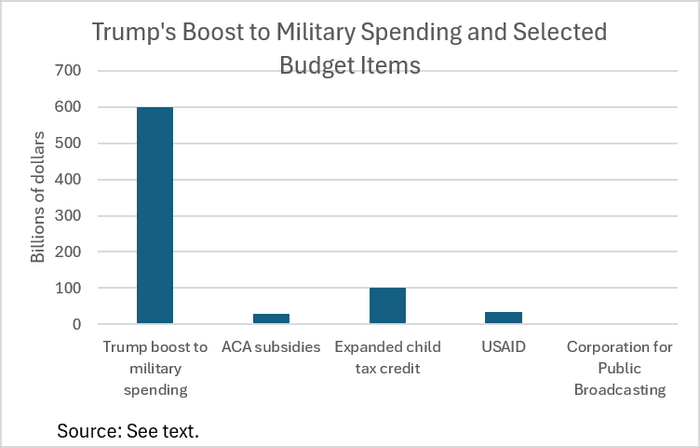
President Donald Trump is asking for $1,500,000 million for the military for next year. That’s close to $600 billion (adjusted for inflation) more than we were spending on the military in fiscal year 2025, before Trump took office.

This increase is huge by any measure. It comes to around $4,600 per household. It is around 8% of the total budget. This spending request dwarfs sums that are often the subject of major debates in Washington.

For example, last year Democrats pushed to have the enhanced subsidies in the Affordable Care Act exchanges extended. This would have cost $30 billion a year, one twentieth of what Trump and Pentagon chief Pete Hegseth are demanding.

People may recall Elon Musk gleefully putting the US Agency for International Development into the “wood chipper” last spring. While ending this program is expected to lead to 4 million additional deaths over the next four years, it only saved around $35 billion a year. That is less than 6% of the increase in military spending that Trump is asking for.

Is the argument that in just 18 months in office, Trump has made the world so much less safe that we have to increase the defense budget by two-thirds?

The annual cost of extending the enhanced child tax credit, which cut child poverty in half, was around $100 billion a year, less than one-fifth of Trump’s proposed increase. And the annual appropriation for the Corporation for Public Broadcasting was $550 million, less than one thousandth of the additional spending for the military that Trump is demanding. (It’s in the chart, just small to see.)


People need to know that Trump’s military spending request is really big money, compared to almost anything else that ever comes up for public debate for Congress. Unfortunately, because of incompetent or corrupt budget reporting, few news accounts make any effort to put these huge numbers in a context that makes them understandable for their audience. As a result, most people will probably have little idea of what is at stake with this military request.

Any self-proclaimed deficit hawk who is not all hair on fire about Trump’s budget demand is a lying hypocrite who only uses concerns about the deficit to argue against programs they don’t like. We got along fine with the former level of military spending, which almost everyone, including Donald Trump in his first term, considered adequate.

Is the argument that in just 18 months in office, Trump has made the world so much less safe that we have to increase the defense budget by two-thirds? Most of us knew that making our former allies into enemies was not a good idea, but Trump is placing a huge price tag on this mistake. And remember, this is Trump’s own number, not his critics’.
We Are Closer Than We Think to Losing Our Wild Neighbors

You do not need to fire a shot to kill an animal and imperil its entire species’ existence—you only need to take away the place it lives. A Trump administration Endangered Species Act rollback would do just that.


Baby and juvenile manatees swim together in a freshwater spring in Florida.
(Photo by Getty Images)


Jane Davenport
Jul 23, 2026
Common Dreams

There is a vision of this country that still exists to anyone who grew up near its wild places: manatees drifting beneath a dock, Florida leafwing butterflies fluttering through the wind, yellow-billed cuckoos migrating in the spring and fall. For generations of Americans, these were not rare sightings. They were proof that people and wildlife could share the same natural inheritance

That inheritance is now under direct threat, and the erosion is no longer incremental. It is accelerating at an unprecedented pace.

Earlier this month, the Trump administration formally rescinded the regulatory definition of “harm” under the Endangered Species Act (ESA)—a single word that has helped to protect this nation’s imperiled wildlife for more than 50 years. For decades, “harm” was understood to include not just the direct killing or injuring of an endangered animal, but the destruction or degradation of the habitat that animal depends on to breed, feed, migrate, or shelter. That understanding was not a bureaucratic technicality. It was the legal recognition of a basic ecological truth: An animal cannot survive the loss of its home and its resources for daily living any more than a person can. Each of these species has a story that will end the same way without habitat protection: not a quick death by bullet but a slow death by a thousand cuts.

Remove that definition, and you remove the government’s ability to regulate clear-cutting old growth forest filled with an endangered bird’s nesting sites, draining a wetland key for an endangered frog’s breeding, or dumping pollution into the lagoon where sea turtles and marine mammals graze. You do not need to fire a shot to kill an animal and imperil its entire species’ existence. You only need to take away the place it lives.

Habitat destruction is already the leading driver of species decline in the US, and this rollback removes one of the few legal tools available to slow it.

Congress enacted the ESA in 1973 with overwhelming bipartisan support, and Republican President Richard Nixon signed it, “to provide a means whereby the ecosystems upon which endangered species and threatened species depend may be conserved.” In the more than five decades since, the ESA has prevented the extinction of an estimated 99% of the species placed under its protection—one of the most successful conservation records in the world.

Rescinding the definition of harm will eviscerate the ESA. And it does so under the pretense of streamlining obstacles to American economic growth, as if the nation’s economy runs on oil, gas, logging, and mining alone. But our national economy—and our national welfare—are inextricably linked to healthy, thriving wildlife and habitats. Wildlife watching, for example, supports a $250.2 billion industry in the US. Commercial and recreational fisheries generate $319 billion in sales and sustain 2.1 million jobs. Hunting and fishing support $400 billion in annual economic value. And the ecosystem services nature provides for free—clean water, crop pollination, flood control, pest suppression—are valued at an estimated $5 trillion a year.

Habitat destruction is already the leading driver of species decline in the US, and this rollback removes one of the few legal tools available to slow it.

Consider the Florida manatee, listed as threatened under the ESA. Manatees lack blubber and cannot fully regulate their own body temperature; in winter, their survival depends on access to water near 72°F. Coastal development and polluted runoff have devastated the seagrass beds manatees depend on and degraded the natural springs that once kept them warm through the winter. More than half of Florida’s manatees now survive only because they cluster near the artificial warm-water discharge of aging power plants. Without the harm definition, it will be exponentially harder to protect and restore their foraging and sheltering habitats they need to survive and recover.

The same pattern will repeat across the country. The North American wolverine depends on vanishing high-elevation snowpack at risk of being lost to development and expanding winter recreation. The whooping crane, one of the rarest birds in North America, needs undisturbed wetland corridors to complete its migration. In the Arctic National Wildlife Refuge, polar bears depend on undisturbed denning sites; seismic testing, vehicle traffic, and aircraft noise associated with oil exploration can cause mother bears to abandon their dens and cubs. For five decades, the ESA enabled economic activities in the habitats species need to survive and recover, with permitting guardrails to ensure adequate protections. Now that the administration has eliminated those guardrails, it’s open season for industry to sacrifice habitat—and the future of our imperiled wildlife species. Defenders of Wildlife, along with other conservation organizations, has already gone to federal court to challenge this unlawful action.

At the same time, we’re standing up to defend the ESA itself from anti-wildlife members of Congress who favor unfettered logging, mining, grazing, and drilling, no matter the cost to endangered animals—or to our irreplaceable natural heritage. One of the most effective actions concerned citizens can take right now is to call their representative and senators and oppose any effort to undermine this bedrock wildlife law.

We are closer than most people realize to losing the manatees in our canals, the whooping cranes in our wetlands, and the wolverines in our mountains. What remains to be seen is whether we act while there is still habitat left to save.


Our work is licensed under Creative Commons (CC BY-NC-ND 3.0). Feel free to republish and share widely.


Jane Davenport
Jane Davenport is a senior attorney at Defenders of Wildlife.
Full Bio >
Our Healthcare System Is Failing; Medicare for All Is the Solution

When everybody has guaranteed access to high-quality care without financial barriers, physicians can focus solely on their patients’ needs and patients can trust that our recommendations are based on science.


Participants gather for the Medicare for All Rally in Los Angeles California
(Photo by Ronen Tivony/NurPhoto via Getty Images)

Diljeet K. Singh
Jul 23, 2026
Common Dreams

The following remarks were delivered as testimony to the Congressional Progressive Caucus, Medicare for All Shadow Hearing on July 22, 2026.

Thank you for the opportunity to speak about our urgent need for Medicare for All. My name is Dr. Diljeet Singh, and as a practicing gynecologic oncologist, I do not exaggerate when I say our healthcare system is in dire straits. Every day in my clinic, I see patients struggling with the cost of healthcare: a woman on chemotherapy who cannot afford her anti-nausea prescription, or a patient forced to choose between an MRI copay and groceries for her family. If you walked through my clinic, you would know that this is no time to be tinkering with unproven reforms or complex regulations. It is long past time for Medicare for All.

I care for a part-time elementary school teacher whose health plan did not cover routine preventive care. Instead of getting regular Pap smears over the years, she arrived in my office with advanced cervical cancer. She underwent radical surgery followed by chemotherapy and radiation that fundamentally changed her body and her life—and she still has no guarantee of a cure.

Or consider another patient of mine who works two part-time jobs, with no health insurance. She ignored severe abdominal pain until it doubled her over. In the emergency room, she was told she had a potentially cancerous mass. She came to me for care, and thankfully, it turned out to be a non-cancerous ovarian cyst, cured by surgery. Yet, even in this best-case medical scenario, she still owes thousands of dollars. A treatable, curable medical problem absorbed her children’s college savings and her retirement money.

When the drive for profit outweighs patient health, professionals and patients alike are betrayed.

I am speaking to you today as president of Physicians for a National Health Program (PNHP), an organization of more than 25,000 health professionals nationwide. We are working to achieve universal single-payer healthcare—free from corporate middlemen, copays, deductibles, prior authorization, and the risk of medical debt. Similar countries around the world provide care to all while spending only half of what we spend—yet we die younger, face higher maternal mortality, and lose more newborns. We already spend enough money, but at least 35 cents of every healthcare dollar is wasted on insurance administration and corporate profit instead of patient care.

The root cause of this failure is the corporate takeover of healthcare, where financial interests take precedence over the sacred oath we swore as physicians—to prioritize our patients’ health and make evidence-based, patient-centered decisions free from third-party interference.

At PNHP, we conducted a two-year research project speaking with doctors about working in a profit-driven system where financial goals dictate clinical care. We found that doctors, like nurses, suffer from profound “moral injury”—the acute psychological harm caused by systemic barriers that prevent us from providing compassionate, evidence-based care. When the drive for profit outweighs patient health, professionals and patients alike are betrayed, driving clinicians out of medicine in increasing numbers.

Reversing this crisis requires recentering healthcare on patients and aligning with its true mission. The most commonsense solution is single-payer Medicare for All. When everybody has guaranteed access to high-quality care without financial barriers, physicians can focus solely on their patients’ needs and patients can trust that our recommendations are based on science and their healthcare needs—not corporate bottom lines.

Doctors, nurses, and patients understand that we need Medicare for All. Now we need Congress to understand the same thing—and to act with all of the urgency that this moment requires.


Our work is licensed under Creative Commons (CC BY-NC-ND 3.0). Feel free to republish and share widely.


Diljeet K. Singh
Diljeet K. Singh, MD, DrPH is a practicing integrative gynecologic oncologist and the president of Physicians for a National Health Program. She holds degrees from Northwestern University (MD), Harvard School of Public Health (MPH), and the University of Texas School of Public Health (DrPH, Health Services Research) and completed her clinical training at Johns Hopkins Hospital (OB/GYN) and the MD Anderson Cancer Center (GYN ONC).
Full Bio >

With New Rules, Trump Accused of ‘Coordinated Dismantling of the Medicaid Program’


One advocate warned that new Medicaid rules issued by the Trump administration would have “disastrous impacts on individuals and healthcare systems.”


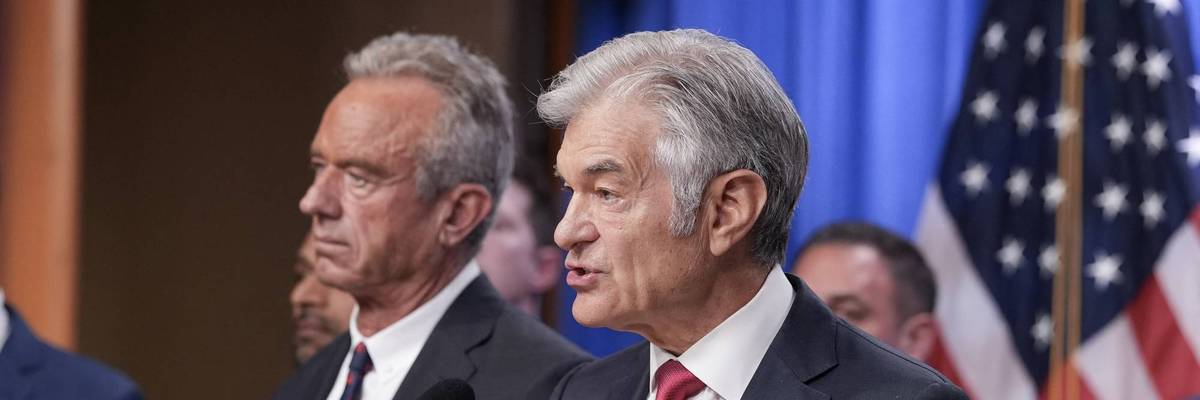
Centers for Medicare and Medicaid Administrator Mehmet Oz speaks during a press conference in Washington, DC on June 23, 2026.
(Photo by Ken Cedeno/AFP via Getty Images)

Jake Johnson
Jul 23, 2026
COMMON DREANS

The Trump administration earlier this week unveiled a new rule that advocates said would make it harder for states to fund their Medicaid programs, compounding damage caused by expanded work requirements and other changes enacted under the 2025 Republican budget law.

The law bars states from creating new provider taxes—levies on hospitals and other healthcare providers—and limits existing ones. The new Centers for Medicare and Medicaid Services (CMS) rule, which is open for public comment until September, would codify the GOP law’s changes.

Anthony Wright, executive director of Families USA, said Wednesday that the CMS rule “goes beyond the harsh restrictions already imposed by Congress to further narrow the options that states have to fund Medicaid services and providers.”

“Along with Congress’ other restrictions on taxing healthcare providers—restrictions that gut Medicaid funding in all states—CMS estimates this new proposed rule will cut $198.7 billion in state Medicaid funding over 10 years,” Wright noted. “This rule comes at a time when states are already under significant budgetary pressure to foot the bill for the cost of implementing complex and unnecessary work reporting requirements; in tandem with a proposed rule that slashes Medicaid provider payments and further eliminates state flexibility.”

“Taken together,” Wright warned, “these three rules serve as a coordinated dismantling of the Medicaid program, including its eligibility systems, payment structures and financing mechanisms, with disastrous impacts on individuals and healthcare systems.”

The Republican budget measure, which President Donald Trump signed into law last summer, includes roughly $900 billion in Medicaid cuts over the next decade. Millions of Americans have lost Medicaid coverage since the GOP law took effect.

Earlier this week, the entire House Democratic caucus implored CMS to “reconsider” its recently published Medicaid work requirement rule, warning it “will create an undue burden for beneficiaries with serious healthcare needs and put people at risk of losing coverage, while also creating significant implementation challenges for states.”

“This rule will require beneficiaries to frequently prove and verify their exemptions in order to maintain coverage, which will cause confusion, create bureaucratic burdens for patients seeking care, and, as a result, will lock patients out of lifesaving treatments,” the lawmakers wrote. “Forcing vulnerable patients to exhaustively document their symptoms simply to maintain access to basic healthcare is both imprudent and inconsistent with federal law.”


‘Starvation Wages’ at Giant US Corporations Force Workers to Seek Taxpayer-Funded Aid

“No one who works for a company making billions in profits should be living in poverty,” said Sen. Bernie Sanders.


An Amazon employee works to fulfill same-day orders during Cyber Monday, one of the company’s busiest days, at an Amazon fulfillment center on December 2, 2024 in Orlando, Florida.
(Photo by Miguel J. Rodriguez Carrillo/Getty Images)


Julia Conley
Jul 23, 2026
COMMON DREAMS


US Sen. Bernie Sanders recently commissioned a government analysis of federal aid programs and how much employees of some of the largest and most politically influential corporations in the country are relying on food and healthcare benefits due to the chronically low wages paid by Amazon, Walmart, and other firms.

On Wednesday, the nonpartisan Government Accountability Office (GAO) released the results of its research, revealing trends that Sanders (I-Vt.), a longtime critic of economic inequality and poverty wages and the ranking member of the Senate Health, Education, Labor, and Pensions Committee, called “beyond unacceptable.”

Six years after the GAO first analyzed low-wage workers’ use of Medicaid and the Supplemental Nutrition Assistance Program (SNAP), the report found that the number of Amazon employees who required federal assistance has nearly tripled since 2020, despite the fact that the e-commerce giant has increased its annual profits from $11.59 billion to $77.67 billion in that time.

The analysis focused on 11 states—Arkansas, Georgia, Indiana, Maine, Massachusetts, Nebraska, North Carolina, Oklahoma, Rhode Island, Tennessee, and Washington—whose combined populations comprise about one-fifth of the US population.

Last year, 12,346 of Amazon’s employees needed SNAP assistance, for which households must earn less than 130% of the federal poverty level to qualify. A family of three would have to make around $35,000 or less to qualify for the program. Millions of people were shut out of the crucial program by the One Big Beautiful Bill Act (OBBBA), which required states to impose strict limits on eligibility.

More than 11,000 Amazon workers also relied on Medicaid last year in the states surveyed.

“Corporations underpay workers, don’t provide healthcare, and outsource core worker needs to the government,” said the labor-focused media organization More Perfect Union.


While Walmart topped the list of corporations whose employees used Medicaid benefits, as it did in 2020, its share of workers who rely on the two federal programs went up only slightly over the five-year period, while Amazon’s share grew significantly.

Amazon spokesperson Rachael Lighty told The Washington Post—owned by billionaire Amazon founder Jeff Bezos—that the company’s hiring spree since the coronavirus pandemic contributed to its increased share of Medicaid and SNAP beneficiaries, and noted that Amazon offers “part-time options for those who want them,” which makes more employees eligible for the benefits.

But the Post noted that many people who may want full-time employment and the higher wages it offers can only find part-time work. The Federal Reserve Bank of St. Louis has found an increase in part-time employment since the pandemic.

Sanders noted that Walmart increased its annual profits from $14.88 billion in 2020 to $21.89 billion in 2025, but the number of workers who relied on Medicaid grew by 55% to more than 16,000 people in the 11 states sampled by the GAO.

“American taxpayers should not be forced to subsidize the starvation wages of large corporations like Walmart and Amazon,” said the senator. “These corporations are making record-breaking profits, paying their CEOs exorbitant compensation packages, and spending billions of dollars on stock buybacks to enrich their wealthy shareholders. It is beyond unacceptable that these corporations, owned by some of the wealthiest people on the planet, are receiving corporate welfare from the federal government.”

Rideshare and delivery apps like Uber and DoorDash, which were not significantly featured in the GAO’s 2020 report, are now the top employers of people who use SNAP benefits and are in the top three employers of workers on Medicaid.

Nicole Moore, president of Rideshare Drivers United, told the Post that gig workers across the country struggle to make ends meet with “absolutely precarious income.”

The analysis comes a year after the passage of the OBBBA, which delivered $4.5 trillion in tax cuts to corporations and the rich and which Republican proponents said was partially focused on eliminating waste and fraud in government programs like Medicaid. The law includes work requirements for the program and is expected to slash $1 trillion from Medicaid over the next decade.

Republicans have intensified their fixation on “fraud” in social services in recent months after fraudulent payments were found in Minnesota’s public programs.

Warren Gunnels, the minority staff director for the Senate HELP Committee, said the GAO analysis shows that “the problem isn’t the single mom getting $6 a day in food stamps.”

“The problem is Jeff Bezos, worth $269 billion, more than doubled his wealth since 2020 while paying wages so low the number of Amazon workers on food stamps and Medicaid nearly tripled,” said Gunnels. “Bezos is the welfare queen.”

Sanders called on Bezos and the Walton family, which owns Walmart, “to get off of welfare and pay their workers a living wage with good benefits.”

“No one who works for a company making billions in profits should be living in poverty,” said the senator. “This is especially true after these corporations and their multibillionaire owners received a massive tax break from President Trump’s so-called ‘Big, Beautiful Bill,’ paid for by the largest cuts to Medicaid and nutrition assistance in history.”

 SPACE/COSMOS

Portuguese scientists study Martian clouds to help future landings

The atmosphere of Mars
Copyright NASA:JPL-Caltech:MSSS

By Ema Gil Pires
Published on

As plans for crewed missions to Mars advance, a study led by two Portuguese scientists at Lisbon University's Faculty of Sciences is helping make landings on the Red Planet smoother.

Two Portuguese scientists were the lead authors of a study, published in the scientific journal Journal of Geophysical Research: Planets, (source in Portuguese) which set out to “hunt” and analyse clouds on Mars, in a breakthrough designed to make future missions to the Red Planet easier.

As part of this research, the aim was to measure simultaneously the altitude and propagation speed of Martian atmospheric waves, which are a key element in understanding how energy is transported in the planet’s atmosphere.

As scientist Francisco Brasil, who led the study alongside Pedro Machado, both from the Faculty of Sciences of the University of Lisbon (CIÊNCIAS ULisboa) and the Institute of Astrophysics and Space Sciences (IA), explained to Euronews, this was achieved essentially on the basis of data from the Mars Express mission.

The work draws on “one of the European Space Agency’s longest missions”, which has been in orbit for 23 years and has since been extended “until 2029” — with key elements of this unmanned initiative having been used in the study.

The study set out to characterise Mars’ atmospheric waves
The study set out to characterise Mars’ atmospheric waves ESA/DLR/FU Berlin

Outlining why the research matters, Francisco Brasil noted that “to land on a planet, just as we land on Earth, we need to know, more or less, how that atmosphere is distributed in terms of layers”.

By characterising the atmospheric waves of the planet in question, it is possible to understand “how the dynamics of its atmosphere work at those specific altitudes”. This work, in this particular case, relied on “measuring the altitude of the clouds and the winds” as “essential techniques”.

All of this was made possible thanks to a high‑resolution camera on board the European Mars Express spacecraft, “which made it possible to observe the same location from different angles”.

According to Francisco Brasil, the discovery “will be important in future, when humanity reaches Mars”, because it will help us understand “what optimisations need to be made” to the spacecraft that aim to reach the Martian “surface”. The goal is to “control the friction or differences that exist in the atmosphere” of the planet so that “everything goes well at landing”.

A “very thin atmosphere compared with Earth’s”

But why could this analysis have such a significant impact on future missions to Mars? Because the planet’s “atmosphere”, “compared with Earth’s, is very thin”, meaning “it has few molecules”. As a result, “the frictional force that exists” on the Red Planet ends up being far lower. “It is as if we were almost in free fall,” the astrophysicist illustrates. That is very different from what happens on Earth, where “it is very difficult to put a rocket into space”.

And the challenges at this level have been very evident over recent decades. “It has been very difficult to send rovers to the surface of Mars,” Francisco Brasil said. The fact is that, since 1960, roughly half of Mars exploration missions have not gone as planned, including crashes on the planet’s surface by these robotic vehicles, as well as launch and orbit failures.

He went on to explain the reason behind the difficulties with landing, looking ahead to a possible crewed mission to the Martian surface, something that has never yet happened: “Because we did not have much information about how the atmosphere was structured, they [the rovers] ended up nearly in free fall and crashed onto the surface of Mars. And we do not want that to happen to humans.”

However, this reality has started to change “in recent years”, during which the “success rate for landings” on Mars has already been considerably higher than in previous periods, the researcher noted.

This is also due to the investments that have been made in equipment. “In recent years, all the rovers have greatly improved their ability to cushion that free fall that occurs on Mars,” reducing the impact at the moment of touchdown on the surface through different mechanisms, such as “very specific parachutes” and “shock‑absorbing systems” similar to airbags.

Clouds on Mars are rare and “seasonal”

As on Earth, there are “several seasons of the year” on the Red Planet, because both have an “inclined axis”, the expert from the Institute of Astrophysics and Space Sciences pointed out.

And this influences the formation of clouds on Mars. “Throughout the year they are very sparse”, and are marked in particular by a certain seasonality.

Clouds on Mars are rare and seasonal, according to researcher Francisco Brasil
Clouds on Mars are rare and seasonal, according to researcher Francisco Brasil ESA/DLR/FU Berlin/J. Cowart

This is because the planet “has polar caps made up of carbon dioxide ice and water ice which start to evaporate as the northern hemisphere summer approaches”, forming what is known as the Aphelion Cloud Belt, “a region in the northern hemisphere with many clouds”. Consequently, “only at that time” in the Martian year “can we observe more clouds”, because they then “evolve over time” and respond “to the various dynamics of the atmosphere”.

For this reason too, clouds on Mars are only identifiable “in a few places on the planet”. And that is why, when “most people look at a picture of Mars, they see its surface and almost never see clouds”.

Thus, the data from this new study led by Francisco Brasil and Pedro Machado could, hypothetically, influence the timing chosen for a mission to the surface of Mars from the planet’s orbit. Knowing “in advance” which season Mars is in, the choice could be to try to carry out the mission “for example, at a time when there is less turbulence in the atmosphere, so that a smoother landing can be achieved”.

Mars is a “natural laboratory for some Earth phenomena”

Asked about the relevance that the study of the Martian atmosphere has for the scientific community in the 21st century, researcher Francisco Brasil noted that “one very interesting thing about Mars” is that the planet “ends up being a natural laboratory for some of the phenomena we see on Earth”, albeit at an “extremely exaggerated” level.

A dust storm on Mars
A dust storm on Mars ESA/DLR/FU Berlin

He gave an example, stressing that the reasons behind these occurrences are still not clear: “We have a phenomenon that is well known, global dust storms on Mars, which completely cover the planet, and we still do not quite understand what trigger sets off these storms.”

The astrophysicist added that these “typically occur during the spring and summer of the southern hemisphere, when Mars is closer to the Sun and the heating of the atmosphere is at its maximum, generating great turbulence”. The academic community is currently studying the causes of these global storms on Mars, which often arise from the merging of smaller storms, many of them local or regional in nature.


Researchers uncover signatures of primordial black holes when triggering Type Ia supernovae


Kavli Institute for the Physics and Mathematics of the Universe


An international team of researchers have found when primordial black holes triggered white dwarf stars to explode as Type Ia supernovae, it may have caused a chemical abundance trend, reports a recent study published in The Astrophysical Journal on June 20.

Primordial black holes (PBH) are one of the relics from the primordial universe. During the inflation period, the primordial fluctuation of matter in the created PBHs. These black holes could be a candidate to explain the mysterious dark matter, the invisible matter that contributes to about 90% of matter in the Universe by mass. These PBHs could pass through stars across the universe. Early works suggest that, during their passage, the tidal interaction due to their own gravity could trigger the white dwarfs, a stellar evolutionary end point for low-mass stars, to explode as Type Ia supernovae (SNe Ia). 

A team of researchers led by SUNY Polytechnic Institute Assistant Professor and The University of Tokyo Kavli Institute for the Physics and Mathematics of the Universe (Kavli IPMU) Visiting Associate Scientist Shing-Chi Leung, and including Kavli IPMU Visiting Senior Scientist Ken'ichi Nomoto and Kavli IPMU Senior Fellow Alexander Kusenko, studied the dynamical, optical, and chemical characteristics of supernovae under this new PBHs-triggered explosion channel.

In an earlier paper published in 2025 by the team, the PBH-triggered explosions can actually produce SNe Ia that closely resemble the standard SNe Ia models.

In this new study, the researchers did a comparative study with supernova remnants (Tycho, Kepler, 3C 397), nearby supernovae (e.g., SN 2011fe, SN 2012cg) and the chemical abundances of Milky Way stars. They showed PBH-triggered SNe Ia could explain several observed characteristics of these objects. By examining the radioactive isotopes such as Ni-56, Ni-57, and stable elements such as Mn and Ni, the team pinned down the masses and the metallicities (the amount of metal when the star is formed, which probes when the star is born in the cosmic age) of the progenitor stars of these supernova events and remnants. 

Furthermore, the supernova model to study how this explosion channel was involved in the galactic chemical enrichment showed that a non-zero fraction of PBH-triggered SN Ia is necessary to explain the chemical abundance trend made by stars in the Milky Way. 

“Our work suggests that some supernova that we observe in the sky could be a result of the PBHs. Therefore, even though we cannot directly observe these evasive entities, they leave many interesting clues in nature for us to probe their properties.” Leung said.

The team will continue to expand the research scope to study how these supernovae change the population of canonical supernovae and the collective rates of these transient events. 


Aerial robots need measurements, not just commands


This Perspective argues that open UAV tasks should turn language instructions into verifiable measurement queries before flight actions.


Science China Press


Large vision-language-action models are changing how robots connect language, perception and motion. For unmanned aerial vehicles, however, an open task often starts with a command that names a situation rather than a next safe motion. A request such as “inspect the damaged roof” or “search for a missing person” does not specify which fact must be checked first, from which viewpoint it can be checked, or whether the aircraft can obtain that evidence while keeping enough control margin.

In a Perspective article in National Science Review, researchers from Zhejiang University and Differential Robotics (Hangzhou) Technology Co., Ltd. argue that aerial embodied intelligence should be organized as command-measurement-action. The core idea is that a UAV should first turn a human command into executable measurement queries, use flight to obtain or reject task evidence, and then choose short-horizon actions based on evidence that has actually been checked.

The authors define a measurement query as more than a sensor reading. It is a task-level question that links a semantic proposition with a required viewpoint, confidence threshold and remaining safety margin. In roof inspection, for example, the useful question may be whether a crack on a particular tile can be confirmed from an oblique view with sufficient image scale and enough room to retreat. In search and rescue, the query may ask whether an occluded sector has truly been covered or whether a heat source can be accepted as human evidence.

This framing connects semantic goals to technical constraints that are especially important in flight. Moving closer may improve visual detail but reduce visual-inertial robustness. Changing altitude may reveal a target but increase wind or communication uncertainty. Waiting at a viewpoint may consume battery needed for a safe return. A useful aerial system therefore has to judge measurement feasibility together with motion feasibility.

The same view affects data generation, computation and evaluation. Expert trajectories alone are not enough if they do not record what uncertainty was reduced after each move. Synthetic and reconstruction-based data can be useful, but only when they include labels for visibility, dynamic feasibility, sensing noise and control conditions. Onboard, edge and cloud computation should also be selected according to the current task state, because extra reasoning is useful only when its delay, communication cost and energy use do not make the evidence stale or the action unsafe.

The article concludes that larger models alone will not solve the evidence-validity problem on aerial platforms. Future aerial robots should use flight to turn incomplete commands into reliable evidence, and their actions should depend on checked facts rather than assumptions.