Thursday, July 23, 2026


West Nile virus: 21 cases in Greece as it spreads across Europe
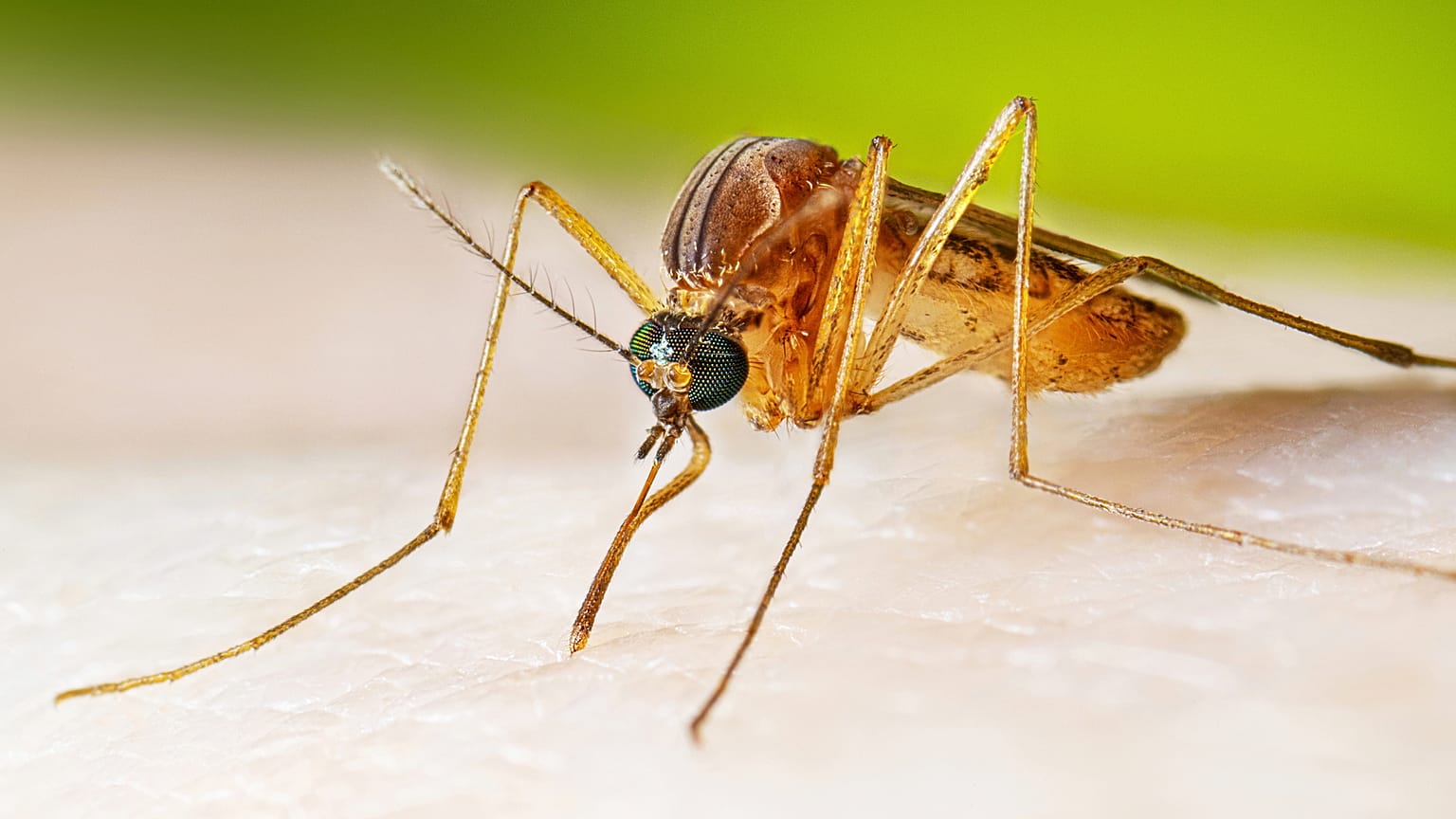
A Culex quinquefasciatus mosquito on human skin (file photo)
Copyright Lauren Bishop/CDC via AP

By Akis Tatsis & ΑΠΕ- ΜΠΕ
Published on

Italy, Spain, Romania and North Macedonia also reported locally acquired cases of West Nile virus infection.

The West Nile virus transmission season is underway in many parts of Europe, with locally transmitted cases reported in Greece, Italy, Spain, Romania and North Macedonia, according to the latest data from the European Centre for Disease Prevention and Control (ECDC).

In Greece, 21 locally acquired cases of West Nile virus infection have been recorded from the start of the 2026 surveillance season until 22 July, the National Public Health Organisation (EODY) announced.

Of these, 20 patients developed involvement of the central nervous system, such as encephalitis, meningitis or acute flaccid paralysis, while one case presented with mild symptoms. So far, no deaths have been recorded, and 13 patients are hospitalised.

In the past week, 14 new locally acquired cases were reported. In addition, another case was identified with a complex travel history, including a stay in an endemic country abroad. The probable country of exposure has not yet been determined and the case is not included in EODY’s epidemiological analysis.

The situation in the rest of Europe

According to data submitted to the ECDC up to 15 July 2026, a total of 33 locally transmitted cases of West Nile virus had been recorded in five countries in Europe and its immediate neighbourhood.

Italy has seen the widest spread, with 20 cases in 16 areas. Most have been reported in Novara, with three cases, and in Cremona and Verona, with two cases each. Cases have also been reported, among other places, in Milan, Florence, Naples, Padua, Modena and Ferrara.

In North Macedonia, two cases have been recorded, in the regions of Skopje and Vardar. Two cases have also been reported in Romania, in the Argeș and Suceava regions, and two in Spain, in Alicante and Seville.

The ECDC map shows the areas where cases have already been reported, as well as those designated as affected for the first time during the latest reporting week. In Italy, 11 of the 16 affected areas were added that week, highlighting the rapid geographical expansion of the virus’s circulation.
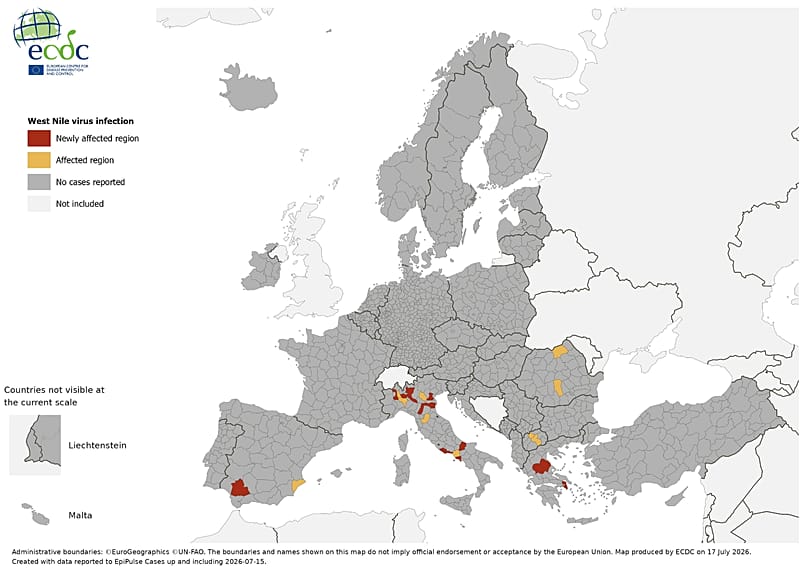
Geographical distribution of the areas affected by West Nile virus during the 2026 transmission season, up to 15 July.
Geographical distribution of the areas affected by West Nile virus during the 2026 transmission season, up to 15 July. www.ecdc.europa.eu

Greece: Most infections in Attica

The vast majority of cases have been detected in Attica.

Cases have been recorded in the municipalities of: Spata–Artemida (6), Markopoulo Mesogaias (2), Pallini (2), Agia Paraskevi (2), Vari–Voula–Vouliagmeni (1), Kropia (1), Lavreotiki (1), Nea Ionia (1), Chalandri (1), Athinaion (6th Municipal Community) (1), Glyfada (1).

Outside Attica, one case has been recorded in the Regional Unit of Larissa and one in the Municipality of Palamas.

Although no human cases have yet been reported, EODY has designated as high-risk areas the municipalities of Paiania, Rafina–Pikermi, Marousi, Iraklio Attikis and Filothei–Psychiko.

The decision was based on epidemiological and geomorphological data, as well as on proximity to areas where the virus is already circulating.

EODY points out that the almost yearly occurrence of cases since 2010 indicates that West Nile virus has become established in Greece, as is also the case in several other European countries.

The ECDC now publishes weekly updates during the summer, as virus transmission is affected by weather conditions, mosquito abundance and the movements of wild birds, which are the natural reservoir of the virus.

Health authorities recommend that people take personal protective measures against mosquitoes across the country, as it is not possible to predict with certainty which areas will be affected during this year’s transmission season.

DRC's Ebola outbreak kills more than 1,000, with children hit hardest

More than 1,030 people have died from an Ebola outbreak declared in May in the Democratic Republic of Congo and Uganda, the World Health Organization said on Wednesday, as confirmed cases in the DRC surpassed 2,530, according to government data.


Issued on: 23/07/2026 - RFI

Health workers disinfect a coffin of an Ebola victim at Ebola Treatment Center at Bunia General Hospital in Ituri, DR Congo, on 22 July, 2026. 
AP Photo/Dirole Lotsima Dieudonn - Dirole Lotsima Dieudonne

Fifty new Ebola cases were detected on Monday in the eastern DRC provinces of Ituri and North Kivu, the country's public health institute said in its latest report, as the outbreak declared in May continues to accelerate.

A total of 2,536 cases of the deadly virus have been confirmed in the DRC since May, along with 1,001 deaths, plus two deaths registered in neighbouring Uganda, according to a World Health Organization overview based on official data from the two countries.

The DRC's 17th Ebola outbreak was declared on 15 May after several deaths in Ituri, and has remained concentrated in the mineral-rich northeastern province, which is plagued by fighting between armed groups.


A toll on children

Nearly 90 percent of the cases are in Ituri province, where children are paying a heavy price. According to the NGO Save the Children, 189 children have already died and 476 have been infected, while thousands more are suffering from trauma after losing a loved one, being displaced, or living under the constant threat of the virus.

Efforts to control the outbreak through contact tracing require "enormous resources" because of Ituri's poverty and violence, said Trish Newport, director of emergency programmes for Doctors Without Borders (MSF) in Bunia, the provincial capital.

Some of the deceased are buried without protective measures by their families, accelerating the spread of infection. "A single death can lead to up to 17 cases of transmission," Newport said.

A semblance of normality still prevails on the streets of Bunia, but many of its nearly 1 million residents are anxious.

"I saw three members of the same family die in the space of a week. It scared me so much," said Heritier Bomengo, a motorbike taxi driver who, like many of his colleagues, has stocked up on hand sanitiser.

Ebola cases in DRC may be four times official tally, says WHO
'Faster than any previous outbreak'

Cases of Ebola, which spreads through close contact and infected bodily fluids, have also been found in four other DRC provinces. The cases found in Uganda were mostly Congolese citizens who crossed the border, and the country says it has gone three weeks without registering any new cases.

WHO chief Tedros Adhanom Ghebreyesus, warned last week that the outbreak had over the past month "expanded faster than any previous outbreak" of Ebola.

Despite a ramping up of the response, "the outbreak remains ahead of us and we are still in a phase of catching up," Thierno Balde, WHO's incident manager for Bundibugyo virus in DRC, told reporters on Tuesday.

There is currently no approved vaccine or treatment for the Bundibugyo strain behind this outbreak. But the WHO has reported "encouraging progress," with trials for two potential treatments, a vaccine and a post-exposure prophylaxis underway on the ground.


Amazon forest fires fell to all-time low in 2025 but could a super El Niño halt progress?

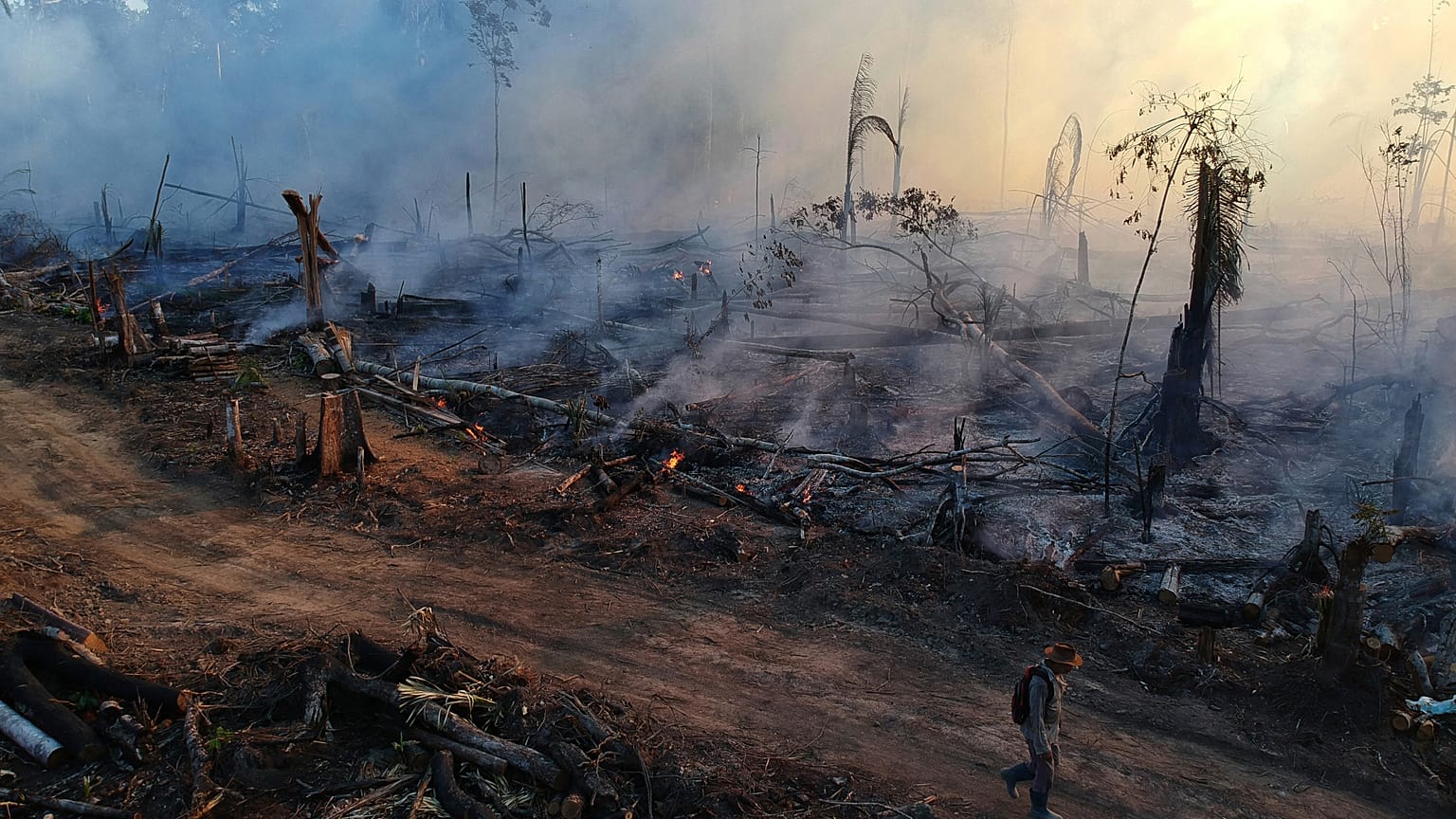
A man walks along a paved dirt road in an area scorched by fires near Labrea, Amazonas state, Brazil, Friday, Aug. 7, 2020.
Copyright AP Photo/Edmar Barros

By Ruth Wright with AFP
Published on

"There is no climate security for the world without a protected Amazon".

Forest fires in the Brazilian Amazon fell to a historic low in 2025 after peaking the previous year, according to a new report

Deforestation in the world’s largest rainforest also eased off last year, the report from environmental monitoring network MapBiomas says, which drastically reduces the amount of fuel available to start fires.

Using satellite images, MapBiomas found that 3.1 million hectares were burned last year - the smallest area since records began in 1985.

The progress will come as good news for leftist President Luiz Inacio Lula da Silva who vowed to end deforestation when he was elected in 2022.

Protecting the Amazon is crucial in the fight against the worst effects of climate change, since its dense vegetation absorbs the greenhouse gases that cause global warming.

Drought in 2024 may have led Amazon communities to protect their land

Forest fires in the Amazon peaked in 2024 when an unprecedented drought triggered the spread of fires, the majority of which were human-made. Flames engulfed the world's largest tropical rainforest, leading to untold losses of carbon-sucking trees, plants and rare wildlife.

The new data shows that 2025 saw a reversal of the critical situation. The decline was "out of the ordinary", geographer and report coordinator Ane Alencar told news agency AFP.

While disrupted weather patterns are wreaking havoc in many parts of the world, in the Amazon they were a gift on one front. A delayed rainy season between 2024 and 2025 blocked the emergence of the "ideal window for burning in certain areas" where fire is used to clear agricultural land, Alencar said.

Poorly managed fires of this type are exacerbated by illicit practices such as deforestation, which is common in areas where illegal mining occurs.

The report highlighted the "psychological factor" among communities who feared a fire season like 2024 and therefore helped control any outbreaks. Fewer fires, it said, "interrupts a sequence of years of fire expansion and returns the country to a historically lower level of burned area".

Fires eased off across the whole country in 2025, with burned areas nationwide at their smallest since 2018. Central Brazil's vast Cerrado savanna, however, "kept burning" at similar rates, Alencar said.

Why a Super El Niño could lead to more fires

Alencar flagged the potential arrival of a "super El Niño" as a risk factor for more forest fires.

In March this year, the US National Oceanic and Atmospheric Administration (NOAA) forecast a 62 per cent chance of El Niño forming this summer. “If El Niño forms, the potential strength remains very uncertain, with a one-in-three chance that it would be ‘strong’ during October to December 2026,” the NOAA’s Climate Prediction Center says.

Although not an official term, this strong weather phenomenon has been dubbed a "super El Niño". In the Amazon, this could bring "an extended dry season and a greater risk of forest fires" according to report coordinator Ane Alencar.

El Niño can be triggered by a series of tropical wind bursts from the west that weaken or even reverse these trade winds. When this occurs, warm surface water sloshes back towards South America, where the warming of surface water prevents the colder deepwater from upwelling.

El Niño, which occurs irregularly and typically lasts for about a year, tends to increase global temperatures, which in turn can result in more extreme weather such as flooding.

This is because for every 1℃ rise in air temperature, the atmosphere can hold around seven per cent more moisture, leading to more intense and heavy rainfall. El Niño can also intensify heatwaves in the tropics, which is why El Niño years are often among the warmest on record.

President Lula: “Let’s fight for zero deforestation”

When Brazil’s President Luiz Inacio Lula da Silva came to power in 2022, he had a long environmental to-do list to tackle.

Under his predecessor, Jair Bolsonaro, deforestation in the Amazon hit an all-time high. In 2019 alone, the first year of the Bolsonaro administration, 9,762 square kilometres of land was deforested - a 30 per cent increase from the previous year. “Jair Bolsonaro’s reign as Brazil’s president has seen the greatest reversal of social and environmental protections in our nation’s history,” Adriana Ramos of Instituto Socioambiental said at the time.

“Let’s fight for zero deforestation,” Lula said in his victory speech in 2022, pledging to end the practice by 2030. This pledge has featured heavily in Lula’s policies since, saying at COP27: "There is no climate security for the world without a protected Amazon," adding that Brazil will "do whatever it takes to have zero deforestation and degradation of our biomes".

His promises seem to be paying off: deforestation in the Amazon dropped by a third during the first six months of his term. By April 2023 it had fallen by 68 per cent compared to the previous year. Data from the first quarter of 2026 shows that deforestation is at its lowest-ever rate this decade.

The leftist leader is looking to nab a fourth non-consecutive term in office in October elections, partly by championing environmental causes. But his decision to endorse a major offshore oil exploration project off the coast of the Amazon has garnered virulent criticism from activists.


Wildfires rage across parts of France, Spain and Italy


By Nathan Rennolds
Published on

Two firefighters died in France, and another died in Italy while working to tackle wildfires that have devastated Europe this week.

Wildfires continued to spread across parts of France, Spain and Italy on Wednesday, forcing thousands of people from their homes amid soaring temperatures.

In southwestern France's Gironde department, more than 10,000 people were evacuated overnight due to a blaze that's ravaged more than 2,000 hectares in the region, local authorities said.

The fire broke out in the town of Saumos on Wednesday and has advanced southwest towards the areas of Le Porge and Lège Cap-Ferret.

As of Thursday morning, 500 firefighters are tackling the blaze, with aerial reinforcements on the way.

Two firefighters were killed while tackling flames in the Mérignac suburb of Bordeaux on Tuesday.

French Interior Minister Laurent Nuñez met with their families and colleagues on Wednesday to pay tribute to the pair.

"On behalf of the president of the Republic, the government and the entire nation, which owes them so much, I expressed our boundless gratitude and our unwavering support," he wrote in a post on social media.

Multiple departments in southern France remain under a red alert for forest fires on Thursday, per Météo-France.

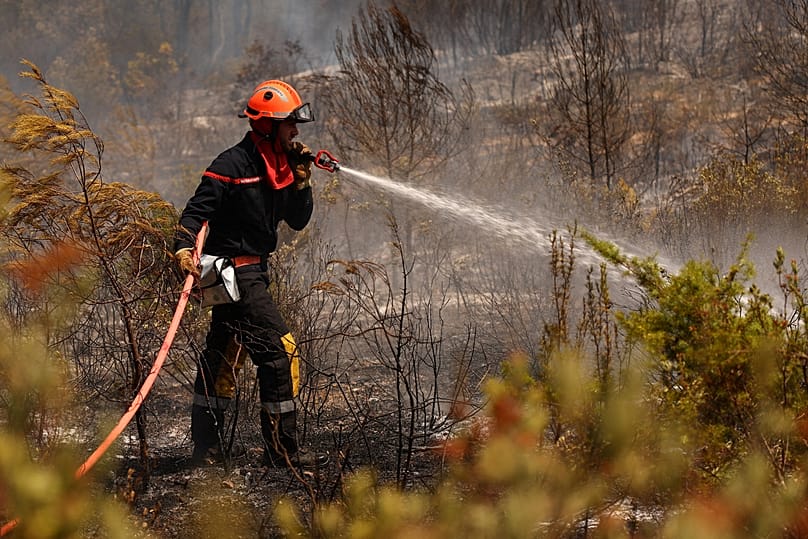
A firefighter sprays water on burnt vegetation and trees during clean up operations in an area affected by a wildfire in Cotignac, France, Wednesday July 22, 2026. AP photo

Italy

Fires have also broken out in Sicily, where around 6,000 emergency responders, including firefighters, forest guards and civil protection officers have been mobilised to assist.

According to the regional government, 300 of the island's 344 reported fires had been extinguished as of Wednesday.

"The most critical blazes, where teams from the fire brigade, civil protection and the forestry corps are currently in action, are in Casaboli, Bivona, Alimena, San Cataldo, Galati Mamertino, certain areas of the Madonie Park and the Syracuse area," it said in a press release.

One firefighter named by officials as Alessandro Marchi died while responding to a fire in San Cataldo, Italian Interior Minister Matteo Piantedosi announced.

"He lost his life whilst carrying out his duty, in the service of the community. On behalf of myself and the Ministry of the Interior, I extend my deepest condolences to his family," Piantedosi said.

Spain

A major wildfire has also been declared to the southwest of the Spanish capital, Madrid, between the towns of Almorox and Villa del Prado.

Video footage posted to social media by Spain's Civil Guard showed officers going home to home as residents were evacuated from parts of the area.

As of Wednesday night, 88 firefighters, 35 vehicles, and a helicopter had been deployed to help fight the fire.

It comes after a devastating wildfire in Spain's Guadalajara province had already burnt through 32,000 hectares to the north of Madrid

According to data from the European Forest Fires Information System, wildfires have burnt around 254,388 hectares across the EU in 2026.

This is higher than the long-term average but remains below the 270,449 hectares that burnt in 2025 over the same period, per the data.


‘Scorching, dry summers’: Heat rather than lack of rain is now to blame for Europe’s droughts

By Angela Symons

Published on
“This isn’t just a crisis for farmers, it’s a crisis that trickles down to Europe’s most vulnerable,” says researcher Merel Laauwen.

Scientists say Europe’s droughts are increasingly being driven by scorching heat rather than a lack of rain, with soil moisture disappearing “faster than it would in a world without climate change”.

France is heading for its worst maize harvest in 50 years. Romania has lost more than a million hectares of crops. Rivers across the continent are running so low that shipping lanes are disrupted and energy production is under strain.

According to a new study, the root cause isn’t simply a shortage of rain – it’s heat.

Research by World Weather Attribution (WWA), an international collaboration of climate scientists, has found that record-breaking summer heat is supercharging drought across Europe by evaporating water out of the soil faster than it can be replenished.

Scientists from 12 European countries analysed rainfall trends, agricultural drought (soil moisture) and “potential evapotranspiration” – a measure of the atmosphere’s ‘thirst’ or its ability to evaporate moisture – to work out how much of a role climate change is playing in this year’s drought.

They concluded that, while long-term rainfall trends across the continent vary, it’s extreme heat that is turning ordinary dry spells into severe droughts.

Soil moisture is disappearing at an alarming rate

The study found that agricultural soil droughts in Western Europe are now five times more likely because of climate change. In Eastern Europe, where dry conditions have already dragged on for six months, soil droughts are 11 times more likely.

In Western Europe, climate change was not found to be the primary driver of the lack of rain itself – but it is making once-rare heatwave conditions far more common, dramatically shifting how thirsty the atmosphere has become.

The same amount of low rainfall that might once have caused a mild, manageable dry spell is now tipping into serious drought – because the additional heat is pulling moisture out of the ground far faster than before.

In Western Europe, heatwaves capable of driving these intense evaporative conditions are now around 80 times more likely to occur than in a world without climate change. In Eastern Europe, they are around 40 times more likely.

‘Extreme heat is taking over as the primary driver of drought’ in Europe

“Europe’s climate is shifting fast,” says Dr Sarah Kew, a climate scientist at the Royal Netherlands Meteorological Institute (KNMI). “While rain patterns remain mixed, our findings show that extreme heat is taking over as the primary driver of drought on our continent.

“We are seeing water supplies evaporate out of our soils and rivers faster than we would have in a world without climate change, turning what would have been manageable dry spells into severe droughts.”

Dr Dominik Schumacher, from the Institute for Atmospheric and Climate Science at ETH Zurich, says the pattern marks a shift in how European droughts form in the first place.

“Despite more wintertime rainfall across most of Europe, we now see an enhanced tendency for unusual soil drying already in spring, before summer has even begun,” he says. “That is our own doing: as temperatures climb, the atmosphere’s thirst increases quickly, sucking moisture out of rivers, lakes, reservoirs and the soil.

“This fundamentally changes how European droughts form – less and less through missing rain, and more and more through warmer air that prevents the rain from staying in the ground.”

Food prices and vulnerable households are on the front line

The consequences are already being felt far outside of farmers’ fields. Crop failures, low rivers and strained energy systems are threatening to push up the price of essential household items – a burden that falls hardest on low-income households.

“This isn’t just a crisis for farmers, it’s a crisis that trickles down to Europe’s most vulnerable,” says Merel Laauwen of Wageningen University & Research in the Netherlands. “Crop losses, low river levels, and water use restrictions threaten to drive up the price of basics like food and energy, hitting low-income households hardest.

“Although science is telling us that we will see more frequent and intense droughts in the future, drought management plans are still not mandated by the EU and we see inconsistent preparedness across European countries.”

Drought conditions could become the new normal as temperatures rise

With temperatures projected to keep rising if planet-heating emissions are not urgently reduced, drought conditions in Europe could rapidly worsen.

“What’s most alarming is that these conditions are occurring at 1.4°C of warming,” says Dr Mariam Zachariah of the Centre for Environmental Policy at Imperial College London. “If global emissions push temperatures up to 2.8°C as predicted, these intense evaporative conditions could double in likelihood, turning droughts like this one into regular occurrences.”

She warns that “scorching, dry summers” will become a yearly occurrence in Europe if swift action isn’t taken.

Simon Stiell, executive secretary of UN Climate Change, calls Europe’s worsening droughts an “unignorable red alert that our planet is overheating as the climate crisis gets rapidly worse”.

“Until humanity stops burning huge amounts of coal, oil and gas, these brutal climate-driven droughts will only get more severe and more costly for households and whole economies alike,” he warns.

“But the solutions are just as clear: move much faster to renewable energy – which is now cheaper than polluting fossil fuels – electrify economies and invest in resilience so that communities, businesses and economies are better protected.”

Climate change has intensified Europe's risk of drought, scientists say


Human-caused climate change has intensified Europe's drought by making extreme heat, rather than low rainfall, the main driver of exceptionally dry conditions, an international team of scientists said on Thursday, warning that a warmer atmosphere is sharply increasing drought and wildfire risks.


Issued on: 23/07/2026 
By:  FRANCE 24


Firefighters stand near the scene where two firefighters died while battling a building fire in Merignac in southwestern France on July 21, 2026. © Caroline Blumberg, AP

Human-caused climate change has intensified a drought across Europe, with extreme heat, rather than low rainfall, driving the exceptionally dry conditions, a team of international scientists said on Thursday.

The continent is gripped by a major drought, with countries from France to Romania confronting parched rivers, water restrictions and devastating wildfires after a historic heatwave in June.

A new study found that today's hotter climate has accelerated moisture loss from Europe's soils, lakes and rivers, increasing the likelihood of bone-dry conditions.

Much of Europe received below-average rainfall during spring, but it was climate-driven heat that made the drought "more severe", said Mariam Zachariah, who co-authored the World Weather Attribution group study.

Cover image: © France 24
01:56


"Overall, our results show that this drought is not primarily a story of low rainfalls but of a warmer atmosphere that is causing more moisture deficits on the land," Zachariah, from Imperial College London, told reporters.

"This means that even in regions where the rainfall has changed little or is projected to increase seasonally, drought risk continues to rise."

This is because a warmer atmosphere can hold about seven per cent more water vapour for every 1C rise in temperature, scientists say.

The planet has warmed about 1.4C since 1850–1900, primarily because of the burning of coal, oil and gas.

'Thirsty' atmosphere

Scientists say climate change is making destructive events such as droughts, floods and heatwaves more frequent and intense, and that Europe is the world's fastest-warming continent.

Last month was the hottest June ever recorded in western Europe, the Copernicus Climate Change Service said, with a brutal heatwave causing thousands of excess deaths.

The heat was such that even regions that experienced a relatively wet winter were baked dry just months later, study co-author Dominik Schumacher from ETH Zurich told journalists.

"If you have increasingly hot air, it will soak the soils dry. And then it gets even hotter, and the soils get even drier," he said. This rapid drying also primed the land for wildfires, he added.

Cover image: Un avion largue un produit ignifuge sur un feu de forêt entre Taradeau et Les Arcs-sur-Argens, près d'Arc-sur-Argens, dans le sud de la France, dimanche 19 juillet 2026. © Manon Cruz, Reuters
02:07


For the study, scientists from Europe, the United States and the United Kingdom used weather data and computer models to compare a drought in today's hotter world with a climate that was 1.4C cooler.

They found that extremely dry soils were five times more likely today in western Europe than in a world without climate change, and 11 times more likely in eastern Europe.

The exceptionally high levels of evaporative demand – the atmosphere's potential to draw moisture from soils and plants – observed between April and June in western Europe were about 80 times more likely.

"Because the atmosphere is now thirstier, the same rainfall deficit that might not have caused a drought in the pre-industrial climate can now lead to a more severe" event, said Zachariah.

(FRANCE 24 with AFP)


What are the ‘catastrophic’ pesticides that led France’s environment minister to try and quit?

Protesters congregate at the Iowa state capitol building in Des Moines on Feb. 10, 2025, to rally against a bill that would protect pesticide companies from lawsuits
Copyright AP Photo/Hannah Fingerhut, File


By Ruth Wright with AFP
Published on

Acetamiprid and flupyradifurone have been proven to harm bees and could be a risk to children’s developing brains.

France's Minister for the Ecological Transition has tried to resign after lawmakers approved a bill allowing bee-harming pesticides to come back into use.

"Contrary to the commitments that had been made to me, the government prevented any debate on the removal of this measure," Monique Barbut said in a statement posted on LinkedIn.

She said that the reversal was "one environmental setback too many" however President Macron did not accept her resignation, and "assured her of his support," her office told news agency AFP.

Barbut - also former executive secretary of the United Nations Convention to Combat Desertification - will stay due to the "urgency to address the consequences of climate change," her team added.

What are the two pesticides that led Monique Barbut to try and resign and how dangerous are they?

Acetamiprid and flupyradifurone: ‘Catastrophic’ pesticides

The French parliament approved a controversial agriculture bill reintroducing two pesticides critics say harm bees.

The legislation gives France's health and safety agency, Anses, the authority to conditionally authorise the use of acetamiprid and flupyradifurone. The pesticides are allowed in the European Union, but individual countries can limit their use.

Proponents say French sugar beet, apple and hazelnut farmers need the insecticides - forbidden in France since 2018 and 2019 respectively - to help them compete with their European counterparts.

While research has found that acetamiprid can poison honeybees, affecting their foraging capacity and memory, a 2024 study suggested flupyradifurone could be lethal to some bees.

"In 2016, France chose to ban acetamiprid in the name of the precautionary principle, based on the scientific evidence available at the time," Barbut said. "Ten years later, far from dispelling concerns, scientific studies continue to raise doubts about its effects on human health and the environment."

Pesticide Action Network Europe have long campaigned for acetamiprid to be banned not only on the basis of its impacts on bees but also on humans: “New scientific evidence shows that neonicotinoids like acetamiprid can favour breast cancer, due to its endocrine disruption property, and may lead to infertility. They can also affect our brain. Neonicotinoids cross the placental barrier and the brain barrier, putting unborn children at risk.

“Acetamiprid has been detected in umbilical cords, breast milk and even in children's cerebrospinal fluid. It has been shown to concentrate at high levels in mice fetuses' brains upon mother exposure.”

Flupyradifurone was approved in 2015. “It was presented by producer Bayer as an alternative to the other, more bee-toxic neonicotinoids. This proves to be new wine in an old bottle, since, in fact, it can be considered just another neonicotinoid,” according to Pesticide Action Network Europe.

How did acetamiprid and flupyradifurone get approved in the French parliament?

The vote came after the Constitutional Council, France's highest court, last year struck down a provision in another bill trying to reintroduce acetamiprid, saying it posed risks to human health, after more than two million people signed a petition against it.

Most leftists in the lower house voted against the reintroduction of the two pesticides, but backing from the far right and many centrists meant it passed. The left has said it would appeal to the Constitutional Council if the Senate approved the measure.

The left is expected to refer the matter to the Constitutional Council, and Green MP Daniel Salmon has slammed “a reckless and destructive headlong rush, with complacent measures that deny the scientific evidence”.

For his part, centrist senator Franck Ménonville describes the text as a response to “the hypocrisy of producing less in France in order to import ever more products that do not comply with our standards”.

"The government and its allies are trampling on science, health, the environment, and the will of the people," Greenpeace said after the National Assembly passed the bill.

Henri Clement, of the French Beekeeping Union, told regional media outlet Ici Gard Lozere the measure was "absolutely catastrophic".

Agriculture Minister Annie Genevard has defended the bill as necessary to address discontent among farmers after protests this winter. She has stressed health authorities would only approve use of the pesticides in certain areas for limited periods "on the condition there is no impact on human health or on the environment, there is an emergency situation" and "there is no alternative".


Emergency farm law adopted: conditional return of two pesticides

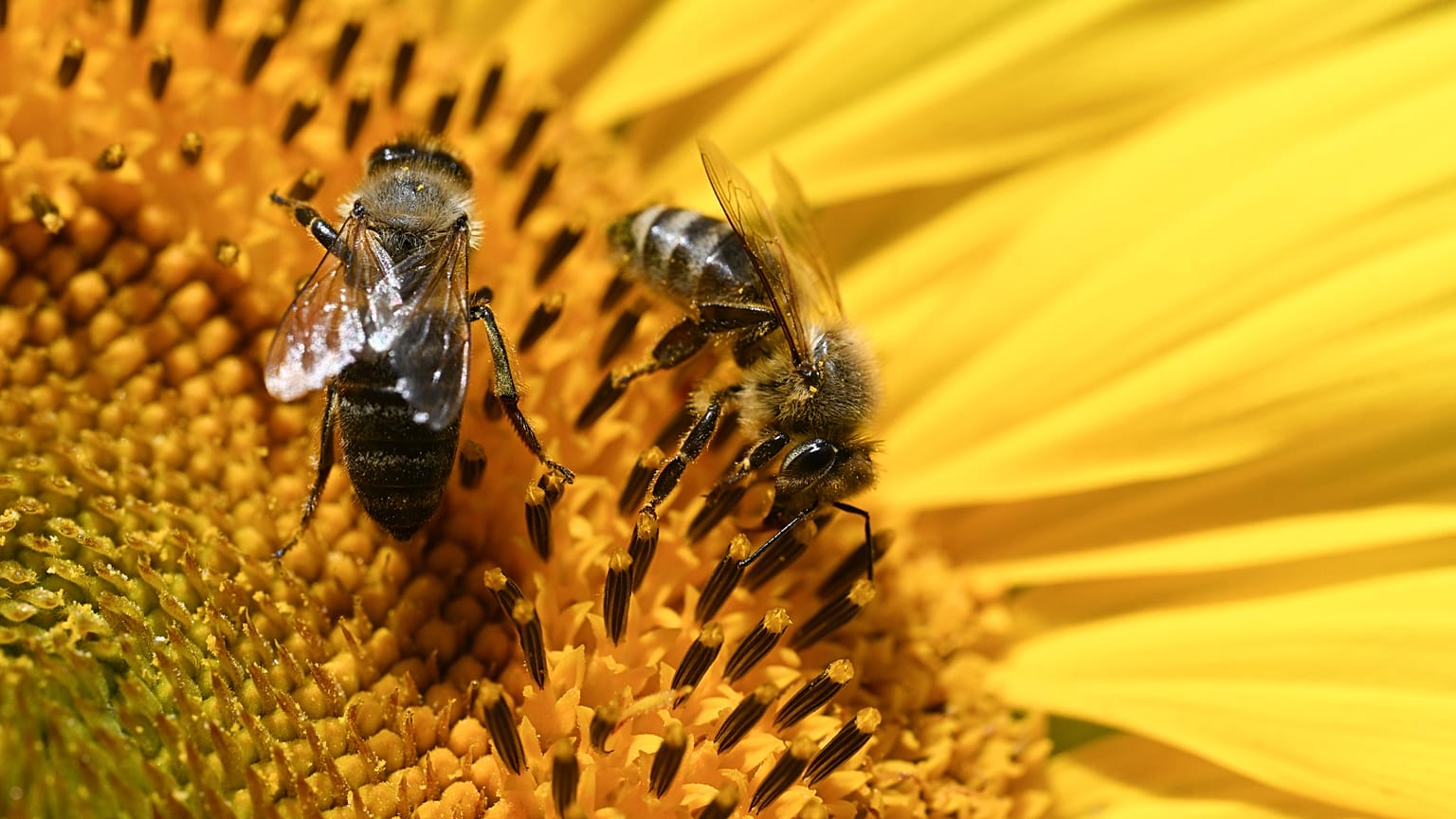
Bees collect nectar and pollen from a sunflower in Remseck, in Germany’s Baden-Württemberg region, on Friday 10 July 2026. (Bernd Weißbrod/dpa via AP)
Copyright AP Photo

By Romain Gutkind with AFP
Published on

The law confirms that, by way of exemption, permission may be granted to use two controversial pesticides: acetamiprid, harmful to pollinators, and flupyradifurone, likely to be sold as treated seeds.

Prime Minister Sébastien Lecornu had promised farmers he would find solutions to their problems with their “means of production”.

Senators backed the bill by 214 votes to 111.

The emergency law has been pushed through with difficulty and is causing divisions even within the ruling majority.

The Minister for the Ecological Transition, Monique Barbut, opposed the adoption of the law and announced, as soon as it was approved by the Senate, that she would submit her resignation to Emmanuel Macron.

The left is expected to refer the matter to the Constitutional Council, and Green MP Daniel Salmon has slammed “a reckless and destructive headlong rush, with complacent measures that deny the scientific evidence”.

For his part, centrist senator Franck Ménonville describes the text as a response to “the hypocrisy of producing less in France in order to import ever more products that do not comply with our standards”.

The law provides that, if referred to by the Minister of Agriculture, the health agency Anses may, “on an exceptional basis” and subject to conditions, authorise the use of two pesticides: acetamiprid and flupyradifurone.

The first has been banned in France since 2018. The EU allows it until 2033, at ever lower doses.

Flupyradifurone (source in French), banned since 31 December 2019, is considered a new-generation neonicotinoid. Its use is authorised in the EU until 2029.