Showing posts sorted by relevance for query ERIC FROMM. Sort by date Show all posts

Thursday, February 09, 2006

Make Friends and Kill Yourself


Reuters is reporting that internet suicide rates are up in Japan. That is folks meeting on the net to plan collective sappuku. It's a unique Japanese phenomena.

While in the West folks hide away in their rooms, by themselves, alienated from the world around them only to die alone leaving their notes on the internet. Now some commentators thought I was being harsh in my comments on this particular case, of the AI genius who commited suicide, because I failed to understand him or read his work.

But the point I was making is that he was his project. He had stepped into the abyss. All that we do is a process of self realization, one side is enlightenment the other is madness. The same goes for the technogeeks in society. They already are maladjusted in mass society, alienated individuals, being nerds and geeks, their best friend is their program or their computer. Thus they already have the tendency towards the dark side.

It's the darkside of the web, and the dark side of our culture which denies public access to information on the epidemic of suicide. As the pressures of capitalism deforms our culture it also deforms our psyches. The pace of society, the demands of work and consumerism, the social conformity demanded of us are greater than any other time in human culture. Capitalism dehumanizes us and in its twisted version of individualism we are reduced to being alone, alienated.

We lack authentic relationships, love and solidarity, as Eric Fromm points out in this essay from 1959. Love in America


Modern man is alienated from himself, from his fellow men, and from nature. He has been transformed into a commodity, and experiences his life forces as an investment that must bring him the maximum profit under existing market conditions.

Man bows down and submits to the demands of his own work, his machines, his organization of production and consumption, and loses the experience of himself as creator and subject of his truly human powers of love and thought. Thus human relations become more and more those of alienated automatons.

But automatons cannot love. They can exchange their „personality
packages“ and hope for a fair bargain. Love becomes the refuge for a
„team“ from an otherwise unbearable sense of aloneness. One forms an alliance
against the world as this „egoisme a deux“ is mistaken for love and intimacy.

Industrialization has provided leisure for entertainment, mass communications
media have made it continuously available, and our consumption-oriented
economy urges us to imbibe as much of it as possible. Turn where we will our
senses are assailed by hundreds of competing forms of amusement.
The tendency of mass entertainment, especially the movies, to exalt romantic
love at the expense of other kinds has already been noted. Its other effects on
love include the following:

(a) As financial considerations require that most
entertainment programs attract the largest possible numbers, they demand very little
of their audiences. This means that they contribute to human passivity; little more
is required than to sit and absorb. But if love is an activity, as we have insisted, it
is poorly served by inducements to become, as persons, more passive.

(b) The continuous entertainment which mass media offer us has turned what is inherently the most intimate of all human relationships into the most public and ubiquitous. Never before have so many people been wooed in such public fashion.
Sentiments which were formerly regarded as deep, personal exchanges between
two loving human beings are now common promises in the wind. „I love you“ is a
pledge by a disembodied voice to an anonymous mass. It is difficult to see how
this process can continue without undercutting some of the power of love’s language.

(c) When people spend their time together, not in coming to know one
another better as individuals, but in attending to something unrelated to anyone
in the group, neither friendship nor love is advanced. In this sense, it is one of the
ironies of our culture that the entertainment designed to bring people together
actually keeps them apart.

The phrase „mass culture“ has come to suggest a number of features of
modern society which work against the individual’s uniqueness,
depth of personal feeling, and self-identity.

Cities are crowded, work is specialized, and people are mobile, all of which
means that we encounter more persons but know and are known less
thoroughly by each. We are part of the busman’s „load,“ a proprietor’s
„customers,“ a manager’s „personnel.“ Vast, centralized enterprises with
radical divisions of labor inhibit workers’ individuality and reduce them
to the status ofr eplaceable cogs.

Government, business, and labor unions are all so big as to
make us feel impotent. Alienated from ourselves, from our fellow-men and from
nature, we try to escape from our loneliness, insignificance and insecurity by
identifying ourselves with others through conformity. We dress like them, behave
like them, and hold the same opinions, only to discover that
uniformity is noguarantor of true unity.

Huddled in togetherness we remain alone. Significant human relationships are a function of lives that are confidently rooted in the individuality that mass culture renders difficult.


Mind & Body, Alfred Adler, 1931

Character and the Social Process, Eric Fromm, 1942

One Dimensional Man, Herbert Marcuse, 1964

The Politics of Experience, R. D. Laing, 1967

Society of the Spectacle, Guy Debord, 1967


Find blog posts, photos, events and more off-site about:

, , ,

Wednesday, January 20, 2021

CANADA
Tory caucus to meet Wednesday to determine fate of MP Derek Sloan: sources

© THE CANADIAN PRESS/Sean Kilpatrick 
Conservative MP Derek Sloan arrives to a meeting in Ottawa on Tuesday, Sept. 22, 2020.

The Conservative Party of Canada's caucus will be holding a vote on Wednesday to decide whether to remove MP Derek Sloan, sources say.

The party's leader, Erin O'Toole, had called for his removal on Monday, after a report from Press Progress surfaced revealing the member of parliament for Hastings–Lennox and Addington accepted at $131 donation from a man who has been described as a neo-Nazi.

Read more: O’Toole seeks to boot MP Derek Sloan from Conservative caucus over donation

A Conservative source told Global News many members of caucus are frustrated that Sloan doesn't act like a member of the team, and does not show any remorse or understanding about the effects his behaviour has on his colleagues.

Wednesday's vote will be about the cumulative effect of Sloan's behaviour, not just about the issue of the donation, the source said.

Another source confirmed to Global News the meeting will take place at 11 a.m. ET.

However, in an interview on Tuesday, Sloan dismissed the calls for his removal as “trumped-up charges.”

“This is infighting and it's not good for the future of conservatism in Canada,” he said.

Sloan also maintained that he did not know of the donation from Paul Fromm before Monday, adding that he condemns racism and hatred.

“I don't know much about Paul Fromm,” he said
. “I understand that he's affiliated with racist groups. I condemn that, I condemn racism. I condemn hatred.”

“That's certainly something I'm proud to say.”

Video: MP Derek Sloan says he condemns racism, hatred after donation scandal

Sloan said his leadership campaign team did not have the manpower to conduct background checks on each individual donation, saying they received over 13,000 individual donations.

Earlier on Tuesday, Prime Minister Justin Trudeau said he was "pleased" with O'Toole's move to begin the process of removing Sloan.

“The Liberal Party has been calling for Erin O’Toole to remove Derek Sloan from caucus for many, many months now following a number of unacceptable comments that he has made,” Trudeau said.

“We are pleased that Erin O’Toole has finally decided to take leadership and we’ll see how that unfolds.”

On Monday, O'Toole issued a statement calling Sloan's acceptance of the donation "far worse than a gross error of judgment or failure of due diligence."

The leader said he had initiated the process to remove Sloan under the Reform Act, and would bar him from running as a candidate for the party.

Read more: O’Toole seeks to boot MP Derek Sloan from Conservative caucus over donation

"Racism is a disease of the soul, repugnant to our core values." he said in the statement.

"It has no place in our country. It has no place in the Conservative Party of Canada. I won't tolerate it."

However, in a statement Monday evening, Sloan claimed Fromm had applied and was accepted as a member of the party last summer amid the party's leadership race.

He said this means scrutineers for the campaigns of O'Toole, Peter MacKay and Leslyn Lewis also overlooked Fromm's application.

“Therefore the Party, and the O’Toole campaign, failed to uphold the same standards to which they are now applying to me,” he said.

But, in an email to Global News, a spokesperson from the Conservative Party said it was Sloan’s campaign that sold Fromm a party membership in May.

“Mr. Sloan’s campaign accepted the donation from this individual in August,” the email read. “We are revoking this membership. We are remitting the funds.”

A majority vote of the party caucus would be required to remove Sloan.

It was not immediately clear how members planned on voting, though at least one has publicly called for his ouster.

In a tweet on Monday, MP Eric Duncan said he has "had enough too."

"There is no room for this garbage in our Party," he wrote. "Good riddance."


Former Conservative MP John Baird also shared his thoughts on Twitter, saying he has "worked well with many social conservatives in our party over the years."

"They are welcome in our party, but Derek Sloan’s behaviour is not. I am fully supportive of @erinotoole's strong leadership," he wrote.

Sloan, meanwhile, has said he has heard from some members of the party who have offered their support.

“I don’t want to highlight anybody in particular, but you know, I think many people that I’ve spoken to, frankly, understand that this can happen to anyone,” he said.

This is not the first time members of the party have called for Sloan to be removed from caucus.

Last year he faced calls for removal after he questioned whether Canada’s Chief Public Health Officer Dr. Theresa was working for China amid the novel coronavirus pandemic.

However, Sloan insisted he was not questioning Tam’s loyalty to Canada, and ultimately remained in the party’s caucus.

— With files from Global News' Amanda Connolly

Monday, October 20, 2025


How the US Department of Energy Is Controlling Language to Shift Policy

  • The DOE has reportedly instructed employees to avoid terms like “climate change,” “clean energy,” and “decarbonization,” effectively narrowing how policy can be discussed.

  • This move, as in George Orwell’s 1984, will limit the language that can be used in order to drive ideological conformity within the Department of Energy.

  • Controlling language in government communications risks erasing vital environmental discussions and undermining transparent policymaking.

In George Orwell's novel, 1984a totalitarian regime now rules the homeland and operates by three slogans: 1) War is peace, 2) freedom is slavery and 3) ignorance is strength. In 1984, the term "Newspeak" refers to what is essentially a mandatory style guide for using the English language under that regime by substituting Newspeak formulations for common words and phrases so as to make public discourse conform to the ruling party's orthodoxy. (For a list of Newspeak words and phrases, check here.)

Not surprisingly, failure to conform to this style in written and oral communications is considered a crime. In fact, to think thoughts contrary to those expressed in Newspeak terms is considered a "thoughtcrime" because it implies one's personal values are not in harmony with official party dogma. Even having a facial expression that appears to imply disagreement with that dogma is a "facecrime."

Every modern regime tries to regulate the language used by its citizens (or subjects, as the case may be). As I have written previously, "If you want to corrupt a people, corrupt the language." So, it's not particularly surprising that the U.S. Department of Energy (DOE), now controlled by an oil industry insider, has put out its own Newspeak-like manual in the form of an email to department employees, which is focused on subtracting words and phrases according to Politico. In the email, the DOE is doing to the vocabulary of its personnel what the Trump administration is doing to the government, namely, cutting it.

The latest announcement appears to apply to those working for the Office of Energy Efficiency and Renewable Energy and adds to a list that was started some time ago. The list of "words to avoid" now includes the following:

  • clean or dirty energy
  • carbon/CO2 footprint
  • climate change
  • decarbonization
  • emissions
  • energy transition
  • green
  • sustainability/sustainable
  • tax breaks/tax credits/subsidies

Of course, this off-limits list seems ludicrous since all of these topics have been widely discussed in publications that fill library shelves and online repositories of scholarly work, journalism, and policy papers. How could this directive actually enforce the kind of rigorous elimination of ideas and words, รก la 1984, which are "misaligned with the Administration’s perspectives and priorities" as the email puts it? Of course, it cannot.

However, DOE employees will henceforth not be allowed to use such words, and that will have definite effects on policy discussions for the simple reason that none of the ideas associated with those words will be contemplated in those discussions.

As social psychologist Eric Fromm explains in an afterword to the edition of 1984 that I have, the goal is not simply to force people to say the opposite of what they think. Fromm writes: "[I]n a successful manipulation of the mind the person is no longer saying the opposite of what he thinks, but he thinks the opposite of what it true."

There is a lot of that going around these days thanks to social media. People often only have discourse with those with whom they agree and agree to facts which they cannot personally verify and which may be the opposite of what they are told. If this were merely a benign process—say, revolving around the best way to make a Bundt cake—we'd have little to worry about. But it involves the very essence of how we will govern ourselves and how we will face a future of increasingly dangerous climate change and resource depletion.

In 1984 the main character, Winston, works for the Ministry of Truth where he helps to rewrite history to conform to the ideological views of the single political party that controls his country. Since the party changes its ideas and policies not infrequently, there are many people like Winston at the ministry rewriting history on a daily basis.

I am reminded of the Great Soviet Encyclopedia. In 1953 following the arrest and execution of Lavrentiy Beria, former head of the interior ministry and secret police, the publishers sent out three pages to owners of the encyclopedia on the topics of the Bering Sea and Bishop Berkeley (an Irish philosopher and clergyman), and asked owners to cut out the three pages which covered the life of Beria and replace them with these new pages.

As the DOE tries to turn the Office of Energy Efficiency and Renewable Energy into a mini ministry of truth, we should remember that forces representing the full spectrum of ideological beliefs are constantly putting out versions of history and versions of the present to advance their goals. Some may be accurate, some may merely be selective—no one can write a history of everything or cover the entire span of current events—and some may be flat-out lies.

One telltale sign that you are reading or listening to something that is not giving you the full story will be the language used. If the vocabulary is limited, repetitive, and/or sounds like sloganeering, you would do well to be skeptical of the writer or speaker. If the language is expansive and nuanced, there's a better chance that what you are reading or listening to will have some value.

By Kurt Cobb via Resource Insights

Wednesday, April 13, 2022

 Towards A »Sane Society«

Thoughts on Liberation On the Way to a Humane Society

Burkhard Bierhoff

 Abstract:

Eric Fromm was one of the ๏ฌrst psychoanalysts to deal with the crisis of civilization. Hisideas about human nature, the social character and the social unconscious, the pathology of normalcy and the ideal of productivity are important. Fromm criticizes industrialism for its unrealizable promises of freedom and happiness, which correspond to an ideology of growth and progress. The satisfaction of »false« needs and desires does not lead to human well-being.

Wednesday, February 14, 2007

A Little Eros For Valentine's Day


Alternet had this article about activism and love for Valentines day;
Why Love Is Our Most Powerful, Lasting Form of Activism

Which is very much what I said here;Socialism Is Love

And it got me thinking about the left wing Freudians like Norman O. Brown. One of the philosophers who was widely read in the Sixties and Seventies but who is forgotten now. Yet Brown only recently passed away, five years ago.

His attack on repression and embrace of Eros against Thantos (death) spoke to the crisis of rigidity, authoritarianism and the war culture in America and around the world in that period. Not unlike the situation of world crisis we find ourselves in now.

Like Marcuse's; Eros and Civilization,
and the various works of Paul Goodman and Eric Fromm, and those of Wilhelm Reich, reading Browns work was a liberatory experience.

For Valentines day I can think of no better suggestion than remember Norman. O. Brown.

Brown like Fromm and the radical theologian Harvey Cox a Dionysian Christian,embraced the idea of death and resurrection as liberation, and that the secret gnosis was to embrace life not death, in that Christos was life against death.

Like
Jane Ellen Harrison who in her work Themis described the revolutionary aspect of Dionysus as being the young god who embraces life even in death, against the sterility and rigidity of the old pantheon of dead stone faced Gods of Greece. By the time of the Bacchanae, the Greek pantheon stood as statues in the edifice of State. Appolianic culture was ridden with wars and patriarchy as it was the creator of high culture and civilization of the Greek State.

This dialectic is also reflected in the later works of Harold Bloom and Camille Paglia.

In his work Loves Body....

Brown here draws much more on ethnography and myth, in addition to psychoanalysis, and he strives for a fusion of the pagan/Dionysian with a radical Christian mysticism. (This latter is noteworthy, because it calls upon potentialities in Christianity that are far different either from the “liberal theology” of Brown’s day or from the heavy fundamentalism that is the main face of Christianity in America today. Brown’s emphasis on the joyousness of the Resurrection, on the “resurrection of the body,” is diametrically opposed to the sadomasochistic body hysteria/disgust of Mel Gibson’s Passion of the Christ). Brown also moves from the formidably learned and argumentative discourse of Life Against Death to a more poetic, more willfully fragmentary style of writing. Love’s Body is short on any concrete discussion of how we might get from here to there, from civilized repression to redemption in the body of Dionysus/Christ, but it’s ferociously visionary in a way that stands as a reproach to more timid social, cultural, and religious theorists.


Norman Brown, Playful Philosopher, 89, Is Dead

October 4, 2002
By DOUGLAS MARTIN


Copyright 2002 The New York Times Company

Norman O. Brown, an erudite and spectacularly playful
philosopher whose attempt to psychoanalyze nothing less
than history itself entranced intellectuals, beguiled New
Age seekers and sold many books, died on Wednesday in Santa
Cruz, Calif. He was 89.

His son Thomas N. Brown said he had Alzheimer's disease and
died at an assisted-living residence.

Dr. Brown was a master of philosophical speculation, mixing
Marx, Freud, Jesus and much else to raise and answer
immense questions. Alan Watts, the popular philosopher,
sang his praises. His works joined David Riesman's ``Lonely
Crowd'' and J.R.R. Tolkien's ``Lord of the Rings'' on the
reading lists of undergraduates aspiring to the
counterculture.

Scruffy pilgrims streamed to commune with him, only to
discover a short-haired man who lived in a split-level
house and avoided drugs. A meticulous student of ancient
Greek who was given to long, meditative walks with his
golden retriever, he was not a little perplexed when
magazine and newspaper articles linked him to the new left,
LSD and the sexual revolution.

``I have absolutely no use for the human-potential
movement,'' he said in an interview with Human Behavior
magazine in 1976.

His books were nonetheless gobbled up by scholars eager to
respond to hip-sounding ideas that combined erudition and a
poetical mysticism.

``Reading Brown was a little like taking drugs, only it was
more likely to lead to tenure,'' the sociologist Alan Wolfe
wrote in The New Republic in 1991.

In his ``Life Against Death: The Psychoanalytical Meaning
of History'' (Wesleyan University Press, 1959), he said
individuals and society were imprisoned by an essentially
Freudian ill: repression. He argued that the only escape
was to face death head-on and affirm life.

Maurice Richardson wrote in The New Statesman: ```Life
Against Death' is a running dive off the Freudian
springboard into history's deep end. It is a fascinating
book, discursive, inconsequent, sometimes preposterous, but
full of interesting ideas, product of a learned man in a
tight place, one of those rare genuine stimulators.''

Dr. Brown's book ``Love's Body'' (Random House, 1966)
discussed the role of erotic love in human history,
describing a struggle between eroticism and civilization.
He voted against civilization, a stance that elicited
praise and criticism.

Among his critics was Brigid Brophy in The New York Times
Book Review, who called Dr. Brown's assertion that
schizophrenics might be saner than those without the
disease ``the most preposterous ever made in serious
print.''

His ``Closing Time'' (Random House, 1973), an interweaving
of quotations from James Joyce's ``Finnegans Wake'' with
excerpts from the works of the 18th-century philosopher
Giambattista Vico, was ``an extraordinary tour de force,''
Library Journal said.

Norman Oliver Brown was born in El Oro, Mexico, on Sept.
25, 1913. His father was an English mining engineer, and he
was mainly reared and educated in England, where his tutor
at Balliol College, at Oxford University, was the eclectic
historian Sir Isaiah Berlin. He earned his doctorate in
classics at the University of Wisconsin.

From 1943 to 1946 he served in the Office of Strategic
Services, the forerunner of the Central Intelligence
Agency. He became a friend of Herbert Marcuse, another
intelligence analyst and later analyst of society, and
those philosophers later engaged in spirited intellectual
debates for many years.

In 1938 he married Elizabeth Potter, who survives him. In
addition to her and his son Thomas, of Santa Cruz, he
leaves another son Stephen, who lives near Armstrong,
British Columbia; his daughters Rebecca Brown of Monte Rio,
Calif., and Susan Brown of Iowa City; and five
grandchildren.

Dr. Brown was a professor at Wesleyan University, the
University of Rochester and the University of California at
Santa Cruz.

He was a Marxist by sensibility and intellectual
inclination in the 1930's, and worked in the leftist
presidential campaign of the Progressive Party's Henry
Wallace in 1948. By the early 1950's, he decided that
politics did not answer the important questions, and became
enamored with Freud. He even learned to interpret his
dreams, which had the unwanted side effect of ruining his
sleep.

Sir Stuart Hampshire, an English philosopher who had known
Dr. Brown since they were students at Oxford, said
yesterday in a telephone interview that Dr. Brown was ``a
victim of theories,'' whether those of Marx or Freud. He
said Dr. Brown's idea that it was possible to abandon
Freudian morality in choosing an unrepressed life was ``not
really his life or anybody's life.''

But Sir Stuart praised many of Dr. Brown's intellectual
insights, mentioning in particular his recognition of
Jonathan Swift's hatred of the physical functions of the
body.

``Nobody had ever said that before,'' he said. ``It was
very, very intelligent.''

Jay Cantor, who teaches a mix of literature, philosophy and
psychoanalysis at Tufts University, said yesterday by phone
that Dr. Brown was brilliant at connecting seemingly
disparate subjects to form new insights. A typical example:
``If Freud is true it is because of connections with the
Gospel, and if the Gospel is true it is because of
connections with Marx, and if Marx is true it is because of
connections with James Joyce.''

Dr. Brown typically used memorized quotations to make the
connections, Dr. Cantor said. He added that Dr. Brown had a
modern poet's sensibility in his writings, allowing ``the
symbolism and the history of the words he used to lead his
thoughts.''

``Everything is only a metaphor,'' Dr. Brown wrote in
``Love's Body,'' ``there is only poetry.''

His favorite poetic sentiment was about how we all die with
unlived lives in our bodies. Dr. Cantor suggested that this
referred to ``the difficulty of breaking the mental chains
we carry within us.''


ZIZEK, NORMAN O. BROWN & THE PSYCHOLOGY OF CULTURE
by Richard Koenigsberg


According to Slavoj Zizek, the fundamental level of ideology is that of an
"(unconscious) fantasy structuring our social reality." Ideology is not a
"dreamlike illusion," rather is a "fantasy- construction which serves as a
support for our 'reality' itself." Matthew Sharpe notes that just as an
individual subject's discursive universe will "only ever be unified through
recourse to a fantasy," so too the public ideological frame wherein
political subjects take their bearings can only function through the vehicle
of what Zizek calls "ideological fantasies."

Norman O. Brown's writings in Life Against Death: The Psychoanalytical
Meaning of History allow us to expand upon Zizek's views. In contemporary
theory, concepts such as culture, ideology, discourse and narrative usually
are taken as "givens." These concepts are used to "explain" the mind, but
are not themselves considered to be subject to explanation. However, one may
pose questions such as: Why do particular discourses become dominant within
a given society? Why do some narratives replicate whereas others do not? How
may we account for the structure and shape of particular ideologies, and the
passion with which they are embraced?

Whereas Lacanian theorists view the mind as a product of the symbolic order,
Norman O. Brown seeks to explain the nature of the symbolic order itself.
Brown states that culture represents a set of "projections of the repressed
unconscious." Symbolic objects in culture, according to Brown, exist to the
extent that they perform psychological functions for the subject. Culture,
Brown declares, exists in order to allow human beings to "project the
infantile complexes into concrete reality, where they can be seen and
mastered."


The Freudian Left

The body was also the nexus of repression for Brown, and his “eschatology of immanence” (to use Susan Sontag’s memorable phrase (262)) foreshadows the postmodernism of many from Dilleuze to Irigaray:

With the whole world still in the bourgeois stage of competitive development and war, the thing to remember about Marx is that he was able to look beyond this world to another possible world, of union, communion, communism…And after Freud, we have to add that there is also a sexual revolution; which is not to be found in the bourgeois cycle of repression and promiscuity, but in the transformation of the human body, and abolition of genital organization. (1968, 246)

Brown is at pains to point out that the most basic of Freud’s speculations demand not only a science of culture, but also a revolution:

In a neurosis, according to Freud, the ego accepts reality and its energy is directed against the id… In a psychosis, the ego is overwhelmed by the id, severs its connection with reality, and proceeds to create for itself a new outer and inner world. The healthy reaction, according to Freud, like a neurosis, does not ignore reality; like a psychosis it creates a new world, but, unlike psychosis, it creates a new world in the real world; that is, it changes reality. (1959, 154)

For Brown, who remains the most Freudian of our triumvirate, sublimation (the result of repression) is essentially desexualization wherein the ego, incapable of accepting its own negation in death, dilutes its life and connects its “higher sublimations” (socially accepted transferences of erosic energy such as work and industry) to lower regions of the body in what Brown terms a “dialectical affirmation-by-negation.” If the simplest example of such sublimation-as-desexualizing is infantile thumb sucking, the “most paradoxical” is anality, and Brown concludes his magnum opus, Life Against Death with a simply astonishing deconstruction of “the excremental vision” in western literature and philosophy. In a discussion ranging form Luther’s eschatology, to Berkeley’s tar-water and Kant’s “categories of repression” we find a conclusion of sorts: “It is by being the negation of excrement that money is excrement; and it is by being the negation of the body (the soul) that the body remains a body-ego” (1959, 161).


Norman O. Brown, 1913-2002

Norman O. Brown was born in New Mexico in 1913 and educated at Balliol College, Oxford, and at the University of Wisconsin. His tutor at Oxford was Isaiah Berlin. A product of the 1930s, Brown was active in left-wing politics - for example, in the 1948 Henry Wallace presidential campaign - and his work belongs within the history of Marxist, as well as psychoanalytic, thought. During World War II, he worked in the Office of Strategic Services, where his supervisor was Carl Schorske and his colleagues included Herbert Marcuse and Franz Neumann. Marcuse urged Brown to read Freud, leading, in 1959, to Brown’s most memorable work, Life Against Death. Brown taught Classics at Wesleyan University and was a member of the History of Consciousness Department at the University of California at Santa Cruz. Although Life Against Death made him an icon of the New Left, he successfully eschewed publicity, insisting to the end on his primary identity as teacher.

There is still no better introduction to Life Against Death than the one that Brown wrote in 1959. The book was inspired, he explained, by a felt ‘need to reappraise the nature and destiny of man’. The ‘deep study of Freud’ was the natural means for this undertaking. His motives, Brown continued, were political in the most profound sense of the term: ‘Inheriting from the Protestant tradition a conscience which insisted that intellectual work should be directed toward the relief of man’s estate, I, like many of my generation, lived through the superannuation of the political categories which informed liberal thought and action in the 1930s.’ ‘Those of us who are temperamentally incapable of embracing the politics of sin, cynicism and despair’, he added, were ‘compelled to re-examine the classic assumptions about the nature of politics and about the political character of human nature.’

How did it come about, at the dawn of the 1960s, that Freud appeared as the successor to a ‘superannuated’, but not yet surpassed, Marxist project? Life Against Death addressed this question. Until the 1960s, as Marx had well understood, the overwhelming fact of human life had been the struggle for material existence. The ‘affluence’, ‘cybernation’, and ‘conquest of space’ that were becoming apparent signalled that this struggle need no longer dominate. As John Maynard Keynes prophesied, even a glimpse at ‘solving the economic problem’ would provoke a society-wide ‘nervous breakdown’ or creative illness in which the ends of society would come in for re-examination. Marxism lacked the means for this re-examination but psychoanalysis did not. However, Freud in the 1950s was understood to be a conservative refuter of liberal and Marxist illusions of progress and not as their successor. As Norman Podhoretz - then a student who, along with Jason Epstein, discovered and promoted the book - noted, Brown disdained the ‘cheap relativism’ of Freud’s early critics such as Karen Horney and Erich Fromm and understood that ‘the only way around a giant like Freud was through him’.

Brown’s reading of Freud in Life Against Death had two main theses. first, Brown offered a riddle: ‘How can there be an animal that represses itself?’ Freud’s texts offered a solution. The determining element in human experience, in Brown’s reading, was the fear of separation, which later takes the form of the fear of death. What we call individuation is a defensive reaction to this primal fear and is ‘based on hostile trends directed against the mother’. Driven by anxiety, the ego is caught up in ‘a causa sui project of self-creation’; it is burdened with an ‘unreal independence’. The sexual history of the ego is the evidence of this unreality. Desexualization (the transformation of object-libido into narcissistic libido) is the primary method by which the ego is built up.

While Brown’s emphasis on the infant’s psychical vulnerability was true to Freud, his one-sided denigration of the ego was not. According to Brown, what psychoanalysis considered the goals of development - ‘personal autonomy, genital sexuality, sublimation’ - were all forms of repression. Above all Brown criticized psychoanalysis for endorsing dualism: the separation of the soul (or psyche) from the body. The true aim of psychoanalysis, he argued, should be to reunite the two. This can be achieved by returning men and women to the ‘polymorphous perversity’ of early infancy, a state that corresponds to transcendence of the self found in art and play and known to the great Christian mystics, such as William Blake and Jakob Boehme. The key was to give up the ego’s strivings for self-preservation; genital organization, Brown wrote, ‘is a formation of the ego not yet strong enough to die’. Brown called repression the ‘universal neurosis of mankind’, a neurosis that every individual suffered.

History, or the collective individual, he continued, went through an analogous process of trauma, repression and the return of the repressed. History, then, had the structure of a neurosis. In particular, Brown saw the birth of capitalism as the nucleus of the neurosis, a critical period, somewhat akin to the stage of the Oedipus complex in the evolution of the individual. Just as, in Freud’s original formulation, the infant moved from anality to genitality, so, Brown believed, in the transition from medieval to modern capitalist society, anality had been repressed, transformed and reborn as property. Capitalism at root, Brown argued, was socially organized anality: beneath the pseudo-individuated genitality of early modern society, its driving force was literally the love of shit. The Protestants, he held, had been the first to notice this. Luther, in particular, regularly called attention to the Satanic character of commerce, by which Brown meant both its daemonic, driven character and its excremental overtones of possession, miserliness and control. The papacy’s ultimate sin, according to Luther, was its accommodation to the world, meaning to commerce or the Devil. Once again, as for the individual, Brown viewed death as the portal to life. Max Weber, he argued, in linking Protestantism to capitalism, emphasized the calling but left out the crucifixion. According to Brown, ‘the Protestant surrenders himself to his calling as Christ surrendered himself to the cross’, meaning that a free, unrepressed merging with this world was the path to resurrection and to the transcendence of the soul/body divide.

Life Against Death will always be associated with Herbert Marcuse’s Eros and Civilization, which appeared four years earlier and which inevitably influenced Brown. Whereas Brown articulated his impossibly utopian vision of an unrepressed humanity in prophetic tones, Marcuse distinguished surplus repression - the repression imposed by alienated labour and class society - from necessary repression, the repression that was inevitably involved in separation from the mother, the struggle with the instincts, and death. Both books reflected the historic possibilities of automation, but Marcuse’s added a note of realism missing in Brown’s. Furthermore, in the ecumenical 1960s, the Christian substructure of Brown’s thought was barely noticed, although it became even more prominent in his 1965 Love’s Body. By contrast Eros and Civilization was unremittingly secular. In one sense, however, Brown’s book advanced beyond Marcuse’s. Whereas Marcuse still suggested that most psychic suffering originated in social demands imposed on the individual from the outside, Brown was closer to Freud in grasping the ‘mind-forg’d manacles’ rooted in the painful facts of dependence and separation.

Although published in the 1950s, Life Against Death found its main audience among the polycentric, globally dispersed, revolution-oriented student and youth groups known collectively as the New Left. Just as such ‘extremist’ sects of the Reformation as the Anabaptists, Diggers and Holy Rollers sought to experience salvation on earth, so the New Left rejected Freud’s insistence that repression was inevitable. In doing so, it served as a kind of shock troop, limning the horizon of a new society. Life Against Death spoke to its key preoccupations: the belief that the socio-political world was intrinsically mad, the rejection of the nuclear family, the desire to transcend distinctions and boundaries, to bring everything and everyone together, the rejection of sublimation and the achievement ethic in favour of authenticity, expressive freedom and play. Like Eros and Civilization it rested its claims on the ego’s original, ‘inseparable connection with the external world’. Giving voice to the communal ethos of the time, it provided an underpinning to the New Left’s critique of instrumental reason, its desire for a new connectedness with nature, and its attempt to liberate sexuality from its genital, heterosexual limits; indeed, to eroticize the entire body and the world.

What, finally, can we say about a work whose tone and vision seem almost infinitely alien to our own ‘post-utopian’ times? Brown’s perception of the liberating potential of the modern economy was not wrong, but it required cultural and political transformations that necessarily occurred only in partial and limited ways. If Brown missed the fact that the fantastic power of the modern economy can be and has been harnessed for life, he illuminated its dark and daemonic underside in ways that we have still not fathomed. It is also worth remembering that the dreams that arise in great periods of social upheaval do not disappear for ever. Rather, they go underground, as the 1960s went underground and were reborn in the women’s movement, in the upheavals of 1989, and in the anti-globalization struggles of today. Memorializing Brown’s death is one way to encourage what he believed in above all: rebirth.

Eli Zaretsky


Find blog posts, photos, events and more off-site about:
, , , , , , , , , , , , , , , , , ,

Sunday, October 02, 2005

Another Fascist Bites the Dust

RON GOSTICK, R.I.P.

Actually its good riddance to this home grown Alberta fascist, who founded the Canadian Intelligence Service (sic), Canadian League of Rights, etc. etc ad naseum.

His eulogy is written by current fascist spokesman Paul Fromm and published here at the Australian League of Rights site, which is a creepy slimy fascist organization, that came about as part of the Right Wing League of Rights groups in Canada (Gostick was its founder), the US, and England. You can tell them by their motto:"All that is necessary for the triumph of evil is that good men do nothing" Edmund Burke

You have been warned. I publish this here because its important to learn the links that the right wing rump of the Reform/Alliance/Conservatives and their friends have to the fascist movement in Canada. Interestingly Gosticks death was over shadowed by that of Wolfgang Droege, leader of the Heritage Front, who died this spring.

Gostick's importance in the continuation of the post war fascist movement (packaging itself as an anti-communist movement during the long Cold War) of the right in Canada should not be underestimated. Often overshadowed by those high profile fascists in the media like Droege, James Keegstra, and Zundel whom would not have existed had it not been for Gostick and his pal Pat Walsh.

Their hatred of Trudeau and publication of scurilous attacks on him, as well as their unrepentant anti-semitism, pro-white/Celtic/Saxon, anti-bilingualism publishing lead to the creation of the anti-hate laws in Canada. They drew attention to themselves and their small publishing empire by their continued attacks on Trudeau.

Gostick and Walsh had the base of their operations in Southern Alberta, and Southern Ontario, in the farming and evangelical protestant communities. Today Southern Ontario is still a base for fascists like Paul Fromm.

In Canada itself, neo-fascist groups continue to organize. Over the past few months, in southern Ontario, the Canadian Heritage Alliance has developed as a youth organization with links both to former Heritage Front members and to long-time far-rightists, Paul Fromm and Marc Lemire. At the same time, a new group associated with White Power Skinheads, the Canadian Ethnic Cleansing Team, has emerged in the Kitchener-Waterloo area. In Calgary, there is a new presence of the National Alliance, a US-based international neo-Nazi organization; in Ontario and in BC, the white racist World Church of the Creator is showing renewed strength, while in Quebec, the Vinland Skinheads are organizing in both the Anglophone and Francophone communities. Fascism at the End of the Twentieth Century, David Lethbridge

In Southern Alberta Gostick and Walsh found a fertile base for their ideology, as it was also the home of Dutch Emirgres of the Calvinist Christian Reformed Church and the Mormons. Both of these sects viewed the choosen people as being 'white', the CRC was strongly affiliated with the aparthied State in South Africa.

They can be credited with having influenced Alberta Seperatism as the ideology that lay beneath the populist Western Canadian reformist veneer of Doug Christies Western Canada Concept (WCC), and
Elmer Knutsen's Confederation of Regions Party,

A reading of any of the WCC or CRP publications from the seventies shows the same belief in creating a 'white only' ( Celtic/Saxon peoples), anti-Quebec/Anti-bilingualism/Anti-Multiculturalism Independent Alberta/Western Canada. These ideas today are still thinly vieled in the Alberta Seperatist movement.

A Separation Party of Alberta government will establish and administer its own immigration program and support an immigration policy based on acceptable applicants who will embrace our way of life and accept our standards of behavior and abide by our laws.

The reason for this calamity is that Family Class immigrants constitute
over 60% of all immigrants. Asians are displacing the founding race of
this country at an alarming pace specifically because we allow them to
bring in family members from Third World nations. Meanwhile, highly
qualified European workers have to go through the rigours of the points
system, where their eligibility is appraised according to their
proficiency in English or French and the correlation of their specific
occupational history to the list of underrepresented occupations established by
Citizenship and Immigration Canada. Family class immigrants, of course,
have no requirement to know English or French and their occupational
history is considered irrelevant. BC White Pride


Gostick and his gang were the fascist rump of the Social Credit party, which was always inherent in Major Douglas's Social Credit ideology. In Albera it was a direct result of the party moving from being a populist reformist movement in Alberta to taking state power under the direction of the Evangelicalists Bill Abreheart and then Ernest Manning. Manning's son Preston of course resurected his own right wing populist movement post WCC/CFR which became the Reform/Alliance/Conservative party.

I am surprised that Warren Kinsella, Mr. Right Wing Watch himself, missed this. But then again he is being busy with his efforts at self promoting and of course sucking up to the Tories, well I guess his anti-fascism is in the past replaced with his current neo-punk rocker career.......


Ron went to college in Calgary and took further business studies in Chicago. He joined the Canadian Army in 1941 and served as a court reporter in Ottawa and Toronto. Immediately after the war, Ron served as the General Secretary of the Social Credit Party of Canada. Party intrigues soured him on political parties. Major Douglas had warned against the formation of a Social Credit Party, believing that it would be better to spread the philosophy of economic reform, hoping that people of good will in many parties would adopt it. Ron began his publishing activities, at first distributing copies of his newspaper by motorcycle around Ontario.

A Social Creditor and journalist would seem to have made Ron fairly mainstream - at least not a subject for law enforcement scrutiny. However, his voluminous RCMP file, obtained some years ago by lawyer Barbara Kulazska reveals than his meetings were under Mountie surveillance as early as the late 1940s. Ron's Christian principles led him into many causes. He was a firm anti-communist at a time when trendy Canadians like Pierre Trudeau were open admirers of tyrants like Fidel Castro and Mao tse-Tung. When Rhodesia declared independence in 1965, he rallied to the cause of the Ian Smith experiment, grounded in Christianity and a gradual approach to Negro involvement. Ron strongly opposed the Pearson's pennant coup d'etat, the invention of a "new" Canadian flag and the abandonment of the Red Ensign, as a prelude to the changing of the country the flag symbolized, through massive Third World immigration, multiculturalism and the sacrificing of our sovereignty through internationalism. When Royal Canadian Legion Branch 333 became a hotbed of pro-Red Ensign sentiment, Dominion command in Ottawa, under political pressure, decreed that Ron Gostick must be purged as president or the branch would lose its accreditation. He was. Assisted by his longtime associate, former RCMP undercover agent Patrick Walsh, burly Irishman from Quebec City who spoke with a distinctly French accent, Ron warned repeatedly of communist infiltration and subversion in Canadian politics.

In the early 1980s, Ron warned of the dangers of the Charter of Rights and Freedoms. Far from granting us rights, it, in fact, restricts them. Under British Common Law, one had the right to do whatever one wanted, except what was expressly forbidden by law. Under the Charter the State grants citizens a seemingly impressive list of rights. Yet, this list can be and often is severely restricted by the courts - see, the many and growing limitations on freedom of speech. Other essentials, such as the ownership of property, aren't even listed as rights at all.

More recently, Ron formed the Third Option for National Unity Committee. He worried both about Quebec separatism and Western alienation. There was a third option, he argued, to the extremes of separation, of totalitarian interfering rule from Ottawa. That option was to return to the letter of the BNA Act which granted direct taxation, education, health and many other functions to the provincial governments. Federal usurpation of these powers was at the heart of the legitimate grievances of the Quebec nationalists and the Western separatists.
Paul Fromm

Phillip Butler of Australia
I first met Ron Gostick in London towards the end of 1966 as he was returning from Rhodesia. On behalf of the Canadian Friends of Rhodesia, he had presented the commander of the Rhodesian Armed Forces with monies raised to purchase fuel. The Candour League, headed by A.K. Chesterton had arranged the meeting. From then on Ron and the Gostick family played a big part in my life. I flew to Toronto and spent an incredible family-orientated Christmas with them. Australians can only dream of a "White Christmas", but that year in the little village of Flesherton, Grey County - approximately 100 miles north of Toronto - I was welcomed into a caring, jovial Gostick family gathering to share a truly "White Christmas". (SIC) [and he isn't talking about Snow, ep]
The office of Canadian Intelligence Publications is centred there, out of which grew the Christian Action Movement (CAM) and in turn - after much consultation with his close political and social crediter friend, Eric D. Butler of Australia - The Canadian League of Rights (CLR) was set up. In late 1969 I commenced a 20 year stint with the CLR as Ron's Deputy National Director.

Saturday, July 11, 2026

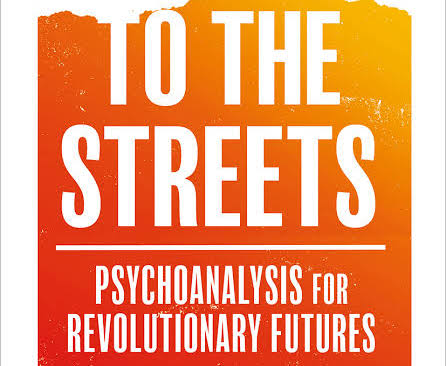
Towards a Revolutionary Psychoanalysis


 July 10, 2026

Cover art for the book From the Clinic to the Streets: Psychoanalysis for Revolutionary Futures by Lara Sheehi

Psyops are part and parcel of warfare, especially in modern times. Familiarly called winning hearts and minds during Washington’s war on the Vietnamese, one can argue that the incorporation of modern psychology into what might be termed propaganda exercises enhanced those “exercises”. Whether or not bringing psychological insights into the combat for the hearts and minds of non-combatants made war propaganda more effective is up for debate. However, its use in convincing the people back home—the ones paying for the war with their money and their children—seems to have been very effective. The evidence for this statement lies in the support wars tend to get by those governments waging them; a support that waxes and wanes often according to how the killing is presented.

That being said, there is another possible use of psychology that rejects the underlying goal of mainstream practice, that is, to get people to adjust to the structure of control and repression the state and its system of servitude demands. This alternative use of psychology is one that encourages liberation, in fact sets liberation as its goal. In a manner similar to the understanding championed by R.D. Laing and other rebel psychiatrists and psychologists that, generally speaking, insanity is a reasonable response to an insane society, a psychology that suggests a revolutionary struggle is an appropriate response to the current structure of capitalism, militarism and empire.

It is this concept of a liberation psychology that informs a new book by clinical psychologist and host of the Psychic Militancy podcast Lara Sheehi. Titled From the Clinic to the Streets: Psychoanalysis for Revolutionary Futures, Sheehi states in her introduction that “the story begins with Frantz Fanon,” as all psychoanalysis should. This is not just an opinion, writes Sheehi, but a political necessity. If one considers the essence of Fanon’s writing about colonialism and the struggle against it—in history and in the present—it becomes clear that the work of psychologists should not be to get the patient to accept the status quo. Instead, it should be to change the status quo so that the patient (in both an individual and collective sense) can experience a more complete humanity found in fighting for one’s liberation.

Fanon argued that for the colonized, the deepest struggle is not land, but consciousness. While colonized people may regain territory, they often remain mentally subjugated long after liberation. Conversely, the liberation of the mind and the maintenance of an anti-colonial and anti-imperialist history can help keep the struggle for the territory alive; this is the case as regards the struggle for Palestinian liberation. The imperialist mindset must be rejected and replaced with a revolutionary one. This, writes Sheehi, is the role of a liberatory psychoanalytic practice and psychology itself.

Referring to the liberation struggles of oppressed peoples from Africa to San Quentin, Vietnam to Palestine, Sheehi writes that the oppressor operates by creating exhaustion, confusion, fear and despair. Their work involves the study of what she calls psychological intrusions which are manipulated by psyops agents in the government and the sycophantic media that conspires consciously and otherwise with it. We must understand these phenomena in order to prevent them from working on us; the liberatory psychoanalysis which she presents is part of this educational and ultimately liberatory process. Quoting Black Panther George Jackson in his book Blood in My Eye, she discusses Jackson’s concept of the oppressive contract—a scenario which leads the potential revolutionary among the oppressed in modern capitalist society to choose the life of the outlaw instead of the revolutionary. She quotes Jackson: “the commitment to total revolution must involve an analysis of both the economic and the psycho-social motives which perpetuate the oppressive contract.” (50) Without this understanding and a means to gain it, revolutionaries (organized or not) end up becoming outlaws. There’s probably no better illustration of the truth of Jackson’s statement in the United States than the individual histories of revolutionaries like Panther Huey Newton and Weather Underground member JJ (John Jacobs), both of whom died living mostly outside of the society they fought to change, one in a senseless gangland slaying and the other during a medical event in his exile as an itinerant worker and weed dealer in Vancouver, BC.

In my consideration of psychology and its practices I have usually been of the mind that its role is to make people adjust to the existing power structure dominated by capitalism and its manifestations. Frantz Fanon was the first to challenge that perception; author Sheehi’s text enhances the oppositional theories put forth by Fanon and, in doing so, remakes psychology itself. This is an important book. Its intention is even more so. Written with the anti-colonial resistance of the Palestinian people in the face of imperial/colonial genocide in our feeds every day—a struggle considered by many to be the most important liberation struggle since that of the Vietnamese—the author Sheehi has issued a clearly written, clearly revolutionary and quite timely demand to people around the world opposed to US imperialism and its subsidiaries that they move forward in their resistance. Furthermore, the reader is encouraged to practice the revolutionary love espoused by Che so it becomes the standard by which we fight to save our planet from those who are destroying it.

Ron Jacobs is the author of several books, including Daydream Sunset: Sixties Counterculture in the Seventies published by CounterPunch Books. His latest book, titled Reality, Resistance, Rock and Roll is a collection of book reviews written for Counterpunch over the years and is now available. He lives in Vermont. He can be reached at: ronj1955@gmail.com 


LA REVUE GAUCHE - Left Comment: Search results for R D LAING

LA REVUE GAUCHE - Left Comment: Search results for ANTI PSYCHIATRY

LA REVUE GAUCHE - Left Comment: Search results for Michel Foucault

LA REVUE GAUCHE - Left Comment: Search results for ALDOUS HUXLEY

LA REVUE GAUCHE - Left Comment: Search results for MARX AND FREUD

LA REVUE GAUCHE - Left Comment: Search results for ERIC FROMM

LA REVUE GAUCHE - Left Comment: Search results for HERBERT MARCUSE

LA REVUE GAUCHE - Left Comment: Search results for FRANKFURT SCHOOL