Berlin, Israeli defence giant IAI sign deal for aerospace and defence innovation hub
The agreement foresees a new innovation centre for defence and dual-use technologies in the German capital
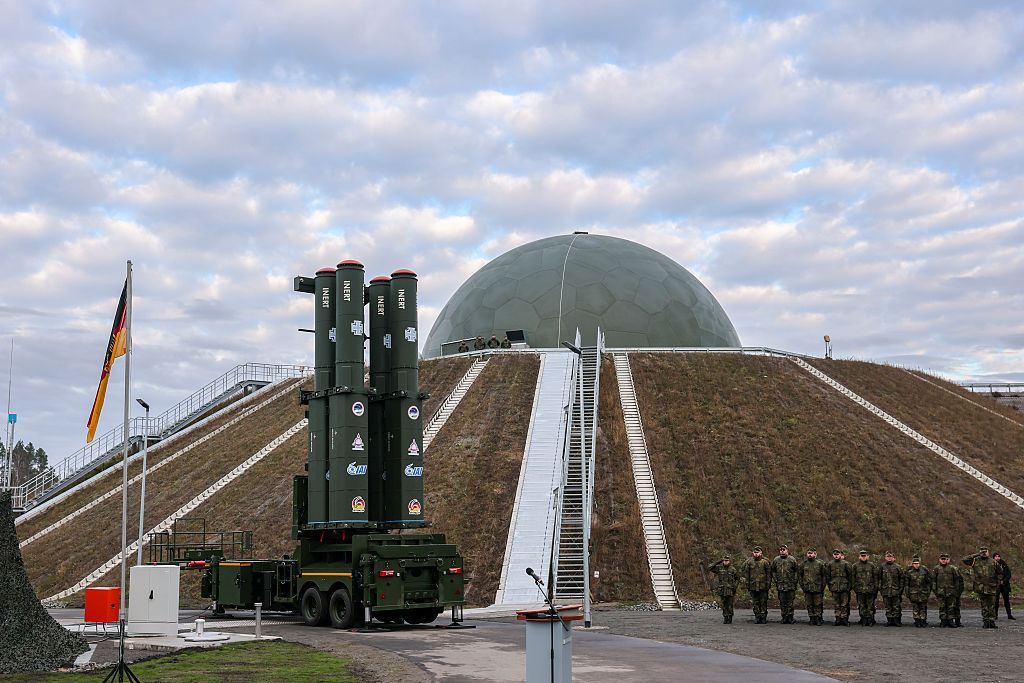
The State of Berlin and Israeli defence group Israel Aerospace Industries (IAI) plan to establish an innovation centre focused on aerospace, defence, security and dual-use technologies in the German capital. The agreement was signed by Berlin Mayor Kai Wegner and IAI President and CEO Boaz Levy this week on the sidelines of the ILA Air Show.
IAI was the prime contractor for the Arrow-3 missile defence system delivered to Germany at the end of last year. Berlin sees the system as a cornerstone of its ambition to play a leading role in the European Sky Shield Initiative. IAI also supplies Heron TP drones to the German Air Force.
Under the agreement, the planned hub will support start-ups operating in aerospace, defence, security and dual-use technologies through accelerator programmes, partnerships and pilot and proof-of-concept projects.
“Berlin is the right location for an aerospace and defence innovation hub,” Wegner said. Given the current geopolitical environment, it was important to establish such a centre in the German capital and strengthen investment in the aerospace sector, he added.
The initiative reflects “our long-term commitment to Europe and our vision of building deep strategic partnerships that combine innovation, industrial capabilities and operational expertise,” Levy said.
IAI is not the only Israeli defence company expanding its presence in Europe. Elbit Systems, Israel’s largest defence contractor, plans to increase its German workforce to 1,000 employees over the next four years. During the ILA Air Show, Elbit also signed an MoU with German manufacturer Diehl Defence to establish production of the SkyStriker loitering munition in Germany.
“Israel is proud of the strength of security cooperation between Germany and Israel,” Israeli ambassador Ron Prosor told Euractiv.
The relationship extended both to major procurement programmes and projects that attract less public attention, he said. “That stands in stark contrast to other European countries such as France, which are choosing to forgo this cooperation at the expense of their citizens’ security.”
(cz)

No comments:
Post a Comment