Showing posts sorted by relevance for query CHILD BRIDE. Sort by date Show all posts

Thursday, December 21, 2023

Iran hangs 'child bride' for murder of husband: rights groups

Stuart WIilliams
Wed, December 20, 2023 

Rights groups are concerned by surging numbers of executions in Iran 
(Ludovic MARIN)

Iran on Wednesday hanged a woman convicted of murdering her husband, whom she married while still a child, defying an international campaign for clemency, rights groups said.

Samira Sabzian, who had been in prison for the past decade, was executed at dawn in Ghezel Hesar prison in the Tehran satellite city of Karaj, the Norway-based Iran Human Rights (IHR) group said.

Her execution comes as concern grows over the numbers of people this year executed by Iran, where hundreds of people have been hanged mainly on drugs and murder charges, including more than a dozen women.

IHR said Sabzian was a "child bride" who had married her husband at the age of 15 and had been a victim of domestic violence, according to relatives.

The Hengaw rights group also confirmed the execution of the woman, now believed to be in her late 20s or early 30s, saying that she was originally from the city of Khorramabad in the western Lorestan province.

Amnesty International said it was "horrified" by the reports of the "chilling execution", saying the mother of two was "subjected to a forced and early marriage as a child".

The office of the UN High Commissioner on Human Rights said it was "alarmed" by the execution, saying Sabzian had been forced to marry her husband while aged 15.

"We again urge Iran to establish a moratorium on all executions with a view to abolishing death penalty," it added.

The execution has so far not been reported by media inside Iran.

- 'Killing machine' -

Sabzian was arrested around a decade ago when she was aged 19 on charges of murdering her husband and then subsequently sentenced to death, IHR said.

She had two children who she had not seen after her arrest until a final meeting in prison earlier this month, IHR said.

"Samira was a victim of years of gender apartheid, child marriage and domestic violence, and today she fell victim to the incompetent and corrupt regime's killing machine," said IHR director Mahmood-Amiry Moghaddam.

Rights groups have raised alarm over a surge in executions in Iran this year, with at least 115 people put to death in November alone according to Amnesty International.

"The international community must urgently call on Iran's authorities to immediately establish an official moratorium on executions," Amnesty said.

The British government had called on Iran to spare Sabzian's life.

"Samira is a victim of child marriage... Iran must cease its appalling treatment of women and girls," junior foreign minister Tariq Ahmad said on X, formerly Twitter, late Tuesday.

According to IHR, 18 women have now been executed in Iran this year, including Samira Sabzian.

Rights groups have repeatedly said Iran's sharia-based murder laws -- based on a principle of "qesas" (retribution in kind) -- fail to take into account potentially mitigating factors such as abuse or domestic violence in such cases.

Iran has executed eight men in cases related to the protests that erupted in September 2022 but rights groups argue that the surge in hangings on all charges is aimed at instilling fear in the wider population.

According to IHR, Iran executed 582 people in 2022 but this year's total is expected to be significantly higher.

sjw/ah/hkb


Iran hangs ‘child bride’ for murdering husband despite international calls for leniency

Bradford Betz
Wed, December 20, 2023 

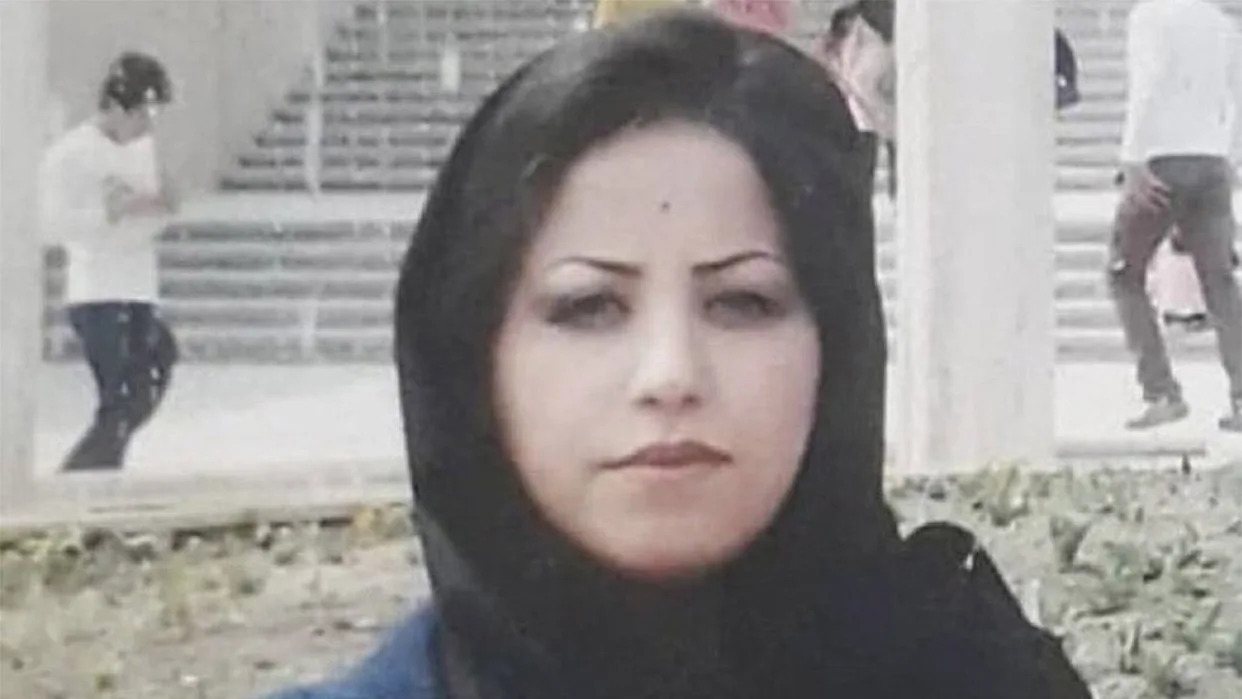
An undated photo of Samira Sabzian.

An Iranian woman who was forced into marriage as a child and being held in prison for murdering her husband, was executed Wednesday despite calls from human rights groups for leniency.

Samira Sabzian was hanged in Ghezelhesar Prison, according to the Norwegian-based group, Iran Human Rights (IHRNGO).


An Iran flag waves at a park in northwestern Tehran, October 3, 2023.

IHRNGO Director Mahmood Amiry-Moghaddam said Sabzian was a victim of "gender apartheid, child marriage, and domestic violence."

US IMPOSES NEW ROUND OF SANCTIONS ON NETWORK INVOLVED IN IRAN'S DRONE PRODUCTION

"[T]oday she fell victim to the incompetent and corrupt regime’s killing machine. A regime that has sustained itself solely through killing and instilling fear," Amiry-Moghaddam said in a statement. "Ali Khamenei and other leaders of the Islamic Republic must be held accountable for this crime."

Sabzian had been in prison for a decade, having been arrested for the murder of her husband.

IHRNGO said Sabzian was forced into marriage when she was 15 and was a victim of domestic violence. She had two young children – including a newborn baby – at the time of her arrest. Sabzian did not see them for 10 years until they came to say their goodbyes at the prison before her execution.

The office of the UN High Commissioner of Human Rights said it was "alarmed" at the execution.

"We again urge Iran to establish a moratorium on all executions with a view to abolishing the death penalty," the office said.

IHRNGO says Iran is one of the world’s leading executioners of women, with nearly 200 executed since 2010. In well over half of those cases, the women – who have no right to divorce, even in cases of domestic violence and abuse – were convicted of killing their husbands.

Saturday, December 16, 2023


Stalled progress toward eliminating child marriage in India


Peer-Reviewed Publication

HARVARD T.H. CHAN SCHOOL OF PUBLIC HEALTH

Friday, December 15, 6:30 PM ET

Key points:

  • Using national data between 1993 and 2021, researchers observed that India’s national prevalence of child marriage—defined by the study as marriage before age 18—declined throughout the study period. 

  • The decade between 2006 and 2016 saw the largest magnitude of reduction in child marriage, while the years between 2016 and 2021 saw the smallest. During these latter years, six Indian states/union territories saw increases in the prevalence of girl child marriage and eight saw increases in boy child marriage.

  • The study is among the first to examine how the prevalence of child marriage has changed over time at a state/union territory level. 


Boston, MA—Child marriage has declined in India—but across the country, one in five girls and nearly one in six boys are still married as children, and in recent years the practice has become more prevalent in some states/union territories, according to a new study led by researchers at Harvard T.H. Chan School of Public Health.

Child marriage is a human rights violation and a recognized form of gender- and sexual-based violence. India’s success in reaching zero child marriage is critical to achieving United Nations’ Sustainable Development Goal (SDG) target 5.3.

The study will be published on December 15, 2023, in The Lancet Global Health.

“This study is among the first to estimate how rates of girl and boy child marriage have changed over time at a state/union territory level. Boy child marriage in particular is often overlooked; to date, there’s been almost no research estimating its prevalence,” said lead author S. V. Subramanian, professor of population health and geography. “Our findings offer a big step forward in understanding the burden of child marriage in India—one that will be critical to effective policymaking.”

Though India legally defines child marriage as marriage before age 18 for girls and before age 21 for boys, for the purposes of the study the researchers defined it as marriage before age 18 for both sexes. Using data from all five waves of India’s National Family Health Survey, from 1993, 1999, 2006, 2016, and 2021, they estimated the number of men and women ages 20-24 who met that definition across state/union territories. 

The study found that between 1993 and 2021, child marriage declined nationally. The prevalence of girl child marriage decreased from 49% in 1993 to 22% in 2021, while boy child marriage decreased from 7% in 2006 to 2% in 2021. (Using the Indian legal definition of boy child marriage, the prevalence was much higher: 29% in 2006 and 15% in 2022.) However, progress towards stopping the practice of child marriage has stalled in recent years: The largest reductions in child marriage prevalence occurred between 2006 and 2016, with the lowest magnitude of reduction occurring between 2016 and 2021. In fact, during these later years, six states/union territories (including Manipur, Punjab, Tripura, and West Bengal) saw an increase in girl child marriage and eight (including Chhattisgarh, Goa, Manipur, and Punjab) saw an increase in boy child marriage.

By 2021, the researchers counted more than 13.4 million women and more than 1.4 million men ages 20-24 who were married as children. The results showed that one in five girls and nearly one in six boys are still married below India’s legal age of marriage.

“Child marriage is a human rights violation,” said first author Jewel Gausman, research associate in the Department of Global Health and Population. “It is both a cause and a consequence of social and economic vulnerability that leads to a range of poor health outcomes. The state/union territory stagnation in reaching zero child marriage that we observed is a significant concern—and is a call for India to reignite progress.”

Rockli Kim, visiting scientist at the Harvard Center for Population and Development Studies, was also a co-author.

Funding for the study came from the Bill & Melinda Gates Foundation (INV-002992).

“Prevalence of Girl and Boy Child Marriage: A Repeated Cross-sectional Study Examining the Subnational Variation across States and Union Territories in India, 1993-2021,” Jewel Gausman, Rockli Kim, Akhil Kumar, Shamika Ravi, S.V. Subramanian, The Lancet Global Health, December 15, 2023, doi: 10.1016/S2214-109X(23)00470-9

Visit the Harvard Chan School website for the latest newspress releases, and multimedia offerings.

###

Harvard T.H. Chan School of Public Health brings together dedicated experts from many disciplines to educate new generations of global health leaders and produce powerful ideas that improve the lives and health of people everywhere. As a community of leading scientists, educators, and students, we work together to take innovative ideas from the laboratory to people’s lives—not only making scientific breakthroughs, but also working to change individual behaviors, public policies, and health care practices. Each year, more than 400 faculty members at Harvard Chan School teach 1,000-plus full-time students from around the world and train thousands more through online and executive education courses. Founded in 1913 as the Harvard-MIT School of Health Officers, the School is recognized as America’s oldest professional training program in public health.

Wednesday, May 03, 2023

Asia still needs 55 years to eliminate child marriage: UN
Published May 4, 2023
 

UNITED NATIONS: South Asia leads global reductions in child marriage but still needs 55 years to eliminate the practice if it does not speed up the pace, says a UN report released on Wednesday.

To meet the UN target of eliminating child marriage by 2030; South Asia needs to accelerate the pace of reforms by seven times, says the report released by the UN Children’s Fund (Unicef).

Within South Asia, Pakistan is third in reductions, behind Maldives and Sri Lanka but ahead of India, Bangladesh, Afghanistan, Nepal and Bhutan. About 18 per cent women in Pakistan are still married in childhood, which is slightly better than the global average of 19pc.

According to the statistics released on Wednesday, Pakistan still has nearly 19 million child brides as 1 in 6 young women in the country are married in childhood. The minimum legal age for marriage in Pakistan is 18 but about 18pc of girls are married before 18. The age gap between a child bride and her groom is often between 40 to 60 years. At 51pc, Bangladesh has the highest rate of child marriages in South Asia. Maldives has the lowest, only two per cent.

India is home to the largest number of women who married in childhood. One in three child bride lives in India. There are about 34pc women in India who married in childhood. The majority of Indian women married in childhood, gave birth as adolescents.

South Asia leads the world in progress on reducing child marriage. Yet, one in four young women in South Asia were first married or were in union before their 18th birthday.

The region is home to around 290 million child brides, accounting for 45 per cent of the global total. Levels of child marriage vary considerably across the region, from over 50pc in Bangladesh to 2pc in the Maldives.

In Pakistan, India, Nepal, and Bangladesh child brides are more likely to report that wife-beating is justified, and they often experience such violence themselves.

In Pakistan, 55pc of child brides say that wife-beating is justified. In India, 41pc say the same thing. Thirty-three per cent and 28pc in Bangladesh also justify wife-beating. Child brides in South Asia are more likely to live in poor households, have less education and reside in rural areas.

SEE
https://www.academia.edu/2494539/Hegels_Master_Slave_Dialectics


Three in four child brides in the region give birth while they are still adolescents. The vast majority of child brides in South Asia are out of school.

Unicef, however, also reports that the practice of child marriage has continued to decline globally, driven predominantly by a decline in India, which is still home to the largest number of child brides worldwide.

Progress is also evident in other contexts, including in populous countries where the practice has historically been common, such as Bangladesh and Ethiopia. Some smaller countries, such as Maldives and Rwanda, are moving closer to elimination.


Commenting on the good news, Unicef observed that “the experiences of these countries illustrate that progress is possible in a variety of settings.”

But the UN agency warned that a ‘polycrisis’ — of war, climate shocks, and the Covid pandemic — threatens the fragile gains made towards ending the scourge.

Published in Dawn, May 4th, 2023

Sunday, June 15, 2025


West Bengal: The Intersection Between Child Labour and Child Marriage


Sandip Chakraborty 


    With rising instances of child marriages being reported, the state government and UNICEF call for focus on regular monitoring and creating awareness.

    Kolkata: Khalil Ahmad, 10, (name changed) helps his father sell fruits at South Jagaddal in South 24 Parganas district of West Bengal. A student of Class 5, Khalil tops his class and is considered a meritorious student. His father being illiterate, he does all fruit sales accounting, giving back the exact change to customers.

    “I want him to study at least up to Class 10 and then I will arrange his marriage,” his father, Iftiqar Ahmad, shared his plans with NewsClick. When informed that child marriage was prohibited in India, he said “It might be prohibited among the well-off, but in our India, it is the norm. Even the Imam of our mosque has told us to get a young bride for Khalil and other young boys lest they go astray and elope,” he added.

    For Abinash Mahato, 8, (name changed), the situation is more grave. One of seven children of a daily wager in Jhalda block of Purulia, he was sent to Kolkata and practically sold to tea stall owner at Garia. The deal was that his father would be paid Rs 800 for Abinash’s work per month in the tea stall, where he would wash utensils and serve customers. When asked about his future plans, Abinash said one day he hoped to own a tea stall, too.

    Neha Khatun, 9, who was recently rescued from a house in an apartment block at Narendrapur in South 24 parganas by an NGO, her mother, a domestic worker with three children (two boys and Neha) is estranged from her husband. She said she found it difficult to feed the three mouths. The boys, who are younger, are studying in Dakshin Barasat, so she was trying to marry Neha off. When we warned her about law enforcement agencies, her mother asked: “Will the police feed Neha? By getting married she would at least lead a dignified life.” In the village, marriage at a young age was taking place, and the police was finding it difficult to intrude in these marriages that, as per the local Imam, were “made in heaven.”

    The United Nations Children’s Fund or UNICEF, which has been working in the area of child education has often expressed concern over the reported cases of child labour and child marriages in West Bengal.

    According to Paramita Neogi, Child Protection Specialist, UNICEF, West Bengal: “UNICEF calls for a multipronged approach to retain children in school through quality education, promotion of access to social protection for families. This UN body promoting children's rights also envisages a trained workforce for need based response and effective law enforcement which can together go a long way in eliminating child labour.”.

    When asked, a government official on the condition of anonymity told NewsClick that child marriages were taking place due to “abject poverty”, which was “the real culprit”. The official said the government was trying to intervene in such marriages and instances of child labour, but community pressure and peers sanctioning such marriages made the task difficult, especially among the minority communities due to “pressure from the local Imams.”. Similarly, in the Hindu community, too, such marriages were taking place, with the panchayat members keeping silent and not informing the police and other law enforcement agencies.


    Govt Awareness Drive on Child Marriages

    With a view to preventing child marriage further in the state, the West Bengal government said it would lay emphasis on building awareness among girls and boys about the harmful effects of this social practice.

    "It's not the girls alone, boys also have to be educated about the ill-effects of early marriage and should be demotivated from marrying before their legal age," Shashi Panja, Minister of Women and Child Development and Social Welfare, recently said at a state-level consultation on ‘Adolescent Empowerment’ attended by government officials from various departments across districts.

    Panja urged the officials gathered to share their experiences in fighting the menace of child marriage since the launch of the District Action Plan three years ago and later the Child Marriage Reporting and Tracking Mechanism. The state has reported that more than 41% girls were getting married underage in National Family Health Survey-5 (NFHS) released in 2020-21.

    Additional District Magistrates and other officials attending the programme reported that many boys were getting married below 21 years of age. "Building awareness in society is the key to stopping this. Also include men and boys more in the meetings on child marriage with girls and women," the minister said, while releasing 'Guidelines for Implementation of the Prohibition of Child Marriage Act 2006 in West Bengal'. 

    The minister also asked officials from the departments of Health and Family Welfare, School Education, Panchayat and Rural Development, Technical Education, Training and Skill Development to deal with the problem “more empathetically” as present day adolescents were exposed to many lures and distractions, including online and social media platforms on mobile phones. She also highlighted how the  Kanyashree Prakalpa scheme had been “empowering adolescent girls on online safety besides motivating them to remain in school and not get married.”

    In NFHS-5, the highest number of child marriages were reported to have taken place in Purba Medinipur (57%) followed by Purba Bardhaman (50%) and Jalpaiguri, the lowest at 18%.


    Sanghamitra Ghosh, Principal Secretary, WCD department, urged officials to use the Child Marriage Reporting and Tracking Mechanism regularly. The mechanism was launched by the state government, with the help of UNICEF in 2023 to collect data from the districts and portray the real-time situation.

    Describing this consultation as “ a renewed call to action”, Monjur Hossain, chief of UNICEF in West Bengal, said holistic development of adolescents required concerted, coordinated and multi-sectoral actions by all stakeholders concerned. "The involvement of key community influencers, panchayat members, SHGs, religious leaders, teachers, students, youths and adolescents is necessary to challenge harmful norms and support girls' and boys' empowerment," he added.

    Tuesday, August 10, 2021

    FEMICIDE PATRIARCHY MISOGYNY
    UN calls for end to child marriages as Zimbabwe mourns 14-year-old child bride


    TUESDAY AUGUST 10 2021

    A girl carries water. Zimbabweans have expressed outrage after a 14-year-old child bride died while giving birth. PHOTO | FILE | NMG

    Summary

    The girl’s death in rural Marange in the eastern parts of the country has brought back into the spotlight the scourge of child marriages in Zimbabwe, especially among indigenous religious sects.

    Memory was allegedly forced out of school and into marriage at age 13. She died on July 15 and was secretly buried two hours later by the church.

    Her death was only exposed last week because the church was allegedly offering Memory’s nine-year-old sister as a replacement to her “husband.

    By KITSEPILE NYATHI
    More by this Author

    The United Nations has condemned the practice of child marriage in Zimbabwe after a 14-year-old girl died while giving birth at a church shrine.

    Zimbabweans have also expressed outrage about the girl’s death online with a petition demanding justice for Memory Machaya garnering nearly 40,000 signatures in a few days.

    The girl’s death in rural Marange in the eastern parts of the country has brought back into the spotlight the scourge of child marriages in Zimbabwe, especially among indigenous religious sects.

    Memory was allegedly forced out of school and into marriage at age 13. She died on July 15 and was secretly buried two hours later by the church.

    Her death was only exposed last week because the church was allegedly offering Memory’s nine-year-old sister as a replacement to her “husband.”

    The UN in Zimbabwe said it “notes with deep concern and condemns strongly the circumstances leading to the death of Memory Machaya.”

    “Sadly, disturbing reports of the sexual violation of underage girls, including forced child marriages, continue to surface and indeed this is another sad case,” the UN in Zimbabwe, which represents all 25 UN agencies in the country, said in a statement.

    It said one in three girls in Zimbabwe is likely to be married before turning 18.

    This is despite the fact that Zimbabwe’s Constitutional Court in 2016 banned child marriages after two former child brides challenged the country’s Marriage Act.

    The judges struck down a section of the law that allowed girls to marry at 16, but boys at 18.

    “A situation where one out of three girls in Zimbabwe will be married before the age of 18 years is also not acceptable,” the UN added.

    “The current trend of unresolved cases of violence against women and girls in Zimbabwe, including marriages of minors cannot continue with impunity.

    “All forms of violence and early forced marriages severely affect the mental and physical health of girls and is a violation of the Convention on the Rights of the Child, which Zimbabwe is a signatory.”

    Dewa Mavhinga, southern Africa director for Human Rights Watch, said millions of girls in Zimbabwe continue to suffer in forced marriages because the government was failing to enforce the Constitutional Court ruling.

    “Child marriage is rampant in Zimbabwe, especially among indigenous apostolic churches, an evangelical group that mixes Christian beliefs with traditional cultures and has millions of followers across the country,” Mr Mavhinga said.

    “Girls are often sexually abused, beaten by their husbands and in-laws, confined in their homes, forced into pregnancy and labour, exposed to serious reproductive health risks, including risk of death, and denied an education.

    “Millions of Zimbabwean girls like Memory Machaya continue to suffer abuse because of the authorities’ inaction.

    “The future of millions of girls depends on Zimbabwe’s government ensuring the ban on child marriages is fully enforced.”

    Thursday, October 01, 2020


    Coronavirus risks ‘greatest surge in child marriages in 25 years’

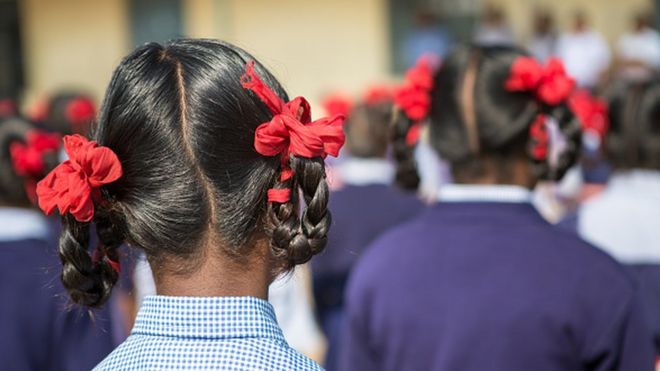
    An schoolgirl in India pictured from behindImage copyrightGETTY IMAGES
    Image captionFamilies are being plunged into poverty by the pandemic, forcing girls in early marriages (file photo)

    The coronavirus pandemic could lead to a spike in child marriages globally, reversing 25 years of progress on ending the practice, a charity has warned.

    Save the Children said Covid-19 had put 2.5 million more girls at risk of early marriage by 2025.

    The pandemic is increasing poverty, forcing girls out of school and into work or marriage, the charity said.

    Girls in parts of South Asia, Africa and Latin America are most vulnerable.

    The UK-based charity is calling on world leaders to commit more funding and support to efforts to address child marriage and gender inequality.

    "These marriages violate girls' rights and leave them at increased risk of depression, lifelong violence, disabilities, and even death," said Karen Flanagan, a child-protection adviser for Save the Children.

    She said that 78.6 million child marriages had been prevented over the last 25 years but progress to end the practice had "slowed to a halt".

    How big is the problem?

    Around twelve million girls are victims of early marriage every year, the charity says.

    But its report finds that number is expected to rise markedly over the next five years as the economic consequences of pandemic take their toll.

    In 2020 alone, another 500,000 girls risk being forced into child marriages and up to one million more are expected to become pregnant, the charity says.

    If no action is taken, there could be 61 million child marriages by 2025, according to the charity, yet this estimate may only be "the tip of the iceberg".

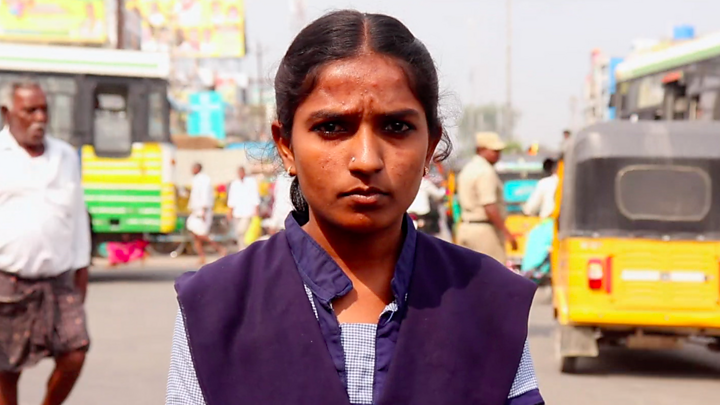
    Media caption'I want child marriage to end'

    "The pandemic means more families are being pushed into poverty, forcing many girls to work to support their families and to drop out of school - with far less of a chance than boys of ever returning," Bill Chambers, the president and CEO of the charity, said.

    "A growing risk of violence and sexual exploitation combined with growing food and economic insecurity also means many parents feel they have little alternative but to force their young daughters to marry older men."

    2px presentational grey line

    'Girls give their bodies to older men'

    For its report, Save the Children spoke to Esther, who lives in Kinshasa, the capital of the Democratic Republic of Congo.

    Lockdown measures to prevent the spread of Covid-19 in her community have closed schools and some public spaces.

    She is enjoying helping her mother take care of their family's chickens for the moment but the economic impact of the pandemic is being felt - and particularly by girls.

    "Many parents from my neighbourhood once sold goods at the big open-air market. But because of confinement, they don't do anything any more," Esther said. "Girls have to turn to older men to support themselves."

    'I can never compromise my education'

    The charity also spoke to Abena, a 16-year-old adviser to Save the Children in Ethiopia.

    Abena has worked with local communities to stop girls being made to marry older men. Despite this, Abena's parents still wanted her to get married at 16 to "an educated and well-to-do man".

    Abena persuaded them that she should continue her education.

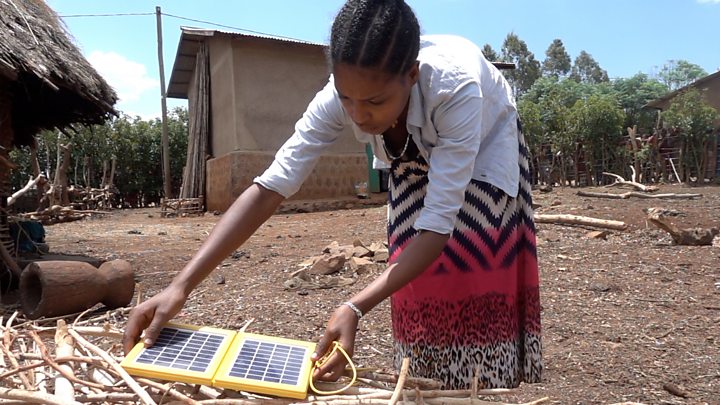
    Media captionIn Ethiopia, a scheme involving solar lamps is helping thousands of girls stay in school longer and avoid marriage until they are adults

    "My answer was 'no way'," she said. "I can never compromise my education, and the marriage request itself is a violation of a girl's rights as long as she is under 18."

    2px presentational grey line

    The charity's Global Girlhood Report 2020, which was released on Thursday, analyses the effects of Covid-19 on gender equality worldwide.

    The report also found that:

    • Girls affected by humanitarian crises face the greatest risks of child marriage
    • Nine of the 10 countries with the highest rates of child marriage are considered fragile states
    • The pandemic has led to increased reports of gender-based violence around the world, with an estimated one in 10 girls having experienced rape or sexual violence
    • The UN expects an additional two million cases of female genital mutilation to take place over the next 10 years because of the pandemic
    2px presentational grey line

    More on child marriage:

    Media caption'It's Never Your Fault': The Nigerian teens aiming to end child marriage