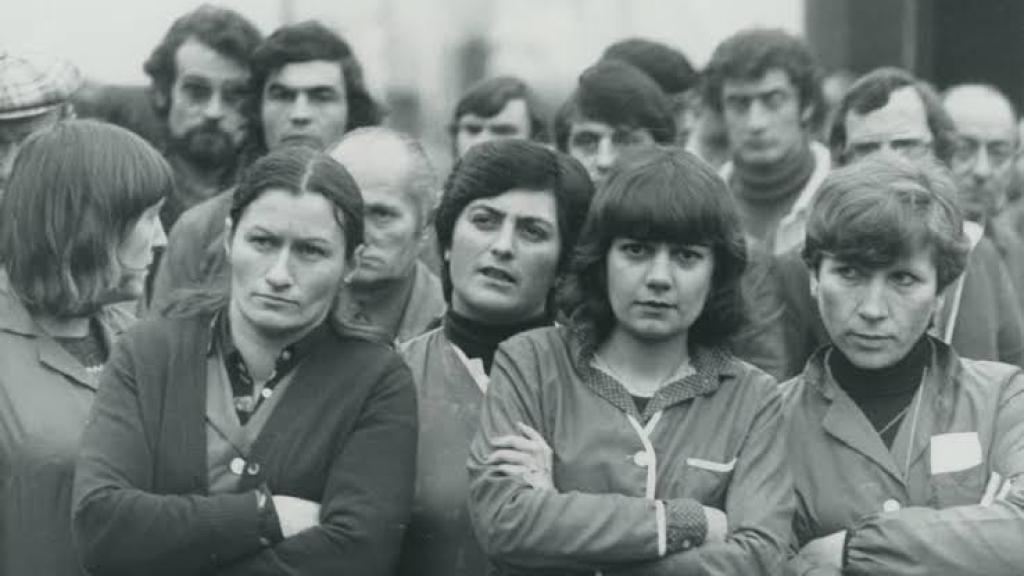
Romain Castellesi is an associate professor of contemporary history at the Université du Littoral Côte d’Opale (ULCO), whose research focuses on the social and labour history of deindustrialisation in France and the Western world. He is also the author of Savoir commencer une grève: Résistances ouvrières à la désindustrialisation dans la France contemporaine (Knowing How to Start a Strike: Workers’ Resistance to Deindustrialization in Contemporary France)
Castellesi spoke with Serhii Shlyapnikov for LINKS International Journal of Socialist Renewal about his book, how communities resisted deindustrialisation and the importance of working class history and memory in the face of economic crisis.
Why did you write Knowing How to Start a Strike?
This book grew out of the doctoral research I conducted over five years. As the grandson of a coal miner, and having grown up in an area deeply affected by mass closures in the garment industry, I became interested in the subject at a very early age. Beyond the visible social consequences of deindustrialisation, I grew up with the feeling that an entire working-class world was sinking away.
Through this research, I wanted to make visible the workers’ struggles that I had witnessed — and that were also present in my family’s memory. These struggles seemed to be constantly portrayed as last-ditch reactions in the face of death, as “last stands,” a term often used in the media. In reality, anyone could see that the labour movement was continuing, changing and even reinventing itself in this vital and sometimes final struggle to preserve jobs.
It was precisely the features generally regarded as weaknesses or stigmas of these struggles that seemed to make them so interesting: the urgency in which they unfold; their vital character and their connection to the very foundations of working-class identity; and their more or less distant relationship with trade-union organisations that were sometimes themselves exhausted.
To make a “return to the working class” — borrowing an expression used by sociologists Stéphane Beaud and Michel Pialoux — to question workers’ sense of class belonging, and to observe the disintegration of the group in the face of changes in contemporary capitalism, these were the questions that imposed themselves from the very beginning of the research.
My first academic studies focused on the Carmaux coal mines, in a rural part of the Tarn department that had been a stronghold of municipal socialism since the 19th century and the electoral base of philosopher and member of parliament Jean Jaurès. I also studied women workers in the luxury footwear industry in Romans-sur-Isère, an industrial area in southeastern France not far from the Rhône Valley.
During my doctoral research, I expanded the study to three additional field sites: the automobile industry in Sochaux, the paper industry in Rouen, and the textile industry in rural Saône-et-Loire.
The book therefore explores these five areas, whose workforces, industrial sectors, forms of social life and traditions of protest reflect the diversity of France’s working-class worlds.
Why are oral sources so important for writing the history of non-hegemonic classes? What do interviews provide that archives and statistics cannot?
It should be said that oral sources have not always been an obvious choice in the field of labour history in France. Although workers’ voices can be glimpsed indirectly in some 19th-century social surveys, through the writings of representatives of the police or state institutions, as well as in literature produced by workers themselves, historical research was slow to recognise oral testimony as a legitimate source.
This should not make us forget, however, that some pioneering studies of working-class worlds did incorporate oral testimony as an analytical tool, particularly in the 1960s and ’70s, at the height of social and labour history and during the rise of sociology. In 1962, for example, Rolande Trempé and Michelle Perrot discussed the value of such sources for preserving the memory of workers and other socially invisible groups, while pointing to the risks of memory distorting events and facts.
In France, this reluctance was linked to the predominance of written archives, which were regarded as more reliable, whereas witness testimony was seen as subjective and potentially shaped by factors such as the interview setting or the position of the researcher.
Since the 1980s and ’90s, however, major studies by historians and sociologists have shed light on transformations of the working class in the context of economic crisis, just as deindustrialisation was beginning to take hold. These researchers became deeply involved in their fieldwork, immersed themselves for long periods in working-class social networks and everyday life, and reflected theoretically on their own relationship to the object of study.
What is interesting about deindustrialisation is that the question of workers’ voices immediately emerged as central to the different ways in which the phenomenon has been approached — whether in the history of workers, anthropological studies of processes of heritage-making, or geographical research on the territorial impact of factory closures. This shows the extent to which deindustrialisation is an object of the social sciences, one that has been examined simultaneously through several different scholarly approaches.
Above all, among these many approaches, oral testimony appears as a means of gaining access to the process of destruction of working-class identity that accompanies the disappearance of factories. For historians, studying deindustrialisation may seem counterintuitive: the aim is not to highlight new dynamics or explore new developments, but rather to reveal “the end of a world,” as Marion Fontaine puts it, and what has been taken away from French society through the decline of the working class.
In this respect, interviews restore a subjective meaning to workers’ experience of loss, whether through redundancy itself or, for those who remain, through the disintegration of a collective. In the context of research, oral testimony does not merely have informational or factual value. It sheds light on the ways in which workers construct individual narratives in situations of economic decline, while giving a central place to language, silences and the conditions under which the interview takes place.
Steven High, a pioneering historian of deindustrialisation in Canada and the US Rust Belt, has pointed out that the practice of oral history varies from country to country. In France, it developed later, and researchers have been reluctant to conduct studies based exclusively on testimony. In his study of the miners of Harlan County, Kentucky, for example, Alessandro Portelli conducted more than 150 interviews over several years and used them to produce a monumental book on working-class life and its political, social, and cultural transformations.
I was greatly inspired by Portelli’s conception of the interview as an “experience of equality” between researcher and interviewee, involving mutual projections and free associations of ideas. This does not, of course, rule out meticulous preparation beforehand, including research into the context of the factory, the industrial area and the person being interviewed. The narratives that emerge from these encounters remind us that the working class is, first and foremost, made up of individuals, as Portelli emphasises; that these individuals follow diverse trajectories; and that the group itself is traversed by internal hierarchies and lines of division.
In my own case, I conducted around fifteen interviews, with the aim of using them in conjunction with other sources: trade-union and state archives, the media, and workers’ private documents. I was following a very French historiographical approach, but I also wanted to examine deindustrialisation as an economic phenomenon that was conceptualised and identified by the state, just as workers’ mobilisations were monitored by the intelligence services and became the subject of media narratives that alternated between pity and disapproval of what was portrayed as workers’ violence.
For this reason, interviews in my research had to coexist with other types of sources. They provided an essential perspective from which to reassess the archives, particularly trade-union records relating to industrial disputes. Over the course of the interviews, numerous divisions emerged in response to the urgency of preventing a closure or negotiating the final compensation packages: personal animosities and disagreements over how the struggle should be conducted became particularly acute.
When it comes to gender, interviews also make it possible to move beyond purely theoretical considerations of the construction of working-class masculinities. They allow us to hear individual accounts of struggles in which intimacy, friendship and rivalries between fellow workers reveal the issues of respectability and dignity at stake in the different expressions of these masculinities.
Is deindustrialisation a qualitatively new process, or simply another cycle of technological substitution, like the decline of Lyon’s silk industry in the 1930s? What has changed in the 21st century?
Although the economic dimension runs throughout my work in the background — for example, when assessing the employment situation in a particular industrial area or taking stock of industrial employment in the country during certain periods — it is not the central focus.
Researchers working on deindustrialisation broadly agree on one point: for a long time, the phenomenon was understood primarily in terms of economic transformation. This emphasis may have encouraged public authorities to politically downplay, or even deny, the real and concrete scale of the recession and its consequences for individuals and for society as a whole.
Our research, however — and by now this has developed into a genuine field of study, notably around the international research network, Deindustrialization and the Politics of Our Time — aims to explore the social, demographic, political, individual and collective consequences of employment decline at every level.
Your question concerns whether deindustrialisation is cyclical or not. This is indeed a debate that occupies many economists. In the case of France, two points seem particularly important to me.
First, the 1970s and ’80s represent a clear turning point in terms of job losses. Between 1980–2007, France lost nearly two million industrial jobs, 96% of them in manufacturing. This latter figure shows that, within the broader process of industrial decline, the erosion of the industrial working class has been particularly pronounced. In 1975, France had 8.2 million manual workers, representing more than 37% of the working population, compared with only 21.3% in 2010.
The second important characteristic is that this decline has been continuous, without any real recovery, although this does not rule out minor fluctuations or even substantial variations between different industrial sectors.
Can workers’ struggles be considered lost? Does it still make sense to evaluate resistance in terms of “victory” and “defeat” when macroeconomic forces are objectively stronger?
This question is indeed central to my thinking. Interviews show that when workers resist a closure and obtain substantial compensation, some may experience a temporary sense of victory even though the factory has ultimately closed. Conversely, some struggles have succeeded in keeping production going, yet were followed by a pervasive sense of anxiety.
Take the example of the Carmaux miners. A century after the great strikes supported by Jean Jaurès, which had played an important role in the formation of the French labour movement, the Socialist candidate François Mitterrand launched his presidential campaign in 1980 in this highly symbolic town. He promised to revive coal production, going against the trend in the rest of Europe, where coal mines were closing on a huge scale.
In 1983, as the government delayed implementing these costly measures while the economic crisis was taking hold, the miners decided to mobilise and demand additional hiring. In an especially intense struggle involving demonstrations, occupations, the detention of managers and clashes with the police, the gueules noires (“black faces,” as French coal miners were traditionally known) eventually won their demands, securing the creation of about one hundred jobs after difficult negotiations.
They were proud to have forced the government to retreat and to have imposed their demands at a time when many other workers in the country were being forced to give ground. Yet the prevailing feeling among the miners was that this was a pyrrhic victory — a victory achieved at considerable cost and one that proved highly temporary, as a former trade-union official told me.
More generally, it was around 1968 that a number of historians and sociologists began to speak of “offensive” and “defensive” strikes to describe labour conflicts. These scholars were drawing on categories used by activists at the time. Far-left workers, in particular, advocated offensive strikes aimed at winning new gains for workers rather than allowing the balance of power to deteriorate in favour of employers.
The prospect of a factory closure fundamentally undermines this distinction. When the very means of production are about to disappear, a struggle can no longer aspire to win new rights; it can only try to save what can still be saved in a context of a generalised collapse in industrial employment. A strong sense of abandonment therefore takes hold and is expressed through actions intended to appeal to public authorities and remind them of their duty to protect workers. One striking example was the illuminated “SOS” installed by steelworkers at the top of a slag heap in Longwy, Meurthe-et-Moselle, in 1978.
This assessment, however, needs to be qualified immediately. Whether closure is something workers have seen coming for a long time or whether it comes “like a gunshot,” as workers at Metaleurop in the Pas-de-Calais put it, the prospect of losing the walls, machinery, and colleagues of a workplace in which people may have spent several decades can come as a profound shock.
Among women workers at Bourbon-Lancy in Saône-et-Loire, the 2001 announcement that the plant was to close triggered a conflict unprecedented in the factory’s history. United by their shared experience as a generation of women workers who had survived earlier waves of job cuts, they waged a long struggle. At one point they even threatened to blow up the premises — although they never seriously intended to carry it out. They succeeded in building a broad front of solidarity across the town and forced their way into meetings attended by management. In the end, they secured higher severance payments than had initially been planned.
Although such gains do nothing to erase the individual and collective tragedy represented by the end of production, they are often won through extremely hard struggle, with management fully aware of the asymmetry in the balance of power. The strength of the collective — sometimes as surprising and unexpected to the most committed activists as to anyone else — also becomes the basis for a crucial narrative shaping the lives of laid-off workers after the factory has closed.
Fanny Gallot has shown, particularly in the case of women workers, the importance of associations, collectives and informal relationships that allow the momentum of the struggle to continue or simply help people rebuild their lives. Even if it seems impossible to speak of outright “victories,” these experiences challenge the condescending and pitying narratives that are so often imposed on such struggles.
Making the company pay is often understood as a mechanism for compensating workers for the social costs imposed on them by employers. Legal proceedings brought by trade unions to have dismissals declared invalid, to challenge their legality, or to claim measures provided for under the French Labour Code became an important arena of conflict and resistance during deindustrialisation.
Although such proceedings generally mobilise relatively few workers directly, victories in court can provide financial redress and, above all, restore a sense of wounded dignity. When the Reynolds pen factory in Valence, in the Drôme department, closed in 2007, Nathalie, a former employee, welcomed the court’s decision declaring the dismissals unjustified, but immediately added: “It is very painful because, in fact, if justice had acted more quickly, the company would not have closed.”
Some have presented miners as the vanguard of resistance and inventors of a new repertoire of collective action. Did their tactics lose effectiveness in the 1980s and ’90s, when mass unemployment became widespread?
Miners do indeed occupy an important place in my research. I explored the profession primarily through the case of Carmaux. This area is particularly fascinating because it offers a view of a coal-mining basin located outside the major centres of production in northern and eastern France. For a long time, miners there retained a dual mining and peasant culture, since the pits were located in a rural environment. Occitan culture was also very strong, as was the influence of the Church. It therefore provides a highly distinctive perspective both on resistance to deindustrialisation and the history of the French coal industry more broadly.
The mining sector, which began to decline very early — by the late 1950s in the Borinage region of Belgium — inevitably became something of a laboratory for deindustrialisation. Struggles against mine closures were crucial in the emergence of a “consciousness of crisis,” and took place at a time when the working class still occupied a central position in European societies.
While there were nearly 350,000 miners in 1947, mine workers enjoyed considerable prestige. This was due, among other things, to perceptions of their role in rebuilding the country after the war, their involvement in the Resistance against the German occupation, and their central place in the development of the labour movement.
What particularly interested me was putting the myth of the miner — the heroic, masculine figure, held up as the embodiment of working-class identity by trade unions and the Communist Party — to the test against the reality of dispossession and decline.
In the historiography of working-class life, miners’ struggles during the formation of the working class have traditionally received a great deal of attention. Following other historians, I wanted to reverse the perspective and look instead at miners as emblematic of the “de-formation of the working class,” as the historian Marion Fontaine describes it in a forthcoming book.
The way your question is phrased is interesting, because it assumes that the 1980s and ’90s were marked by the relative failure of workers’ struggles, or at least by a decline in their intensity. The case of Carmaux — as well as other mining areas in southern France, such as Alès in the Gard and Gardanne in the Bouches-du-Rhône — suggests the opposite. Protest actions became longer and increasingly relied on new forms of contention in response to successive restructuring programs carried out by the state, since the mines had been nationalised in 1946.
The June 1991 strike in Carmaux is particularly representative of the ambiguity of these new forms of resistance. After the 1983 strike I mentioned earlier, miners were gradually transferred, from the late ’80s onward, to an enormous open-cast coal-mining project known locally as la découverte. In the process, the authorities were able to reduce the workforce dramatically through early retirement schemes. The highly unrealistic promise was that mining activity would continue into the 2000s.
When a new redundancy plan in 1991 proposed drastic cuts to the remaining workforce, the miners took action. Many saw it as a “final struggle” — one that was not only supposed to prevent the death of coal mining and working-class identity, but to honour the history of a social group that was by then becoming increasingly diluted within the wider population.
Because they now had access to extremely large pieces of machinery at the open-cast mine — excavators, backhoes, loaders, and other heavy vehicles — the miners decided to block the main access routes to Albi, the departmental capital. Serious clashes occurred along the way: CRS riot-police roadblocks were broken through, several vehicles were set on fire, and there were also some physical confrontations between workers and police. The passage of the enormous mining trucks caused considerable damage in the city.
Ultimately, the miners once again managed to capitalise on the prestige associated with their profession and forced the Socialist government to make partial concessions.
What emerges from the interviews, trade-union archives, and filmed footage of the clashes is that the violence being staged was, in reality, highly restrained, and that miners exercised considerable self-control. Young people and women were present, even though they were generally absent from this kind of action; the operation was tightly supervised by the miners’ main trade union, the CGT (Confédération Générale du Travail,General Confederation of Labour); police vehicles were set on fire only after the area had been cleared; and during the negotiations, the heavy machinery was stationed overnight in Albi without frightening passersby, who instead took photographs and came to visit the miners.
This show of force therefore actually reveals the weakness of the miners’ available means of action: they struggled to find tactics powerful enough to halt the mines’ closure. Yet it served other purposes as well: putting pressure on the government, making an impression on public opinion, and visibly asserting the persistence of a certain form of working-class masculinity.
Could you briefly characterise the Lip conflict? How did the later strikes of the 1980s and ’90s differ from Lip? Were there any tactical innovations?
The Lip conflict, which broke out at the Lip watch factory in Besançon, in the Doubs department, in 1973, was one of the most emblematic labour struggles of the “1968 years” in France. In response to plans for layoffs and closure, workers adopted an original repertoire of action: they occupied the factory, temporarily detained managers, seized the stock of watches, and then restarted production under the slogan, “We make them, we sell them, we pay ourselves.”
Although the workers rethought the organisation of labour and experimented with a form of workers’ power inside the factory, the experience described by the men and women involved was still understood as a strike — what came to be called a “productive strike.” The idea itself was not entirely new, but it attracted enormous attention in France and later across Europe.
Women, who made up a large part of the workforce, played a central role in general assemblies, picket lines, the day-to-day organisation of the struggle, and public demonstrations, challenging traditional gender roles within the labour movement. Although the unions, particularly the CFDT (Confédération française démocratique du travail, French Democratic Confederation of Labour), supported the movement, a significant number of strikers insisted on the central role of the general assembly in decision-making, keeping the union apparatus at a certain distance to emphasise direct democracy.
The originality of Lip has rightly been associated with these forms of workers’ autonomy and politics, and with the desire to “fire the bosses.” But another crucial element was the shock and disbelief caused by the discovery of the redundancy plans, which had been carefully concealed from the workforce. This sense of betrayal helped trigger the revolt. In Monique Piton’s fascinating account of the strike — she was a factory worker deeply involved in the struggle — we see how the social violence inflicted by management opened up a new field of possibilities, thereby transcending the usual distinction between offensive and defensive struggles.
In the immediate aftermath of Lip, several similar struggles attempted to imitate the productive strike, but they soon confronted the spread of factory closures and industrial conflicts resulting from the first oil shock of 1973. Nevertheless, attempts to restart production to thwart closure plans persisted, including into the 1980s.
One example was the struggle of paper workers in the Rouen suburbs in 1983, which I was able to study through an extensive archive held by the Ministry of Labour, whose officials had closely monitored and analysed the strike. The Minister of Industry at the time, Laurent Fabius, was also a municipal councillor in a town adjoining the industrial area. Meanwhile, the Communists, who were still participating in the national government but were in open conflict with the Socialists, controlled the municipalities where the two factories were located.
The Socialist Party wanted to impose a takeover plan led by a Dutch financier, which would end the state’s control over a company that had until then been protected as one of the flagships of France’s recycled-paper industry. Working closely with the CGT, the French Communist Party sought to turn the strike into an exemplary struggle and pushed for nationalisation.
In an effort to strengthen workers’ bargaining position, attract local and national attention, and stage a show of force, the CGT branch at the Saint-Étienne-du-Rouvray factory restarted machines during the occupation. Over the course of about ten days, workers managed to produce more than 300 tonnes of paper, drawing on the support of several CGT federations, including dockworkers, chemical workers and transport workers. The paper rolls were ultimately delivered to printing plants in the Paris region that were threatened with closure.
Despite its impressive scale, this mobilisation differed radically from Lip. A French flag was raised above the factory to promote the Communist Party slogan “Produce French,” whereas many of those involved in the Lip struggle had emphasised internationalism. The CGT controlled and supervised the movement at every level, whereas in 1973 trade-union organisations had been kept at a certain distance. Relatively few workers participated directly in the action and largely followed union instructions, whereas the productive strike in Besançon had involved a much broader section of the workforce, including many non-unionised workers.
A former union official summed up the spirit of this strike particularly well, in my view, by adapting one of the famous slogans from the Lip period: “The factory was ours — but in a different way.”
What do you mean by the concept of the “genre of a strike”? What does it add to traditional analyses of protest?
The expression is not mine. I came across it in the work of Fanny Gallot, who wrote an excellent book based on her doctoral thesis, En découdre ! Comment les ouvrières ont révolutionné le travail et la société (Fight Back! How Women Workers Revolutionized Work and Society.). She examines the trajectories of women workers employed in bra manufacturing in Saint-Herblain, Loire-Atlantique and at the Moulinex household-appliance company in Alençon, in the Orne department.
Gallot analyses the specific forms of organisation that emerge in struggles led by women workers and asks whether their actions have a particular gendered dimension when compared with a repertoire of collective action historically conceived in masculine terms. She focuses in particular on the formation of a cohesive female collective, capable both of bringing forward issues that the workers themselves regard as specifically affecting women — such as reproductive labour or the importance of household and childcare responsibilities during a strike — and of displaying forms of distance from feminism or rejecting gender stereotypes.
For my part, I tried to test this concept against the cases I studied, which of course represent only part of the diversity of women’s industrial labour: women workers in the luxury footwear industry in Romans-sur-Isère, where they made up about 50% of the workforce; and garment workers in Saône-et-Loire, where some factories were almost entirely female, with women accounting for close to 95% of the workforce.
During the 2001 strike I mentioned earlier, the women workers chose to demonstrate on March 8. They appealed directly to Martine Aubry, then Minister of Employment, asking her to look at their situation specifically as a woman. They denounced the possible relocation of the factory to Romania while expressing concern for young women workers in Eastern Europe who would in turn be exploited. They also did not hesitate to appropriate and subvert the stereotypes projected onto them to draw attention to their situation.
At the same time, the risks associated with redundancy were so serious for these women that they could also be tempted to adopt what might be called a “proper” or socially acceptable form of strike, so as not to transgress the representations associated with their work, their lives and their bodies.
During the 2005 mobilisation in Romans against the closure of the Jourdan factory, the women workers’ relationship to the shoe itself reveals this tension over whether — or in what sense — the strike had a gendered character. Workers identified themselves with the shoe and incorporated it into their protest: on placards, in piles of shoes placed in a town square, and in pairs hung around their necks or attached to their bodies.
In doing so, they asserted both class and gender identities. They reaffirmed their pride as workers through their attachment to the product, while also asserting themselves as women reclaiming a luxury object that they both wore and produced thanks to a rare and highly specialised skill.
At the same time, drawings and posters began to appear throughout the struggle that referred more to the history of the footwear companies than to the social and working-class history of the area. These images often relied on stereotypically feminine representations both of the women workers themselves and of the women customers of these brands.
Does the example of towns in Occitania confirm Alessandro Portelli’s thesis about the shift from “red belts” to “black belts”? Who votes for the right, and why? Are workers tired of the political alternation between left and right?
My approach remains that of a social historian, even though political questions inevitably emerge in interviews and in the demands raised during industrial disputes. Deindustrialisation is also a political issue in its own right, and one that continues to shape French political life.
My main example in Occitania is Carmaux, so the perspective is necessarily limited. The political landscape of the region is highly contrasted. There are rural areas where the far-right vote is very strong (as in the Pyrénées-Orientales), and major cities where support for the left, including the radical left, remains significant (as in Toulouse). There are also rural areas with a longstanding left-wing tradition (such as Ariège), where the far right has nevertheless been making gains.
In the Tarn department, the situation is highly divided. Support for the Rassemblement National (RN, National Rally) has been increasing, although the left still manages to retain control of the town, and the constituency’s member of parliament belongs to La France Insoumise (LFI, France Unbowed), in alliance with other left-wing parties. The 2024 legislative elections, which saw high turnout, are far from indicating a clear shift of the Carmaux area toward the far right. Rather, they reveal a pattern of polarisation between three blocs: left, centre and far right.
Several points seem important to establish. In Carmaux, as in other areas affected by deindustrialisation, the traditional industrial working-class population has collapsed numerically and is now socially marginalised, even though it still remains significant in some places, such as Romans-sur-Isère. It is therefore difficult to draw broad conclusions from these areas about the political behaviour of workers as a whole.
Workers, who still account for nearly 19% of France’s active population, remain an extremely diverse social group. They are certainly present in rural areas, but also very strongly represented in cities. Many now work in occupations quite removed from the old industrial trades, including delivery and logistics jobs, where digital technologies play an increasingly important role. Some live in working-class suburbs and experience racism and discrimination; others live in suburban housing developments, in lower-income housing in small towns, in village houses, and so on.
Finally, many studies point to another major political fact concerning working-class men and women in France: abstention from voting. In the 2022 presidential election, one worker in three did not vote (33%).
There are also problems of categorisation. If we stick strictly to INSEE’s (Institut National De La Statistique Et Des Etudes Economiques, National Institute of Statistics and Economic Studies) category of “manual workers,” the far right, represented by Marine Le Pen, received 35% of the votes cast by workers, compared with 25% for the radical left, represented by Jean-Luc Mélenchon. Yet when the popular classes are defined in terms of income and include both manual workers and lower-level employees, the left comes out ahead.
It should also be stressed that workers’ affiliation with the left was never complete. In 1973, at the high point of this alignment, 68% of workers voted for the left in the legislative elections. By 1988, the right and far right already accounted for 40% of the working-class vote. The most significant development, therefore, has been, first, the rise of the far right within the broader right-wing bloc, and only later a gradual and uneven decline of the left. These figures, of course, vary from one election to another, depending in part on local issues.
On the qualitative side, while a number of ethnographic studies have appeared in recent years — for example Félicien Faury’s work on RN voters in a town in southeastern France — fewer studies focus specifically on workers, and fewer still on women workers. The interviews I conducted, together with the existing literature, nevertheless reveal several important dynamics.
One of them is what Olivier Schwartz called a “triangular social consciousness.” Workers certainly look “upward,” denouncing employers and powerful groups who oppress them, but they also look “downward,” distinguishing themselves from populations seen as excluded from the dignity of the group and from accepted forms of working-class masculinity — the “welfare dependents,” the “slackers,” and so on.
Recent ethnographic studies tend to show that, within the popular classes, this downward distrust is not simply the mirror image of the hostility directed upward when processes of racialisation come into play. Immigrants may be associated with a negative imaginary and, in the eyes of some interviewees, may be perceived as weakening their own social position.
That said, the popular classes cannot be reduced to industrial or manual workers alone. Through their work, workers are often more exposed to everyday contact with foreign-born workers or people from cultural backgrounds different from their own, and this reconfigures and shifts the terms of this triangular social consciousness.
I strongly believe that further sociological research and oral-history work can provide additional insight into workers’ political behaviour. The findings of such research may also have political consequences, beginning with the need for left-wing political organisations that claim to represent workers to give workers themselves — both women and men — a much more prominent place within their ranks.
How popular are trade unions in France today? Do young people see horizontal movements such as the Yellow Vests as an alternative? Are these modes of organising in conflict or do they complement each other?
In France, trade-union membership is low compared with neighbouring European countries. It stands at about 10%, and is even lower in the private sector. The contrast with Germany is quite striking, where union organisation is structured by sector, with each branch generally dominated by a major union.
In the sectors I studied, the CGT was very strongly represented, particularly among the Carmaux miners, in the paper industry around Rouen, and in the automobile industry in Sochaux. At the national level, however, the CGT now ranks second in the private sector, behind the CFDT. The latter underwent a process of recentrage — a shift toward a more moderate position — at the end of the 1970s, increasingly defining itself as a reformist confederation and giving priority to negotiation.
During my research, I mainly encountered former workers and former trade-union activists, so I had less contact with younger people. However, the Yellow Vest movement took place while I was conducting fieldwork, and I remember the strong appeal this movement had, particularly in rural areas, at a time when the trade unions were hesitant about supporting it.
In Rouen, for example, I remember a former union official who told me that he regularly went to the roundabouts and regarded the Yellow Vests as the most important social struggle in several decades. When he went there, he wore both his yellow vest and his red CGT vest, thereby asserting a dual affiliation — to the union and to the ongoing movement.
In the other areas I studied, the long-standing presence of trade unions made it possible to preserve social ties even after factories or mines had closed. These networks also helped create collectives that could mitigate the many forms of destabilisation that followed closure.
I am thinking in particular of the CGT organisation of retired miners in Carmaux. Its activists still meet after the local market, organise meals, help members with procedures for obtaining reimbursement for medical expenses, and maintain forms of everyday solidarity.
On the other hand, it is clear that deindustrialisation weakens the unions’ roots within workplaces and generates considerable tensions. During the 1983 conflict in Rouen, for example, a so-called “autonomous” union was created in one of the two factories after the dispute, in reaction to the CGT’s role in the struggle.
Personal animosities often remain very strong. Trade unions are regularly criticised from two contradictory directions: on the one hand, they are accused of betrayal when they negotiate the terms of redundancy or departure packages; on the other, they may be blamed for defending jobs to the very end and thereby hindering progress in negotiations.
These tensions are not unique to deindustrialisation and have long existed within trade-union activism. However, they are intensified by the overwhelming stakes workers face when they are at risk of losing their jobs.
In his work on post-Soviet workers, Jeremy Morris proposed the concept of “habitability”: people make their environment more liveable through the care they show toward their colleagues — meeting in a garage, listening to music, helping one another without being paid. They cannot change the macroeconomy, but they can make their immediate surroundings more humane. How do French workers preserve their dignity after losing their jobs? How do they adapt?
Yes, the question of the environment has become extremely important in studies of deindustrialisation. The most recent international conference on the subject, held in Montreal, focused on this very notion.
What Jeremy Morris describes reminds me of the studies carried out by anthropologist and sociologist Florence Weber in the 1980s on travail à-côté — “work on the side.” This referred to productive activities carried out outside paid working time, such as gardening, DIY, or doing jobs to help neighbours and relatives. Olivier Schwartz identified these practices, often in connection with occupational identity and working-class masculinities, as expressions of an “ethos of dedication to effort.”
When the factory closes and precariousness sets in, these forms of solidarity can develop and take on new forms. Others, however, decline as the industrial workforce collapses, taking older practices with it.
Benoît Coquard, for example, has shown the forms of resourcefulness developed by working-class people in rural areas. These practices are certainly a way of saving money, but they are also a means of asserting a form of distinction and pride in being able to manage without other people’s help.
Nicolas Renahy has likewise conducted research in the forests of the Pays de Montbéliard, examining changes in affouage rights — the customary right of local residents to collect or receive firewood from communal forests — and the ways in which working-class communities appropriate and make use of forests in times of crisis.
In the context of deindustrialisation, these local resources are immediately called into question. In Decazeville, in the Aveyron department, when the mine closed in 1961, triggering one of the first major struggles against deindustrialisation in France, a significant number of laid-off miners were transferred to the town of Carmaux in the neighbouring department. Many experienced this as a form of downward mobility: first because they were often assigned to surface jobs rather than underground work, which meant lower wages, but also because they could no longer have gardens as large as those they had previously enjoyed.
The disappearance of the factory undermines what has been called workers’ “capital of autochthony.” The concept, notably explored in the 1990s by Jean-Noël Retière in his work on Breton workers in Lanester, refers to the resources derived from locally rooted relationships and networks.
In the struggles I studied, I was able to see just how central territorial belonging is to the repertoire of collective action: the famous slogan “Live and work in our own region,” which emerged in the 1960s and remains alive today; “dead town” days intended to make visible the future depopulation of an industrial area; and also the involvement of the Church, a dimension that still deserves further study. But, as Morris points out, what is particularly striking is the persistence of everyday acts of solidarity. These practices sustain social ties and, above all, keep alive the memory of the factory and of working-class labour.
Christian Corouge, a former Peugeot worker in Sochaux and a major activist in the region, told me in an interview about the creation of a solidarity garage run by former employees, designed to help fellow workers avoid excessively high repair costs. His account clearly expresses an ideal of working-class autonomy: the practical organisation of forms of labour that escape the company’s control. But it is also a way of asserting working-class dignity within a social group whose ties are becoming increasingly fragmented.
The intellectual and artistic dimension is also very present in the relationships that continue among former workers. Fanny Gallot has shown the importance of writing workshops, such as the one organised by the writer Philippe Ripoll with four former Moulinex workers.
For my part, in all the areas I studied, I observed the very active involvement of workers in local historical societies, publishing books and organising conferences, particularly in Carmaux. In this town, where working-class history is also closely connected to the formation of the French working class itself, an association of former miners called Les Gueules noires (The Black Faces) was established. It created a mining museum, now visited by several thousand people every year, organised numerous cultural events, and promoted local history at a time when the area was undergoing economic and territorial restructuring.
Is there a difference between how younger and older generations respond to deindustrialisation?
Yes, but the generational divide is not systematic, and it can also be artificially downplayed during struggles against closures in the name of an assumed solidarity between generations.
During the Decazeville struggle, for example, children were prominently featured through letters they wrote to their striking fathers, and they demonstrated alongside their mothers to show their support. These reactions, which were strongly gendered and carefully organised in the case of Decazeville, can also be found in statements by public authorities during demonstrations and in the media, which systematically emphasised the future of young people or the threat hanging over the town’s youth.
Behind this rhetoric, maintained by trade unions and political organisations, however, real fault lines existed within factories and among those involved in the struggles. Since most of the people I interviewed were retired activists, I often heard younger generations described as insufficiently militant, with terms such as “consumerist,” “individualistic” or even “gloomy.”
Beyond this tendency to disparage younger workers — which comes from a generation shaped by the struggles of the years around 1968 and which had itself once been criticised by the generation before it — there are in fact deeper social differences at work.
When the state-owned coal industry, seeking to cut costs, began bringing temporary workers into the Carmaux mines in the 1980s, and those workers were subsequently affected by redundancy measures, supporting them was far from automatic, despite the union’s official position. They were young, sometimes foreign-born, and had not been trained locally. They did not share the miners’ established social networks and were therefore placed at the margins of what might be called the circle of working-class respectability.
Young employees were also sometimes accused of being “free riders,” benefiting from gains won through collective struggle without having fully participated in it themselves. Yet younger workers were more exposed to short-term contracts, often carried mortgage debt after buying a home, and did not necessarily share the same trade-union culture as workers who had spent many years in the factory. They therefore had concrete reasons to prefer a compensated departure to a prolonged strike that, from their perspective, might already appear doomed.
Among the cases I studied, the conflict involving women workers in Saône-et-Loire in the early 2000s most clearly revealed this generational divide. Most of the remaining workers affected by the redundancy plan were women approaching the end of their careers who had entered the factory in the 1960s and ’70s.
During demonstrations, they placed themselves at the front of the march, spoke publicly and wore matching clothing in the colours of the struggle. Knowing that the closure had effectively been decided and would be extremely difficult to prevent, they placed dignity and resistance at the heart of their discourse, emphasising that they had sustained the economic and social life of the local area for decades.
This generational dissonance can also be heard beyond the factory walls, when young couples or families move into former workers’ housing estates. In Carmaux, some of the people I interviewed — not all of them — described these new families in two ways: either as young people seen as poor and unwilling to find work, or as middle-class couples whose lifestyles were regarded as profoundly out of step with what the neighbourhood had been like during the heyday of the mines. In both cases, work is central to this sense of social estrangement and nostalgia.
It is important, however, not to imagine this as an unbridgeable divide. Deindustrialisation itself undermines young people’s prospects, and younger generations often take part in mobilisations. The trade-union figures who lead these struggles are sometimes young themselves and are supported by older activists who see them as representing the future.
In Sochaux, where the memory of the labour movement remains especially strong — two people were killed in clashes with the police in June 1968 — it is striking to see this permeability between generations. The CGT premises are regularly visited by older activists, who contribute their experience as well as day-to-day moral support. Younger union officials, in turn, show great respect for what they have to say and involve them in the various projects they undertake.
What books or films on deindustrialisation and strikes in France would you recommend?
As for films, there are many excellent documentaries and thought-provoking works of fiction about factory closures and workers’ resistance. I would especially like to mention one that had a strong impact on me and that I would encourage people to watch to grasp the beauty and pain involved in these movements. It is the documentary Nos hommes (Our Men), made by two young filmmakers, Pierre Muys and Valentin De Poorter, both from Calais in the Pas-de-Calais department, and released in 2024.
The film follows the creation and activities of a collective formed by the wives and partners of laid-off workers after the announcement that the Prysmian-Draka factory, which manufactured fibre-optic cables, was to close. The film therefore offers a double perspective: that of the workers who lose their jobs, but above all that of their partners.
This is unusual in this kind of documentary, where women are generally portrayed as peripheral to the conflict while the heroism of the workers is emphasised. Here, we see the full extent of women’s emotional labour, but also their participation in collective actions and their changing relationship to feminism, which develops through the bonds of solidarity they build during the struggle.
The testimonies are deeply moving because they reveal the full extent of the distress inflicted on these families, who anxiously follow the progress of the negotiations. The words of these women amount to genuine manifestos of working-class feminism: calls for resistance and dignity when everything seems lost. Their demands come close to a form of moral economy, in the sense developed for other historical periods by historian E. P. Thompson: a demand to be treated with consideration by public authorities, a rejection of destructive liberalism and predatory capitalism, and the right to make a living from one’s work.
Beyond this, it is impossible to provide an exhaustive list of documentaries dealing with relocations or layoffs, given how numerous and varied they are — whether made by filmmakers who joined an ongoing struggle at a relatively late stage, camera in hand, to give it greater visibility; by those who had long been preparing a film about a struggle that had already taken place; or by those who chose to focus on the individual and intimate consequences of a closure. I will however mention a few that have inspired me.
One is Wang Bing’s striking three-part documentary West of the Tracks, released in 2003. The film deals with the gradual decay of a vast Chinese industrial zone built during the Maoist period, as a result of the economic transformations the country was undergoing at the beginning of the 21st century. The three films run for nearly nine hours in total, during which the young filmmaker gathers footage combining impromptu interviews with former workers, scenes showing the redevelopment of former industrial buildings, and, more generally, sequences depicting the health and social consequences of these closures.
Another is José Alcala’s Les Molex, des gens debout (The Molex Workers, Standing Up), released in 2010, which is emblematic of the struggles against plant closures that followed the 2008 financial crisis. In a lighter and more humorous vein, François Ruffin’s Merci patron ! (Thanks, Boss!), released in 2016, stages the counterattack of a couple of former workers laid off by a textile company belonging to the LVMH group. The documentary filmmaker — who became a La France insoumise MP in 2017 — draws the two former employees into a series of comic actions aimed at confronting the group’s CEO, Bernard Arnault.
As for fiction films, a few references illustrate several different configurations. In the tradition of French social cinema, I could mention Stéphane Brizé’s En guerre (At War), released in 2018, which dramatically portrays the pressure placed on a trade union representative during a struggle against the relocation of a factory. Xavier Mathieu, the former leader of the 2009 struggle by workers at the Continental automotive-parts plant in Clairoix, in the Oise department, took part in writing the screenplay.
In a different register, there is Gaël Morel’s Prendre le large (Catch the Wind), released in 2017, which follows the trajectory of a woman laid off from a textile factory in Villefranche-sur-Saône, in the Rhône department. She is the only employee to accept a position at the new factory in Morocco. The film shows her evolution within this new industrial environment, as well as the working conditions of Moroccan women workers, which are placed in contrast with what the protagonist had known in France.
There are also the better-known films of British director Ken Loach, which deal with the changing lives of the working classes in Britain, the social problems affecting deindustrialised regions, and the choices facing workers who have lost their jobs.
This is precisely why it is difficult to compile a filmography of deindustrialisation: the phenomenon is often present only in the background, for instance when a city in crisis is chosen as the setting for the story, or when a film focuses on young people in working-class neighbourhoods.
As for books, there are now many of them. The bibliography I used for my own research, which provides a useful first overview of the field, is available online. For an introduction, I would recommend starting with studies based on oral history, since they allow us to hear the “hope and dread,” to borrow Xavier Vigna’s expression, generated by deindustrialisation.
Examples include Marion Henry’s work on British mining communities through the prism of musical culture; Steven High’s research on the Great Lakes region of North America; and Arthur McIvor’s work on environmental issues and workers’ health.
A major trend in current research is to move beyond the framework of individual national economies and adopt a more global perspective, taking into account recent transformations of capitalism while also incorporating questions of colonialism and decolonisation, migration, and the effects of economic decline in the Global South.