Thursday, July 02, 2026

MONOPOLY CAPITALI$M

Eni and Mercuria agree to join forces in commodity trading
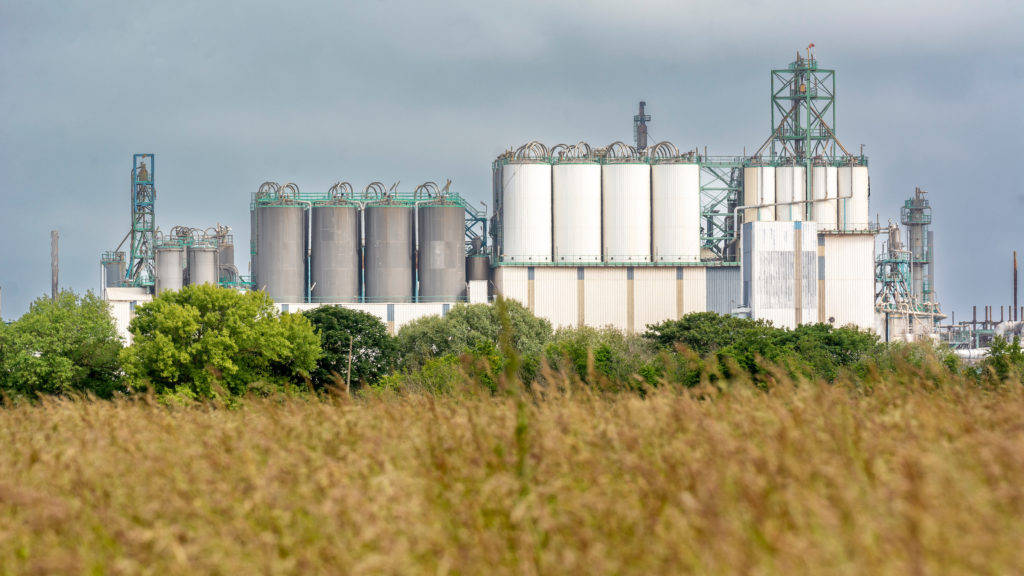

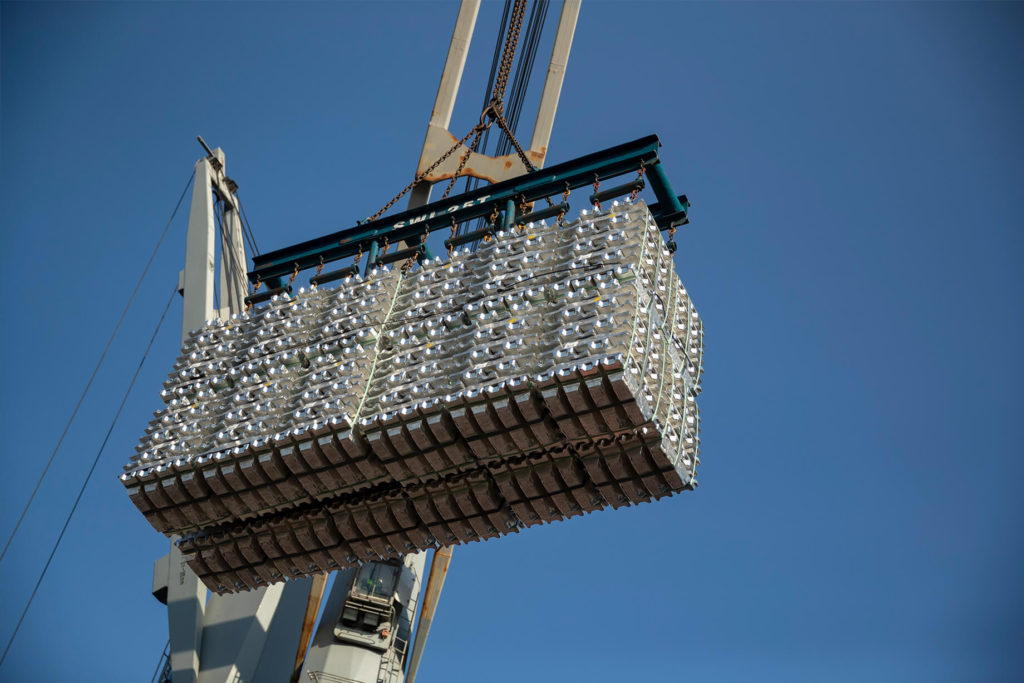
Stock image.

Italian oil company Eni SpA and commodity merchant Mercuria Energy Group Ltd. signed an agreement to join forces in trading, seeking growth in an area that has seen huge price swings and profit opportunities during the war in Iran.

The two firms will be combining their main trading books for various commodities including oil, liquefied natural gas and biofuels under a new entity headquartered in Geneva, according to statements on Wednesday.

It’s a big move for both companies — integrating Eni’s physical energy supply chains with Mercuria’s trading expertise could potentially allow them to compete more effectively with larger rivals such as Shell Plc or Vitol Group.

“This partnership brings together two highly complementary organizations,” Mercuria chief executive officer Marco Dunand said. The venture will combine “physical energy flows with world-class trading, logistics and risk management capabilities.”

For Eni, the tie-up could allow it to challenge its larger European rivals Shell, BP Plc and TotalEnergies SE, which are among the largest oil and gas traders in the world, buying and selling far more than what’s produced by their own assets.

For Mercuria, which long has trailed rivals like Vitol, Trafigura Group and Gunvor Group in its physical trading volumes, the deal offers an opportunity to supercharge an expansion push, especially in LNG. The fuel is seen by many in the industry as a key growth commodity, but it has faced setbacks, with Steve Hill, a former senior Shell executive whom it hired in 2024, leaving this year.

Eni and Mercuria expect the joint venture to be operational in 2027, with the two firms equally represented at the senior managerial level, according to a spokesperson for the Italian oil giant. Commodity traders won’t be made redundant, the spokesperson added.

Price volatility caused by the Iran war has created opportunities for companies that buy and sell energy in large volumes. Shell and BP posted first-quarter earnings that far exceeded expectations, thanks to a surge in profit from their extensive in-house trading operations.

Mercuria’s first-half profit jumped 88%, putting it on track for one of its best-ever annual results. For several months, the trading house has been doing deals to grow its access to physical commodities and processing assets, including $1.2 billion to help finance the buyout of a copper mining company in Kazakhstan and a deal to buy an oil refinery and petrol stations in Argentina.

Trading activities for both parties will be exclusive to the JV for the identified commodities, except cases that require joint approval, the spokesperson said, adding that Eni does not currently expect refinery assets to form part of the venture.

Talks between Eni and Mercuria to form a joint venture were first reported by Bloomberg in January.

(By Jack Wittels)


Mercuria signs first uranium financing deal with Malawi miner
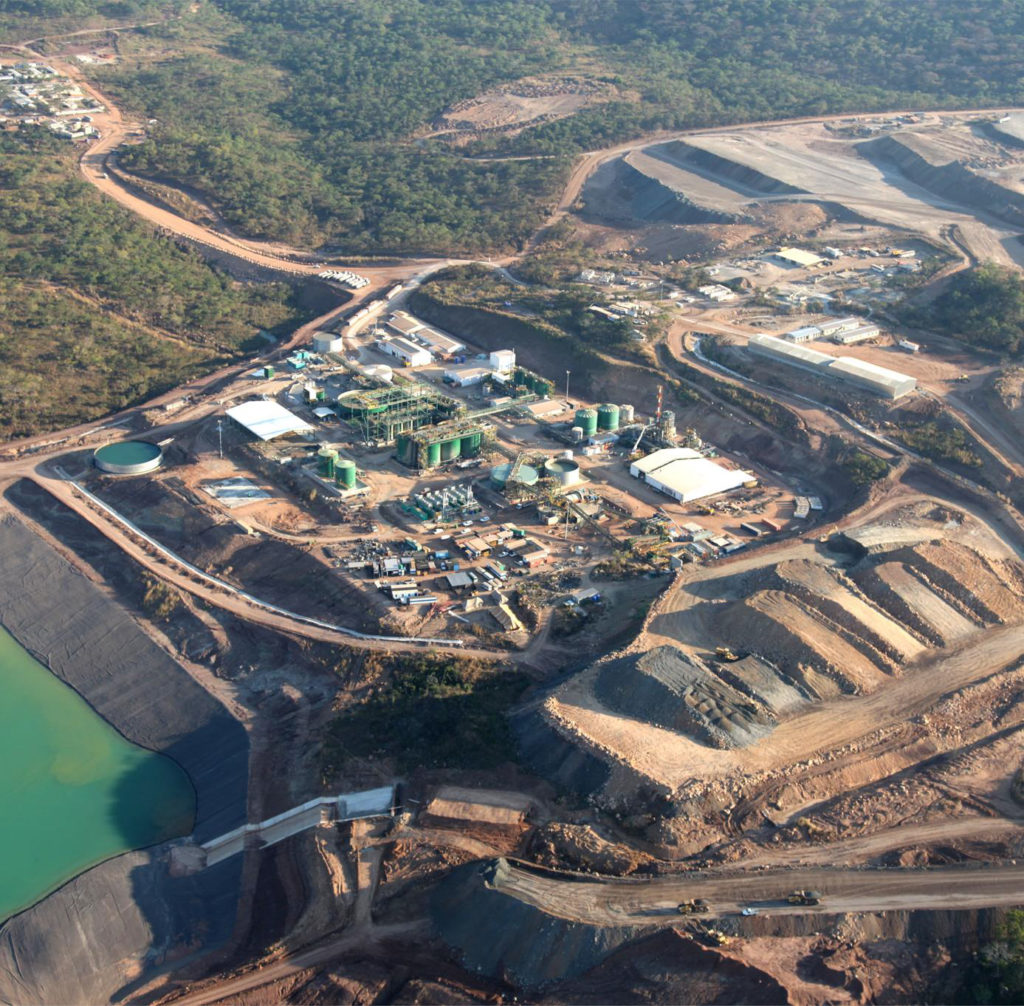

Kayelekera uranium mine in Malawi. Credit: Lotus Resources.

Trading house Mercuria Energy Group Ltd. signed its first prepayment agreement with a uranium miner, striking a deal with the owner of an operation in Malawi.

Australia’s Lotus Resources Ltd. said last week it has signed a non-binding term sheet with the commodity trader for production from the its Kayelekera mine. If finalized, Mercuria will pay up to $30 million and be able to market 3 million pounds of uranium over 30 months.

The arrangement is Mercuria’s maiden foray into financing uranium miners in return for a portion of their output. The market for the nuclear fuel has recovered in recent years following a lengthy downturn after the 2011 Fukushima disaster, and demand is forecast to grow as multiple countries – led by China – expand their fleet of reactors.

Lotus acquired the Kayelekera asset in 2020, six years after it was shuttered due to weak uranium prices. The company restarted the mine last year and is targeting annual output of 2.4 million pounds of uranium oxide, although earlier this month it announced a temporary pause in production after the Iran war disrupted sulfuric acid supplies.

Mercuria’s funding – which won’t be available until September at the earliest – will provide “significant additional working capital flexibility to progress the project,” Lotus said. That involves repairing the mine’s acid plant.

Under the marketing agreement, Lotus will retain “full control” over who Kayelekera’s production is sold to, including to power utilities that have existing offtake contracts with the mine, the company said.

A spokesperson for Mercuria declined to comment.

(By William Clowes and Archie Hunter)


China restricts some Fortescue iron ore cargoes as talks drag


Stock image.

China’s state iron ore buyer has asked some domestic steel mills not to take delivery of certain portside iron ore products from Fortescue, industry sources said, the latest Australian miner to fall foul of Beijing’s push to increase control over the market.

China Mineral Resources Group (CMRG) notified some mills verbally that from July 15 they must not take delivery of portside cargoes of Fortescue’s Super Special Fines and Fortune Fines, both of which are lower-grade iron ore products, five sources with knowledge of the matter said.

Fortescue declined to comment. Shares of Fortescue were flat at 12:57 GMT on Thursday, even as peers BHP and Rio Tinto fell more than 1%.

The move escalates CMRG’s campaign to assert control over how iron ore enters the Chinese market, following a months-long standoff with BHP that ended in April.

Fortescue ships most of its iron ore to China and is still negotiating supply terms with CMRG.

All sources sought anonymity given the sensitivity of the matter. CMRG did not immediately respond to requests for comment outside of working hours on Wednesday.

Stocks of Fortescue’s Super Special Fines at some major Chinese ports stood at 7.22 million tons as of June 30, said a separate trader on condition of anonymity.

That represents nearly 5% of total portside iron ore stocks, according to a Reuters calculation based on data from the consultancy Steelhome.

CMRG last month told some domestic steelmakers not to engage in discussions with Fortescue about a new iron ore product — Fortune Fines — scheduled for shipments from July.

Fortescue’s China president departed in June, just four months after taking the position, the company confirmed last week.

BHP said in mid-April that it had concluded supply contract talks with CMRG, ending a months-long dispute, and Beijing then lifted bans on several of its products.

CMRG was established in 2022 as part of Beijing’s efforts to centralize its iron ore procurement and win better terms from upstream mining giants.

(By Melanie Burton; Editing by Emelia Sithole-Matarise, Kevin Liffey and Tom Hogue)


EGA ramps up recovery at aluminum complex damaged in Iranian strikes


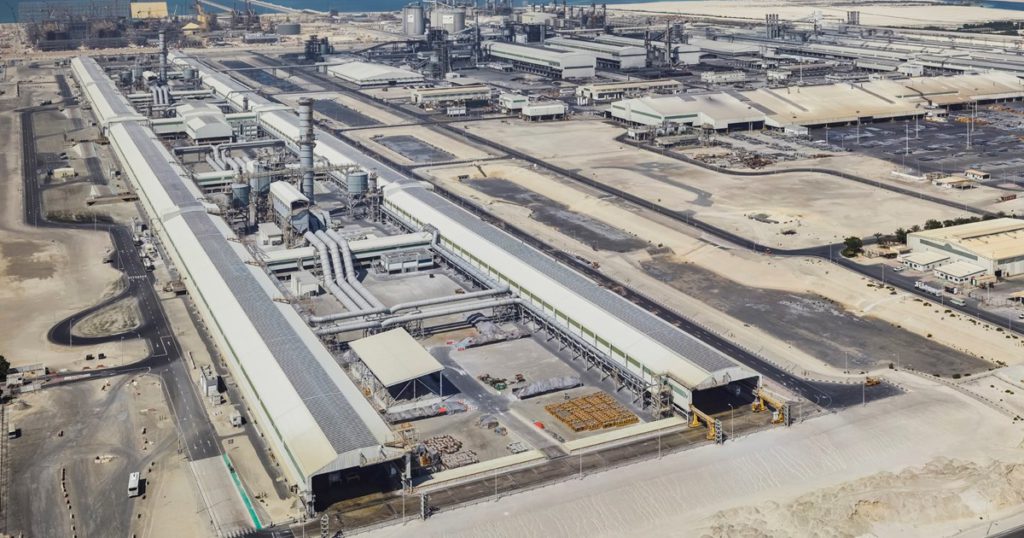
Emirates Global Aluminium’s Al Taweelah site. Credit: Emirates Global Aluminium

Emirates Global Aluminium said on Thursday it was restoring production sooner than expected at its Al Taweelah complex, which was damaged by Iranian missile strikes in March, although hot metal output may take up to a year to return to previous levels.

One of the world’s largest aluminum production sites, the complex suffered extensive damage when strikes hit the Khalifa Economic Zone Abu Dhabi on March 28, forcing an emergency shutdown.


EGA said two employees injured in the attack had left hospital.

The company said EGA must progressively restart each of the smelter’s 1,262 reduction cells to resume hot metal production.

Anode removal is complete across all cells, bath cleaning has been finished at around 90% of cells, and frozen metal has been cleared from more than 20%, the company said.

Since the first cell was restarted on May 26, 89 have now been brought back online, it added.

Cast metal production returning

The plant’s casthouse produced its first cast metal on May 4 and is remelting frozen metal recovered during the restoration alongside hot metal from restored cells.

The site’s recycling plant resumed cast metal production in early May, with full output expected within six months, subject to scrap availability.

First production is expected early in the third quarter at the Al Taweelah alumina refinery, with the pace of ramp-up dependent on bauxite supply chains.

EGA said hot metal output would not depend on the refinery reaching full production.

“All opportunities to accelerate the timeline further are being explored, and we will achieve our goal of emerging stronger than ever before,” CEO Abdulnasser Bin Kalban said in a statement.


EGA’s Jebel Ali site has continued operating at full capacity throughout the conflict. The company said it had secured sufficient raw material supplies for both Jebel Ali operations and the Al Taweelah restart, and is now selling more metal than Jebel Ali produces as it draws down inventories built up when outbound shipments were temporarily suspended.

The company did not disclose the financial impact of the damage or restoration costs.

Chief financial officer Pål Kildemo said stronger aluminum margins since the start of the year were helping offset losses from Al Taweelah’s reduced production, adding that the company’s financial position was very strong.

EGA is jointly owned by Abu Dhabi sovereign wealth fund Mubadala and the state company which holds Dubai’s most high-profile assets, Investment Corporation of Dubai.

(By Hadeel Al Sayegh; Editing by Kate Mayberry and Louise Heavens)

Magnitude 7 Metals plans partial restart of Missouri aluminum smelter

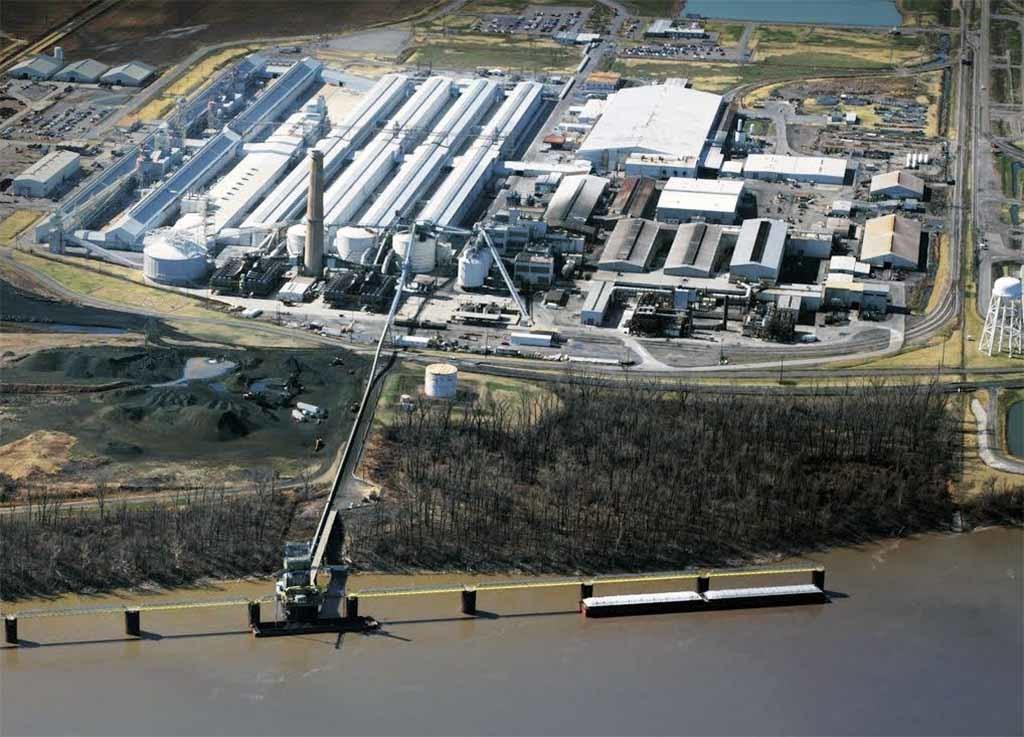
Magnitude 7 plant in Marston, Missouri. Credit: Magnitude 7 Metals | LinkedIn

Magnitude 7 Metals said on Wednesday it plans to restart the first potline at its aluminum smelter in Marston, Missouri after its closure in 2024.

The partial restart is expected to expand US primary aluminum capacity and restore some jobs in the state’s Bootheel region.

The smelter’s shutdown in January 2024 resulted in the layoff of 500 workers, severely impacting the economy of the Missouri Bootheel region.

The facility has faced repeated cycles of closures and curtailments over the last decade, including under previous owner Noranda in 2016, despite federal Section 232 tariffs aimed at shielding domestic producers.

In statements responding to the announcement, coalition groups, including Industrious Labs and Renew Missouri, urged Magnitude 7 Metals to modernize the facility with cleaner, more reliable energy systems to prevent future “boom-and-bust” cycles.

(By Dharna Bafna; Editing by Vijay Kishore)

Norsk Hydro’s Slovak aluminum smelter to partially restart production


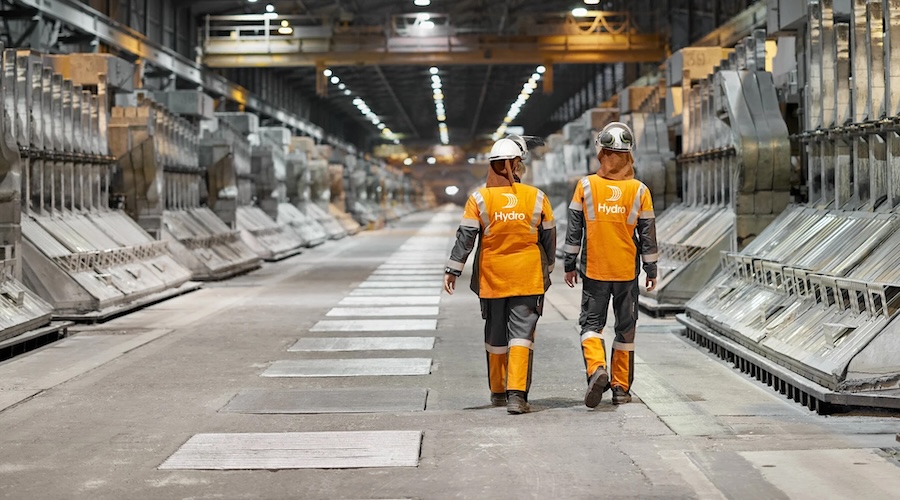
Norsk Hydro is one of the world’s largest aluminum producers.(Image courtesy of Norsk Hydro.)

Norsk Hydro said on Wednesday its Slovalco aluminum joint venture had reached an agreement with the Slovak government to partially restart production after a four-year shutdown, including a new long-term power supply contract.

The deal paves the way for the restart of 75,000 metric tons per year of smelting capacity, with production expected to resume in the fourth quarter of 2026, Hydro said.

Restoring the remaining 100,000 tons of capacity would depend on conditions beyond 2030 and additional power contracts, it added.

The resumption of primary aluminum production at the plant, in Ziar nad Hronom in central Slovakia, would be a boost for the European market, which has been left short of metal by the closure of the Mozal smelter in Mozambique, the EU’s new carbon tax and war-driven supply constraints in the Gulf.

Slovalco – owned 55.3% by Norway’s Hydro and 44.7% by Central Europe-focused Penta Investments Group – was forced to stop primary aluminium production in September 2022 as high power prices left the joint venture facing financial losses.

The deal sets out the “long-term framework conditions” for aluminum production, including a power purchase pact with state-owned hydropower utility Vodohospodarska Vystavba and a compensation scheme for indirect carbon costs under the EU Emissions Trading System (ETS), Hydro said.

Cutting import dependence

Slovalco will invest €100 million ($114 million) to resume operations, which will support more than 200 jobs, it added after a signing ceremony in Bratislava on Wednesday.

“With a production capacity of 175,000 tons per year, Slovalco has the potential to restore a meaningful share of the EU’s domestic primary aluminum production,” Hydro CEO Eivind Kallevik said in a statement.

“Restarting the smelter will strengthen Europe’s industrial resilience, reduce dependence on imports and supply European customers with aluminum carrying significantly lower carbon emissions than the global average,” he added.

In a televised press conference, Slovakia’s Prime Minister Robert Fico described Slovalco as a strategic supplier to the country’s automotive industry and blamed its long absence on “overly ambitious” EU climate targets.

These had led to higher aluminum imports from China, where the metal is produced with a greater environmental impact, Fico said, adding that Slovalco’s power supply contract was for 10 years.

($1=0.8777 euros)

(By Tom Daly and Jan Lopatka; Editing by Elaine Hardcastle, Clarence Fernandez and Louise Heavens)

South32 sells nearly all its aluminum business to Alcoa for $5.6B


Hillside Aluminium (pictured) is the largest aluminum smelter in the southern hemisphere. Credit: South32

Australia’s South32 (ASX: S32) has agreed to sell nearly its entire aluminum portfolio to Alcoa (NYSE: AA, ASX: AAI) in a deal valued at up to $5.6 billion.

In an announcement on Wednesday, the Perth-based miner said it has entered into a binding conditional agreement to sell most of its global aluminum business, comprising interests in Worsley Alumina (86%), Hillside Aluminium (100%) in South Africa, and a trio of Brazilian assets — the MRN bauxite mine (33%), an alumina refinery (36%) and an aluminum smelter (40%).

The Mozal Aluminium operation in Mozambique, which is currently under care and maintenance, is excluded from the transaction, though its sale remains under active consideration, the company said.

As consideration, Alcoa will make an upfront payment of $3.1 billion in cash and $1 billion in stock equating to approximately 6% of its issued share capital.

The US aluminum giant would also assume around $750 million in liabilities related to the acquired assets, and could make a further $750 million payment tied to future aluminum prices to 2030.

Shares of Alcoa fell around 2% to just above $51 apiece during after-hours trading on the announcement, for a market capitalization of $13.75 billion. Earlier this month, the stock surged to a four-year high of $84.38, benefiting from the rise in aluminum prices driven by the US-Iran war.

South32 also fell 2% at market open in Australia, trading at a market capitalization of A$17.5 billion.

‘Simpler’ portfolio

The sale of the aluminum assets, says South32, allows the company to slim down its business to focus on the “high-margin copper, zinc, silver and lead operations” and to maintain its status as a major manganese producer.

The announcement also coincides with the official start of Matthew Daley’s tenure as the group’s new chief executive officer and managing director, succeeding Graham Kerr.

“This Transaction will unlock significant value for shareholders and repositions South32 as a leading upstream base-metals-focused company with high-margin assets and transformational growth,” Kerr said, as he departs from a role he has held since South32 split from BHP (ASX: BHP) over a decade ago.

“Following completion, our portfolio will be focused on high-quality, long-life assets leveraged to attractive market fundamentals, with approximately 85% of pro-forma EBITDA from base and precious metals,” incoming CEO Daley said.

“This will enable a leaner, lower-cost operating model that will deliver ongoing value through an anticipated $125 million per annum reduction in overhead costs as new support structures are implemented,” he added.

In the coming years, the company is expecting approximately a 55% growth in production from its Taylor zinc-lead-silver project in Arizona and a planned expansion at the Sierra Gorda copper mine in Chile.

$900M in synergies

For Alcoa, the transaction would “add a high-quality, low-cost, and globally diversified set of mining, refining and smelting assets, further strengthening Alcoa’s mine-to-metal platform,” it said in a press release.

The Pittsburgh-based company estimates that the assets are expected to generate significant synergies of approximately $900 million in net present value, further reinforcing its position as a leading pure-play upstream aluminum company.

“This is exactly the type of opportunity Alcoa is built to execute,” Alcoa CEO William Oplinger said. “These high-quality, globally relevant assets are a strong strategic fit within our portfolio.”

Alcoa currently holds positions in seven mines globally, including the Huntly mine in Australia, one of the world’s largest bauxite mines.


Congo plans first stock market as AI mineral boom draws interest

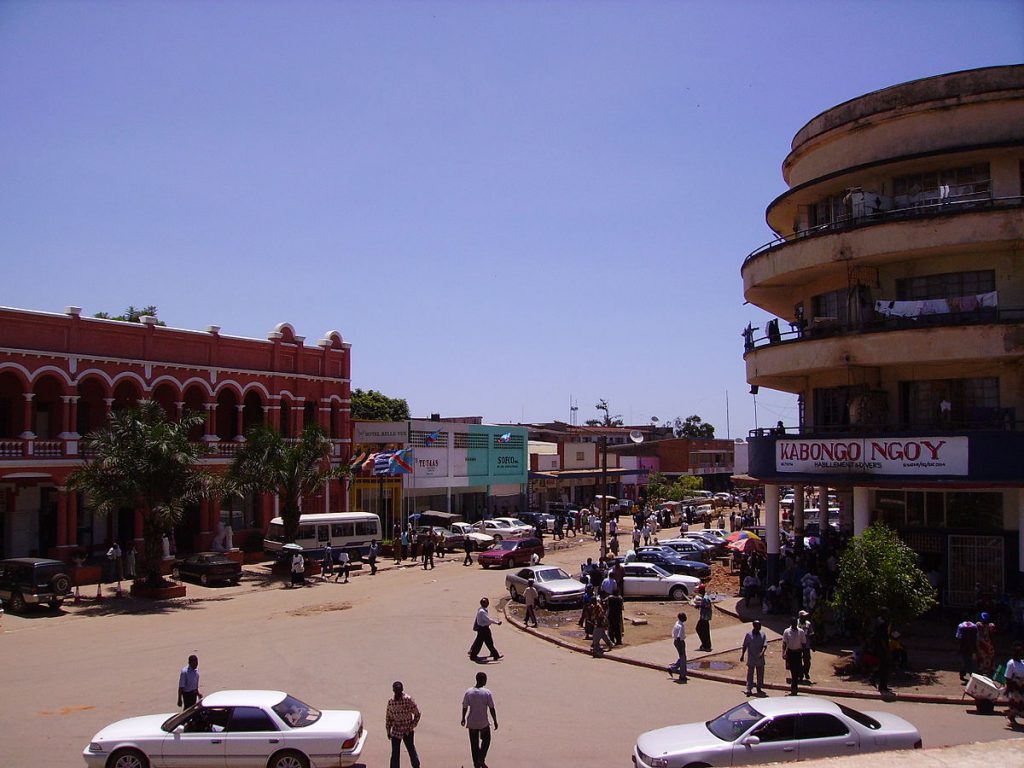
Downtown Lubumbashi, Democratic Republic of the Congo. Credit: Wikipedia.

The Democratic Republic of Congo is drawing up plans for its first stock exchange as it seeks to attract more investment to an economy that’s benefiting from soaring demand for minerals critical to the artificial intelligence buildout.

The new exchange will list securities denominated in both the Congolese franc and the US dollar, Finance Minister Doudou Fwamba Likunde Li-Botayi told Bloomberg News. In the meantime, the government is working with the International Finance Corp. to create a capital markets framework, he said.

The planned Kinshasa Stock Exchange is part of the government’s strategy to capitalize on growing foreign interest in Congo’s economy and broaden companies’ sources for capital, Li-Botayi said. Authorities also hope the dual-currency exchange will encourage greater use of the Congolese franc over time.

“The reality of our economy is that it is strongly dollarized,” Li-Botayi said in emailed comments, noting that more than 95% of total banking system deposits and over 80% of public securities are held in dollars. “We cannot design a stock exchange that ignores that reality.”

“We are building for the market as it exists today, while keeping sight of where we want it to go,” he added.

The move will add to other reforms the Central African nation has embarked on to spur wider market participation. They include liberalizing the mining sector, transforming state enterprises into commercial companies, opening the insurance market to private investors and creating a Treasury bond market, Li-Botayi said.

The International Monetary Fund said this week that the reforms are progressing well although an “accelerated pace is necessary.”

Congo is the latest African nation to try and establish an equity market, following launches in Ethiopia and Somalia in 2025. Prior to that, Zimbabwe set up an exchange in 2020 to allow trading in dollar-denominated securities.

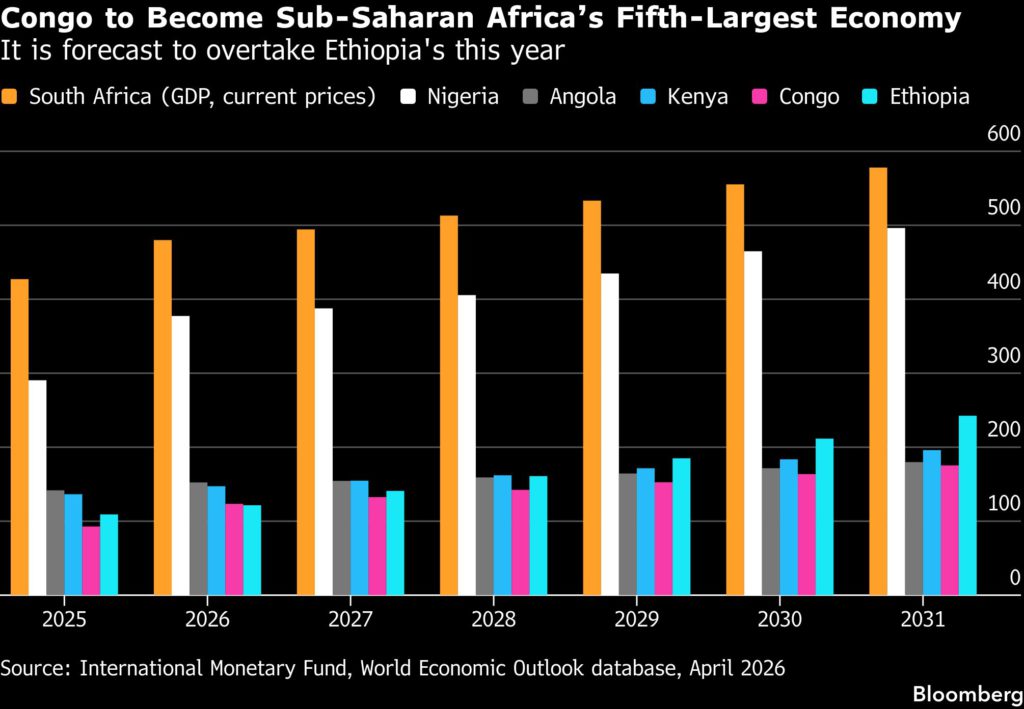
The timing may be in Congo’s favor. It is Africa’s largest copper producer and a major source of cobalt and lithium, all of which have spurred investor interest, amid rising demand for the minerals crucial for AI infrastructure. Booming metals exports are expected to make the economy sub-Saharan Africa’s fifth largest this year, according to IMF projections.

African stocks are also currently in vogue, benefiting from high commodity prices and inflows from investors keen to diversify from Asian technology heavyweights. Ghana, Nigeria, Zambia and Kenya all rank in the 20 best-performing indexes globally this year, adding to 2025’s stellar run.

The government is also on a drive to open its economy to foreign investors, striking deals with overseas firms for exploration and production. Its debut $1.25 billion eurobond in April was heavily oversubscribed and has handed investors returns of about 3% since, outperforming the emerging-market average. While the Congolese franc has weakened this year against the dollar, that comes after a 21% surge in 2025.

A finance bill establishing legal frameworks for markets is now before the country’s Senate and is expected to be signed off by year-end and the Finance Ministry is finalizing a decree to set up an independent regulator, which will license the exchange operator.

Li-Botayi identified mining firms as an priority target for stock-market listings, but said authorities will also work with the wider business community to build a pipeline of initial public offerings. While publicly traded companies will benefit from lower corporate income tax rates, the aim is also to boost public participation in markets.

“We want Congolese people to be able to own a piece of the companies that drive this country’s economy,” he said.

(By Ray Ndlovu)


Hudbay gains Peru approval to further increase Constancia mill throughput


Operations at Constancia copper mine. (Image courtesy of Hudbay Minerals.)

Hudbay Minerals (TSX, NYSE: HBM) says it has received approval from Peru’s environmental agency to increase the Constancia mill throughput by another 10%.

In a statement on Thursday, the copper miner confirmed that the National Environmental Certification Service for Sustainable Investments (SENACE) has issued an amended permit to the company that allows it to increase the Constancia mill’s processing capacity from 31 million tonnes per annum (mtpa) to 34 mtpa.

This represents the fifth amendment to the Constancia environmental permit, following further optimization of the mine plan, an extended operational life and the addition of new infrastructure, Hudbay said.

The most recent amendment came in March 2026, when Hudbay received permit approval to increase the mill throughput to 31 mtpa from 29.9 mtpa.

Hudbay said its efforts to increase mill throughput align with the Peru Ministry of Energy and Mines’ regulatory framework, which permits operational flexibility to operate up to 10% above nominal daily capacity. Over the past two years, the company processed 30.3 million and 31.9 million tonnes of ore, respectively. 

According to the company, the new permit would enable it to add more capacity — amounting to 34 mtpa along with the flexibility to handle daily increases of up to 10% above permitted levels — further optimizing Constancia’s operations to deliver strong copper production.

The open-pit mine, located in the Andes Mountains of the Cusco Region in southern Peru, has been in operation since 2014. Last year, it produced 85,155 tonnes of copper, along with 74,480 oz. of gold, 2.41 million oz. of silver and 1,282 tonnes of molybdenum.

Hudbay Minerals’ stock fell 2.5% on Thursday, in line with the decline in copper prices. The Toronto-based miner has a market capitalization of C$14.6 billion ($10.3 billion).


Almonty kicks off processing at Sangdong tungsten mine


Sangdong tungsten mine in South Korea. Image: Almonty Industries.

Almonty Industries (NASDAQ: ALM) (TSX, ASX: AII) says it has commenced processing plant throughput operations at its Sangdong tungsten mine in South Korea.

The company began in June feeding stockpiled run-of-mine ore through its newly commissioned processing plant to produce saleable tungsten concentrate — in what it says is “a pivotal milestone marking Sangdong’s transition from mine development into active, revenue-generating operations.”

Historical producer

The Sangdong mine in Gangwon province was historically one of the world’s largest tungsten producers before operations were suspended in the early 1990s following a prolonged downturn in commodity prices.

Since acquiring the project in 2015, Almonty has invested more than $100 million to redevelop the site as a modern underground mining operation with a newly constructed processing plant.

The Montana-based company exited the first quarter of 2026 with approximately 120,000 tonnes of ore stockpiled at an average grade of 0.24% tungsten trioxide (WO₃).

During the second quarter, the company mined an additional approximately 19,700 tonnes of development ore at an average grade of 0.35% WO₃, while advancing 214.6 meters of underground development, primarily along the Main Vein. This brought total stockpiled ore to approximately 139,700 tonnes at a blended grade of approximately 0.25% WO₃ ahead of the plant’s commissioning.

Almonty said it is using lower-grade throughput during the initial ramp-up phase and anticipates higher grades as the process advances, with Sangdong’s low-grade ore approximately three times higher than that of its Panasqueira mine in Portugal.

With throughput now underway, stockpiled ore is being introduced during the initial commissioning phase to optimize ore blending and maintain the consistent feed quality the plant requires as the operation ramps up. The Sangdong mine processing plant is designed to upgrade run-of-mine ore into a high-purity tungsten concentrate, the company said.

High-price environment

At prevailing tungsten prices, the contained tungsten in the current stockpile represents approximately 2.6 months of Phase I throughput feed with an illustrative gross in-process value of approximately $68 million.

“Our Sangdong processing plant is now up and running, with throughput finally underway in what is a highly beneficial tungsten pricing environment,” Almonty CEO Lewis Black said in a news release.

“This is the moment our team has worked toward for years; the transition from building and commissioning a mine to actually processing ore into saleable tungsten concentrate. After decades in which the West allowed its tungsten supply chain to atrophy, the Sangdong mine is once again producing one of the most strategically critical metals on earth.”

Sangdong has an expected mine life exceeding 45 years and an average ore grade of approximately 0.51% tungsten trioxide (WO₃), roughly three times the global average. At full capacity, Sangdong is expected to supply around 40% of the global tungsten demand outside China, Almonty has said.


US Department of Energy awards $75M to recover critical minerals from coal feedstocks

Stock image: by Parilov.

The US Department of Energy’s (DOE) Office of Critical Minerals and Energy Innovation has awarded $75 million to five projects using coal and coal-based feedstocks to produce rare earth elements and other critical materials.

The funding is part of a larger $275 million initiative announced in November to support pilot-scale opportunities for byproduct critical minerals and materials recovery at domestic industrial facilities.

Five projects have been selected as the first of two topic areas under funding consideration: Mines & Metals Pilots—Coal-Based Industry. The selected sites are:

  • The University of North Dakota in Grand Forks, North Dakota;
  • Valor Metals in New York, New York;
  • CONSOL Innovations LLC in Pennsylvania;
  • American Resources Corporation in Indiana;
  • Peabody Energy in Missouri.

These facilities will produce market-ready critical materials, including rare earth elements, and other minerals such as germanium, gallium and aluminum, the DOE said in a statement. The National Energy Technology Laboratory will manage the projects.

“American industrial facilities have the potential to produce valuable critical materials from coal and coal byproducts,” Assistant Secretary of Energy Audrey Robertson said in a news release. “By investing in these facilities, we can increase domestic critical materials production and help mitigate the financial risk of commercial deployment.”

Selections under the second topic area, Mines & Metals Pilots—All Industries, will be announced at a later date.

The selections stem from DOE’s August 2025 announcement of nearly $1 billion to advance and scale mining, processing and manufacturing technologies across key stages of the critical minerals and materials supply chains.

Recent announcements include the Rare Earth Elements Demonstration Facility Program.

The announcement, the DOE said, advances the Trump Administration’s efforts to strengthen the US coal sector, including nearly $700 million for coal infrastructure and operations, and reflects a broader commitment to unlock the value of coal and coal-based feedstocks as domestic sources of critical minerals and materials.


CU

Codelco debt and high costs hurt competitiveness, document says


Photo by Codelco

Chile’s state-run copper giant Codelco sees soaring costs, which are over one-and-a-half times above its global rivals, and heavy debt are the main challenges to the struggling company’s competitiveness, according to an internal document seen by Reuters.

The document said that, compared with industry rivals, Codelco has “significantly higher” costs, with a direct cost (C1) 57% higher than major international mining companies and 72% higher than the main national operations.

“The main competitive gap identified by the comparison is concentrated in operational costs, which remain significantly above international and national benchmarks,” the report said.


The analysis also highlighted that the company’s net debt to EBITDA is 3.8x, compared to 0.7x for global mining and 0.5x for the industry in Chile.

Despite losing its spot as world’s largest copper producer in 2025, the report showed that the quality of its mining resources weren’t the main detriment compared to competitors.

The document showed that Codelco’s average ore grade was 0.62% compared to 0.59% at its global counterparts, despite being below the 0.80% of other miners in Chile.

“Codelco’s main challenges are focused on increasing operational competitiveness, improving profitability and increasing the return on the significant investments made, rather than on its production scale or the quality of its resource base,” the report said.

It added that comparisons showed that there are “significant room for improvement in productivity, operational efficiency, and economic performance.”

In its latest earnings, the company said it faced rising costs across several of its mines for varying reasons, including the fatal accident in El Teniente, poor ore grade in Ministro Hales and maintenance costs in Chuquicamata, El Salvador and Gabriela mistral.

The results said costs also rose due to currency appreciation, the rising cost of materials and lower production.

After a scandal involving inflated production figures, Codelco’s new chairman, Bernardo Fontaine, has said he’s reviewing all the company’s operations and projects to restructure its investment and production plans.

Codelco, by law, must return all its profits to the state and debt has become its main source of financing. That debt has also ballooned due to its multi-billion mine expansion projects that were intended to counteract declining ore grades but have been plagued by missteps, cost overruns and accidents.

(By Fabian Cambero; Editing by Alexander Villegas and Nick Zieminski)


BHP seeks to restart Cerro Colorado mine with $1.5B investment

Cerro Colorado mine in Chile. (Image by Zwansaurio | Flickr Commons)

BHP (ASX: BHP) has begun the process to reopen the Cerro Colorado copper mine in Chile, targeting an investment of $1.5 billion to keep the operation running for 20 years.

On Wednesday, the Australian miner said it has applied for a new environmental permit for Cerro Colorado. Located in the Atacama Desert, the mine is part of BHP’s Pampa Norte division in northern Chile that also includes the Spence operation.

The copper mine has been closed since late 2023 after it was denied its water permit following protests by local communities.

In an attempt to restart the operation, BHP said it would explore the use of leaching technologies and desalinated water. Under its application, it laid out plans to use treated wastewater transported through a pipeline of more than 100 km from the municipality of Alto Hospicio to the mine site.

This initiative, according to the company, would enable the mine to run for 20 years. Its total cost is estimated at $1.5 billion.

BHP had previously planned to reboot the Cerro Colorado operation by the end of this decade. The mine represents a small part of its Chilean portfolio, in comparison to the giant Escondida mine and the nearby Spence growth project.


Antofagasta agrees spot-indexed copper ore sales with some Chinese smelters


Centinela copper mine. (Image courtesy of Minera Centinela.)

Chilean miner Antofagasta has agreed to sell term copper concentrate supplies to some Chinese smelters at spot-indexed prices with a guaranteed floor, industry information provider SMM reported on Wednesday.

The reported deal would mark a break with a decades-old practice under which miners sell term supplies at fixed treatment and refining charges (TC/RC) that serve as a global benchmark.

Antofagasta said its negotiations were confidential and it did not discuss them with third parties.


Miners typically pay TC/RCs to smelters to process copper concentrate into refined metal, but charges on the spot market have been deeply negative in recent months due to a shortage of ore.

That has left smelters paying to process material and increased pressure on the benchmark, which was set at zero for 2026 and has already been abandoned by some miners.

Chinese smelters had resisted Antofagasta’s proposal to switch to spot-indexed pricing in mid-year negotiations over term supply, arguing it would reduce pricing certainty.

However, after Antofagasta insisted on the change, the two sides reached an “innovative compromise” under which TC/RCs would be linked to an index while also being subject to a guaranteed floor, SMM said.

The arrangement means Antofagasta cannot sell term concentrate to smelters at TC/RCs below a specified level.

Spot TCs were around minus $126.80 a metric ton at the end of last week, according to Argus.

The SMM report did not say at what level the floor would be set.

(By Tom Daly, Lewis Jackson and Amy Lv; Editing by Mark Potter)


Chile’s copper output, manufacturing production plummet in May

Chuquicamata smelter. (Image courtesy of Codelco | Flickr.)

Manufacturing production in Chile posted its largest decline in over three years in May, weighed down by weak data from the fishing industry, data from the statistics agency INE agency showed on Tuesday.

The country’s manufacturing output was down 7.2% in the month on a yearly basis, the sharpest decline since November 2022. The data also declined more than expected, economists polled by Reuters anticipated a 2.5% decrease.

The decline was largely driven by a 10.9% year-over-year drop in food manufacturing due to lower fish production, INE said in a statement.

The fishing industry has faced “adverse weather conditions that reduced the availability of biomass in the usual fishing areas,” the agency added.

Moreover, copper output in the Andean nation , the world’s largest producer of the metal, fell 12.9% year-on-year in May to 423,623 metric tons.

(By Natailia Ramos and Aida Pelaez-Fernandez; Editing by Chizu Nomiyama)