It’s possible that I shall make an ass of myself. But in that case one can always get out of it with a little dialectic. I have, of course, so worded my proposition as to be right either way (K.Marx, Letter to F.Engels on the Indian Mutiny)
Saturday, July 18, 2026
Great Lakes Boaters Risk Prison or Fines Due to Hoax Distress Calls
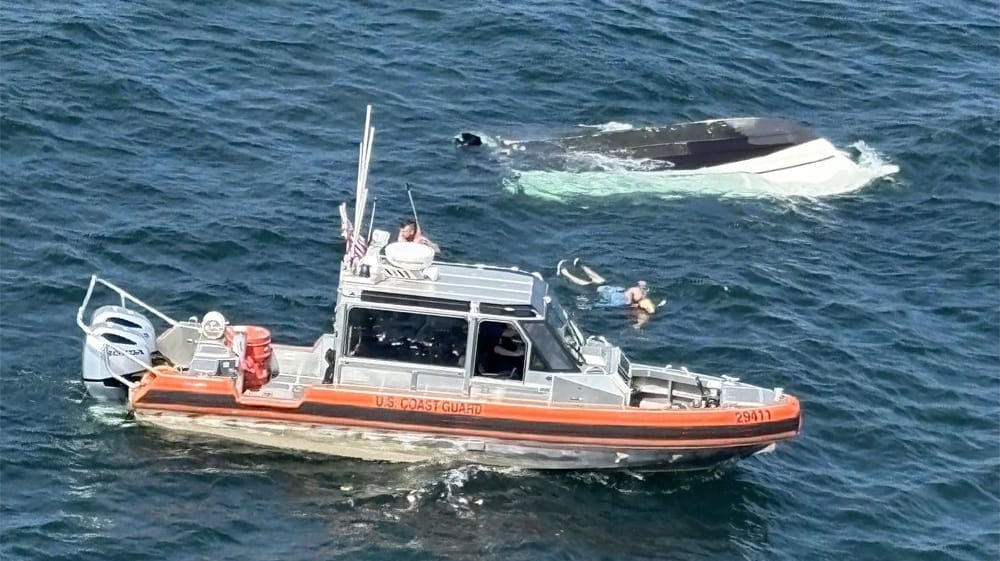
USCG Great Lakes highlights that false calls are endangering lives and increase the demands on rescue personnel (USCG file photo)
The U.S. Coast Guard is sounding the alarm over the rise of hoax distress calls that are making the agency divert rescue crews and resources to respond instead of directing them to actual emergencies.
Having received 187 false distress calls, including three confirmed hoaxes, since the beginning of the year within the Great Lakes District, the agency is now warning of possible fines and jail time for people making the calls and posting on social media.
The Coast Guard categorizes a hoax as knowingly and willfully communicating a false distress message to the agency, while a false distress alert can also result from misunderstanding, accidental transmissions, or outdated information. In both cases, the misleading information can be transmitted via radio, phone, and social media.
Owing to the unprecedented high numbers of distress calls, which are bound to increase as more people hit the water for recreational boating over the summer period, the agency is warning perpetrators risk fines and jail time.
According to the law, initiating a hoax or causing the Coast Guard to attempt to save lives and property when no help is needed is a felony punishable by up to 10 years’ imprisonment. Offenders can also face a fine of up to $13,295 and are liable for all costs the agency incurs as a result of hoax distress calls.
“Intentionally misleading emergency responders is both dangerous and illegal,” said Capt. Mark Kuperman, chief of staff, Great Lakes District. “Every false distress report creates a ripple effect across the entire emergency response community, draining valuable time and resources from the Coast Guard and agency partners, and potentially putting emergency responders at unnecessary risk.”
He added that the hoax calls are negatively impacting the Coast Guard’s operations, owing to the fact that they are reducing readiness for actual emergencies. He emphasized it can be detrimental, especially during the summer months when resources are in constant demand.
Coast Guard recreational boating statistics indicate there were more than 11.6 million registered recreational vessels in the U.S. in 2024. During the year, 3,887 incidents involved 556 deaths, 2,170 injuries, and $88 million of damage to property due to recreational boating incidents.
“The growing influence of social media has added further challenges to search and rescue operations,” said Roger Rice, search and rescue program manager, Great Lakes District. “Social media content suggesting distress may not include critical details, such as an accurate location, the number of people involved, or immediate hazards. Misleading photos or videos may unnecessarily trigger emergency responses and divert critical resources.”
The agency’s Great Lakes District is responsible for a 1,500-mile international border spanning eight states. The district has more than 6,000 active-duty, reserve, civilian, and auxiliary personnel who deliver multi-mission services in search and rescue, maritime safety and security, environmental protection, maritime law enforcement, aids to navigation, and icebreaking.
One Dead, Three Missing in Tragic Capsizing in San Francisco Bay
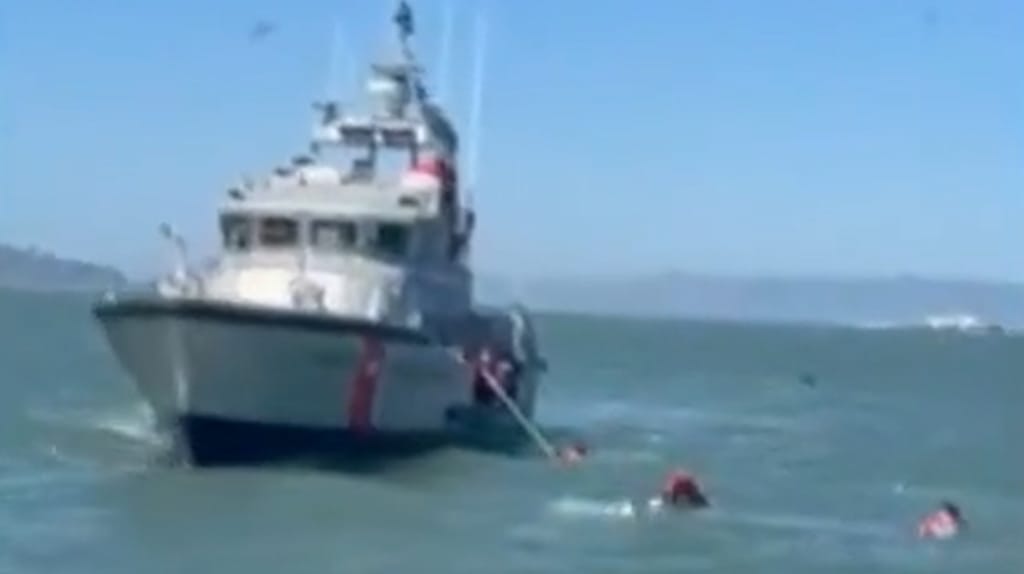
A Coast Guard surf boat pulls survivors from the water (via social media)
The U.S. Coast Guard has called off the search for three people who went missing in the capsizing of a cabin cruiser in San Francisco Bay, a tragedy that started out as an outing for a memorial service.
On Tuesday afternoon at about 1530 hours, the Coast Guard received notification of a "fire" aboard the cabin cruiser Volare, a 49-foot boat operating just off Alcatraz Island. There were 20 adults aboard the vessel, all present for a ceremony to scatter the ashes of a relative.
In circumstances that are under investigation, the vessel capsized suddenly. 16 survivors escaped and were rescued by first responders and good Samaritans.
One deceased passenger was recovered at the scene, later identified as Clifford Joseph Boisa, 79.
Three people remain missing, and may have been trapped inside the vessel's main cabin; one good Samaritan responder who was on scene told local media that passengers who had been caught inside the boat had been banging on the windows as the vessel settled lower in the water.
The Coast Guard continued the search unto 2030 hours Wednesday, when it called off the effort. "Suspending a search is one of the hardest parts of our job and our condolences are with the families of all involved," Capt. Jarod Toczko (USCG) told the San Francisco Chronicle. "We appreciate the support and dedication from our partner agencies and local mariners who rushed on scene to rescue 20 individuals in distress."
Investigators will be looking to establish the root cause of the capsizing, including the initial - and possibly inaccurate - report of a fire. Toczko said that survivors reported the cabin cruiser getting hit by a large wave shortly before capsizing. Accessing the wreck to examine it fully could be difficult: the vessel sits in 130 feet of water, within reach for technical divers but too deep for an easy refloat attempt. A decision on whether to raise it has not yet been made.
Video: Ukraine Expands Anti-Shipping Campaign Into the Black Sea
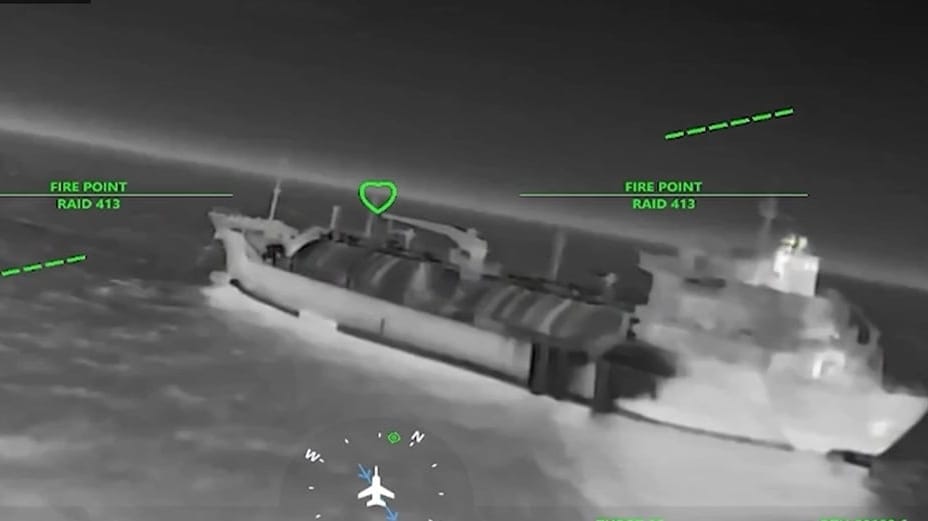
Ukraine is expanding its successful anti-shipping campaign from the Sea of Azov into the waters of the Black Sea, targeting Russia-linked merchant ships and adding to a growing toll of Russian losses. Overnight July 15, Ukraine's Unmanned Systems Forces (USF) hit 17 oil tankers in the Black Sea, two gas carriers and one tugboat.
In a statement, the "Magyar's Birds" unit said that Ukrainian forces had struck two "LNG carriers." There are no LNG terminals in the Black Sea or Sea of Azov, but there is an active Russian trade in LPG in the region. The vessels depicted in the unit's video release appear to be LPG carriers.
In previous strikes on the small, coastwise vessels found in the Sea of Azov, Ukrainian drone pilots almost exclusively targeted the deckhouse, aiming to destroy the bridge - a tactic likely to cause injuries and fatalities among the crew. During operations in the Black Sea on the 15th, the drone pilots almost exclusively tried to damage cargo tanks - usually a survivable, repairable event on a large crude oil tanker, and less likely to harm the crew.
The news of the runaway success of Ukraine's behind-the-lines strike campaign was undercut Wednesday with news of the dismissal of its organizer, the young tech executive turned defense minister Mykhailo Federov. President Volodymyr Zelensky removed Federov from his post on Wednesday and is expected to replace him dwith Interior Minister Ihor Klymenko, a move seen as beneficial for incumbents in Ukraine's defense establishment. During his brief six-month tenure, Federov developed a reputation for shaking up the status quo and taking risks to get technology to the front line, like diverting payroll funds earmarked for the end of 2026 in order to pay for the drone strike capabilities that are in use now. He is said to have had a running feud with more traditional officials, including the Soviet-trained Gen. Oleksandr Syrski, head of the Ukrainian armed forces. In his own sum-up of his accomplishments, Federov said that he "initiated an unpopular but vital transformation of the military."
"Fedorov was widely credited for Ukraine’s turnaround on the battlefield, and for cutting corruption in the military. Firing him after just six months, and with no explanation, is a really bad look for Zelensky," commented the Wall Street Journal's chief foreign affairs correspondent, Yaroslav Trofimov.
Russia Strikes Mykolaiv as Ukraine Continues Unrelenting Shipping Attacks
Damage in Mykolaiv from two days of Russian attacks (Prosecutor's Office)
Russian drones struck the Ukrainian port of Mykolaiv for the second time in recent days on Friday morning, July 17, as the two sides continue to intensify the attacks on commercial shipping. Ukraine is 12 days into its campaign against shipping transporting oil, fuel, and cargo to occupied Crimea.
The Mykolaiv Regional Prosecutor’s Office launched an investigation after three commercial vessels docked in the port were struck this morning. It said the port area was attacked by Shahed-238 type drones. Two Ukrainians who were aboard one of the vessels were killed in the attack.
Two days ago, on July 15, it also reported another strike hitting the port area at 0623 in the morning. It said two Shahed-style drones struck the port area, damaging two commercial cargo ships docked in Mykolaiv. One of the vessels was reported to be flagged in Liberia, and the other in the Cayman Islands.
A 60-year-old seafarer suffered multiple burns in the attack and was transported in serious condition to a hospital. Prosecutors reported he later succumbed to his injuries.
Five hours later, Russian drones also struck a warehouse storing grain. Agricultural machinery was also damaged. A 65-year-old truck driver was seriously injured in the attack and taken to a hospital.
The Russian Defense Ministry said today’s attack was part of an intensifying campaign. It claims to have struck 24 vessels over the past week that it asserted were being used by the Ukrainian military. Last month, it struck two vessels, one registered in Panama and the other in St. Kitts and Nevis, on June 19, and another Turkish-owned vessel registered in Panama on June 22.
The Azerbaijani Foreign Ministry also confirmed that one of its seafarers, a captain of the cargo ship Atlas Bey, was killed in a Russian drone attack on July 14. The vessel was reported to have been off Odesa when it was struck, and a fire resulted. Ten crewmembers were able to abandon the ship, but the captain had been reported missing. His body has now been found and is being brought home to Azerbaijan.
For its part, Ukraine launched its attack on shipping on the Sea of Azov on July 6. Military commanders are now saying a total of 159 vessels have been struck, including 117 in the Sea of Azov and 42 in the Black Sea over the past 12 days.
“The goal is the irreversible paralysis of oil, fuel, and cargo logistics used to bypass sanctions,” said the Ukrainian commanders. “We want every self-propelled vessel to become a drifting barge – blind and deaf. The objective is not to pollute the sea with oil spills, so we are not sinking them.”
The attacks are continuing, with a report that 12 additional ships were hit overnight. They listed it off as nine dry cargo ships, one tanker, and one tugboat. The focus has primarily been on the tankers transporting fuel to Crimea.
Russia’s Foreign Minister Sergey Lavrov again denounced the Ukrainian attacks. He said it is not even piracy, as nothing is being taken. He called it “terrorism,” saying Ukraine simply wants to inflict damage and spread fear.
Ireland Finally Gets Rid of Seized Bulker After Three Years and €16M Cost
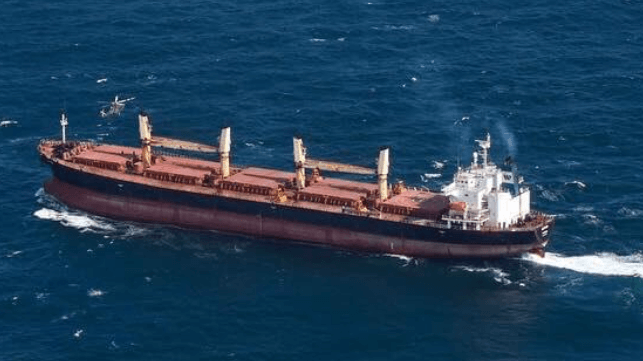
Bulker was at the center of Ireland's largest cocaine seizure but ended up becoming a political headache (Irish Defence Forces)
Irish officials are happy to see the last of the bulker Mathew as it was towed out of the Port of Cork on Friday afternoon. The notorious vessel was at the center of Ireland’s largest cocaine seizure, but then ended up being a political headache that cost a reported €16 million in maintenance costs and security.
The 50,913-dwt vessel was linked to an international smuggling operation. Built in 2001, it changed hands mysteriously in 2023 and made its way from China via Africa. It was intercepted by Irish forces on September 26, 2023. They later reported seizing 2.2 tonnes of cocaine with an estimated street value of €157 million. In July 2025, six crewmembers from the vessel, along with two people operating a small boat that was to have ferried the cocaine into Ireland, were convicted and sentenced to a total of 129 years in jail for their roles in the smuggling operation. Irish news reports said the crew had attempted to burn the cocaine in the vessel's lifeboat when they were being chased by the Irish authorities.
The ship was initially brought into the Port of Cork while it was being searched. The Irish authorities wanted the ship detained as evidence for the trial. However, there was no clear ownership and no one to claim the vessel.
Eventually, the bulker was declared the property of the state, and then it became the center of a political controversy. Politicians charged that the state was spending as much as €120,000 a week to berth and maintain the ship. It was maintaining the engine, electrical and ventilation systems, berthing, crewing, and security.
Recently, questions were asked in the Irish parliament over how much the vessel had cost the state. The reports set it at €3.73 million in berthing costs, €6.99 million on maintenance, and a further €5.28 million for crew and security on the ship, which became a tourist attraction in the Port of Cork.
The government recently moved to sell the ship, although according to media reports, they admitted they had no hope of recovering the expenses over the last three years. A few weeks ago, activity was spotted at the vessel.
The Port of Cork announced that the ship would be towed out of the harbor on July 16, but it was later delayed a day due to problems with one of the tugs assigned to aid with the maneuver. They finally got underway late on July 17.
Four tugs were required for the complex maneuver to tow the vessel out to sea. The port issued restrictions on harbor movements and advised vessels to remain clear during the operation.
Media reports initially said the ship would be going to the Netherlands to be scrapped. However, the lead tug for the tow, Foteini, is showing that it is bound for Varna, Bulgaria, due to arrive on August 9. Media reports in Ireland are now saying the Mathew will be overhauled and return to service for its unidentified new owners.
USCG Resumes Monitoring of Chinese Research Vessels Entering the Arctic
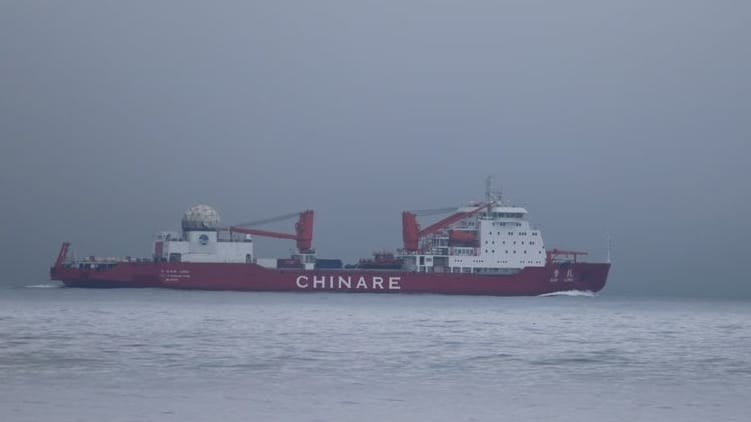
Xue Long, a Chinese research ship, was observed by the USCG entering the Arctic this week (USCG)
The U.S. Coast Guard reports that it has again begun monitoring as Chinese research vessels entered the Bering Sea and transited through U.S. and international waters. Last year, the USCG also reported similar operations in response to what it said was a dramatic increase in Chinese activity in the region.
The Chinese research ship Xue Long transited north this week through the U.S. exclusive economic zone (EEZ) and over the U.S. extended continental shelf (i.e., continental shelf beyond 200 nautical miles of shore) in the Bering Sea. Its declared destination was the Arctic, and the USCG also reported that it observed another China-flagged research vessel, the Xue Long 2, in the Bering Sea and transiting to the Arctic.
It was the first time in 2026 that the USCG observed Chinese vessels in the region. It followed a report from China that it had commenced for the second year a large expedition to the Arctic involving four research vessels. The Ministry of Natural Resources said this year’s expedition will advance on China’s earlier studies on the impacts of global climate change in the Arctic Ocean.
While foreign vessels are permitted to operate within the U.S. EEZ and over the U.S. extended continental shelf in accordance with international law, the Coast Guard remains vigilant to ensure their activities comply with established international law. In particular, conducting marine scientific research within the U.S. EEZ and/or on the U.S. extended continental shelf would require advance permission from the United States and subsequent sharing of information collected.
The U.S. Coast Guard Cutter Munro was dispatched this week to monitor the Chinese vessels during their northbound transit. According to the Coast Guard command, this operation is designed to protect American sovereign rights, ensure consistency with international law, and position the Coast Guard to rapidly respond to any detected malign activity.
The Trump administration is responding to the increased activity in the Arctic by ordering a new fleet of Coast Guard Arctic patrol icebreakers. The first of the vessels is already under construction in Finland and will be followed by U.S.-built vessels tapping the expertise from Finnish partners.
Canada’s Davie, along with Helsinki Shipyard, secured the contract for five vessels and is developing a yard in Texas. The other initial contracts went to Rauma Marine Constructions (for two hulls to be built in Finland) and Bollinger (for four hulls to be built to Rauma's design in Louisiana). The 11 Arctic Security Cutters are expected to begin delivery in 2028, with the program running until 2035.
The Coast Guard has already announced that it plans to station the first three vessels at homeports in Alaska. This is in addition to a homeport that it is developing in Juneau for the acquired icebreaker, rechristened USCG Storis.
UK Denies Bail to Chinese Captain of Detained Shadow Fleet Tanker
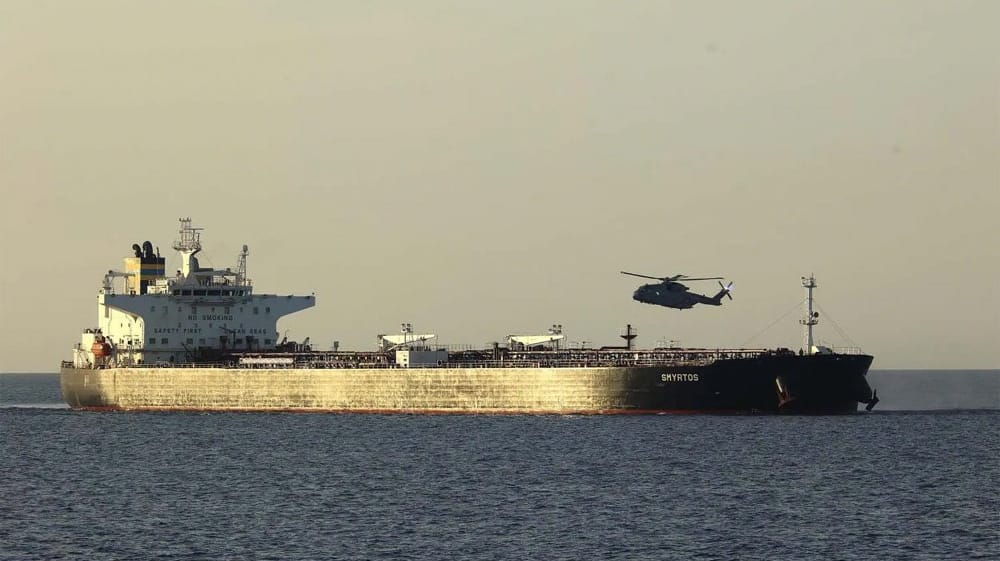
Royal Navy interdicted the tanker on June 14 and two days later the captain was charged with sanctions violations (Royal Navy)
The UK is setting the stage for the trial of a Chinese national who was the captain of the first shadow fleet tanker the UK detained. The captain made his second appearance in court on Thursday, July 16, where he was denied bail, and the trial date was set for December 15.
The tanker Smyrtos (106,969 dwt) was the first, and so far only, tanker that the UK has stopped, although it said it planned to increase enforcement of regulations on stateless tankers operating in the shadow fleet. The tanker, which was built in 2009 and has been sailing for a Chinese company since 2025, was interdicted on June 14 when UK forces boarded the vessel in the English Channel.
The ship was coming from Russia, laden with a cargo of approximately 98,000 tonnes of oil. The ship was claiming it was operating under the flag of Cameroon, but it was among several shadow fleet vessels that had their flags revoked by Cameroon after pressure from the Europeans. The tanker was labeled as “stateless” and directed to anchor off Weymouth, where it remains.
The UK charged the captain, Ajay Pant, age 38, with “directly or indirectly supplying or delivering by ship prohibited oil or oil products from Russia to a third country.” It carries a potential maximum sentence of 10 years in prison.
During the appearance in court, the lawyers representing Pant argued that he was “simply following orders” and that he was an employee of the vessel’s owners. The UK alleges he had knowledge of the cargo and understood that it was a violation of international sanctions. The vessel was sanctioned by the European Union in June 2025 and the UK in October 2025.
The court denied a request for bail for Pant. It said it feared he might abscond or that Russia might help him to flee.
The other 24 crewmembers, from Georgia and India, have remained aboard the vessel for more than a month. They have not been charged with any crimes, but there have been media reports that the UK is exploring seizing and selling the cargo from the ship.
Other countries, including France, Belgium, Germany, Latvia, Sweden, and Finland, have also detained stateless, shadow fleet vessels. France did prosecute the captain of one of the ships in absentia after he was released and failed to attend the trial. The other countries have released the vessels with fines, with Swedish prosecutors admitting it is difficult to prove what the captains were aware of the offenses. It attempted to charge several captains with presenting false registration papers to the authorities. Finland has tried a captain and officers on charges they knowingly damaged subsea infrastructure, but the case was dismissed over jurisdictional issues.
The United States prosecuted the captain of a shadow fleet tanker that attempted to flee from the U.S. Coast Guard. It tracked the vessel coming from Venezuela across the Atlantic before seizing it and arresting the captain. In June 2026, the captain, Avtandil Kalandadze of Georgia, pleaded guilty to charges related to the case and disobeying orders from the U.S. Coast Guard.
The European Union has supported member states in efforts to crack down on the shadow fleet. It provided additional authorizations for searching and seizing vessels, but the countries mostly do not implement the efforts, citing the difficulties and potential legal issues. The case with Captain Pant is seen as a test of the legal system and how much responsibility the captain bears in these operations.
Researchers identify class of 'oddball' meteorite that killed the dinosaurs
A rare CO chondrite meteorite was the probable impactor that struck Earth 66 million years ago, wiping out 75 per cent of Earth's species, including non-avian dinosaurs.
The findings, published today in Science Advances by researchers at the University of British Columbia (UBC), Paris, Brussels and Vienna, used advanced nickel isotope analysis of samples to narrow down the composition of the deadly Cretaceous-Palaeogene meteorite.
“Carbonaceous chondrites of the Ornans class are definitely not like the typical meteors you find in museum collections,” says Dr. Philippe Claeys, who worked on the study as a visiting professor at UBC.
“A CO contains much less volatile elements—like carbon, zinc, water and particularly sulphur—than other classes of meteorites we’ve discovered so far on Earth. It doesn’t alter our theory of what caused the extinction event—but it makes it less likely that sulphur contained in the impactor was the smoking gun. The fine debris thrown into the atmosphere would have the primary factor.”
Researchers from Institut de Physique du Globe and Université de Paris conducted high-precision nickel isotope measurements of samples collected over years from a thin layer of clay created across the globe by the impact.
“This is challenging work,” adds Dr. Claeys, a professor with Vrije Universiteit Brussel currently visiting the Pacific Centre for Isotopic and Geochemical Research with Earth, Ocean and Atmospheric Sciences at UBC. “Only a minute fraction of the projectile is preserved in the planet’s KT clay layer because the entire meteorite vaporized upon impact.”
Many questions remain about the origins of the world-shattering meteorite. Potential sources include distant, debris-rich regions of the outer Solar System or even the outer area of the asteroid belt near Jupiter.
A rare impactor
Carbonaceous chondrites make up only five per cent of meteorites so far sampled on Earth. Carbonaceous chondrites of the Ornans class — CO chondrites — make up a tiny fraction of that group. They are some of the most primitive and untouched materials in the solar system.
“Being impacted by such a rare, distant projectile really underscores how unlucky the dinosaurs were,” says Dr. Claeys.
The Cretaceous-Paleogene impactor was roughly 10 to 15 kilometres or six miles wide. It hit at an estimated 64,000 km/h forming the massive Chicxulub crater. The impact zone is buried underneath the Yucatán Peninsula in Mexico.
A long-held theory suggests that the asteroid strike that killed off non-avian dinosaurs — and most large marine predators — 66 million years ago created an ecological opportunity that spurred the rapid evolution of tunas, and other large, fast, and warm-blooded predators.
The idea is that tunas and their carnivorous counterparts filled a niche left by their massive, predatory predecessors, much like how mammals replaced the world’s non-avian dinosaurs after the K-Pg extinction event.
But that theory doesn’t quite hold water, according to a new Yale study that provides new insights into how these economically important fishes evolved their imposing size, speed, and ability to regulate their body temperatures in cold seas.
For the study, researchers combined genetic data with fossil specimens to create the most complete time-calibrated evolutionary tree available for Scombridae, a family that includes tunas and mackerels along with about half of living warm-blooded, ray-finned fish species.
Their analysis placed the origins of Scombridae near the time of the asteroid strike. However, it also showed that tunas, mackerels, and related predatory fishes independently evolved large body sizes and endothermy — the ability to regulate body temperature — long after the K-Pg extinction.
“Our results demonstrate the K-Pg extinction did not trigger the evolution of tunas and related large, endothermic predators,” said Chase Brownstein, a graduate student in ecology and evolutionary biology in Yale’s Graduate School of Arts and Sciences, and the study’s lead author. “We show that the body plans of these predators evolved over tens of millions of years and that there is no connection between the origins of endothermy and large body sizes in these lineages. More broadly, this paper highlights the need to be cautious when interpreting the evolution of species’ body plans directly from evolutionary trees.”
The study published on July 8 in the journal Proceedings of the Royal Society B. Thomas Near, professor of ecology and evolutionary biology in Yale’s Faculty of Arts and Sciences (FAS), is the study’s senior author.
According to their findings, differing types of endothermy — a trait that helps tunas and other predatory fish swim fast — evolved independently three times in Scombridae lineages, with at least two of the three occurring 10 to 15 million years after the asteroid strike. Endothermy and the animals’ large body sizes were thought to be linked, but the study showed that there is little evidence for this. Instead, increases in body size occurred sporadically throughout the evolution of tunas and other Scombridae lineages. All told, the body plans of today’s tunas and mackerel evolved over the course of 50 million years, the researchers said.
The dataset for the time-calibrated evolutionary tree included tissue and DNA samples collected from several institutions, including the Yale Peabody Museum.
The study of Earth’s biodiversity and this specific research, is a key part of Yale Planetary Solutions — a campuswide initiative that unites leaders and innovators across disciplines to catalyze solutions to the most critical threats facing people and the planet, Near said.
Better understanding the evolutionary biology of tunas, a nutrient-rich food source for people worldwide, can support conservation efforts, he added. Populations of the commercially important Atlantic bluefin tuna, he noted, have dramatically declined over the last several decades due to overfishing.
It also has potential implications for the study of human health, he said.
“Understanding that endothermy independently evolved multiple times in tunas and mackerels provides insight into the fundamental machinery underlying metabolism and thermoregulation,” said Near, who is also the Bingham Oceanographic Curator of Ichthyology at the Peabody Museum. “These are systems that are central to disease and health conditions in humans, such as obesity, diabetes, and metabolic syndrome. To be clear, there is no explicit connection here, but studying how our biodiversity has dealt with similar challenges over the long sweep of time is relevant to better understanding human health.”
Coauthors of the study are Laura R.V. Alencar of Yale, Holly K. Kindsvater of Virginia Polytechnic Institute and State University, Christine E. Thacker of the Santa Barbara Museum of Natural History and the Natural History Museum of Los Angeles County, Dylan K. Wainwright of Purdue University, and Richard C. Harrington of the Marine Resources Institute at the South Carolina Department of Natural Resources.
The research was supported by the Yale Training Program in Genetics, the Bingham Oceanographic Fund of the Yale Peabody Museum, and the National Science Foundation.