USCG Resumes Monitoring of Chinese Research Vessels Entering the Arctic
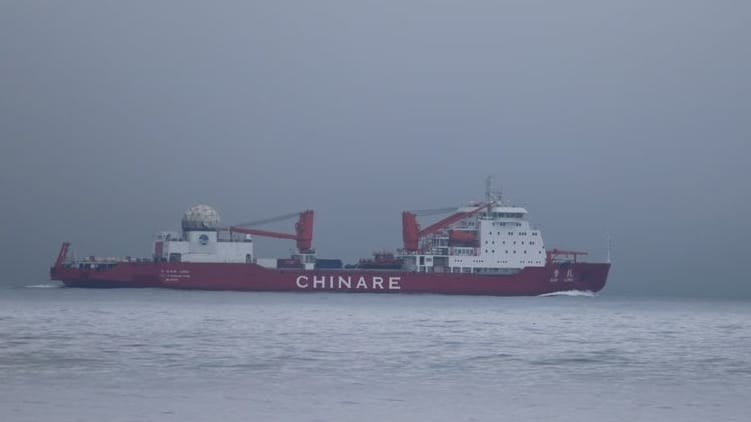
The U.S. Coast Guard reports that it has again begun monitoring as Chinese research vessels entered the Bering Sea and transited through U.S. and international waters. Last year, the USCG also reported similar operations in response to what it said was a dramatic increase in Chinese activity in the region.
The Chinese research ship Xue Long transited north this week through the U.S. exclusive economic zone (EEZ) and over the U.S. extended continental shelf (i.e., continental shelf beyond 200 nautical miles of shore) in the Bering Sea. Its declared destination was the Arctic, and the USCG also reported that it observed another China-flagged research vessel, the Xue Long 2, in the Bering Sea and transiting to the Arctic.
It was the first time in 2026 that the USCG observed Chinese vessels in the region. It followed a report from China that it had commenced for the second year a large expedition to the Arctic involving four research vessels. The Ministry of Natural Resources said this year’s expedition will advance on China’s earlier studies on the impacts of global climate change in the Arctic Ocean.
While foreign vessels are permitted to operate within the U.S. EEZ and over the U.S. extended continental shelf in accordance with international law, the Coast Guard remains vigilant to ensure their activities comply with established international law. In particular, conducting marine scientific research within the U.S. EEZ and/or on the U.S. extended continental shelf would require advance permission from the United States and subsequent sharing of information collected.
The U.S. Coast Guard Cutter Munro was dispatched this week to monitor the Chinese vessels during their northbound transit. According to the Coast Guard command, this operation is designed to protect American sovereign rights, ensure consistency with international law, and position the Coast Guard to rapidly respond to any detected malign activity.
The Trump administration is responding to the increased activity in the Arctic by ordering a new fleet of Coast Guard Arctic patrol icebreakers. The first of the vessels is already under construction in Finland and will be followed by U.S.-built vessels tapping the expertise from Finnish partners.
Canada’s Davie, along with Helsinki Shipyard, secured the contract for five vessels and is developing a yard in Texas. The other initial contracts went to Rauma Marine Constructions (for two hulls to be built in Finland) and Bollinger (for four hulls to be built to Rauma's design in Louisiana). The 11 Arctic Security Cutters are expected to begin delivery in 2028, with the program running until 2035.
The Coast Guard has already announced that it plans to station the first three vessels at homeports in Alaska. This is in addition to a homeport that it is developing in Juneau for the acquired icebreaker, rechristened USCG Storis.
UK Denies Bail to Chinese Captain of Detained Shadow Fleet Tanker
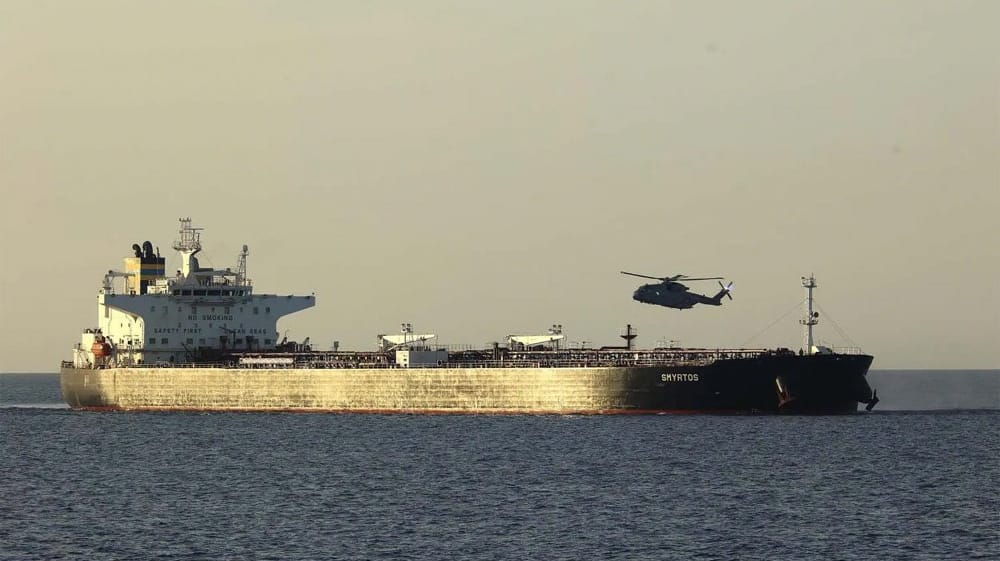
The UK is setting the stage for the trial of a Chinese national who was the captain of the first shadow fleet tanker the UK detained. The captain made his second appearance in court on Thursday, July 16, where he was denied bail, and the trial date was set for December 15.
The tanker Smyrtos (106,969 dwt) was the first, and so far only, tanker that the UK has stopped, although it said it planned to increase enforcement of regulations on stateless tankers operating in the shadow fleet. The tanker, which was built in 2009 and has been sailing for a Chinese company since 2025, was interdicted on June 14 when UK forces boarded the vessel in the English Channel.
The ship was coming from Russia, laden with a cargo of approximately 98,000 tonnes of oil. The ship was claiming it was operating under the flag of Cameroon, but it was among several shadow fleet vessels that had their flags revoked by Cameroon after pressure from the Europeans. The tanker was labeled as “stateless” and directed to anchor off Weymouth, where it remains.
The UK charged the captain, Ajay Pant, age 38, with “directly or indirectly supplying or delivering by ship prohibited oil or oil products from Russia to a third country.” It carries a potential maximum sentence of 10 years in prison.
During the appearance in court, the lawyers representing Pant argued that he was “simply following orders” and that he was an employee of the vessel’s owners. The UK alleges he had knowledge of the cargo and understood that it was a violation of international sanctions. The vessel was sanctioned by the European Union in June 2025 and the UK in October 2025.
The court denied a request for bail for Pant. It said it feared he might abscond or that Russia might help him to flee.
The other 24 crewmembers, from Georgia and India, have remained aboard the vessel for more than a month. They have not been charged with any crimes, but there have been media reports that the UK is exploring seizing and selling the cargo from the ship.
Other countries, including France, Belgium, Germany, Latvia, Sweden, and Finland, have also detained stateless, shadow fleet vessels. France did prosecute the captain of one of the ships in absentia after he was released and failed to attend the trial. The other countries have released the vessels with fines, with Swedish prosecutors admitting it is difficult to prove what the captains were aware of the offenses. It attempted to charge several captains with presenting false registration papers to the authorities. Finland has tried a captain and officers on charges they knowingly damaged subsea infrastructure, but the case was dismissed over jurisdictional issues.
The United States prosecuted the captain of a shadow fleet tanker that attempted to flee from the U.S. Coast Guard. It tracked the vessel coming from Venezuela across the Atlantic before seizing it and arresting the captain. In June 2026, the captain, Avtandil Kalandadze of Georgia, pleaded guilty to charges related to the case and disobeying orders from the U.S. Coast Guard.
The European Union has supported member states in efforts to crack down on the shadow fleet. It provided additional authorizations for searching and seizing vessels, but the countries mostly do not implement the efforts, citing the difficulties and potential legal issues. The case with Captain Pant is seen as a test of the legal system and how much responsibility the captain bears in these operations.

No comments:
Post a Comment