BRINGING THE WAR HOME
War enters brutal tit-for-tat phase as Ukraine strikes civilian targets destroying Wildberries warehouse
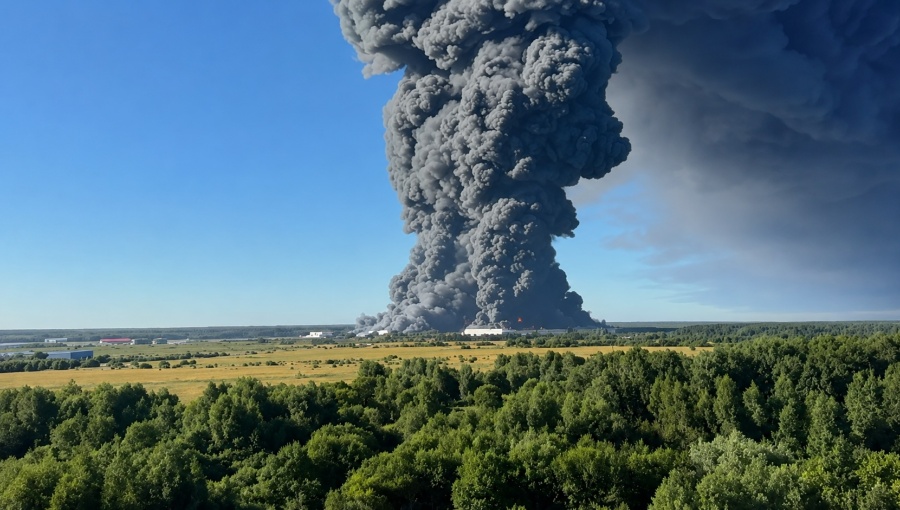
The Ukraine war has entered a new brutal tit-for-tat phase where both sides are increasingly targeting civilian infrastructure in an effort to make life unliveable for the population.
The Missile War is escalating. Waves of Ukrainian medium- and long-range drones have moved beyond targeting Russian oil refineries and are increasingly hitting warehouses and factories.
A swarm of Ukrainian drones destroyed the Wildberries logistics centre outside of Moscow, killing seven warehouse workers and injured dozens more on July 18. Another attack sparked a fire at an oil depot in the wider capital region, the regional governor said on state TV on the morning after the attack.
"Seven people working the night shift died on the spot," Governor Yevgeny Pervyshov wrote on Telegram, adding that 28 more drones were shot down on approach. "If they had achieved their goal, the number of civilian casualties could have been much higher," he said, cited by Reuters.
Zelenskiy said that defence forces also hit two important logistics facilities in the Moscow and Tambov regions, which were used to supply sanctioned components for the production of drones and navigation equipment. An oil facility was also hit, and Ukrainian long-range weapons of destruction were used against targets in the Azov and Black Seas, as well as the Crimea.
"They were used by the aggressor to ensure the supply of sanctioned components for the production of drones and navigation equipment," Zelenskyy said in a social media post.
Russian press reported that the drones that struck the Wildberries warehouse were packed with ball bearings to cause maximum casualties.
"The enemy intentionally used metal ball-shaped projectiles in drones, which inflicted the maximum damage on civilians," according to Pervyshov after visiting the wounded at the Tambov regional hospital. It has not been possible to independently confirm the claim. Russian Ombudsman Yana Lantratova has sent an appeal to the UN High Commissioner for Human Rights.
Punishment strategy
Known as the “Amazon of Russia,” the warehouse was in the city of Kotovsk in the Tambov region, roughly 475km southeast of Moscow. Wildberries logistics complex in Elektrostal is one of the largest facilities in the company's network which is the leading e-commerce business in Russia as well as the largest retail business of any sort based on turnover revenue.
It also plays an important role in the war. Like Ukrainians, Russians use the post to send necessary supplies to the frontlines to their men. Russia has likewise targeted the warehouses of Nova Poshta, which plays the same role, and now Ukraine has finally got round to striking back.
Zelenskiy confirmed he had ordered the attack and said it was in retaliation for Russia’s new campaign of targeting civilian assets in Ukraine.
Ukraine’s campaign to damage or destroy Russia’s oil refineries in the last year has led to widespread fuel crisis across the entire country. In retaliation, Russia has started to systematically hit Ukraine’s petrol stations with drones to cause similar shortages. As IntelliNews reported, both sides have increasingly adopted a punishment strategy, taking out civilian infrastructure to make life for ordinary citizens as hard as possible.
Wildberries co-founder, CEO and Russia’s richest woman, Tatiana Kim, said it had been a "terrible night" for Russia and for the company, offering her condolences to the victims' families.
To limit the financial damage to the company, both Wildberries and its biggest rival Ozon, updated terms and conditions in June to say the companies are not liable for the losses if the stock of its merchant partners stored in the warehouses were destroyed by acts of war.
Escalation trap
The logic behind the latest attacks is that steadily increasing the economic and social cost of the war will eventually inflict enough pain on Russia to force Vladimir Putin into negotiations. But the central problem, as journalist and IntelliNews columnist, Leonid Ragozin, argues in a recent op-ed for The American Conservative, is the timescale.
Russia is too large, economically resilient and politically repressive for coercion to produce a rapid capitulation. Its energy infrastructure, transport network and civilian economy can be damaged, but as IntelliNews argued, in the drones vs missiles conflict this has turned into, Ukraine’s drones don’t pack enough punch to destroy an oil refinery, although they are becoming increasingly effective at damaging them. Despite the sustained hits on refineries, the throughput has only been reduced by 13.5%, according to Sergey Vakulenko, an independent energy analyst, although that number appears to be rising steadily. Russia’s oi products sector is battered but not broken, Vakulenko argues. In the meantime, Russia has boosted its imports of petrol from Belarus, Kazakhstan and India.
Where drone strikes used to take a refinery offline for a few days while fire damage was repaired, a recent strike against the Moscow refinery has taken it offline for the rest of the year, Reuters reports. Converting the damage into decisive political pressure could take many years — perhaps a decade, says Ragozin.
“The problem is that Russian resilience is just beginning to be tested. Meanwhile, Ukraine’s society and economy have worn down to a dangerous level that Russia, if the war of attrition continues, would take decades to reach,” Rogozin said. “There is virtually no way for Ukraine and the West to make Russia so unliveable that Putin would end the invasion before Ukraine itself becomes completely lifeless."
For Ukraine, that timetable is potentially catastrophic. Russian forces have continued to advance despite Ukrainian strikes on refineries, fuel depots and logistics routes.
“What Russia is doing now in response to Ukrainian strikes is inching towards total war, with Russian drones and missiles methodically knocking out petrol stations in addition to energy infrastructure,” Rogozin wrote. “Moscow has also begun to target food-processing facilities, agricultural equipment, and trucks on highways. Ukrainians are bracing for another horrific winter in unheated apartments, while Russians are merely at the stage of making an extra effort to fuel their cars. The contrast couldn’t be starker."
Ukraine’s allies appear either not to recognise this asymmetry or to be willing to discount it. European governments continue to argue that additional funding, more advanced weapons and further escalation can finally force Moscow to retreat, even though successive rounds of pressure have failed to halt Russia’s eastern offensive.
Ragozin’s point is not that Russia cannot be hurt, but that the time needed to turn that pain into political surrender is far longer than Ukraine can safely endure. Prolonging and escalating the conflict without a credible path towards negotiations therefore risks becoming a fundamental strategic error.
This strategy resulted in the recent flood of “turning point” rhetoric, which claimed that Russia was losing the war and Ukraine “has already won,” according to comments by Finnish President Alexander Stubb ahead of the Ankara Nato summit on July 8. However, battlefield reports paint a very different picture. Updates of the milblogger site Deep State were suspended in the run up to the Nato summit, but now they are being refreshed again, they show Russian forces moving into artillery range of the last two key cities in the Donbas Fortress Belt, which are now in danger of falling into Russian hands after the crucial Donbas logistics hubs of Pokrovsk and Kostiantynivka have already been captured over the last six months.
“The “turning tide” campaign rests on a constellation of dubious assumptions about the state of the war, Russia’s society and economy, and the West’s ability to contain the conflict without it sliding into nuclear apocalypse...” said Ragozin.
Bankova’s political crisis
The latest attacks come as the Ukrainian administration is in the midst of a political crisis that has left Ukraine without a defence or foreign minister. Following Zelenskiy decision to shake-up the government after Prime Minister of Ukraine Yuliia Svyrydenko resigned last week, triggering the resignation of the entire cabinet, squabbling broke out over who should replace the highly effective, but much disliked by the establishment, Defence Minister Mykhailo Fedorov.
“Ukr security source tells me of “intense turbulence” at the heart of Zelenskiy’s operation tonight. “At noon there was one decision on the new defence minister, at 2pm another, and at 6pm a third.” Zelenskiy, he says, is focused on one thing alone: Fedorov and what to do about the protests,” The Economist’s Ukraine correspondent Oliver Carroll said in a social media post.
Analysts believe that Zelenskiy decided to reshuffle the government in anticipation of a brutal winter attack by Russia where Putin will once again target what remains of Ukraine’s power sector and attempt to freeze Ukraine into submission. Energy was a major theme in his choices for replacement candidates to the top jobs in the government.
Lawmakers approved chairman of the national gas company Naftogaz's board, Serhii Koretskyi as the new Ukrainian Prime Minister on July 16, but the key posts of defence minister and foreign minister remain vacant, with acting minister appointed to run the ministries until the Rada comes back from its summer break on August 18.
As IntelliNews reported, Zelenskiy is facing a growing domestic political crisis as parliament frustrated the president by refusing to approve his choices for the new Defence Minister.
The president subsequently named Major General Yevhenii Khmara, acting head of the SBU security service and a former commander of its Alpha special-operations unit, as acting defence minister. Zelenskiy has not yet proposed a replacement for the foreign minister, leaving the incumbent Andrii Sybiha in place for now as acting foreign minister.
The turmoil comes at the worst possible time as Russian forces capture the Kostiantynivka and threaten to take the two remaining cities of Slovyansk and Kramatorsk, which would complete Russia’s occupation of the region if successful – Russian President Vladimir Putin’s stated war goal.
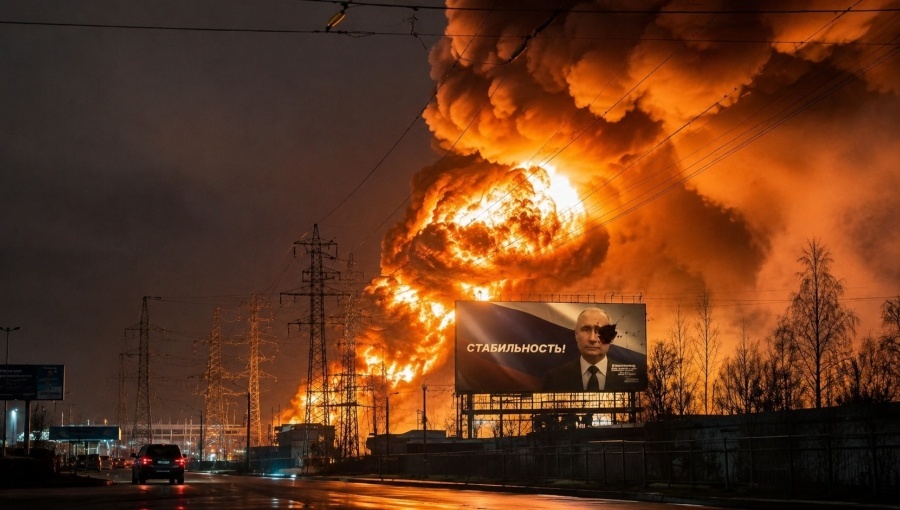
Ukraine's struggle to defend its skies against ballistic missile attacks is increasingly highlighting the strategic importance of interceptor production, while successful Ukrainian strikes on Russian energy infrastructure are reshaping fuel markets without significantly reducing Moscow's oil export revenues, argued independent analyst Shanaka Anslem Perera.
Kyiv's air-defence challenges were highlighted during a large-scale Russian attack on July 6, when Ukrainian officials said 28 people had been killed by the following morning. According to Reuters, Ukraine intercepted only four of 54 ballistic missiles launched during the early-July assault, illustrating the growing strain on the country's limited stock of advanced interceptor missiles.
President Volodymyr Zelenskiy has repeatedly urged allies to release additional Patriot missiles, arguing that interceptors stored in partner countries could immediately strengthen Ukraine's air defences.
The shortage reflects not only political decisions but also the limited pace of global production. During the opening days of the recent conflict involving Iran, US and Gulf air-defence forces reportedly expended hundreds of Patriot interceptor missiles within several days. By comparison, Lockheed Martin produced a record 620 PAC-3 MSE interceptors during 2025, highlighting how quickly inventories can be depleted during high-intensity warfare.
The imbalance has created a strategic asymmetry. Russia can launch repeated ballistic attacks while Ukraine depends on lengthy production schedules, allied political approvals, international deliveries and integration of new systems before additional interceptors become operational.
At the same time, Ukraine has demonstrated growing effectiveness in striking Russian energy infrastructure. Ukrainian drones have targeted Russia's ten largest oil refineries since the start of the campaign, disrupting domestic fuel production and contributing to periodic gasoline shortages.
Despite the refinery damage, Russia has maintained strong crude oil exports. In June, the country exported 5.8mn barrels per day of crude, its highest monthly volume since February 2022, suggesting Moscow has increasingly compensated for reduced refining capacity by exporting more unprocessed crude while importing some refined petroleum products.
The broader geopolitical environment has further complicated the picture. Concerns over instability in the Middle East briefly pushed Brent crude prices to their highest levels in weeks, temporarily increasing export revenues for Russia just as its domestic refining sector faced mounting pressure.
Perera argued the conflict is increasingly becoming a contest of industrial capacity as much as battlefield performance. They point to the time required to design, manufacture, approve and deploy sophisticated missile-defence systems, compared with the speed at which combatants can exploit temporary shortages or damage critical infrastructure.
For Ukraine and its allies, maintaining adequate supplies of air-defence interceptors has become one of the central challenges of the war, while for Russia the resilience of its energy sector remains essential to sustaining export revenues despite repeated attacks on refining facilities. The balance between industrial production, logistics and military adaptation is likely to remain a defining factor as the conflict enters another phase.
Ukrainian forces strike 'major' logistics hubs in central Russia
"The aggressor used them to supply sanctioned components for drone production and navigation equipment," Zelenskyy said of the targeted facilities.
Ukraine carried out large-scale strikes on central Russia overnight, targeting a number of warehouses and an oil facility, according to Kyiv and local Russian authorities.
Ukrainian President Volodymyr Zelenskyy said on Saturday that Ukrainian forces had hit two "major" logistics facilities in the regions of Moscow and Tambov as part of Kyiv's "long-range sanctions" against Russia.
"The aggressor used them to supply sanctioned components for drone production and navigation equipment," Zelenskyy wrote in a post on social media, adding that an oil facility was also hit.
Two warehouses belonging to Russian online retailer Wildberries were targeted in the strikes, according to Tatyana Kim, the company's founder.
"Seven people working the night shift were killed at the scene," Yevgeny Pervyshov, the head of the Tambov region, wrote on Telegram, adding that 25 others were injured in the attack.
One person was also killed and 37 were injured in a drone attack on a Wildberries logistics centre in Elektrostal in the Moscow region, authorities reported.
Video footage circulating on social media appears to show a large fire at the scene of one strike.
Earlier on Saturday, Moscow Mayor Sergey Sobyanin announced that 370 drones were heading for the Moscow region. He said that air defences had "neutralised" most of the drones and that 64 were destroyed. Euronews has been unable to independently verify these figures.
For its part, Russia has repeatedly targeted Ukrainian logistics facilities, including sorting facilities operated by Nova Poshta, a private Ukrainian mail and courier service. The Russian Ministry of Defence has said that such facilities are used by Ukraine to store and assemble drones.
In June, Nova Poshta CEO Yevhen Tafiichuk said a Russian missile attack had destroyed the company's "largest and most innovative terminal."
The Ukrainian air force said Russia launched 90 attack drones and seven missiles at Ukraine overnight, particularly targeting the Odesa region. As of early Saturday morning, local air defences had intercepted one missile and 69 drones, it added.
A drone attack on Kherson on Saturday morning also injured at least nine people, according to the Kherson Oblast Military Administration.
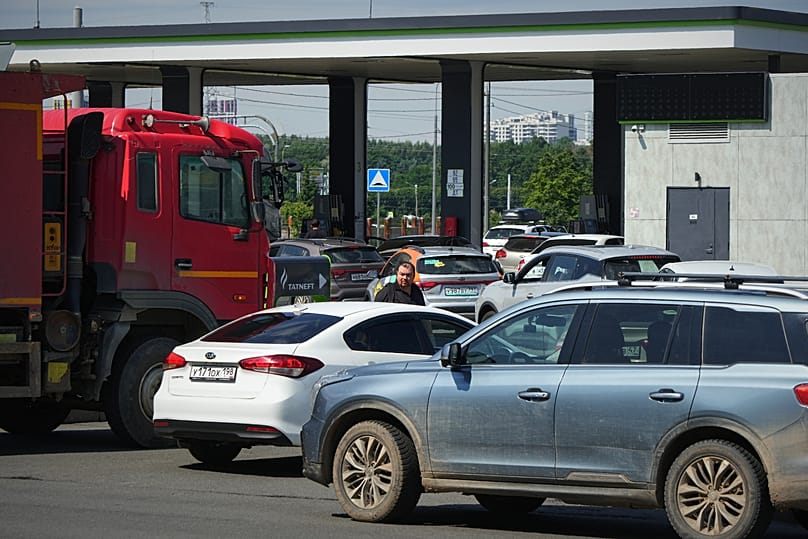
Ukraine has ramped up its long-range attacks on Russian industrial and energy sites in recent months, particularly targeting oil facilities such as refineries and depots.
Ukraine's strikes have led to a fuel crisis across large parts of Russia and Russian-occupied territories, with many locals facing petrol shortages and rising prices.
In response, the Kremlin moved to ban diesel exports in an effort to soften the impact, while fuel rationing has also been introduced in some regions.

No comments:
Post a Comment