U.S. Intensifies Attacks on Iranian Ports on Sixth Day of Bombing Campaign
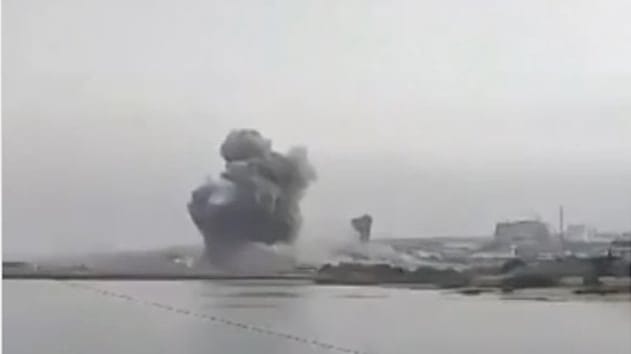
U.S. Central Command is confirming that it undertook a sixth consecutive night of bombings targeting infrastructure in Iran. It reported attacks on the southern port complex of Chah Bahar Shahid Kalantari, while other reports also said the U.S. has increased attacks in and around Bandar Abbas.
Iran has been cooperating with India for the past 20 years on the operation of Chah Bahar Shahid Kalantari as a regional center. It was also used to open overland trade routes into Afghanistan.
Centcom reported on Friday morning that U.S. forces had destroyed the port surveillance tower at Chah Bahar Shahid Kalantari. Iran said it was the third day of attacks on the port complex and contended that the tower was traffic control for the two ports in the complex. Centcom, however, said that the Islamic Revolutionary Guard Corps (IRGC) was also using the tower to track and target commercial vessels in the Strait of Hormuz.
Centcom released video showing the attack on the tower and port complex
U.S. forces used fighter jets, drones, and warships, Centcom reported, as it continued to target coastal surveillance and other targets, air defense sites, military logistics, infrastructure, and maritime capabilities. U.S. officials did not directly mention the power infrastructure and bridges, but the Associated Press reports the attacks were expanded to include these targets.
There were also reports of strikes on the roads and bridges leading to the Bandar Abbas port. AP writes that it appears the U.S. is attempting to cut off Iran’s main port.
Iran responded by launching missiles and drones toward Qatar, Bahrain, and Kuwait. While it says it is targeting U.S. military installations, Kuwait reported damage to the country’s power and water desalination plant.
The attacks also continued against vessels attempting to take the Omani route through the Strait of Hormuz. UKMTO reports a tanker came under attack. The ship sustained minor damage. However, the attacks continue to affect shipping volumes.
AXSMarine analyzed transits through the Strait of Hormuz in the week since the bombings resumed. It says between July 8 and July 16, the number of transits is down by more than half. In the first days of July, it calculated average daily crossings of over 34 vessels, down to just under 30 on July 8-9, and now down to 14 vessels between July 12 and 16. Nearly two-thirds (63 percent) of the transits are now confirmed on the Iranian corridor with only 10 percent on the Omani route. Dark transits also rose from 37 percent at the beginning of July to 44 percent this week.
CENTCOM asserts that its strikes are protecting the freedom of navigation in the regional waters. It has also said it will continue to implement the naval blockade on Iranian vessels and shipping bound for Iranian ports.
Video: U.S. Marines Board Falsely-Flagged Tanker in Gulf of Oman
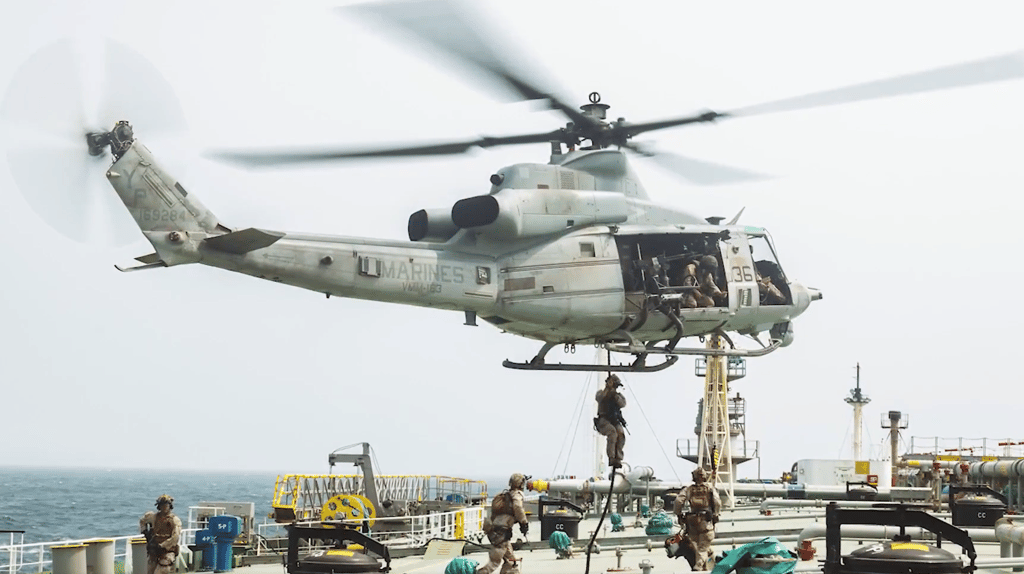
On July 16, the USS Boxer Amphibious Ready Group intercepted and boarded a "shadow fleet" VLCC in the Gulf of Oman, part of the large-scale effort to enforce the Trump administration's newly-reinstated blockade on Iranian seaports.
U.S. Marines from the 11th Marine Expeditionary Unit used helicopters to access the deck of the 300,000 dwt tanker Wen Yao in the Gulf of Oman. The operation was a flag verification boarding, according to U.S. Central Command.
Wen Yao is falsely flagged in San Marino, according to her Equasis record. Though the tanker's most recent name is Chinese, she is owned and operated in Dubai, a popular hub for shadow fleet shipmanagement.
Wen Yao is fully laden with a cargo of Iranian fuel oil, and her crew took several curious steps while under pursuit by U.S. forces, according to TankerTrackers.com. She changed her name and her flag repeatedly on the 16th, ending up as the "Azhin" and flying an Iranian flag by the time of the boarding.
The boarding is one of several actions that the Navy has taken to divert Iran-bound traffic since the restart of the blockade. Three vessels have been redirected with warnings; one was disabled with Hellfire missiles; and one has now been boarded.
"The Strait of Hormuz and the surrounding waters remain free and open, except for vessels attempting to violate America’s steel wall blockade," said Central Command in a statement late Thursday.
In addition to the vessel interdictions, Iranian state media outlets claim that American forces destroyed two road bridges connecting the Iranian port of Bandar Abbas to inland locations to the west. Up until recently, Central Command has refrained from striking civilian infrastructure targets in Iran. Anecdotal reports indicate that a bridge in Hormozgan and a rail station west of Bandar Abbas were also hit. In a statement, CENTCOM confirmed that it had launched strikes on "military logistics infrastructure."
Between strikes, boardings and escalatory rhetoric, the tensions between Iran and the U.S. are having a material effect on commercial transit volume, according to Kpler. Crude and condensate cargoes through the Strait of Hormuz are down to just four million barrels per day, a sharp reversal from the recovery seen during the ceasefire. Loadings have fallen by half in recent days, setting back GCC states' plans for normalizing production. "The larger test is whether Gulf producers can establish a repeatable loading cycle, rather than move cargo only between periods of escalation," assessed Kpler.
Kuwait Reports Attack on Offshore Oil Platform as US and Iran Trade Fire
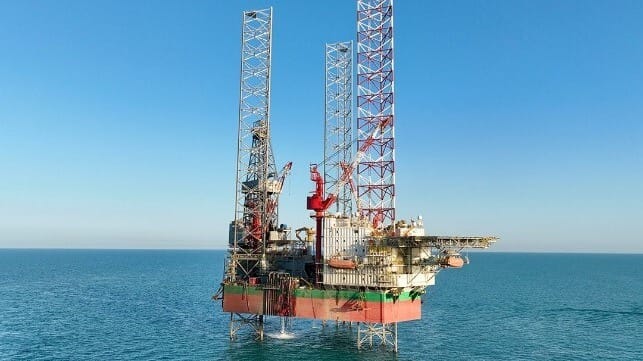
Kuwait's ministry of defense has reported a drone attack on an offshore drilling platform operated by the state-owned Kuwait Petroleum Company near Shuwaikh Port, causing substantial damage to the rig and injuring one worker. In a statement, the ministry called the strike a "criminal" act.
The platform strike - a likely but unconfirmed operation by Iranian forces - is among the first attacks on energy infrastructure in the GCC states since the ceasefire began. The recent Iranian missile and drone volleys have focused on U.S. military bases and the nations that host them, without the damage to oil and gas facilities seen in the first round of intense hostilities in March and April.
Dozens of targets around the region were hit over the weekend. After Iran struck and damaged a container ship in the Strait of Hormuz on Saturday, Iranian and American forces traded fire on July 11-12 - the most intense exchange since the beginning of the ceasefire agreement last month, with extensive damage reported on both sides.
In addition to the Kuwaiti platform strike, Iranian attacks or attempted attacks have been reported in Oman, Qatar, Bahrain and Jordan. Open-source intelligence researchers have spotted apparent impact sites via Sentinel-2 low-resolution satellite imaging, notably at Prince Hassan Air Base in Jordan, one of the staging points for long range U.S. Navy-operated surveillance flights near Iran. The extent of any damage at the air base remains unconfirmed, but satellite imaging shows clear visual changes in the vicinity of one large hangar and a nearby apron.
Iran ???????? ballistic missile hit in Jordan ???????? Prince Hassan AB POSS MISSED that US ???????? drone hangar ????
— Tom Bike (@tom_bike) July 12, 2026
Looks to have hit apron. Most of what we see is pulverized concrete debris. Hangar POSS still there.
Please let me know if you see high resolution satellite images or pics. https://t.co/mVdkNm7OAL pic.twitter.com/vThh8MfNgy
U.S. strikes hit 140 Iranian targets overnight Saturday, according to U.S. Central Command. Targets included Iranian missile and drone launch sites, naval units, ammunition storage sites, communications systems and coastal surveillance locations.
Additional follow-up strikes on Sunday night included more attacks on air-defense systems, coastal radars, and small boats. For the first time ever reported, the U.S. military used "one-way attack sea drones" in combat, Central Command said.
Satellite imaging also appears to show impact damage on the site of Iran's Bushehr nuclear power plant complex, though the timing of the damage is unclear; satellite data suggests a physical event occurred sometime between July 7-12, and caused damage to a building located several hundred yards from the main reactor. Residents in the Bushehr region reported strikes and air defense activity overnight July 11-12.
In a statement carried by state media, the Atomic Energy Organization of Iran dismissed reports of an attack on the Bushehr nuclear site, claiming that "the plant remains fully operational, secure, and stable, with all systems running continuously and without any disruption."
Bushehr is undergoing a planned expansion with the addition of two more Russian-built reactors. The project has been delayed by the conflict, which prompted state atomic agency Rosatom to withdraw its advisors and workers in March, but Rosatom director Rosatom Director General Alexei Likhachev has said that both Russia and Iran remain committed to completing the reactors. An attack on an Iranian nuclear site - if confirmed - would mark a major escalation.

No comments:
Post a Comment