Monday, August 03, 2026


Survivors recall blasts before deadly Indonesian ferry fire

Surabaya (Indonesia) (AFP) – Survivors said on Monday they heard multiple blasts moments before an Indonesian passenger ferry caught fire, killing five passengers and prompting many to jump into the sea, with some still missing more than 24 hours later.


Issued on: 03/08/2026 - RFI

More than 200 people were aboard the ferry when it caught fire some six hours from Surabaya by sea © JUNI KRISWANTO / AFP

There were 236 people on board the vessel when it left Indonesia's second-largest city, Surabaya, for Makassar on Sulawesi island on Sunday morning, search and rescue agency head Nanang Sigit said.

Nanang told Kompas TV on Monday 229 people had been rescued alive and five bodies were also recovered.

"Mathematically, only two that have yet to be evacuated. We are confirming this data with the shipowner," he said.

Numbers provided by officials have fluctuated wildly. The last toll given on Sunday was 41 people missing and five dead from a total manifest of 271 people.

Arman Asmara Syarifuddin, an East Java police official, told Kompas TV on Monday some 28 people were still missing.

The reason for the discrepancy was not clear.

The fire broke out on Sunday morning as passengers were eating breakfast, survivor Muhammad Abdul Karim told reporters in Surabaya after disembarking from a rescue vessel.

"Initially, the smoke entered the information room, the sleeping quarters. And then explosions happened," he said.

The blaze originated in the stern, sending passengers fleeing to the bow where they were all given life jackets, Muhammad said.
Five people were killed and another 41 were missing after an Indonesian ferry caught fire at sea, search and rescue officials said © Handout / INDONESIA'S NATIONAL SEARCH AND RESCUE AGENCY (BASARNAS)/AFP

He said he jumped overboard with an elderly man as the fire came closer, and saw flames engulfing "almost all" of the ferry as he looked back.

"The waves were big and the ship coming to save us was quite far. Those were our fears when we were about to jump," said Muhammad -- who was rescued drifting at sea in his life jacket about seven hours later.

He said he had not seen any lifeboats aboard the ferry.
'No choice'

Rescuers worked through the night to find survivors even as estimates of the number of missing people kept changing.

At least five passengers died © JUNI KRISWANTO / AFP

Most evacuees were taken back to Surabaya, a six-hour boat ride from where the ferry ran into trouble.

Bambang Susilo, 36, said he felt the blaze come closer to the bow of the ferry and the floor getting warmer, convincing him and a female passenger to jump some 10 metres (33 feet) into the sea.

"We had no choice but to surrender" to our fate, he told reporters at the Bhayangkara Hospital in Surabaya, where he was waiting to retrieve the body of a colleague.

Bambang and five other survivors had swum to the nearest rescue ship, some five kilometres (three miles) from the blazing ferry.

Another rescue vessel was deployed on Monday to help find the missing, said Nanang.

Marine accidents are a regular occurrence in Indonesia, an archipelago of more than 17,000 islands, partly due to lax safety standards and unpredictable weather.

At least four people were found dead and 14 others remained missing until the end of the search operation.

© 2026 AFP


Wildfires raze neighborhoods in US northwest city of Spokane


Spokane (United States) (AFP) – Firefighters worked to contain huge blazes in the northwestern US city of Spokane early Monday after officials reported hundreds of structures had been reduced to cinders.


Issued on: 03/08/2026 - RFI

A Virgin Mary statue remains untouched in front of a burned out residential home in the Balboa neighborhood of Spokane, Washington, on August 2, 2026. © Erick Doxey / AFP


Thousands of people were ordered to evacuate their homes over the weekend as three separate fires broke out in and around the city in the east of Washington state.

The National Weather Service (NWS) had warned of "extremely critical fire weather conditions" in the area due to strong winds and exceptional dryness.

Video of the aftermath on Sunday showed scores of homes burned to the ground, with only their brick fireplaces and foundations remaining, while other houses nearby escaped practically unscathed.

"Just driving around looking at the homes -- it's just one of the most heartbreaking things I've ever seen in my life," Spokane resident Geoff Beadles told AFP, after evacuating from his home with his fiancee and two dogs.

Mayor Lisa Brown told a press briefing Sunday afternoon: "Hundreds of homes and structures have been lost. We are still assessing the potential for lives to be lost."

"To the people who are suffering right now in our region from either loss or uncertainty... our hearts go out to you. We are here for you for the long term," she said.

Fire officials said late Sunday that the blazes were still zero-percent contained.

And while more favorable weather, with only light winds, was forecast for Monday, temperatures were expected to rise again later in the week.

Smoke accumulating over the city would likely render air quality "very unhealthy" on Monday, the regional clear air agency said.

Sheriff John Nowels said no deaths or injuries had so far been reported, but "because of the scale of this and what it takes to... do those kinds of investigations in an active fire scene, that could change."

Washington Governor Bob Ferguson, who declared a state of emergency, said the state is enduring a fourth consecutive year of drought as climate change creates conditions conducive to destructive wildfires.

He told the press conference that he had spoken to federal officials about receiving resources to respond to the disaster, including President Donald Trump, who understood "how dire the situation is."

Fire officials warned that "unauthorized" drone incursions into restricted airspace above wildfires were forcing the grounding of helicopters and other aircraft fighting the blazes.

'Extraordinary wildfire season'

A burned pickup truck sits in the driveway of a burned residential home with an untouched home in the background in the Balboa neighborhood of Spokane, Washington, on August 2, 2026. © Erick DOXEY / AFP

The head of Washington's Department of Natural Resources, David Upthegrove, warned that the fire in Spokane was "one of 15 major fires burning throughout the state of Washington right now."

"This is an extraordinary wildfire season in the Pacific Northwest. It's not a normal season," he said.

"A confluence of weather conditions, a confluence of fires throughout the West, are stretching our resources and challenging the individuals in this response."

The biggest of the three fires burning in Spokane, the Old Trails fire, jumped the Spokane River on Saturday afternoon and crossed into the city proper.

Another resident, Tena Risley, said she saw flames behind trees near her home and, in a panic, she grabbed her dog and a few things. She got stuck in traffic has she tried to flee as the fast-moving fires blocked routes out of the city.

"There were probably hundreds and hundreds of cars," she told AFP.

Authorities issued the highest-level evacuation alert, "Go Now," for swathes of northern Spokane affecting thousands of people within city limits, according to the government's evacuation map.

As of Sunday morning the three fires had charred a total of 5,390 acres (2,181 hectares), CNN reported.

Emergency authorities set up a fire evacuation shelter at the Spokane Convention Center.

© 2026 AFP


Housing in Portugal: Why €400,000 may no longer be enough to buy a home

Buying a home costs an average of 430,500 euros. What is behind this figure?
Copyright AP Photo

By Ana Filipa Palma
Published on

In Portugal, finding a home under €400,000 is increasingly difficult — and sometimes impossible. The average asking price is now €430,500, according to Imovirtual.

The latest Imovirtual Barometer, produced by the property portal specialising in the housing market and published in May 2026, put the average asking price of a home in Portugal at €430,500. This figure covers all types of property, both new and existing, and is beyond the reach of a large part of the population.

A quick search on a property portal or a walk past estate agents' windows is enough to see how far house prices in Portugal have risen. But is it no longer possible to buy cheaper homes? The answer depends on several factors, the first being the lack of properties available.

"Without new homes coming onto the market and with extremely dynamic demand, it is becoming very difficult for young people and for Portuguese families to manage to buy their own home," Patrícia Barão, president of the Professional Association Representing Portugal's Estate Agents (APEMIP), explained in an interview with Euronews.

On top of that, "we have the cost of land, the cost of construction, the cost of labour, project and specialist fees, taxes and planning charges," Barão said, all of which make a major contribution to high housing prices.

Ricardo Vagarinho, CEO of the construction company MomentVM, pointed to another factor that has helped drive up market prices. "It seems that a new threshold has now been set based on what the government has allowed young people, giving them the possibility of buying a property with a state-backed guarantee, with an upper limit of €450,000," which led the market to "push prices up across the board, for both resale and new homes, because people have that financing available," he told Euronews.

The support scheme can provide financing of between 85% and 100% of a property's value, backed by a state guarantee covering up to 15%. It is available to young people aged between 18 and 35 whose income does not exceed the eighth income tax band, for the purchase of a first permanent home costing no more than €450,000. Separate tax exemptions are also available to eligible young buyers.

In a recent report published in June, in the chapter analysing the Portuguese economy, the International Monetary Fund (IMF) recommended suspending some of the government's measures in the sector, including this public guarantee for young people, arguing that they had widened "market imbalances". In other words, more people are now looking to buy homes who previously were not in the market, but the number of homes available has stayed the same.

Barão argued that it is necessary to go further and take a "holistic view" of the market. "There is no silver bullet for housing. There is no such thing as a single measure that solves everything, so we have to act on several fronts," she said.

Labour shortages have pushed house prices up

The housing crisis is defined not only by the lack of homes, but also by the shortage of people to build them. And the story repeats itself: if supply is scarce and demand is high, prices go up.

There is a shortage of specialised workers such as "bricklayers, electricians, plumbers, formwork specialists or subcontractors", Ricardo Vagarinho listed.

With the arrival of the international bailout programme in Portugal, the state cut investment in infrastructure and major projects, and banks stopped granting credit for housing and business activity, forcing many construction companies into bankruptcy and triggering a "brain drain" in the sector.

"Those who were good and stayed here are not enough for the volume we want to build," he said.

"It is estimated that 80,000 people are missing from the construction sector and, if everyone needs workers, of course they will end up offering a little more. That is why the price of labour rises," he explained.

The entrepreneur also recalled that the housing construction market competes with large state and private projects. "Airports, railway lines, roads and all those bigger projects also absorb a lot of labour," Ricardo Vagarinho added.

This year in Portugal, the storms that devastated the centre of the country also fuelled demand for labour in the construction sector, leading to the fast-tracking of the so-called "green lane" for migrant workers in the industry.

The protocol signed between the state and the Portuguese Confederation of Construction and Property (CPCI) was designed to respond to the urgent need for labour on public works planned under the Recovery and Resilience Plan (PRR). However, after the tragedy in central Portugal, the government indicated that some ongoing public works might have to be temporarily suspended or delayed to prioritise interventions considered more urgent.

Construction materials have also become more expensive

Construction-material inflation has also been one of the variables driving up the final price of a home since 2021, with Russia's invasion of Ukraine in 2022 adding further pressure.

According to data from the National Statistics Institute (INE), the cost of construction materials rose by 3.7% year-on-year in March 2026.

Among the materials that contributed most to the increase were glass and mirrors, bare and insulated copper wire, and concrete slabs and ceramic blocks. "Everything depends on energy," Ricardo Vagarinho said.

"A large part of materials depends on energy and, therefore, if there is a war that pushes up fuel prices, energy costs rise, as do the costs of materials that depend on it, and inevitably this ends up affecting construction costs," he concluded.

Land prices also carry great weight in the final budget for a project. "Since demand for homes is high, land prices also inevitably rise," said the entrepreneur, who estimated that land accounts for 20% of a construction project's budget.

Put simply, Ricardo warned that "building costs the same anywhere"; what really weighs is the value of land and of the square metre in different regions. "Location is the big issue," he concluded.

In addition, the time it takes to obtain planning consent for a site "represents a risk for the property developer and is also a factor behind high house prices," explained Patrícia Barão.

Waiting times for urban planning consent are a very important variable in the property market and represent an indirect cost in the final price of a home.

"If we look at a local council process that takes a year, sometimes two years, that is a long time to have significant capital, namely the price of the land, sitting idle without generating any return," explained Ricardo Vagarinho. "During that time, the money invested there, which should be earning at least 6% a year, is not earning anything. So what happens is that investors factor that into the final price of the product," he said.

'New housing is needed in locations where young people and families can afford to buy'

According to a property-market observatory published in March 2026, the average asking price for homes in Portugal stood at €3,693 per square metre on 1 March.

"These are high prices that young people and Portuguese families cannot afford" and, therefore, it is necessary "to bring new housing onto the market in locations where young people and families can buy and can reach their jobs without it taking an eternity," argued Barão.

The Lisbon district is the region with the highest price per square metre, at €5,796. Faro is the second most expensive district, where a square metre costs €4,804. It is followed by Madeira, at €4,333 per square metre, and Setúbal, at around €4,000.

The difference is staggering at the other end of the scale, where the price per square metre is below €1,000 in the districts of Guarda (€739 per square metre), Bragança (€943 per square metre) and Castelo Branco (€981 per square metre).

"We need to think about regions that are not in the city centre and build large-scale projects, but with a transport network that allows people to travel to their workplaces in a fast and efficient way," Patrícia Barão said.

"We do not want to create dormitory towns; we have to create a network of services and infrastructure with schools, banks, restaurants and supermarkets," she explained.

However, although building is important, it would not have an immediate effect, and the APEMIP president argues that, as a first measure with "more immediate" results, the state should create "conditions to bring empty properties back onto the market", through public-private partnerships.

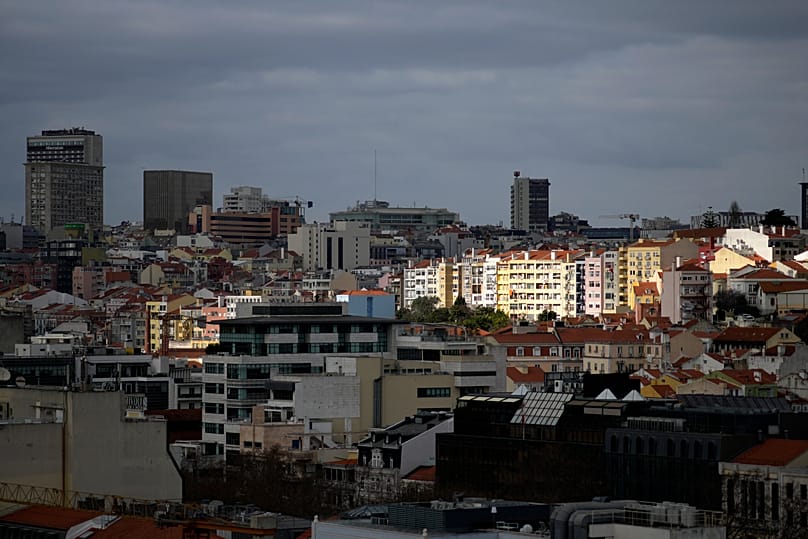
A view of Lisbon's buildings, Monday, 27 February 2023. AP Photo

Patrícia Barão rejected the idea that estate agents are responsible for the price spiral. "It is not estate agents who set house prices," she said.

The APEMIP president believes that estate agencies can help make the process of buying and selling a home more transparent and democratic. She also noted that the association has contributed to a proposed law aimed at strengthening training and professionalism in the sector.

"A good estate agent, who knows the market, who knows what property prices are, who has information on transactions involving similar homes in recent times, who knows every detail of a purchase and sale operation, who knows exactly what documentation is needed, who knows the market trends, helps ensure that house prices are fair and appropriate," she explained.

For Ricardo Vagarinho, the construction sector also needs more specialised professionals. The entrepreneur also pointed to the urgent need for the state to speed up licensing processes as an important measure to facilitate construction and expand the housing stock.

Both sectors recognise that, as long as the supply of land, homes and qualified professionals remains insufficient, and construction costs stay high, buying a home will continue to be beyond the reach of a significant proportion of Portuguese people.


This Scottish startup saves wild fish by replacing them with Omega-3 algae fed on whisky waste

Copyright Denis Loctier/

By Denis Loktev
Published on

Are farmed fish a sustainable choice? Many still depend on wild-caught fish for feed – algae grown on Scottish whisky industry waste could change that.

Aquaculture is now the world's largest source of fish for human consumption, outpacing wild catch globally.

But the industry has a hidden problem: farmed fish, especially salmon, are carnivores that need omega-3 fatty acids – and almost all of that omega-3 comes from fish oil, which itself is extracted from wild-caught fish.

"The sustainable limits of what you can catch out of the ocean at the moment have been reached," Douglas Martin, founder and CEO of MiAlgae, tells Euronews Earth. "You can't physically catch any more out of the seas."

The result is a cycle that undermines the environmental credentials of farmed fish: the more aquaculture grows, the more pressure it places on already-strained wild fish populations.


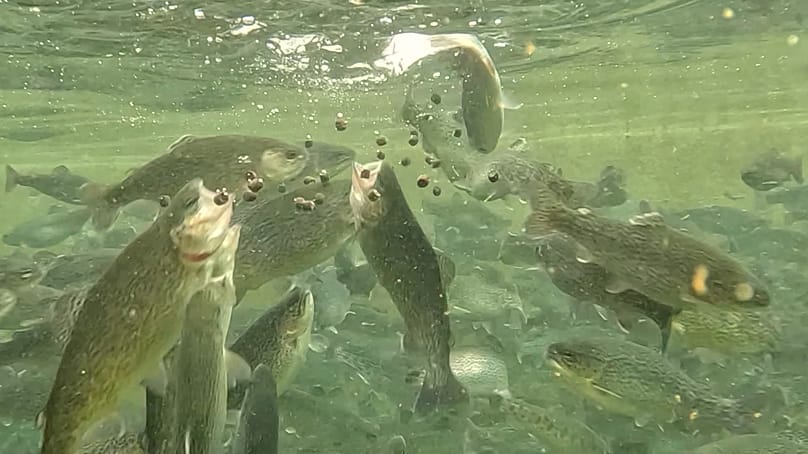
Carnivore fish still depend on wild-caught fish for feed Getty Images

Going back to the source of omega-3

Martin's answer is to go further down the food chain – all the way to microalgae. Oily fish do not actually produce omega-3 themselves; they accumulate it from the algae they eat. MiAlgae cuts out the middle step entirely.

"The algae are the ones that actually produce the omega-3s," Martin tells Euronews Earth. "If you can produce the algae and you can grow that algae, you can get the omega-3s without actually having to go through the whole food chain."

The challenge that has frustrated researchers for years has been cost. Growing algae on high-grade feedstocks makes the economics unworkable when competing against cheap wild fish oil. MiAlgae's solution is to use low-value industrial byproducts as the algae's food source – specifically, the liquid waste from Scotch whisky distilleries.

Whisky production generates an eight per cent alcohol beer, from which distillers extract the alcohol. The remaining 92 per cent – produced in billions of litres every year across Scotland – is largely low-value waste.

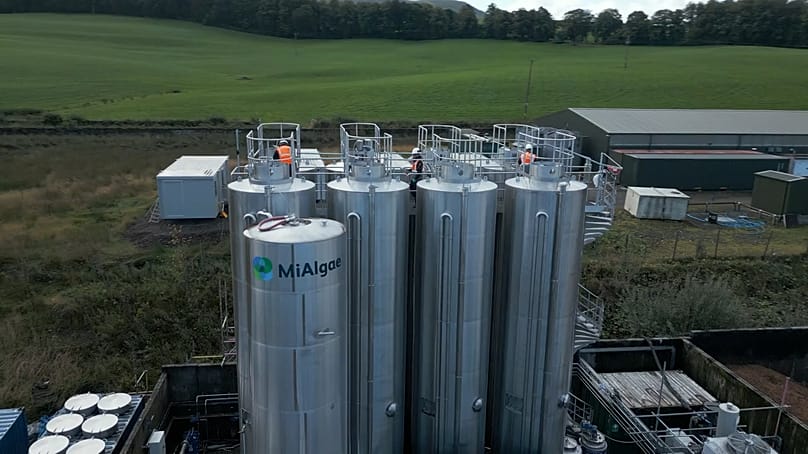
MiAlgae feeds that liquid to algae cells in large stainless steel tanks, harvesting the resulting biomass as a direct replacement for fish meal and fish oil.

"It's a bit like brewing," Martin explains. "You take a very small number of algae cells and you take all the whisky byproducts and some other bits and you put them into these big stainless steel tanks and you let the algae feed on all of that nutritious goodness."

MiAlgae production tanks The Earthshot Prize

Scaling up production of dried algae

MiAlgae's current product is dried algae, bagged and shipped to aquafeed and pet food manufacturers as a drop-in substitute for wild fish ingredients. The pet food sector is the company's primary market for now, with aquafeed customers also in the pipeline.

The company is currently building out its first full commercial production site, which Martin says will produce thousands of tonnes of product per year – significant, but still a fraction of global demand.

"In the omega-3 world that's a good start, but a drop in the bucket," he tells Euronews Earth. "So we've got lots more fish to save still."

On price competitiveness, Martin acknowledges the challenge of matching fish oil at current scale, but frames the comparison in terms of value per unit of omega-3 delivered. "We're looking to be cost parity with any fish oil that's coming out of the world," he says.

MiAlgae reached the finals of the Earthshot Prize in 2024 – a platform Martin credits with boosting the company's credibility. "Having the Earthshot Prize behind us has been a huge win for us," he says.

With commercial scale production on the horizon and industry interest growing, MiAlgae is positioning itself as a systemic alternative to one of aquaculture's most entrenched – and least visible – sustainability problems.


How Europe’s working day is increasingly encroaching on personal time

A tired employee at a desk, showing signs of exhaustion and stress, exemplifying workplace burnout.
Copyright  Nataliya Vaitkevich/Pexels

By Indrabati Lahiri
Published on

One in five EU workers say that they are contacted for work reasons beyond normal working hours many times a month, contributing significantly to always-on culture and adding considerable stress.

Have you ever found yourself replying to work emails late at night? Unfortunately, this is a scenario that many people are all too familiar with.

The rise of remote working, combined with ongoing volatility and layoffs across the global labour market, has increasingly blurred the boundaries of reasonable working hours.

As a result, millions of Europeans are finding that their work is steadily encroaching on their personal time.

According to a key Eurofound study published in June, around one in five EU workers say that they are contacted for work-related reasons outside normal working hours many times each month, leading to significant additional stress and reinforcing an always-on culture.

This phenomena extends to the UK as well, with CV company MyPerfectCV’s new Always-On Workforce Report 2026 highlighting that more than half of British employees work beyond their normal working hours every day.

Contact outside working hours a key driver of stress

Around 59% of European workers surveyed by Eurofound said they always or almost always experienced stress at work. The study found that the frequency with which workers were contacted outside normal working hours was directly linked to higher levels of stress.

By contrast, only 17% of workers who were never contacted outside working hours reported feeling stressed.

Similarly, according to a recent analysis of the UK Labour Force Survey by the Trades Union Congress (TUC), approximately 3.5 million British workers – or one in eight – regularly worked unpaid overtime last year, contributing an estimated £28.5 billion (€33.3 billion) in unpaid labour.

As such, the increasingly prevalent always-on culture is having a significant impact on mental health and work–life balance.

Heavy workloads were the biggest driver of out-of-hours contact in Europe, according to Eurofound.

Remote workers, in particular, struggled to maintain boundaries and were more frequently exposed to overtime, irregular schedules and work spilling into their free time, alongside an expectation that they should remain constantly available.

“Among employees with flexible start and finish times, 64% report being contacted outside working hours at least occasionally, compared with 49% of those with standard schedules. A similar pattern appears by work location: 63% of teleworkers report such contact, compared with 48% of employees working exclusively at their employer’s premises,” the Eurofound survey said.

According to the Always-On Workforce Report, 92% of UK employees struggle to mentally switch off during their time off, well above the European average of 78%. Similarly, 88% said they feel anxious or guilty when requesting leave.

A combination of operational, personal and cultural factors prevents workers from switching off completely, including fear of missing out, management expectations, work apps on their phones and concerns about being perceived as replaceable.

What are European countries doing about it?

In an effort to better protect workers' work–life balance, several European countries, including France, Italy, Belgium, Spain, Portugal, Ireland, Greece and Luxembourg, have introduced legal measures, labour regulations or workplace codes aimed at limiting out-of-hours contact and safeguarding employees' right to rest.

These measures range from statutory right-to-disconnect laws and amendments to labour codes to collective agreements and non-binding codes of practice. By contrast, the UK currently has no standalone statutory right to disconnect.

Despite these advances, implementing and enforcing the rules remains challenging. National approaches vary considerably, creating a fragmented regulatory landscape across Europe. Employers must also contend with deeply ingrained always-on workplace cultures, while hybrid working, international collaboration and cross-border teams can make it harder to establish clear boundaries between working and personal time.

This is particularly true for senior managers and employees with flexible working arrangements, whose roles often involve irregular schedules, greater autonomy and collaboration across different time zones. As a result, it can be less clear when they are expected to be available and when their personal time begins.

In some countries, certain obligations apply only to employers above a specified size, meaning workers in smaller businesses may not benefit from the same level of protection.

Fear of retaliation or being perceived as less committed can also lead employees to respond to work communications outside normal hours voluntarily, making it more difficult for organisations to foster lasting cultural change.


1933


What are giant lobsters doing in Pompeii? Ancient ruins meet pop art in Philip Colbert's biggest installation


By Ilaria Federico
Published on
Philip Colbert in Pompeii Pop Mythology​
Philip Colbert in Pompeii Pop Mythology​©Ivan Romano / Getty Images for Philip Colbert Studio

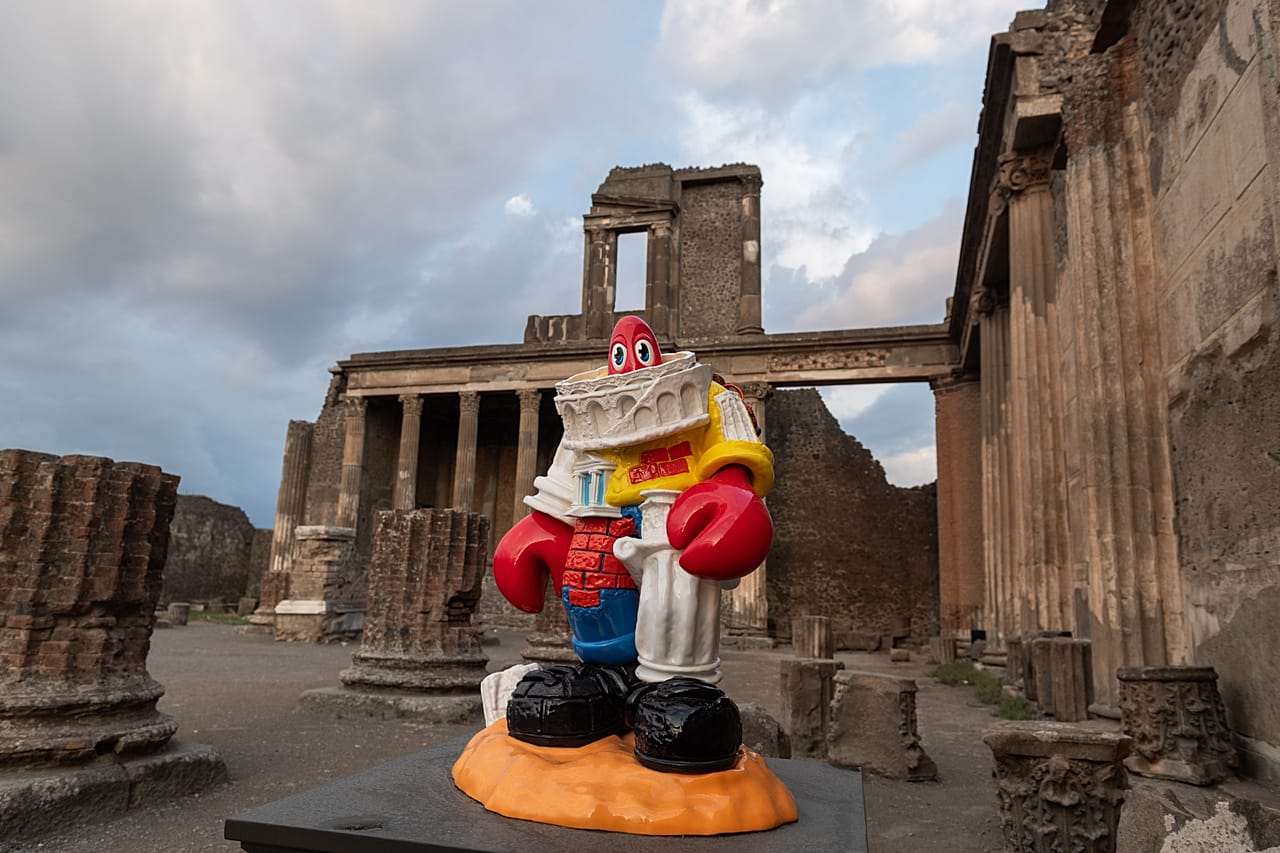
Thirty giant lobster sculptures have arrived in Pompeii as British pop artist Philip Colbert unveils his largest-ever installation. Blending mythology and contemporary culture, the exhibition transforms one of the world's most iconic ancient sites into a dialogue between past and present.

Visitors exploring the ancient ruins of Pompeii this summer may stumble upon an unexpected sight: towering lobster sculptures standing among Roman villas, ancient streets and archaeological remains.

The surreal intervention, which began last week is part of Philip Colbert in Pompeii: Pop Mythology, the British artist's largest exhibition to date. On display at one of the world's most celebrated archaeological sites are more than 30 monumental lobster sculptures, creating an unusual conversation between antiquity and contemporary pop culture.

Known for his colourful alter ego The Lobster, Colbert has built an international reputation by reimagining art history through the language of pop art. Frequently described by critics as the heir to Andy Warhol, the London-based artist has staged large-scale public installations from London and Venice to Seoul, Singapore and Shanghai. Pompeii, however, marks his most ambitious takeover yet.

The exhibition is also a milestone for the archaeological park. It is the first contemporary sculpture exhibition in Pompeii in 30 years, and the first time an artist has exhibited inside the ancient city's houses.

For Colbert, Pompeii is much more than an archaeological landmark.

"Pompeii is, for me, the ultimate city of antiquity — a place that exists beyond time," he says. "I can't think of a more powerful setting in which to create a sculptural dialogue about time, identity and the ways art can transcend its limitations."

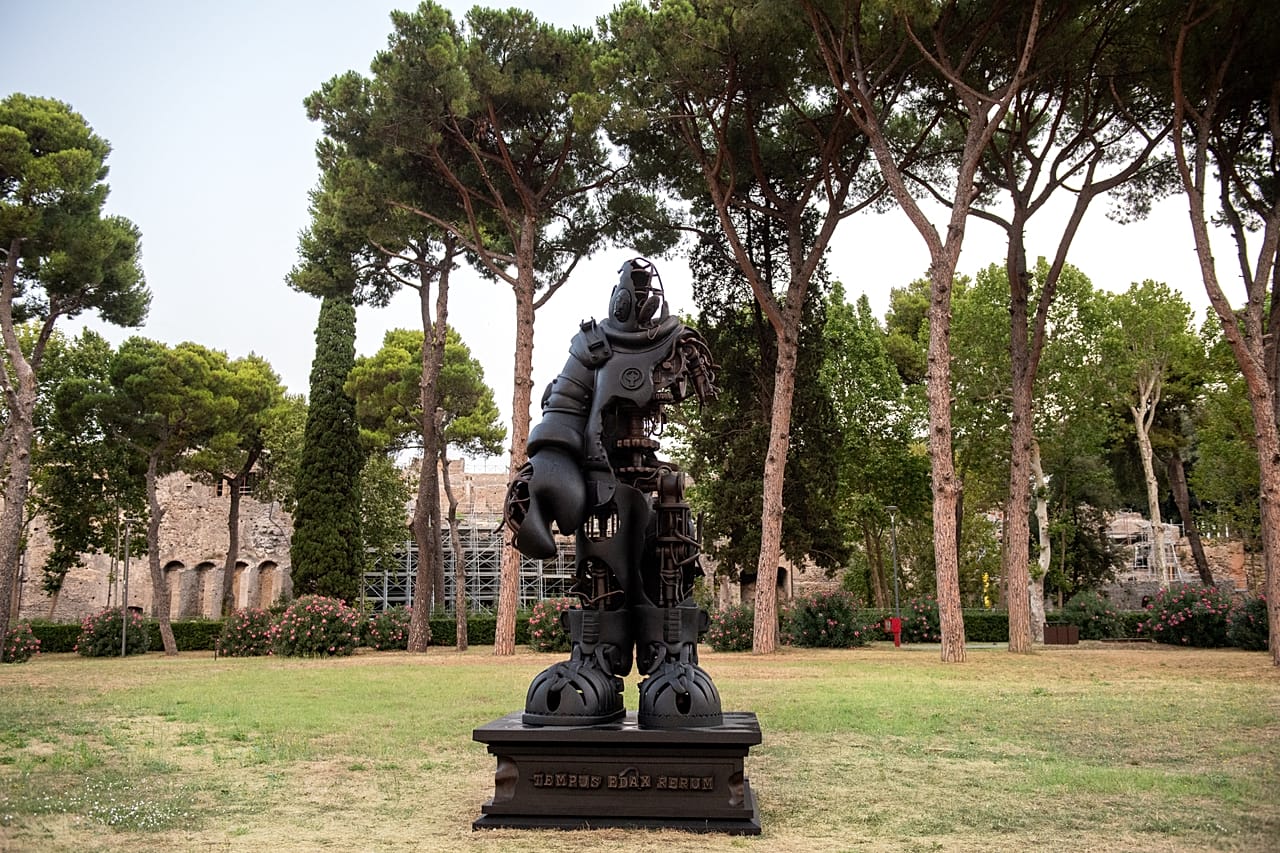
Inspired by the famous lobster mosaic in Pompeii's House of the Faun, the installation features 12 new sculptures created specifically for the site. Stainless-steel lobster figures appear unexpectedly between columns, temples and ancient homes, while monumental black steel works depicting futuristic robotic lobster warriors evoke what Colbert describes as "future mythological relics".

Philip Colbert in Pompeii Pop Mythology​©Ivan Romano/Getty Images for Philip Colbert Studio

The artist hopes these imagined creatures will encourage visitors to see Pompeii from a fresh perspective.

"The ruins of Pompeii embody both tragedy and beauty, and the city itself feels suspended between past and present," he explains.

Rather than treating Pompeii as a frozen monument, Pop Mythology presents it as a living cultural landscape where classical mythology, archaeology and contemporary visual culture can coexist. Themes of mortality, civilisation, memory and humanity's relationship with technology run throughout the exhibition, inviting visitors to reflect on how societies preserve their histories while imagining their futures.

The wider programme will also include meetings with schools and local associations across the region, reinforcing Colbert's ambition to connect contemporary art with local communities as well as international visitors.

The exhibition also extends to Longola, Boscoreale, Oplontis, Villa San Marco, Villa Arianna and the Real Polverificio Borbonico, creating a contemporary art trail across some of Campania's most important archaeological sites.

Whether seen as playful, provocative or unexpected, Colbert's giant lobsters offer a striking reminder that even one of history's best-preserved ancient cities can still become a canvas for new artistic conversations.

Philip Colbert in Pompeii: Pop Mythology runs until early 2027 at the Archaeological Park of Pompeii.


Myanmar's former leader Aung San Suu Kyi meets Red Cross official, president's office says

Myanmar's ousted leader Aung San Suu Kyi shakes hands with Arnaud de Baecque from the Red Cross in Naypyidaw, 3 August, 2026
Copyright AP Photo

By Gavin Blackburn
Published on

The military deposed Suu Kyi in February 2021, jailing the Nobel Peace Prize laureate and triggering an ongoing civil war that has killed more than 100,000 people on all sides.

Myanmar's detained former leader Aung San Suu Kyi met with the nation's Red Cross representative on Monday, the president's office said, the first publicised meeting between her and a foreign official since she was ousted in a 2021 military coup.

The military deposed Suu Kyi in February 2021, jailing the Nobel Peace Prize laureate and triggering an ongoing civil war that has killed more than 100,000 people on all sides.

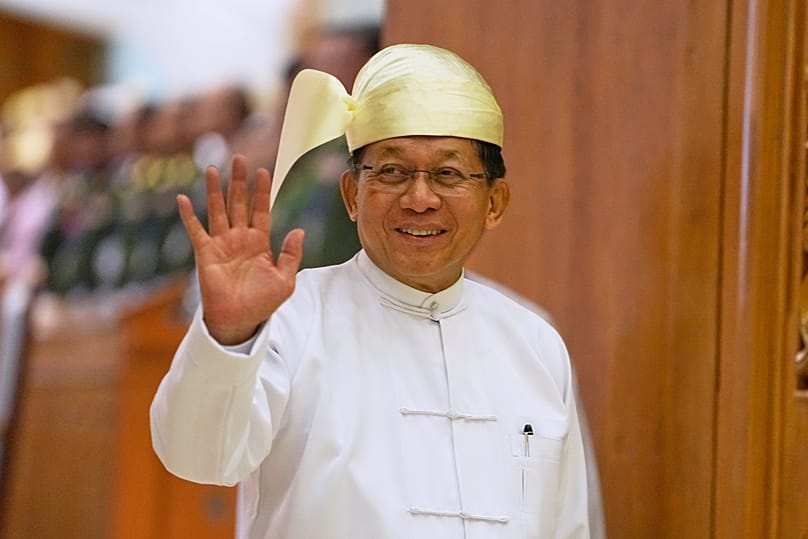
The coup leader and former junta chief, Min Aung Hlaing, was installed as civilian president in April following highly restricted elections.

Later that month, Suu Kyi, now 81, was moved to house arrest after Min Aung Hlaing said he had commuted the rest of her sentence.

She was detained on a host of charges which rights groups say were concocted to sideline her and her popular National League for Democracy party.

The president's office said in a statement that Arnaud de Baecque, the Resident Representative of the International Committee of the Red Cross (ICRC) to Myanmar, met with Suu Kyi on Monday morning.

Myanmar’s President Min Aung Hlaing waves as he leaves after delivering speech at the Union Parliament in Naypyidaw, 31 July, 2026 AP Photo

In photos released by the president's office, Suu Kyi is seen shaking hands with a man who appears to be de Baecque.

Another image shows Suu Kyi cutting a birthday cake, and yet another shows the cake with text reading: "Happy Birthday Aunty Suu."

The images could not be immediately verified by the AFP news agency but AI tools found no instances of fabrication.

"We are happy to see her photo like this if it's really her meeting with the ICRC. We can know now that she's alive," a veteran politician of her party told AFP on condition of anonymity.

"However, Aunty should be released immediately as she's being detained unlawfully," the politician said.

Proof of life

Authorities have not disclosed the exact location of Suu Kyi's detention in the capital Naypyidaw, nor how many years of her sentence remain.

Her son, Kim Aris, a British national, has sought independently verified proof of his mother's life after she was transferred to house arrest.

He says he has not heard from his mother, who remains massively popular inside Myanmar.

Since the coup, Myanmar has been largely ostracised by the international community, and the 11-nation Association of Southeast Asian Nations (ASEAN) has excluded the country's leadership from high-level summits.

But neighbour Thailand has been leading an effort to bring the once pariah state back in the diplomatic fold, both bilaterally and through the regional bloc.

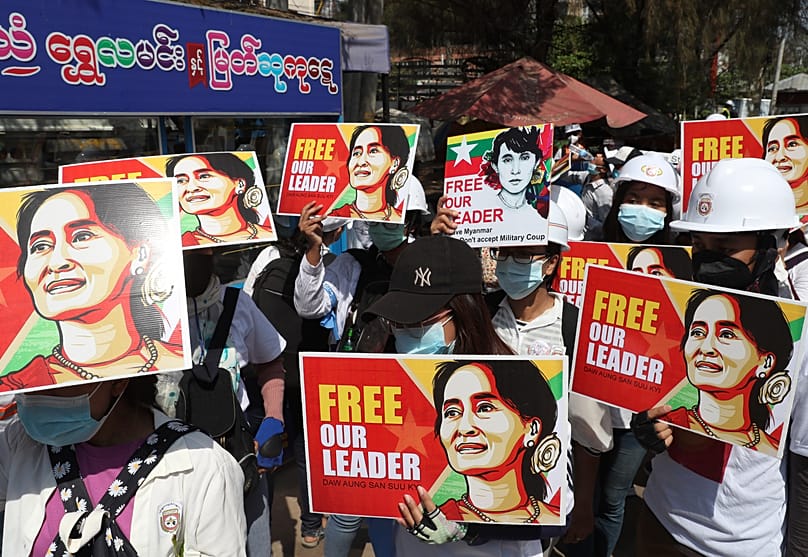
Anti-coup protesters hold images of deposed Myanmar leader Aung San Suu Kyi as they gather in Mandalay, 5 March, 2021
Anti-coup protesters hold images of deposed Myanmar leader Aung San Suu Kyi as they gather in Mandalay, 5 March, 2021 AP Photo

Since his change in position, Min Aung Hlaing has travelled to India, China and ASEAN member Laos, and he is scheduled to make an official visit to Thailand this week.

Despite the diplomatic outreach, the continued detention of Suu Kyi remains a major sticking point for some nations.

The ASEAN bloc has pressed for its special envoy to meet Suu Kyi, but so far Myanmar has refused.

Thai Foreign Minister Sihasak Phuangketkeow told reporters last month that Myanmar's Foreign Minister Tin Maung Swe had assured his regional counterparts during a trip to Thailand that Suu Kyi was "in good health."

"We have been told she has been taken care of well but it needs to be proved," Sihasak added.