Monday, August 03, 2026


Russia May Put Mobile Fire Groups on its Grain Ships to Counter Drones

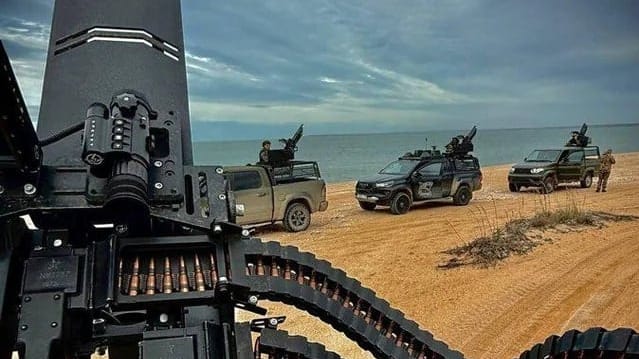
Russian Navy mobile fire groups of the Black Sea Fleet (Russian social media)

Published Jul 28, 2026 9:22 PM by The Maritime Executive


Faced with a serious threat from Ukraine's "middle strike" drone campaign in the Sea of Azov, Russian transport authorities are considering taking a page from the experience of Russian truck convoys on the road to Crimea, which face an identical threat. 

On the highways, Russian fuel and ammunition trucks are often accompanied by mobile fire groups - machine gunners in trucks - which are tasked with downing incoming Ukrainian attack drones. The duty is hazardous, as the gunners themselves are a priority target. But the operating model is well-established, used by both sides in the conflict as an inexpensive way to counter slow-moving, low-flying drones; Ukrainian units' effectiveness in shooting down slower prop-driven Shahed drones has reportedly prompted Russia to field faster-moving jet drones, according to ISW. Within Russia, a series of long-range Ukrainian strikes on warehouses and refineries has prompted an acceleration of mobile fire group recruitment for domestic air defense operations. 

Both sides have to deploy finite resources well, and each expansion of the target list expands the territory that must be protected. The threat to shipping expands the area at risk out to sea, further stretching available resources of equipment and manpower - a goal in itself, as it thins out the resources available on land. 

According to Bloomberg, Russian authorities are responding to pressure and looking at ways to harden the vessels against inbound drones. The list of options starts with passive defenses, like cables and mesh strung from the deckhouse to catch and detonate drones before they make contact - an arrangement seen across the front lines for the protection of high-value assets and infrastructure. 

The next step up would be embarked guard detachments with machine guns, equipped with suitable mounts for temporary shipboard installation. These mobile fire groups would board at the port of departure on the Sea of Azov, provide manually-operated air defenses through the Kerch Strait, and disembark after the passage - removing the weaponry upon departure. The concept has similarities to the private maritime security contractor arrangement used by merchant shipping to combat Somali piracy: the weapons go on the ship and come off the ship without touching a foreign jurisdiction, avoiding the regulatory complications of crossing borders while armed.  

Personnel close to the Russian deliberations told Bloomberg that military patrol boat escorts and convoy operations could also be used. This approach is a familiar strategy but could have unintended side effects: Ukraine's drone forces prioritize strikes on military patrol vessels, and convoying - rather than dispersing - would concentrate the vessel targets in a smaller area. Ukraine's Unmanned Systems Forces have shown a preference for striking areas of concentration, particularly anchorages, and convoying could create a similar hazard.

Until Russia finds a way to mitigate the threat, its wheat exporters will have a difficult time reaching foreign markets. About one quarter of Russia's grain export capacity passes through the Sea of Azov, and there are few alternative routes to water, according to World Grain. 


Fiber-Optic Cables Can be Used to Track "Silent" Bow Wave Vibrations

Whales
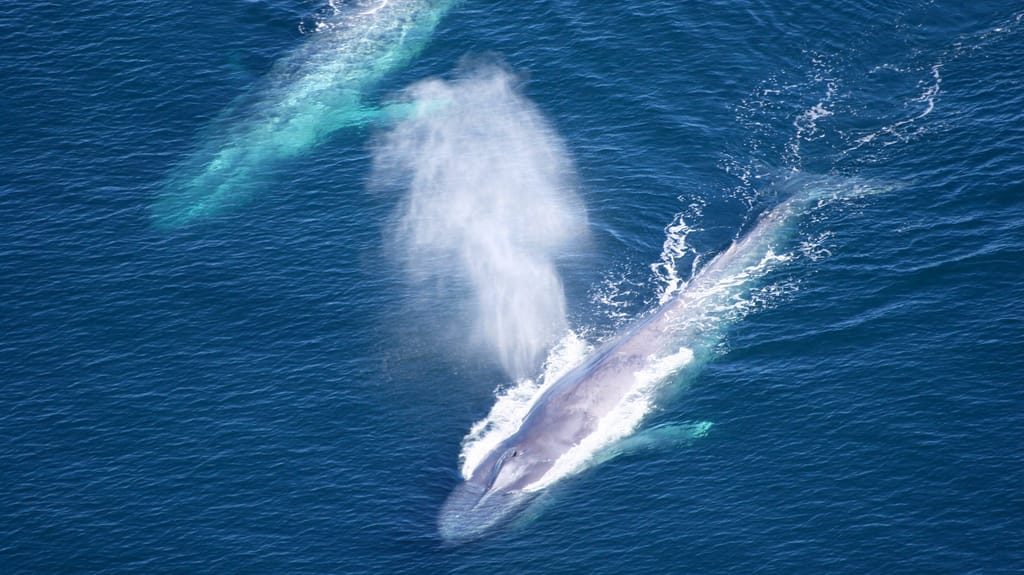
Even "silent" blue whales can be tracked by the low-frequency vibration of their movement through the water column (NOAA)

Published Aug 2, 2026 

 by Gemini News

[By Nancy Bazilchuk]


A 100-year-old equation and a fibre-optic cable off the coast of Svalbard led researchers to discover they could detect swimming whales — even if they were completely silent. The discovery broadens the tools that biologists could someday use to detect and monitor these marine giants.

Fibre-optic cables lace the planet’s oceans, carrying everything from telephone conversations to banking information. In 2020, NTNU researchers figured out that those cables can also serve as a passive listening device, allowing them to detect the deep rumbles of whale sounds in the frigid waters off Svalbard.

Now researchers have discovered how to use fibre optic cables to “listen” to whales, even when they don’t make any sound.  The secret is that whales, like ships, push water ahead of them as they swim – which creates a very low frequency pressure wave that the fibre-optic cables can detect.

“If the whales are silent, their body movement causes disruptions in the water and the sediments, so that we can detect them, even if they aren’t making any noise,” said Martin Landrø, head of NTNU’s Centre for Geophysical Forecasting and the senior author of a new paper just published in PNAS, the Proceedings of the National Academies of Science.

But no one, including the researchers, had thought to look at these very low frequency waves to detect whales – until now.

“The main challenge in detecting these low frequency signals is that they decay very fast with distance. A big ship is easy to detect as it moves a lot of water, but a whale is much smaller, so that it moves a lot less water. This means that they need to dive into the water column to be detected,” said Robin Andre Rørstadbotnen, the first author of the paper, and a postdoc at the Centre for Geophysical Forecasting.

One of the many advantages to the fibre-optic cable network in the waters around Svalbard is that there are a number of ships, both small and large, that cruise these same waters.

And if you think about, the shape of a ship’s hull isn’t that different from the shape of a whale’s body.

But unlike whales, all ships are required to have what’s called an Automatic Identification System, or AIS. That identifies both the ship itself and where it is travelling, allowing researchers to track the ships as they sail along or across the fibre-optic cables.

The researchers could detect the actual sound – the acoustic signal – of the different ships in the data from the fibre-optic cables, of course. They could also detect how fast the ships were travelling.

That’s the same approach the researchers had previously used to hear whale vocalizations.

This time, however, they realized that they could use the fibre-optic cable to detect the pressure wave generated as the ship moved through the water.

From boiling water to pressure waves

A pressure wave from water movement is much lower frequency than a whale vocalization. It’s also information that the researchers hadn’t looked at before.

“The big surprise was that this fiber could detect this,” Landrø said.

Suddenly they had a way to interpret the low-frequency data because they already had so much information about the different ships.

Bubbles in boiling water may not seem to have much in common with pressure waves from swimming whales, but researchers were able to use the equations to interpret their information on swimming whales. Screenshot.

“There are a lot of cruise ships during the summer months in Svalbard, sailing along the fibres we interrogated. By looking at one ship, Le Commandant Charcot, over three cruise seasons, we obtained a lot of very valuable information that could help us better understand these low-frequency signals and also identify aspects that need further research,” Rørstadbotnen said.

They also used a well-known equation published in 1917 by a famous physicist named Lord Rayleigh that described how bubbles in boiling water collapse.  That may sound very different than moving ships and whales, but the basic physics applies.

“This is the way we calibrated it,” Landrø said. “We know how fast the ships are moving, we know exactly where they are, because we have the AIS information. So that gives you a way to fine tune the understanding of these low-frequency signals. And that was our major observation, which is new.”

When you think about it, a whale, moving through the water, isn’t that different than a ship, pushing water out of the way as the motor propels the ship forward.

“That opened the possibility that maybe this can be used to detect silent whales,” Landrø said.  “When we saw this, we knew the next step was to look for whales.”

A blue whale and a bit of luck

Here’s where chance – call it a little bit of luck – stepped in.

“We were lucky to find a whale, a blue whale, that was vocalizing close to the surface, and thenwhen it stopped vocalizing, it dove down,” Landrø said.

A blue whale seen from below. Blue whales are the largest animal on Earth, but their population was decimated by commercial whaling during the last century. Researchers don’t know the current global population size, but they believe it is between 5,000-15,000 mature individuals, which is just 3-11% of the population size in the early 1920s. Photo: NTB

So first, the researchers could see the blue whale’s vocalizations using the acoustic data from the fibre-optic cables. This was by now a routine way for them to detect whales that made sound.

But now they knew that they should also look at the low-frequency data from the fibre-optic cables to see what the blue whale looked like in those data. And they could interpret what they saw with the help of Rayleigh’s equation.

Suddenly they could follow the track of the whale even as it stopped making sounds, and dove deeper into the ocean.

Another tool for conservation work

Landrø and his colleagues have previously suggested that researchers explore the use of fibre-optic cables for a range of remote sensing applications, from detecting earthquakes and monitoring undersea pipelines for sabotage to linking information from satellites to create an Earth-Ocean-Atmosphere-Space Observatory.

A blue whale seen from below. Blue whales are the largest animal on Earth, but their population was decimated by commercial whaling during the last century. Researchers don’t know the current global population size, but they believe it is between 5,000-15,000 mature individuals, which is just 3-11% of the population size in the early 1920s. Photo: NTB

”This could be a game-changing global observatory for Ocean-Earth sciences,” Landrø said after a paper about how such a system could work was published in Nature Scientific Reports.

The ability to detect silent whales is another step in using the existing fibre-optic network to better understand the planet and its far-flung inhabitants, such as whales.

While some few whale populations are in reasonable shape, most whales were heavily exploited over time. But the very nature of whales – big marine animals that roam the oceans – makes population estimates challenging.  Being able to track silent whales could change all that.

This article appears courtesy of Gemini News.

R.A. Rørstadbotnen, & M. Landrø, Detecting silent whales using seabed fiber-optic cables, Proc. Natl. Acad. Sci. U.S.A. 123 (26) e2603077123, https://doi.org/10.1073/pnas.2603077123 (2026).

The opinions expressed herein are the author's and not necessarily those of The Maritime Executive.
Iceland Seizes Paul Watson Foundation’s Boat as it Tracks Whale Hunt

Icelandic special squad boarding the activist vessel
Icelandic Coast Guard alleges the vessel failed to obey orders before it was pursued and boarded (Paul Watson Foundation)

Published Jul 31, 2026 12:53 PM by The Maritime Executive


The Icelandic Coast Guard and a team of special forces from the police boarded the vessel Bandero operated by the Captain Paul Watson Foundation on July 31 and arrested the captain. The forces took control of the vessel, which was accused of disobeying instructions from the Coast Guard as the activists were pursuing a whaling vessel.

The well-known activist group had reported it was launching a campaign this summer seeking to find and interrupt Iceland’s whaling efforts. The group accuses Iceland of violating a global moratorium on commercial whaling. The campaign was named “Operation 86,” which media reports said celebrated a November 1986 incident when two members of the Sea Shepherd group, also founded and formerly run by Captain Paul Watson, sneaked into a whaling station in Iceland and destroyed computers and equipment with sledgehammers.

The group had reported early in July that its vessel Bandero, a 500-ton, 65-meter (213-foot) motor yacht, had reached the region around Iceland. The vessel briefly left the region after a crewmember was injured and required medical treatment, but this week it had reported it was again “searching for Iceland’s last two active whaling vessels.” 

The group asserted that, “The combined efforts of the Bandero crew and our ground team have helped slow the pace of the hunt.” It said it was also documenting the violations being committed by the whaling company.


Two weeks ago, media reports said that the Icelandic Coast Guard had observed the Bandero entering Iceland’s EEZ without transmitting an AIS signal. The vessel claimed its AIS was malfunctioning, and Iceland had ordered the ship to report its position hourly by alternate means.

The Icelandic Coast Guard said it received a report on July 30 that the crew aboard the whaling vessel Hvalur 9 felt threatened by the Bandero, which had sailed into the 12-nautical-mile coastline of Iceland. The Coast Guard said its headquarters radioed the Bandero and ordered them to leave the Icelandic coast, and received no response.

The Coast Guard then sent its helicopter, which was on a standard patrol, to investigate. Again, they instructed the Bandero to leave coastal waters and received no response. The Captain Paul Watson Foundation posted online that the helicopter was “interfering with our operation as we work to monitor the whaling vessel Hvalur 9.”

The Coast Guard vessel Freyja was also dispatched, and it said when it reached the area, it ordered the Bandero to stop the ship’s engines. It asserted that the captain of the Bandero disobeyed the instructions, and that is when the special squad was called out. Around midnight, the special squad boarded the Bandero. It apprehended the captain of the boat and directed the vessel to Reykjavik. Media reports from Iceland are quoting the Coast Guard as saying the matter has been handed over to the police and prosecutors for investigation.


Bandero held in Iceland between the Coast Guard vessel and two Japanese warships (Captain Paul Watson Foundation)


The foundation is now writing online that the Bandero is “being held captive.” It asserts that two Japanese warships have been positioned near the vessel, which remains docked in Reykjavik. Japan has been pursuing Watson since a 2012 incident and attempted to have him extradited in 2024 after he was arrested in Greenland.

Captain Watson was not aboard the vessel, but has posted video messages to his followers calling for support.

It is the second time this year the Bandero has been involved in a reported incident. In April, it was accused of ramming a fishing boat as part of its efforts to interrupt krill fishing in Antarctica. 


UK Government Ends Royal Fleet Auxiliary Labor Dispute with Pay Increase

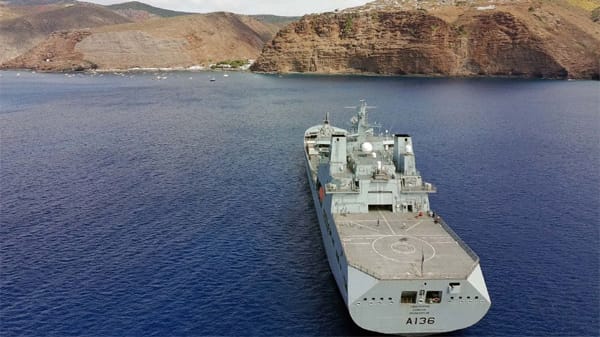
Civilian-crewed fleet oiler RFA Tidespring (Royal Navy file image)

Published Aug 2, 2026 8:14 PM by The Maritime Executive


The UK government is moving to end the protracted labor disputes that have disrupted the Royal Fleet Auxiliary (RFA) in recent years, reaching an agreement with unions on a long-sought pay increase for more than 1,750 civilian ratings, officers and apprentices.

After downing their tools at least four times over the past two years, RFA personnel get a 4.5 percent pay raise backdated to April 1, 2025 and a 3.6 percent pay raise backdated to April 1 this year. The settlement represents a combined increase of 8.1 percent.

Apart from the pay increase, the agreement also comes with a basket of other improvemets, including improved leave arrangements that will allow RFA personnel earn more time off for periods spent at sea, a one-off leave buy-back arrangement, and a $332 one-off payment.

Both the National Union of Rail, Maritime and Transport Workers (RMT) and the Nautilus International union have accepted a deal that could finally end strikes that have become regular in recent months. In May this year, RFA personnel staged two 24-hour strikes while another action slated for June was called off after the government tabled the revised pay offer.

The UK Minister for Veterans and People Calvin Bailey said that by reaching a resolution, the government recognizes the contribution that RFA members make to the Royal Navy and provides a strong foundation for the future.

“The Royal Fleet Auxiliary is a vital part of the Royal Navy and contributes directly to the UK’s national security through their crucial work across the world,” he said.

Though the primary role of the agreement was to end the protracted labor disputes, it is also expected to address the crisis of staff shortages that has been hindering RFA operations. The organization is so short-handed that it has had difficulty crewing all of the service's assets.

Critically, the deal is expected to support recruitment and retention, helping meet future operational demands. Apart from inability to attract new recruits, the RFA has in recent times recorded significant hemorrhage of seafarers seeking the superior pay and conditions in commercial shipping.

Established in 1905, the RFA has been shrinking and currently operates a fleet of nine ships - tankers, landing ships, and aviation support vessels - with a core mission to replenish the Royal Navy at sea. Reports indicate that only six to seven of these ships are operational at any given time.

Survivors recall blasts before deadly Indonesian ferry fire

Surabaya (Indonesia) (AFP) – Survivors said on Monday they heard multiple blasts moments before an Indonesian passenger ferry caught fire, killing five passengers and prompting many to jump into the sea, with some still missing more than 24 hours later.


Issued on: 03/08/2026 - RFI

More than 200 people were aboard the ferry when it caught fire some six hours from Surabaya by sea © JUNI KRISWANTO / AFP

There were 236 people on board the vessel when it left Indonesia's second-largest city, Surabaya, for Makassar on Sulawesi island on Sunday morning, search and rescue agency head Nanang Sigit said.

Nanang told Kompas TV on Monday 229 people had been rescued alive and five bodies were also recovered.

"Mathematically, only two that have yet to be evacuated. We are confirming this data with the shipowner," he said.

Numbers provided by officials have fluctuated wildly. The last toll given on Sunday was 41 people missing and five dead from a total manifest of 271 people.

Arman Asmara Syarifuddin, an East Java police official, told Kompas TV on Monday some 28 people were still missing.

The reason for the discrepancy was not clear.

The fire broke out on Sunday morning as passengers were eating breakfast, survivor Muhammad Abdul Karim told reporters in Surabaya after disembarking from a rescue vessel.

"Initially, the smoke entered the information room, the sleeping quarters. And then explosions happened," he said.

The blaze originated in the stern, sending passengers fleeing to the bow where they were all given life jackets, Muhammad said.
Five people were killed and another 41 were missing after an Indonesian ferry caught fire at sea, search and rescue officials said © Handout / INDONESIA'S NATIONAL SEARCH AND RESCUE AGENCY (BASARNAS)/AFP
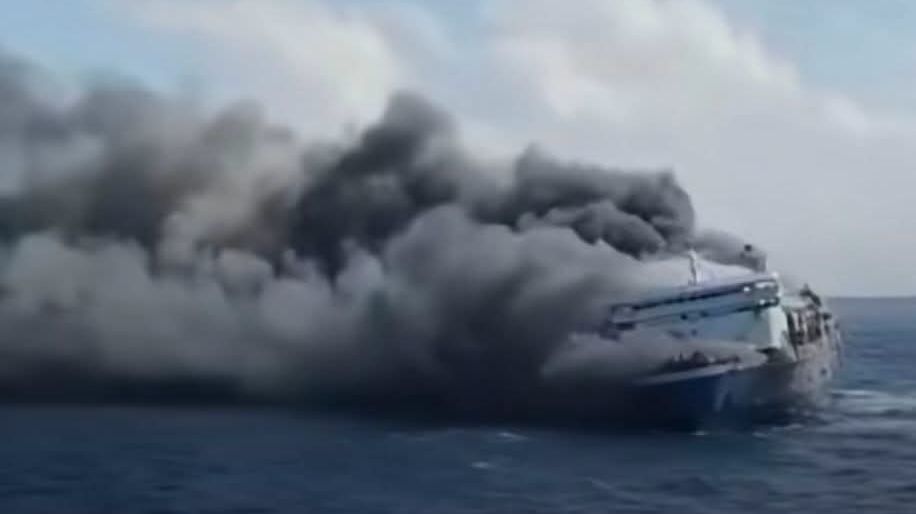
He said he jumped overboard with an elderly man as the fire came closer, and saw flames engulfing "almost all" of the ferry as he looked back.

"The waves were big and the ship coming to save us was quite far. Those were our fears when we were about to jump," said Muhammad -- who was rescued drifting at sea in his life jacket about seven hours later.

He said he had not seen any lifeboats aboard the ferry.
'No choice'

Rescuers worked through the night to find survivors even as estimates of the number of missing people kept changing.

At least five passengers died © JUNI KRISWANTO / AFP

Most evacuees were taken back to Surabaya, a six-hour boat ride from where the ferry ran into trouble.

Bambang Susilo, 36, said he felt the blaze come closer to the bow of the ferry and the floor getting warmer, convincing him and a female passenger to jump some 10 metres (33 feet) into the sea.

"We had no choice but to surrender" to our fate, he told reporters at the Bhayangkara Hospital in Surabaya, where he was waiting to retrieve the body of a colleague.

Bambang and five other survivors had swum to the nearest rescue ship, some five kilometres (three miles) from the blazing ferry.

Another rescue vessel was deployed on Monday to help find the missing, said Nanang.

Marine accidents are a regular occurrence in Indonesia, an archipelago of more than 17,000 islands, partly due to lax safety standards and unpredictable weather.

At least four people were found dead and 14 others remained missing until the end of the search operation.

© 2026 AFP


Video: Five Dead, 41 Missing in Fire Aboard Indonesian Ferry

Mutiara Sentosa 2
Via Indonesian social media

Published Aug 2, 2026 5:10 PM by The Maritime Executive


A fire on board a crowded Indonesian ferry has killed at least five people, according to authorities in Java, and dozens of passengers remain missing. 

On Sunday morning, the ferry Mutiara Sentosa 2 was under way from Surabaya to Makassar, Sulawesi. About 39 crewmembers and 232 passengers were on board. At about 0600 hours local time, as the ferry transited past Madura Island, a fire broke out aboard the ship. The fire was not reported to authorities until an hour after the fact, according to rescue agency Basarnas. Good Samaritan vessels responded to the scene to begin a rescue, including Meratus Pematang Siantar (109 rescues), Hasnur 26, Meratus Project 3, Transco Arafura, Prakarsa Mas and SC Aila XVII. 

Survivors of the fire gathered on the bow of the ship, and appeared to be in precarious circumstances as the heat and smoke of the fire approached. The missing people are believed to have jumped over the side to escape the fire, according to local media. Video from the scene showed a strong wind and moderately rough surface conditions, less-than-ideal factors for a SAR situation. As of late Sunday, no visible personnel remained on the deck of the ferry, and search efforts were concentrated on finding survivors in the water.

Over 220 people have been rescued, at least five are dead, and a search is under way for 41 additional personnel. 


Early videos from the scene showed heavy smoke emanating from the aft third of the vessel; later in the day, good Samaritan vessels' footage showed that nearly the entire ship had burned through, gauging from the smoke and the scorched-off missing paint on the topsides. 

The cause of the fire remains under investigation. 

Mutiara Sentosa 2 (ex name Golden Bird 5) was a 1992-built passenger ferry of 3,800 dwt capacity. The vessel was owned and operated by a domestic company, and had been in service in Indonesia since at least 2015. 

river cruise ship evacuation
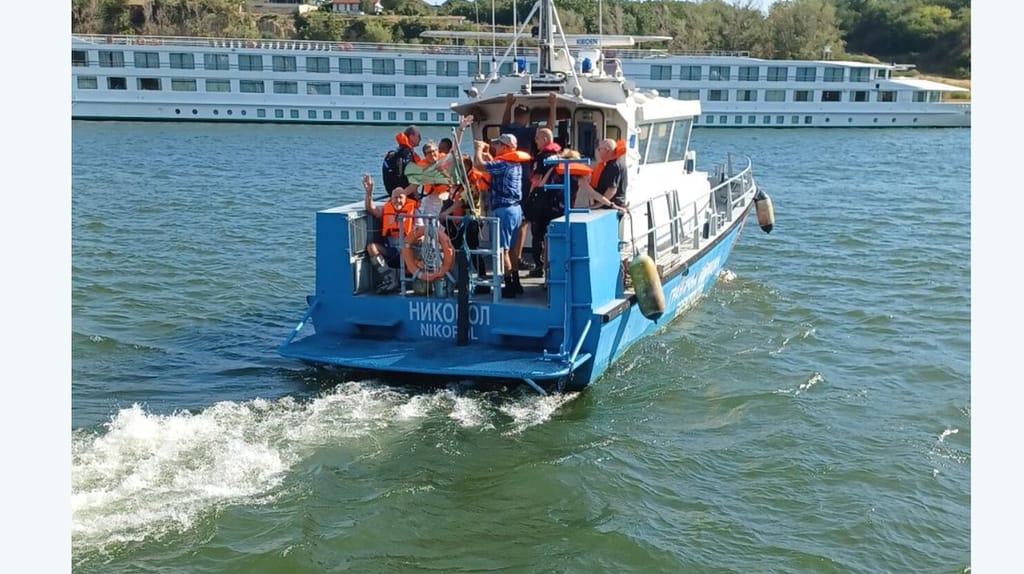
Passengers were evacuated from the grounded Viking Ullur (Bulgarian Ministry of the Interior)

Published Jul 29, 2026 11:33 AM by The Maritime Executive


Bulgaria’s Border Police were leading an orderly evacuation of the passenger from the Viking river cruise ship Viking Ullur after the vessel grounded early on July 28. The authorities cited low water levels and the dark of night as contributing factors but said the vessel had ultimately left the navigation channel before it grounded.

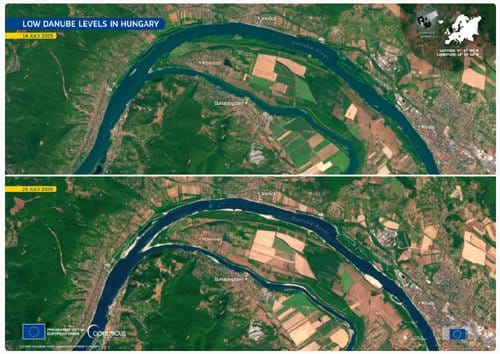
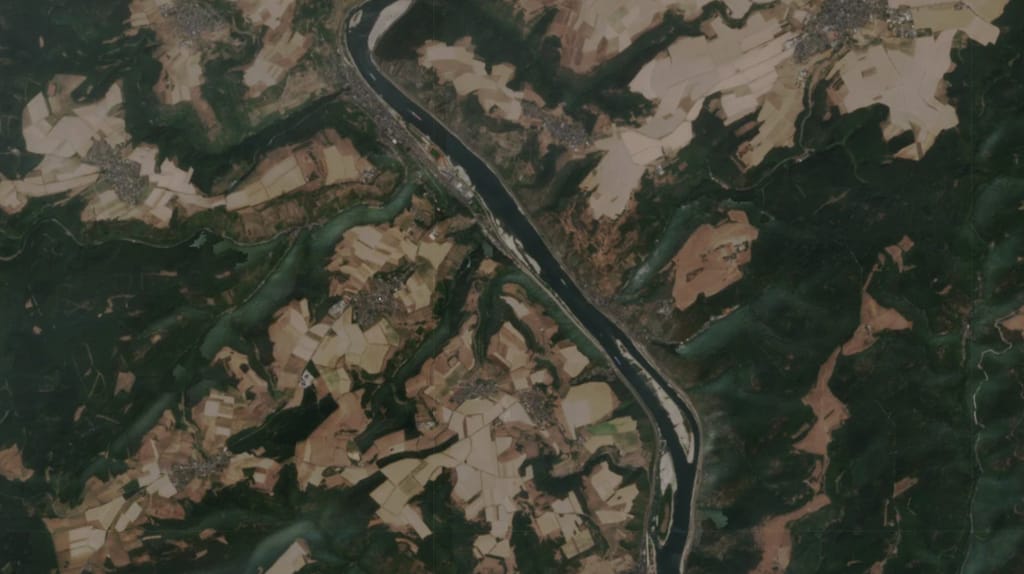
At various points along the Danube, which is the second longest river in Europe, authorities have warned of extreme low water levels due to a prolonged dry spell and intense summer heat, which has accelerated evaporation. The European Union used imagery from Copernicus Sentinel-2 to illustrate the rapid decline in water levels in sections of the Danube. It highlighted “exposed pale sediment bars along several bends” of the river in Hungary, saying the low water levels were affecting navigation and river tourism, warning that sightseeing services to northern Hungarian towns have been suspended since mid-July.


Images show the decline in water levels over 10 days in July on a section of the Danube in Hungary (European Union, Copernicus Sentinel-2 imagery)


Authorities in Serbia and Croatia reported the river is at record low levels. Serbia’s fuel imports are being impacted, as are fishing and tourism.

The Swiss-flagged cruise ship, built in 2019, departed the port of Drobeta-Turnu Severin, Romania, around 9:15 p.m. Monday night in a section of the river between Serbia and Romania. It was heading to Vidin in northwest Bulgaria. There were 186 passengers and 52 crew aboard the ship. It measures 443 feet (135 meters) in length as part of Viking’s unique Longship design.

The cruise ship went aground at approximately 02:20 on July 28, approximately 15 miles above Vidin as it was sailing downriver. The ship attempted to free itself, and local vessels were used in attempts to pull it free. 

The authorities highlighted that there are draft restrictions on the river. They said the river’s flow in the area has fallen from a normal 4,700 cubic meters per second to a current 1,650 cubic meters per second, but the ship was in compliance with the restrictions and had moved outside the navigable channel. A passenger writing on social media said they were told it was a pilot error.

The Lower Danube River Administration sent its technical vessel Concordia to carry out water-depth measurements. Viking also sent a chartered cruise ship, the French-flagged Vivaldi, in an effort to transfer the passengers to another vessel. However, the second ship was unable to approach the stranded cruise ship.


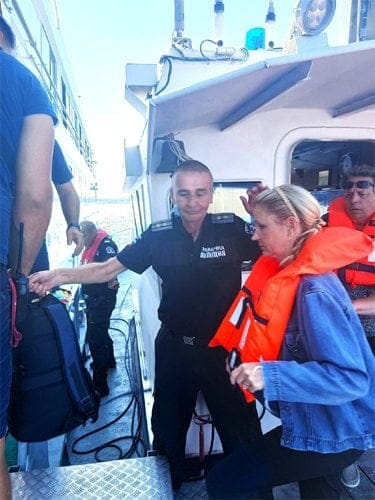
Passengers were being transferred between ships and later were bused to Bucharest (Border Police)


The authorities determined to conduct a daylight evacuation of the cruise ship after reports said the vessel was low on drinking water. It had been scheduled to replenish in Vidin. Pictures from the Border Police showed the passengers in life jackets boarding a small boat and being ferried to the second cruise ship. A passenger from Viking Ullur later reported they would be making a five-hour bus trip to Bucharest, where they would arrive around 2:00 a.m. local time.

The authorities reported the Viking cruise ship is in no immediate danger. Because it is outside the channel, it is not disrupting river traffic.

It is the second vessel that they are managing after having grounded in the Danube.  In a similar area on the eastern side of the river in Romania, a cargo vessel has also stranded. It is aground near Calafat, Romania, stuck, the authorities said, on a sandbar exposed by the low water levels on the river.

All along the river, precautions are in place to address the low water levels. Cargo ships have been required to reduce their loads due to the draft restrictions. Some of the river cruise ships have been docked at key ports and are transferring passengers by bus between cities, while others have had to alter their scheduled itineraries.


Sunken Nazi warships resurface on Danube as Serbia's drought deepens

Sunken Nazi warships resurface on Danube as Serbia's drought deepens
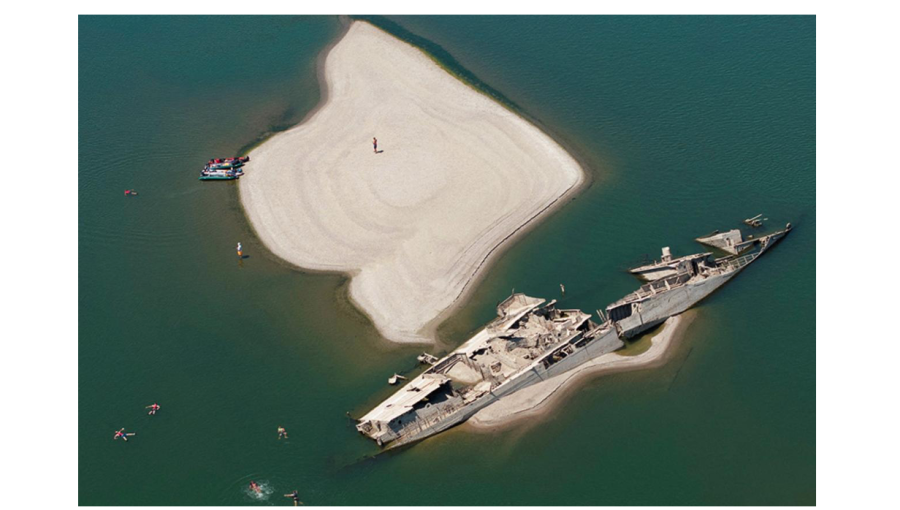
Around 200 vessels scuttled in 1944 to keep them from the Red Army are re-emerging near Prahovo as the river hits some of its lowest levels on record. / bne IntelliNewsFacebook
By bne IntelliNews August 3, 2026

Dozens of Nazi-era warships, deliberately sunk in the Danube in 1944 to stop them falling into Red Army hands, have resurfaced near Prahovo in eastern Serbia as a summer drought pushes the river to some of its lowest levels on record, Euronews reported.

Around 200 ships, barges and tugboats may still lie on the riverbed in a roughly five-kilometre bottleneck near Prahovo, obstructing navigation, and some of the wrecks may still contain live ammunition. With EU support, Serbia has begun raising the wrecks and clearing the waterway; salvage work led by the European Investment Bank started in 2024 and is expected to run until 2028.

It is not the first time low water has forced the issue. Persistent drought has repeatedly cut Danube water levels over the past several years, disrupting grain shipments and forcing Serbia and its neighbours into repeated dredging operations to keep the river navigable - a recurring seasonal stress on one of Central and Eastern Europe's most important trade corridors that this year's heatwave has made acute enough to expose seven-decade-old wreckage.