Tuesday, August 04, 2026


Cargo Ship Attacked in Omani Sector of the Strait of Hormuz
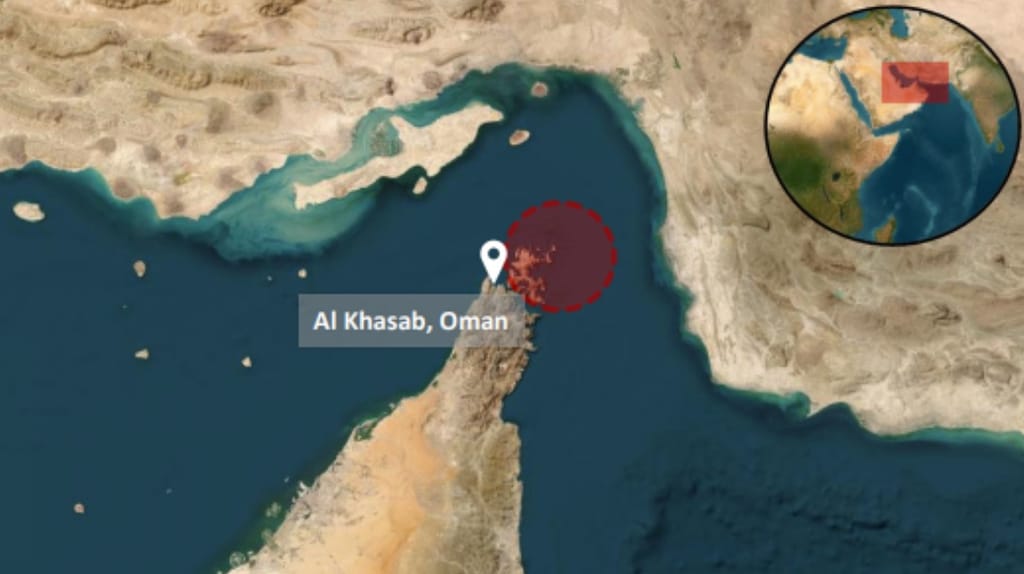
UKMTO
Courtesy UKMTO

Published Aug 3, 2026 10:47 PM by The Maritime Executive


As talks between Iran and Oman on control over the Strait of Hormuz move forwards, a new attack has been reported off the Musandam Peninsula, in the Omani coastal channel used by GCC shipping interests.

At about 2200 hours on August 3, the crew of an unnamed cargo vessel broadcast a VHF distress signal, reporting that their ship had been hit by an unknown projectile. The incident occurred at a position about 20 nm to the northeast of Khasab, the midpoint of the "neutral" Omani coastal route through the strait.

Maritime security consultancy Vanguard Tech reports that the attack was more serious than the UKMTO brief suggests. According to its sources, the bulker Minoan Pioneer (IMO 9471630) was hit in her engine room, resulting in a complete blackout and a fire in the accommodations area. The third engineer went missing following the blast. A crew-led firefighting operation was still under way Tuesday morning local time.

A near-miss attack occurred about 24 hours earlier in the same region, about 20 nm northeast of Khasab. In that prior incident, the master of an unnamed tanker reported hearing a blast near the vessel. No damage occurred and the ship continued safely on its way. 

All prior kinetic attacks in this area of the strait have been Iranian in origin. Iran objects to the Omani route, as it bypasses Tehran's "Persian Gulf Strait Authority" administrative regime; Iranian hardline leaders claim a sovereign right to control traffic through the strait, despite its status as a free and ungated waterway prior to the U.S.-Israeli conflict with Iran. 

To preserve some degree of long-term control - and collect fee revenue from passing vessels - Iran is currently negotiating with the government of Oman on the contours of an acceptable split in administrative responsibilities. According to the New York Times, a proposed joint Iranian-Omani control regime for the strait would divide oversight of the channels into two directions. Inbound traffic would pass through a northern channel closer to the Iranian coast, and would be administered by Iran's authority. Outbound traffic would pass through an Omani-controlled lane. The two states would equally split the revenue from a "service fee" for each transit, a cost to shipping which did not exist before the war. 

An American official who was briefed on the talks denied this account, telling the Times that the control scheme would be both temporary and toll-free.

Iran and the White House do not publicly agree on whether they are negotiating towards a peace agreement, though President Donald Trump claims that talks are progressing quickly and a "deal is imminent." On Sunday, the president called off previously-announced airstrikes on Iran, claiming that he wished to give diplomacy time to work and that he wanted to give Iran's leadership "every last chance before decapitation." Iran denies that talks with the U.S. are ongoing.

"Our negotiations are with Oman, we are focused on reaching an understanding on a route that will ensure safe shipping traffic through the Strait of Hormuz," an Iranian Foreign Ministry spokesperson told Bloomberg. "These are bilateral negotiations between the two coastal states. Others can play a constructive or destructive role in this process, but the issue is with Iran and Oman."

UAE Resumes Cross-Gulf Trade with Iran
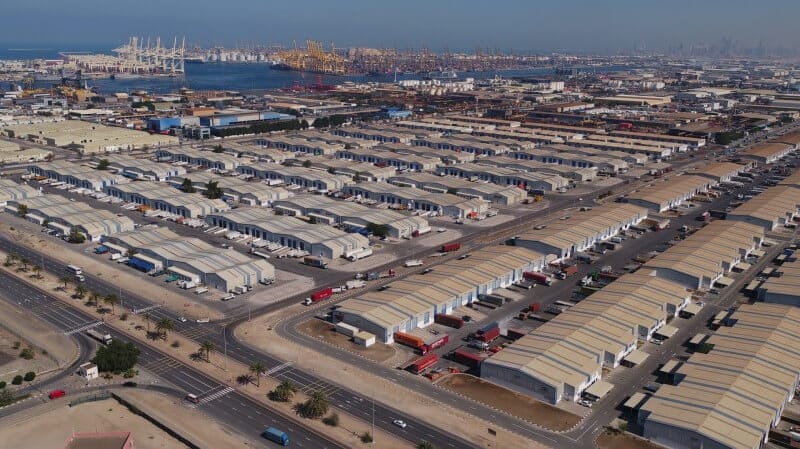
Jebel Ali, UAE
Jebel Ali Port, usually the biggest and busiest port in the Middle East

Published Jul 31, 2026 11:22 AM by The Maritime Executive

A little-appreciated consequence of the all-out war that broke out in the Gulf on February 28 has been the disruption to the United Arab Emirates’ trade with Iran.

A foundation of the Emirates’ extraordinary growth since 1979 has been its role as the import-export gateway to Iran. Not so long ago, about 90 percent of Iran’s trade with the outside world passed through DP World’s massive container terminal at Jebel Ali, where, from a central distribution point, global container liners transferred cargo to smaller ships servicing numerous Iranian ports within the Gulf. This was a hugely profitable business for DP World, the revenue stream for the Dubai government providing capital for the early phases of the Emirate’s explosive growth. The growth and profitability of Emirates Airline followed a similar pattern, with Dubai acting as a hub for Iranians wanting to switch from local networks and use the services of Emirates Airline’s unmatched global footprint. Business and trade with the supposedly isolated Islamic Republic were a huge engine for growth.

So, in this regard, Iran has not really been isolated since 1979 – it has been thoroughly integrated with the economies of the GCC, notwithstanding the strictures of global sanctions applied on Iran. There has been a strong mutual inter-dependency. So, while there have been political differences between the GCC and Iran, principally over Iran’s desire to be seen as the dominant nation in the region, the strategic aim behind its regional expansionism program, which sought to subvert the political system in many neighboring countries, there have always been strong economic reasons to maintain a working relationship. Expatriates in Dubai who never meet any locals may not appreciate just how many Iranians and Iranian businesses operate in Dubai, and how a large proportion of the Emirati citizen body has roots in Iran.

Private enterprise and commercial interest are powerful forces in the Emirates, and therefore it is no surprise that trade has once again started flowing across the Gulf, notwithstanding that Jebel Ali is temporarily cut from global supply through the Strait of Hormuz. Kpler analyst Rebecca Gerdes, who keeps a close eye on container movements in the Gulf, reports that more than 60 containerships made cross-Gulf passages in July, up from 10 in June. In the period up until July 31, traffic was averaging a daily container liner in each direction between Jebel Ali and the Rajaei civilian port in Bandar Abbas. Five container-carrying vessels, all flying flags of convenience, are apparently shuttling to this route, namely the Yekta 4 (IMO 9303675), Mehran 1 (IMO 1111117), Farahi 2 (IMO 9034688), J. Pioneer (IMO 9116711), and Capilano (IMO 9358577). 
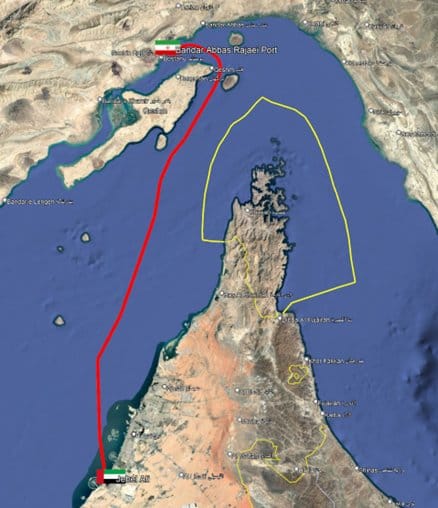
 

The route followed by Capilano and other container liners between Jebel Ali and Bandar Abbas Rajaei (red), keeping towards the Iranian coastline (Google Earth/CJRC/Kpler data)


The conflict between Iran and the United States has in recent days settled into what appears to be an economic contest of endurance, pitching the U.S. desire to limit inflation and oil price rises against Iran’s need for finance to fuel its war effort and to keep the population happy with essentials. The U.S. naval blockade of Iranian ships and ports being enforced from outside the Gulf applies most of the leverage the United States needs to have to keep an advantage in this battle, and the volumes being carried on the Jebel Ali to Bandar Abbas route will not make a substantial impact. The contents of the containers on the route one can expect are being closely monitored, and will tend towards medicines and foodstuffs rather than dual-use electronics and fertilizer.

Still central to the trade is Jebel Ali, with its sophisticated cargo handling and logistic facilities. The difference with the pre-war era is that Jebel Ali is now being serviced from the landward side, with goods being trucked (or railed) in and out from Fujairah, Khor Fakkan, Sohar, and Salalah, and from Europe and beyond by trucks coming from the Mediterranean and Saudi west coast ports. Clearly, these elongated trade routes, involving switches between transport means en route, are economically inefficient – but needs must. Moreover, between the UAE and Iran, there is a baseload of bilateral trade; the fresh fruit and vegetables in the Spinneys supermarkets in Dubai, amongst many other classes of goods, come largely from Iran.

Oman’s Foreign Minister has been an advocate for a new security regime in the Gulf, calling for the end of the containment of Iran and its integration into a legal and practical framework shared by all Gulf states. There is already a degree of economic integration between all Gulf states, as the resumption of cross-Gulf trade shows. But the bar to deeper integration at both the economic and political level appears to be an unwillingness on Iran’s part to observe legal and practical frameworks which the others all have, most noticeably the United Nations Convention on Law of the Seas (UNCLOS), the 1968 UN Non-Nuclear Proliferation Treaty, and the IMO’s 1968 Traffic Separation Scheme covering the Strait of Hormuz. 


Brazil coffee faces El Niño headwinds, but crops more resilient


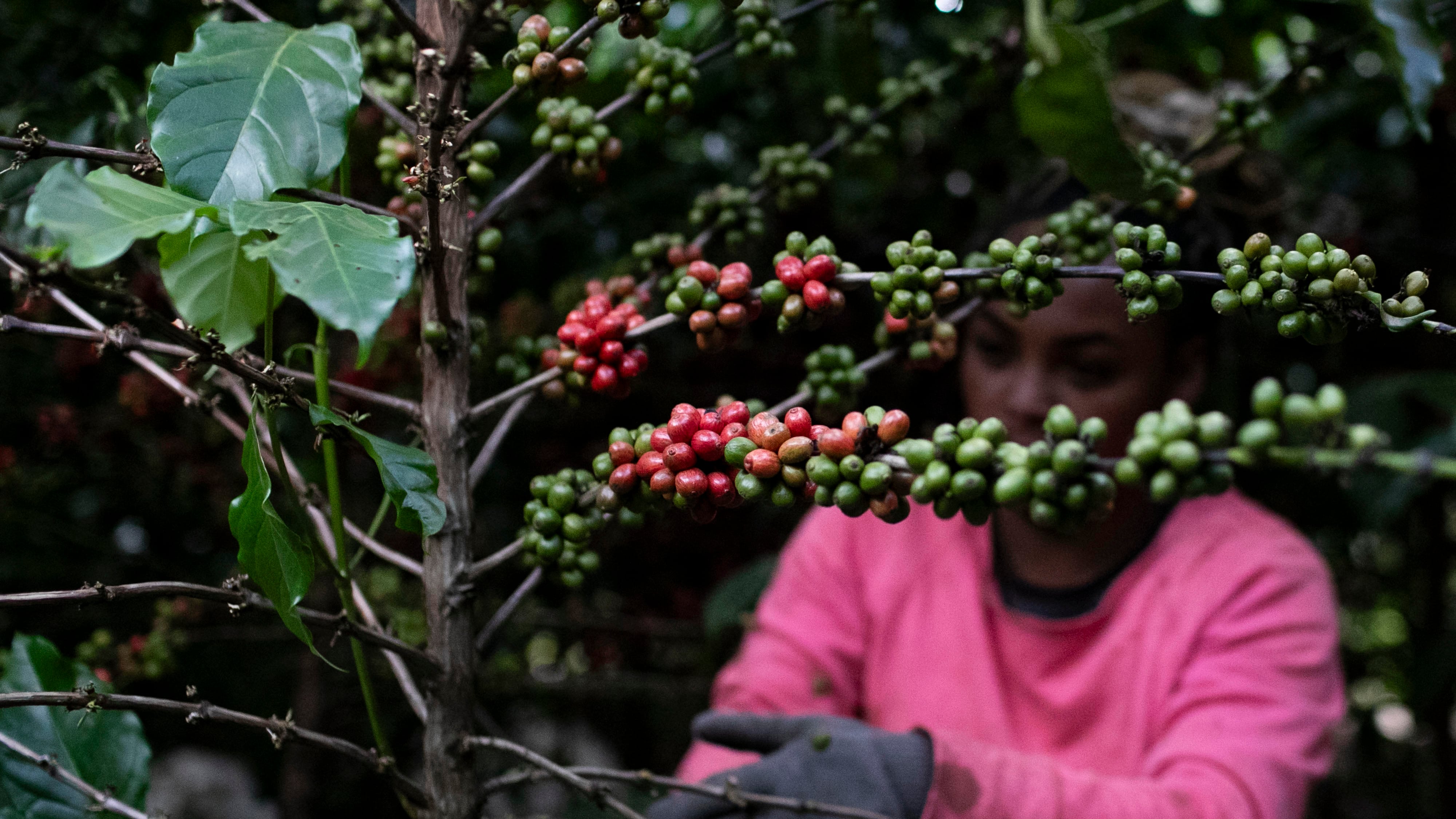
Worker Hellen Vitoria harvests coffee beans on a plantation in Porciuncula, Rio de Janeiro state, Brazil, Thursday, July 17, 2025. (AP Photo/Bruna Prado)

SAO PAULO — El Niño could cut Brazil’s expected record harvest by up to a fifth, according to the Brazilian Coffee Industry Association (Abic), as excessive heat and irregular rainfall threaten production.

For this year, state crop agency Conab forecast a bumper total output of 66.7 million 60-kilogram (132.3 lb) bags of arabica and canephora beans, with the latter including varieties like robusta and conilon.

But deteriorating weather conditions amid an El Niño weather cycle could dramatically reduce production, said Abic executive director Celirio Inacio da Silva.

“We are now talking about a crop loss of 15 per cent to 20 per cent, which in a normal year would be within expectations. But in the current scenario, that is very bad news,” he said in an interview.

Despite the gloomy outlook, coffee growers are better prepared than during previous El Niño episodes thanks to technological advances producing a more climate-resistant crop.

“We’ve made significant advances and today we’re able to plant and harvest more efficiently,” said Silva.

Coffee farmers in recent years have shored up their ability to mitigate climate risks by rapidly expanding irrigation systems, investing heavily in such technology to reduce their dependence on increasingly erratic rainfall driven by climate change.

Even so, El Niño is expected to disrupt the crop’s biological cycle, particularly during the flowering period in the second half of 2026. Excessive heat and irregular rainfall can lead to uneven and unsuccessful flowering, specialists said.

“Irregular ripening creates quality problems and makes harvesting more challenging,” said Wellis Caixeta, coffee purchasing manager at Minas Gerais-based cooperative Expocacer.

The 2023/24 El Niño, combined with heatwaves and irregular rainfall, cut Brazil’s 2024 coffee crop from an initial government forecast of 58.8 million to 54.2 million 60-kg bags. Despite arabica’s positive biennial cycle, output rose just 0.2 per cent, while conilon productivity fell 5.9 per cent.

El Niño may already explain some anomalies, such as unusual rainfall in southeastern Brazil over the past month.

Expocacer estimates that rainfall exceeding 50 millimeters in arabica-growing regions about 40 days ago delayed the harvest and caused a significant amount of coffee cherries to fall to the ground, hurting bean quality.

Espirito Santo, Brazil’s largest producer of canephora coffees, has also faced irregular weather this year, with longer intervals between rainfall and shorter, more intense downpours, said Luiz Carlos Bastianello, president of Cooabriel, Brazil’s largest canephora cooperative.

Growers in the state are concerned El Niño could prolong dry periods and excessive heat through January 2027, disrupting bean filling, Bastianello said.

While conilon production in the state is expected to decline by 15 per cent this year due to conilon’s natural biennial cycle - which alternates between high- and low-yield years - Bastianello said it would be too early to forecast the impact of El Niño in 2027.

“Heat is the biggest risk for severe crop loss. Above 27 degrees Celsius (80.6°F), Canephora slows its metabolism, and at 35°C (95°F) it stops altogether. The damage is often greater than from the lack of water itself,” he added.

Conditions have been more favorable in northern Brazil, where temperatures and rainfall have remained largely within seasonal norms this year. In Rondonia state farmers expect a record harvest of 3 million 60-kg (132.3 lb) bags, above crop agency Conab’s forecast of 2.77 million bags.

Heat and drought associated with El Niño are unlikely to have the same impact on Rondonia’s robusta crop as on arabica-producing regions, said Juan Travain, president of state coffee association Caferon.

“Coffee is highly sensitive to temperature fluctuations, but virtually all robusta plantations are irrigated, and some also use water-based cooling systems. Many arabica farms, by contrast, still lack irrigation,” he said.

(Reporting by Victoria Pacheco; Editing by Oliver Griffin)

WAIT, WHAT?!

U.S. companies cut reliance on China to build weapons


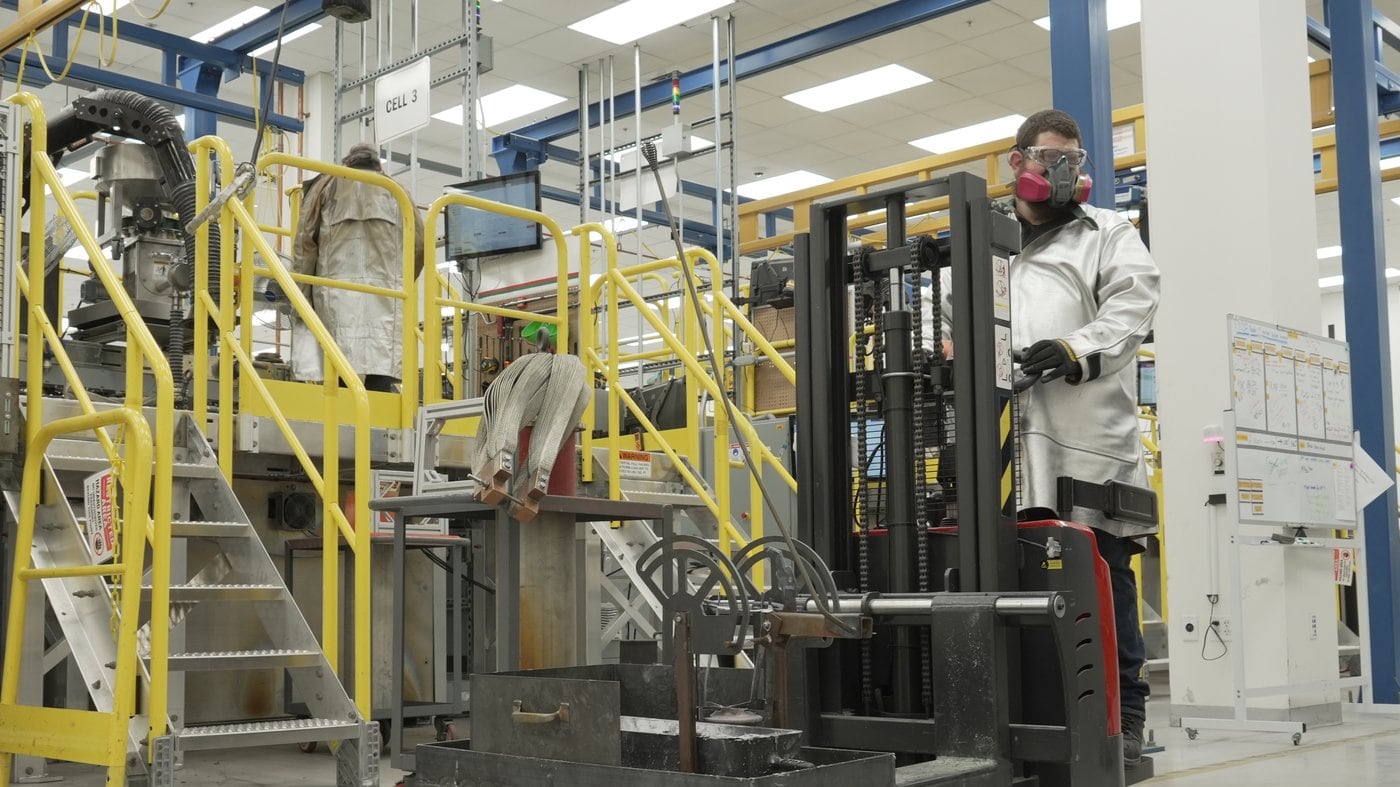
A worker drives a forklift at the Phoenix Tailings refinery Wednesday, July 22, 2026, in Exeter, N.H. (AP Photo/Rodrique Ngowi)

EXETER, N.H. -- Tucked inside a New Hampshire office park, a small refinery zaps mining waste with electricity to tease out critical minerals needed for key U.S. weapons systems, including missiles used in the Iran war.

It can play a part in helping America break the chokehold China has on processing critical minerals, but it will take up to a year and a half to build a new factory as the Trump administration pushes to expand domestic production. The company, Phoenix Tailings, recently got a $500 million loan from the Pentagon to ramp up its work, after starting out eight years ago as a backyard lab seeking a cleaner metal-refining method. It’s just the latest critical minerals company the government has backed.

The task that workers carry out in heat-resistant suits and sealed face masks has become more urgent as the Iran conflict draws down key munitions such as Tomahawk cruise missiles and THAAD interceptors. While the White House is demanding military contractors speed up production, it’s also imposing stricter rules banning them from sourcing critical minerals from China.

“It will be a tall order and a challenge to replenish these stocks and scale up in the timeframe needed to meet defense demand and regulations,” said Anthony Balladon, chief commercial officer and a co-founder of Phoenix Tailings. He said the company is working hard to boost capacity.

Although the U.S. is quickening its pace to build domestic supplies of critical minerals free of control from its most formidable rival, it will likely take years for companies across the industry to build new mines and boost production of the high-powered magnets essential in many high-tech applications. Extracting some of the hard-to-pronounce elements from existing mine waste can help satisfy the growing demand in the meantime, but it will likely take several companies to do that.

Critical minerals industry has big plans, but it will take time to ramp up

Phoenix Tailings taps waste from traditional mining as well as recycled magnets and disk drives as raw materials, working to counter China in processing where it has the strongest hold on the supply chain.

The company based in the Boston-area city of Woburn, Massachusetts, plans to build a bigger facility to extract and produce critical metals needed in not only defense but also the aerospace and automotive industries.

“We call it the freedom facility because, ultimately, the purpose of this is to ensure that the entire Western Hemisphere, the United States and its allies are free of Chinese influence within the rare-earth space,” Balladon said.

On a recent afternoon, two technicians in heat-resistant hazmat suits were operating an apparatus of cylinders, tubes, funnels and control panels set up on a platform with bright yellow railings. A chemical process involving electricity removes oxygen and turns the material into a grayish metal that can be used to make the extremely strong permanent magnets used in fighter jets, missiles, radar systems and drones.

The metals that Phoenix Tailings refines and other critical minerals play “an outsized role” in defense systems, Balladon said. A $150 million weapons system won’t work if it’s missing critical minerals that may be worth only $20,000 to $30,000, he said.

The defence sector is particularly reliant on the metal samarium and needs 50 to 100 tons each year, but U.S. capacity is very limited, he said.

Phoenix Tailings is among the few companies capable of producing the final metal, according to Balladon, but its capacity is only about 200 kilograms (440 pounds) a year. He said the company will scale up to about 5 tons in the next three months but that it will be next year or 2028 before it reaches its goal of 120-ton capacity.

Another U.S. magnet maker looks to France for raw materials

Arnold Magnetic Technologies for years relied on China for samarium to produce the extremely strong, stable-in-high-temperatures magnet that goes into precision-guided missiles such as Tomahawks.

That doesn’t work anymore. For Arnold, the solution to getting the critical minerals it needs has come from a relic of Europe’s past rare-earth industry -- abandoned mining dirt in the French city of La Rochelle.

Solvay, a Belgium-headquartered chemical company, stopped separating and processing rare earths from the mined dirt in the 2000s. That was when China was building up most of the world’s processing capacity with a determination to dominate the industry.

China weaponized that near-monopoly last year by choking off its flow of processed critical materials and forcing the U.S. government to back off during a trade war. Solvay then restarted work and has added other rare earths this year, including samarium.

“This ramp‑up is driven by several factors: rapidly growing demand for permanent magnets, increased geopolitical focus on supply chain security, and strong customer demand in Europe and the United States for more diversified, resilient and traceable sources of supply,” a Solvay spokesperson said.

For Arnold Magnetic Technologies, paying more to get its supply from Solvay instead of China has not been a deal-breaker, because the samarium-cobalt magnets it makes account for only a small cost in a weapon system, said Matt Blake, Arnold’s CEO.

“They are not the absolute cost drivers,” he said.

Plus, the company says the surge in demand for magnets has worked in its favor.

Some concerns remain. The U.S. is dependent on imports of the critical mineral tungsten, with China controlling roughly 80% of the global mine supply and an even larger share of processing, according to Brodie Sutherland, CEO of Patriot Critical Minerals Corp.

Sutherland, whose company seeks to explore and mine tungsten in the U.S., is concerned that America will not be able to get by without China-sourced tungsten after a Pentagon-imposed deadline of Jan. 1, 2027.

Efforts to ramp up U.S. production will take years, he said, and in the meantime, the Pentagon and its defense contractors will need to rely on existing inventories, expanded recycling and limited non-China sources.

The Iran war and Trump’s China order create pressure and opportunity

The need to increase production has become more urgent as renewed fighting with Iran digs into the U.S. military’s already diminished stockpiles of advanced missile interceptors, including Patriots and THAADs, according to a recent analysis from the Center for Strategic and International Studies, a Washington think tank.

It also has raised concerns that the military would have diminished firepower in any potential future conflict with China. CSIS warned in May that it could take at least three years to replenish stockpiles of Tomahawks, Patriots and THAADs, or Terminal High Altitude Area Defense interceptors.

At the same time, U.S. President Donald Trump has announced stricter controls on defense contractors sourcing critical materials from China.

“It is the policy of the United States that not only the finished equipment deployed by our military, but also the critical materials and components necessary to manufacture, maintain, sustain, and repair that equipment, are sourced domestically or from allied nations,” the July 20 executive order says.

Lockheed Martin, which makes THAADs and many other weapons systems, said “we continuously assess the global rare earth supply chain to ensure access to critical materials that support our customers’ missions.” Several other major U.S. defense contractors, including Raytheon Technologies and Northrop Grumman, didn’t respond to requests for comment.

Balladon, of Phoenix Tailings, was confident in U.S. companies.

___

Funk reported from Omaha, Nebraska.

Didi Tang, Josh Funk And Rodrique Ngowi, The Associated Press