Monday, August 03, 2026


Myanmar's former leader Aung San Suu Kyi meets Red Cross official, president's office says

Myanmar's ousted leader Aung San Suu Kyi shakes hands with Arnaud de Baecque from the Red Cross in Naypyidaw, 3 August, 2026
Copyright AP Photo

By Gavin Blackburn
Published on

The military deposed Suu Kyi in February 2021, jailing the Nobel Peace Prize laureate and triggering an ongoing civil war that has killed more than 100,000 people on all sides.

Myanmar's detained former leader Aung San Suu Kyi met with the nation's Red Cross representative on Monday, the president's office said, the first publicised meeting between her and a foreign official since she was ousted in a 2021 military coup.

The military deposed Suu Kyi in February 2021, jailing the Nobel Peace Prize laureate and triggering an ongoing civil war that has killed more than 100,000 people on all sides.

The coup leader and former junta chief, Min Aung Hlaing, was installed as civilian president in April following highly restricted elections.

Later that month, Suu Kyi, now 81, was moved to house arrest after Min Aung Hlaing said he had commuted the rest of her sentence.

She was detained on a host of charges which rights groups say were concocted to sideline her and her popular National League for Democracy party.

The president's office said in a statement that Arnaud de Baecque, the Resident Representative of the International Committee of the Red Cross (ICRC) to Myanmar, met with Suu Kyi on Monday morning.

Myanmar’s President Min Aung Hlaing waves as he leaves after delivering speech at the Union Parliament in Naypyidaw, 31 July, 2026 AP Photo

In photos released by the president's office, Suu Kyi is seen shaking hands with a man who appears to be de Baecque.

Another image shows Suu Kyi cutting a birthday cake, and yet another shows the cake with text reading: "Happy Birthday Aunty Suu."

The images could not be immediately verified by the AFP news agency but AI tools found no instances of fabrication.

"We are happy to see her photo like this if it's really her meeting with the ICRC. We can know now that she's alive," a veteran politician of her party told AFP on condition of anonymity.

"However, Aunty should be released immediately as she's being detained unlawfully," the politician said.

Proof of life

Authorities have not disclosed the exact location of Suu Kyi's detention in the capital Naypyidaw, nor how many years of her sentence remain.

Her son, Kim Aris, a British national, has sought independently verified proof of his mother's life after she was transferred to house arrest.

He says he has not heard from his mother, who remains massively popular inside Myanmar.

Since the coup, Myanmar has been largely ostracised by the international community, and the 11-nation Association of Southeast Asian Nations (ASEAN) has excluded the country's leadership from high-level summits.

But neighbour Thailand has been leading an effort to bring the once pariah state back in the diplomatic fold, both bilaterally and through the regional bloc.
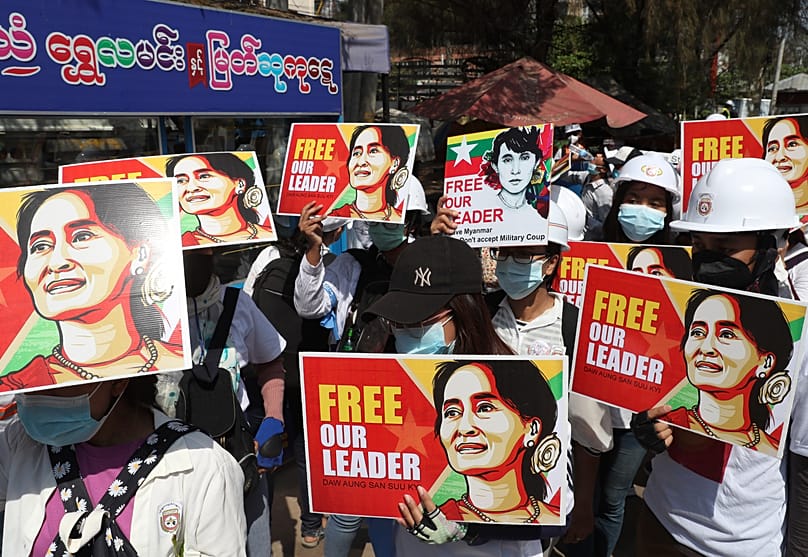
Anti-coup protesters hold images of deposed Myanmar leader Aung San Suu Kyi as they gather in Mandalay, 5 March, 2021
Anti-coup protesters hold images of deposed Myanmar leader Aung San Suu Kyi as they gather in Mandalay, 5 March, 2021 AP Photo

Since his change in position, Min Aung Hlaing has travelled to India, China and ASEAN member Laos, and he is scheduled to make an official visit to Thailand this week.

Despite the diplomatic outreach, the continued detention of Suu Kyi remains a major sticking point for some nations.

The ASEAN bloc has pressed for its special envoy to meet Suu Kyi, but so far Myanmar has refused.

Thai Foreign Minister Sihasak Phuangketkeow told reporters last month that Myanmar's Foreign Minister Tin Maung Swe had assured his regional counterparts during a trip to Thailand that Suu Kyi was "in good health."

"We have been told she has been taken care of well but it needs to be proved," Sihasak added.


Spain to see first total solar eclipse in more than a century

FILE - This image provided by NASA and captured by the Artemis II crew from lunar orbit, April 6, 2026, shows the Moon eclipsing the Sun.
Copyright AP Photo (NASA via AP, File)

By Una Hajdari with AP
Published on

Mainland Spain is about to get its first total solar eclipse in more than 100 years, with the path of totality also touching Iceland and Greenland on 12 August. Next year's show will last even longer.

For the first time in more than a century, a total solar eclipse is coming to mainland Spain, with an even longer encore next summer.

It is all the more extraordinary considering Spain's last full solar eclipse, not counting the Canary Islands, occurred two days before the Titanic sank in 1912.

Because that rare hybrid eclipse was a mix between a ring-of-fire and just a few seconds of totality for Spain, some consider 1905 the country's last pull-out-all-the-stops solar eclipse.

Add a crescendoing meteor shower and a six-planet parade on the same day, and the heavens will be overflowing with spectacle.

On 12 August, the sky over the Iberian Peninsula will fall dark just as the sun starts to set, with slivers of Greenland and Iceland getting the same treatment as the sun, moon and Earth line up perfectly.

Getting there takes some time, too. The umbra — the moon's shadow that blocks out the sun — will race across 8,260 kilometres in about an hour and a half, most of it over empty Atlantic waters.

The show starts near the North Pole before working its way south, with totality lasting up to two minutes and 18 seconds. Maximum totality will occur off Iceland's west coast.

The spectacle will end in the Mediterranean.

Eclipse chasers gear up for the spectacle

Hundreds of millions more on the sidelines are in for a treat as well.

A partial eclipse will be visible as far away as Alaska and Siberia, taking in Canada, the northern US and much of Europe and West Africa.

The closer to the totality's path, the more of the sun will vanish behind the moon, including 94% coverage in Dublin and 83% in Oslo. Montreal will see an 18% bite taken out of the sun, tapering to 9% in New York and 2% in Norfolk, Virginia.

Special eclipse glasses are essential, even if only a sliver of sun is showing.

Adding to the cosmic wonder, the day begins with six neighbouring planets forming an arc in the sky before dawn and ends with the Perseid meteor shower peaking after nightfall under a new moon.

Who is hosting watch parties and science experiments

The European Space Agency (ESA) will host a live webcast from Spain's Astrophysical Observatory of Javalambre and a public celebration in León. NASA will provide its own coverage, as will the Italy-based Virtual Telescope Project and others.

"For me, it's not just a scientific moment. It's not just an incredible alignment of heavenly bodies. It's also a very human moment," said ESA's director of science, Carole Mundell. "It's a real human connection between us, with our feet planted on the Earth and the cosmos."

US college research teams are also pitching in, launching more than 60 high-altitude balloons from Spain and Iceland to study Earth's atmosphere and other changes during the eclipse, when the temperature momentarily drops.

That is 10 times as many balloons as were launched during the 2024 total solar eclipse that captivated North America.

"A couple of minutes isn't a lot of time, but it's still plenty to affect the atmosphere and to make that cold, dark shadow of the moon on Earth," said Angela Des Jardins of Montana State University, who leads the NASA-funded balloon project.

In this image provided by NASA the Artemis II crew pose with eclipse viewers during a lunar flyby on April 6, 2026. (NASA via AP, File) AP Photo

More celestial shows to come

An exceptionally long total solar eclipse is in store for 2027, offering nearly three times more observation time.

The southern tip of Spain will take centre stage on 2 August 2027, with up to six minutes and 23 seconds of totality extending into Morocco, Algeria, Libya, Egypt, Saudi Arabia, Yemen and Somalia.

Then on 26 January 2028, a ring-of-fire eclipse will round out Spain's celestial trifecta — "a lucky coincidence," according to ESA's Mundell.

The Royal Observatory of Belgium's Andrei Zhukov cannot get enough of them, regardless of their length or origin.

His Proba-3 science mission has created more than 60 simulated total solar eclipses over the past two years, with the longest lasting five hours and 38 minutes, produced by two satellites flying in formation.

"We're looking forward to more eclipses," Zhukov said, "natural or artificial."


Cyberattack hits Liechtenstein's anti-money laundering data register, Vaduz says

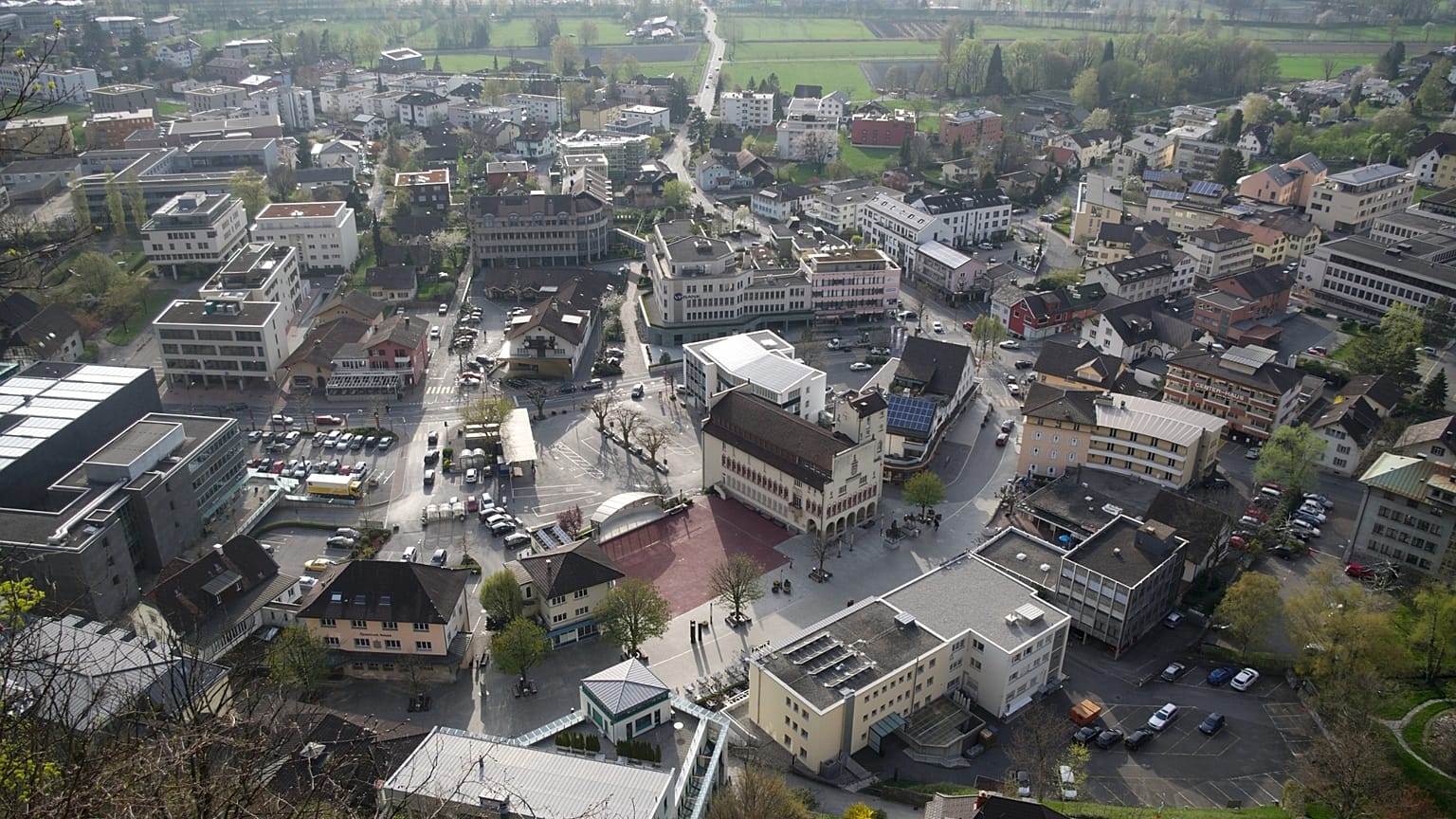
An aerial view of the centre of Vaduz, 31 March, 2014
Copyright CC BY-SA 3.0/Clément Bucco-Lechat

By Gavin Blackburn
Published on

A team appointed to investigate the hack has already established that the hackers had managed to steal data "from approximately 31,000 legal entities," a government statement said.

A cyberattack tapped the data of some 31,000 people in Liechtenstein's register of people behind companies and foundations in the wealthy principality, the government said.

The "register of economic beneficiaries" was accessed at night from Wednesday into Thursday last week, the government said.

"According to preliminary findings, an unknown perpetrator gained unauthorised digital access to the VwbP (Federal Office for the Protection of the Constitution) during the night of July 30, 2026," a government statement said.

It said that the breach was noticed on Thursday, that measures were taken to secure data and the system taken offline.

The government said there were no indications that any data was altered or deleted.

The list of people behind companies, foundations and trusteeships is part of efforts to combat money laundering and terror financing.

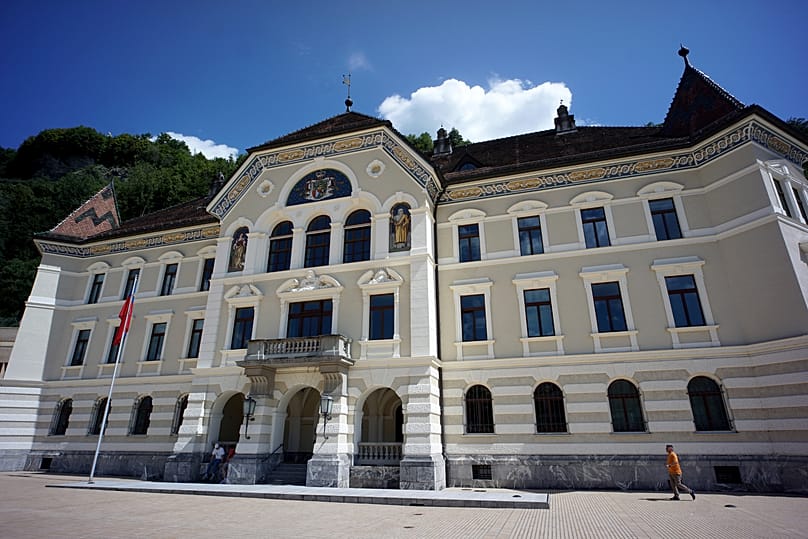
Exterior view of the Liechtenstein Government Building in Vaduz, 18 August, 2023 AP Photo

Liechtenstein is a nation of 40,000 people between Switzerland and Austria, and the financial industry is central to its economy.

The hackers targeted the Register of Beneficial Owners of Legal Entities, set up in 2021 to help "prevent money laundering and terrorist financing," said the statement.

A team appointed to investigate the hack has already established that the hackers had managed to steal data "from approximately 31,000 legal entities," the statement added.

A crisis team led by Prime Minister Brigitte Haas and Justice Minister Emanuel Schadler was set up on Saturday evening to investigate the breach and inform those affected as soon as possible.

Cuba state energy firm reports new nationwide blackout as US embargo continues

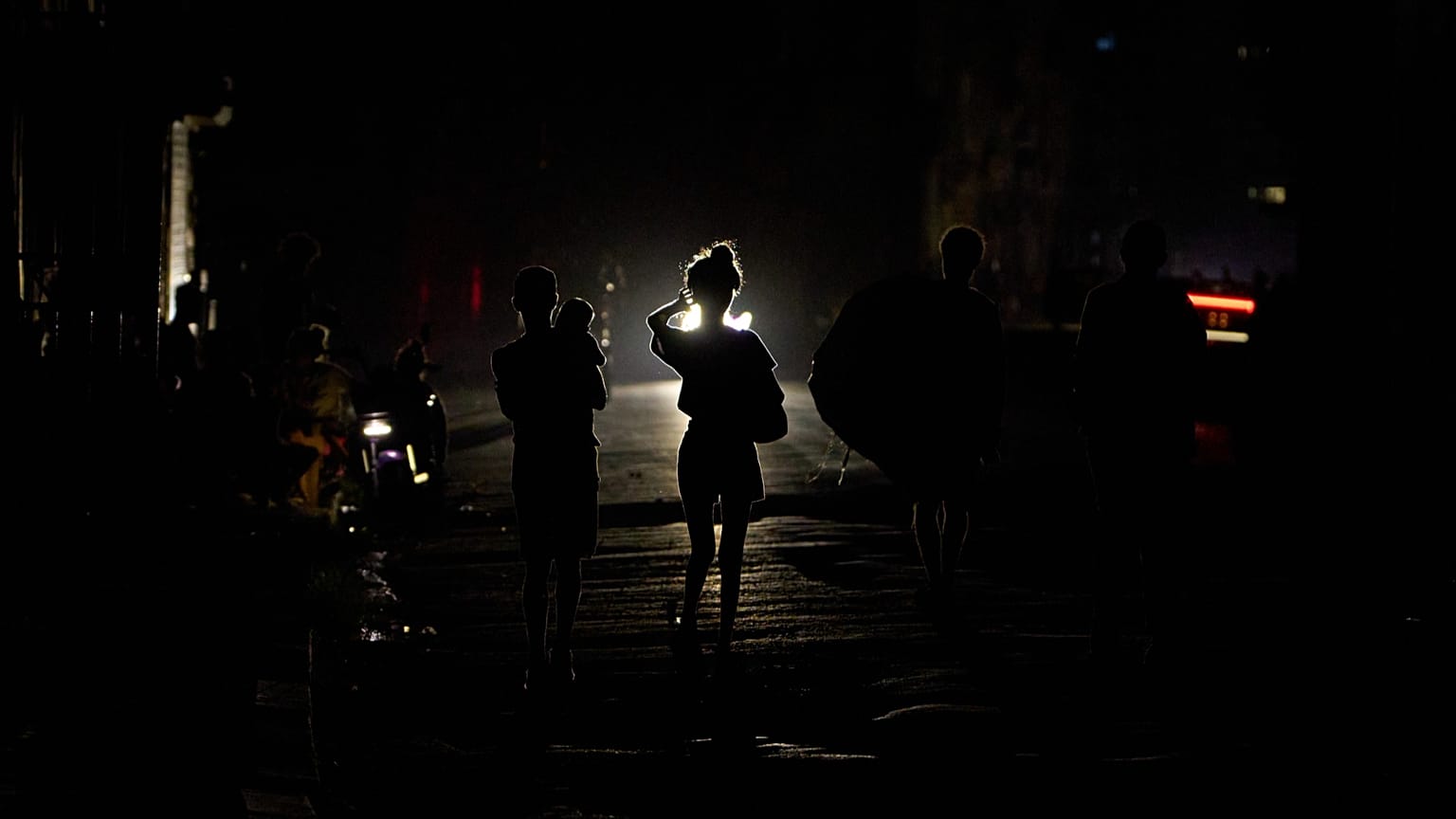
People walk along a street during a blackout in Havana, 6 July, 2026
Copyright AP Photo

By Gavin Blackburn
Published on

The power cuts have made normal life almost impossible, with each outage also meaning that water supplies trickle away and ceiling fans slow to a halt.

Cuba's power grid failed on Sunday, causing another nationwide blackout, a state energy company said in a social media post.

As the lights suddenly turned off across the capital Havana, residents who were sat outside to get some respite from the summer heat audibly groaned en masse.

Cuba has been suffering rolling power cuts due to ageing equipment and a US energy embargo that halted regular deliveries of fuel for power stations.

State-run UNE said there was a "total disconnection" of the national electricity system, plunging the country, including the capital, into abrupt darkness.

This is just the latest in a series of total collapses of the electricity grid.

Just 24 hours ago, the whole west of the country went dark.

The power cuts have made normal life almost impossible, with each outage also meaning that water supplies trickle away and ceiling fans slow to a halt.

Men sit on a car during a blackout in Havana, 14 July, 2026 AP Photo

It is a growing strain for a society used to adversity but now stuck in a months-long crisis that has no obvious end in sight.

Residents in the worst-affected areas have vented their frustrations by setting piles on trash on fire or banging on pots and pans.

The Ministry of Energy said that protocols to reactivate the grid were underway.

Washington has authorised the arrival of only one Russian tanker, carrying 100,000 tons of crude, which came in March. Those reserves have since been exhausted.

In addition to enacting an oil blockade, the Trump administration has ramped up sanctions against Cuban state-owned businesses, prompting many foreign firms to suspend operations in the country.

The United States has also indicted former president Raúl Castro, brother of revolutionary leader Fidel Castro, over the downing of two civilian planes three decades ago.

Talks between Havana and Washington appear to have made little in the way of progress.

Havana has enacted a series of free-market reforms to give the economy a boost.


Europe's worst wildfire season in years flags a global El Nino already moving commodity markets

Europe's worst wildfire season in years flags a global El Nino already moving commodity markets
The World Meteorological Organization's official August-October outlook confirms a strengthening El Nino and a positive Indian Ocean Dipole - a combination that has already pushed food and power prices around the world before the season it describes has even started. / bne IntelliNews
By bne IntelliNews August 2, 2026

Several European countries are having their worst wildfire year in more than a decade and worst than last year’s record wildfires that burnt over one million hectares, according to data from the EU's Global Wildfire Information System published this week.

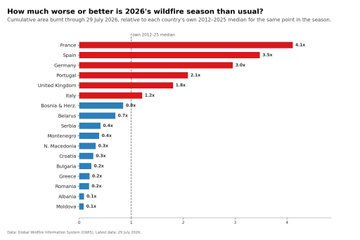
France's cumulative burnt area through July 29 is running 4.1 times its 2012-2025 median for the same point in the season, Spain 3.5 times, Germany 3 times, Portugal 2.3 times and the UK 1.8 times. The Balkans, by contrast, have had a quieter year, with Bosnia and Herzegovina, Serbia, Montenegro and North Macedonia all below their historical median.

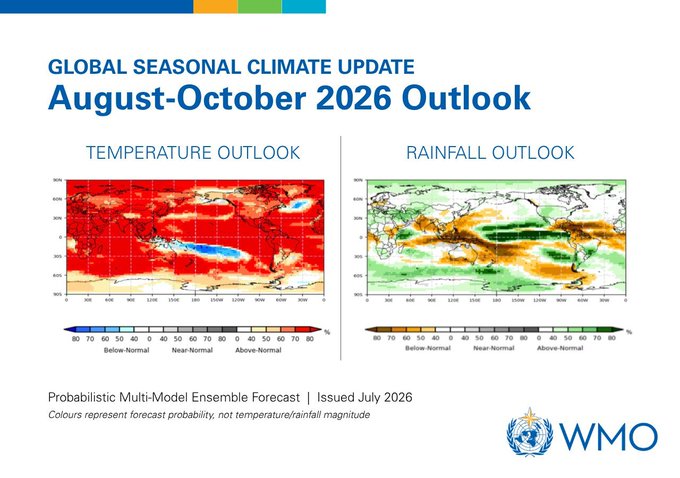
The World Meteorological Organization's Global Seasonal Climate Update for August-October 2026, issued in July, forecasts above-normal temperatures across most of the world alongside a strengthening super El Niño and a developing positive Indian Ocean Dipole - a combination that tends to amplify, rather than offset, extreme rainfall swings in both directions: worse flooding in some regions, worse drought in others.

And it’s going to get worse. Europe's wildfire season is one of the first visible symptoms of a pattern the WMO is only now confirming officially for the months ahead\ through to October.

Markets have not waited for the official confirmation. IntelliNews has tracked a string of El Nino-linked commodity and inflation stories through the second and third quarters of 2026, from Latin American central banks to Southeast Asian crop belts - evidence that the economic transmission channel identified by the WMO's forecast is already live, not merely forecast.

A hotter, more extreme world for three months

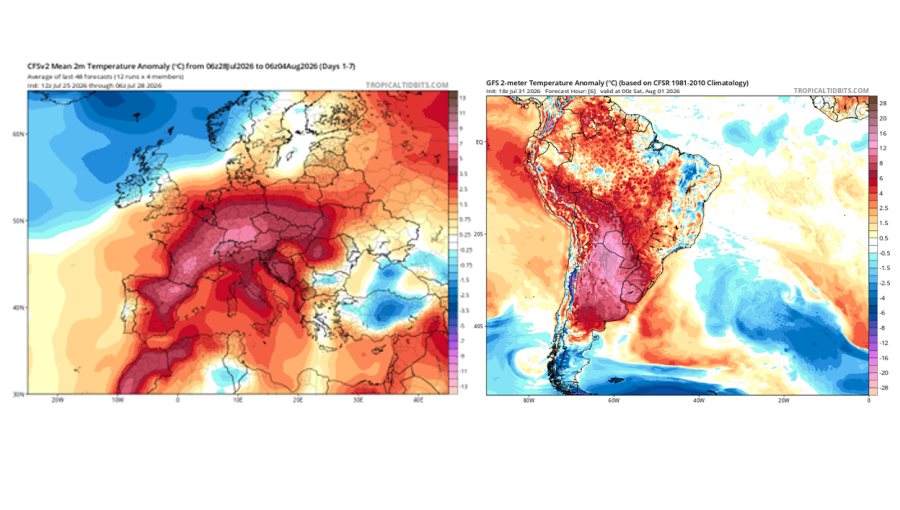
The WMO's probabilistic model, built from a multi-model ensemble, shows above-normal temperature probability across almost the entire globe for August-October, with the strongest confidence in the tropics and mid-latitudes. Changes in rainfall patterns is going to make the biggest difference. The same forecast shows a mixed but pronounced pattern of above-normal rainfall probability across parts of South Asia and the tropical Pacific, and below-normal probability across swathes of southern Africa, parts of South America and the Mediterranean basin – a divergence that turns a single global weather pattern into a series of very different regional economic stories.

Already pricing in

Swiss bank UBS warned in mid-July that a strong El Nino threatens to reignite inflation and delay interest rate cuts across Latin America, singling out Colombia as most exposed given its high inflation and weak fiscal position, with Brazil and Peru also flagged and Venezuela's hydropower-dependent grid seen as vulnerable to drought. The US National Oceanic and Atmospheric Administration puts the probability of the current episode being powerful at 63%, with effects expected to persist into early 2027.

The pattern has already hit agricultural commodities further east. In June that Malaysia issued a sovereign warning over crop damage risk to its palm oil plantations even as near-term prices fell on unrelated demand weakness - agricultural economists note the biological lag between an El Nino heatwave and reduced fresh fruit bunch extraction typically runs several months, meaning any supply hit shows up closer to early 2027. Rice told a faster-moving version of the same story: Vietnam's rice export price for 5% broken rice rose to $412 a tonne in May on El Nino-linked drought fears across India, Thailand, Indonesia and Australia, with the UN's FAO Rice Price Index up 2.7% on the month.

Burning in Europe

Europe's wildfire numbers are the clearest evidence yet that this year's pattern is not merely a forecasting exercise. The divergence within Europe itself - a very bad year in France, Spain, Germany, Portugal and the UK against a calmer one in the Balkans - illustrates the WMO's own point about the Mediterranean basin sitting in the below-normal rainfall probability band, a dry bias that raises fire risk independent of any single heatwave.

WMO Global Seasonal Climate Update: temperature and rainfall outlook for August-October 2026. Source: World Meteorological Organization.

Cumulative burnt area, 2026 season to July 29, relative to each country's 2012-2025 median. Source: Global Wildfire Information System.

None of this guarantees a repeat performance for the rest of the WMO's three-month window - seasonal probabilistic forecasts describe likelihoods, not certainties, and the report itself stresses that its colours represent forecast probability rather than magnitude. But taken together with the commodity moves already logged this quarter, the wildfire data is the strongest sign yet that 2026's El Nino is behaving as advertised rather than fading, as some earlier and weaker episodes have done.


Ukraine less births than Kyrgyzstan this year as Central Europe's demographic crisis deepens

Ukraine less births than Kyrgyzstan this year as Central Europe's demographic crisis deepens
War, emigration and a shrinking birth rate are converging across Central and Eastern Europe, with Ukraine's collapse now the most extreme case of a region-wide trend. / bne IntelliNewsFacebook
By bne IntelliNews August 2, 2026

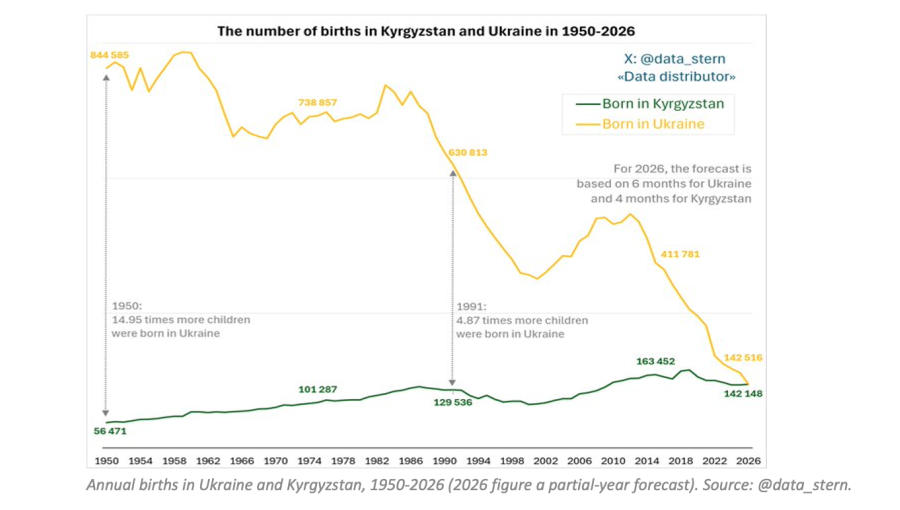
Ukraine is on track to record fewer births this year than Kyrgyzstan for the first time - a reversal from the end of the Soviet Union, when Ukraine's newborns outnumbered Kyrgyzstan's five to one, French demographic commentator Clement Molin in a post on social media on August 1.

Ukraine’s demographic collapse has been accelerating and it now has the worst demographics in the world with three deaths to every one live birth. But the whole world is suffering from a widening Demographic Crisis that is affecting everyone.

Ukraine's wartime exodus of millions of young women, combined with a collapsing birth rate and elevated mortality, has left the country facing what demographers call one of the most severe peacetime-equivalent population declines anywhere in the world. But Molin's reports that Ukraine is the extreme end of Eastern EU mounting demographic strain as populations shrink and age across the region, according to  Eurostat.

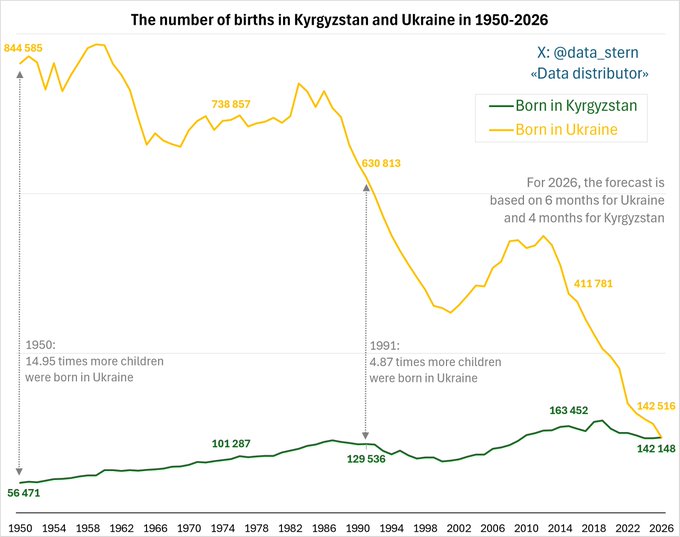
Annual births in Ukraine and Kyrgyzstan, 1950-2026 (2026 figure a partial-year forecast). Source: @data_stern.

A chart underlying the comparison, compiled by @data_stern, puts Ukraine's 2026 forecast at 142,516 births against Kyrgyzstan's 142,148 - a gap of under 400, effectively a statistical dead heat rather than a clean overtake, though separate reports already describe Kyrgyzstan as set to overtake Ukraine outright. Either way, Ukraine had almost 15 times as many births as Kyrgyzstan in 1950 and still nearly five times as many as recently as 1991.

The Baltics are suffering similar problems. There the exodus of young people has not been caused by the war, but economic migration, but while less extreme than in Ukraine, large number of young people have left. Estonia has seen just 4,000 births in the country in the first half of 2026; while that specific figure could not be independently confirmed, it is consistent with the trend Statistics Estonia has already logged - 9,092 births for the whole of 2025, a record low since records began in 1919 and 5.7% down on 2024, with the total fertility rate falling to 1.16. The picture in Lithuania, Latvia and Poland is the same, part of a broader emigration-plus-low-fertility squeeze across the region that is part of a baby bust at a global level.

And low birth rates are changing the ethnic balance in some countries. In North Macedonia young people have also emigrated in large numbers, leaving the ethnic Albanian minority - about 30% of the population, concentrated in the northwest - now accounting for nearly 40% of births, a shift that is playing out in various forms in other Balkan states too.

The one piece of good news is that Poland is slowly taking over from Germany as the destination of choice in Europe thanks to Poland's rapid economic rise. Poland is closer to home and now offers better economic prospects since it became a $1 trillion economy and increasingly is the growth engine of Europe. That means it will potentially retain more of the region's shrinking pool of young workers within Central and Eastern Europe rather than losing them further west. There has also been a slight rebound in births across the region in the first half of 2026, although it is too early to say if this is a new trend or an aberration.


Nigeria's cities now hold half the population, up from one in ten in 1950

Nigeria's cities now hold half the population, up from one in ten in 1950
New European Commission data underscores Nigeria's place at the sharp end of the world's fastest-urbanising region, with towns and suburbs - not the countryside - losing the most ground. / bne IntelliNewsFacebook
By bne IntelliNews August 2, 2026

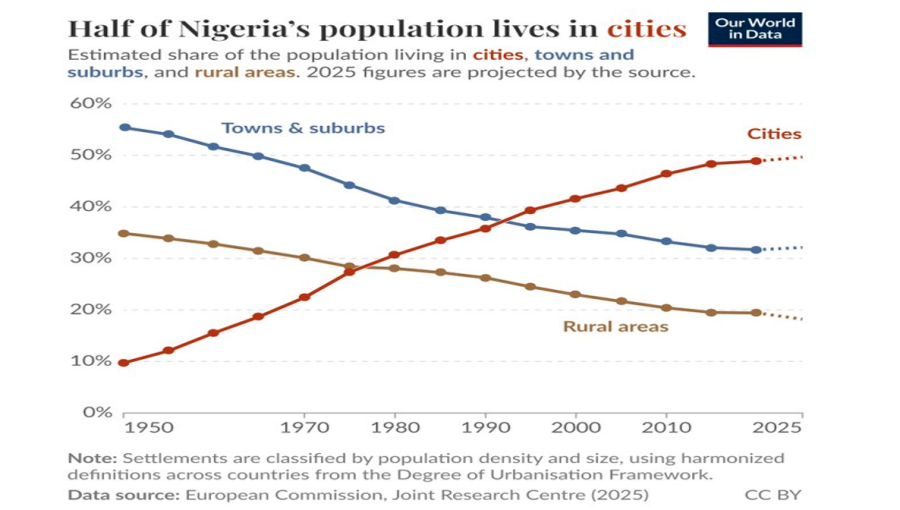
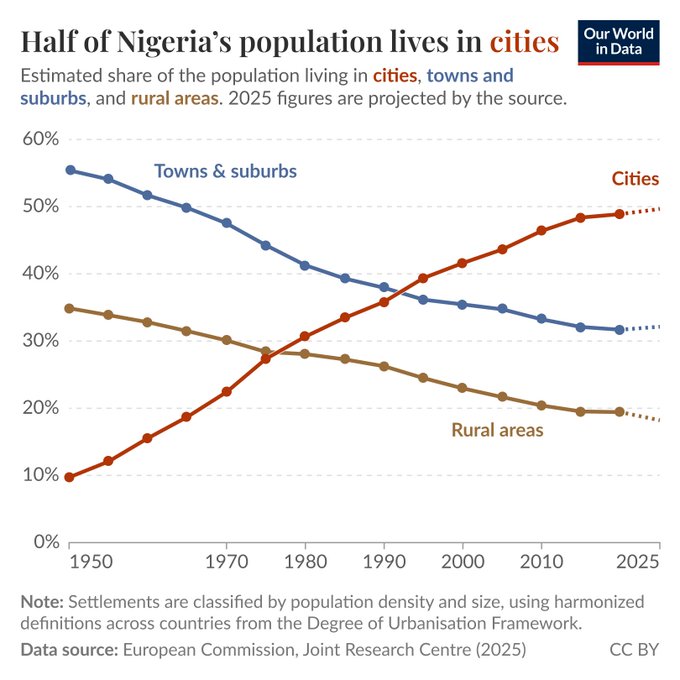
Nigeria's urban population has climbed from around one in ten people in 1950 to nearly one in two today, according to harmonised settlement data published by the European Commission's Joint Research Centre and highlighted this week by Our World in Data.

Sub-Saharan Africa is widely regarded as the world's fastest-urbanising region, with the continent's urbanisation rate running at roughly 3.5% a year, and Nigeria - the region's most populous country - shows the scale of that shift most clearly.

Estimated share of Nigeria's population living in cities, towns and suburbs, and rural areas, 1950-2025 (2025 figures projected). Source: Our World in Data / European Commission Joint Research Centre.

The share of Nigerians living in towns and suburbs - the country's largest settlement category as recently as 1950 - fell by roughly as much as the rural share over the same period. Nigeria's population became more concentrated in cities both through migration into established centres and through smaller towns and suburbs growing dense enough to be reclassified as cities in their own right, Our World in Data says.

Lagos remains the clearest example of the growth: population-tracking estimates put Nigeria's commercial capital at somewhere between 15mn and 17mn people depending on whether city-proper or metro-area boundaries are used, with the wider metro area adding roughly 1.1mn people a year, an annual growth rate of about 3.3-3.75%.

Nigeria's experience also breaks from the historical pattern in which rapid urbanisation tracked industrialisation, as it did in Europe, North America and, more recently, East Asia. Across much of today's sub-Saharan Africa, Our World in Data reports, city growth is happening without a comparable manufacturing base to absorb the new urban workforce - a structural gap that shapes the informal-economy and infrastructure pressures already visible in Lagos and other fast-growing Nigerian cities.