Thursday, July 02, 2026

‘Beyond The Limit’: One Million Satellites And Mirrors In Space Pose Grave Threat To The Night Sky


This image shows satellites crossing the night sky above the northern Atacama Desert in Chile, over a period of just one hour. It is a stack of a time-lapse video taken on 15 October 2025 about two hours after sunset. A few streaks are caused by planes, and can be easily identified by their blinking-coloured lights, but most trails are due to satellites. In the foreground we see the dome of ESO’s Extremely Large Telescope (ELT), the world’s largest optical/infrared telescope, currently under construction atop Cerro Armazones. Behind it we see the lasers of ESO’s Very Large Telescope (VLT) at Paranal Observatory, 22 km away from the ELT. CREDIT: F. Kamphues, ESO/M. Kornmesser

July 1, 2026 
By Eurasia Review


A new European Southern Observatory (ESO) study has found that current proposals to launch over 1.7 million satellites into orbit, including extremely bright ones, would have “devastating consequences for astronomy.” According to the study, no more than 100 000 faint satellites, below naked eye visibility, should orbit Earth, to safeguard our ability to observe the night sky with modern telescopes. The study is the first to compute the extent to which large and bright satellite constellations — which have also raised concerns about their impacts on health and the environment — would affect astronomical observations by making the night sky brighter.

Since 2019, the number of satellites orbiting Earth has increased rapidly, to over 14 000 today [1] — dominated by SpaceX’s Starlink telecommunications satellites. Satellite proposals have also escalated, both in number and in potential impact. “Until now we have managed, but it’s getting worse,” stresses Olivier Hainaut, who has been involved in developing recommendations to mitigate the impact of satellite constellations on astronomy. While companies like SpaceX have taken measures to make their satellites less bright, current satellite proposals are going “beyond the limit” of what astronomy can withstand, he says. Hainaut, an astronomer at ESO for over 30 years, is the author of the peer-reviewed study on the impacts of satellite constellations accepted for publication in Astronomy & Astrophysics.

SpaceX plans to send one million more satellites into orbit, for space-based data centres, which would significantly alter the appearance of the sky. The new study shows that, for a large fraction of each night, hundreds of satellites would be visible and, at certain times, up to several thousand, similar to the number of stars seen with the naked eye in good conditions. Other planned satellite constellations such as E-Space’s Cinnamon and China’s CTC-1 and 2 would add hundreds of thousands more satellites into orbit, compounding the problem.

Reflect Orbital, a US start-up, aims to launch a constellation of very large mirror-like satellites to provide sunlight at night, with reflected beams that span at least five kilometres on Earth’s surface. They intend to start with a prototype satellite in orbit this year and plan to increase their satellite population to 50 000 by 2035. These satellites would be the brightest ever in orbit, with damaging consequences for dark skies on Earth. Hainaut’s calculations show that the full constellation would fill the night sky with hundreds of very brightly visible satellites. Seen from within a reflected beam, the satellite delivering sunlight would appear four times brighter than the full Moon. Even if no satellite points its beam directly at an observer, each would be as bright as the planet Venus, the ‘morning star’. From a light-polluted city, like Munich, Germany, these hundreds of satellites would be the only ‘stars’ visible in the night sky.


These proposals, combined with others considered in the study, would dramatically brighten the night sky, hindering humankind’s ability to observe faint cosmic targets, including far-away galaxies, some Earth-like planets around other stars, and even asteroids potentially dangerous to Earth.
Bright trails and brighter skies

Hainaut explains that “satellites, illuminated by the Sun, are much brighter than distant galaxies. When a satellite crosses what we observe, it makes a bright streak on our image, zapping whatever is behind it.”

To compute the impact of this and other effects of satellite constellations on astronomical observations, Hainaut simulated the positions, motion and brightness of all present and planned satellite constellations.

For the SpaceX satellite mega-constellation, he found that dozens of trails would appear in each image taken two hours into the night with ESO’s Very Large Telescope (VLT) at Paranal Observatory in Chile, representing field-of-view losses of up to 28% [2]. This assumes that the satellites would be faint enough not to be seen with the naked eye in good conditions. If they are just a little brighter, some instruments would be even more affected: for instance, a camera like that of the US National Science Foundation’s Vera C. Rubin Observatory could have most of its images rendered unusable for several hours each night [3].


Hainaut’s simulations assumed that no Reflect Orbital satellite would point its beam directly at or near an observatory. Even so, the trail from a single mirror-satellite could spoil an observation with a camera like that of Rubin Observatory. With the full fleet of Reflect Orbital satellites in orbit, every image from such a camera would be lost when the satellites are illuminated by the Sun.

However, it’s not just the criss-crossing paths of satellites that limit what we can observe: their light can pollute the entire sky. Satellites too faint to be seen directly produce a veil of ‘diffuse’ light, while light from brighter satellites is ‘scattered’ in all directions as it passes through the atmosphere. Both contributions increase the overall brightness of the night sky. This study is the first to consider the impacts on astronomy due to the contribution of satellite constellations to background sky brightness, revealing the full extent of satellite light pollution.

Very bright constellations like Reflect Orbital would have a particularly significant effect on background sky brightness. With the full 50 000 Reflect Orbital satellites, the sky would be up to three to four times brighter overall.

Limiting satellites to safeguard the night sky

Hainaut concludes that the proposed 1.7 million new satellites would have drastic consequences for ground-based astronomy. These impacts can only be avoided by limiting the total, of both existing and future satellites, to 100 000 satellites faint enough not to be seen with the naked eye from a dark site. “This is not a hard number, like 99 999 is good and 100 001 is bad: clearly I’d prefer 50 000,” says Hainaut. “But 100 000 causes losses at about the level of other technical losses, such as equipment failure.” However, he adds, the satellites must be fainter than visual magnitude 7 [4]; should some of them be too bright — above the minimum threshold for naked-eye visibility — the total number would need to be much lower.


SpaceX and Reflect Orbital, responsible for the most extreme new proposals, have each filed with the US Federal Communications Commission (FCC) for permission to launch. This new study served as the basis for a response to the FCC on these proposals by ESO, in collaboration with the UK’s Royal Astronomical Society and the International Astronomical Union.

“The FCC received over 1800 comments regarding Reflect Orbital and nearly 1500 comments on the application by SpaceX,” explains ESO Institutional Affairs Officer Betty Kioko, responsible for coordinating ESO’s response to the proposals. “The ball is now in the FCC’s court, and we wait to see the determinations they make on both filings. For optical astronomy, this is an existential threat, and we hope that the regulators will share that view.”

“Astronomy generates huge value for humankind, including scientific, technical, economical, and educational, and helps us understand our place in the Universe,” says ESO Director General Xavier Barcons. “The large number of planned satellites in low-Earth orbit challenges that capacity, underscoring the need to limit future satellite launches and for astronomers, engineers, satellite operators and other stakeholders to work together to adopt strict mitigation measures.”

“Sending thousands of satellites has implications: economical, ecological, and astronomical,” adds Hainaut. Light pollution from very bright satellite constellations can impact the health and functioning of life on Earth, by disrupting biological clocks and ecosystems. Large constellations also have direct impacts on air quality from the numerous launches required to send and maintain thousands of satellites, as well as from the atmospheric pollution caused as they burn up on re-entry at the end of life. “My job is astronomy, so I quantify the effects on astronomy,” explains Hainaut, “I hope others will evaluate the other impacts in their field of expertise.”

Hainaut concludes: “Low Earth orbit is a celestial seashore that provides immense value to modern life, from global connectivity to our clear access to the Universe. However, we must manage the footprint of mega-constellations — from the light pollution affecting astronomy to the atmospheric effects of satellite re-entry — to ensure this resource remains pristine and accessible for future generations.”

NotesThe number of satellites currently in orbit rises to 32 000 if dead satellites and debris are included.
The instrument considered for the simulation is FORS2, the VLT workhorse, which is representative of traditional cameras on large telescopes.
In cameras like the one on Rubin Observatory, with high-density, complex electronics, a satellite trail bright enough to saturate the detector causes not only a broad streak on an astronomical image, but also a series of ghost trails that multiply the losses and can potentially contaminate an entire image.
A satellite below visual magnitude 7 ensures it does not saturate the detector of cameras like that of the Rubin Observatory. It also means, coincidentally, that satellites would be too faint to be viewed to the naked eye, even under pristine dark skies.


 

Did The Simpsons really predict the final of the 2026 World Cup?

Did The Simpsons really predict the final of the 2026 World Cup?
Copyright Fox - Disney

By David Mouriquand
Published on

Some people believe that they know who will face off in the final of this year’s FIFA World Cup – all because of an episode of The Simpsons from 1997. The claim is going viral on social media, and many are affirming that this is the US animated sitcom predicting the future once more...

The belief that The Simpsons can predict the future has become something of a pop culture phenomenon over the years.

Frequently cited successful predictions include foretelling the Donald Trump presidency, the censorship of Michaelangelo’s David, Disney’s acquisition of 21st Century Fox, and the 2015 FIFA corruption scandal.

There were even viral posts this year suggesting that the show had warned viewers about Epstein island as far back as 2000.

Now, a viral claim circulating on social media alleges that The Simpsons predicted the final of the 2026 FIFA World Cup in a 1997 episode titled “The Cartridge Family”.

In the Season 9 episode, a TV ad promotes a football – sorry, “soccer” - match to determine "which nation is the greatest on Earth". The game sees Mexico facing off against Portugal.

Many have run with this as evidence that the show’s hot streak of premonitions about actual real-life events continues.

In reality, the clip is real, but the claim is fake.

The segment in the 1997 episode does not mention the year 2026, nor does it make reference to the FIFA World Cup.

Also, the identical claim citing “The Cartridge Family” previously circulated during both the 2018 and 2022 World Cups. It seems to have gained more momentum this year simply because Mexico is one of the host nations - as well as the fact current fixtures could see both teams face off in the final.

There is also no reference to Cristiano Ronaldo in the episode, as many as asserting online... And for good reason, since Ronaldo was 12 years old when the episode aired.

In case you were wondering, The Simpsons' Mexico vs Portugal match is so tedious that the Springfield crowd riots and no winner is shown.

The 2026 FIFA World Cup final will be played at MetLife Stadium at the Meadowlands Sports Complex in New Jersey on Sunday 19 July. Expect mayhem online if it does turn out to be Mexico vs Portugal.


Iran players depart unwelcoming World Cup, jeered by US official but saluted by fans


In a World Cup co-hosted by a country waging war on their homeland, the odds were always stacked against Iran’s Team Melli, who narrowly missed out on the knockout stage despite being undefeated. Their players departed North America on Tuesday, mocked by a senior official in the Trump administration but saluted by fans at their replacement base in Mexico’s Tijuana.


Issued on: 01/07/2026 

FRANCE24
By: Benjamin DODMAN

Fans salute Iran's Team Melli as they leave their hotel in Tijuana, on June 30, 2026. © Gregory Bull, AP


The Iranian national team left their World Cup base in Mexico on Tuesday following a troubled tournament marked by repeated spats with US officials, flashes of athletic brilliance and, ultimately, disappointment over barely missing out on a historic place in the knockout stage.

The players return to a homeland still in the grips of an unresolved conflict with Israel and the United States. But their fans say they should be proud.

“I think even though they lost, it gave people a sense of hope,” said Mohammad Modarres, 38, who traveled from San Diego to bid the team farewell.

After their three group stage matches ended in battling draws, Iran's World Cup future depended on either Algeria or Austria winning their final group match on Saturday – and avoiding a draw.

Watching from the lobby of their Tijuana hotel, the team erupted in celebration when Algeria took a 3-2 lead in stoppage time.

“I've never seen a room explode like that,” said Kimia Ranjbar, 25, a lifelong fan of Team Melli who had driven down from the Los Angeles area. But moments later, in the final minute of injury time, Austria tied the game again, leaving the lobby in dismayed silence.

It was the last of many disappointments throughout the tournament, including when a late goal by Shoja Khalilzadeh gave Iran the lead in its last match, against Egypt, before being ruled offside.

US official's 'happy dance'

Distractions abounded off the pitch before and during the tournament, beginning with questions over whether Team Melli would even be allowed to play in light of the US and Israeli war with Iran. A Trump envoy at one point came up with the extraordinary suggestion that FIFA replace the Iranians with Italy, who had failed to qualify.

Iran then relocated their base from Arizona to Mexico but were denied a request to move their matches there too. The US refused to grant visas to key members of the Iranian team's staff and also rejected Iran's request to travel to the US two days before its Los Angeles matches, only relaxing some restrictions for Iran's last match.


Cover image: © France 24
01:53


During a World Cup security briefing Monday, Homeland Security Secretary Markwayne Mullin told reporters that the US had made several accommodations for Iran's travel and repeated assertions that many of the people Iran originally requested to travel with the team to the US were associated with Iran's Revolutionary Guard.

“I'm just glad they're done and they're not coming back,” Mullin said, adding that he “might have sung a song or two or maybe even danced a happy dance”.

In a statement to The Associated Press on Monday, the Iranian team said Mullin's remarks showed a lack of commitment to international law and the basic standards expected to host a global tournament.

“The fact that he openly celebrates Iran’s elimination says far more about him than it does about our team. It reflects a level of pettiness that cannot even tolerate the presence of a football team competing on the world’s biggest stage,” said the team, which declined requests to interview players and staff.

Before decamping Tuesday, the team thanked Mexico and Tijuana for their “kindness” but questioned its treatment at the tournament by the US.

“What we experienced was a series of decisions, logistical arrangements, and circumstances that undermined the sense of fairness – an impression only reinforced by the events of the final matchday of our group,” the team said in a statement.
Diaspora casts politics aside

Members of the Iranian diaspora were also divided about whether supporting the team showed tacit backing for Iran's theocratic government, which many of them oppose. Some wanted to keep politics and sports separate.

“You don't see someone screaming at (US soccer star) Christian Pulisic for something Trump does,” Modarres said.

Though the team spoke out against its travel restrictions, it avoided commenting directly on the war. But it did not shy away from spotlighting the victims of a deadly missile strike on an elementary school at the start of the conflict.

Players wore pins with the number “168” when they first landed in Mexico, referencing the number of people, mostly children, killed in the attack, which was likely launched by the US. They left a note in the locker room at Los Angeles Stadium, calling for peace “among all nations” and with the hashtags #168 and #minab, the school’s name.

Sherry Ghaemi, an Iranian living in Los Angeles, called their stand for the young victims “honorable”.

Amid the strife, players tried to focus on the sport. There were high notes, like when goalkeeper Alireza Beiranvand made seven saves to hold Belgium to a scoreless draw, and when Ramin Rezaeian scored off the outside of his boot to equalize against New Zealand.

“They’re going home not as losers, they’re going home as winners," said Ghaemi. “We’re proud of them.”

Meeting some of the players was a thrill for Siavash Khosrowshahi, a 32-year-old Iranian American who drove from Los Angeles to Tijuana on Sunday, the day after the team was eliminated.

“It’s been really tough and stressful,” Khosrowshahi said of the months since the US and Israel started the war. There were times during the conflict when he couldn't reach his parents in Tehran – but not Sunday, when he called his mother from the hotel and surprised her by putting Beiranvand on the phone.

“It’s a source of happiness for her,” he said.

A Mexico fan salutes Iran's "brothers" as the players leave their hotel in Tijuana.
 © Gregory Bull, AP

Iranians and Mexicans also deepened a bond, as Tijuana embraced the team throughout its visit.

“Irán, hermano, ya eres Mexicano!" (Iran, brother, now you are Mexican) fans chanted in Spanish whenever they saw Team Melli.

“Iran are taking home the best of our country, and this city, which is the way in which outsiders are received,” said Arely Ramírez, a Tijuana resident who turned up at the team's hotel Sunday hoping to meet some of the players.

The feeling was mutual, as head coach Amir Ghalenoei said through an interpreter before the Iranian team left for the airport: “We’re leaving Tijuana today, but our heart and soul stay here.”

(FRANCE 24 with AP)
Trump's massive July 4 firework show raises health alarms

Washington (United States) (AFP) – An "unforgettable" tribute to America, or a health hazard that will terrorize animals and pollute the environment?


Issued on: 02/07/2026 - FRANCE25=
Independence Day fireworks go off over the National Mall in Washington, DC, as seen from the area of the US Marine Corps War Memorial in Arlington, Virginia, on July 4, 2024 © ANDREW CABALLERO-REYNOLDS / AFP/File


That's the question as Washington prepares to break the record for the world's largest fireworks display on the United States' 250th birthday on Saturday.

The Trump administration's "Freedom250" project has hired Pennsylvania-based Pyrotecnico to launch more than 850,000 fireworks shells across 10 sites around the Lincoln Memorial and Potomac River, starting at 10:30 pm and lasting 40 minutes.

That is around 40,000 more than the current Guinness World Record, set in Bocaue, Philippines in 2016, and roughly 50 times more than Washington's usual annual show.

"Freedom250" has billed it as the "unforgettable" capstone for a day of performances, flyovers and acrobatics displays at the National Mall, claiming it will bring hundreds of thousands of visitors and calling it a generational event.

They haven't however disclosed the bill for the affair and did not respond to a request seeking the sum.

- 'Frightening' numbers -

"Fireworks are a tried-and-true American tradition," Jodi Dague, Pyrotecnico's director of marketing, told AFP. "They bring back childhood memories and allow families to create new ones. It's a reason to gather and celebrate."

Not everyone is convinced.

"First let me say, I like fireworks -- I think they're fun," Russell Dickerson, a professor of atmospheric chemistry at the University of Maryland told AFP, but said the number in question was "frightening."

"In my professional opinion, it's probably ill-advised to try to set off 850,000 fireworks... on a hot, stagnant, already polluted day. I'm not going down to the Mall and I certainly would not bring my grandchildren there."

The biggest concern is fine particulate matter, he explained -- particles 2.5 micrometers or smaller that can penetrate deep into the lungs, enter the bloodstream and even cross the blood-brain barrier.

The EPA's 24-hour standard caps exposure at 35 micrograms per cubic meter. After a fireworks show, "it dissipates substantially in a few hours, but in those few hours, people are going to be exposed to huge amounts," Dickerson said, adding that the smoke could cut visibility to a few hundred yards.

Making matters worse is a heat wave gripping the East Coast, with firework smoke and pollution liable to last longer without rain to clear it, and hot weather itself increasing background levels of pollution as the power grid strains under increased demand for cooling and as vehicles emit more.

"The amount of pollution that we produce is apocalyptic during this one particular day," Glory Dolphin Hammes, CEO of IQAir's North American division, told AFP.

Data compiled by the Swiss-based company from public and private sources showed that hourly PM2.5 in Washington peaked at 11 pm on July Fourth, last year at 133 micrograms per cubic meter. The Air Quality Index peaked at 208, levels more commonly associated with South Asian cities.

Epidemiologically, PM2.5 spikes are linked to a rise in emergency room visits, Hammes said, with longer-term impacts on heart and lung health from chronic exposure. Beyond particulate matter, fireworks contain trace metals that produce their bright colors, and burning them releases harmful volatile organic compounds.

- Sounds of freedom -

Fireworks are also traumatizing for pets, particularly dogs, which tremble and even bolt from their homes in fear.

Adrian Aceves, a physician living in downtown Washington, said he'd be staying in with his five-year-old mutt Rosy, "trying to distract her with treats and toys, and I will medicate her."

Then there's wildlife: a recent European study found Arctic migratory geese flew away from their sleeping sites in response to New Year's Eve fireworks and never returned.

And a 2016 US government study found perchlorate, an oxidizing agent used in fireworks, had made its way into groundwater and surface water around Mount Rushmore National Memorial, which holds annual July 4 shows.

But Erica Walker, an assistant professor of epidemiology at Brown University School of Public Health, said the harms of fireworks need to be weighed against the joy they bring, drawing a distinction between ongoing sources of noise and pollution and those confined to a single day.

"As an American who has ancestors here who descended from slavery, Independence Day for me is incredibly relevant," she said. "I think for me those are the sounds of independence... it's also the sound of freedom, without trying to sound all corny."

© 2026 AFP


UN to close its human rights office in Burkina Faso following junta's suspension

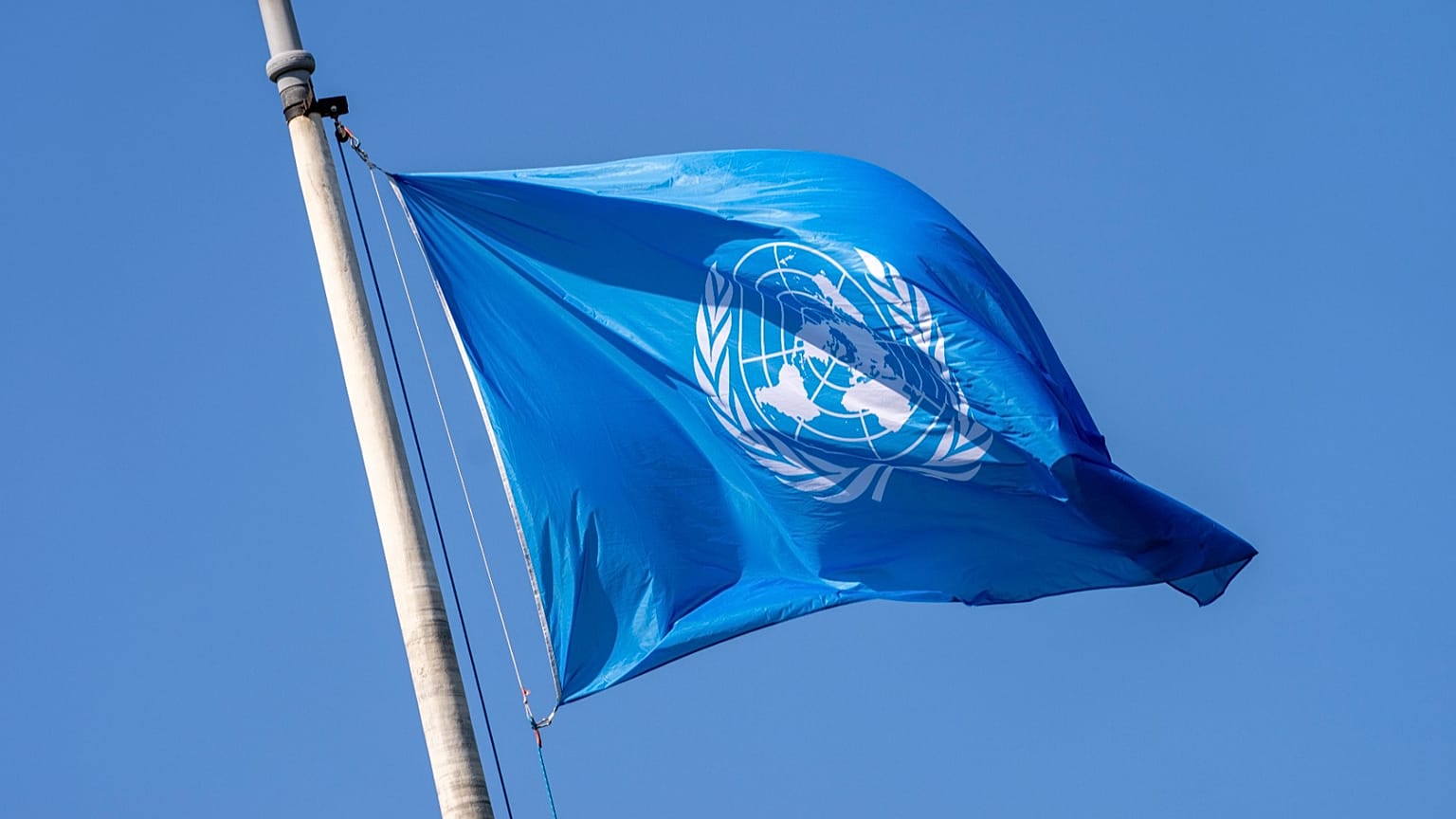
The UN flag waves the International Court of Justice in The Hague, 23 May, 2024
Copyright AP Photo

By Gavin Blackburn
Published on

Junta chief captain Ibrahim Traoré has pursued anti-Western policies since seizing power in a coup in September 2022, while critical voices are met with repression.

The United Nations announced on Thursday it would close its human rights office in Burkina Faso, saying the authorities' indefinite suspension of its operations meant it could not carry out its duties.

The decision comes three months after military-ruled Burkina Faso suspended the office's work over a press release which had called on the west African nation to uphold civic space.

The UN Human Rights Office's branch in the country is set to close by 30 November.

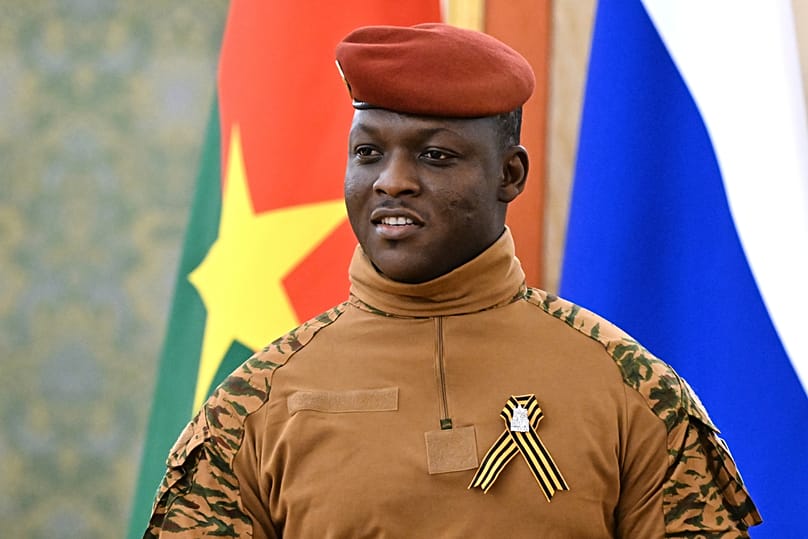
Junta chief captain Ibrahim Traoré, 38, has pursued anti-Western policies since seizing power in a coup in September 2022, while critical voices are met with repression.

"I deeply regret the Burkinabe authorities' decision indefinitely suspending our in-country operations, and that intensive engagement with the authorities since has not resolved the matter," UN rights chief Volker Türk said in a statement.

Burkina Faso President Ibrahim Traoré arrives at the Grand Palace at the Kremlin in Moscow, 10 May, 2025
Burkina Faso President Ibrahim Traoré arrives at the Grand Palace at the Kremlin in Moscow, 10 May, 2025 AP Photo

"This has directly affected our ability to implement our mandate and ultimately necessitated my decision to wind down the country presence."

The office was set up in October 2021 and had conducted human rights monitoring and documentation and had advocated for respect for human rights.

It had also trained nearly 4,000 members of the defence and security forces on international human rights law and humanitarian law, the statement said.

"Despite the closure, my office and I remain committed to continue supporting and cooperating with the government, national institutions, civil society, and other stakeholders, to keep promoting and protecting human rights in Burkina Faso," said Türk.

Violence in the Sahel

The press release that seemingly upset the Burkinabe authorities was issued on 5 February.

In it, Türk called on the government to end all forms of repression of civic space and to overturn its intention to prohibit all political parties.

"Real civic and democratic space, allowing pluralistic voices of political parties and organisations, and strengthened rule of law are essential for lasting peace, security and social cohesion in Burkina Faso," he said.

The UN high commissioner for human rights last month said west Africa's violence-wracked Sahel region, where military rulers are battling jihadist insurgencies, was at a "dangerous tipping point."

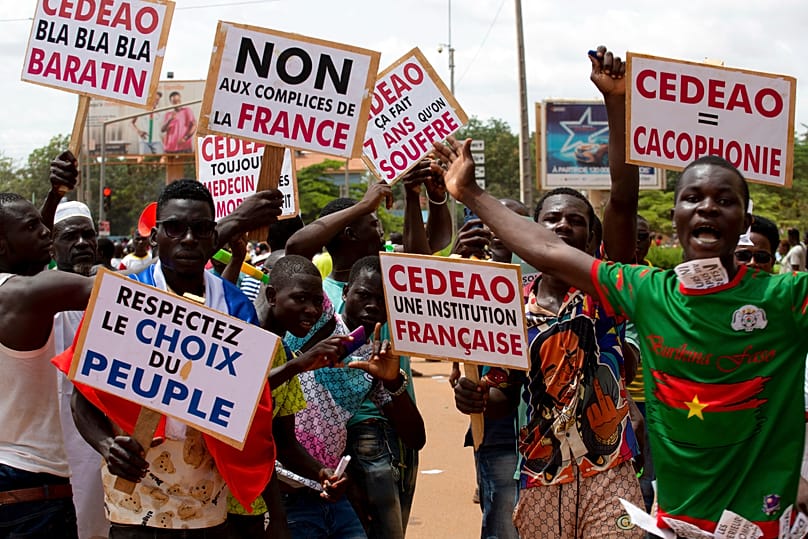
Supporters of Burkina Faso’s junta in the streets of Ouagadougou, 4 October, 2022
Supporters of Burkina Faso’s junta in the streets of Ouagadougou, 4 October, 2022 AP Photo

Türk voiced concern about the actions of authorities and security forces in Burkina Faso, Mali and Niger, where juntas seized power in coups between 2020 and 2023.

They have made sovereignty and the fight against jihadists their priority after years of deadly attacks by groups linked to Al-Qaeda and the so-called Islamic State.

The three countries have forged closer ties with Russia and have moved away from the former colonial power France.

Burkina Faso's ruling junta on Friday severed diplomatic ties with France, accusing Paris of persistently acting against its interests.

INTERVIEW

US shows ‘increasingly blatant’ bias over DRC peace deal, says Rwandan minister

The fragile peace process between Rwanda and the Democratic Republic of Congo is under renewed pressure, as the United States imposes fresh sanctions over alleged links to mineral trafficking from areas controlled by M23 rebels. Rwandan Foreign Minister Olivier Nduhungirehe tells RFI Kigali is being unfairly blamed – arguing that the Congolese government has failed to meet its own commitments under the US-brokered peace deal.


Issued on: 02/07/2026 - RFI

A man carries supplies through Kishishe, eastern Democratic Republic of Congo. Fighting in eastern DRC has displaced millions of people as Rwanda and the DRC seek to implement a US-brokered peace agreement. © Alexis Huguet / AFP

The eastern DRC has been torn apart by decades of conflict involving the country's army and more than 100 armed groups competing for land, power and valuable minerals such as gold and coltan, a mineral used in mobile phones and laptops.

The M23 rebel group controls large swathes of eastern Congo – a group the DRC, the United Nations and several Western governments say Rwanda supports, which Kigali denies.

For its part, Rwanda says its main security threat is the Democratic Forces for the Liberation of Rwanda (FDLR), an armed group linked to the 1994 genocide against the Tutsi people in Rwanda – and accuses the Congolese government of failing to dismantle it.

A peace agreement signed in Washington on 27 June, 2025, was meant to address both sides’ concerns. The DRC agreed to dismantle the FDLR, while Rwanda agreed to withdraw its forces and end its alleged support for M23.

Rwandan Foreign Minister Olivier Nduhungirehe attends the signing of the Washington peace agreement between Rwanda and the Democratic Republic of Congo on 27 June 2025. AP - Mark Schiefelbein

Washington sanctions former DRC president Kabila over 'support' for rebels

The accord has come under renewed scrutiny in recent weeks.

On 25 June, the United States sanctioned Gasabo Gold, a Rwandan gold-refining company, two of its executives and three related mining firms, freezing their assets and barring US citizens from doing business with them. Washington accuses them of helping smuggle gold out of areas controlled by M23.

At a recent UN Security Council meeting, White House senior adviser for Africa Massad Boulos said neither side had fully met its commitments.

To help ensure both sides keep their promises, the two countries and their international partners set up a Joint Oversight Committee. At its sixth meeting in London last week, Rwanda and the DRC agreed to reduce tensions around Minembwe and strengthen monitoring of the ceasefire.

It is against this tense backdrop that Nduhungirehe rejected the allegations against Rwanda and accused the United States of bias in its mediation efforts.

RFI: At the latest Security Council meeting, Massad Boulos questioned whether Rwanda was meeting its commitments under the Washington agreement. How do you respond?

Olivier Nduhungirehe: You have to consider those comments alongside what Secretary of State Marco Rubio said on 5 June during a hearing before the House of Representatives. He said Rwanda was implementing its commitments, even if it was not enough. But he said nothing about the DRC.

The problem is that the DRC's commitments are also an integral part of the Washington agreement. So far there has not been the slightest sign that they have begun implementing them.

Mass graves found in eastern DRC following M23 withdrawal from Uvira

RFI: But what about your own commitments?

ON: On those commitments, the problem is that the peace agreement was signed by two parties, each with security obligations and commitments. Even the Americans say the Congolese government has never begun implementing its main security obligation.

RFI: You say the DRC has failed to neutralise the FDLR, which is based on Congolese territory. But Massad Boulos has also said Rwanda should withdraw from Congolese territory. Why has Rwanda not done so?

ON: Do you think the Washington agreement is a one-sided agreement that concerns only Rwanda?

Why, in a peace agreement, do we acknowledge that one party has failed to implement its commitments, continues to support the FDLR and continues to use drones that kill civilians, while at the same time saying the other party must fulfil its obligations, as if the agreement applied only to Rwanda?

At some point we have to be consistent. Both parties, as required by the Washington agreement, must implement their obligations. It is not only Rwanda that must do so.

RFI: The US has sanctioned Gasabo Gold and several other Rwandan companies accused of taking part in trafficking gold and coltan from areas controlled by M23 in eastern DRC. What is your response?

ON: The United States acknowledges that the Congolese side has not fulfilled its obligation to neutralise the FDLR. The United States also acknowledges there has been an increase in drone attacks. Have you seen the latest statement by the International Contact Group referring to those drone attacks?

But when it comes to sanctions, only Rwanda is sanctioned. So there is a problem. That brings us to another point about the mediation. We are disappointed by what we see as its bias, a bias that is increasingly blatant and increasingly glaring.

Despite the evidence on the ground, and despite the information we have provided to the Americans almost every day since last year about Kinshasa's daily violations of the peace agreement, in the end only Rwanda is sanctioned. That is a problem.

Goma's residents reflect on life a year after DR Congo city fell to M23 rebels

RFI: What explains that?

ON: You would have to ask those who impose the sanctions. That is not us.

RFI: This is not the first time Rwanda has faced sanctions. The Rwandan army, military officers and now Gasabo Gold have all been sanctioned. Why do you think Rwanda keeps being singled out?

ON: Yes, exactly. That is the question that should be put to those who impose the sanctions.

If the Americans or the Europeans said the DRC was implementing its commitments, I would understand why they were not sanctioning the DRC. But the problem is that they themselves acknowledge the DRC has done nothing to neutralise the FDLR.

In fact, instead of moving towards that solution, the DRC has gone in the opposite direction. For example, in mid-March, during the first meeting between the DRC, Rwanda and Burundi, following the capture of Uvira, the Congolese army said in Kisangani on 29 March that the Congolese army would take action against the FDLR.

But what happened? Two days later, on 31 March, they sent helicopters to Walikale [a mineral-rich town in North Kivu province] carrying weapons, ammunition and money to those same FDLR fighters. We provided that information to the Americans.

So there is a problem with this mediation. The bias of the US mediation does not bode well for the effective implementation of the Washington agreement. Nor does it bode well for lasting peace in eastern DRC and the wider African Great Lakes region.
Mali's war on civilians deepens as alliances shift, HRW says

Human Rights Watch (HRW) says the army, allied militias and Islamist armed groups have all committed abuses with impunity since the attacks in northern Mali in April.


Issued on: 01/07/2026 - RFI

Tuareg rebels of the Azawad Liberation Front (FLA) coalition gather at the Kidal roundabout in Kidal, on 26 April, 2026. AFP - ABDOLLAH AG MOHAMED

By: Melissa Chemam

In a new report titled Mali: Grave Abuses Amid Renewed Fighting, published at the end of June, the human rights NGO examines abuses committed in the country by the Group for the Support of Islam and Muslims (JNIM), as well as by the Malian army and its Russian proxies from Africa Corps, since the attacks of 25 April.

On that day, jihadists and their partners from the Azawad Liberation Front (FLA) killed Defence Minister Sadio Camara and captured the northern town of Kidal.

Since then, the Malian army and its Russian partners from Africa Corps have intensified their "counter-terrorism" operations, while JNIM jihadists have imposed new blockades on civilian populations.

Impunity fuels abuses


Against this backdrop, Human Rights Watch (HRW) has investigated abuses committed by the various parties to the conflict.

The organisation points out that humanitarian law prohibits any deliberate or indiscriminate attack against civilians, and that "long-standing impunity continues to fuel the cycle of abuses against civilians in Mali," according to Ilaria Allegrozzi, Sahel researcher at HRW and author of the report.

She told RFI that she had wanted to focus on the impact of the hostilities on civilians, having initially assumed that most casualties were caused by clashes between JNIM and the FLA on one side, and the Malian army and Africa Corps on the other.

"But in reality, you see in our report that yes, there were casualties in clashes, in Kidal, during the fighting, but most of the people killed were killed by the Malian army, either during counterinsurgency ground operations in the centre of Mali or during the drone strikes that we documented. And that's even more worrying," she added.

HRW called on the UN and the African Union (AU) to support independent efforts to "hold those responsible for serious abuses accountable," as well as a fact-finding mission aimed at laying the groundwork for criminal investigations and prosecutions.

What worries the NGO most is the continued impunity — its primary recommendation is that the crimes be investigated and those responsible brought to justice.

Renewed fighting

There is no official casualty count for the multiple attacks of 25 April, but HRW offers a partial one: in the cities of Gao and Kidal alone, the clashes reportedly left 13 civilians dead and at least 25 injured.

The HRW report details the violence committed since then.

Between 6 and 21 May, JNIM torched more than 40 civilian vehicles bound for Bamako as part of a blockade imposed on the road to the capital — a conservative figure covering only that two-week period.

On 14 May, FLA spokesman Mohamed El Maouloud Ramadane told Human Rights Watch: "We took sufficient measures so that civilians are not collateral victims of the fighting. We wrote several times to communities located around the city [of Kidal] to tell them to leave and not to approach military sites."

The NGO also points to the public execution of a civilian in Tonka, in the Timbuktu region, on 21 May, and attacks on tanker trucks that since September 2025 have killed drivers, caused severe fuel and electricity shortages, disrupted education, and paralysed daily life.

Changes of alliance


Successive governments in Mali have battled Islamist and separatist armed groups since 2012.

After coups in 2020 and 2021, General Assimi Goïta seized power, expelled French and UN forces, and strengthened ties with Russia. He also terminated a nine-year peace agreement with predominantly Tuareg armed groups.

In 2024, the al-Qaeda-linked coalition JNIM, seeking to expand Islamist rule across the Sahel, entered into an alliance with the FLA - the Tuareg separatist coalition seeking independence for northern Mali - espite their ideological differences. The two joined forces during the April 2026 offensive.

Meanwhile, the military regime sought the protection of the private Russian group Wagner, now rebranded as Africa Corps, a development analysts say has only deepened the cycle of violence.

"The Malian army has committed abuses against civilians even prior to the arrival of the Wagner fighters, now the Africa Corps," Allegrozzi said.

"But of course things are getting worse because Wagner came to Mali with a very heavy background and a very bad reputation in terms of respect for human rights, with examples in the Central African Republic, in Ukraine, in Libya."
FEMICIDE

Sudan's RSF paramilitaries accused of crimes against humanity in El Fasher

Sudan's paramilitary Rapid Support Forces committed crimes against humanity and ethnic cleansing while deliberately targeting children during their campaign to seize El Fasher, the capital of North Darfur state, Amnesty International said on Wednesday.


Issued on: 01/07/2026 - RFI

Women displaced from El Fasher queue for food aid at Al-Afadh camp in Al Dabbah, northern Sudan, in November 2025, after fleeing fighting in North Darfur. AP - Marwan Ali

The global rights organisation called for an immediate nationwide ceasefire and the deployment of an international force to protect civilians after documenting killings, torture, rape, sexual slavery, forced displacement and other abuses between early 2024 and October 2025.

Sudan has been at war since April 2023, with fighting between the army and the Rapid Support Forces (RSF) killing tens of thousands of people and forcing millions to flee, according to the United Nations.

Both sides have been accused of atrocities, and a UN fact-finding mission said in February that the 2025 assault on El Fasher bore the "hallmarks of genocide".

Agnès Callamard, Amnesty International's secretary general said: "The war in Sudan is a war on civilians. The world was warned of the horrors that civilians in El Fasher confronted as the RSF laid siege to the city. It is a stain on the conscience of humanity."

The investigation was based on interviews with 247 people, including 208 survivors, as well as analysis of 89 videos and satellite imagery.

A letter setting out the findings was also sent to RSF leader General Mohamed Hamdan Dagalo on 10 June 2026, but no response had been received by the time the report was published.

Children under fire


Systematic attacks targeted villages, towns and displacement camps around El Fasher that were home to many people from the Zaghawa, a non-Arab ethnic group in Darfur, Amnesty said.

Homes were burned after residents had fled, leaving areas uninhabitable and preventing displaced people from returning.

A siege of El Fasher from May 2024 until October 2025 restricted food and humanitarian supplies, causing what Amnesty described as a manufactured famine.

The organisation said the evidence supports a finding of persecution based on ethnic identity and that the documented acts "may be relevant to the crime of genocide".

Its investigation is continuing.

"Children were not collateral damage of this violence – often, they were deliberately targeted and have suffered immensely," Callamard said.

Urgent calls for action


A final RSF offensive on El Fasher on 26 October 2025 left hundreds of civilians trying to flee executed, while many others were tortured or detained, Amnesty said.

The RSF also attacked the Saudi Maternity Hospital, a protected medical facility, in what Amnesty described as a war crime.

"A nationwide ceasefire is immediately needed," Callamard said. "An independent and adequately resourced international force must be deployed to Sudan to protect civilians against crimes by all parties to the conflict.

"The international community must move beyond statements of concern and take concrete steps to protect civilians, breaking the cycle of impunity."

Amnesty has urged all countries to stop supplying arms and ammunition to parties in the conflict.

The NGO specifically urged governments to stop providing arms to the UAE until it complies with the UN embargo, and called on the UN Security Council to expand the existing arms embargo on Darfur to the rest of Sudan.
Paris death penalty congress warns abolition cannot be taken for granted

The fight to abolish the death penalty remains "eminently contemporary", French President Emmanuel Macron said as campaigners, judges and former death row prisoners gathered in Paris this week for the World Congress Against the Death Penalty, amid rising executions worldwide and renewed support for capital punishment in some democracies.


Issued on: 02/07/2026 - RFI

A gurney used for lethal injections at the Texas death house in Huntsville, Texas. More than 110 countries have now abolished the death penalty, but executions continue to rise in a number of others. ASSOCIATED PRESS - Pat Sullivan

Speaking on Tuesday at the ninth World Congress Against the Death Penalty (ECPM) in Paris, Macron said abolition should not be treated as a settled achievement, 45 years after France scrapped capital punishment.

"Many people pretend to believe that it is a foregone conclusion," he said. "But the risks remain in many countries – and nothing can be taken for granted."

The congress, organised by the NGO Together Against the Death Penalty, is being held from 30 June to 2 July at several venues across Paris and is due to close on Thursday.

Macron said the debate was returning "amidst confusion over principles and language", particularly in the wake of crimes that shock public opinion.

In a post on X, he wrote: "The existential struggle for the abolition of the death penalty is never a foregone conclusion."

In France, calls for a tougher response have followed several recent child murder cases, including that of Lyhanna, aged 11, whose death exposed alleged failings in the handling of earlier rape complaints against the suspect, and Louis, aged 17, killed in an alleged lynching in Narbonne.

A CSA poll for right-wing media outlets CNews, Europe 1 and the Journal du Dimanche, published on 14 June, found that 68 percent of French people supported holding a referendum on reinstating the death penalty for crimes against children.

"The death penalty has never made a society safer. Never," Macron told the congress. "Because it does not act as a deterrent. That is simply not true. This has been demonstrated, observed and measured."

He said capital punishment had "never had the deterrent effect" claimed by its supporters, including "often authoritarian" governments that present it as a tool of order.

France's President Emmanuel Macron delivers a speech during the 9th World Congress Against the Death Penalty in Paris, France, on 30 June 2026. AFP - CHRISTOPHE PETIT TESSON


Abolition under pressure

Speaking at the congress on Wednesday, European Court of Human Rights President Mattias Guyomar also warned that support for restoring the death penalty was re-emerging in Europe, despite the continent having abolished it.

He said the court's case law had established that capital punishment was fundamentally incompatible with human dignity.

France abolished the death penalty in 1981, shortly after François Mitterrand became president. The last person sentenced to death in France, Philippe Maurice, was pardoned by Mitterrand that same year and is among the campaigners attending the Paris congress.

Macron has framed abolition as a democratic principle rather than a purely legal one, saying it rests on the idea that even those who commit serious crimes retain their humanity.

"Whatever any one of us may have done, we do not have the power to deny them this shared humanity," he said, calling that principle a "cornerstone of all our democratic societies".

According to Isabelle Lonvis-Rome, France's ambassador for human rights, 114 states have now definitively abolished capital punishment. But 47 countries still retain it, including the United States.

Lonvis-Rome said the long-term global trend remained abolitionist, even as several countries were seeing a "resurgence of executions" used as tools of "political repression, social control or in response to security crises".


Executions rising

ECPM says China, Iran, Saudi Arabia and Iraq carried out the highest number of executions in 2024.

Iran has drawn particular concern. According to Norway-based Iran Human Rights and ECPM, Iranian authorities executed at least 1,639 people in 2025 – the highest figure recorded since 1989.

The congress also heard from former death row prisoners, including Daniel Gwynn, an American who spent nearly 30 years under sentence of death before being exonerated in 2024.

"I was targeted because of the colour of my skin. I was young, I was 24, I didn't know the law. And this system crushed me," Gwynn told RFI. "I was sentenced to death and held in solitary confinement for 28 years."

Gwynn said he had received no compensation or apology after his release.

"Not even a bus ticket to get home," he said. "Because the authorities don't want to admit they were wrong, or even that they did it on purpose. To this day, I don't even know how I became a suspect in this case."

Asked what he would say to supporters of capital punishment, Gwynn said the argument that it prevents crime does not stand up.

"The death penalty doesn't work. It has no deterrent effect on crime," he said. "There are always people who commit murders. So it is not a deterrent. And there is a more humane way to punish someone for a crime they have committed."


France advances assisted dying law with strict rules and safeguards

France's National Assembly has approved a new version of a bill creating a legal right to assisted dying, bringing the country closer to a major change in end-of-life care. The legislation sets out who could qualify, how requests would be made and the safeguards designed to prevent abuse of the law.


Issued on: 02/07/2026 - RFI

France's National Assembly has approved a bill that would create a legal right to assisted dying, with a final parliamentary vote expected on 15 July. AP - Mosa'ab Elshamy

While supporters say the bill – approved on Tuesday after a lengthy legislative process – would give seriously ill patients a final choice, opponents warn it remains too permissive.

Expected to receive final adoption on 15 July, the bill would create a "right to assisted dying", allowing eligible people who request it to use a lethal substance with medical support.

Under current legislation, known as the Claeys-Leonetti law, patients in France can refuse or stop medical treatment.

In certain cases, they can also receive deep and continuous sedation with pain relief until death. However, healthcare professionals cannot provide or administer a substance to cause death.

The words "assisted suicide" and "euthanasia" do not appear anywhere in the text.

A new legal right


"It is the patient who asks. Nobody is forced and nobody is encouraged," Philippe Vigier, an MP from the Democratic Movement, a centrist party which supports the bill, told RFI.

The Association for the Right to Die with Dignity, a campaign group known as ADMD, says the bill would shift decision-making towards seriously ill patients.

"It will bring a real change to healthcare democracy by putting the sick person back at the centre of the decision," siad ADMD head Jonathan Denis, adding the text would create a "final option" for seriously ill people facing unbearable suffering.

The French Society for Palliative Care and Support, a professional organisation representing palliative care workers, however, strongly opposes the proposed new right.

The bill took account of "none of the concerns, none of the warnings" raised by palliative care professionals, the group's president, Ségolène Perruchio, told RFI.


Access conditions


To qualify for assisted dying, patients would have to meet five conditions. They would have to be adults who are either French citizens or legal, long-term residents of France.

They would also need to have a serious and incurable illness that threatens their life and has reached an advanced or terminal stage. The bill defines an advanced stage as entry into an irreversible process marked by worsening health that affects the person's quality of life.

Patients would also have to experience suffering linked to that illness that cannot be adequately relieved by treatment, or suffering they consider unbearable after choosing not to receive or to stop treatment. Psychological suffering on its own would not qualify.

Applicants would also have to be able to express a free and informed decision, even if they had previously written advance directives.

This would exclude some people with neurodegenerative diseases such as Charcot disease, a progressive condition that weakens muscles and gradually paralyses the body, if cognitive problems prevent them from confirming a request they had made earlier in writing, Denis said.

Opponents say the criteria leave too much room for interpretation. They are "extremely broad" and "extremely vague" and "leave an enormous role for the doctor's own subjectivity", Perruchio warned.

Making the request

Patients would have to submit a written request to a practising doctor or, if that is impossible, use another method suited to their abilities.

The doctor could not be a relative, an in-law, a spouse, a civil partner, a life partner or anyone who stands to inherit from the patient. If the patient cannot travel, the doctor would have to visit their home or the place where they are receiving care to collect the request.

The doctor would have to explain the patient's medical condition and how it is likely to progress, the option of palliative care, access to psychological or psychiatric support and the right to withdraw the request at any time.

The doctor would also have to explain the conditions for accessing assisted dying and how the process would work.

The decision would then be taken after consultation with a multidisciplinary group including at least one other doctor specialising in the illness, as well as a nurse or nursing assistant involved in the patient's care. At the patient's request, the doctor could also seek the views of a trusted person or, if the patient has not named one, a relative.

The decision would have to be given, with reasons, within 15 days of the formal request. After a reflection period of at least two days, the patient could confirm the request.

As a final safeguard, on the day the substance is administered, the doctor or nurse would have to confirm once again that the patient still wishes to proceed.

If a doctor refuses the request, the patient could challenge that decision before an administrative court, including through an emergency procedure.

Safeguards and refusals


One of the most debated issues was who should administer the lethal substance.

Patients should be able to choose between administering the substance themselves or asking a doctor or nurse to do it, argued MPs from France Unbowed, a hard-left party, and the Socialist Party.

Instead, as in the original version of the bill, self-administration would remain the rule, while a doctor or nurse could administer the substance only if the patient is physically unable to do so.

The ADMD had argued for patients to have a free choice between the two options, a position the final bill does not reflect, to Denis's regret.

After a request is approved, a date would be agreed with the doctor or nurse accompanying the patient. The procedure could take place at the patient's home, at the home of a relative, in a hospital, in a care home or in another healthcare setting. The patient could be surrounded by people of their choosing.

The costs of the procedure would be fully covered.

Lawmakers removed a provision during the latest reading that would have classified a death through assisted dying as a "natural death". However, the bill says death insurance policies would still apply so that beneficiaries are not deprived of cover.

The bill includes several safeguards. Patients could withdraw or postpone the process at any time, and healthcare professionals would have to suspend it if they believed the patient was under pressure.

If more than three months passed between approval and administration, the patient's wishes would have to be reassessed.

The proposal also requires every stage of the procedure to be recorded and would create a control and evaluation commission under the health minister. The commission would carry out checks after procedures, make recommendations to the government and parliament and report failures or suspected offences to professional bodies or prosecutors.

The National Authority for Health, France's independent health authority, and the National Agency for the Safety of Medicines and Health Products, the country's medicines safety agency, would jointly define and assess the lethal substances that could be used.

They would also draw up recommendations on good practice.

Healthcare professionals would be able to refuse to take part under a conscience clause. Anyone who refused would have to inform the patient or colleague immediately and provide the names of professionals willing to participate.

Those professionals would have to register with a new commission that would keep a register accessible only to healthcare workers.

The conscience clause offers only partial protection because it covers the doctor or nurse carrying out the procedure, but not everyone else involved in caring for the patient, Perruchio said.

"There is no conscience clause for the nursing assistant who washes the patient half an hour before the euthanasia, or for the person who prepares the body half an hour afterwards, or for the psychologist who meets the family," she added.

The bill would not create an offence of obstructing access to assisted dying, similar to the existing offence covering abortion. It would also not create an offence of encouraging someone to seek assisted dying.