Sunday, July 26, 2026


Human impacts rewrite the rules of island biodiversity around the globe


New research provides the most comprehensive assessment to date of human influences on island biodiversity patterns.


University of Birmingham

The broad-billed parrot (Lophopsittacus mauritianus) 

image: 

Lophopsittacus mauritianus is a large species of parrot that was formerly endemic to the island of Mauritius in the Indian Ocean. It went extinct in the 17th century, likely due to a combination of introduced species, habitat loss and hunting.

view more 

Credit: Used with permission of Julian Hume.


A new study reveals that human activities have fundamentally reshaped biodiversity patterns on islands across the globe, providing important implications for how scientists understand ecology, evolution and conservation. 

Led by the University of Birmingham, the international team of researchers examined how species extinctions and introductions have transformed island ecosystems over a (?) millennia showing that islands have experienced a disproportionate share of global biodiversity loss.   

In total, island endemic species account for around 75% of recorded anthropogenic extinctions globally, while many islands have also received large numbers of introduced species. In some cases, the number of introduced species now equals or exceeds the original native flora and fauna. For example, in the Hawaiian Islands almost all endemic species of bird have been driven extinct, with roughly the same number having been introduced from elsewhere in the world. 

The study’s findings, published today (23 Jul) in Science Advances, also suggest that many biodiversity patterns observed today – such as species richness, endemism and ecological interactions – are not solely the result of natural ecological and evolutionary processes but also often reflect a long legacy of human influence.  

Key findings: 
 

  • Key biodiversity patterns have been altered due to the impact of human-driven extinctions and introductions, which have changed fundamental relationships between biodiversity and different abiotic factors, such as island size and island isolation, and potentially affecting long-standing ecological and evolutionary theories.  
     

  • In several cases, human impacts commenced thousands of years ago, making it increasingly difficult to tease apart natural patterns from human influences. 


  • Introduced species often offset species losses numerically, but not ecologically. Many islands now have as many or more species than before human arrival due to introductions, yet they have still experienced substantial losses of native biodiversity and ecological function. 
     

  • For certain groups – primarily birds and mammals – researchers have a reasonable idea of the biodiversity that has been lost on islands. However, for many others there is a lack of knowledge, making it difficult to identify pre-human biodiversity baselines and fully understand the extent to which island ecosystems have been altered.  
     

Dr Thomas J. Matthews, from the University of Birmingham and lead author of the study, said: "Islands have played a central role in the development of ecological and evolutionary theory. However, many of the biodiversity patterns we observe today have been shaped not only by natural processes but also by thousands of years of human-driven extinctions, species introductions and environmental change.  

"We know that these human actions have substantially affected island environments. What we show in this study is a different kind of impact - that human actions have also substantially altered our understanding of the natural world. Many current ecological and evolutionary patterns observed on islands reflect not just natural processes but also a legacy of human-induced change spanning millennia." 

Dr Sandra Nogué, ERC researcher at UAB and CREAF and co-author of the study, said: "Overall, we found that the extinction of endemic species, combined with the introduction of plants and animals that are widespread elsewhere in the world, is making islands increasingly homogeneous and more similar to one another." 

Islands have long been regarded as natural laboratories for understanding biodiversity, inspiring foundational scientific ideas such as Darwin's theory of evolution and the theory of island biogeography. However, this new review highlights how extensive historical changes to island ecosystems can affect our interpretation of these systems.   

The paper also highlights a range of existing and emerging approaches that can help scientists reconstruct pre-human biodiversity baselines. Approaches include fossil evidence, ancient DNA analysis, museum collections, historical records, and advanced ecological modelling. The team argues that combining these approaches will provide a more accurate understanding of how island biodiversity has changed through time. 

Dr Thomas J. Matthews added: "New datasets, analytical tools and palaeoecological evidence are giving us unprecedented opportunities to better understand the natural history of island ecosystems. By integrating these different sources of information, we can develop a clearer picture of how biodiversity patterns have been transformed as well as how the ways in which they might be restored or conserved in the future." 

Future biodiversity research must increasingly consider both natural and anthropogenic drivers of ecological change. As globalisation, trade and land-use change continue to influence island ecosystems, understanding the combined effects of natural and human processes will be essential for effective conservation planning. 

The study was led by the University of Birmingham and involved researchers from several international institutions, including CREAF, the Universitat Autònoma de Barcelona (UAB), the BETA Technological Centre (UVic-UCC), the Granollers Museum of Natural Sciences, the University of La Laguna and the Centre for Biodiversity and Global Change Research at the Autonomous University of Madrid. 

ENDS


Insect submariners survive the depths without imploding


University of British Columbia

Excised Chaoborus edulis airsacs Credit Philip Matthews 

image: 

Excised Chaoborus edulis airsacs

view more 

Credit: Philip Matthews


Deep-diving insect larvae are challenging a long-held idea about why there are no insects in the ocean, thanks to sturdy air sacs.

Daily dive to dodge death

In Lake Malawi in East Africa, billions of lake fly larvae (Chaoborus edulis), make an unusual commute: By day, they sink more than 200 metres into the lake’s oxygen-starved “dead zone” to hide from predators. By night, they rise to safely feed – but not before passing through a horde of waiting fish.

UBC researchers Drs. Philip Matthews and Evan McKenzie deployed a sonar system at the bottom of the lake to map these daily dives.

Dissecting the larvae, the team found they had turned part of their respiratory system into two pairs of tiny air sacs that function like ballast tanks to control their buoyancy.

They also found that the air sac wall contains a material called resilin which expands or contracts when the larvae change the wall’s pH. This mechanism allows the larvae to control the volume of their sacs and so, their own buoyancy. 

Under pressure

The researchers placed larvae in tiny pressure chambers to find the maximum depths they could endure before their air-sacs imploded.

They proved remarkably tough, holding out to the equivalent of more than 400 metres deep, far beyond the larvae’s daily dives.

Insects thrive on land and fresh water, but the open ocean is insect-free. One popular explanation is the insects’ air-filled respiratory systems would collapse under the pressure of the depths. These larvae puncture that idea.

pH-powered engines

Resilin has been studied in other insects as a nearly perfect biological rubber in wear-and-tear-resistant wing hinges and tendons.

In the future, the research could add to work aimed at creating pH-powered resilin smart materials or artificial muscles activated on chemical command.

This project was partially funded by Natural Sciences and Engineering Research Council of Canada Discovery and Accelerator grants

Macky Sall pledges to restore trust in UN as leadership race gathers pace

Former Senegalese president Macky Sall has pledged to restore trust in the United Nations and make the organisation more responsive, as he seeks to become the first African to lead the global body in almost three decades.


Issued on: 24/07/2026 - RFI

Senegal's former president and candidate for the United Nations Secretary-General position Macky Sall speaks during a debate at the UN General Assembly Hall in New York, on 23 July 2026. AFP - LEONARDO MUNOZ

Sall was among six candidates who set out their vision for the United Nations during a restrained debate in New York on Thursday, one week before the formal selection process begins.

The candidates agreed that the next secretary-general would need to rebuild the credibility of an organisation facing deep financial pressures, growing geopolitical divisions and criticism over its response to conflicts around the world.

Sall said he would use his first 100 days in office “to restore trust and put the UN on a path to become more agile, more effective and more ready to listen”.

The former Senegalese leader promised an organisation able to “listen, act and bring people together”, placing effectiveness and dialogue at the heart of his campaign.

Sall, who served as Senegal’s president from 2012 to 2024, is the only African and the only non-Latin American candidate in the race to succeed Secretary-General Antonio Guterres, whose term ends on 31 December.

His candidacy challenges an informal tradition of geographic rotation, under which many countries believe the next secretary-general should come from Latin America and the Caribbean.

Four of the six contenders are women, adding further weight to longstanding calls for the UN to appoint its first female secretary-general.

Candidates set out credentials

Alongside Sall, the candidates are former Chilean president Michelle Bachelet, former Ecuadorian foreign minister Maria Fernanda Espinosa, International Atomic Energy Agency chief Rafael Grossi of Argentina, UN trade and development head Rebeca Grynspan of Costa Rica and Guyanese ambassador Carolyn Rodrigues-Birkett.

During the nearly two-hour, televised debate in the UN General Assembly Hall, the candidates answered questions from diplomats, UN employees and civil society representatives.

Each presented their national or international experience as evidence of their ability to manage the organisation during an era marked by wars, political rivalry and declining confidence in multilateral institutions.

Grynspan said she wanted the UN to regain a central role in resolving conflicts and delivering visible results.

“Five years from now, I would like nobody to ask me again, ‘Where is the UN?’” she said.

She called for the organisation to be “back at the table” in conflict situations and able to produce meaningful improvements on the ground.

(L-R) Candidates for United Nations Secretary-General position, Chile's former president Michelle Bachelet, Ecuadorean diplomat and former President of the UN General Assembly Maria Fernanda Espinosa, Argentine diplomat and Director General of the International Atomic Energy Agency (IAEA) Rafael Mariano Grossi, Costa Rican economist and Secretary-General of UNCTAD Rebeca Grynspan, Guyana's former foreign minister Carolyn Rodrigues and Senegal's former president Macky Sall participate in a debate at the UN General Assembly Hall in New York, on 23 July 2026. AFP - LEONARDO MUNOZ

Rodrigues-Birkett similarly promised to engage directly with the most difficult international crises.

“I would be that secretary-general that would try, whether it is in Iran or in Haiti or in Sudan or in the Democratic Republic of Congo,” she said.

Grossi argued that the secretary-general should intervene more actively whenever a UN member launches a war or commits an act of aggression.

“We need to restore this credibility of the UN as a valid interlocutor, and then use the tools at hand,” he said.

The candidates also sought to demonstrate that they would be able to stand up to powerful states without alienating the governments whose support they would need.

Without referring to any country by name, Bachelet said she would resist pressure from major donor nations.

“I will speak out loud what I think is my moral authority and my duty,” she said.

Espinosa placed conflict prevention at the centre of her campaign, arguing that it should become an operational priority rather than simply a political slogan.

She promised to ensure that the UN system was prepared to identify and respond to crises early, adding that she would personally take part in diplomatic efforts.

“I will be there myself, carrying the UN flag,” she said.


First vote


The debate comes as the UN confronts what officials and diplomats describe as a serious crisis of both funding and confidence.

The administration of United States President Donald Trump has accused the organisation of excessive spending, taking on too many responsibilities and failing to deliver sufficient results.

Washington wants the UN to return its focus to its founding responsibilities for international peace and security.

Other member states insist that its two other central pillars – human rights and sustainable development – must remain equally important.

Most of the candidates backed continuing reforms intended to make the organisation more efficient, while also calling for the secretary-general to become more closely involved in peace negotiations.

They have already faced three hours of questioning individually from representatives of the UN’s 193 member states.

The next decisive stage will begin on 30 July, when the 15 members of the Security Council are due to hold their first closed-door ballot on the candidates.

The anonymous “straw poll” will show which contenders have the strongest support and whether any face opposition from the council’s five permanent members – the United Kingdom, China, France, Russia and the US.

Further ballots are expected until one candidate secures at least nine votes without being vetoed by a permanent member.

The Security Council will then submit its chosen candidate to the General Assembly for formal approval. The new secretary-general is due to take office on 1 January 2027.

Latin American governments argue that it is their region’s turn to provide the next secretary-general, although the informal system of geographic rotation has not always been followed.

Sall’s supporters are instead likely to emphasise Africa’s growing diplomatic weight and the continent’s central place in many of the issues facing the UN – from peacekeeping and development to climate change and reform of the international system.

The last African secretary-general was Ghana’s Kofi Annan, who held the position from 1997 to 2006.

(with newswires)
Haitians at home and abroad fear fallout from end of US protection

Concern is mounting in Haiti and in the United States ahead of the planned end of Temporary Protected Status for Haitians on 27 July, which could leave nearly 350,000 people at risk of deportation from the US.


Issued on: 25/07/2026 - RFI


People in San Diego hold Haitian flags and signs during a rally in support of immigrants living in the United States with temporary protected status, or TPS, on 9 July 2026. © Gregory Bull / AP


President Donald Trump's government determined last year that Haiti no longer met the necessary conditions for the special protection, which temporarily grants the right to live and work in the US for people who come from countries where conflict, disaster or other conditions make it unsafe to return.

After a series of legal challenges that ended in the Supreme Court, that decision will become effective next week.

For the estimated 348,000 Haitians with Temporary Protected Status (TPS), its termination will mean losing both their protection from deportation and their authorisation to work.

In New York’s Little Haiti neighbourhood, residents describe a climate of fear as the deadline approaches.

“At any moment, I could go out to buy something and get arrested,” said one young Haitian man who has lived in the US for three years.

He has been on edge since the withdrawal of TPS was announced in June 2025, he told RFI. “Whenever I see a car, whether it’s the police or immigration, it makes me uneasy. You never know.”

The Little Haiti neighbourhood in the Brooklyn borough of New York on 15 July 2025. © AFP/Charly Triballeau

Many other residents are reluctant to speak on the record. “It’s a real disaster in our community because there are so many people suffering as a result of TPS ending,” one man said.

Pascal Antoine, who works for an organisation supporting migrants in Little Haiti, said people who lose their immigration status will be left facing impossible choices.

“These people have homes, children,” he said. “There are families wondering what they’re going to do – whether they’ll leave their children here. Many of their children are American citizens.

“So it’s much more complicated than simply packing your bags and leaving. It’s not as simple as that. And these people have nothing in Haiti.”


Financial lifeline


The consequences will also be felt in Haiti, where many families rely on money sent home by relatives living abroad. In a country struggling with insecurity and widespread hardship, these remittances help pay for food, housing, education and healthcare.

“In Haiti, the majority of families depend on the diaspora,” a Port-au-Prince resident named Bedson told RFI. “Many Haitian migrants benefitting from TPS support relatives financially. Deporting them would be serious and truly tragic.”

Fellow resident Jean-Baptiste agreed forced returns would be painful, but suggested they might encourage Haitians abroad to put greater pressure on the country’s political leaders to address the crisis.

“It’s true that this decision could cause our compatriots a lot of pain,” he said. “But I think this is a good opportunity for them to force the Haitian authorities to take action to improve living conditions in Haiti, particularly the security situation.”


Residents flee after gang violence in their area of Port-au-Prince, Haiti, on 20 April 2026. 
@ AFP - CLARENS SIFFROY

Ongoing gang violence has displaced more than a million people in Haiti, where armed gangs control nearly all of Port-au-Prince and continue to expand their reach. The United Nations estimates that some 6.4 million people need humanitarian assistance.

As the US deadline approaches, the Haitian government has remained largely silent. No official plan has been announced for dealing with the possible return of hundreds of thousands of emigrants.

In Port-au-Prince, Stéphanie said Haiti was not prepared for an influx of deportees.

“If this decision comes into effect, what will become of our fellow Haitians in the US?” she asked. “We mustn’t forget that these are people who left Haiti in search of a better life elsewhere. The country isn’t ready yet to have them back.”

This article was adapted from the original version in French by RFI correspondents Loubna Anaki in New York and Peterson Luxama in Port-au-Prince.


NGOs take France to court over companies’ links to Israeli settlements

Five NGOs on Wednesday filed a case before France’s highest administrative court, seeking a ruling that would oblige the French government to take measures preventing French companies and economic institutions from conducting commercial activities in Israeli settlements.


Issued on: 25/07/2026 - RFI

The Kiryat Arba settlement in the background near Palestinian houses near Hebron, in the Israeli-occupied West Bank, 7 May 2026. © Mussa Qawasma/Reuters

The legal action, which draws on an advisory opinion issued on 19 July, 2024 by the International Court of Justice (ICJ), the United Nations’ highest judicial body, is being led by the International Federation for Human Rights (FIDH), Juristes pour le respect du droit international (JURDI), the International Centre of Justice for Palestinians (ICJP), the Ligue des droits humains (LDH), and Law for Palestine.

In its opinion, the ICJ found that “Israel’s continued presence in the Occupied Palestinian Territory is unlawful” and stated in particular that UN member states must “take measures to prevent trade or investment relations that assist in maintaining” this “unlawful situation”.

According to the five organisations:“France has not translated these obligations into concrete regulatory or coercive measures."


They are asking the Conseil d’État to “declare the State’s inaction unlawful and to order measures ensuring compliance with international law, including restrictions on trade and investment linked to the occupation, safeguards for companies, as well as monitoring mechanisms”.

Israeli bulldozers break ground on land belonging to Palestinian Etaf Jaradat from Silat al-Harithiya to reportedly make way for the construction of settlements in the Sarouj area, in the occupied West Bank on 22 December, 2025. © Zain Jaafar / AFP

The applicants say they have identified several French companies operating in the settlements, including Egis and its subsidiary Egis Rail, both listed in a database compiled by the Office of the UN High Commissioner for Human Rights (OHCHR).

The two companies are said to be “involved in the construction of the Jerusalem light rail linking West Jerusalem to settlements established in East Jerusalem”.

They also refer to other French companies identified by the Israeli anti-settlement NGO Who Profits Research Center.

“The International Court of Justice left no room for doubt: states cannot remain bystanders in the face of their legal obligations,” said James Goldston, executive director of the Open Society Justice Initiative, which is advising the applicants.

“International law has force only if states are willing to implement it in practice,” he added.

The Israel-based watchdog NGO Monitor wrote in an emailed response to RFI that "FIDH is widely-known as an anti-Israel NGO,” adding that “its Palestinian partner organisations are linked to the Popular Front for the Liberation of Palestine (PFLP) terror organisation.

According to NGO Monitor, the lawsuit "has no judicial merit, and is part of the biased agenda that erases Hamas terror and the victims. This NGO receives French and EU taxpayer funds for political campaigns that use the facade of human rights, and fuel more conflict instead of helping to promote peace".

(with newswires)

Low Danube levels threaten Serbia’s river traffic, disrupt fuel imports

Low Danube levels threaten Serbia’s river traffic, disrupt fuel imports
Low Danube levels threaten Serbia’s river traffic, disrupt fuel imports / bne IntelliNewsFacebook
By bne IntelliNews July 23, 2026

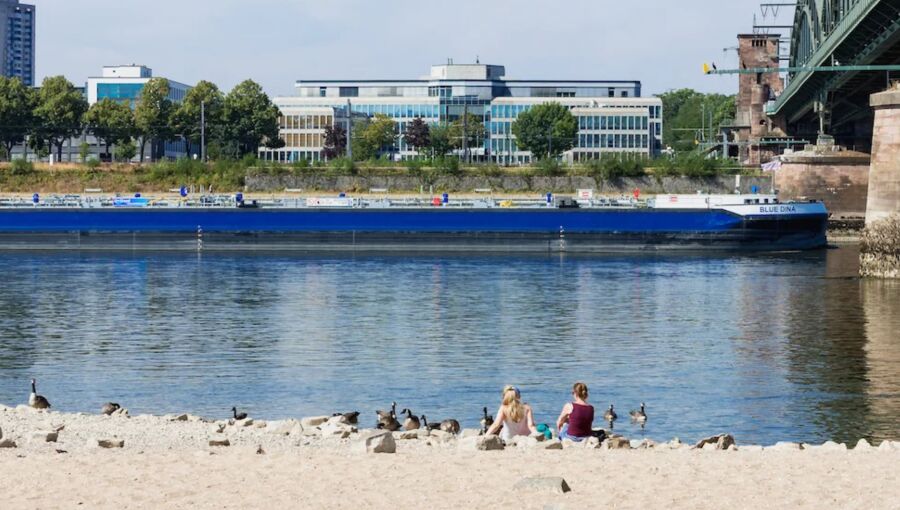
Exceptionally low water levels on the Danube are threatening to disrupt river navigation in Serbia and have slowed imports of petroleum products, officials said on July 22, adding pressure to fuel supplies amid high demand and elevated global oil prices.

Milan Nikolic, head of Serbia’s Directorate for Inland Waterways, said critically low levels could lead to a suspension of navigation in some areas.

The drought-hit Danube has forced barges to reduce cargo loads, with vessels carrying only 30-40% of their usual capacity, Energy Minister Dubravka Đedović Handanović said. As a result, only about 25% of planned petroleum product imports for July have been delivered so far, Beta reported.

Alternative transport by trucks and rail has been used, but officials said it cannot fully replace river shipments and has increased costs.

Đedović Handanović said Serbia’s Pančevo oil refinery, owned by the Oil Industry of Serbia (NIS), was crucial for maintaining market stability. NIS is under US sanctions due to its majority Russian ownership, and the minister said an extension of its operating licence beyond July 31 would allow the refinery to maximise production and help offset reduced imports.

Without the licence extension, Serbia would have to rely more heavily on state reserves, she said, adding that diesel reserves currently stand at 269,000 tonnes.

The low water levels are linked to prolonged drought and high temperatures across Europe. Officials said a slight rise in the Danube was expected in the coming days as higher water moves downstream from Hungary, but the longer-term decline is likely to continue.

The falling river levels have already affected shipping, irrigation and the Danube ecosystem. In neighbouring Croatia, the river recently reached a record low near Batina, according to state water management authorities.


Climate change 'exacerbating' drought across Europe, scientists say

Climate change is exacerbating drought in Europe as extreme heat evaporates water supplies, scientists said in a study published this week, with low water levels disrupting shipping, farming and industry in countries including Romania and Greece.


Issued on: 25/07/2026 - RFI


Cattle on sand dunes that appeared following a significant drop in the water level of the River Danube near Kelerash, Romania, 18 July. © Inquam Photos / Reuters

Numerous European countries are suffering drought conditions this summer. France fears it may have its smallest maize crop in 50 years, while Romania has restricted farmers' access to ​water for irrigation, the Netherlands declared a water shortage last week and seven Greek islands have declared drought emergencies to preserve water.

Climate change was not the cause of the lack of rain in April to June this year, according to analysis by the World Weather Attribution. Rather, climate change's role in the ongoing drought is that it has directly contributed to the extreme heat which is accelerating how much water evaporates out of soils.

Evaporation-potential conditions were 80 times more likely in western Europe and 40 times more likely in eastern Europe in January to June compared with pre-industrial times before humans started burning fossil fuels on an industrial scale, the WWA said.
Drought classification maps of Europe, categorised according to the US Drought Monitor (USDM) system, for the first half of 2026. © World Weather Attribution

Latest heatwaves, droughts, floods could cost Europe €126 billion by 2029


"Extreme heat is taking over as the primary driver of drought on our continent," said Sarah Kew, a climate scientist at the Royal Netherlands Meteorological Service.

"We are seeing water supplies evaporate out of our soils and rivers faster than we would have in a world without climate change, turning what would have been manageable dry spells into severe droughts," she said.

Agricultural soil droughts are now five times more likely in western Europe because of climate change, and 11 times more likely in eastern Europe, according to the WWA analysis.

(with newswires)
Heatwave hits North Africa, with power cuts in Tunisia and wildfires in Algeria

In Tunisia long power outages across the country have added to the strain of an intense heatwave, with temperatures as high as 49C. In neighbouring Algeria, more than 100 people were hospitalised after wildfires, the country's interior minister said this week.


Issued on: 24/07/2026 - RFI

A forest officer battles a wildfire in a mountainous area near the town of Al Hachimia, Bouira Province, Algeria, 21 July. AFP - -


For days, the STEG state electricity and gas company has been issuing daily heat alerts in Tunisia, listing neighbourhoods where it would cut electricity to reduce pressure on the national grid.

STEG chief executive Faycel Trifa said heavy air conditioner use had pushed the electricity network to its limit.

Another company official told state television that electricity demand may have reached a record 6 gigawatts on Tuesday, after hitting 5.6 gigawatts only days earlier.

"I’m adapting. Since the power cuts out every two hours, I avoid stocking up on food so it doesn’t spoil," vendor Mohamed Ali told RFI's reporter in the city of El Fahs, north of Tunisia. "We’ve been in this situation for three weeks, and no one understands what’s going on because the outages happen constantly."

The outages have become one of the country's main talking points, both online and in the streets. Some residents say their electricity has gone off for up to six hours at a time, while some are avoiding using lifts for fear of being trapped inside.

The Young Doctors' Association has recorded nearly 150 heatwave-related deaths.


Tunisia has been experiencing temperatures exceeding 48C, and daily water and electricity cuts. AFP - FETHI BELAID


Economic consequences

President Kais Saied said those responsible for the failures should be held accountable. He has also ordered immediate measures to address water and electricity outages, which he described as "abnormal phenomena".

Tunisian business groups fear the outages are hurting the economy, with employers' organisation CONECT saying the lack of precise schedules for planned cuts made it difficult for companies to prepare for production.

As scientists say human-driven climate change is increasing the length, intensity and frequency of heatwaves, Héla Tlili, an economics lecturer at Tunis El Manar University, said Tunisia needs to speed up the development of renewable energy.

The country has vast solar potential and favourable conditions for wind power, but the biggest challenge would be storing electricity, Tlili said.

That would require significant public investment, she added, arguing that Tunisia needs "a change of paradigm" diversifying its energy resources.

Wildfire deaths

Meanwhile, fires broke out in neighbouring Algeria on Tuesday in Seraidi, a town west of the city of Annaba surrounded by forests.

More than 100 people were hospitalised this week after the wildfires reached nearly 150 homes in a small town in the north-eastern region of the country, according to the interior ministry.

Interior Minister Said Sayoud told reporters at a local hospital that most of the hospitalised people were in a "stable and reassuring" condition.

Civil protection crews "were still battling the blazes" most of the week, the minister added.

Algeria has been grappling with hundreds of wildfires for days, with at least six people dead in several provinces, according to the interior ministry.

Every summer, northern Algeria is struck by forest fires, a phenomenon exacerbated by drought and climate change. Dozens of people have been killed in recent years and thousands of hectares of forest or farmland destroyed, along with numerous homes.

A court in Algiers said on Wednesday that four people had been placed in pre-trial detention for "setting fires within forest areas" around northeastern Algeria's Constantine province.

(with AFP)
South Africa's migrant exodus leaves employers short-handed

Durban (South Africa) (AFP) – Zimbabwean farmworker Aaron Majatamhe was heading home at sunset after a shift in one of South Africa's top fruit-producing regions, where bushes laden with bright unpicked citrus stood in rows.

Issued on: 26/07/2026 - RFI

Factories, farms and ordinary households across South Africa are scrambling for labour after thousands of foreign workers left © RODGER BOSCH / AFP


"I see a lot of farm owners who are crying now... people have to harvest those naartjies but there is no one," the 33-year-old told AFP.

The same shortage, he said, is looming in the vineyards. "It's time to cut off the grapes and there is no one."

Similar scenes are playing out across South Africa as factories, farms and even ordinary households scramble for labour after thousands of foreign workers left in a matter of weeks to escape deadly anti-migrant protests and intensified immigration enforcement.

Fringe anti-foreigner groups had set June 30 as an unofficial deadline for undocumented migrants to go home, triggering the exodus of more than 160,000 people, according to an AFP tally based on figures from African governments repatriating their citizens.

Zimbabwe, which accounted for the largest share of those returning, said many had worked in South Africa's farming, domestic work and construction sectors.

More than 160,000 migrants left in a matter of weeks, most of them Malawians and Zimbabweans © MARCO LONGARI / AFP

The first cracks were felt almost immediately in KwaZulu-Natal's sugar belt.

One farmer on the north coast said he lost up to 80 percent of his cane-cutting workforce virtually overnight.

"Production and supply have deteriorated to the point where it is going to be difficult for the mills to stay open," he said, speaking anonymously because he feared retaliation.
'Back-breaking' work

Another grower near Mid-Illovo, a region of rolling hills south of Durban, said most cane cutters in his area came from Lesotho, the tiny kingdom encircled by South Africa.

"There are fields we are supposed to be cutting, but there are just not enough people. Local people don't like this job because it is back‑breaking and physical," he said.

That argument is fiercely disputed.


Many South African employers favour migrant workers because they are cheaper, more flexible and less demanding © RODGER BOSCH / AFP

With unemployment above 33 percent -- and far higher when discouraged job seekers are included -- labour unions and researchers argue there is no shortage of South Africans willing to work.

Instead, they say, many employers favour migrant workers because they are cheaper, more flexible and less likely to demand formal contracts, benefits or legal protections.

"They are making a profit out of foreign nations," said Patrick Williams, a local organiser with the Commercial, Stevedoring, Agricultural and Allied Workers Union.

Foreign farmworkers, he said, routinely worked seven days a week, skipped lunch breaks to maximise piece-rate earnings and were often paid below the national minimum wage.
'Locals first'

For employers, the challenge is not only finding workers, but replacing years of experience.

In Durban's Chatsworth industrial area, a manager at a clothing factory said the departure of skilled machinists from Malawi and Mozambique had left factories struggling to meet orders.

"We can barely meet our targets because most were forced to go," she said on condition of anonymity, adding it would take time for local workers to master the job.

The government has sought to respond to public anger over migration by promoting a "locals first" approach, while acknowledging that some industries rely on foreign skills and labour.

Groups against illegal migration have threatened foreigners, in some cases destroying shops and property © MZINGENKOSI SIBANDA / AFP

This week it expanded its Trusted Employer Scheme that fast-tracks worker visas for companies that meet requirements including predominantly employing South Africans, investing in skills development and operating in priority sectors.

Industry groups are urging the government to create legal pathways for seasonal foreign labour, arguing that sectors such as agriculture have become dependent on migrant workers and cannot replace them overnight.

South Africa should consider a regulated seasonal worker programme similar to one in the United States, said Siyabonga Madlala, chief executive of the South African Farmers Development Association.

"There may be a need for a special dispensation allowing seasonal labour from SADC countries where local supply is insufficient," he told Newsroom Afrika, referring to the 16-member Southern African Development Community bloc.

More than 60 percent of South Africa's immigrants are estimated to come from SADC.

Yet for many who left, the debate over labour policy has been eclipsed by fears for their safety after at least four foreigners were killed, according to police data.

Wayne Chimbadzwa Mutasa, a Zimbabwean national who had lived in Robertson since 2014, said he left after foreign workers were targeted in door-to-door raids.

There are calls for a regulated seasonal labour programme drawing workers from the region © RODGER BOSCH / AFP

"The people who came into the houses of Zimbabweans were police officers saying that you are living here illegally," he told AFP as he prepared for repatriation.

His fellow national Majatamhe, the farm worker, has decided to remain for now.

"We are afraid to stay even in this place, but the problem is, we don't have enough money to go home," he said.

strs-ho/br/giv

© 2026 AFP


Ghanaians ask ICC to investigate xenophobic violence in South Africa

Two Ghanaian nationals have petitioned the International Criminal Court to open a preliminary investigation into attacks on foreign nationals in South Africa, arguing the violence could amount to crimes against humanity, as Ghana's president repeated his call on Thursday for the African Union to address the ongoing unrest.


Issued on: 24/07/2026 - RFI

Anti-immigrant protesters march in Johannesburg, South Africa, on 9 July 2026. The country has seen a tide of demonstrations and violence against foreign residents. 
© REUTERS - Oupa Nkosi

Submitted to the International Criminal Court (ICC) on 15 July, the petition alleges a "pattern of widespread and systematic attacks" against migrants in South Africa and accuses President Cyril Ramaphosa's government of failing to prevent or punish those crimes.

The petition was filed by Palgrave Boakye-Danquah, a former Ghanaian government spokesperson on governance and security, and Emmanuel Kotin, a counter-terrorism and security analyst.

"For years, African brothers and sisters have been killed, beaten and driven from their homes in South Africa," they said in a press release.

South Africa has been gripped by a surge in anti-immigrant protests in recent months, accompanied in some cases by violence against foreigners, whom protesters blame for problems such as crime and unemployment.

Zulu protesters in Durban on 30 June 2026. Thousands of demonstrators massed across South African cities on the same day to vent anger at undocumented foreign nationals, as police mounted a major operation to head off looting and xenophobic violence. © AFP - RAJESH JANTILAL

Several African migrants have been killed in the unrest, while others have been beaten and have seen their homes and shops looted. Tens of thousands have fled the country.

Ghana's President John Mahama on Thursday reiterated his call for the African Union (AU) to address the wave of anti-immigrant violence, which he said was "escalating".

"Sweeping the matter under the carpet will not resolve the root causes," the President said, adding that he had secured a commitment to discuss the topic at the next AU summit.

South Africa protesters confront migrant homes during nationwide marches


State failings


Citing Article 7 of the ICC's Rome Statute, the two Ghanaian plaintiffs contend that widespread and systematic attacks against a civilian population could constitute crimes against humanity.

"While we commend individuals in South Africa who have condemned these acts, the pattern, scale and recurrence of the violence raise serious questions about the failure of state authorities to prevent, investigate and punish these crimes," their statement said.

The ICC has confirmed receiving a petition from two Ghanaians requesting a preliminary examination into recurring xenophobic attacks and alleged crimes against humanity in South Africa. The court has not yet said publicly whether it will consider the demand.

A spokesperson for South Africa's foreign affairs ministry said the petition was opportunistic.

"South Africa has a sophisticated domestic legal framework and legislation provides comprehensive safeguards and enforcement measures against discrimination of any kind, including intolerance on the grounds of social origin," spokesperson Chrispin Phiri told Reuters news agency.

President Ramaphosa has previously condemned the attacks and warned against scapegoating immigrants for deep-rooted problems.

South Africa unrest grows as migrants become ‘scapegoats’
Thousands leave country

As the wealthiest country on the continent, South Africa has long been a destination for documented and undocumented African workers searching for work. For years, it has experienced periodic outbreaks of xenophobic violence.

Xenophobic groups set a deadline for undocumented migrants to leave by 30 June, and citizens of other African countries flocked to consulates and community halls seeking transport home.

More than 160,000 foreign nationals have left South Africa over the past two months, according to an AFP tally based on figures from the repatriating governments.

The largest numbers to leave this year are from Zimbabwe and Malawi, but hundreds more are from other countries including Ghana, Kenya, Lesotho, Mozambique, Nigeria and Uganda.
Malawi nationals seeking to return home wait to be processed by border officials in Durban, South Africa, on 25 June 2026. © Rogan Ward / Reuters

Zimbabwe's government said this week that 108,366 of its nationals had come home as of 18 July.

Malawi announced on Monday that more than 46,890 citizens had returned since early June, with the government providing 699 buses for the journey home. Six people died in transit.

Nigeria has said two of its nationals were killed in "the ongoing xenophobic protests and attacks of migrants".

Ghana said one of its citizens died in a Cape Town township in "anti-immigrant demonstrations linked to ongoing xenophobic attacks".

Nearly 2,000 Mozambicans also returned, according to South African government figures.

Some crossed the border with help from their government after two Mozambican nationals were killed at the end of May after a protest in the southern town of Mossel Bay. They were the first people to die in the latest unrest.

(with newswires)

More health workers strike as Ebola cases in Congo near 3,000, including over 1,300 deaths

Health workers at an Ebola treatment center in eastern Congo went on strike Saturday over payment issues, disrupting care for patients in the epicenter of the country’s rapidly growing outbreak.


Issued on: 25/07/2026 - RFI


Health workers disinfect a coffin of an Ebola victim at Ebola Treatment Center at Bunia General Hospital in Ituri, Congo, Wednesday, July 22, 2026. AP Photo/Dirole Lotsima Dieudonn - Dirole Lotsima Dieudonne

The number of confirmed Ebola cases in the Democratic Republic of Congo has reached 2,973, including 1,309 deaths, according to government data released on Friday, in what authorities describe as the fastest-growing outbreak on record.

Activities at the Elikya Ebola Treatment Centre in Bunia, in Ituri province, were largely paralysed after doctors, nurses and security staff stopped work.

Around 100 health workers protested outside the treatment centre on Saturday. They said unpaid bonuses were undermining morale and disrupting patient care, and called on the Congolese authorities to settle the arrears so they could resume their work.

In a statement issued on Friday, staff said they had unanimously voted to strike from Saturday until “concrete solutions” were found to resolve “two months of unpaid performance bonuses”.

Last week, health workers at Bunia General Hospital, the region’s largest medical centre, went on strike over unpaid salaries. Some told the Associated Press they had not received any payment since starting work at the onset of the outbreak.

The World Health Organization (WHO) says more than 100 healthcare workers have been infected since the beginning of the outbreak.

The Central African country has been battling the Ebola outbreak, caused by the rare Bundibugyo virus, since 15 May. A total of 766 patients remain in isolation or in hospital, while 540 have recovered so far, according to data from Congo’s Ministry of Health.

The eastern province of Ituri accounts for nearly 90 per cent of confirmed cases.

The outbreak continues to spread faster than health officials can track, despite an expanding response.

Health workers practice safe removal and disposal of used Personal Protective Equipment (PPE) at the 'Doffing' tent during a training by medical charity, Médecins Sans Frontières (MSF) to reinforce regional emergency response capacity for Ebola in the Democratic Republic of Congo (DRC) at Ongata Rongai, Kajiado County in Kenya on July 10, 2026. AFP - TONY KARUMBA

A key challenge is that health authorities have yet to identify the outbreak’s index case, while displacement caused by armed conflict and mining-related movements has made it difficult to trace thousands who have come into contact with infected individuals.

The response is being hampered by a funding gap, attacks on health centres, ongoing conflict in eastern Congo and mistrust among local communities.

Response efforts have also been complicated by the lack of approved vaccines or treatments for the Bundibugyo virus, unlike the more common Zaire strain, for which a vaccine exists and which was responsible for most of Congo’s previous 16 outbreaks of the disease.

Enrolment in a highly anticipated study of two potential Ebola treatments has recently begun in Ituri.

The WHO says the global risk of the outbreak spreading beyond Central Africa remains low, noting that Ebola is transmitted through direct contact with the bodily fluids of an infected person rather than through the air, making it far less transmissible than respiratory viruses.

(with newswires)