A New Spirit Of Oneness Will Take Hold Of The Human Race: Sri Aurobindo – Essay

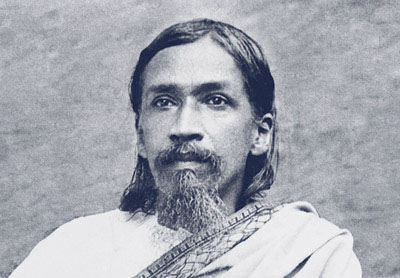
Sri Aurobindo, the philosopher-saint of Pondicherry (now Puducherry).
Photo-credit: www.sriaurobindoashram.org
July 27, 2026
By Raju Mansukhani
Key Takeaways:
Vision for Asia and the World: He outlined broader dreams of Asia’s liberation and resurgence, the eventual formation of a world-union based on international spirit and cooperation, and India’s capacity to contribute statesmanship and leadership toward these goals.
Spiritual and Evolutionary Mission: Sri Aurobindo emphasized India’s spiritual gift to the world and the ultimate evolutionary aim of raising human consciousness to a higher level, seeing India’s independence as potentially the starting point for these larger civilizational and spiritual transformations.
Recalling visionary words of philosopher-saint of Pondicherry
Given the global wars, killings of millions of people, the subsequent distress and discord across our world, it is time to revisit the key messages from the writings of Sri Aurobindo, the philosopher-saint of Pondicherry (now renamed as Puducherry). On 15 August 1947, on the eve of India’s Independence from British imperial rule, Sri Aurobindo’s message was broadcast on All India Radio. As most readers would agree, his thoughts, words of advice remain relevant and important till date.
“August 15th, 1947 is the birthday of free India. It marks for her the end of an old era, the beginning of a new age. But we can also make it by our life and acts as a free nation an important date in a new age opening for the whole world, for the political, social, cultural and spiritual future of humanity. August 15th is my own birthday and it is naturally gratifying to me that it should have assumed this vast significance. I take this coincidence, not as a fortuitous accident, but as the sanction and seal of the Divine Force that guides my steps on the work with which I began life, the beginning of its full fruition. Indeed, on this day I can watch almost all the world-movements which I hoped to see fulfilled in my lifetime, though then they looked like impracticable dreams, arriving at fruition or on their way to achievement. In all these movements free India may well play a large part and take a leading position,” he said.
In the universal, global vision of Sri Aurobindo there is a clear role for India to play. He enunciated his thoughts, his dreams when he said, “The first of these dreams was a revolutionary movement which would create a free and united India. India today is free but she has not achieved unity. At one moment it almost seemed as if in the very act of liberation she would fall back into the chaos of separate States which preceded the British conquest. But fortunately, it now seems probable that this danger will be averted and a large and powerful, though not yet a complete union will be established.” Besides the areas directly under British rule, there were more than 560 Princely States across the sub-continent. Many of these Princely States had been established after the collapse of the Mughal Empire, and several pre-dated the Mughals by centuries. The Princely States had a long and illustrious history; in fact, Sri Aurobindo after his return from England in 1893 was working for Baroda, one of the biggest and richest of the Princely States. He spent fourteen eventful years developing the university, and assisting the Maharaja of Baroda in his official duties.
Unity and division
Sri Aurobindo was not only deeply conscious of history he was able to assess the role of the Constituent Assembly in bringing together different segments of India’s citizens in the address of 1947. He said, “the wisely drastic policy of the Constituent Assembly has made it probable that the problem of the depressed classes will be solved without schism or fissure. But the old communal division into Hindus and Muslims seems now to have hardened into a permanent political division of the country. It is to be hoped that this settled fact will not be accepted as settled for ever or as anything more than a temporary expedient. For if it lasts, India may be seriously weakened, even crippled: civil strife may remain always possible, possible even a new invasion and foreign conquest. India’s internal development and prosperity may be impeded, her position among the nations weakened, her destiny impaired or even frustrated. This must not be; the partition must go. Let us hope that that may come about naturally, by an increasing recognition of the necessity not only of peace and concord but of common action, by the practice of common action and the creation of means for that purpose. In this way unity may finally come about under whatever form—the exact form may have a pragmatic but not a fundamental importance. But by whatever means, in whatever way, the division must go; unity must and will be achieved, for it is necessary for the greatness of India’s future.” For India, in the third decade of the 21st century, the words of Sri Aurobindo are prophetic with his emphasis on social-political unity at all times.
About Raju Mansukhani
Raju Mansukhani, based in New Delhi, is a researcher-writer on history and heritage issues; a media consultant with leading museums, non-profits, universities and corporates in India and overseas. Contributing regular columns, book reviews and features in the media he has drawn attention of the new generations to critical issues and personalities of Indian and Asian history. Over the last three decades he has authored books on diverse subjects including the media, palace architecture, sports and contemporary history. Through in-depth documentaries, he has profiled leading Asian public figures highlighting their research and publications.
View all posts by Raju Mansukhani
July 27, 2026
By Raju Mansukhani
Key Takeaways:
India’s Role in Unity and Freedom: In his 15 August 1947 All India Radio address, Sri Aurobindo celebrated India’s independence while stressing that true national fulfillment requires overcoming internal divisions (especially the Hindu-Muslim partition) and achieving lasting political and social unity.
Vision for Asia and the World: He outlined broader dreams of Asia’s liberation and resurgence, the eventual formation of a world-union based on international spirit and cooperation, and India’s capacity to contribute statesmanship and leadership toward these goals.
Spiritual and Evolutionary Mission: Sri Aurobindo emphasized India’s spiritual gift to the world and the ultimate evolutionary aim of raising human consciousness to a higher level, seeing India’s independence as potentially the starting point for these larger civilizational and spiritual transformations.
Recalling visionary words of philosopher-saint of Pondicherry
Given the global wars, killings of millions of people, the subsequent distress and discord across our world, it is time to revisit the key messages from the writings of Sri Aurobindo, the philosopher-saint of Pondicherry (now renamed as Puducherry). On 15 August 1947, on the eve of India’s Independence from British imperial rule, Sri Aurobindo’s message was broadcast on All India Radio. As most readers would agree, his thoughts, words of advice remain relevant and important till date.
“August 15th, 1947 is the birthday of free India. It marks for her the end of an old era, the beginning of a new age. But we can also make it by our life and acts as a free nation an important date in a new age opening for the whole world, for the political, social, cultural and spiritual future of humanity. August 15th is my own birthday and it is naturally gratifying to me that it should have assumed this vast significance. I take this coincidence, not as a fortuitous accident, but as the sanction and seal of the Divine Force that guides my steps on the work with which I began life, the beginning of its full fruition. Indeed, on this day I can watch almost all the world-movements which I hoped to see fulfilled in my lifetime, though then they looked like impracticable dreams, arriving at fruition or on their way to achievement. In all these movements free India may well play a large part and take a leading position,” he said.
In the universal, global vision of Sri Aurobindo there is a clear role for India to play. He enunciated his thoughts, his dreams when he said, “The first of these dreams was a revolutionary movement which would create a free and united India. India today is free but she has not achieved unity. At one moment it almost seemed as if in the very act of liberation she would fall back into the chaos of separate States which preceded the British conquest. But fortunately, it now seems probable that this danger will be averted and a large and powerful, though not yet a complete union will be established.” Besides the areas directly under British rule, there were more than 560 Princely States across the sub-continent. Many of these Princely States had been established after the collapse of the Mughal Empire, and several pre-dated the Mughals by centuries. The Princely States had a long and illustrious history; in fact, Sri Aurobindo after his return from England in 1893 was working for Baroda, one of the biggest and richest of the Princely States. He spent fourteen eventful years developing the university, and assisting the Maharaja of Baroda in his official duties.
Unity and division
Sri Aurobindo was not only deeply conscious of history he was able to assess the role of the Constituent Assembly in bringing together different segments of India’s citizens in the address of 1947. He said, “the wisely drastic policy of the Constituent Assembly has made it probable that the problem of the depressed classes will be solved without schism or fissure. But the old communal division into Hindus and Muslims seems now to have hardened into a permanent political division of the country. It is to be hoped that this settled fact will not be accepted as settled for ever or as anything more than a temporary expedient. For if it lasts, India may be seriously weakened, even crippled: civil strife may remain always possible, possible even a new invasion and foreign conquest. India’s internal development and prosperity may be impeded, her position among the nations weakened, her destiny impaired or even frustrated. This must not be; the partition must go. Let us hope that that may come about naturally, by an increasing recognition of the necessity not only of peace and concord but of common action, by the practice of common action and the creation of means for that purpose. In this way unity may finally come about under whatever form—the exact form may have a pragmatic but not a fundamental importance. But by whatever means, in whatever way, the division must go; unity must and will be achieved, for it is necessary for the greatness of India’s future.” For India, in the third decade of the 21st century, the words of Sri Aurobindo are prophetic with his emphasis on social-political unity at all times.
The young Aurobindo Ghose, around the time he was working in Baroda.
Photo-credit: www.sriaurobindoashram.org
Not merely confined to India and its emergence from oppressive colonial rule, Sri Aurobindo’s vision is for Asia’s resurgence. He said, “Another dream was for the resurgence and liberation of the peoples of Asia and her return to her great role in the progress of human civilisation. Asia has arisen; large parts are now quite free or are at this moment being liberated: its other still subject or partly subject parts are moving through whatever struggles towards freedom. Only a little has to be done and that will be done today or tomorrow. There India has her part to play and has begun to play it with an energy and ability which already indicate the measure of her possibilities and the place she can take in the council of the nations.”
During those formative years in Baroda, Sri Aurobindo established a programme of national emancipation even though he was preoccupied with administrative and educational responsibilities. In his magnum opus, The Intellectual Roots of India’s Freedom Struggle (1893-1918), Prithwindra Mukherjee wrote how Sri Aurobindo “sailed upstream towards the source of Indian civilization. In addition to possessing Bengali (to the extent of using it for editorials published in his Bengali magazine Dharma, in 1909), and learning other major Indian languages (Hindi, Gujarati, Marathi and, later, Tamil), Aurobindo mastered Sanskrit and keeping with the initial objective of the seers of antiquity—the Vedas, the Upanishads, the Gita and of other fundamental texts. Up to then, these new significances escaped the grasp of the routine philologists. Sri Aurobindo affirmed, in his treatise on the philosophy of the Upanishads that, thanks to a number of inner disciplines and observances, the seers of ancient India had discovered some essential truths of the universe inside and outside themselves.”
For all Mankind
In the address on 15 August 1947, Sri Aurobindo spoke of the third dream and the role which India had to play. “The third dream was a world-union forming the outer basis of a fairer, brighter and nobler life for all mankind. That unification of the human world is under way; there is an imperfect initiation organised but struggling against tremendous difficulties. But the momentum is there and it must inevitably increase and conquer. Here too India has begun to play a prominent part and, if she can develop that larger statesmanship which is not limited by the present facts and immediate possibilities but looks into the future and brings it nearer, her presence may make all the difference between a slow and timid and a bold and swift development. A catastrophe may intervene and interrupt or destroy what is being done, but even then the final result is sure. For unification is a necessity of Nature, an inevitable movement. Its necessity for the nations is also clear, for without it the freedom of the small nations may be at any moment in peril and the life even of the large and powerful nations insecure. The unification is therefore to the interests of all, and only human imbecility and stupid selfishness can prevent it; but these cannot stand for ever against the necessity of Nature and the Divine Will. But an outward basis is not enough; there must grow up an international spirit and outlook, international forms and institutions must appear, perhaps such developments as dual or multilateral citizenship, willed interchange or voluntary fusion of cultures. Nationalism will have fulfilled itself and lost its militancy and would no longer find these things incompatible with self-preservation and the integrality of its outlook. A new spirit of oneness will take hold of the human race.”
His faith in India’s spiritual heritage and its contribution to the world remained at the forefront of his vast writings. Sri Aurobindo said, “Another dream, the spiritual gift of India to the world has already begun. India’s spirituality is entering Europe and America in an ever increasing measure. That movement will grow; amid the disasters of the time more and more eyes are turning towards her with hope and there is even an increasing resort not only to her teachings, but to her psychic and spiritual practice. “The final dream was a step in evolution which would raise man to a higher and larger consciousness and begin the solution of the problems which have perplexed and vexed him since he first began to think and to dream of individual perfection and a perfect society. This is still a personal hope and an idea, an ideal which has begun to take hold both in India and in the West on forward-looking minds. The difficulties in the way are more formidable than in any other field of endeavour, but difficulties were made to be overcome and if the Supreme Will is there, they will be overcome. Here too, if this evolution is to take place, since it must proceed through a growth of the spirit and the inner consciousness, the initiative can come from India and, although the scope must be universal, the central movement may be hers. Such is the content which I put into this date of India’s liberation; whether or how far this hope will be justified depends upon the new and free India.” On the 154th birth anniversary of the philosopher-saint on 15th August 2026, we pay our homage to him and search deeper into his writings for inspiration and wisdom.
Not merely confined to India and its emergence from oppressive colonial rule, Sri Aurobindo’s vision is for Asia’s resurgence. He said, “Another dream was for the resurgence and liberation of the peoples of Asia and her return to her great role in the progress of human civilisation. Asia has arisen; large parts are now quite free or are at this moment being liberated: its other still subject or partly subject parts are moving through whatever struggles towards freedom. Only a little has to be done and that will be done today or tomorrow. There India has her part to play and has begun to play it with an energy and ability which already indicate the measure of her possibilities and the place she can take in the council of the nations.”
During those formative years in Baroda, Sri Aurobindo established a programme of national emancipation even though he was preoccupied with administrative and educational responsibilities. In his magnum opus, The Intellectual Roots of India’s Freedom Struggle (1893-1918), Prithwindra Mukherjee wrote how Sri Aurobindo “sailed upstream towards the source of Indian civilization. In addition to possessing Bengali (to the extent of using it for editorials published in his Bengali magazine Dharma, in 1909), and learning other major Indian languages (Hindi, Gujarati, Marathi and, later, Tamil), Aurobindo mastered Sanskrit and keeping with the initial objective of the seers of antiquity—the Vedas, the Upanishads, the Gita and of other fundamental texts. Up to then, these new significances escaped the grasp of the routine philologists. Sri Aurobindo affirmed, in his treatise on the philosophy of the Upanishads that, thanks to a number of inner disciplines and observances, the seers of ancient India had discovered some essential truths of the universe inside and outside themselves.”
For all Mankind
In the address on 15 August 1947, Sri Aurobindo spoke of the third dream and the role which India had to play. “The third dream was a world-union forming the outer basis of a fairer, brighter and nobler life for all mankind. That unification of the human world is under way; there is an imperfect initiation organised but struggling against tremendous difficulties. But the momentum is there and it must inevitably increase and conquer. Here too India has begun to play a prominent part and, if she can develop that larger statesmanship which is not limited by the present facts and immediate possibilities but looks into the future and brings it nearer, her presence may make all the difference between a slow and timid and a bold and swift development. A catastrophe may intervene and interrupt or destroy what is being done, but even then the final result is sure. For unification is a necessity of Nature, an inevitable movement. Its necessity for the nations is also clear, for without it the freedom of the small nations may be at any moment in peril and the life even of the large and powerful nations insecure. The unification is therefore to the interests of all, and only human imbecility and stupid selfishness can prevent it; but these cannot stand for ever against the necessity of Nature and the Divine Will. But an outward basis is not enough; there must grow up an international spirit and outlook, international forms and institutions must appear, perhaps such developments as dual or multilateral citizenship, willed interchange or voluntary fusion of cultures. Nationalism will have fulfilled itself and lost its militancy and would no longer find these things incompatible with self-preservation and the integrality of its outlook. A new spirit of oneness will take hold of the human race.”
His faith in India’s spiritual heritage and its contribution to the world remained at the forefront of his vast writings. Sri Aurobindo said, “Another dream, the spiritual gift of India to the world has already begun. India’s spirituality is entering Europe and America in an ever increasing measure. That movement will grow; amid the disasters of the time more and more eyes are turning towards her with hope and there is even an increasing resort not only to her teachings, but to her psychic and spiritual practice. “The final dream was a step in evolution which would raise man to a higher and larger consciousness and begin the solution of the problems which have perplexed and vexed him since he first began to think and to dream of individual perfection and a perfect society. This is still a personal hope and an idea, an ideal which has begun to take hold both in India and in the West on forward-looking minds. The difficulties in the way are more formidable than in any other field of endeavour, but difficulties were made to be overcome and if the Supreme Will is there, they will be overcome. Here too, if this evolution is to take place, since it must proceed through a growth of the spirit and the inner consciousness, the initiative can come from India and, although the scope must be universal, the central movement may be hers. Such is the content which I put into this date of India’s liberation; whether or how far this hope will be justified depends upon the new and free India.” On the 154th birth anniversary of the philosopher-saint on 15th August 2026, we pay our homage to him and search deeper into his writings for inspiration and wisdom.
About Raju Mansukhani
Raju Mansukhani, based in New Delhi, is a researcher-writer on history and heritage issues; a media consultant with leading museums, non-profits, universities and corporates in India and overseas. Contributing regular columns, book reviews and features in the media he has drawn attention of the new generations to critical issues and personalities of Indian and Asian history. Over the last three decades he has authored books on diverse subjects including the media, palace architecture, sports and contemporary history. Through in-depth documentaries, he has profiled leading Asian public figures highlighting their research and publications.
View all posts by Raju Mansukhani

No comments:
Post a Comment