Thursday, July 02, 2026


Everllence Expands Training Center in Augsburg

Everllence
PrimeServ Academy nearly doubles space for hands-on training and new technologies

Published Jul 1, 2026 10:52 PM by The Maritime Executive

[By: Everllence]

Everllence has unveiled the comprehensive expansion of the PrimeServ Academy at its Augsburg site. By increasing floor space from around 1,700 to approximately 3,000 square meters, the company is responding to the growing demand for training driven by new technological developments. The official opening took place as part of the Technology Fair, an annual customer event that Everllence recently held for the sixth occasion and that had 50 participants.

Uwe Lauber – CEO of Everllence – said: “With the expansion of this PrimeServ Academy, we are investing 6.5 million euros in the future of the site and strengthening Augsburg as a key training center for our customers and employees from the global, PrimeServ after-sales organization.”

Holger Gehring - Head of PrimeServ Academy Augsburg – said: “The extended PrimeServ Academy now also places a special focus on our expanded engine portfolio, which is increasingly shifting toward climate-neutral fuels such as green methanol and methane. New fuels bring new challenges for our customers. We support them, not just with our future-oriented technologies but also by working closely with them throughout our engines’ entire lifecycles with tailored training.”

Training center grows with demand
The PrimeServ Academy in Augsburg is the company’s hub for training on large, medium-speed engines and turbochargers and, in recent years, an average of around 1,500 people annually have participated in training there. Participants are evenly split between customers and employees from Everllence’s global, after-sales organization.

Demand for training has increased significantly in recent years, driven in part by technological developments in engines, automation and injection systems, and turbochargers, as well as by the growing use of climate-neutral fuels. At the same time, there continues to be strong demand for hands-on courses for older installations. As part of the expansion, a larger workshop, four additional training rooms and a dedicated area for online formats were added to existing facilities. This enables Everllence to offer training on new and future technologies while significantly increasing capacity for existing ones.

As part of the expansion, another building directly adjacent to the PrimeServ Academy and dating from 1888 was fully renovated and converted into a training center over the course of around one-and-a-half years. Everllence is thus continuing to invest in the Augsburg site and extending its activities within service and training.

The products and services herein described in this press release are not endorsed by The Maritime Executive.

 

Indian Coast Guard Aids Vessel Along the Coast that was Taking on Water

cargo ship flooding
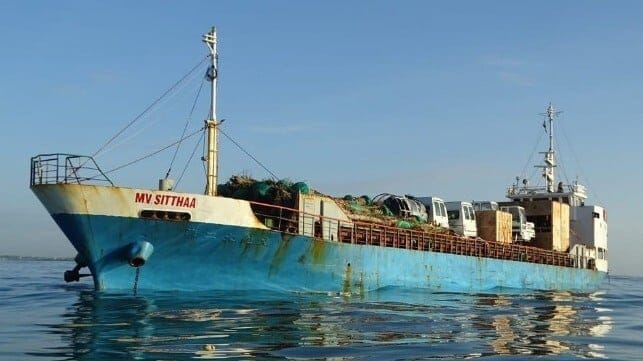
Cargo ship reported flooding in multiple compartments (Indian Coast Guard)

Published Jun 29, 2026 4:02 PM by The Maritime Executive


[Brief]  A small cargo ship operating along the Indian Coast reported on Saturday that it was taking on water in multiple compartments. The Indian Coast Guard dispatched its vessel Atulya to aid in getting the vessel stable and ultimately taking it to the port of Tiruchendur.

The cargo ship Sitthaa (649 dwt) was built in 1996 and is registered in Comoros. According to the Coast Guard, the vessel was taking on water in multiple locations. A specialized team boarded the vessel and coordinated with salvage experts. The situation and intake of water were monitored while emergency repairs and dewatering were underway. They were able to bring the flooding under control.


Records indicate that the vessel had been reported for multiple issues in 2025. A port state inspection identified 14 deficiencies, prompting a detention. Hull damage was identified that the inspection said was impairing the vessel’s seaworthiness. In addition, they identified issues with sewage treatment, fire detection, certificates, and labor.

After the situation was stabilized, the vessel was taken to the port of Tiruchendur. It will receive a survey and additional repairs.

The Coast Guard notes it is the latest in a series of challenging calls it has responded to recently.

OSHA Fines Terminal Operator $82,000 for Million-Gallon Acid Spill

Small subcontractor handed an additional $3 million fine

Cash

Published Jun 30, 2026 7:22 PM by The Maritime Executive

The U.S. Department of Labor has issued a combined $3.5 million in fines to the companies responsible for a sulfuric acid spill on the Houston Ship Channel last year. 

The spill occurred at the BWC Jacinto site in Channelview, one of 22 facilities that privately-held BWC Terminals operates around the U.S. The agency alleged that an unsafe chemical mixture caused the spill, some of which entered the shipping channel. "OSHA found that despite safety warnings, BWC Terminals mixed fresh and spent sulfuric acid, triggering a tank overpressure that ruptured a supply line releasing one million gallons of sulfuric acid resulting in multiple employee injuries," the agency alleged in a statement. 

For the cleanup, BWC hired Coastal Environmental Solutions and its subcontractor One Way Environmental Services, which supplied the labor for the post-casualty remediation effort. The overwhelming bulk of the fine ($3 million) was levied on One Way Environmental, a small local firm.

The subcontractor has a limited public presence. Its mailing address in the OSHA complaint appears to be an auto repair shop in South Park, a low-income, majority-minority neighborhood on the south side of Houston. 

One Way's ability to pay a multimillion-dollar fine is unclear. Its financial standing has been questioned by some of its workers, who told local Click2Houston in February that some of their handwritten paychecks bounced and that they had not been paid on time.

A group of One Way laborers gathered outside the house of the firm's owner February 4 to complain, causing enough of a disturbance that the police were called. The owner told the news outlet that a banking issue was responsible for the nonpayment of wages, with some workers claiming unpaid amounts of about $4,000 per person. The wages were paid in several days' time. 

OSHA alleges that during the process of the acid cleanup, One Way committed 18 willful, egregious violations of safety regulations, plus five serious violations. The agency claims that One Way didn't provide its laborers with the right training, safety measures or respirator fit tests before sending them to clean up a sulfuric acid spill.

BWC and Coastal received other penalties. OSHA alleges that BWC exposed its workers to chemical burns, did not provide hazmat training, and had deficiencies related to respirator use. The agency proposed a fine of about $82,000 as a penalty for the terminal operator's million-gallon release.


Report: Hibernia Platform Spill Could Have Caused Serious Casualty

Hibernia
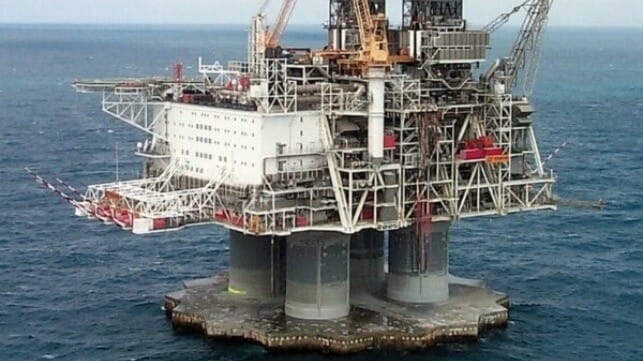
Hibernia platform (press handout / Hibernia Management and Development Company Ltd.)

Published Jun 29, 2026 7:20 PM by The Maritime Executive


Offshore regulators say that a recent spill aboard the Hibernia oil platform off Canada's eastern shores caused no pollution or injuries - but the outcome could have been much more serious. 

On the morning of May 12, the Hibernia platform's crew were preparing to carry out a routine transfer of crude oil to a tanker. At about 1100 hours, workers noticed unusual vibration and noise coming from a utility shaft on the platform and went to investigate. They found that a sludge pump's low point drain had sheared off the pump, releasing about 400 gallons of crude oil into the interior of the platform.

The workers shut off the platform before anything more could happen, and there were no injuries or pollution effects. However, the regulator said that the incident had potential to cause a fire, explosion or fatality. 

The incident was reported May 12, and the platform's operator has submitted a preliminary report. The final investigation report is still pending. 

Hibernia is the world's largest oil platform by mass, thanks to the gigantic concrete-and-rebar gravity base structure (GBS) holding it in place. It can store about 1.3 million barrels of crude at a time in its storage tanks. It has been producing oil on the Grand Banks off Newfoundland and Labrador for nearly 30 years, and is near the end of its original design lifespan. Operator ExxonMobil says that its life will be extended by drilling new production wells and refurbishing its physical plant. It exports its oil by means of shuttle tanker to a nearby refinery. 

The installation has had incidents before, notably a 2019 spill that released 32,000 gallons of oil into the sea. Other, smaller spills include 580 gallons of oil-water mix in 2019 and 1,500 gallons of oil in 2013. The operator has paid various fines over the years for these pollution incidents. 

Famously, the exploration of the Grand Banks oil reservoirs came at a price. In 1982, the semisubmersible Ocean Ranger was working the area when it was sunk by an extreme storm, at the cost of the lives of all 84 crewmembers (and later, three salvage divers). 


Thieves Make Off With $1.4M Worth of Bronze Propellers at WA Storage Yard

Propellers
WA Police Force press handout via ABC

Published Jun 29, 2026 8:02 PM by The Maritime Executive


One tug owner in Western Australia is facing a significant insurance claim, reports ABC. Sometime over the southern-hemisphere winter, someone broke into a storage yard near Dampier and stole a set of very expensive tug propellers, with a total value in the millions. 

According to the WA Police Force, thieves appear to have made off with four tug propellers made of a high-spec bronze-nickel alloy from a yard on the remote Burrup Peninsula. The timeline of the theft is quite uncertain: it is believed to have occurred sometime between December 2025 and late May 2026. The owner did not report them missing until last month. 

The authorities believe that the suspects likely brought in heavy equipment to remove the goods, since the propellers weigh about two tonnes each. The $1.4 million consignment disappeared along with the storage racks used for shipping. 

The likely fate of the propellers is for a scrapyard. The alloy is high in copper, and the current boom market for the conductive metal - which is much in demand for electrical and electronic equipment - is driving a rash of copper theft across the continent. Current pricing in the Australian market runs at about US$14 per kilo for unadulterated copper, and measures to reduce buying at the point of purchase have had limited traction. Scrap metal theft has a comparatively low priority for enforcement when there are other, more serious crimes to be dealt with. 

At a small scale, the crime is often linked to drug consumption, and specifically methamphetamine.  Australia has the world's largest per-capita methamphetamine market. Organized heists may be conducted systematically by larger gangs. 


Hapag-Lloyd Continues to Invest in its Portfolio of Port Terminals

Hamburg Germany container terminal
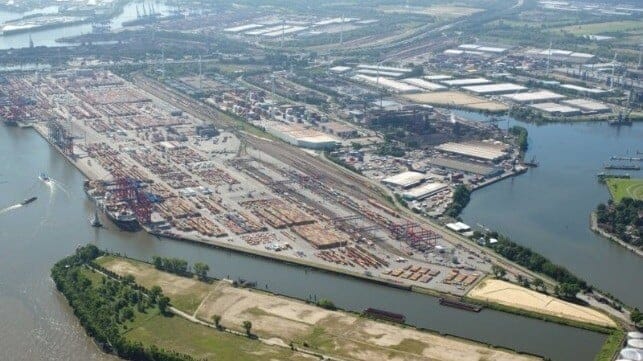
Hapag's Hanseatic Global terminals is negotiating to acquire a 20% stake in Eurogate Container Terminal Hamburg (Eurogate)

Published Jul 1, 2026 7:15 PM by The Maritime Executive

Hapag-Lloyd, three years after launching a port terminal company, Hanseatic Global Terminals, is continuing to expand its portfolio. The company announced negotiations for investments in Hamburg, Germany, and Tangier Med, Morocco, for its portfolio as it works toward a goal of more than 30 terminals by 2030.

The company has completed a terms sheet outlining the key conditions for an intended investment in Eurogate Container Terminal Hamburg. It calls for Hanseatic Global Terminals to acquire a 20 percent stake in the operation from Eurogate.

The terminal is one of the major facilities in the Port of Hamburg, currently with an annual capacity of 2.5 million TEU. Hanseatic Global Terminals will be investing as efforts are underway for a planned western extension of the terminal and further modernization and automation. It is expected to further increase the capacity of the Hamburg location.

“The agreement marks another important step in strengthening our Terminal Portfolio in Europe. Together with our partners, we aim to support the further development of efficient, future-ready terminal infrastructure that benefits customers, ports, and global trade,” said Dheeraj Bhatia, CEO of Hanseatic Global Terminals.

It points to the opportunities for digitalization and increased automation at the terminal as well as the electrification of cargo handling. It looks to further develop Eurogate Container Terminal Hamburg to enhance its role as a logistics hub in Northern Europe.
  
Hapag highlights that it is also a further demonstration on its long-term commitment to the Port of Hamburg. It already holds a stake in Container Terminal Altenwerder, also in Hamburg. 

As part of the negotiations with Eurogate, Hanseatic Global Terminals would also increase its stake in the TC3 container terminal in the Moroccan port of Tangier. It calls for increasing its participation from 10 to 20 percent, acquiring the stake from Eurogate.

It highlights the importance that the Tangier Med port has taken on in the global routing. It serves as a key transshipment port for vessels coming from Asia and for access across the Mediterranean. 

Established in 2023, Hanseatic Global Terminals currently manages a portfolio of stakes in 26 terminals and logistic services in 13 countries. It participates with India’s J M Baxi, having increased its investment to a 50 percent stake earlier this year. It also entered Latin America in 2025 and continues to expand its investments. It recently took a 50 percent interest in a new greenfield port project in Brazil and took full ownership of the Florida International Terminal.


Pentagon Puts All Drone Programs Under One Office, Except Navy's MUSV

Large unmanned aircraft and the Navy's ship-sized drone vessels are outside of the new office's scope

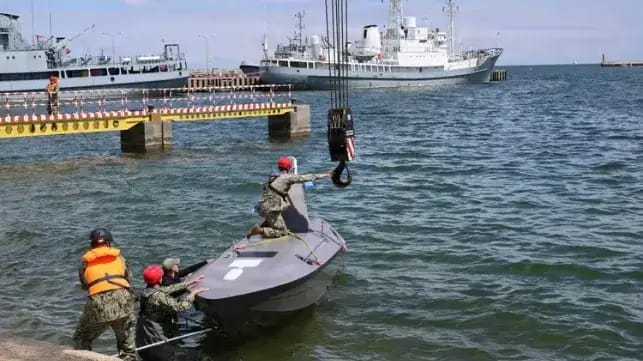
Navy personnel launch a drone boat in an exercise in Gdynia, Poland, June 2026 (USN)

Published Jul 1, 2026 6:45 PM by The Maritime Executive

As the Pentagon moves to expand its unmanned-systems programs in all domains and across all service branches, it is setting up a new command center for all U.S. military drone acquisition and R&D programs. The newly-formed office - dubbed the Direct Reporting Portfolio Manager for Unmanned Systems, and referred to day-to-day as the DRPM-UxS - will be in charge of overseeing drone subs, drone boats, terrestrial drones and airborne drones, both autonomous and remotely-controlled. 

"While global military unmanned systems production has skyrocketed over the last three years, the United States has been slow to field these capabilities at scale. Drones and autonomous systems are the most consequential battlefield innovation of this generation. The DoW must move at the speed this moment demands," Defense Secretary Pete Hegseth said in a statement. 

The existing directors of the Defense Autonomous Warfare Group and Joint Interagency Task Force 401 are folded into the new office's functions as dual-hatted appointments, to be overseen by the head of DRPM-UxS. "The DRPM-UxS will take precedence on all acquisition matters related to execution of UxS programs after the Sec War and the DepSecWar," Hegseth wrote - including serving as the Milestone Decision Authority (MDA). The office will be exempted from all restrictions on hiring for its own personnel. 

The largest unmanned aviation programs (systems over about 1,300 pounds) remain under the control of each service branch. So does the Navy's restructured MUSV unmanned warship program, which remains under the control of the Portfolio Acquisition Executive Robotic Autonomous System (PAE RAS), headed by longtime Navy engineer Rebecca Gassler.

The recently-completed reorganization of the Navy's unmanned-systems programs and the revamp of the MUSV acquisition were based in part on detailed guidance from the Government Accountability Office, which recommended thorough reforms in early 2025. 


One Missing in U.S. Navy Helicopter Crash in Arabian Sea

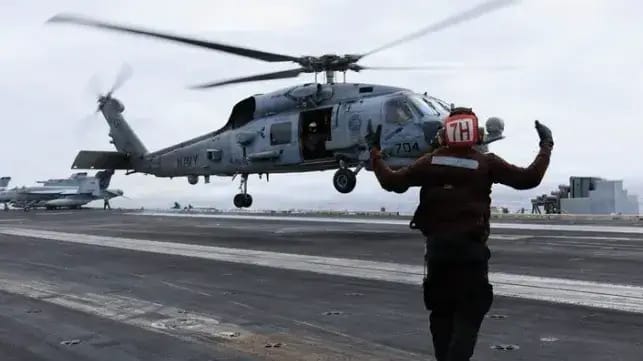
A helicopter takes off from the deck of USS George H.W. Bush, June 2026 (USN)

Published Jul 1, 2026 7:57 PM by The Maritime Executive

A helicopter from the carrier USS George H.W. Bush has gone down in the Arabian Sea, prompting a sustained search and rescue effort. 

At about 0330 Eastern Time on July 1 - late morning in the region - an MH-60S Sea Hawk helicopter went down in the Arabian Sea with four crewmembers on board. Three were rescued swiftly and are on board in stable condition, according to U.S. 5th Fleet. 

The fourth crewmember remains missing, and Navy assets in the area are conducting a search. 

The cause of the accident is under investigation, but it is not believed that any hostile action was involved, 5th Fleet said. 

The last loss of a helicopter in the operation was the downing of an Army Apache attack helicopter early last month in the Strait of Hormuz, caused by Iranian fire. The Iranian antiaircraft missile that struck the Apache failed to detonate, and both pilots managed to survive a water landing and escape the cockpit. The attack prompted an inventive SAR effort (involving an unmanned vessel) and a sizeable round of retaliatory strikes. 

The USS George H.W. Bush has a comparatively positive safety record. A crewmember was struck by a propeller blade and killed during routine deck operations in 2018, but there have been few incidents since. The ship is currently deployed in the Arabian Sea as part of the mission to deter Iranian attacks on shipping.


House Leaders Call for an End to White House's Jones Act Waiver

Congress

Published Jul 1, 2026 8:46 PM by The Maritime Executive

The Republican leaders of the House of Representatives have written to the White House to ask for an eventual end to the sweeping 150-day waiver of the Jones Act. The waiver is the longest and broadest in scope since at least 1950, and industry advocates say that it is already having damaging effects on the health of America's domestic maritime sector. 

The petition's signatories include all relevant House decisionmakers, including House Speaker Mike Johnson (R-LA), House Oversight chairman Rep. James Comer (R-KY), House Majority Leader Rep. Steve Scalise (R-LA), Transportation Committee Chairman Sam Graves (R-MS), Maritime Transportation Subcommittee Chairman Mike Ezell (R-MS), and 47 other members of the chamber. Together, they have asked the White House to allow the waiver to expire at the end of its currently-scheduled lifespan - August 16 - and use other authorities to help reduce the cost of fuel at the pump. 

The waiver has been quite controversial. The Jones Act shipping industry says that the use of foreign-flag tanker tonnage has not meaningfully affected gas prices, has had no impact on military operations (the only statutory reason for a waiver), and is causing harm to domestic shipping and shipbuilding. Anecdotal reports suggest that at least some Jones Act newbuild decisions have been slowed down in order to wait for long-term clarity on the Act's future, and that U.S. oil-industry charterers have used the threat of waivers to press U.S. tanker operators for day-rate discounts. 

The House letter notes that about 95 percent of the waivered voyages benefit foreign operators that do not pay taxes and do not have to comply with U.S. immigration laws in order to crew their ships. "The Jones Act waiver has become a loophole exploited by adversarial countries to erode America’s maritime dominance, the authors concluded.

Foreign-flag shipping's lower operating costs - along with the far-lower capital cost of foreign-built hulls - make it difficult for American maritime operators to compete commercially, and the Jones Act provides them protection to sustain operations. "Our nation’s strongest shield against foreign exploitation of American waterways is the Jones Act," the congressmen wrote to the president. "We respectfully request that you allow the waiver to expire on August 16, 2026. Thank you for your consideration of this matter."

Jones Act opponents have noted that waivered voyages have delivered large quantities of fuel from Texas to California, the highest-priced fuel market in the lower 48 states. Administration officials have generally supported the waiver. Energy Secretary Chris Wright told the Atlantic Council in June that it has been "enormously helpful to suspend the Jones Act temporarily," and White House Council of Economic Advisors chairman Kevin Hassett told reporters that the waiver was "incredibly effective" for moving fuel from the Gulf to the West Coast. The editorial board of the Washington Post has hailed it as a "real-life experiment of what life would be like without the Jones Act," calling for the Act's permanent repeal.

The waiver's future is uncertain. Global oil prices have plummeted since the signing of the U.S.-Iran ceasefire MOU last month, and domestic fuel prices at the pump have fallen below the $4 per gallon mark. This means the end of the high-price situation that the waiver was created to address; though the underlying rationale has passed - at least for now - the White House has yet to signal whether it would sign another extension to keep the waiver in effect. 


Greece Arrests Cruise Ship Captain After Lines Part and Passenger Falls

Cruise ships Corfu Greece
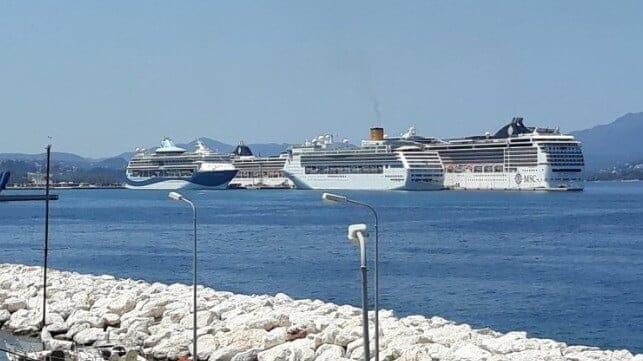
The cruise ship moved after its lines parted and a passenger on the gangway fell into the water (Corfu Port file photo)

Published Jul 2, 2026 12:19 PM by The Maritime Executive

Greece has placed the captain of a large, international cruise ship under arrest after an incident in the Port of Corfu on Wednesday evening, July 1. The cruise ship was one of four docked in the port, which was experiencing strong winds.

The Hellenic Coast Guard reports the lines holding the cruise ship, which is registered in the Bahamas, parted in the wind. The vessel had its gangway down, and passengers were returning for a day on shore before the departure.

After the lines broke, the gangway shifted and a female passenger, age 56 from New Zealand, lost her footing and fell into the water. The crew and dockworkers rush in and they were able to retrieve the woman, who is reported to have suffered slight injuries on her face and body. She was sent to a local hospital by ambulance.

The captain of the cruise ship, a 56-year-old Italian citizen, was taken into custody as an investigation began into the incident. The captain was arrested on charges of violating an article of the Hellenic Penal Code that pertains to exposing an individual to life-threatening danger or placing them in a helpless situation. The captain could face charges of neglecting a legal duty of care for the passenger.

The cruise ship was able to continue on its voyage after the incident, while the investigation is being carried out by the Central Port Authority of Corfu.