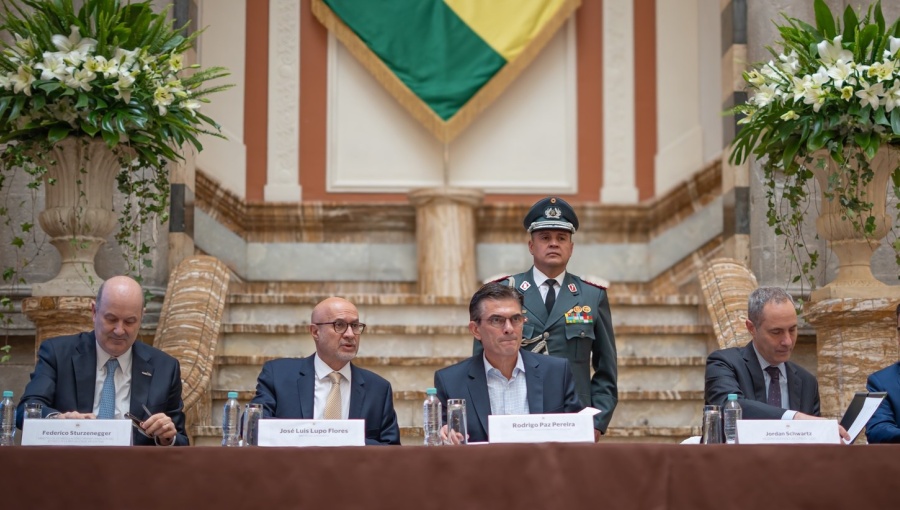
Bolivian President Rodrigo Paz signed legislation on June 8 expanding executive powers to deploy the military against road blockades that have brought the country to a near-standstill for almost six weeks, as fresh clashes broke out in Cochabamba and the human toll from the unrest climbed to at least ten dead.
The Law on the Regulation of States of Emergency, pushed through an all-night sitting of the Chamber of Deputies that stretched across nearly 15 hours the previous day, gave Paz authority to declare a state of emergency by decree, potentially bringing troops into the effort to reopen blocked highways. Any such decree must be submitted to the Plurinational Legislative Assembly within 72 hours for approval or rejection. Paz, who last month had publicly rejected calls for a state of emergency, has not yet issued the decree, and it remains unclear whether he will do so, as military crackdowns on protests have toppled Bolivian presidents before.
With his cabinet ministers and the chiefs of the armed forces and police at his side, Paz held a press conference in La Paz framing the unrest as an organised assault on democratic order. "This law is to protect the majority of the country from the narco-terrorism that is instigating the protests," he said. "I extend my hand to the social organisations that have legitimate demands and reiterate my willingness to engage in dialogue." He also lashed out at former president Evo Morales, referring to "the boss who is in Chapare" and accusing him of having ordered the radicalisation of the demonstrations. Paz added that his government would serve its full term through 2030.
The signing coincided with renewed violence. Cochabamba saw running confrontations in which demonstrators threw firecrackers and debris at officers, who fired tear gas in response, with police making 23 arrests. Separately, in El Alto, a public transport workers' office was overrun by demonstrators angered by persistent fuel shortages; police detained at least 28 people. The government's human rights ombudsman recorded ten fatalities, 37 injuries and 365 detentions in the five weeks to June 2. Paz's administration contests some of those figures, arguing seven deaths resulted from blocked access to hospitals, and says each case is being investigated.
Bolivia has now endured 39 consecutive days of protests, with more than 90 active blockades severing supply routes across eight of the country's nine regions. La Paz, the seat of government, and the neighbouring city of El Alto have faced acute shortages of food, fuel and medical supplies, including liquid oxygen. The National Chamber of Industries has estimated economic losses from the unrest at more than $2.1bn. La Paz's regional health authority has declared a hospital emergency, with some facilities left with only days of oxygen reserves.
The crisis has drawn sharp international attention. US Defence Secretary Pete Hegseth took to X to express Washington's backing for Paz's administration, warning that Bolivia must not succumb to what he called "narco-terrorist interference." Secretary of State Marco Rubio separately pledged to step up emergency aid. Paz responded publicly, posting on X that "Bolivia defends its democracy through its institutions, through dialogue, and with the support of its people," while vowing not to allow what he described as narcoterrorist interests to destabilise the country.
The protest movement is led by the Bolivian Workers' Centre (COB) and the Túpac Katari Peasant Federation. The movement's central demand has coalesced into one: that Paz step down immediately, just seven months after his election ended nearly two decades of rule by Evo Morales's hard-leftist movement. Demonstrators accuse Paz of abandoning the rural and labour constituencies that backed him at the ballot box, and of pressing ahead with plans to privatise state enterprises and raise tariffs for basic services, accusations the government denies. The COB also denounced the arrest on June 7 of five of its leaders, whom it said were seized by hooded, plainclothes individuals while travelling in a private vehicle.
The political pressure has taken a toll on Paz's centrist administration. Three ministers — those responsible for labour, education and defence — have resigned since the unrest began. The former anti-drug chief, Ernesto Justiniano, has taken over the defence portfolio.
Morales, who has remained in his stronghold in the coca-growing Chapare region for nearly two years while evading an arrest warrant on human trafficking charges, denied orchestrating the protests. In earlier social media posts, he defended the mobilisation as a popular rebellion driven by genuine economic grievances.

No comments:
Post a Comment