Shein Bought Everlane. The Rest of Ethical Fashion May Follow.
Two things happened this year that the fashion industry would prefer you didn’t connect. Shein bought Everlane — a $100 million acquisition of ethical fashion’s most recognisable name, the brand that built its identity on “radical transparency” and the promise that consumption could be made clean — and the EU quietly pushed its binding corporate accountability checks to 2029.
One was a business transaction. The other was a policy retreat. Together they are a single statement: the people who profit from the labour of 75 million garment workers have decided, again, that accountability can wait.
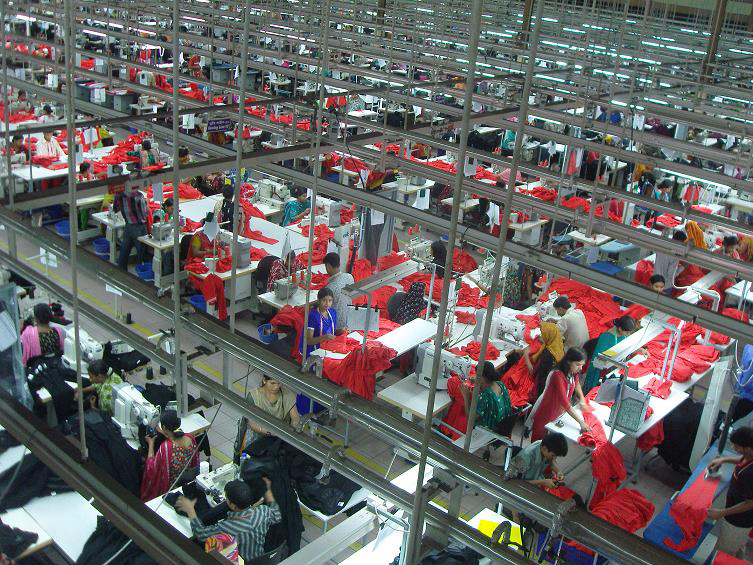
I’ve spent my career moving between the runway and the workshop floor — in the rooms where brands announce their ethical commitments to great applause, and in the factories where the women who make those commitments real earn wages that don’t survive the month.
The gap between those two rooms is the gap the industry has always exploited, and nobody ever seriously tried to close.
“Radical transparency” was always a story Western brands told about themselves. Everlane disclosed its markup. It did not disclose whether its workers could afford to send their children to school. The brand’s entire ethical proposition rested on what it chose not to say.
This is the structural dishonesty at the heart of ethical fashion: the brand takes the credit, the factory bears the cost, and the worker absorbs the risk. When Shein buys the brand, the credit transfers. The cost and the risk stay exactly where they were.
Everlane is not an isolated case. Mara Hoffman, one of sustainable fashion’s most recognisable names, closed in 2024, citing the impossibility of building a profitable business while maintaining genuine ethical standards. Allbirds, valued at $4 billion at its 2021 IPO on the back of its sustainability story, just sold its assets for $39 million. Most of the ethical fashion sector is private-equity backed, debt-laden, and operating on margins that were always too thin to survive a sustained price war with fast fashion.
The EU delay removes the one regulatory pressure that might have made genuine supply chain investment economically necessary. Without it, the choice for every conscious label is the same one Everlane faced: find a buyer, or fold. A movement liquidated, label by label, while the industry’s actual workforce watches Western consumers mourn their favourite guilt-free hoodie.
The cruelest part is that while this retreat was happening, workers in the Global South were already building what the brands never did.
In Bangladesh — the country Western capitals have spent decades lecturing about standards — Youngone Corporation has embedded accountability into the physical architecture of its operations. Its Korean Export Processing Zone runs on one of Bangladesh’s largest rooftop solar installations, generating up to 40 megawatts of renewable electricity. In Vietnam, coal-fired boilers have been replaced with biomass systems fuelled by rice-husk pellets, part of a commitment to reach 100 megawatts of solar capacity across global production sites by 2030.
Youngone was also among the first manufacturers in Bangladesh to employ a predominantly female workforce at scale — at a time when women’s participation in industry was culturally contested. Its GEAR programme moves women from the factory floor into supervisory and managerial roles. Female workers are supported to study at the Asian University for Women on full scholarships, salaries maintained so their families don’t pay the price of their education.
This is precisely what Western trade policy cannot see — and will not reward. Only this week, the Trump administration proposed additional tariffs of up to 10% on Bangladesh — alongside 59 other economies — citing failures to prevent trade in goods made with forced labour. The message to every manufacturer who invested in doing the right thing is unambiguous: it does not matter. Progress and opacity receive identical treatment. That is not trade policy. It is an incentive to stop trying.
The answer is not better brands, and it is not blunter tariffs. It is enforcement that can actually see what has been built — legally binding, tied to the factory regardless of who owns the label. The model exists. After Rana Plaza killed 1,138 garment workers in 2013, unions won the Bangladesh Accord — legally binding, brand-signed, enforced by workers through independent arbitration. It now covers 2.5 million workers across hundreds of factories, and buildings are safer not because of a CEO’s pledge but because the rights belong to the people inside them.
Build the same architecture for wages and hours — and pair it with trade policy that rewards verified progress rather than punishing it — and the next acquisition is irrelevant.
Everlane’s sale is only a crisis if you thought the brand was ever protecting anyone. Across the industry, it never was. What protects workers is binding law, union enforcement, and rights that no acquisition can erase and no lobbying campaign can delay. The movement that spent a decade building ethical brands needs to spend the next one building that instead.

No comments:
Post a Comment