Friday 1 May 2026, by Leila Al-Shami , Oleksandr Kyselov
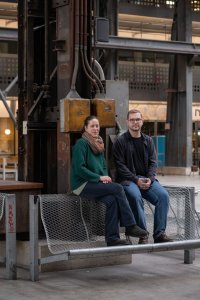
WOZ: Leila al-Shami, Oleksandr Kyselov, in international politics it seems that only might makes right anymore. The World Economic Forum (WEF), taking place this week in Davos, also stands for this. [1] Are we witnessing a new wave of imperialist expansion?
Leila al-Shami: We are undoubtedly heading towards a multipolar world order in which various imperialisms compete with one another. [2] It is sad that a large part of the Western left regards non-Western forms of imperialism as alternatives and fails to recognise their imperialist nature. A world in which imperial powers fight to establish spheres of influence only leads to greater instability.
Oleksandr Kyselov: I did not live through the wave of imperialist competition during the Cold War, but I certainly feel reminded of it. Of course, Western imperialism always strove for expansion too, but at least there was an attempt to disguise this striving with a commitment to international law. Today, the entire system is being openly questioned. When Donald Trump says Europe is weak, he is right: not only is Ukraine dependent on the USA, Europe is too. And the Russian threat is real – at least for those territories in Eastern Europe that the Kremlin considers part of its sphere of influence – whilst Trump attempts to wrest Greenland from his most important ally.
Al-Shami: We are currently witnessing the complete collapse of international norms, a politics essentially determined by raw violence and power. This is not least because Russia, Iran and the Assad regime were never held accountable for their atrocities in Syria or Ukraine. [3] The consequences of this impunity can be seen in Gaza or Venezuela. The terrible thing is: the collapse of the liberal order is not producing a left-wing alternative, but rather helping fascism and authoritarianism to power.
WOZ: Anti-imperialist criticism usually still centres on US imperialism. You both, however, have experienced the consequences of Russian imperialism first-hand: before Russian aggression escalated in Ukraine from 2014, Syria was a testing ground for Russian weapons and tactics. How has imperialist strategy changed over time?
Al-Shami: The main difference is that Russia claims Ukraine as part of its own empire, whereas the conflict in Syria was geopolitical in nature: Russia wanted influence in the region. Whilst Iranian troops were deployed on the ground, the Russian air force controlled the airspace; the Kremlin asserted its influence in international negotiations, thwarting every attempt by the UN to hold the Assad regime accountable. The brutal Russian approach against civilians was, incidentally, always also an instrument in the struggle against the West: Russia devastated Syrian cities and thereby caused a massive wave of refugees towards Europe. At the same time, it funded far-right groups there so they would agitate against refugees. A deliberate policy of destabilisation.
Kyselov: Russian media at that time displayed almost schizophrenic symptoms: they defended the intervention in Syria by claiming they were standing by "Syrian brothers" in the struggle against US imperialism. But the moment these brothers crossed the border fleeing the war, they immediately became "Islamist terrorists" supposedly trying to destroy European civilisation. The same media spread two completely opposing narratives.
WOZ: Leila al-Shami, in 2018 you wrote a much-discussed text about the "anti-imperialism of idiots". How did you arrive at this term?
Al-Shami: At that time, Western states attacked Syrian military installations and chemical weapons facilities after the Assad regime had attacked its own population with chemical weapons. This limited intervention to protect the population led to massive mobilisation on the Western left – which was very frustrating for me, because these people had never taken to the streets to condemn the regime’s attacks on schools and hospitals. In total, there were three mobilisations of Western leftists regarding Syria – and they always criticised targeted Western interventions against military targets. But when there was later a major Western intervention in Syria against the so-called Islamic State, during which the city of Raqqa was completely destroyed, mobilisation was absent. [4] There was no outcry whatsoever, not even a demand for the protection of the civilian population. [5]
Kyselov: The position of the anti-imperialist left in the West reflects for me a kind of Eurocentrism – simply inverted: one regards oneself as the greatest global wrongdoer, nothing can be compared to one’s own evil deeds. Essentially, they deny others even the possibility of being evil. In this sense, one cannot oppose Russian and Iranian imperialism either, or the Assad regime – because these are opponents of the main villain, the USA.
WOZ: How do you explain this narrow focus?
Al-Shami: It is a return to Cold War ideology, when the world was divided into two blocs. But this world no longer exists. I also see in it a Western narcissism: the idea that only white men can influence history and everyone else is irrelevant. This attitude is coupled with an unwillingness to listen to voices from the ground – which is also evident in Iran at present. People are suffering so much under the repressive regime that they really have other concerns than potential US attacks. Not everything that happens in the world can be traced back to the geopolitical chess game. Instead, a class analysis would be appropriate, looking at internal dynamics and social conflicts within a state. The authoritarian regimes will not liberate us, so we must bring back a revolutionary perspective, learn again to believe that liberation can only come from below.
Kyselov: Take the example of Venezuela: of course Maduro’s overthrow alone will not bring radical changes, of course his removal is problematic from an international law perspective. But one should nevertheless show more empathy, not proceed from abstract geopolitical concepts, but from those affected. Of course, the context is important. I come from Ukraine, I have my prejudices and traumas that I project. I imagine myself in the place of Venezuelans: if Trump were to remove Putin, that could lead to an escalation. But for a moment I would still be relieved. That is a human feeling when it concerns someone who has inflicted so much suffering on your compatriots.
WOZ: Is it not the case that military strikes from outside weaken social movement building inside in any case?
Al-Shami: To return to Syria once more: the Western left even opposed Syrian demands for a no-fly zone. Nobody in Syria was demanding US ground troops or an American occupation of the country – precisely in this region people know more about US imperialism than anyone in the West; Syrians strongly identify with the people in Iraq or Palestine. They merely wanted an intervention to protect the civilian population. And the Western left wanted them to keep quiet and die rather than support such an intervention. That is not even a political principle, but basic humanity. What troubles me is the inability to put oneself in the position of others, to understand their traumas.
Kyselov: The Ukrainian tragedy is that one wishes for intervention from outside because one is completely powerless oneself. And the task of the left would surely be to organise around a common sense of injustice – not to look down on people. I have often dealt with Iranians in the past: they have protested against the regime in the country itself, have tried to leave the country. Now the regime is openly executing people in the streets. But the left is merely obsessed with US imperialism.
Al-Shami: In Syria, I always spoke out against interference from outside, that of the West as much as that of Iran and Russia. But in the early days of the revolution, I supported the call of the Free Syrian Army [6] for weapons, which at that time still represented the democratic movement. But even this call for weapons for self-defence was criticised by the Western left. So one does not allow Syrians to defend themselves, but also does not support other states in their defence. People are left with no choice but to die.
WOZ: And what is your position on Western arms deliveries to Ukraine?
Al-Shami: I have complete understanding for the Ukrainian position. Defending oneself is not an ideological question for Ukrainians, but an existential struggle for survival. It is about whether they can continue to exist as a society or not.
Kyselov: The rejection of arms deliveries seems to me merely a helplessly moral attitude that conceals the absence of a viable strategy. I recently met a Lithuanian leftist who had engaged with Die Linke [7] in Germany because he wanted to convince his compatriots to vote for them. And then the party positioned itself against sending Bundeswehr soldiers to Lithuania, a country that is openly threatened by Russia. What are leftists in Lithuania supposed to think about the actions of the Left Party? It is similar with Ukraine: Die Linke says weapons will not bring peace. Yet the ability to negotiate is based on being able to reject demands – and for that one simply needs weapons. [8]
WOZ: One of the major issues preoccupying leftists here is rearmament in Europe, which is supposed to serve defence and is primarily financed through austerity policies in the social sector. How should one deal with this?
Kyselov: In this context, I would not speak of defence, but of readiness. If a crisis occurs in one of your neighbouring countries, whether an ecological catastrophe or a war, thousands will set off. This in turn will become a challenge for the social systems of the destination countries. Accordingly, one must be able to organise this emergency situation. Against the background of my Ukrainian experience, it seems absurd to me to take the money for security from the social sector. It may be that one really does have to spend money on defence including weapons. But in the event of war, functioning hospitals are also needed; one must be able to significantly scale up provision. Whether one can treat war victims in addition to regular patients depends on whether one has enough personnel.
WOZ: So instead of austerity programmes, investments in infrastructure are needed?
Kyselov: Ukrainian infrastructure currently depends heavily on the railways – and in certain European countries, these do not even work in peacetime. And the energy infrastructure in Europe already has so many problems due to minor natural events that it would scarcely survive a war. Ukraine probably survives partly because the infrastructure was built in Soviet times – when we were preparing for a world war – and is therefore resilient. Much also depends on whether people are ready to defend. Why should one risk one’s life if one has no interest in a community, a place, a country? Why go to the front if one knows that, should something happen to you, there is no social support? Talking about security is important, but if one focuses solely on buying weapons and makes savings elsewhere, that will not bring security. This criticism of incompetent government action should be the left position – not that security in general is unimportant, because people’s security concerns are justified. [9]
WOZ: You advocate for dialogue between Eastern and Western European leftists. What experiences have you had?
Kyselov: In the Nordic states, it is easier to enter into an exchange: whilst all left positions that exist in other European countries are represented there, they are not so dominant; the contributions to debates on security policy are also more diverse. The problem, however, is that even those leftists who support Ukraine have no concrete idea of what that means. The pacifist-left camp favours peace without knowing how this peace can be achieved. And those who support Ukraine see themselves as morally right in their claim to the realisation of justice, but also have no idea how this justice can be achieved and what it would even mean in the Ukrainian context.
Al-Shami: In the Syrian context, for example, being leftist is completely discredited – and for two reasons. Firstly, because the Assad regime rhetorically presented itself as a socialist, secular regime. And secondly, because of the defamation by Western leftists. Today it is therefore very difficult in Syria to represent a left position, because for people it is associated with nothing positive.
WOZ: Have you also perceived a learning process among anti-imperialists?
Kyselov: Definitely! In the last ten years, much more and much more openly has been discussed about the problems of bloc thinking. I also believe that many who rejected the struggle of Syrians changed their minds regarding Ukraine because they identified more strongly with Ukrainians, because there were better connections there. I do see a greater willingness to listen than ten years ago.
Al-Shami: It is as if every new crisis reveals the bankruptcy of the old approach – when confronted with it, one is forced to formulate an alternative.
WOZ: Leila al-Shami, you are part of the network The Peoples Want. What is it about?
Al-Shami: It was originally an initiative of Syrian refugees and exiles from different countries who came together to discuss precisely the questions we have now discussed – and to think about what a progressive internationalism for the 21st century might look like. Between 2009 and 2019, a decade of mass global uprisings, we repeatedly brought together revolutionaries and people involved in social struggles everywhere in the world. A network has emerged from this in which ways are sought to live practical solidarity and help each other. Our recently published manifesto analyses the last decade and presents a proposal for a new internationalism.
WOZ: And what do you propose?
Al-Shami: Essentially it is simple: away from the geopolitical view, towards the perspectives of people on the ground. One of our focuses is to create a space for discussion and collaboration, through festivals or online formats. To build real connections, discuss complexities, understand each other better. And – this is most important – to be solidary and support each other, so that people do not get stuck in those uncomfortable tactical alliances we spoke about: that they have to accept weapons or money from other states. And to ask how we can strengthen the movements themselves.
WOZ: Who could be the main actors of the new internationalism?
Kyselov: I do not believe different people are needed, but rather a new approach: instead of imposing one’s own ideas on others, one should bring people together around the questions that are important to them, from everyday social issues to security. From this common struggle, sustainable connections can then be built – and from that in turn something political can be formulated. In Sweden, where I live, there is a good example of organising migrant communities. The Solidariska Byggare [10], a syndicalist trade union, says: okay, perhaps people do not want to talk about syndicalism, but about wages. So they began organising migrants, most of them from Ukraine – first men from the construction industry, because they were easier to reach, now many cleaners, most of whom are female. Over time, they have also learned more about the political context of those affected, their working conditions. A very inspiring struggle.
WOZ: That may work locally. But what could be a unifying factor internationally?
Al-Shami: Through joint discussions, people quickly discover that they have more in common than separates them. Problems like the climate crisis are global, the enemies are also the same – and well organised: we are confronted with a global fascist international. So we too must organise ourselves, otherwise we are in a weak position. Internationalism is not a luxury that adds something extra to the national and local struggle – it is a survival mechanism. This can also be seen in the fact that movements that have made internationalism a key strategy are the only ones that have survived long-term – the Kurds, the Palestinians or the Zapatistas. [11]
Kyselov: What counts are common interests. Often the left has a very elaborate vocabulary to describe the situation in the world. One that is barely comprehensible even to me with a degree in sociology. Instead, one should begin one’s analysis with what is important for people. I like the idea of knocking on doors. The left in the USA does this; meanwhile, the practice is being adopted more and more often in Europe too. One does not go there to agitate people, but to ask what is important in their neighbourhood. One builds a connection by listening. Based on that, ideas can be formulated in which people recognise themselves.
WOZ: What can the Syrian exile movement and the Ukrainian resistance learn from each other?
Al-Shami: I believe we have already learned a great deal from each other. The extent of mutual solidarity is really beautiful to see – and part of it comes from the fact that we have a common enemy in Russia. The other is a kind of trauma bond that has arisen through the reaction of large parts of the Western left to our situation. I know many Syrians who have been in Ukraine in recent years, medics, civil defence people. I still remember how the Syrian White Helmets [12] informed the Ukrainians about Russia’s "double tap" attacks: that the army bombs a building and then waits for the arrival of rescue workers to strike again, so there are as many victims as possible. Such connections will only increase. Actually, I am quite optimistic at the moment. The worse the situation becomes, the more people understand that they must organise themselves.
Kyselov: That is what I base my hope on too. In a crisis situation, it is very difficult to change anything because most people are occupied with survival. But the crises do not occur everywhere simultaneously – so there is still time to prepare. [13]
22 January 2026
Translated by ESSF from WOZ, Anna Jikhareva (interview) and Caroline Minjolle (photo).
Footnotes
[1] The World Economic Forum is an annual gathering in Davos, Switzerland, where political leaders, business executives, and selected intellectuals discuss global economic issues. Critics view it as a symbol of elite consensus-building that serves corporate and neoliberal interests.
[2] On the challenges of analysing imperialism in a multipolar world, see Gilbert Achcar, "’Campism’ versus internationalism: On Gutter Journalism and Purported ’Anti-Imperialism’", Europe Solidaire Sans Frontières, October 2019. Available at: https://europe-solidaire.org/spip.php?article50740
[3] On the lessons from Syria for understanding the Ukrainian resistance, see Syrian Exiles, "War in Ukraine: Ten Lessons from Syria", Europe Solidaire Sans Frontières, March 2022. Available at: https://www.europe-solidaire.org/spip.php?article61512
[4] Raqqa, a city in northern Syria, served as the de facto capital of the Islamic State from 2014 until its recapture by US-backed forces in October 2017. The battle to retake the city caused extensive civilian casualties and left much of the urban area in ruins.
[5] On the "anti-imperialism of idiots" debate and its implications, see "The bankruptcy of a one-sided ’anti-imperialism’", Europe Solidaire Sans Frontières, October 2022. Available at: https://www.europe-solidaire.org/spip.php?article63562
[6] The Free Syrian Army (FSA) was formed in July 2011 by defecting Syrian military officers. In its early phase, it represented an armed wing of the democratic uprising against the Assad regime before the conflict became increasingly fragmented and militarised.
[7] Die Linke (The Left) is a democratic socialist political party in Germany, formed in 2007 through a merger of the Party of Democratic Socialism (successor to East Germany’s ruling party) and the Electoral Alternative for Social Justice.
[8] On the dilemmas facing the left regarding Ukraine, see Oleksandr Kyselov, "Ukraine: The left’s dilemma amid a crumbling world order: Prepare to fight or let others determine the outcome?", Europe Solidaire Sans Frontières, February 2025. Available at: http://www.europe-solidaire.org/spip.php?article73842
[9] See Oleksandr Kyselov, "Ukrainian Activist to European Left: ’You Cannot Fight Fascism With Flowers’", Europe Solidaire Sans Frontières, June 2025. Available at: http://www.europe-solidaire.org/spip.php?article75457
[10] Solidariska Byggare (Solidarity Builders) is a Swedish syndicalist trade union affiliated with the SAC (Sveriges Arbetares Centralorganisation), which organises workers regardless of immigration status and has been particularly active in defending migrant workers’ rights.
[11] On the Zapatista position on Ukraine, see "No concessions to any imperialism! The Zapatistas’ Clear Stand on Ukraine", Europe Solidaire Sans Frontières, July 2025. Available at: http://www.europe-solidaire.org/spip.php?article76176
[12] The White Helmets, officially known as the Syria Civil Defence, is a volunteer organisation operating in opposition-held areas of Syria. Founded in 2014, they conduct urban search and rescue in response to bombing, and have been credited with saving thousands of lives.
[13] For Kyselov’s analysis of crisis preparedness and the left, see Nataliia Lomonosova and Oleksandr Kyselov, "Social Movement (Ukraine): What’s going on in Ukraine and why left solidarity is important", Europe Solidaire Sans Frontières, May 2022. Available at: http://www.europe-solidaire.org/spip.php?article62543

.png)