Sunday, May 03, 2026

CALIFORNIA GOVENORS PRIMARY RACE

Xavier Becerra Says We Must Think About the Future of Humanity — Then Cashes Checks from Chevron

 May 1, 2026

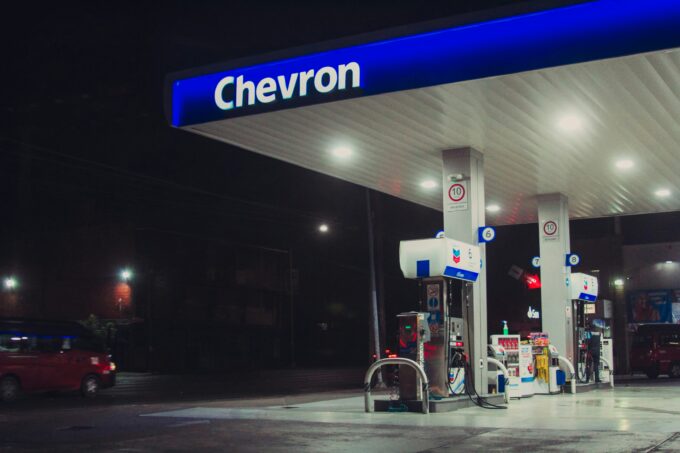
Image by Luis Ramirez.

California Democratic gubernatorial candidate Xavier Becerra recently told Californians that we need to think about the future of humanity.

He said it with conviction. He said it with urgency. He said it as a candidate for governor of a state on the frontlines of climate change.

And then he defended taking campaign money from Chevron.

Not just quietly accepting it.
Not just brushing it off.
He said, plainly, that “we need Chevron.”

That statement deserves scrutiny, especially from Latino communities who live every day with the consequences of decisions like that.

Because in California, the future of humanity is not an abstract concept. It is the air our children breathe in the Central Valley. It is the asthma rates in Boyle Heights and Wilmington. It is the refineries that loom over neighborhoods where Latino families live, work, and go to school.

And those communities are tired of politicians who talk about climate leadership while staying financially tethered to the very industries driving the crisis.

Campaign finance records show that Becerra’s gubernatorial campaign has accepted contributions from fossil fuel and utility interests; including Chevron, Sempra, the American Gas Association, and PG&E.

These are not neutral actors in California’s energy debate.

They are corporations with long histories of lobbying against clean energy policies, delaying the transition away from fossil fuels, and passing costs onto ratepayers; many of them Latino households already struggling with rising energy bills.

They are also companies whose infrastructure is concentrated in communities of color, communities that consistently rank among those with the worst air quality in the nation.

This is not speculation. It is the lived reality of environmental injustice in California. So when a candidate says we must think about the future of humanity while taking money from the industries fueling climate change, voters are right to ask a simple question: Whose future are we talking about?

Latinos make up nearly half of California’s population, yet we are disproportionately exposed to pollution from oil refineries, gas plants, and diesel freight corridors. We breathe more polluted air. We suffer higher rates of asthma. We face greater risks from extreme heat and climate disasters. And we pay the price when utilities invest billions in fossil fuel infrastructure instead of clean energy solutions that could lower costs and improve public health.

This is why campaign contributions from fossil fuel and gas interests are not just political trivia.
They are signals of alignment. They tell us who has a seat at the table, and who does not.

Becerra has also faced scrutiny over his campaign operations in the past. Federal prosecutors brought charges against a former aide for stealing funds from a dormant campaign account, a case that led to a guilty plea. Becerra himself was not charged and cooperated with investigators. But the episode raised serious questions about oversight, accountability, and leadership; questions that matter when someone seeks the highest office in the state. Leadership is not just about speeches. It is about judgment. And judgment is revealed by the company you keep.

Let’s be clear: California does not “need” Chevron.

This is the same Chevron that has poisoned communities like Richmond for decades. The same Chevron that has spent millions of dollars shaping public opinion and local politics to protect its bottom line. The same Chevron that fought accountability for massive oil contamination in the Amazon, leaving Indigenous communities to battle one of the worst environmental disasters in history.

And today, it is the same Chevron profiting from global instability, reporting record earnings while families in California struggle to afford gas and groceries.

That is the company Xavier Becerra says we “need.”

California needs leaders who are willing to stand up to powerful corporations when public health and environmental justice are on the line.

We need leaders who will invest in clean energy, not double down on fossil fuels. We need leaders who will protect communities on the frontlines of pollution. We need leaders who understand that the future of humanity is not compatible with business as usual.

Because if we elect a governor who sides with the fossil fuel cartel, the consequences will be immediate and lasting. It would mean pushing the transition to clean, renewable energy to the back burner, at the exact moment we can least afford delay.

It would mean locking California into more gas plants, more pipelines, and more pollution, while other states and countries race ahead in the clean energy economy. And Latino families would be the ones paying the price. We would pay it in higher electricity and gas bills. We would pay it in missed job opportunities in the fastest-growing sectors of the economy; solar, storage, and clean technology.

We would pay it in hospital visits for asthma, heart disease, and heat-related illness. And we would pay it in lost wages when parents miss work to care for sick children.

That is not climate policy. That is an economic burden placed on working families. California’s clean energy transition is not just about protecting the planet. It is about lowering household costs. It is about creating good jobs that cannot be outsourced. It is about keeping our communities healthy and economically secure.

Delaying that transition is not neutral. It is a decision; one that benefits fossil fuel companies while shifting the costs onto Latino families.

So the question for voters is simple: Do we want a governor who prepares California for the future, or one who keeps us tied to the past? Because the future of humanity is not a slogan. It is a choice. And the time to make that choice is now.

Andrea León-Grossmann is an environmental justice advocate and organizer focused on corporate accountability, clean energy, and community health in California. She has worked alongside frontline communities to challenge fossil fuel expansion and promote solutions that lower costs, create jobs, and protect public health. Her advocacy centers on ensuring that Latino and working-class communities are not left behind in the clean energy transition.

Vampire Planet: This Week in the Anthropocene


 May 1, 2026

A fresh snow in Montana, but not enough. Photo by Joshua Frank.

Let’s start with the good news. As of 2025, coal is no longer the dominant energy source worldwide. It’s been at the top for over 100 years, but it’s been edged out by renewables, driven mainly by China’s solar boom.

Now, the reality. Despite this surge in renewables, the world saw a record increase in carbon emissions last year. That’s because fossil fuels are still being burned in record numbers across sectors beyond energy, such as transportation, which accounts for nearly 30% of global fossil fuel consumption. Not everyone is keen on large-scale industrial solar projects like China’s, either. A ProPublica report details a brewing battle in Michigan over solar plantations.

Sorry for the bummer news, but here’s more on renewables: we need so much copper for the energy transition that an old, dormant mine in Utah has reopened. A recent study found that, in the worst-case scenario (which is on the path we’re on), we’ll need 373 new copper mines by 2050 to keep up with demand. Oh, and that Utah mine will be supplemented by robot miners.

So much for the promise of jobs, given all the mines that will be needed for lithium, uranium, cobalt, and other critical minerals for batteries and fuel for nuclear plants. AI technophiles are hoping to automate the entire industry. Speaking of uranium, don’t miss Bill Hatch’s excellent piece in these pages this week on uranium-mining speculators haunting the Navajo Nation. In other mining news, environmental groups in Oregon filed a lawsuit to stop lithium exploration on federal lands in the McDermitt Caldera in southeast Oregon. I write about this whole messy and destructive ordeal in Bad Energy, out later this year.

On the topic of AI, spending in the sector set a record last quarter. Google, Amazon, and Microsoft shelled out $130 billion in capital expenditures, largely driven by a surge in data center investments. These tech ghouls plan to spend a combined $700 billion by the end of the year.

There are at least 1,500 data centers in development nationwide, and resistance to these energy suckers is growing quickly. A recent Quinnipiac University poll from late March found that 65% of Americans don’t want Big Tech to build data centers in their communities. As Liza Featherstone writes, this is truly the environmental enemy we can all organize against.

As for enemies, well, Trump’s enemies at least: Iran’s refusal to budge on the Strait of Hormuz continues to push oil prices up, with prices at a four-year high. Will continued expensive gas prices at the pump help the electric car industry? They already are in many markets, including China, the US, and Canada.

Even bigger oil news: the UAE is opting out of OPEC. That could make the global oil market even more volatile.

If this war-driven oil trend continues, expect the new lithium find in Appalachia to be kick-started quickly. The USGS has reported that they located so much accessible lithium that the mine would replace the need for lithium imports for the next 100 years. First, it was coal mining, and now, lithium mining is set to poison the poor folks in Appalachia. The UN even admitted that critical minerals are the “oil of the 21st century” and that their mining is ravaging the health of people and the planet. So much for renewables saving us.

Trump is also continuing his war on offshore wind energy, buying off companies to the tune of $2 billion.

Out here in the West, we’ve had a very, very dry winter. The Rockies have seen the lowest snowfall since we started tracking the stuff. That does not bode well for water levels in the Colorado River. The reservoir behind Lake Powell may get so low that by August, the Glen Canyon Dam, which forms Lake Foul as we call it, won’t be able to operateHigh Country News also reports that this extremely low snowpack means serious drought, but also flooding.

Want to make sense of all of this climate chaos? It’s about to get more difficult. Last Friday, Trump fired the entire National Science Board. An article in Nature detailed the bloodbath. In just over a year, Trump has axed more than 100 independent advisory panels and terminated 1000s of research grants.

Speaking of science, another study dropped, linking pesticide exposure to rising colon cancer rates in young people. Nate Halverson also has an incredible and disturbing piece over at Mother Jones, revealing how we are poisoning our forests with Roundup. This, while the Supreme Court heard the Monsanto Company v. Durnell case on April 27th, which would force the killer chemical company to label its pesticide as the cancer-causer that it is. Don’t hold your breath that SCOTUS will listen to the science on this one.

Also in Montana, rising progressive star Sam Forstag, a Bernie and AOC-backed candidate for a Montana House seat, wants to log Western Montana and restart old timber mills. WTF?

Down in Colombia, the first conference on Transitioning Away from Fossil Fuels was held in Santa Marta. The meetings were sponsored by Colombia and the Netherlands. Here are some of the key outcomes.

Lastly, since we started with an (alleged) positive story, let’s end on one worth celebrating. Humpback whales are forming supergroups, which scientists say is a testament to their recovery.

Snack on that, and I’ll see you next week.

JOSHUA FRANK is co-editor of CounterPunch and co-host of CounterPunch Radio. He is the author of Atomic Days: The Untold Story of the Most Toxic Place in America, and the forthcoming, Bad Energy: The AI Hucksters, Rogue Lithium Extractors, and Wind Industrialists Who are Selling Off Our Future, both with Haymarket Books. He can be reached at joshua@counterpunch.org. You can troll him on Bluesky @joshuafrank.bsky.social