Sunday, June 07, 2026

UK

One hundred days of turpitude
JUNE 7, 2026

The End Fuel Poverty Coalition has tracked the energy price crisis, called on the Government to act and warned that the damage to household finances will be significant.

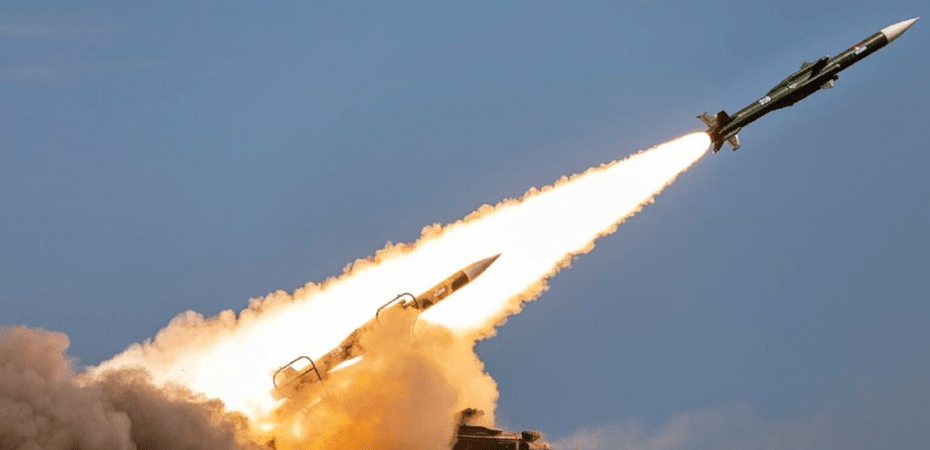
Today marks the first 100 days of the US-Israeli military action against Iran, which triggered the UK’s second major energy price crisis of the 2020s. 

The conflict has driven fossil fuel prices to fresh highs. Currently UK Natural Gas is around 38% higher and heating oil is 80% higher year on year. It has locked in a huge rise in energy bills from 1st July. At the same time, energy companies posted £26.2 billion in profits in just the first three months of 2026, and key figures linked to the energy industry saw their wealth grow. 

KEY FACTS (click on the link for source information)

July 2026 Ofgem average energy bill price cap increase13.5% / £221 per yearendfuelpoverty.org.uk
Gas unit rates (quarter-on-quarter, July Ofgem cap)Up 28%endfuelpoverty.org.uk
Typical household bill vs winter 2020/21Up 79%endfuelpoverty.org.uk
Cumulative extra household energy costs since 2021 (ECIU)£4,800endfuelpoverty.org.uk
Energy industry profits (Q1 2026, global)£26.2 billionendfuelpoverty.org.uk
Energy industry profits (Q1 2026, UK operations)c.£3 billion / £102 per UK householdendfuelpoverty.org.uk
Increase in the stock market value (market capitalisation) of 15 leading energy firms (26th Feb to 29th May)£52.4 billionNew analysis
Combined increase in value of shares of 10 energy CEOs (26th Feb to 29th May)£6.6 millionNew analysis
Combined wealth of 16 energy-linked Sunday Times Rich List individuals£74.2 billion (up £2.8bn in a year)endfuelpoverty.org.uk
Households potentially spending 10%+ of income on energy from 1st Julyc.13.5 millionNew estimate
Public saying energy firms are morally wrong to profit from Iran crisis74%endfuelpoverty.org.uk
Public support for Windfall Tax vs oppositionTwo to oneendfuelpoverty.org.uk
UK adults who have become more interested in home energy technology since the Iran conflict19.3 millionendfuelpoverty.org.uk

Simon Francis, coordinator of the End Fuel Poverty Coalition said:“Behind every percentage point on the Ofgem price cap is a household whose direct debit is about to go up and an energy firm whose profits already have. 

“One hundred days on from the start of the Iran conflict, the bill for Britain’s dependence on fossil fuels is landing on doormats across the country. The only people who benefit are the drill-more and bill-more brigade who would keep us hooked on gas to heat our homes, even after the North Sea industry has finished extracting the last drop of gas from the UK basin.

“Households need to know what support is coming, and they need a credible long-term plan that means the next foreign conflict or market shock does not send their bills even higher.”

He added: “The Iran conflict, like the Ukraine invasion before it, is a reminder that as long as our homes run on gas, our bills will be set by decisions made in Riyadh, Moscow and Washington. So while there is a cost to acting on climate change, the cost of not acting is even greater and is a cost already felt in energy bills.

“Staying on gas forever is not viable. Firms have already extracted 90% of commercially viable gas from the North Sea while posting billions in profits, and import dependence will only rise as the basin ages. Even industry figures admit that geological reality.

“But we cannot accept a transition that simply swaps one form of profiteering for another. The move to clean energy must not become a fresh opportunity for the market to extract profits from people who can least afford it. The benefits of change must flow to households, not disappear into the pockets of energy giants.

“A key policy that will deliver the transition is the Warm Homes Plan. This is the right vehicle for change, but delivery must be done right. We are calling on the government to adopt a Warm Homes Guarantee to underpin the Plan built around four commitments: real warmth and wellbeing outcomes, independent advice households can trust, strong rights and redress when things go wrong, and a measurable reduction in energy costs.”

Jonathan Bean, spokesperson for Fuel Poverty Action said: “Their billions come from our bills. This obscene profiteering from oil wars needs to stop, and our Government needs to focus on moving to renewables to give us greater independence and security. The benefits of cheap-to-produce wind and solar energy aren’t being harnessed to bring down our bills.

“The Government must take action to fix the rigged electricity market, cut excess grid and network profits, rapidly expand access to solar power and batteries, and give everyone access to the cheapest tariffs and free excess energy that is being wasted on  sunny and windy days.”

Tessa Khan, executive director of Uplift, said: “The cost of living crisis – high energy bills, rising food prices and the cost of filling up the car – are all being made worse by soaring oil and gas prices. That’s why accelerating the transition to renewables is just common sense now.

“And yet some politicians still want to lock the UK into decades more oil and gas dependence, despite the fact every new drilling project deepens the climate crisis and does nothing to alleviate the many costs being borne by households. New developments like Rosebank are not compatible with safe climate limits. It’s beyond time we take climate risks seriously and stop fuelling the crisis with new oil and gas drilling.”

Timeline of the Iran conflict impact on Uk energy bills

Phase 1: Immediate Shock (Late February to early March 2026)

The conflict triggered an immediate market response:

  • Wholesale gas prices rose 36% year-on-year by 3rd March, hitting levels not seen since 2023.
  • Heating oil costs surged 39% year-on-year.
  • Heating oil prices more than doubled in under two weeks, from 63.1p to 128.1p per litre.

Gas and electricity bills were protected until 1st July by the existing price cap, but the End Fuel Poverty Coalition warned the real risk lay ahead: if elevated prices persisted, they would feed directly into Ofgem’s May decision on the July cap. Around 1.5 million off-grid households, concentrated in rural areas and Northern Ireland, had no such protection.

Phase 2: Escalation and UK Government response (March 2026)

As the conflict deepened, gas prices spiked 124% month-on-month and 65% year-on-year by 19th March. Energy firm shares rose close to 10%, even as the FTSE 100 fell.

The Government announced a £53 million heating oil support package. EFPC welcomed it but warned it was limited in scale and slow to reach those suffering immediately.

On 18th March, EFPC wrote to ministers with an emergency support framework, including:

               •             A new Alternative Fuel Support Scheme for off-gas households

               •             Targeted unit rate reductions from July if the cap rose significantly

               •             A national energy debt relief scheme

               •             Reforms to Cold Weather Payments and the Warm Home Discount

By 20th March, projections pointed to a massive July increase what EFPC called a “Trump Tax” representing a 90% rise on pre-crisis levels.

Phase 3: Limited ceasefire (April 2026)

A ceasefire was announced on 8th April, but EFPC was clear: the damage was already done. Gas prices remained 38% up year-on-year and heating oil costs 78% above 2025 levels. Oil, LPG and gas had spent over five weeks at elevated levels, and all households would feel the impact from 1st July. The Resolution Foundation estimated the conflict would leave the typical working-age household around £480 worse off.

As the Government announced a further raft of policies designed to help the public move away from gas for heating, the crisis also accelerated a shift in public attitudes. Survation polling for EFPC found that 35% of the public (19.3m people) have become more interested in home energy saving technology since the Iran conflict began. The polling also found 77% agreed that “history just keeps repeating itself with energy prices” and 72% felt that reliance on oil and gas leaves the UK vulnerable to global price shocks.

Phase 4: Profits revealed (May 2026)

While households braced for higher bills, energy companies posted £26.2 billion in global profits in Q1 2026, with around £3 billion from UK operations: equivalent to £102 for every household in the country. Key figures include Equinor (£7.19bn), Shell (£5.07bn), TotalEnergies (£4bn) and BP (£2.4bn, more than double the year before).

EFPC’s analysis of the Sunday Times Rich List found the combined wealth of 16 energy-linked individuals grew by £2.8 billion in a year to £74.2 billion. A Survation poll found 74% of the public believed it was morally wrong for energy firms to profit from the Iran crisis, with support for the Windfall Tax running at two to one right across the country.

Phase 5: Energy bills rise (May 2026)

On 27th May Ofgem confirmed a 13.5% price cap rise from 1st July: £221 on the average annual bill, driven by gas unit rates up 28% on the previous quarter. Household bills are now 79% higher than before the energy crisis began in winter 2020/21. EFPC warned that any chance households had to reduce debts or build reserves before winter would be wiped out, and that the poorest neighbourhoods face a double burden: higher bills and homes seven times more likely to overheat in summer.

The way forward

One hundred days of higher prices and higher profits have left millions of households worse off through no fault of their own. The public have delivered a clear verdict: 77% say history keeps repeating itself on energy prices, and nearly 20 million people are now actively looking at ways to cut their exposure to fossil fuel markets. 

The Government must match that appetite for change with action, confirming bill support for the coming winter, scaling up clean energy to get households off the fossil fuel rollercoaster and fixing the electricity pricing system so the benefits of homegrown renewables are felt in household bills, not just on energy company balance sheets.

Image: https://www.amherstindy.org/2026/05/20/opinion-the-golden-opportunity-of-president-trumps-war-on-iran/ Photo: : AEBetako Gobernua, Rawpixel. (CC0 1.0 Universal)

Shadow banking is out of control – but how can it be fixed?


JUNE 6, 2O26

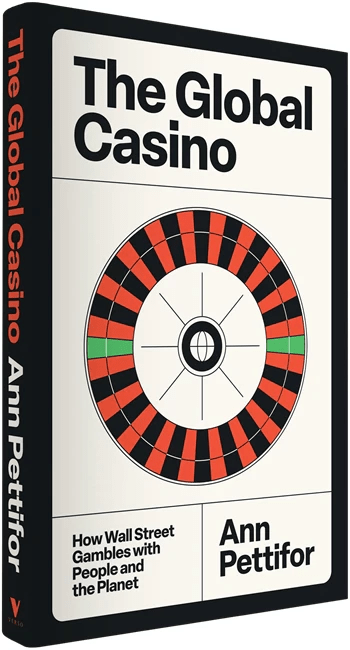
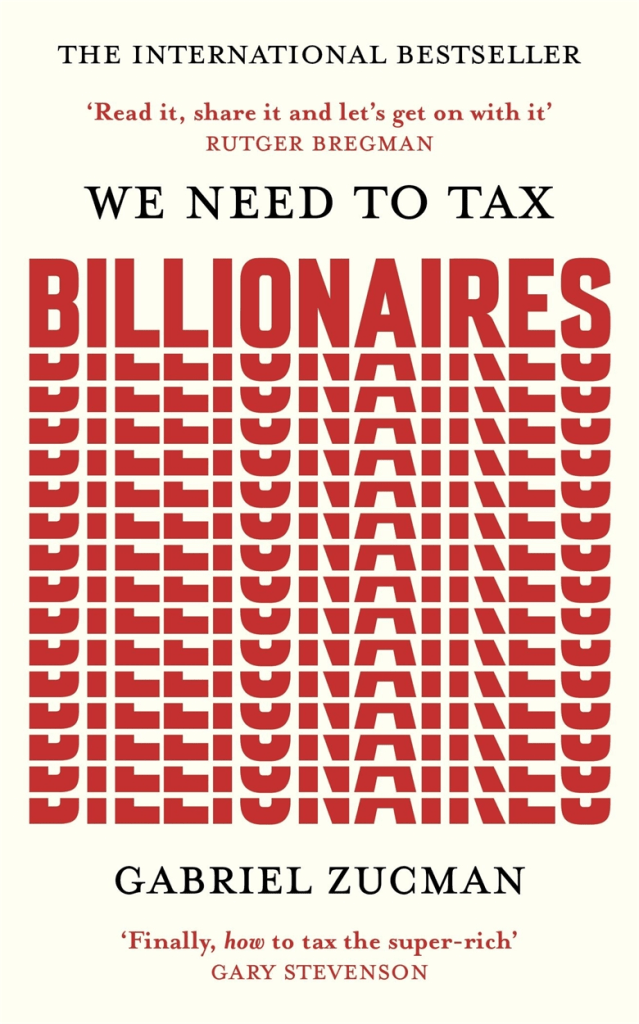
Mike Phipps reviews The Global Casino: How Wall Street Gambles with People and the Planet, by Ann Pettifor, published by Verso, and We Need to Tax Billionaires, by Gabriel Zucman, published by Basic.

Global financial markets and their gambling habits are largely invisible to most people, Ann Pettifor tells us in this new analysis. Nor are the economies we inhabit really governed by elected politicians, however much our current government thinks they are: “Instead the value of an economy and  of a nation’s currency and its interests rates as well as the levels of investment that ought to provide livelihoods and both economic and ecological security are all economic levers largely wielded by unaccountable and irresponsible financiers.”

Growing financial globalisation is especially dangerous, because financial assets are intangible, based on something ephemeral: money. And money, contends the author, is a social construct: credit, a promise to pay, based on trust, upheld by regulation and law.

But the global financial system is largely lawless and unregulated. Shadow banking – beyond the regulatory boundaries of states – currently gambles with assets estimated to be worth $217 trillion.

The system has a demonstrable power to destabilise governments. It ignores democratic priorities, for example, by funding the fossil fuel industry. The 2007-9 Global Financial Crisis showed little will to regulate the problem. Generous state bailouts gave financial institutions the belief that they were too big to fail and too big to jail.

Political institutions have hollowed out and centrist politicians have no answers about what to do about government by the markets. This fuels the rise of the populist right, Pettifor pointed out in a recent interview, as people say “Give me a strongman to protect me from markets that strip me of the right to a decent roof over my head, food, education, health.”

The dismantling of the financial system’s guardrails, argues Pettifor, began in 1971 with President Nixon’s suspension of the convertibility of the US dollar into gold. The shift away from a national bank-based system to a global unregulated market paved the way for the recurring financial crises subsequently experienced.  At the same time, the over-valuation of the dollar as the world’s reserve currency collapsed manufacturing in the US rustbelt and expanded US consumption of goods and services produced in China and elsewhere, worsening the US trade deficit. But it also harmed the economies of poorer countries which were now forced to buy oil and pharmaceuticals in a currency much stronger than their own.

Today, the export orientation of almost all of the world’s richest economies has led to record levels of overproduction of stuff that can’t be consumed simply because people cannot afford to buy it. So, rather than, as we are frequently told, the public living beyond their means – which forces people into debt – it’s the economy that is operating beyond the means of the public.

There is a lot to chew over here, such as how money cannot and should not be a tradeable commodity, and how households have been exposed to global financial markets thanks to the privatisation of pension funds. The essential point is that the colossal sums of money circulating in global markets are forever seeking lucrative new investments to increase their value – and this is destabilising agricultural markets. Prices mushroomed in 2005-8, causing hunger, despite more food being produced than ever before.

Energy and housing markets are also adversely affected.. The number of houses, even in London and the southeast, has grown faster than the household count, but prices continue to rocket – because they are often deliberately intended to be financial assets, rather than affordable homes.

Pettifor proposes to “urgently transform” financialised capitalism. It’s a Keynesian, reformist perspective: it can be done, we are told, because it’s been done before. But can it? The levels of public food storage and energy stockpiling required to counter the inflationary effects of financial speculation seem vast. But both China and India have food storage policies and the US Department of Energy operates an energy reserve. Pettifor wants the UN to lead in these fields, but that look unlikely in a context of chronic underfunding and superpower sidelining.

On housing, the speculative market could be controlled by the state building more affordable stock, imposing rent controls and taxes on property, second homes and buy-to-let.

Tackling international markets directly, Pettifor proposes constraints on capital mobility, but ideas like the Tobin Tax are very modest in the face of the scale of the problem. One thing is clear: Trump’s rage against globalisation is unlikely to go beyond tariffs unless the power of Wall Street is confronted, and there is very little likelihood of that.

Returning to where we started, one giant step would be to move away from the US dollar being the world’s reserve currency. Given the huge advantages this gives to its economy, the US is unlikely to yield on this without a fight – literally. Attempts by Iraq, for example, to stop trading oil in dollars was identified by some analysts as a motive for US military intervention in 2003, although Pettifor doesn’t look at this.

“Government by organised money has become unbearable for human society,” the author said in a recent article in Tribune. But greater regulation of a sector that appears “vast and unstoppable” may not be enough, and hoping that the world will come to its senses in the event of a major catastrophe smacks of desperation. More radical solutions are needed.

“If the cause of all our woes globally is an uncontrolled financial sector, why does Pettifor not call for the public ownership of the banking system in the major economies and the closure of hedge funds and other speculative forms of finance capital?” asked economist Michael Roberts in a recent review. It’s a fair question.

After the complexities of Ann Pettifor’s book, We Need to Tax Billionaires is comparatively straightforward – but still an eye-opener. Economics professor Gabriel Zucman calculated French citizens pay on average 51% of their income in tax, if all forms of tax, including VAT, are considered. For the working class, it’s around 45%, but for billionaires, it’s just 13%.

If France’s billionaires all moved to the Cayman Islands tomorrow, the loss of tax revenue to the country would be insignificant – around 0.03%. And the same is true throughout Europe.

It’s remarkably easy for the super-rich to structure their finances in such a way that their personal income – and income tax bills – are as low as possible. This is easily done via holding companies. At the same time, the easier it is to avoid paying tax, the easier it is to accumulate more wealth.

Targeting holding companies, as the US government has in the past, just leads the filthy rich to seek other loopholes. The answer, says Zucman, is to tax wealth itself. Even a 2% tax on individuals worth over $100 million would, in France, bring in around 20 billion euros a year.

“Billionaires cannot be allowed to live in some parallel society,” concludes Zucman. “With great wealth comes great power.” The fact that Elon Musk’s Tesla company didn’t turn a profit for 17 years until 2020 didn’t stop him acquiring Twitter two years later for $44 billion, allowing him to turn the social network into a platform for a range of ideological causes, including getting Donald Trump re-elected, with all the rewards that that brought him. If wealth confers power, democracy alone requires it be constrained.

Mike Phipps’ book Don’t Stop Thinking About Tomorrow: The Labour Party after Jeremy Corbyn (OR Books, 2022) can be ordered here.

UK


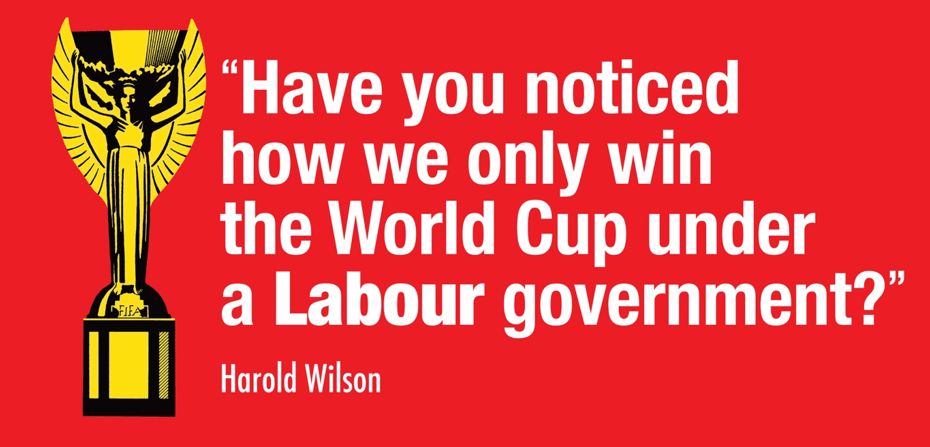
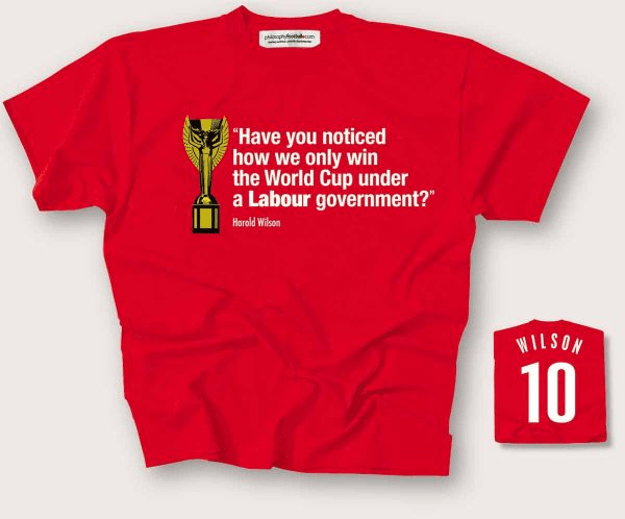
“Have you noticed how we only win the World Cup under a Labour government?”

JUNE 5, 2026

Politicians seldom get it right when they talk about football, argues Mark Perryman.

In March 1966 Harold Wilson’s Labour Party won a landslide victory and just four months later Harold was there to celebrate when England for the first, and to date last, time lifted the World Cup at Wembley. 

Never mind the (disgraced) Peter Mandelson, England’s victory spurred Harold to the greatest piece of Labour spin-doctoring ever. Of course, Harold had been at the Final; infamously Harold sent one of his advisers to the BBC matchday studio to suggest he join commentator Kenneth Wolstenholme for some half-time punditry – an invitation that was promptly turned down. Perhaps they lacked the silky charm of (disgraced)  Peter Mandelson?!

Four years later, most unwisely Labour risked their 1970 General Election chances by choosing a date slap-bang in the middle of England’s defence of their World Cup at Mexico 1970.  The quarter-final defeat to West Germany  was widely blamed for Labour’s defeat just four days later.

Yes, really. Wilson’s Minister of Sport, and former League referee, Denis Howell, was better-placed than most to justify the impact: “The moment goalkeeper Bonetti made his third and final hash of it on the Sunday, everything simultaneously began to go wrong for Labour for the following Thursday.”

Labour and football, eh? Be careful what you wish for. Still at least 1970 General Election victor Ted Heath and his sundry Tory Prime Minister successors have proved incapable of robbing Harold’s sound-bite of it’s enduring truth.

But any kind of relationship between politics and international football in the particular context of England has a broader purpose than simply, win lose or draw supposedly being dependent on the party in government at the time. 

There is one crucial word that Harold gets spectacularly wrong: ‘we’. Great Britain is unique in international football, represented by four – and for the purposes of football at least – independent nations: England, Scotland, Wales and Northern Ireland.  It doesn’t require either pedantry or nationalism to recognise this. It’s a fact perhaps lost on Harold, or Keir, who every time a summer football tournament comes around will promptly, and very publicly, choose an England shirt for his go-to leisure wear. This tells us, or at least it should, everything we need to know about Labour Unionism.

Gordon Brown might have thought he was being helpful travelling out to  support England at World Cup 2006 as the British Prime Minister. Precious few England fans were won over while in his native Scotland it went down like a lead proverbial. Of course, not all Scotland fans are nationalists. But when in 1992 Jim Sillars lost his Govan seat that he’d won in an infamous 1988 SNP by-election defeat of Labour and angrily described the Tartan Army as “90-minute nationalists,” it was a very different era to now. The SNP are no longer a minor party, but, via the Scottish Parliament, a governing party with a formidable number of MPs at Westminster. If Harold could have got away with ‘we’ in 1966, in Scotland, Wales and the North of Ireland, he certainly couldn’t today; yet Keir wears his `England shirt regardless.

Such confusion is both muti-faceted and deep-rooted in Englishness. World Cup Quiz question: which is the only team at this summer’s tournament to line up before kick-off without a National Anthem of their own for them and their fans to belt out? England! God Save the King is the National Anthem of the United Kingdom, not England and just try asking the Scotland team to dop Flower of Scotland to join in too!

This isn’t pedantry, it gets to the core of Englishness, a contradictory mix of nationalism and unionism. The most vivid example of this is the spate of hanging flags, Union Jacks and St George Crosses, from lamp posts in a movement to ‘Unite the Kingdom’. Much of this is wrapped up in a version of English patriotism which does little to distinguish itself from bad old-fashioned racism.

Contrast this to what Harold’s ‘we’ has become. The Wembley 1966 final was full of Union Jacks, the St George scarcely present. The tournament mascot  ‘World Cup Willy’ wore a Union Jack. Yes, the only time England has not only won, but hosted too a World Cup and the FA got our flag wrong! 

Few England fans this summer will make this mistake: the St George Cross is Universal, home and away. And in sheer numbers it will absolutely dwarf those of the lamp post hangers too.  And the purpose dwarves them too. A St George Cross celebrating a multicultural team managed by a German on its own doesn’t make for an anti-racist, Europeanised nation, but given the popular-political will is a very welcome first step in both directions.

In July 2024 Keir Starmer’s Labour Party won a landslide victory and just two years later Keir was there to celebrate when England for the second time lifted the World Cup at the New York New Jersey stadium. 

Well, that’s one Labour pledge all of England can get behind. 

Mark Perryman is the co-founder of the self-styled ‘ sporting outfitters of intellectual distinction’ aka Philosophy Football.

Special Offer The Philosophy Football Harold Wilson T-shirt is available to Labour Hub readers at 25% off and postage free. Quote coupon code LHWC26 at checkout. From here

Borders, Ballgames and Global Players


 June 5, 2026

Victor Wembenyama at 2025 NBA Cup. Photograph Source: Daiei Onoguchi – CC BY 4.0

The upcoming June 14 vote on limiting Switzerland’s population to 10 million is a daily reminder here in Geneva that nativist populism remains a powerful political force. In France, Marine Le Pen continues to build support on anti-immigration politics. Nigel Farage pushes similar anxieties in Britain. The AfD does the same in Germany. Donald Trump’s version is familiar: build walls, tighten borders, send ICE into cities. Across much of the West, hostility toward foreigners has become ordinary politics.

Which is why the recent announcement of the National Basketball Association’s All-NBA First Team was so striking. At the very moment politics is warning against outsiders, American sports is celebrating them. Four of the five players selected to the NBA’s top team were born outside the United States. The city game has gone global. (The phrase city game for basketball was popularized in Pete Axthelm’s The City Game, his classic account of New York basketball in the late 1960s.)

Chosen by a panel of 100 sportswriters and broadcasters covering the league, the All-NBA First Team included: Shai Gilgeous-Alexander of the Oklahoma City Thunder, from Canada; Nikola Jokić of the Denver Nuggets, from Serbia; Victor Wembanyama of the San Antonio Spurs, from France; Luka Dončić of the Los Angeles Lakers, from Slovenia. Only Cade Cunningham of the Detroit Pistons was American. Four of the league’s five best players were born abroad, representing four countries and starring in four different American cities.

That is not symbolic. It reflects a broader reality. As of the 2025–26 season, 135 NBA players were born outside the United States, the highest number in league history. They come from 43 countries across six continents. Roughly one in four players in the NBA is now international.

Now, for those who are not basketball fans, allow me to briefly explain the importance of basketball in the United States. It is one of America’s defining sports: invented in Springfield, Massachusetts, and perfected on playground courts like Rucker Park in Harlem. As Vinson Cunningham observed, “Basketball is one of New York’s great public spectacles: you can’t walk far without passing a hoop.” It is American in origin and mythology, embedded in the streets of New York, Detroit, Chicago, and Los Angeles. Yet the league’s brightest stars increasingly arrive with accents, translators, and passports from elsewhere.

My beloved New York Knicks reflect the same global pattern: OG Anunoby was born in London, Pacôme Dadiet in France, Ariel Hukporti in Germany, and Karl-Anthony Towns represents the Dominican Republic in international competition.

Although New York’s Madison Square Garden (MSG) is considered the sport’s Mecca, the sport reaches far beyond cities. Even in Midwestern rural states like Indiana, basketball courts are woven into everyday life in countless driveways. “Mr. Indiana Basketball” is a major statewide honor—closer to a civic title than a routine sports award. (For anyone curious about Indiana basketball culture, Gene Hackman’s Hoosiers remains the reference point.)

Basketball is not a simple sports niche—it is a major entertainment industry. The NBA Finals regularly draw between 10 and 20 million U.S. viewers per game. The NBA generates billions in annual revenue; franchise valuations are among the highest in global sports, with a huge merchandising market (jerseys, sneakers, etc.).

Basketball is not alone in this globalization. The pattern of more and more foreign stars repeats in what has long been considered the American sport, baseball. On Major League Baseball’s opening day in 2026, 249 players—26.3 percent of the league—were born outside the United States. The Dominican Republic led with 93 players, Venezuela had 60, Cuba 20, Canada 19, and Japan 14. Others came from Mexico, Puerto Rico, Panama, Curaçao, Colombia, South Korea, Australia, Aruba, the Bahamas, Honduras, Nicaragua, Taiwan, and South Africa.

The reigning king of American baseball is a non-American. Shohei Ohtani, born in Japan, is now arguably the most extraordinary player the sport has ever seen. Both an elite pitcher and an elite hitter, Ohtani rightly challenges Babe Ruth as the sport’s greatest player. He is already a four-time Most Valuable Player winner. More and more postgame interviews now happen through translators because many of the game’s biggest stars, like Ohtani, are not native English speakers.

Politicians increasingly tell voters to fear foreigners. In Switzerland, we are told non-Swiss workers cause traffic jams and drive up housing costs. But Switzerland’s own national soccer team offers a similar picture of globalization. Several of its most prominent players have dual citizenship or family roots abroad. Yet the same anti-immigration voters will root for the entire team during the upcoming World Cup.

Like Swiss soccer fans, Americans cheer foreign-born athletes not despite where they come from but because of what they bring: talent, discipline, style, and victory. Tens of thousands of fans in Oklahoma City rise for a Canadian. Denver adores a Serbian. San Antonio chants for a Frenchman. Los Angeles embraces a Slovenian. Baseball stadiums roar for a Japanese superstar.

Sports does not erase xenophobia. It does not resolve the asylum debate or settle border politics despite the Olympic ideal. There is an important paradox. The rhetoric of exclusion collides every day with a simpler reality: people admire excellence wherever it comes from when it helps their team win. The crowds see winners before they see nationality, even as many of them vote for politicians running on xenophobia. U.S. sports crowds—many of whom voted for Trump and admire his hard line on immigration—seem perfectly happy cheering non-Americans.

The NBA’s first team may say something larger about the country. Politicians may still campaign on borders and walls. Donald Trump and Stephen Miller may continue to denigrate foreigners, but America’s sports fans keep rooting for the world.

To understand the importance of the Knicks to New York, see The New Yorker editor David Remnick’s recent description of the first time the Knicks won the NBA crown: “May 8, 1970, was the night of all sporting New York nights,” he wrote. “Bliss it was in that dawn to be alive! So proclaimed the voices of the Knicks: John F. X. Condon at the Garden, Marv Albert on the air.”

How I remember that night! “Bliss it was to be alive.” After decades of waiting to see the Knicks back in the Finals and more than half a century since we last won the title, I just want my team to win this year, no matter who hits the winning baskets, American or otherwise. Go Knicks!

Daniel Warner is the author of An Ethic of Responsibility in International Relations. (Lynne Rienner). He lives in Geneva.