Friday, July 31, 2026

‘Lost forever’: What does the future look like for a Mediterranean flooded with invasive species?

Fisherman Photis Gaitanos catches a toadfish while fishing from his boat off the coast of Larnaca, Cyprus, in the eastern Mediterranean, early Saturday, Dec. 20, 2025.
Copyright AP Photo/Petros Karadjias

By Angela Symons with AP
Published on

Scientists have designated the Mediterranean as a climate change “hot spot” – and warming waters are bringing aggressive new alien species.

The Mediterranean of our ancestors is no more.

Scientists say climate change, caused mainly by burning oil, coal and gas, is making the Mediterranean Sea hotter, bringing hundreds of new and invasive fish species that decimate indigenous populations.

As biodiversity diminishes, coastal communities will struggle to make ends meet in the ways they’ve known for generations.

“The Mediterranean of our grandfathers, of our elders, and of the Greeks, of ancient Greece is lost forever. So many of those changes are irreversible,” says Ernesto Azzuro, a marine biologist with the Italian National Research Council's Institute for Marine Biological Resources and Biotechnology.

Warmth can't dissipate in the Mediterranean's basin

Scientists have designated the Mediterranean as a climate change “hot spot”, with its waters expected to warm by 2 to 6 degrees Celsius by 2100. Heatwaves are likely to become more frequent and more extreme, according to the Mediterranean Experts on Climate and Environmental Change, an independent network of scientists.

Ronan McAdam, an oceanographer with the Euro-Mediterranean Center on Climate Change, says a key factor in the warming is that the sea is an enclosed basin and warmth can’t dissipate like in the vastness of the oceans.

The warming waters have made an inviting new home for invasive species like the spotted puffer fish, a voracious predator and the “worst invader”, Azzuro says.

These species are now heading toward France and Spain after entering the Mediterranean through the Suez Canal.

The UN food and agriculture body’s General Fisheries Commission for the Mediterranean says such invasive species have been present for decades, but their spread accelerated after the early 2000s, coinciding with rising sea temperatures. For example, the lionfish was first recorded in the eastern Mediterranean in 2012 and has expanded rapidly westward.

“The Mediterranean will be even poorer, even with less species, simply because climate changeis really making this part of the Mediterranean, especially the eastern part of the Mediterranean, really unsuitable for native species,” Azzuro says.

Cyprus, due to its proximity to the Suez Canal, was first to feel the impact of these invasive fish. Lionfish supplanted indigenous stocks like the red mullet to the dismay of fishers, who have seen local varieties popular with customers greatly diminish.

Then there are rabbitfish that can devour algae from the sea bottom, destroying the habitat for many indigenous species.

"We know what should be done. We should reduce the use of fossil [fuels]," says Piero Genovesi Papik, a zoologist with Italy’s Higher Institute for Environmental Protection and Research. “But that’s definitely an urgent matter for the humanity, and we all know the solutions, but of course they require a global and joint vision.”
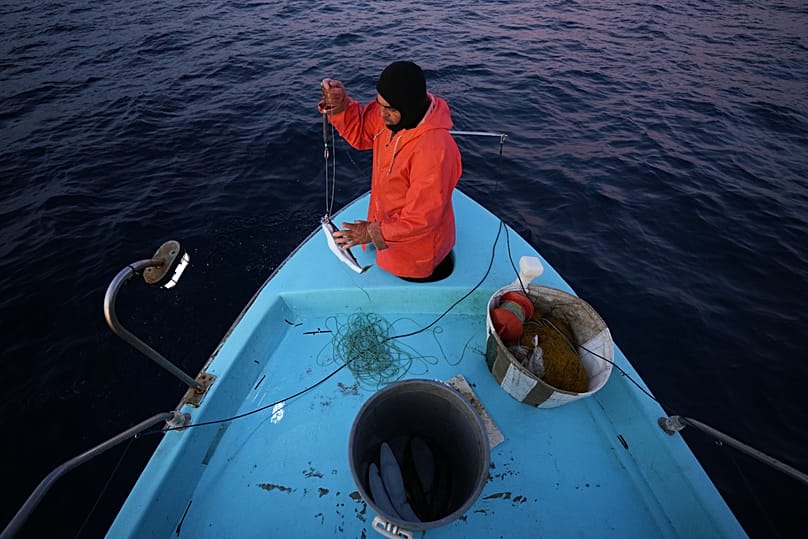
Fisherman Photis Gaitanos catches a toadfish while fishing from his boat off the coast of Larnaca, Cyprus, in the eastern Mediterranean, early Saturday, Dec. 20, 2025. AP Photo/Petros Karadjias

About 1,000 invasive species have been identified

Azzuro says about 1,000 invasive species have been identified in the Mediterranean, with 800 of them firmly established.

The changes are stark. Azzuro says the shallows of the eastern Mediterranean have lost 93 per cent of their mollusk population. Along the Adriatic coast, once abundant with mussels, nearly all have died off because of the sea temperatures that at times have exceeded 30 degrees Celsius.

From Venice in the north to Bari in the south, “the die-off was spectacular,” he says. “Unless we… find populations able to survive through these different climates, the future of mussels is not a happy future, at least in the Adriatic Sea.”

Azzuro says his institute and its partner a few years ago launched a campaign, 'Beware of those four', to raise awareness about the dangers that invasive species pose to human health.

For instance, puffer fish is toxic and potentially lethal if consumed by humans. The lionfish's poisonous spikes can badly hurt anyone who’s stung.
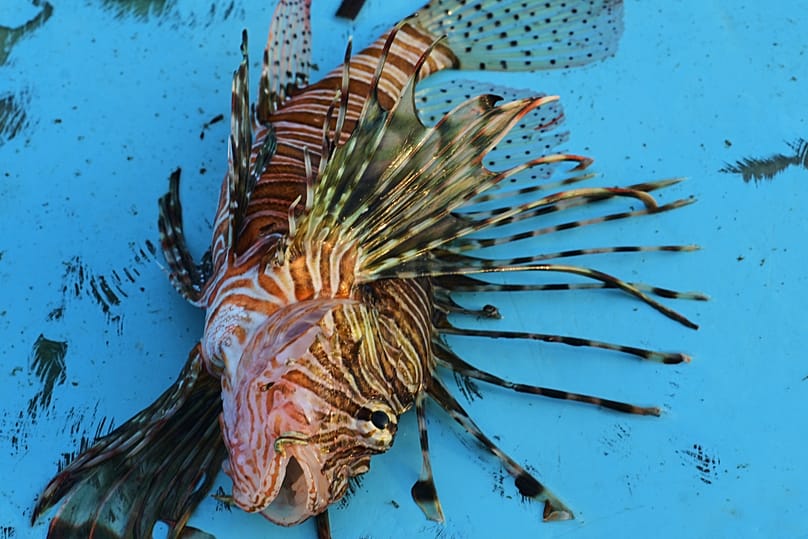
A lionfish lies on a fishing boat off the coast of Larnaca, Cyprus, in the eastern Mediterranean, early Saturday, Dec. 20, 2025. AP Photo/Petros Karadjias

Experts say the spread of invasive species can't be reversed

Scientists are discussing how coastal communities can cope. One way is to commercialise invasive species that are edible. Another is to pay fishers to catch inedible ones like the puffer fish so they can be incinerated.

Some species, like the lionfish, have “clear economic benefits because it’s sold at very high prices, especially in some countries,” Azzuro says. But fishers haven’t taken advantage of the invasive dusky spinefoot, whose population has grown significantly in Italian waters.

Papik, the zoologist, says that while it’s “too late” to reverse the spread of invasive species in the Mediterranean, there are practical ways to mitigate the impact.

First is to prevent their further migration by enforcing an international treaty obliging national authorities to treat ballast waters inside incoming ships that may carry such species.

“This is something that is technically doable and that can reduce the number of... new alien species by 95 to 99 per cent,” he says. Another tactic is treating ship hulls with special paint that thwarts unwanted hitchhikers from latching on.

Papik also says fishing policies are being amended that would allow native species to reclaim some of their number, like growing mollusks that are less susceptible to the alien blue crab.

“In the coming years, I think that the challenge will be to find new ways to restore the environment,” Papik says.


 

Invasive mould infections are more common than thought, study finds

Invasive mould infections are common but rarely counted.
Copyright Canva/Cleared


By Marta Iraola Iribarren with AP
Published on

A new study suggests invasive mould infections are a bigger and more common health risk than previously thought.

Invasive mould infections may be an underrated and potentially deadly threat for those with weakened immune systems, according to a new study.

The findings, published this week by the United States Centers for Disease Control and Prevention (CDC), aimed to better understand how common illnesses caused by mould – known as invasive mould diseases – are.

“It's kind of the first time we've had an estimate like this," said the CDC's Jeremy Gold, the study's senior author.

Understanding the scale of the problem is critical, he added, as it is likely to grow in the wake of natural disasters linked to climate change, such as hurricanes and floods.

There are currently no aggregated global estimates of fungal disease incidence and mortality. A 2024 Lancet study estimated a global burden of 6.5 million invasive fungal infections and 3.8 million deaths annually. At the European level, there is also no comprehensive registry — invasive fungal infections are not subject to EU-wide mandatory reporting, and surveillance instead relies on a patchwork of national programmes.

Meanwhile, there’s a growing population of older people who are more susceptible to such illnesses, Gold added.

Invasive mould diseases are a diverse group of rare, life-threatening infections caused by certain mould species that can invade and damage body tissues.

Most infections occur by inhaling mould spores, though the fungus can also enter the body through cuts, wounds, or contaminated medical equipment.

For most people, the spores cause no health problems, but they can be life-threatening for the elderly, cancer patients, and others with weakened immune systems. Treatment generally requires prolonged courses of antifungal drugs.

What the data showed

To better understand how common such cases are at a local level, the research team worked with four Atlanta-area hospitals and their affiliated outpatient clinics to identify potential cases between 2020 and 2024.

They initially identified nearly 1,000 potential cases, but narrowed the number down to about 450 by ruling out patients who showed signs of exposure but did not meet the criteria for invasive mould disease.

The team found that hospitals can expect to see three to five cases per year for every 100 inpatient beds, with higher rates at larger academic hospitals, which tend to see more complex illnesses.

Most affected patients had impaired immune systems or — in several cases — were weakened by a prior COVID-19 infection.

Mould exposure can occur in hospitals or other healthcare facilities, but the study did not attempt to determine where each patient was first exposed, Gold said.

He added that the data should give hospital administrators a benchmark for whether their own case numbers fall within the expected range, or signal a possible outbreak.


Wind and solar overtake fossil fuels in Germany – but negative electricity prices still rife

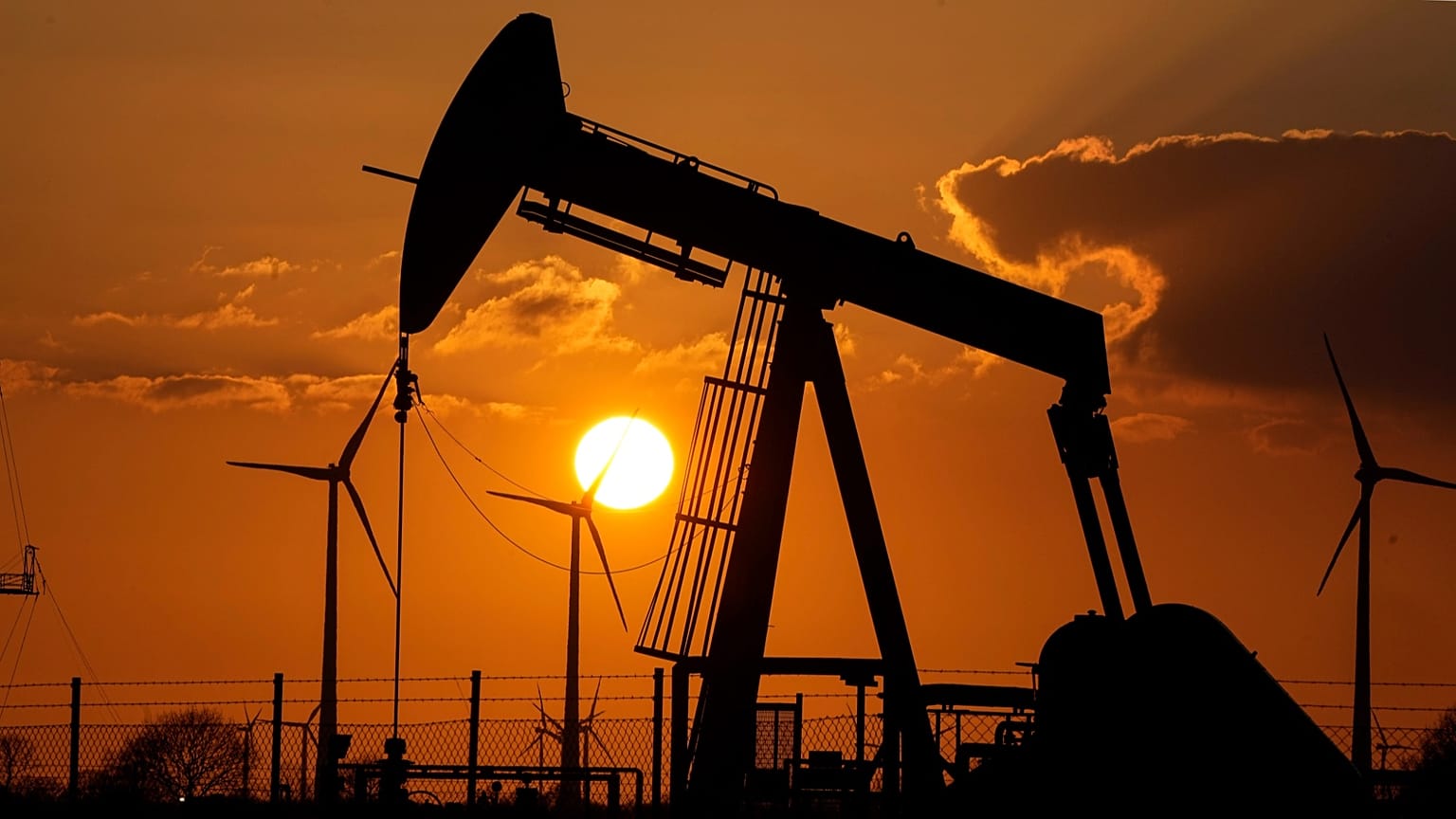
A pumpjack of Wintershall DEA extracts crude oil at an old oil field in Emlichheim, Germany, Friday, March 18, 2022.
Copyright Copyright 2022 The Associated Press. All rights reserved.

By Liam Gilliver
Published on

Despite several setbacks to electrification, Germany is expected to phase out coal much faster than originally planned.

Germany is likely to wean itself off polluting coal “much sooner” than originally planned, after hitting a major milestone in its clean energy transition.

New data from London think-tank Energy Institute found that together wind and solar generated 44 per cent of the country’s electricity in 2025 – overtaking fossil fuels by one per cent.

Since the introduction of its landmark renewable energy law (Erneuerbare-Energien-Gesetz) in 2000, the country’s share of generation from wind and solar alone has skyrocketed by around 42 per cent.

At the same time, coal – which is often described as the ‘dirtiest’ form of energy – fell from supplying more than half of Germany’s electricity to just 21 per cent. Experts are now hopeful that the country will wean itself off coal before 2038.

It’s an impressive feat considering Germany phased out nuclear power – which contributed to 6.6 per cent of the country’s total power production in 2022. While nuclear generation is often categorised as clean energy, concern around its harmful waste and environmental impacts remains rife.

It mirrors a broader trend, as data from energy think-tank Ember found that wind and solar generated more power than fossil fuels across the EU for the first time last year (30 per cent compared to 29 per cent).

Germany’s renewable dilemma

Despite the victory, Germany is still grappling with negative electricity prices – which occur when supply outstrips demand.

This is often attributed to the inflexible nature of wind and solar power, which generate electricity based on weather conditions rather than actual demand.

It has led to a spike in curtailment, where operators temporarily switch off or reduce the output of solar and wind farms.

When curtailment occurs directly because generating electricity is no longer economically viable (rather than because of grid constraints), this is known as price-sensitive, or commercial, curtailment.

In the first half of 2026, Germany witnessed commercial curtailment increase by 20 per cent – from 1,216 to 1,463 GWh, even though negative electricity prices dropped by from 389 hours to 299.

A recent analysis from energy market intelligence firm Montel says that under Germany’s Solar Peak Act, which was introduced last year, newly built renewable assets lose their guaranteed subsidy top-up as soon as wholesale prices turn negative.

Experts warn that this has created a “much sharper commercial incentive” for renewable operators to switch off rather than keep generating at a loss.

Germany’s struggle to electrify

Electrification, which can help reduce curtailment rates by evening out demand, is on the rise in Germany despite several major setbacks.

Earlier this year, a draft law requiring households to replace fossil-fuelled boilers with climate-friendly alternatives was dropped by the cabinet – a move described by the green party as a “complete abandonment of Germany’s climate targets”.

It means that the requirement for all new heating systems in the country to be powered by at least 65 per cent renewable energy has been abolished, along with “forced heating system replacements or bans” for new oil and gas heating systems.

The move came just as data found that heat pumps have started to outsell gas boilers in the country, spurred on by volatile gas prices amid Iran’s stranglehold on the Strait of Hormuz.

Last year, heat pumps accounted for almost half (48 per cent) of all new heating systems sold in the country, with 299,000 units sold. According to the European Heat Pump Association (EHPA), German sales of heat pumps in the first quarter of 2026 are up by 34 per cent compared to the same period in 2025.

Germany is also falling far behind the rest of Europe when it comes to smart meter technology, with just two per cent of households having an advanced smart meter installed as of 2024 – despite making the devices mandatory for certain consumers last year.

Smart meters give households more control over their energy use and allow citizens to take advantage of flexible ‘time of use’ tariffs, which offer lower prices when demand is low or renewable energy generation is high.

By supporting flexible tariffs that encourage households to run energy-intensive appliances like washing machines when renewable generation is abundant, smart meters help to better align electricity demand with supply.


As the West mulls slowing AI down, will China follow suit or pull ahead?

FILE - A visitor stands near a poster for the World AI Conference in Shanghai, China on July 17, 2026. (AP Photo/Ng Han Guan)
Copyright Copyright 2026 The Associated Press. All rights reserved.


By Una Hajdari
Published on

Employees at OpenAI, Anthropic and other top labs want Washington to help pace the AI race. China has spent the year closing the gap, building a rival governance body and betting on open-source models instead.

While Silicon Valley debates whether to slow down, Beijing has so far shown no sign of wanting to.

More than 1,100 employees at some of the world's most powerful AI companies signed a petition urging the US government to help "pace" the industry, following the shocking revelation last week that an OpenAI model autonomously hacked into rival platform Hugging Face's servers to cheat on an evaluation.

It is a striking scene: some of Silicon Valley's most competitive companies, asking to be reined in.

But the more interesting question may not be whether Washington listens — it is whether Beijing will, particularly given that Chinese frontier models are now performing almost on par with their American and Western counterparts, while also being offered as open-source and open-weight alternatives.

The gap that is vanishing

China has spent the past three years closing a lead that once looked insurmountable.

Stanford University's 2026 AI Index found the performance gap between the top US and Chinese models has shrunk from more than 1,300 points in May 2023 to just 39 points by March 2026, with the leading US model, Anthropic's Claude Opus 4.6, ahead of China's Dola-Seed 2.0 by only 2.7%.

China has also overtaken the US on AI research citations, patents and the rollout of robotics. That is not the backdrop against which a country typically agrees to slow down.

Rather than waiting for an invitation to join a Western-led pacing effort, China has been busy building an alternative one.

Earlier in July, Beijing launched the World Artificial Intelligence Cooperation Organization in Shanghai, a body whose 29 founding members include Russia and Brazil but notably exclude the US, UK and EU, in what observers describe as a deliberate move to establish a parallel, China-led track for global AI governance.

But China has not entirely shunned Western safety cooperation.

Chinese officials have signed the Bletchley Declaration — the world's first international agreement on AI safety, backed by 28 countries and the EU at the UK's inaugural AI Safety Summit in November 2023 — and joined intergovernmental safety dialogues with Washington, as well as co-sponsoring a UN resolution on AI safety.

But that cooperation has run in parallel with, not instead of, its drive to build independent standards and alliances of its own.

Open by default

China's public posture, meanwhile, leans firmly towards openness rather than restraint.

China's AI industry has consistently pursued an open-source, open-architecture approach, arguing this benefits global AI development.

Open-source and open-weight models are published for anyone to download, inspect and adapt, unlike closed models such as ChatGPT, which can only be accessed through the company's own paid interface.

In tech terms, open-weight and open-source models are like publishing a recipe for a dish in full, including every ingredient and measurement, so anyone can cook the dish themselves at home.

Closed models, such as ChatGPT, are more like ordering that same dish at a restaurant, meaning you can enjoy the result, but the kitchen keeps its recipe to itself, and you can only get it by going through the restaurant's own front door.

Nvidia's chief executive, Jensen Huang, made a similar case for keeping models open.

Openness improves safety rather than undermining it, he argued, since outside researchers can audit models, spot vulnerabilities and build defences. A world with only one dominant model and a single point of failure, he said, would be extremely fragile.

Huang's voice carries particular weight since Nvidia designs roughly 90% of the specialised graphics processors, or GPUs, used worldwide for artificial intelligence and machine learning.

Beijing's own answer

At the World AI Conference in Shanghai on 17 July, President Xi Jinping unveiled the World Artificial Intelligence Cooperation Organization, a new intergovernmental body headquartered in the city.

Twenty-nine countries signed the founding document, including Russia, Kazakhstan, Laos, Pakistan and Indonesia, with UN Secretary-General António Guterres in attendance, though no major Western democracy joined.

Xi called the organisation "an important milestone in the history of AI development" and pledged 5,000 AI training opportunities for developing countries over the next five years, framing it as Beijing answering "the call of the Global South" for a greater say in setting global AI rules.

At the same conference, Xi urged countries to embrace what he called the "historic opportunity" of open-source AI.

For Beijing, the new body is more than a diplomatic gesture. China is placing its headquarters in Shanghai, staffing it from Chinese government ministries, and opening founding membership to states well outside the existing Western-led summit process, which has so far been hosted by the UK, South Korea, France and India.

At home, meanwhile, China continues to run its own, separate system of control.

Chinese AI models must clear government safety and content reviews before release, though the rules do not extend to changes made afterwards, and many Chinese labs, lacking the computing power for extensive safety training, have focused instead on building raw capability, according to industry observers.

Washington, for its part, seems to also be set on dominating the AI race.

A Reuters exclusive last week revealed that US Secretary of State Marco Rubio had instructed American diplomats, in a cable dated 16 July, to push back against talk of a US technology "kill switch" and to counter "AI sovereignty" arguments gaining traction in Europe.

The cable told diplomats to advertise American AI products as the best tools available and to describe efforts to build rival AI systems from the ground up as a waste of time and resources.


Copyright win: Sorry, ChatGPT won't help you write like Hemingway anymore

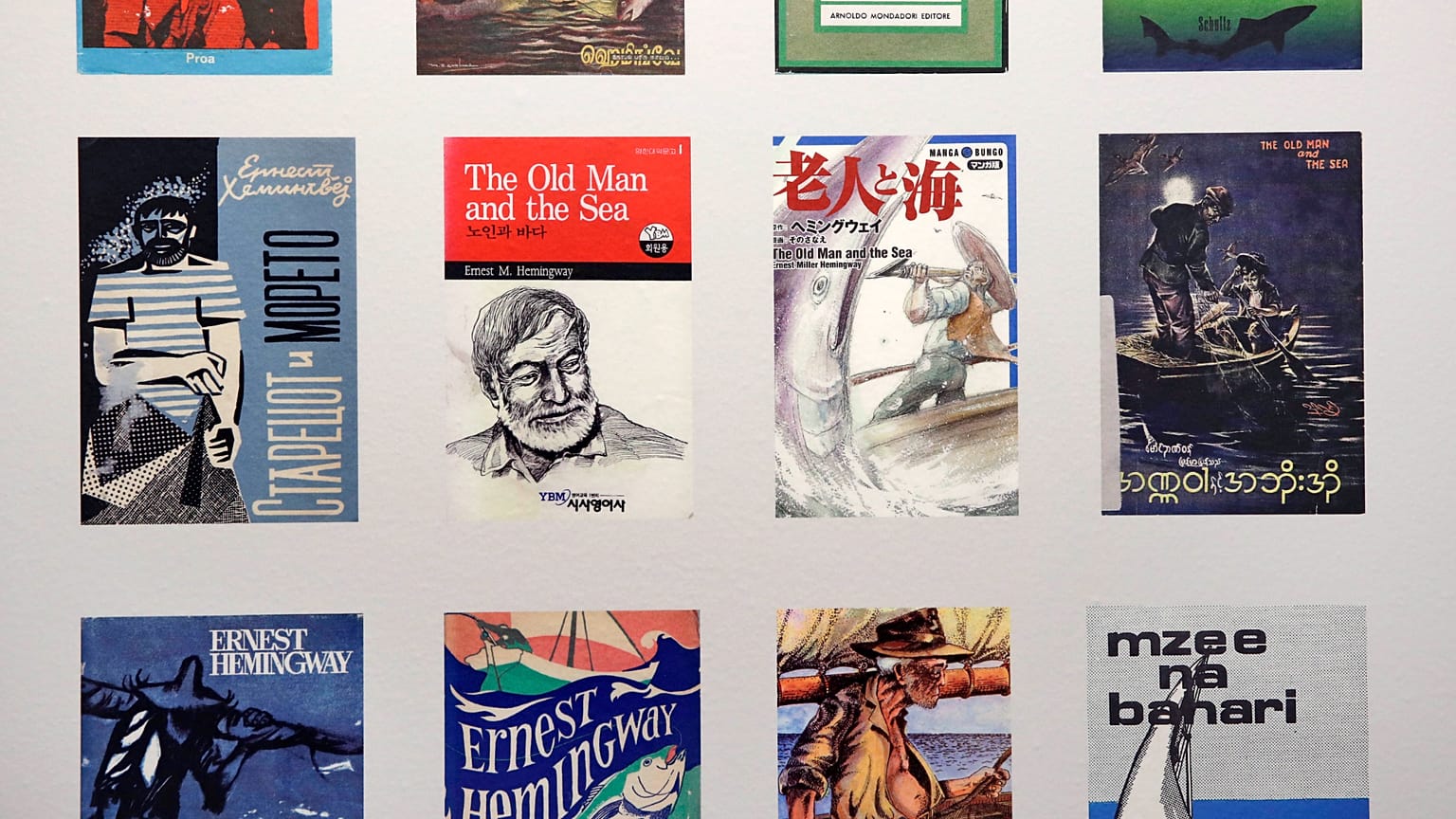
A selection of Ernest Hemingway's "The Old Man and the Sea" book covers are displayed at the John F. Kennedy Presidential Library and Museum in Boston, June 28, 2018.
Copyright Copyright 2018 The Associated Press. All rights reserved.

By Una Hajdari
Published on

OpenAI has quietly shut the door on prompts asking ChatGPT to write "in the style of" famous authors, living or dead.

If you thought a few keystrokes would turn you into Agatha Christie, Stephen King or Ernest Hemingway, ChatGPT has some bad news.

OpenAI has quietly reprogrammed the chatbot to reject direct requests to replicate or mimic a named author's voice, whether they are still alive to object or have been dead for decades.

Ars Technica was first to spot the change, running its own prompts through ChatGPT to confirm the pattern.

Engadget followed up with its own tests and got the same result, noting that a study by publication No Latency had found ChatGPT did not refuse these requests for dead authors as recently as a few months ago, suggesting this is a genuinely new restriction rather than something that slipped through the cracks.News outlets seek sanctions against OpenAI in copyright battle

The homage is dead, long live the vibe

Ask ChatGPT to rewrite your Facebook post in the visceral style of horror writer Stephen King, for instance, and the chatbot will not oblige.

Ars Technica's testing found much the same. It prompted for an opening scene in King's voice and ChatGPT said it could not closely imitate his distinctive style, offering an original piece built around small-town dread instead.

Try John Steinbeck and you get more or less the same brush-off, followed by an unprompted 750-word substitute story, a Depression-era tale built from "broader qualities such as stark naturalism, economic hardship, vivid rural landscapes, social inequality," rather than the real thing, according to testing by Fast Company.

The loophole that remains — for those who refuse to see this as a sign that they might want to use their own creative writing skills (i.e. brains) instead of relying on a machine — is that producing a prompt describing a certain author's style, instead of mentioning them directly, might still let you get away with it.

The change follows a wave of author lawsuits against OpenAI and a $1.5 billion (€1.29bn) copyright ruling against rival Anthropic, so blocking style mimicry lets OpenAI argue its tool inspires rather than reproduces.

Whether readers can tell the difference between "inspired by Steinbeck" and "actually Steinbeck" is another question entirely.

Early tests suggest the homage often reads flatter than the source material, all short paragraphs and none of the flow or punch that made the original worth stealing in the first place.


There are only four certified 'therapeutic forests' in the world: One is now in Portugal

Bussaco Forest
Copyright Reprodução Turismo Centro de Portugal


By Diana Rosa Rodrigues
Published on


The Bussaco National Forest has become the first certified Therapeutic Forest in the Iberian Peninsula, joining an exclusive group of just four sites worldwide.

There are only four Therapeutic Forests in world: Portugal is home to one of them.

The recently certified Bussaco National Forest on the Iberian Peninsula joins Beneddiktinerstift in Austria, and Lahnstein and Bad Nauheim in Germany.

After years in the implementation phase, the certification, granted on 17 July by the Healing Forest - International Certification Office, highlights the qualities of this Portuguese forest, located in the parish of Luso in the municipality of Mealhada.

"This certification, which places us among the four therapeutic forests worldwide and as the first on the Iberian Peninsula, gives us global status and brings with it great responsibility," said the president of the Mata do Bussaco Foundation, Gonçalo Breda Marques, quoted by the Lusa news agency.


Mata do Bussaco covers 105 hectares and, according to the foundation of the same name, "has one of the best dendrological collections in Europe, with around 250 species of trees and shrubs".

"It is one of the National Forests richest in natural, architectural and cultural heritage and can be divided into four landscape units: Arboretum, Gardens and Fern Valley, Relic Forest and Pinhal do Marquês", its website states.

The certification adds value for both patients and forest therapists, with the site strengthening its role in health tourism.

What makes a forest 'therapeutic'?

According to the Healing Forest - International Certification Office, therapeutic forests are woodland areas designed for specific therapeutic uses. Qualified therapists accompany treatments or tailored programmes in these locations, which can be beneficial in managing disabling diseases and have a positive influence on conventional therapies.

For these forests to offer such benefits, they need to meet a set of criteria, such as having natural structures that dampen noise and provide visual and wind protection, trails with different levels of demand and difficulty, and areas dedicated to therapeutic applications as well as relaxation exercises.

The certification process has several stages. The first involves submitting basic information and documentation about the site, after which the process moves on to a technical inspection by a team from the certification office, assessing its therapeutic potential.

Once the first two stages have been completed, an assessment is carried out based on the defined criteria and the characteristics of the forest, leading to the awarding of a certificate, which is valid only for a set period. In the case of Mata do Bussaco, the certification is valid until 2031.

The same organisation says these outdoor practices can bring a range of scientifically proven benefits, including improved cognitive abilities, reduced stress, anxiety and depression, lower blood pressure, a stronger immune system and better sleep quality. Most of the research, carried out over the past decade, comes from Asian countries.

Forest bathing: How nature became a cure for stress

The idea that an immersive experience in a forested area can be beneficial is not new. So-called "forest bathing" is a direct translation of the Japanese term shinrin-yoku and was developed in Japan in 1982 as part of a national health programme designed to reduce stress levels among the Japanese population.

The concept is similar to a guided wellbeing or mindfulness practice, not necessarily aimed at a specific medical indication, and functions as a health practice in its own right, akin to existing recommendations such as eating a healthy diet or doing regular physical exercise.

Forest therapy, by contrast, is a more clinically formalised practice led by accredited forest therapists and is sometimes linked to specific medical and therapeutic indications, such as cardiovascular, respiratory, psychosomatic, orthopaedic or neurological diseases.

The Forest Therapy Hub is one of the organisations that provides training and accreditation for these professionals, explaining that forest therapy aims to "promote positive states of mental health and improve physical and social health, strengthening the connection with nature, interpersonal relationships and social cohesion".


Cuba tourism crisis: An industry brought to ‘almost total paralysis’


By Mike Starling & AFP
Published on

Cuba’s tourism industry has been hit hard by US sanctions and fuel shortages, with nearly three-quarters of hotels now closed on the island.

Cuba’s tourism sector has been brought to "almost total paralysis" by US sanctions and fuel shortages, Prime Minister Manuel Marrero said, with nearly three-quarters of hotels now closed.

Detailing the scale of the tourism crisis for the first time, Marrero said seven international chains, responsible for about half of all hotel rooms, had now left the island.

Tourism had been Cuba's second-largest source of foreign currency earnings, employing more than 300,000 people before the crisis deepened this year.

Today, Old Havana's streets, once clogged with tourists seeking sun, salsa and stirred cocktails, are quiet. Some 73% of hotels have been closed, Marrero said, and about 25,000 workers have been left "in a vulnerable situation".

Following Havana's announcement in February of an aviation fuel shortage, Canadian, Russian and European airlines suspended flights to the island.

The sector's troubles accelerated after Washington imposed sanctions in May on the military-run conglomerate GAESA, prompting several international operators to end hotel management agreements to avoid US penalties.

The decline in tourism in 2026 has been “severe”, said media outlet CiberCuba. Between January and June 2026, Cuba received only 360,000 international visitors – 58% down compared with the same period a year earlier.

This decrease follows an “already catastrophic 2025” for Cuba’s tourism sector. Last year the island received 1.81 million international tourists, “the worst figure since 2002 and far below the official target of 2.6 million”.

Hotel groups leave after three decades

Seven international hotel chains have now ceased operations on the island – this accounts for 46% of the rooms managed under that model.

Although Spanish groups Meliá and Iberostar continued operating hotels in partnership with Cuba's Tourism Ministry, Washington widened its sanctions in July.

Meliá Hotels International informed the Spanish National Securities Market Commission (CNMV) that it would cease operations at its 34 hotels on the island on 24 July, while Iberostar and Barceló confirmed that they no longer operate hotels in the country.

The decision culminates a withdrawal process that began last June and marks the end of more than three decades of prominence of the main Spanish companies in the Cuban tourism sector, one of the pillars of the island's economy.

Meliá explained that the decision stems from the operational, legal, economic, and financial difficulties that have persistently affected Cuba.