Thousands start returning to Morocco after mass arrivals in Spain's Ceuta
Issued on: 31/07/2026
At least 34 people have died attempting to reach the Spanish exclave of Ceuta from Morocco, according to Spanish authorities. Officials are pushing for a national emergency to be declared as around 60,000 migrants crossed into the territory via land and sea over the past 24 hours. Over 37,500 have since gone back. It is yet unclear what triggered the influx, although Spanish Prime Minister Pedro Sanchez has blamed criminal networks.
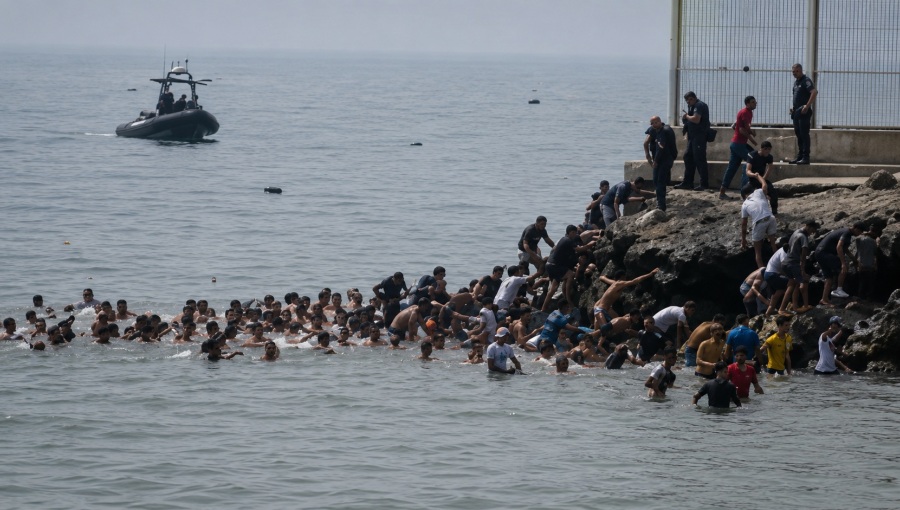
At least 19 people died after about 49,000 migrants crossed from Morocco into the Spanish exclave of Ceuta in a single day, prompting both countries to reinforce controls along the European Union’s border with Africa.
Spain and Morocco moved to halt further crossings on July 31 after the unprecedented influx overwhelmed the small territory, Reuters reported, citing Spanish authorities. Moroccan security forces deployed water cannon near the frontier, while Spain sent additional personnel to Ceuta.
Some of those who died drowned while attempting to reach the territory by sea, while others were killed in a stampede near Tarajal beach, the Associated Press reported, citing a local representative of Spain’s Civil Guard.
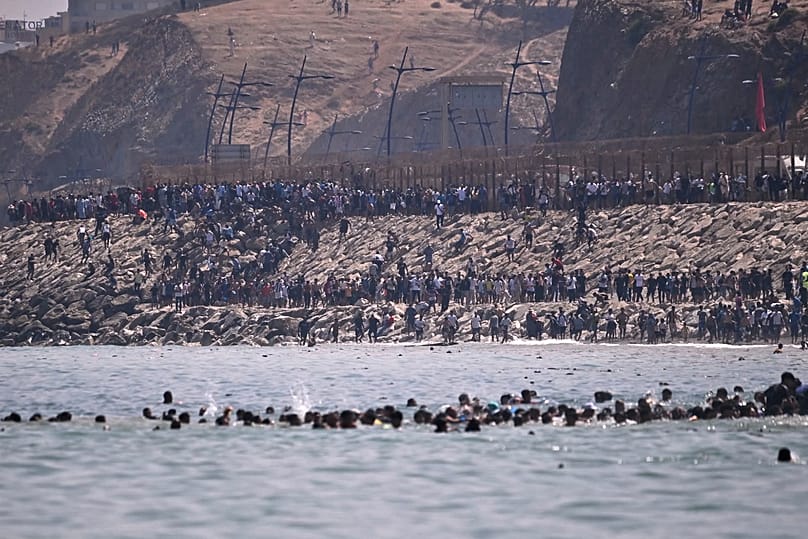
The influx was equivalent to more than half of Ceuta’s population of about 85,000 and far exceeded the roughly 8,000 people who entered during a migration crisis in 2021.
Reception facilities were overwhelmed, leaving migrants, including families and unaccompanied children, sleeping in parks and on streets. Ceuta’s regional authorities called on the Spanish government to declare a national emergency and provide additional security and humanitarian support.
Spanish authorities said they would seek to return people who had entered irregularly. Some officials linked the scale of the crossing to a recent Supreme Court ruling restricting the immediate return of migrants arriving by sea without due process, although the reason for the mass movement remained unclear.
The crisis also prompted political tensions within the EU after Italian Prime Minister Giorgia Meloni threatened measures affecting Spain’s participation in the Schengen free-travel area. Spain rejected the criticism and said it would summon Italy’s ambassador.
Ceuta and Melilla, Spain’s two territories on Morocco’s northern coast, form the EU’s only land borders with Africa and are frequent targets for migrants seeking to enter the bloc.
Spain recorded 3,523 irregular land arrivals in Ceuta in 2025, up 39% from 2,531 in 2024 and more than triple the 1,068 recorded in 2023, according to Interior Ministry data. Sea arrivals into Ceuta were far smaller, at four in 2025, 28 in 2024 and 67 in 2023.
The pressure continued to rise in 2026. A total of 2,826 people entered Ceuta irregularly by land between January 1 and July 15, compared with 1,133 in the same period of 2025, an increase of 149%. That figure predates the latest mass crossing and illustrates how exceptional the estimated one-day influx of 49,000 was.
The previous major crisis came in May 2021, when about 8,000 people entered Ceuta over two days after Moroccan border controls were relaxed amid a diplomatic dispute with Spain. The latest estimated influx was therefore more than six times larger and occurred within about half the time.
Across the EU, however, the broader trend had been downward before the Ceuta crisis. Frontex recorded just over 49,000 irregular border-crossing detections in the first half of 2026, down 37% year on year, although detections on the Western Mediterranean route rose 17% to 7,860. Frontex figures count detections rather than necessarily distinct individuals.
More than 40,000 migrants crossed into Ceuta over past 24 hours, Spain says
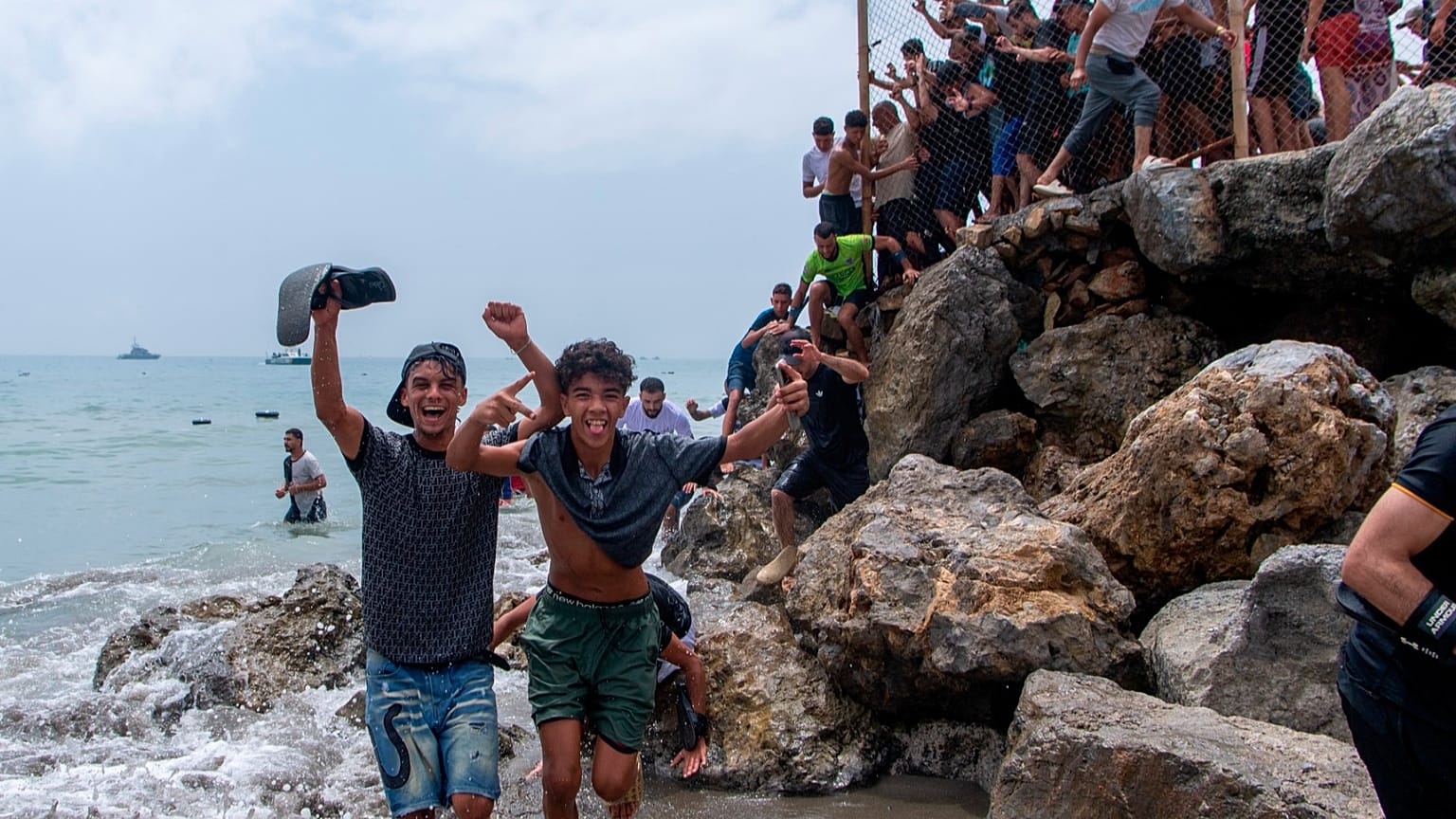
Spain's Interior Ministry said on Friday that according to its estimates more than 40,000 migrants had crossed into the enclave of Ceuta in North Africa over the past 24 hours, as they rushed by sea and land from Morocco.
Around 40,000 migrants have crossed in recent days from Morocco into Spain's Ceuta enclave, a police source said on Friday, as Spanish Prime Minister Pedro Sanchez was due to arrive there.
"There was a steady stream of people all night long," a police source said, adding that migrants "continued to arrive overnight and are still arriving" early Friday.
Spanish authorities said they would try to expel those who had entered illegally as quickly as possible, despite a court ruling that has put some new restrictions on special "border rejection" rules that allow immediate expulsions.
It was not immediately clear whether that is what prompted the recent surge of migrants from Morocco.
Ebullient migrants on Thursday were walking through the streets of Ceuta, thanking the Spanish police and calling out: "Bye bye Morocco, hello Spain."
Police and Civil Guards in Ceuta appeared to do little to intervene, although some officers attempted to direct the arrivals to the local migrant reception centre.
Diplomatic fallout
Already, the Ceuta scenes of the surge in migrants were causing diplomatic fallout.
Italy on Thursday called for Spain to be suspended from Europe's open-borders Schengen zone, prompting Spain to summon Italy's ambassador and accuse Rome of using the crisis for political gain.
Two top officials within US President Donald Trump's White House on Thursday also reiterated their anti-immigration politics using video of Ceuta.
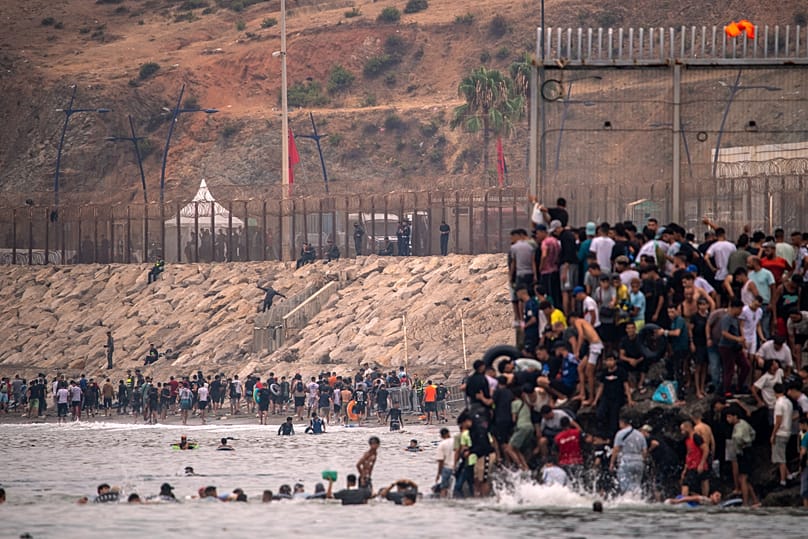
Hundreds of migrants who have irregularly entered Ceuta began to return to Morocco through the same chokepoint, the breakwater that separates the autonomous city. The migrants are being led by the military to find a way to return.
France reinforces border controls with Spain
The French Interior Minister, Laurent Nuñez, stated this Friday that controls on the border with Spain will be reinforced.
"In light of the situation in the enclave of Ceuta, I gave instructions yesterday evening to immediately step up controls at the Spanish border. Furthermore, I am mobilising the Rapid Border Intervention Force to carry out thorough checks," says the French Interior Minister.
Spanish authorities "overwhelmed"
Spanish authorities said they have been "completely overwhelmed" by the situation, El Mundo reports. Only 55 agents were on the front line when the situation broke out, according to the Spanish newspaper.
The active troops on the ground are "three or four times less than what would be needed to face something like this," says to El Mundo David Gomez, secretary of communication of the Justice Professional Association for the Civil Guard.
The influx marks the largest arrival of migrants in Ceuta since 2021 — predominantly young men and adolescents — with 18 deaths reported during the crossing, according to figures released on Friday morning by the same source.
The number of entries means the population of the enclave increased by around 50%, as around 83,000 people are living in Ceuta.
Spain mobilises troops to Ceuta as thousands of migrants continue to swim across the border from Morocco
The Spanish government said on Thursday that it would deploy the army to Ceuta to reinforce security after the crossings, which saw many migrants swim around the border to reach the territory.
Thousands of migrants have swum across the border into the autonomous Spanish territory of Ceuta from Morocco on Thursday, prompting the Spanish government to mobilise the troops to the area.
19 people reportedly died while attempting to make it to Ceuta.
The troop mobilisation comes after the enclave's regional president urged Madrid to declare a national emergency and assume control of the situation in the autonomous city, warning that local authorities had become overwhelmed by the surge in illegal crossings.
The Spanish Interior Ministry had initially ruled out declaring a national emergency. It later announced the deployment of troops to help restore order and reinforce security in the territory. Spanish Prime Minister Pedro Sánchez is expected in Ceuta as political pressure grows from the opposition.
Italy calls for Schengen closure
Italy's foreign minister has called for the closure of the Schengen area to Spain after hundreds of migrants crossed into the North African enclave of Ceuta from Morocco on Thursday.
In a post on X, Antonio Tajani said he was "in favour" of closing the free travel zone with Spain, arguing that "irregular and uncontrolled immigration poses a threat to national security."
"The images coming out of Ceuta show that the Madrid government’s decision to grant Spanish – and therefore European – citizenship to over 500,000 irregular migrants is profoundly misguided and encourages human trafficking," he added, apparently referring to the Spanish government's previous move to give legal status to some undocumented migrants. Spain's foreign minister said he had summoned the Italian ambassador over what he called Tajani's "inappropriate" comments.
Italian PM Giorgia Meloni echoed Tajani's words in another post on social media, saying Rome was ready to take "extraordinary measures" to defend Italy's borders, including through the "suspension of the Schengen area with Spain."
Meanwhile, the European Commissioner for Migration, Austria's Magnus Brunner, said he was in constant contact with the Spanish authorities and stressed that protecting the EU's external borders remains "a crucial part of our efforts to fight illegal migration".
The European Commission said it had offered operational support through Frontex.
The scenes recalled the 2021 migration crisis, when around 10,000 people entered Ceuta over the course of two days. While Morocco says it is cooperating with Spain and the EU to manage the latest arrivals, Rabat has previously been accused of using migration flows to exert political pressure on its European neighbour.
Spain and Morocco agree to speed up returns
Hundreds of people reached Ceuta from Morocco on Thursday, swimming or using inflatable devices to arrive at Tarajal beach, overwhelming Civil Guard officers.
More than 60 people have died attempting the crossing over the past 12 months.
Sánchez said his government was "fully committed to providing an immediate response to the situation in Ceuta" and pledged to work with the Moroccan authorities to "restore normality as soon as possible".
Spain's Interior Minister Fernando Grande-Marlaska is expected to travel to Ceuta to meet local officials and assess the situation. The two countries said they had agreed a procedure to accelerate returns, although no timeline or figures were made public.
The Spanish Interior Ministry also said human trafficking networks may be exploiting a recent court ruling to encourage undocumented migrants to attempt the crossing. Rabat blamed traffickers too, even-though its law enforcement also handles the border.
Moroccan diplomatic sources said the increase in irregular crossings did not reflect any intention by the authorities in Rabat to facilitate or promote illegal migration into Spain.
Spain's Civil Guard sources in Ceuta, however, questioned the level of Moroccan cooperation, arguing that support from the Moroccan Gendarmerie had been limited and insufficient to ease pressure at the border, despite the Spanish government's insistence that cooperation with Morocco remained active.


No comments:
Post a Comment