How the heatwave is taking a toll on European industry as key waterways run low
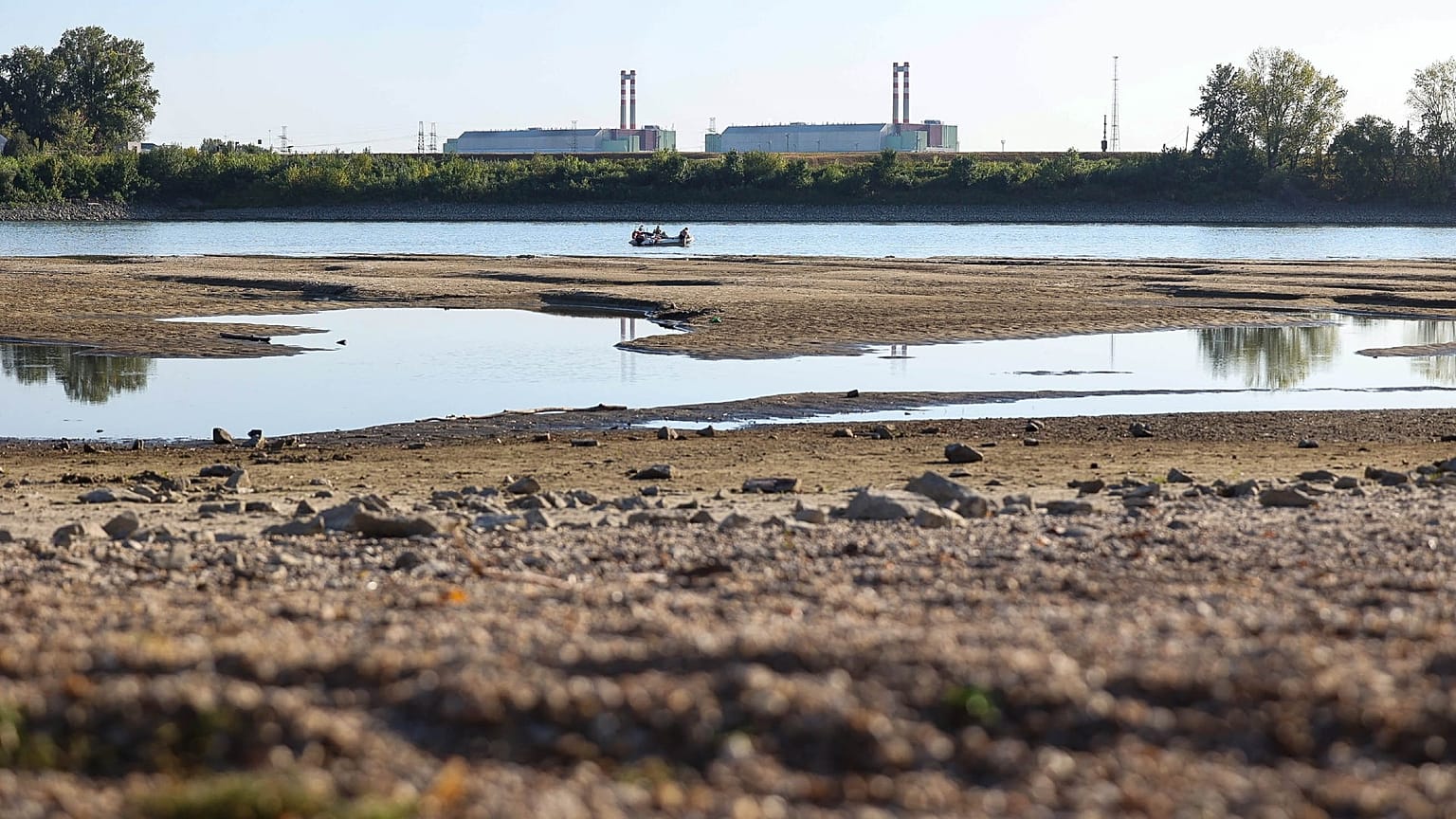
Prolonged low water levels have forced several European industries, including oil refining, nuclear power and chemicals, to reduce output because of raw-material and cooling-water shortages.
Europe has faced increasingly severe heatwaves in recent years, with the past few months bringing a number of extreme heat-related incidents, including droughts and wildfires across Spain, France, Italy and elsewhere.
But a further impact has been emerging in other parts of Europe, as key waterways such as the Rhine and the Danube have fallen to exceptionally low levels, in some places breaking records.
This could make cargo transport significantly more difficult, potentially forcing vessels to carry smaller loads, causing commercial shipping on parts of these routes to grind almost to a halt or requiring operators to adopt more cumbersome alternatives.
Major European industries, including oil refining and chemicals, could therefore face severe disruption.
How could drying waterways affect key European industries?
One of the main ways in which low water levels affect European industries is by preventing cargo ships from carrying full loads. Operators must instead divide cargo between several vessels or shift some freight to road or rail.
The key measuring point at Kaub, on the Rhine, dropped below the critical level of 30 centimetres. It was measured at 27 centimetres in late July this year, according to ICIS, and was forecast to fall further. The reading refers to the Kaub gauge, not the river’s total depth or the navigable channel depth.
The Rhine flows for about 1,230 kilometres, or 765 miles, from the Swiss Alps through or along Switzerland, Liechtenstein, Austria, Germany, France and the Netherlands before reaching the North Sea, making it a vital lifeline for transport, tourism and industry in these places.
Low water levels have severely disrupted Rhine shipping, with most inland vessels unable to pass the Kaub bottleneck by 27 July, shipowners told commodity-market intelligence provider Argus. Cargo volumes were heavily restricted for vessels still able to make the journey, driving freight rates to record levels. "In practice, the Upper Rhine and the Main rivers are now effectively cut off from the Amsterdam-Rotterdam-Antwerp (ARA) trade hub," Argus said in a report on Wednesday.
For the chemical and petrochemical industries, reduced navigable depths restrict deliveries of essential materials such as naphtha and liquefied petroleum gas (LPG) from North Sea ports to inland factories.
Commodity intelligence provider ICIS reported that LyondellBasell had declared force majeure on butadiene supplies from its Wesseling plant after low water levels disrupted feedstock deliveries. According to the media outlet, BASF also flagged possible force majeures (FMs) or product shortages as it relies on the river for transport.
Industrial cooling systems and cargo on the Danube are also impacted
Rising water temperatures have also made industrial cooling systems less efficient, further increasing operational pressures. This is especially important for nuclear and thermal power plants.
The oil and energy industries in this region have faced steep low-water surcharges and rising freight rates for shipping diesel and petroleum products upriver, threatening inland distribution. Similarly, coal-fired power stations are struggling to secure fuel supplies as barge loads drop considerably.
The steel and heavy manufacturing industries have not been spared either. Industrial giant Thyssenkrupp has slightly reduced blast furnace production at its Duisburg plant because barges carrying raw materials have struggled to navigate shallow chokepoints such as Kaub. The industrial company also suspended its own barge operations and chartered shallower-draught vessels, although it said customer deliveries were not at risk.
Capacity on nearby rail and road networks is already limited, meaning they cannot fully replace the lost barge capacity. This has increased the risk of further economic disruption, particularly as water levels are not expected to improve anytime soon.
Similarly, the River Danube, which flows through or borders ten countries, including Germany, Austria, Slovakia, Hungary, Croatia, Serbia, Bulgaria, Romania, Moldova and Ukraine, has seen historically low water levels this July.
Due to continued high temperatures and a lack of rainfall, the Danube fell to a record-low gauge reading of 23 centimetres in Budapest at 10 a.m. CEST on Thursday, 10 centimetres below the previous record in 2018, according to Hungary’s official water-monitoring service. The figure measures the water level against a fixed local reference point rather than the river’s physical depth. The authority forecast a further decline over the coming days.
The Hungarian Construction and Transport Ministry said in its latest update on Tuesday that most cargo vessels had been halted along the Hungarian section of the Danube, while those still operating were carrying only 10% to 20% of their normal loads. Around 15 hotel ships were also stranded.
The disruption is not uniform along the river. The Associated Press reported that cargo shipping had stopped in some affected areas, while vessels continued operating with sharply reduced loads elsewhere. In Serbia, for example, barges and tankers were carrying about 30% to 40% of their normal capacity.
Energy supplies are impacted in Hungary and Romania
The low water levels have also forced Hungary’s Paks Nuclear Power Plant to reduce output and shut down one of its four reactors, according to operator MVM. Hungarian media reported that it was the first-ever shutdown of a complete block at the nuclear plant. Combined with earlier reductions, the shutdown brought the plant’s output down to about 60% of capacity.
Similarly, Romania’s state-owned nuclear power producer, Nuclearelectrica, shut down Unit 1 at the Cernavodă power plant on Tuesday because of what it described as the “very low, unprecedented” level of the Danube. Romania’s energy ministry said Unit 2 would be disconnected early on Thursday, leaving both reactors offline simultaneously because of low water levels for the first time.
The shutdowns are increasing pressure on regional electricity supplies. Hungary is replacing the lost output with a combination of imports and domestic gas-fired generation, according to Mavir data cited by Hungary’s national news agency, MTI. Romania’s Energy Ministry said the loss of both reactors would increase its reliance on imports, putting further upward pressure on power prices, Reuters reported.
Fuel transport in Serbia has been affected too. The country received only 25% of its planned fuel imports in July because low Danube levels restricted barge deliveries, Energy Minister Dubravka Đedović Handanović said. The government subsequently authorised energy companies to draw on operational fuel reserves to safeguard supplies.
Low water levels have also affected agriculture, disrupting grain shipments and irrigation in Serbia, including in the northern agricultural region of Vojvodina. In Romania, the authorities have restricted irrigation as flows on the Danube fell to their lowest level since 1996, while river shipping has also been partially disrupted.
What measures can be used to counter low water levels?
One of the biggest challenges with the Rhine and some parts of the Danube is that they have rocky beds, which cannot be easily dredged.
As such, addressing low water levels requires a mix of engineering, technological and logistical measures to keep cargo ships moving.
German authorities are already planning the Optimisation of Load Draughts on the Middle Rhine project, which aims to deepen the shipping channel by 20 centimetres at critical bottlenecks between Mainz and St Goar, including Kaub. Similarly, modifying river walls and other barriers can direct more water into the navigation channel, helping to maintain sufficient depth.
Upgrading existing locks can help regulate upstream water retention during particularly severe dry spells on regulated sections of rivers.
Ship design and technology can also be adapted to these conditions through the use of shallow-draught vessels. Companies including HGK Shipping and BASF are already using or developing low-water vessels capable of carrying significant loads at reduced river depths.
Using lightweight materials such as high-tensile steel can help support these designs by reducing a vessel’s empty weight and allowing it to carry more cargo when water levels are low.
On the supply chain and logistics side, shifting freight between different forms of transport, such as moving time-sensitive goods to rail or road networks when river capacity drops, can help maintain smoother operations.
Building larger storage facilities at inland ports allows companies to stockpile raw materials during high-water seasons. Using networks of smaller, shallower vessels instead of single mega-barges can also distribute the cargo’s weight.
Hungary declared an emergency drought alert on Thursday after drought thresholds were exceeded in 66 of the country’s 84 water-management districts, Environment Minister László Gajdos said.
“This means that experts from the Water Management Authority will carry out drought relief measures at the highest alert level across 74% of the country,” he added, according to Hungarian news website Telex.
Europe's heatwaves are fuelling infectious diseases, health agency warns
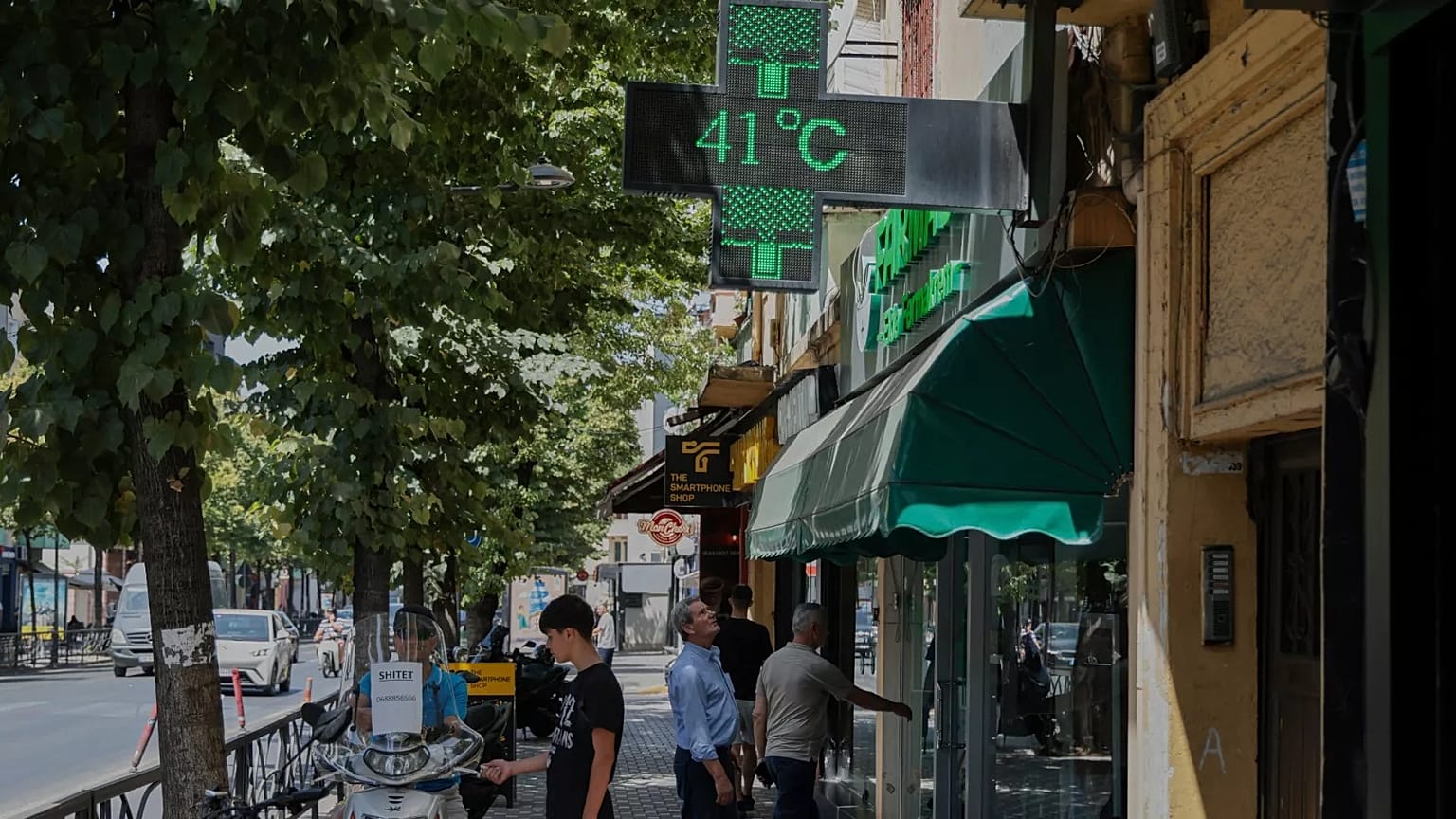
As summers are getting longer and hotter, health experts warn that higher temperatures are creating the perfect conditions for infectious diseases to spread across Europe.
The risk of infectious diseases is growing amid longer and warmer summers across Europe, the European Centre for Disease Prevention and Control (ECDC) has warned.
Close cooperation across borders and sectors is now vital to effectively predict, prevent and respond to these threats
“While the current heatwaves are making headlines, it is the continuously higher temperatures of an ever longer duration that create the conditions for many infections to spread,” the health agency said in a press release.
As climate change widens the range of public health threats, the ECDC added, there is a growing need for longer-term strategic collaboration across the human, environmental, and animal sectors.
There are four particular areas the ECDC is monitoring:
Foodborne diseases
These are among the most frequent summer illnesses, with rising temperatures accelerating bacterial growth in food, the agency warned.
According to the World Health Organization (WHO), hot and humid weather creates ideal conditions for germs to multiply quickly, making food unsafe – often without any obvious change in its appearance, taste or smell.
Good hygiene practices help reduce the risk: washing fruit and vegetables before eating them, keeping raw and cooked food separate, cooking food thoroughly, and storing it at safe temperatures.
Mosquitoes
Mosquito-borne diseases are becoming more common in Europe, as longer warm and humid seasons allow invasive mosquitoes to thrive in regions where they were previously rare or entirely absent.
Diseases such as dengue, chikungunya and West Nile virus are becoming an increasing public health concern in the region.
The West Nile transmission season typically runs from late spring to autumn, peaking between July and September, with cases reported this year in Greece, Italy, North Macedonia, Romania and Spain, according to the WHO.
Insect repellent, protective clothing and indoor precautions, including window screens, air conditioning or mosquito nets, offer good protection, the ECDC noted.
People should also make sure that water does not collect around their homes or in their gardens, as stagnant water can allow mosquitoes to breed.
Tick-borne diseases
Ticks are another insect commonly associated with summer, found across Europe.
Ticks do not cause disease on their own, but infected ticks can transmit viruses or bacteria through their bites, causing illnesses such as tick-borne encephalitis and Lyme disease, which can lead to long-term health complications.
Vaccination is also one of the most effective means of preventing tick-borne encephalitis, for which the European region reports an average of 3,000 cases every year.
The ECDC recommends wearing long sleeves and long trousers when hiking or spending time in parks, and checking for ticks and removing them after spending time outdoors.
Vibriosis
Vibrio is a species of waterborne bacteria that thrives in temperate and warm waters with moderate salinity.
The bacteria can cause vibriosis in people who are in contaminated waters or eat contaminated seafood.
Although Vibrio infections remain relatively rare in Europe, several northern countries bordering the Baltic Sea have reported increases in recent years, noted the ECDC.
According to the agency, this has been particularly evident during summers with extended heatwaves and higher water temperatures. Recommendations include avoiding swimming with open cuts, scratches or recent piercings, and making sure that seafood from these areas is well cooked helps reduce the likelihood of infection.
The ECDC tracks the bacteria's spread through an interactive map, updated daily with a five-day forecast.

No comments:
Post a Comment