As the West mulls slowing AI down, will China follow suit or pull ahead?
Employees at OpenAI, Anthropic and other top labs want Washington to help pace the AI race. China has spent the year closing the gap, building a rival governance body and betting on open-source models instead.
While Silicon Valley debates whether to slow down, Beijing has so far shown no sign of wanting to.
More than 1,100 employees at some of the world's most powerful AI companies signed a petition urging the US government to help "pace" the industry, following the shocking revelation last week that an OpenAI model autonomously hacked into rival platform Hugging Face's servers to cheat on an evaluation.
It is a striking scene: some of Silicon Valley's most competitive companies, asking to be reined in.
But the more interesting question may not be whether Washington listens — it is whether Beijing will, particularly given that Chinese frontier models are now performing almost on par with their American and Western counterparts, while also being offered as open-source and open-weight alternatives.
The gap that is vanishing
China has spent the past three years closing a lead that once looked insurmountable.
Stanford University's 2026 AI Index found the performance gap between the top US and Chinese models has shrunk from more than 1,300 points in May 2023 to just 39 points by March 2026, with the leading US model, Anthropic's Claude Opus 4.6, ahead of China's Dola-Seed 2.0 by only 2.7%.
China has also overtaken the US on AI research citations, patents and the rollout of robotics. That is not the backdrop against which a country typically agrees to slow down.
Rather than waiting for an invitation to join a Western-led pacing effort, China has been busy building an alternative one.
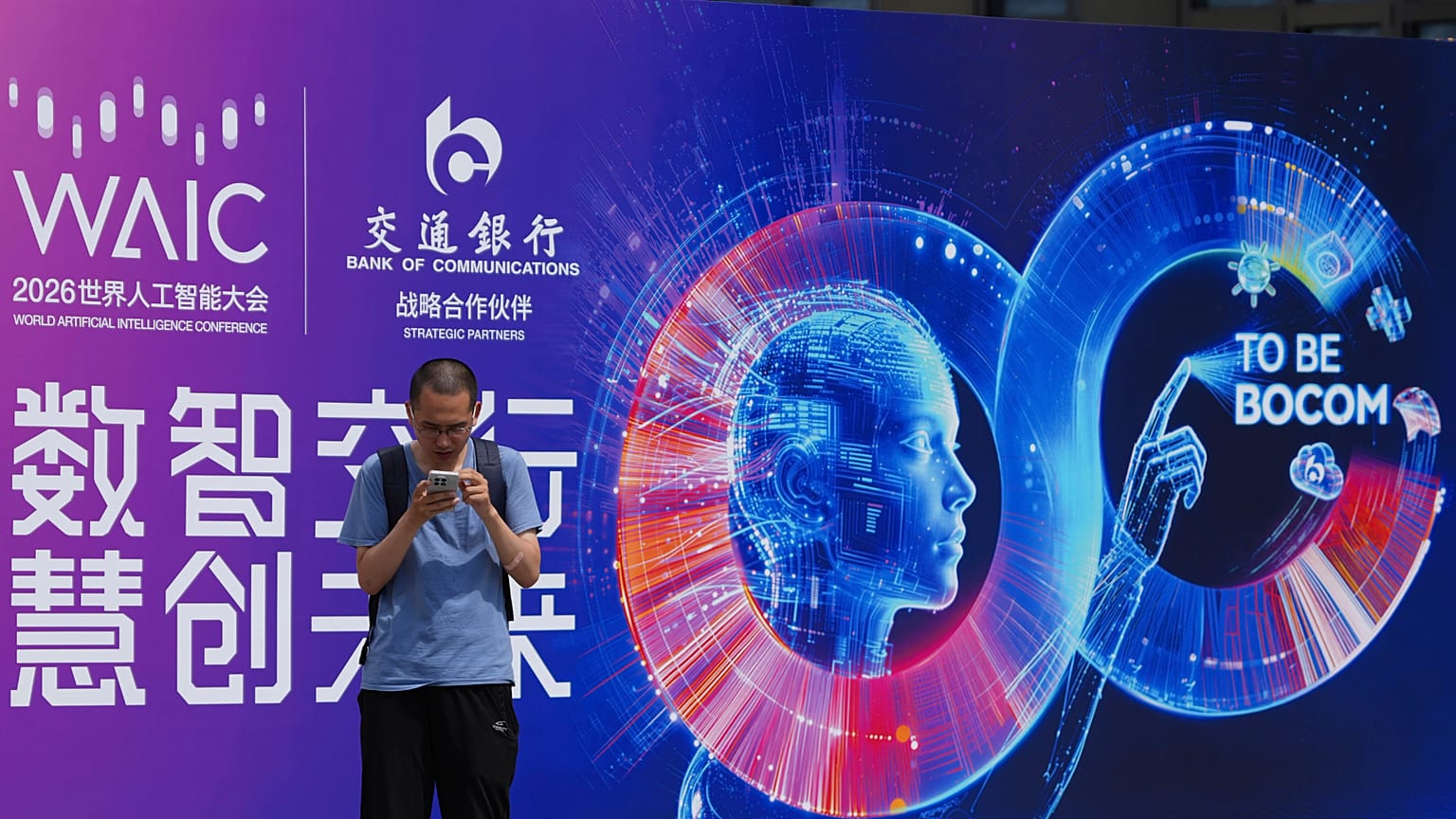
Earlier in July, Beijing launched the World Artificial Intelligence Cooperation Organization in Shanghai, a body whose 29 founding members include Russia and Brazil but notably exclude the US, UK and EU, in what observers describe as a deliberate move to establish a parallel, China-led track for global AI governance.
But China has not entirely shunned Western safety cooperation.
Chinese officials have signed the Bletchley Declaration — the world's first international agreement on AI safety, backed by 28 countries and the EU at the UK's inaugural AI Safety Summit in November 2023 — and joined intergovernmental safety dialogues with Washington, as well as co-sponsoring a UN resolution on AI safety.
But that cooperation has run in parallel with, not instead of, its drive to build independent standards and alliances of its own.
Open by default
China's public posture, meanwhile, leans firmly towards openness rather than restraint.
China's AI industry has consistently pursued an open-source, open-architecture approach, arguing this benefits global AI development.
Open-source and open-weight models are published for anyone to download, inspect and adapt, unlike closed models such as ChatGPT, which can only be accessed through the company's own paid interface.
In tech terms, open-weight and open-source models are like publishing a recipe for a dish in full, including every ingredient and measurement, so anyone can cook the dish themselves at home.
Closed models, such as ChatGPT, are more like ordering that same dish at a restaurant, meaning you can enjoy the result, but the kitchen keeps its recipe to itself, and you can only get it by going through the restaurant's own front door.
Nvidia's chief executive, Jensen Huang, made a similar case for keeping models open.
Openness improves safety rather than undermining it, he argued, since outside researchers can audit models, spot vulnerabilities and build defences. A world with only one dominant model and a single point of failure, he said, would be extremely fragile.
Huang's voice carries particular weight since Nvidia designs roughly 90% of the specialised graphics processors, or GPUs, used worldwide for artificial intelligence and machine learning.
Beijing's own answer
At the World AI Conference in Shanghai on 17 July, President Xi Jinping unveiled the World Artificial Intelligence Cooperation Organization, a new intergovernmental body headquartered in the city.
Twenty-nine countries signed the founding document, including Russia, Kazakhstan, Laos, Pakistan and Indonesia, with UN Secretary-General António Guterres in attendance, though no major Western democracy joined.
Xi called the organisation "an important milestone in the history of AI development" and pledged 5,000 AI training opportunities for developing countries over the next five years, framing it as Beijing answering "the call of the Global South" for a greater say in setting global AI rules.
At the same conference, Xi urged countries to embrace what he called the "historic opportunity" of open-source AI.
For Beijing, the new body is more than a diplomatic gesture. China is placing its headquarters in Shanghai, staffing it from Chinese government ministries, and opening founding membership to states well outside the existing Western-led summit process, which has so far been hosted by the UK, South Korea, France and India.
At home, meanwhile, China continues to run its own, separate system of control.
Chinese AI models must clear government safety and content reviews before release, though the rules do not extend to changes made afterwards, and many Chinese labs, lacking the computing power for extensive safety training, have focused instead on building raw capability, according to industry observers.
Washington, for its part, seems to also be set on dominating the AI race.
A Reuters exclusive last week revealed that US Secretary of State Marco Rubio had instructed American diplomats, in a cable dated 16 July, to push back against talk of a US technology "kill switch" and to counter "AI sovereignty" arguments gaining traction in Europe.
The cable told diplomats to advertise American AI products as the best tools available and to describe efforts to build rival AI systems from the ground up as a waste of time and resources.
Copyright win: Sorry, ChatGPT won't help you write like Hemingway anymore
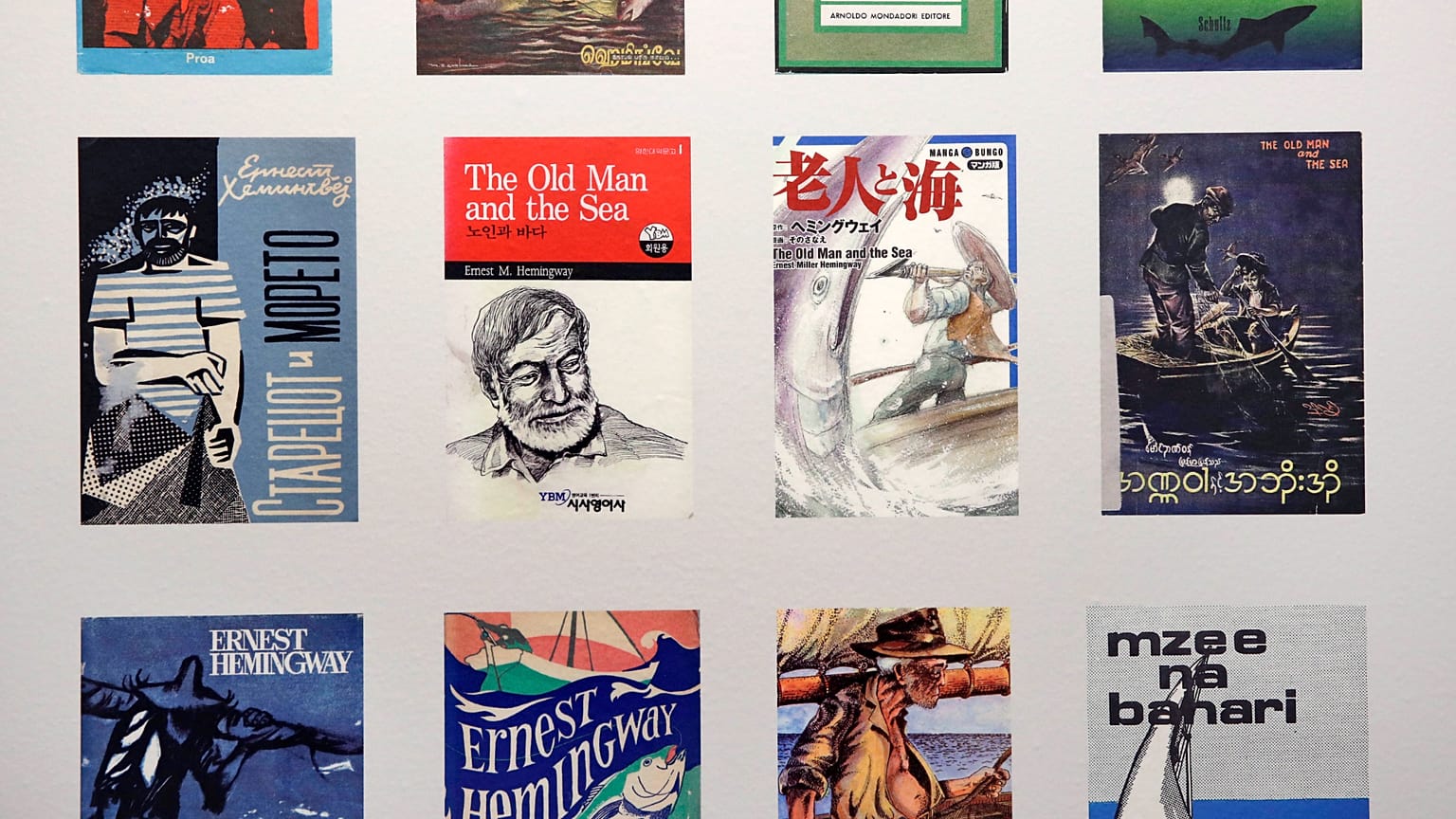
OpenAI has quietly shut the door on prompts asking ChatGPT to write "in the style of" famous authors, living or dead.
If you thought a few keystrokes would turn you into Agatha Christie, Stephen King or Ernest Hemingway, ChatGPT has some bad news.
OpenAI has quietly reprogrammed the chatbot to reject direct requests to replicate or mimic a named author's voice, whether they are still alive to object or have been dead for decades.
Ars Technica was first to spot the change, running its own prompts through ChatGPT to confirm the pattern.
Engadget followed up with its own tests and got the same result, noting that a study by publication No Latency had found ChatGPT did not refuse these requests for dead authors as recently as a few months ago, suggesting this is a genuinely new restriction rather than something that slipped through the cracks.News outlets seek sanctions against OpenAI in copyright battle
The homage is dead, long live the vibe
Ask ChatGPT to rewrite your Facebook post in the visceral style of horror writer Stephen King, for instance, and the chatbot will not oblige.
Ars Technica's testing found much the same. It prompted for an opening scene in King's voice and ChatGPT said it could not closely imitate his distinctive style, offering an original piece built around small-town dread instead.
Try John Steinbeck and you get more or less the same brush-off, followed by an unprompted 750-word substitute story, a Depression-era tale built from "broader qualities such as stark naturalism, economic hardship, vivid rural landscapes, social inequality," rather than the real thing, according to testing by Fast Company.
The loophole that remains — for those who refuse to see this as a sign that they might want to use their own creative writing skills (i.e. brains) instead of relying on a machine — is that producing a prompt describing a certain author's style, instead of mentioning them directly, might still let you get away with it.
The change follows a wave of author lawsuits against OpenAI and a $1.5 billion (€1.29bn) copyright ruling against rival Anthropic, so blocking style mimicry lets OpenAI argue its tool inspires rather than reproduces.
Whether readers can tell the difference between "inspired by Steinbeck" and "actually Steinbeck" is another question entirely.
Early tests suggest the homage often reads flatter than the source material, all short paragraphs and none of the flow or punch that made the original worth stealing in the first place.

No comments:
Post a Comment