Showing posts sorted by date for query Druze. Sort by relevance Show all posts

Saturday, August 29, 2026

‘Words and promises not enough’ as Syria’s Kurds face uncertain future

Syria’s Kurds are facing an uncertain future after this week’s dissolution of the Kurdish-led Syrian Democratic Forces and the integration of military and civilian institutions in northeastern Syria into the Syrian state, raising questions over what the changes will mean for their rights, safety and daily lives. RFI spoke to a Kurdish civil society activist in the region.


Issued on: 28/08/2026 - RFI

A Syrian Kurd leaves a displacement camp in Hasakeh to return to the northeastern border town of Ras al-Ain on 10 August 2026, following an integration deal between Kurdish authorities and Damascus. AFP - DELIL SOULEIMAN

The changes mark a major shift for a region where Kurds had built up significant political and military autonomy during more than a decade of civil war.

The Syrian Democratic Forces (SDF) – which served as the de facto army of the Kurdish administration and played a major role in the fight against the Islamic State group – announced its dissolution on Tuesday after its forces were integrated into the Syrian army.

Damascus has also offered assurances over Kurdish rights.

On Thursday, Syria’s education ministry authorised Kurdish-language classes alongside Arabic and English in public and private schools in areas where Kurds make up a significant share of the population.

The decision follows a decree signed by interim President Ahmed al-Sharaa in January recognising the national rights of Syria’s Kurds and Kurdish as a national language – an unprecedented step since Syria gained independence in 1946.

But questions remain over what the political changes will mean in practice, from the future of Kurdish-language education and the return of displaced families to women’s rights and security.

Alva Ali, the founder of the Ahimsa Centre for Non-Violence in northeastern Syria, tells RFI how Kurds are responding to the changes and why many remain fearful about what comes next.

RFI: How have the recent announcements been received by the Kurdish population?

Alva Ali: There are differing points of view. Some people have welcomed the news, seeing it as a new step towards peace and a better future – a move that would prevent further innocent casualties.

Others see it as bad news because they do not know what the concrete consequences will be. They cannot grasp the meaning of a decision about which they have absolutely no information. They are waiting in fear to find out what will happen to the schools and their children's futures. The problem is that nothing is clear.

Syrians are kept completely out of these kinds of decisions, and this is especially true for the Kurds. As a result, people are often taken by surprise by announcements because they have heard nothing about the negotiations.

In the case of the Kurds, certain leaders are holding talks with the Syrian government, but these leaders do not represent all Kurds.

My view is that the people in power have changed, but we still do not have a true democracy. Syrians still do not participate in decision-making. Admittedly, dialogue has replaced war, and that is a good thing. However, Kurdish rights must be protected by the constitution.

We all know that words and promises are not enough. We learned that from the Bashar al-Assad regime.

We must remember the new Syrian government was formed in part with members of former terrorist groups and individuals who committed crimes against the Kurdish population. Naturally, this is very frightening for the Kurds.

RFI: When Syrian government forces took control of northeastern Syria last January, there was a fear among the Kurdish population that they would suffer the same violence experienced by the Druze and Alawite communities the previous year. Does that fear persist?

AA: Yes, because the integration of the Kurds into Syria is being discussed only at a political level. For the moment, nothing is being done about people's day-to-day lives. In fact, the economic situation has worsened following the integration of the Autonomous Administration of North and East Syria (AANES) into the country.

Everything has deteriorated, yet the leaders do not seem to care much about it.

Attacks against the Kurdish population have also continued. A few weeks ago, displaced families attempted to return to their homes in the city of Ras al-Ain, but armed groups linked to the new authorities attacked them. These people chose to turn back rather than return home. This is a source of tension in many cities.

RFI: One of the promises of the agreement reached between the Kurdish authorities and Damascus last January was to allow Kurdish families who had fled the violence to return home. So far, very few families have been able to return.

AA: During times of war, political groups systematically use displaced people as a tool. In this specific instance, they are being used to project a positive image, demonstrating that integration has been successful. Displaced families do not care about integration in northeastern Syria. All they want is to return home.

However, achieving this requires genuine political will. They must be able to reclaim their property, which in some cases has been seized by others. Those whose homes were destroyed need to receive compensation to enable reconstruction. The individuals who appropriated their assets must be held accountable. And, of course, they need guarantees regarding their safety.

RFI: Within the AANES, women played a significant political and military role. More generally, women enjoyed greater rights than in other parts of the country. Do you think their lives will be significantly affected by this political shift?

AA: It is certain that they will not retain the same rights and powers. Within the AANES, there was a cultural system in which men and women shared leadership. Women also had their own organisations and played a significant political and military role.

We have received no clear guarantees. We are waiting, in particular, to see whether central Syrian law will apply to our region. This raises important questions about issues such as child marriage or polygamy. The authorities in Damascus draw inspiration from Sharia law, so it is difficult to imagine women retaining their rights under that framework.

RFI: You advocate for non-violence alongside the Sullam network, which brings together activists from across the country striving to help build a new Syria. More than a year and a half after the fall of al-Assad’s regime, how do you view the situation in the country?

AA: The situation remains very unclear and, as I was saying, most decisions stem from political and military agreements. To me, the Assad regime is not entirely destroyed. Bashar al-Assad and his supporters are still living in Moscow, and I do not know what we will actually manage to achieve with this revolution.

I hope the future will be better, but we cannot build true peace without justice.

Justice does not mean revenge. We must respond to violence without resorting to further violence. We must listen to victims, and that means fair trials for all those who have committed crimes. It also means helping victims and preventing such crimes from happening again.

To move from violence to peace, we must heal people, not ignore them. True peace can only begin when people have a voice, when their rights are protected and when justice applies to everyone.

Today, it is difficult for us activists, too, to make our voices heard. The Ahimsa Centre continues to operate in northeastern Syria, and we are trying to register our organisation with the new Syrian government, but it is not easy. For instance, they do not accept the concept of non-violence; it cannot be included in our centre’s name. We can speak of peace, but not of non-violence. Many factors constrain our work, and the situation is the same across the country.

People are afraid to speak openly. A few months ago, we organised a webinar through the Sullam network. Some participants were so afraid of the new authorities that they attended using pseudonyms.

This article was based on an interview in French by RFI's Oriane Verdier


Syria's top Druze leader calls community 'integral part of Israel'

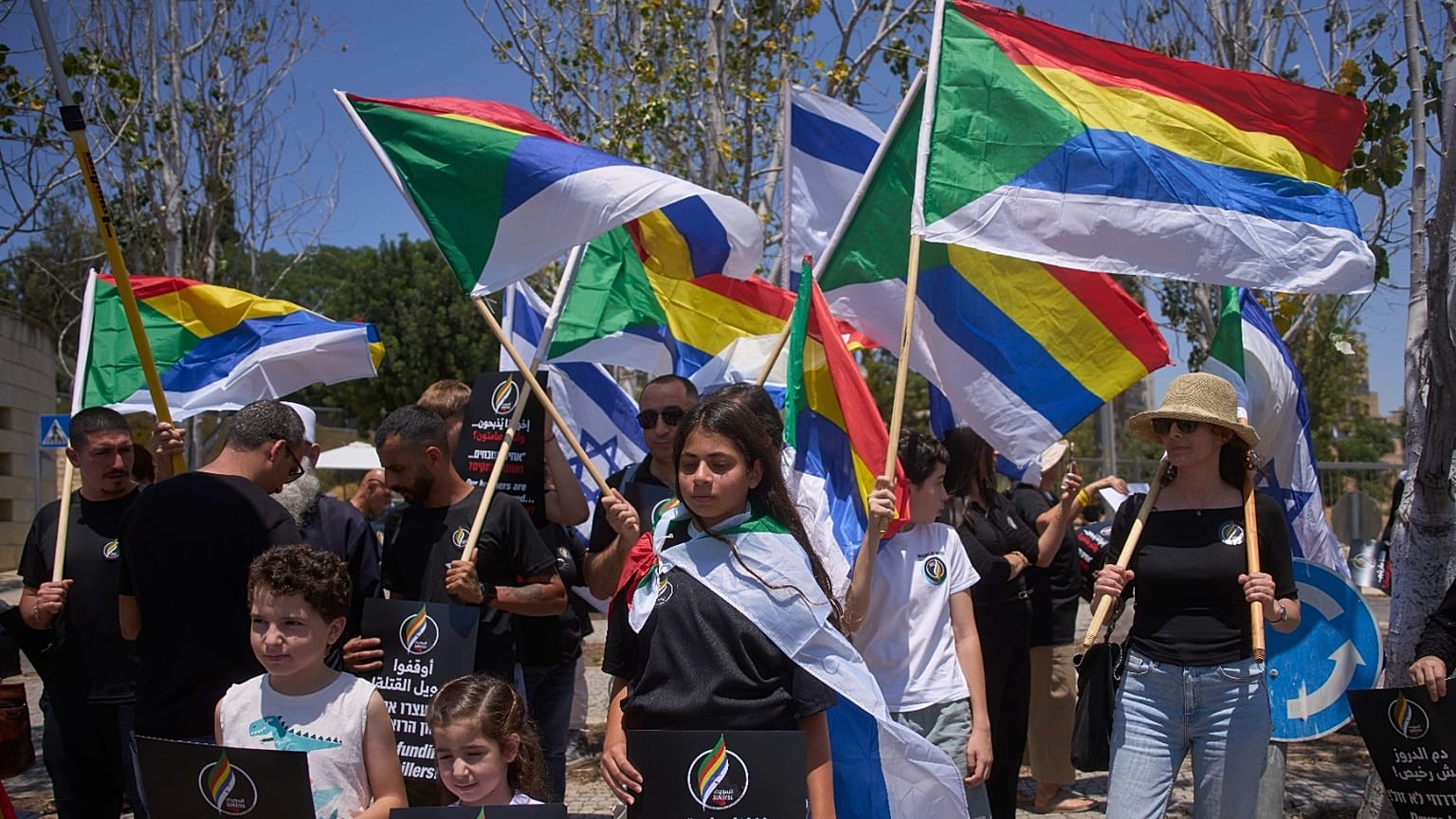
Druze and supporters demonstrate outside the US embassy in Jerusalem on 28 July 2025, amid Suwayda clashes between Syrian forces and Druze militants.
Copyright AP Photo

By Wessam Al Jurdi & Euronews Arabic
Published on


Sheikh al-Aql Hikmat al-Hijri made the declaration at a gathering in Suwayda, praising Israel's model of state-building and saying the two communities shared doctrinal "common denominators," a statement that deepens the rift with Damascus.

The spiritual leader of Syria's Druze has described the community as "an integral part of the State of Israel," a declaration that drew sharp reactions across the region and deepened tensions between Suwayda province and Damascus.

Hikmat al-Hijri made the statement at a gathering in Suwayda on Monday, praising Israel's model of state-building and saying the two communities shared "common denominators" that he said extended to doctrine.

He said the region's inhabitants shared a common fate and that the current period would require sacrifices to achieve stability.

Al-Hijri is one of Syria's three Sheikh al-Aql, the senior religious leaders of the country's Druze community, and has emerged as its most influential political and spiritual figure in Suwayda.

The Druze follow a monotheistic faith that emerged in the 11th century as an offshoot of Ismaili Islam and is now generally regarded as a distinct religion.

There are roughly 1 million Druze worldwide, with most living in Suwayda province in the southwest and the surrounding Jabal al-Arab, and smaller communities in Lebanon and Israel.

The Israeli Druze have a specific status within Israel: unlike other Arab citizens, they are subject to mandatory military service and have traditionally served in the Israeli Defence Forces.

Al-Hijri linked his vision for Suwayda's future to establishing a "civil state" that guarantees the rights of all communities without discrimination.

He hinted at developments in the province that could be announced "within days," without elaborating.

Pushback against al-Sharaa

Al-Hijri has previously called for special administrative arrangements for Suwayda and floated the idea of the province coming under international protection or joining another state.

He thanked Israel publicly for its military intervention during clashes in July 2025, when Israeli aircraft struck targets in Damascus and elsewhere in what Israel described as protection of Druze communities. Syria's government condemned those strikes as a violation of sovereignty.

Since Bashar al-Assad's fall in December 2024, al-Hijri and allied forces in the predominantly Druze province have been pushing for autonomy and have resisted integration with the new Damascus government under President Ahmad al-Sharaa.

Armed clashes between local factions and forces affiliated with the central government have broken out periodically.

The province has refused to hand over weapons or accept Damascus-appointed security officials, making it one of al-Sharaa's most difficult governance challenges.

Sources close to al-Hijri denied any direct negotiations with Damascus were under way, while acknowledging US mediation efforts focused on specific issues, particularly the fate of detainees held by both sides.

Just days prior to al-Hijri's remarks, a Syrian-Israeli meeting in Jordan was brokered by the United States, aimed at de-escalating tensions and discussing security arrangements in southern Syria.

Al-Hijri has previously called for international intervention in Suwayda. He said residents' demands before the recent violence had focused on a democratic system that rejected divisions.

Al-Hijri is the most influential Druze leader in Suwayda, but his position does not represent all Syrian Druze, some of whom have rejected calls to associate the community or Jabal al-Arab with Israel.

Saturday, August 15, 2026

 The Two Terrorists: Britain Jails Tweets While the West Crowns al-Qaeda’s Man in Damascus


by | Aug 14, 2026ANTIWAR.COM

Two men, one word. Next Monday, at Kingston Crown Court in London, a 72-year-old grandfather goes on trial for terrorism; the evidence is a tweet of seven words, and the maximum sentence is 14 years. Nine months ago, a man who founded al-Qaeda’s Syrian branch and carried a $10 million American bounty on his head became the first Syrian head of state ever received at the White House. Tony Greenstein and Ahmed al-Sharaa have never met. Between them they define what the word “terrorist” now means – and for American readers there is a further twist: the seven words that may cost the pensioner his freedom are fully protected speech in the United States, which is why Washington has developed other methods for its own dissidents.

Take the pensioner first, and take his record in full, because the prosecution will. Greenstein was expelled from the Labour Party in 2018; he lost a libel action against the Campaign Against Antisemitism, which had called him a “notorious antisemite,” the court finding the phrase protected as honest opinion; he accepted a suspended sentence over a Palestine Action attack on an Elbit arms factory. He is abrasive, litigious and unrepentant – a Jewish socialist from Brighton, a carer, the son of an Orthodox rabbi who marched against Mosley’s Blackshirts. None of that is the charge. The charge is that in November 2023, goaded by an anonymous account demanding he declare himself, he posted: “I support Hamas against the Israeli army.” Five weeks later, at 6:30 in the morning, counter-terrorism officers took his computers and phones, held him for nine hours, and released him under conditions that banned him from posting about the war at all. “This is Orwellian,” he told the arresting officers. He undersold it.

Now the other man, whose record requires no libel lawyer to establish, because the United States government wrote it down. Ahmed al-Sharaa – then Abu Mohammad al-Jolani – joined al-Qaeda in Iraq in 2003, was captured by American forces and imprisoned for five years, then crossed into Syria to found al-Nusra Front, al-Qaeda’s Syrian branch, pledging allegiance on video to Ayman al-Zawahiri. The State Department’s own wanted notice recorded that under his leadership the group “carried out multiple terrorist attacks throughout Syria, often targeting civilians” – and itemized them: roughly 300 Kurdish civilians abducted from a checkpoint; 20 residents of the Druze village of Qalb Lawzeh massacred in Idlib; suicide bombings claimed in Damascus, Homs and Quneitra. In 2014 he called for retaliatory attacks on the American-led coalition itself. For this the UN froze his assets and banned his travel, and the $10 million bounty placed him among the five most wanted jihadist leaders on earth, on the same short list as Baghdadi and Zawahiri. That is the conduct the word “terrorist” was coined for: emptied villages, detonated city centers, a decade of American soldiers and Syrian civilians in the ground.

While the state prepared its case against the tweeter, it laid siege to the man. Eleven months to charge him; a trial date pushed back the better part of a year; thirty-two months, in the end, between the dawn raid and the jury. And one by one, his banks left him. In a statement published two weeks before trial, Greenstein described being cut off by five institutions since his arrest: Nationwide after a quarter-century, HSBC and First Direct – closing, among others, the account kept for the care of his autistic son – then Santander, which froze his personal accounts and those of a registered charity he serves as treasurer, then a savings bank that shut out his family entirely. None gave a reason; none has to, since banks warned about a customer are forbidden by law to tip him off. Nor is his suspicion of state involvement far-fetched: the government’s own Independent Reviewer of Terrorism Legislation warned in 2023 that proscription enforcement would push banks toward jettisoning clients – “de-risking,” the trade calls it. When Coutts closed one account belonging to Nigel Farage, the affair drew condemnation from the prime minister and toppled a chief executive. A pensioner debanked six times en route to a terror trial has drawn silence. A defendant is presumed innocent; his accounts are not.

And while the pensioner’s accounts froze, the warlord’s thawed. Damascus fell on December 8, 2024; twelve days later an American delegation sat with al-Sharaa and announced the $10 million bounty was being dropped – the file unchanged, the graves at Qalb Lawzeh exactly where they had been. Britain’s prime minister said deproscription was “far too early” to consider; his government then spent 2025 considering it at speed. In March 2025, as government-aligned militias swept the Alawite coast, Amnesty documented the deliberate sectarian killing of civilians and demanded a war-crimes investigation; al-Sharaa’s own fact-finding committee would eventually confirm 1,426 dead, most of them civilians. Two months after those massacres, Trump received him in Riyadh and reviewed him for the cameras: “Young, attractive guy, tough guy, strong past.” In June came an executive order lifting sanctions to “give Syrians a chance at greatness”; in July, Washington revoked the terrorist designation of the organization he built. Britain’s Foreign Secretary flew to Damascus that same July to shake his hand – while HTS was still proscribed under the Terrorism Act as an alias of al-Qaeda, the identical legal status Hamas holds in Greenstein’s indictment. Only in October did Parliament tidy up, erasing the proscription on the stated ground that it “serves the national interest.” By November al-Sharaa was in the Oval Office, enrolling Syria in the anti-ISIS coalition while the Treasury halted most remaining sanctions. No jury weighed the graves. No dawn raid preceded the handshakes. The men who wrote the wanted poster simply took it down – and wrote into Hansard, in their own words, what proscription is: an instrument of the national interest, adjustable by ministerial order.

Hold the two files side by side and the statute confesses. Under Section 12 of the Terrorism Act, as amended in 2019, a person commits an offense by expressing an opinion supportive of a proscribed organization, reckless as to whether anyone is encouraged – an offense Parliament created precisely because the courts had ruled the old law could not touch opinions. By its literal terms, a Foreign Secretary renewing relations with the commander of a then-proscribed organization sits closer to the offense than anything Greenstein typed; nobody suggests prosecuting him, and that is the point. In the United States such a statute could not exist at all: even Holder v. Humanitarian Law Project, the Supreme Court’s furthest reach into “material support,” held that “any independent advocacy in which plaintiffs wish to engage is not prohibited.”

Britain criminalized exactly what America’s highest court fenced off, and then demonstrated, through Damascus, that the criminal category is edited by hand. The Terrorism Act carries a clause no draftsman wrote: it binds the powerless and dissolves on contact with the useful.

The state’s own ledgers show which of the two uses is the real one. Across fourteen years to mid-2025, the Ministry of Justice records 55 people prosecuted under the Act’s membership and support sections – four a year, through the entire era of ISIS. Then the subject changed from bombs to opinions. In the twelve months to September 2025 the Home Office counted 1,886 terrorism arrests – up 660 percent – and 86 percent of them were for supporting Palestine Action, a group proscribed for spray-painting warplanes weeks after HTS’s rehabilitation began. The share of arrests producing a charge collapsed from 47 percent to 17: five of six people seized under terror law are never meant to face trial, because the arrest is the product. The UN human rights chief called the ban “disproportionate and unnecessary”; more than 2,700 arrests followed anyway, 522 in a single day, pensioners and priests led off over cardboard signs. When the High Court ruled the ban unlawful in February, police paused, then resumed – “We must enforce the law as it is at the time,” a commissioner explained, arresting 18 more on the steps of Scotland Yard – and the Supreme Court will rule in November on whether any of it was ever legal. The government’s own reviewer confirms that terror prosecutions now run at record levels, “dominated by documentary offences and proscription related charges.” An apparatus built against the authors of Qalb Lawzeh is processing placards – while the author of Qalb Lawzeh signs coalition documents in the Oval Office.

The American half of the mirror completes itself. The administration that lifted the bounty cannot, thanks to the First Amendment, prosecute its own citizens’ words – so it deports the speakers instead. Mahmoud Khalil, a green-card holder, was seized by plainclothes ICE agents over his campus advocacy, held 104 days in Louisiana, made to miss the birth of his first child, never charged with a crime – detained on the Secretary of State’s certification that his presence compromised American foreign policy. Rümeysa Öztürk was taken off a street by masked agents and jailed 45 days over an op-ed; a judge found the whole policy unconstitutional, her case was thrown out, and she left for Turkey anyway, while Khalil’s protections were stripped on appeal and his fate rides on the Supreme Court.

Hold that against Damascus: the same State Department that certified a student op-ed a threat to American foreign policy spent the year unwinding the terrorist status of a man it once ranked beside Baghdadi. The department’s terror lists and its visa lists are, it turns out, the same list, kept for the same purpose – sorting the useful from the inconvenient.

The inconvenient include the press. Richard Medhurst, an independent journalist covering Gaza, became the first reporter arrested under the statute now aimed at Greenstein – 14 months under investigation, no charge, his files handed to Austria so the ordeal could continue abroad. Ten officers raided the home of Asa Winstanley of The Electronic Intifada over his posts; a court found the warrants improperly obtained and ordered his devices returned. No conviction anywhere; months of seized equipment and fear everywhere – a fair description of the function. Even in Kingston, the instinct holds: by Greenstein’s account, prosecutors have fought to keep his published writings out of the jury bundle, the judge citing an old rule that “courts are not sounding boards for anybody’s political views” – in a trial where the defendant’s political views are the offense.

So the ledger closes where it opened, with two men and one word. One commanded an organization that committed atrocities at scale, and the two governments that hunted him have concluded, in Hansard’s own language, that his rehabilitation serves the national interest. The other posted seven words, and those same two governments – one with its Terrorism Act, one with its immigration code – have spent three years demonstrating what happens to the powerless who say the wrong thing about the wrong war. Greenstein has argued that his verdict will set the price for everyone arrested behind him: acquittal imperils the campaign, conviction licenses it. Perhaps. But the deeper verdict is already in, delivered in Riyadh and sealed in the Oval Office: terrorism, as governed practice, is a description of usefulness. Al-Sharaa became useful, and the word released him. Greenstein and 2,700 placard-carriers remain inconvenient, and the word descends on them with dawn raids and frozen accounts. The trial at Kingston is listed for five days. The word on trial has already been acquitted of meaning anything at all.

Thomas Karat writes investigative work published at karat.substack.com and the Libertarian Institute, drawing on a corporate career and academic training as a behavior analyst to examine how institutions manufacture consent and influence.

Wednesday, August 05, 2026

Fringe Israeli settler group is sneaking into Syria to try to claim land for a Jewish outpost

NAHARIYA, Israel (AP) — Israel's military has occupied the area in southern Syria for more than a year, but forays by civilian settler groups into the region have only recently became a regular occurrence.


NAHARIYA, Israel (AP) — The Israeli military was about to launch a nighttime strike on a group of men in southern Syria when the soldiers noticed the long curls dangling from the temples of their targets. The troops held their fire.

These were not Syrian militants attempting to breach Israel’s border, but religious Jews who had slipped into Syria and were on their way back.

The episode, first reported last week by Israel’s public broadcaster and confirmed to The Associated Press by the Israeli military, has helped raise the profile of a fringe group of Israeli settlers that has staged numerous incursions into Syria, where they hope to establish Jewish settlements.

Israel’s military has occupied the area in southern Syria for more than a year, but forays by civilian settler groups into the region have only recently became a regular occurrence.

The groups, with members numbering in the dozens, have attempted to cross from Israel to Syria every few days in recent weeks. The military is tasked with reining them in and, while most Israelis regard them as fringe, the wider settlement movement in Israel has strong backers in the country’s far-right government.

The most prominent of the groups behind the incursions in Syria is known as “Pioneers of Bashan.”

Pioneers of Bashan are named after a biblical region

Formed early last year, the Pioneers of Bashan are a group of right-wing Israeli activists aiming to establish Jewish settlements inside Syria. They are named after the biblical region of Bashan, which includes part of modern-day Syria and neighboring Jordan.

They have their sights set on an area of southwestern Syria that includes the provinces of Quneitra, Daraa and Sweida.

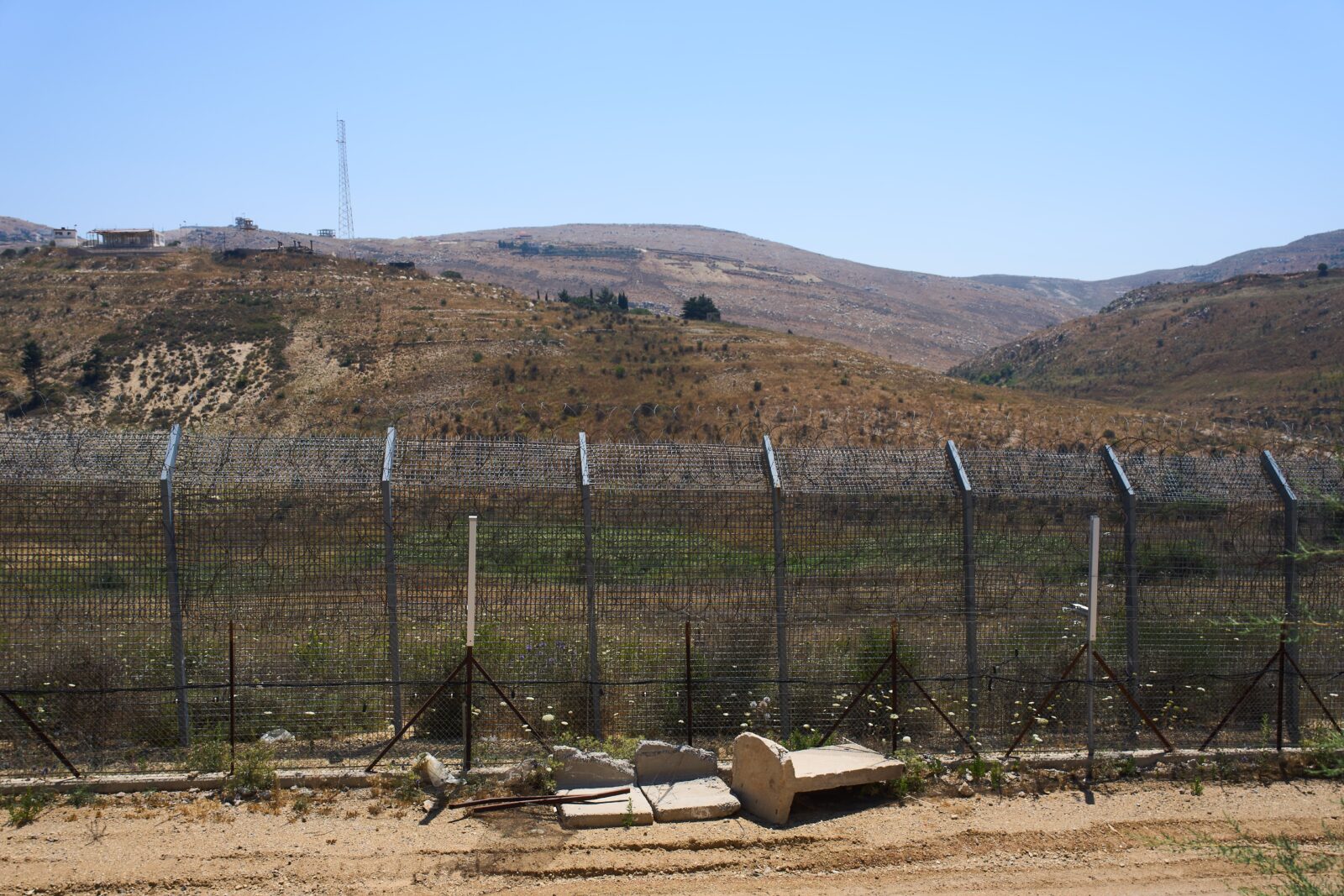
Part of this area, including the summit of Mount Hermon, is a “buffer zone” Israel declared in December 2024, soon after the ouster of former Syrian President Bashar al-Assad in an insurgent offensive.

The region was known in Scripture for its fertile land and came to be associated with strength and divine providence. In the Bible, the Israelites under Moses conquered the Bashan from the mythical King Og and it was then handed to some of the Israelite tribes.

Members of the group claim a historical right to these lands and argue that their presence there will help Israel defend the Golan Heights, which Israel captured from Syria during the 1967 Mideast war and later annexed — a move not recognized by most of the international community.

Some claim that Israeli settlement of the areas would protect members of the Druze religious minority after violence erupted last year between Druze groups and Sunni Bedouin tribes and Syrian government security forces. Hundreds of civilians — mostly Druze — were killed in sectarian revenge attacks.

Amos Azaria, a Pioneers of Bashan leader, said the group aims to establish a “humanitarian corridor” from Israel to the Druze enclave of Sweida by depopulating adjacent Sunni-majority areas.

“The entire Daraa district … must be cleared of the enemies seeking our destruction and instead be filled with Jewish settlement,” said Azaria, a computer science professor at Ariel University in the Israeli-occupied West Bank.

Aim to establish a Jewish outpost inside Syria

The group seeks first to establish a Jewish outpost in southern Syria next to the Israeli-controlled Golan Heights. Outposts, which settlers often call “young settlements,” describe rustic footholds in territory they desire.

Settlers normally establish outposts in the hope that one day Israel’s government will legalize them. That’s how many Jewish settlements in the Israeli-occupied West Bank — which rights groups say are major drivers of settler violence and displacement of Palestinians — got their start.

So far their incursions into Syria have been brief. The military has removed the activists before they have been able to build anything.

Videos on the group’s X account from July 5 show a group of religious teens seated on the ground with their arms linked together, as soldiers try to pry them apart.

A second video shows soldiers shoving several of the activists and zip tying their hands behind their backs.

A video posted by the group in April shows several dozen activists waving Israeli flags and chanting on the roof of a house said to be on the outskirts of the Syrian village of Hader, in Quneitra, as Israeli soldiers look on.

Israeli military says the group compromises its operations

Israel’s military says it takes a firm hand with the border-crossers. It has repeatedly condemned the group for diverting troops’ attention from military operations and compromising their security. It says it detains civilians caught crossing the border and hands them over to police, saying it “expects law enforcement authorities to bring those involved to justice.”

Israel’s Channel 12 reported last week that no indictments have been filed so far.

The border-crossers say they have cozy relationships with members of Prime Minister Benjamin Netanyahu’s government. Several government ministers have expressed support for their cause, and the group’s social media platforms document meetings it has held with at least two cabinet ministers, Amihai Eliyahu and Shlomo Karhi.

“We have support from friends in the government and many members of the Knesset,” Azaria said.

Syria and Lebanon are more concerned about military occupation

Syrian officials have not commented publicly on the attempts by Israeli settler groups to enter Syria.

The Syrian government has condemned Israel’s occupation of southern Syria and frequently calls for Israeli forces to withdraw and for the international community to intervene. Israeli troops have carried out incursions and raids in areas of Syria outside the buffer zone, sometimes clashing with local residents, who have increasingly attempted to block roads to keep them out.

Since Oct. 7, 2023, a similar movement has staged occasional marches along the Gaza border calling to reestablish settlements in the Gaza Strip. Israel removed its 21 settlements as part of its 2005 withdrawal from Gaza.

In Lebanon, a fringe Israeli settler group — “Uri Tzafon,” or “Awaken, O North” — has staged incursions into the southern part of the country. Like Syrian officials, the Lebanese government has paid little attention to the group, focusing on calling for withdrawal of the Israeli army from southern Lebanon.

Still, some have warned against entirely discounting the settler groups.

Lebanese Deputy Prime Minister Tarek Mitri wrote on X of the attempts by the Uri Tzafon group to enter the country, “It is true that they are a small and fringe group and they withdrew under orders from the Israeli army.”

But he pointed out that the movement to settle the West Bank began with an embattled band of right-wing religious activists, known as Gush Emunim, “which in its early days was a small group that faced some obstacles and difficulties.”

——

Sewell reported from Beirut. Frankel reported from Jerusalem. AP videojournalist Alon Bernstein contributed to this report from the Golan Heights.

Monday, July 13, 2026


Syria: Al-Sharaa Dismisses Trump’s Proposal for Military Intervention in Lebanon


Aseel Saleh |


Analysts suggest that the shift in the balance of power, resulting from the recent regional war, has pushed Syria’s new ruler to reconsider his stance towards Hezbollah, despite enjoying support from the Trump administration.


Syrian interim President Ahmad al-Sharaa. Photo: AP

US President Donald Trump announced mid-June that he discussed with Syrian interim President Ahmad al-Sharaa the possibility of Syria’s military intervention in Lebanon to disarm Hezbollah.

Trump claimed that by tasking Syria with this mission, he aims to stop the mass killing committed by Israel during its attempts to dismantle the Lebanese resistance movement.

“I’ll tell you what, Israel is fighting Hezbollah too long and too many people are being killed, and you don’t have to knock down an apartment house every time you are looking for somebody, because there are a lot of people in those apartment houses and they are not all Hezbollah, that I can tell you. And I suggested to Israel to let Syria take care of Hezbollah, cuz to be honest with you, I think they’d do a better job of doing it.” The US President said on the sidelines of the G7 Summit.

The proposal of the US President was, however, interpreted as another attempt by the US to ignite division and sectarian strife in the West Asia region, and to restore the balance of power that shifted during the recent regional war.

Syria’s new rulers have for long adopted a hostile position towards Hezbollah and Iran, due to their support for Syria’s former President Bashar al-Assad. The transitional leadership in Syria, which is known for its extremist background, has also promoted anti-Shia rhetoric since it took over Syria in December 2024. Shia Islam is the religious doctrine followed by the Iranian leadership, Hezbollah, and other actors within the Axis of Resistance.

This sectarian rhetoric was enhanced by a propaganda campaign, which media mouthpieces of the Syrian interim government launched, introducing the new leadership of the country as the successors of the Umayyad Caliphate, the historic rivals of Shia Muslims.

It is worth noting that Syria saw a surge in sectarian violence after Hayat Tahrir al-Sham (HTS) rose to power, resulting in the deaths of hundreds of people from different religious sects, including Druze and Alawites.

Al-Sharaa seems to have recalculated his regional policy 

Despite his longstanding hostility to Iran and Hezbollah, as well as his alignment with Washington, Al-Sharaa dismissed Trump’s proposal in an interview with Al Mashhad TV late June.

Al-Sharaa confirmed that his country has no intention of military intervention in Lebanon, but it is willing to cooperate with the Lebanese State in finding “other solutions” for disarming Hezbollah. He also demonstrated openness to dialogue with the Lebanese resistance movement.

“Today, the situation in Lebanon requires collective solutions, and Syria can be relied upon to help chart a safe path forward. However, this does not mean war, nor does it imply a return to the historical tutelage that the former Syrian regime imposed on Lebanon. Rather, it means providing the Lebanese state with support, strengthening its institutions, and finding common ground between various political actors and powerful forces in Lebanon, including Hezbollah, to reach a solution that satisfies everyone,” Al-Sharaa stated.

Analysts argue that the shift in the balance of power across West Asia, which resulted from the recent regional war, has transformed Al-Sharaa’s political position towards Hezbollah.

The US and its proxy in West Asia, Israel, failed to defeat the Axis of Resistance after a three-year all out multi-front war. This in turn seems to have made US allies in the region, including Damascus, reconsider their relations with the Iran-led resistance coalition.

Israel reacts to Al-Sharaa’s statements by escalating its assaults on southern Syria

Al-Sharaa’s refusal to get involved in dismantling Hezbollah has apparently provoked the ire of Israel, which reacted by escalating its assaults on southern Syria during the past week. The Israeli Occupation Forces (IOF) launched artillery shelling, carried out ground incursions, and set up checkpoints in various villages of Daraa and Quneitra. 

The escalation showcased Tel Aviv’’s deepening fear of losing its security grip over its neighboring countries, and takes “the Greater Israel” project a step backward. It also indicates that the influence of the Iran-led Axis of Resistance on the region has grown, in a way that represents an existential threat to the Israeli occupation state.

Courtesy: Breakthrough News