World Nuclear News
US poll finds support for deep geologic disposal
_19180.jpg)
The research was commissioned by nuclear waste disposal technology company Deep Isolation Inc "to better understand how Americans think about nuclear energy, radioactive waste management, and permanent disposal solutions for used nuclear fuel and high-level radioactive waste." Carried out in April, the nationally representative survey of 1,000 adults explored public attitudes toward nuclear energy, concerns about radioactive waste, support for permanent disposal, views on deep geological and deep borehole disposal, and how opinions changed after respondents received information about different disposal technologies.
While 81% of those surveyed said they believed finding a permanent solution for disposal of high-level radioactive waste should be a national priority, only 28% supported continuing to store used nuclear fuel at reactor sites for many decades. The research also found strong support for deep geologic disposal: after respondents reviewed factual information about geologic disposal technologies, 65% said they supported deep borehole disposal as a solution for managing high-level radioactive waste.
Disposal in deep boreholes - narrow, vertical holes drilled deep into the earth's crust - has been considered as an option for the geological isolation of radioactive wastes since the 1950s. Deep borehole concepts have been developed in countries including Denmark, Sweden, Switzerland, and the USA but have not yet been implemented.
Deep Isolation's disposal solution envisages emplacing nuclear waste in corrosion-resistant canisters - typically 9-13 inches (22-33 centimetres) in diameter and 14 feet long - into drillholes in rock that has been stable for tens to hundreds of millions of years. The company's patented technology leverages standard drilling technology using off-the-shelf tools and equipment that are common in the oil and gas drilling industry.
The survey findings carry important implications for US energy and waste management policy as policymakers consider the future of nuclear energy. The findings also indicate that public confidence is likely to depend on transparent decision-making, meaningful public engagement and the visible involvement of trusted scientific and engineering experts, Deep Isolation said.
"The findings are clear," Deep Isolation Nuclear CEO and President Rod Baltzer says in his foreword to the report of the survey's findings. "Americans want action. They recognise the need for a permanent solution, and they do not want this responsibility left to future generations. At the same time, the research shows that many people are still unfamiliar with how nuclear waste is managed, and that concerns about safety, transportation, and long-term stewardship remain significant. The survey also shows strong trust in scientists and engineers to help guide decisions, reinforcing the importance of evidence-based policy and technically sound solutions.
"As the United States considers the future of nuclear energy, it must also move forward on the waste question. The public understands this. The challenge now is to turn that recognition into progress."
The research comes at an important time as policymakers and industry leaders work to advance a long-term strategy for managing used nuclear fuel, according to Todd Abrajano, President and CEO of the US Nuclear Industry Council. "The strong public support reflected in this survey aligns with growing interest in state-led approaches, including the Nuclear Lifecycle Innovation Campus initiative, that combine innovation with durable waste management solutions," he said.
Since 1987, Yucca Mountain in Nevada has been named in the US Nuclear Waste Policy Act as the sole initial repository for disposal of the country's used nuclear fuel and high-level radioactive wastes. The Department of Energy submitted a construction licence application to the Nuclear Regulatory Commission in 2008. The Obama Administration subsequently decided to abort the project, but its status as the identified site still remains enshrined in US legislation.
As of 2026, according to information from World Nuclear Association, there is a total of approximately 95,000 tonnes of used fuel from nuclear power generation in the USA, all of which is in storage at current or former nuclear power plant sites.
Just 7% of America’s Nuclear Fuel Comes From Home
- 93% of the uranium used in US nuclear fuel comes from foreign sources, with critical enrichment supply chains concentrated among a small number of countries, including Russia.
- Global uranium demand is projected to rise 28% by 2030 and nearly double by 2040, and US utilities already face a 186 million pound gap between projected demand and existing long-term contracts.
- The US is racing to close the gap through spent-fuel recycling, a major new in-situ recovery site in South Texas, and talks to convert Cold War-era weapons-grade plutonium into commercial reactor fuel.
The Trump administration is pushing for a homegrown nuclear power renaissance. The United States is still the largest producer of nuclear energy in the world, but that won’t last long without drastic changes in energy policy and investment at the state and federal level. The United States’ nuclear energy fleet, while sizable, is aging out, with far more plants being decommissioned than coming online. Moreover, the country is heavily dependent on foreign imports of nuclear fuel, presenting another major challenge for Trump’s goal to “produce lasting American dominance in the global nuclear energy market.”
At present, a whopping 93 percent of the United States’ uranium for nuclear fuel is coming from foreign markets. Not only is this antithetical to the current administration’s goal of global dominance, it also presents key energy security concerns. Uranium production and enrichment are overwhelmingly carried out by a worryingly small number of players, and many of these critical supply chains are controlled by Russia. As a result, "U.S. nuclear energy faces fuel supply chain vulnerabilities, with tight uranium supplies, geopolitical risks, and rising costs threatening both existing reactor costs and advanced reactor development," according to a January report from Stanford Energy.
Plus, the United States is far from the only country planning a nuclear energy revival, indicating that increased competition for scarce uranium supply could soon prove to be a major bottleneck. The World Nuclear Association projects that global demand for uranium will balloon 28 percent by 2030 and nearly double by 2040, and prices are already soaring on the global market. Moreover, the United States is behind the ball in terms of securing deals. "Russian and Chinese players have been very keen to secure access to resources in Central Asia and Africa, creating a very aggressive competitive environment," Benjamin Godwin at Prism Strategic Intelligence told the Financial Times last year.
This environment poses a problem for powering the nuclear plants the United States already has, much less the capacity that it wants to build. “Over the next decade, American nuclear utilities will require a massive volume of fuel to maintain grid operations,” Interesting Engineering warned in a Wednesday report. “Over the next 10 years, operators project a total baseline demand of 360 million pounds of uranium. Current long-term purchase agreements cover 174 million pounds of this requirement. The remaining 186 million pounds represent unfilled market demand that utilities must secure through new contracts,” the report went on to say.
The United States is already making some inroads toward building up domestic uranium supplies and relieving its reliance on imports, but it has a long way to go. At present just 7 percent of the nation’s reactor uranium deliveries come from domestic sources. But various projects are trying to change those figures in a big hurry, and are using some innovative approaches to get there.
In one promising approach, the federal government has invested aggressively into recycling and recovering viable uranium from spent nuclear fuel. Recycling spent fuel could reportedly boost resource utilization by a jaw-dropping 95 percent. And, in April, uranium production began at the largest uranium in-situ recovery (ISR) site seen in the country in over a decade, located on 20,000 acres in South Texas. The project is expected to produce 6,155,000 pounds of U3O8, the most stable form of uranium oxide.
In addition to finding new and indigenous streams of uranium resources, alternative nuclear fuels could also form a part of the puzzle. The Trump administration is currently seeking to convert more than 50 tons of weapons-grade plutonium leftover from the Cold War into commercial reactor fuel, and has announced that it is in “advanced negotiations” with a handful of nuclear startups who want to buy it.
"A lack of fuel is one of the biggest choke points in expanding nuclear power right now," said Jacob DeWitte, the chief executive of Oklo, one of the companies in conversation with the Trump administration about acquiring plutonium to power its next-gen small nuclear reactors. "This will help us get more nuclear power online faster."
By Haley Zaremba for Oilprice.com
NexGen starts $1.6 billion uranium build to rival top mines

NexGen Energy (TSX, NYSE: NXE; ASX: NXG) has started construction of its C$2.2-billion ($1.6-billion) Rook I uranium project in Saskatchewan, advancing what could become one of the world’s largest new sources of uranium.

The underground mine and mill are expected to take about four years to build and are designed to eventually produce about 30 million lb. of uranium annually. By comparison, Cameco’s McArthur River-Key Lake operations are licensed to produce 25 million lb. annually, with 2026 guidance of 14 million to 16.5 million pounds.
“This groundbreaking commemorates the work already underway and the progress that has brought us to this milestone — another major step toward production and becoming a leading supplier of uranium for the next generation of nuclear energy,” NexGen said in a post on X.
Rook I’s development comes as nuclear power assumes a larger role in meeting growing electricity demand, increasing the strategic importance of uranium supplies. Canada is also seeking to expand its position in the global nuclear fuel market while strengthening domestic supply chains.
Building Rook I
Major earthworks and surface infrastructure are already advancing at the project, NexGen said. An initial 3,000-foot airstrip has been commissioned and expanded site accommodations are complete and occupied.
The company expects to finish the full 5,840-foot airstrip by year-end, while shaft development is planned for 2027.
The Canadian Nuclear Safety Commission approved NexGen’s environmental assessment in March and granted a licence to construct Rook I, clearing the project’s final regulatory hurdle before construction.
A 2021 feasibility study outlined an 11-year mine life producing 233.6 million lb. of yellowcake. The study estimated an after-tax net present value at an 8% discount rate of C$3.5 billion, a 52.4% internal rate of return and a 0.9-year payback period.
The scale of Rook I would put NexGen among major uranium suppliers if the project reaches its targeted production rate, but the mine still faces a multiyear construction and development period before production can begin.
Construction starts at Saskatchewan uranium mine
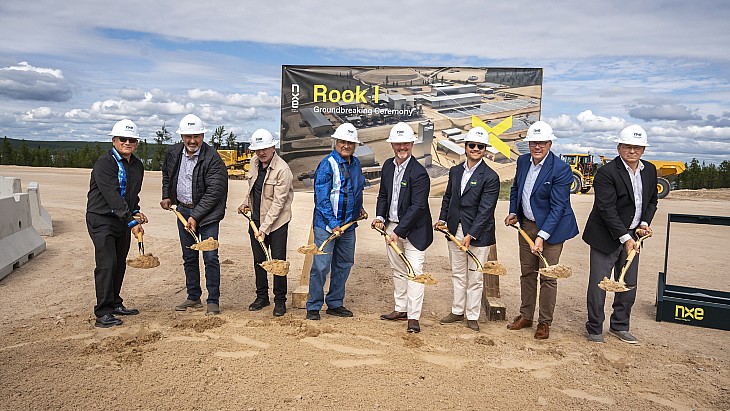
The groundbreaking ceremony comes after the company received the final regulatory approval for the project - described by NexGen as the largest development-stage uranium project in Canada - in March. The event brought together Indigenous leaders, federal and provincial representatives, investors, industry partners, employees, contractors, and community members, including Canada’s 22nd Prime Minister Stephen Harper, Saskatchewan Premier Scott Moe; Secretary of State for Rural Development and Member of Parliament Buckley Belanger, Métis Nation-Saskatchewan President Glen McCallum; and President of Métis Nation-Saskatchewan Local 39 Keith Shewchuk.
"Today, we transition from demonstrating what this project will be to delivering it - for the benefit of local communities, Saskatchewan, Canada, and the world," NexGen Founder and CEO Leigh Curyer said. Nuclear energy has become key to meeting the "unprecedented" electricity demand driven by artificial intelligence, advanced manufacturing, electrification, and energy security, "and with it, uranium has become one of the world’s most strategic resources," he added.
Rook I is located in the southern Athabasca Basin, about 155 km north of the town of La Loche. The project is situated on Treaty 8 territory, the Homeland of the Métis, and is within territories of the Denesųłiné, Cree, and Métis. The project has Benefit Agreements in place with all four Indigenous communities identified within its Local Priority Area, and is expected to support significant employment, procurement, and economic opportunities across northern Saskatchewan and beyond.
It is centred on the Arrow deposit, a high-grade uranium deposit discovered by the company in 2014. The deposit has a total Measured & Indicated resource estimate of 256.7 million pounds U3O8 (98,739 tU) including a probable reserve of 239.6 million pounds U3O8 with an average grade of 2.37% U3O8 (a uranium "reserve" is that part of a uranium resource that that is economically mineable at a given uranium price). A further 80.7 million pounds of estimated resources are in the Inferred category.
According to the company's 2021 feasibility study, the deposit - which lies between about 300 metres and 700 metres underground - will be accessed via two shafts (an 8 metre diameter Production Shaft and air intake, and a 5.5 metre diameter Exhaust Shaft which will provide a second egress). Production will be via conventional "longhole" mining. The estimated mill capacity is targeted at 1,300 tonnes of ore per day.
Some 300 people are currently working at the site. To date, more than 575,000 tonnes of aggregate have been crushed and stockpiled by a Clearwater River Dene Nation-partnered business, supporting up to 50 local jobs, NexGen said. Major earthworks and surface infrastructure are advancing, the initial 3,000-foot (914 metres) airstrip has been commissioned, and expanded site accommodations are complete and occupied. The full 5,840-foot airstrip is expected to be completed by December, with shaft development planned for 2027.
Stephen Harper, who served as the 22nd Prime Minister of Canada from 2006 to 2015, said Rook I, when completed, will deliver 20% of the world’s uranium supply with lasting economic benefit for the community and beyond. "This is an exciting, globally significant project for Saskatchewan and for Canada," he said on X.
Government approves extended operation of Almaraz plant
_47306.jpg)
In June 2020, the Nuclear Safety Council (CSN) approved the operation of Almaraz until June 2030, as licence renewals are for 10 years. However, given the agreed-upon closure schedule as part of Spain's phase-out of nuclear energy, it was decided to extend operations only until October 2027 for Almaraz unit 1 and October 2028 for unit 2.
On 30 October last year, the board of operator Centrales Nucleares Almaraz-Trillo (CNAT) officially requested an extension to the operating licence for both Almaraz units. The decision, taken at an extraordinary meeting of the board of directors and the general assembly of shareholders, sought to extend the life of the two units to June 2030. CSN received a request on 17 November from the Ministry for Ecological Transition and the Demographic Challenge (MITECO) for a mandatory report on the application to modify the operating licence of the Almaraz plant.
Last month, CSN issued a favourable report on the renewal of the operating licence, saying the plant meets the conditions to operate safely until June 2030.
An order from MITECO has now been published in the Official State Gazette, granting the renewal of the operating licence for Almaraz.
"The limited extension is adopted considering the energy situation marked by uncertainty in international energy markets that have caused the armed conflict in the Middle East and the continuation of the war in Ukraine," the ministry said. "This limited and temporary extension may help to moderate the exposure of Spanish consumers to previously unforeseen price spikes resulting from the crisis, while measures already underway to promote renewables and storage continue to be deployed as structural solutions to the exposure and vulnerability caused by dependence on imported fossil fuels."
It noted that the licence extension for Almaraz "does not alter the closing date of the entire nuclear park in 2035".
Industry response
The government's decision to extend the operating licence was welcomed by Spain's nuclear industry forum, Foro Nuclear, whose president, Marta Ugalde, said: "It is great news that a strategic infrastructure like Almaraz can continue operating, since nuclear energy is essential in the electricity generation mix. It provides firm, synchronous, and inertial power, and strengthens energy independence from fossil fuels, as recognised by the European Commission. The continued operation of Almaraz provides certainty for the region and highlights the value of safe, emission-free, competitive nuclear energy that complements renewable energies."
Foro Nuclear noted that the resolution concludes that the licence renewal does not compromise national renewable energy targets or European decarbonisation goals, while contributing to moderating the exposure of the electricity system to the volatility of fossil fuels. The continued operation of Almaraz "is also framed within an international context of growing recognition of nuclear energy as a tool to strengthen energy security, reduce emissions and accompany the advance of electrification," it said.
"Foro Nuclear believes it is necessary to use this new perspective to address, calmly and rigorously, the role that nuclear energy should play in Spain's future energy model," the organisation said. "Likewise, it is essential to review the regulatory, economic, and tax conditions that will allow it to maintain its contribution, in line with European priorities of strategic autonomy, industrial competitiveness, and decarbonisation."
Sama Bilbao y León, Director General of World Nuclear Association, commented: "I am very encouraged by the decision to extend the operation of Almaraz until 2030. This is great news for Spain's economy, energy security and grid stability, helping preserve a reliable source of electricity that supports the prosperity of Spanish families and businesses. I hope this is the first step towards the recognition of the strategic value of nuclear energy in Spain, including the extension of Almaraz and the rest of the Spanish nuclear fleet to 60 years of operation, securing these benefits for decades to come."
Phase-out plan
Spain's seven operating nuclear power reactors - Almaraz I and II, Ascó I and II, Cofrentes, Trillo and Vandellós II - generate about 20% of its electricity. Under the country's nuclear phase-out plans, agreed in 2019, four reactors are scheduled to close by the end of 2030 - including the two Almaraz ones - while the remaining three reactors will shut by 2035.
The Almaraz plant currently supplies more than 7% of the electricity consumed in Spain, equivalent to 4 million homes, and employs about 4,000 people. Almaraz units I and II are pressurised water reactors with a net capacity of 1,011 MWe and 1,006 MWe, respectively. Unit I entered commercial operation in 1983 with unit II following the next year. The plant is owned by Iberdrola (53%), Endesa (36%), and Naturgy (11%).
Nuclea Energy to acquire Moltex Energy technology portfolio
_16114.jpg)
Ontario-headquartered Nuclea is designing the Morpheus microreactor, a compact, transportable and factory-fabricated lead-cooled, graphite-moderated microreactor which is currently in the conceptual design stage. The Moltex asset acquisition would extend Nuclea's technology portfolio into advanced modular and potentially grid-scale nuclear generation, as well as spent-fuel recycling, Nuclea said.
Moltex's technologies include the WATSS (for Waste to Stable Salt) recycling process; the Stable Salt Reactor - Wasteburner (SSR-W), a molten salt fast reactor technology using recycled nuclear waste as fuel; and FLEX, a thermal spectrum version of the SSR technology. The target portfolio - developed over more than a decade, with over CAD96 million (USD69 million) of private, Canadian and US public-sector funding - is expected to include technology and development materials associated principally with WATSS and SSR-W, with 80 granted patents across nine patent families in advanced nuclear technology (including nuclear fuel, reactor, chemistry and materials) plus nine pending patents on the fuel recycling process.
In June, Moltex Energy Canada announced that key stages of the WATSS process had been successfully validated using irradiated fuel from a commercial CANDU reactor at Canadian Nuclear Laboratories' Chalk River facilities.
Moltex Energy Limited - the UK-based parent company of MoltexFlex Limited and Moltex Energy Canada Inc - entered administration in March 2025. The transaction is structured principally as an acquisition of assets, according to Nuclea. Nuclea's Nuclea Energy Canada subsidiary will satisfy the purchase price - which has not yet been disclosed - entirely in cash.
The proposed Moltex asset acquisition would extend Nuclea's technology portfolio into advanced modular and potentially grid-scale nuclear generation, as well as used fuel recycling, the company said.
"We believe the nuclear sector is entering a sustained period of strategic investment driven by the increasing competition in nuclear developments between east and west, energy security, grid reliability, industrial electrification and growing demand for large volumes of dependable, low-carbon power driven by the new digital age," said Josef Freundorfer, Nuclea's CEO. "This agreement is designed to broaden Nuclea's position within the nuclear sector by adding a pair of advanced reactor designs and nuclear fuel-cycle technology that are complementary to our Morpheus microreactor. Importantly, this is an asset-led transaction at what we believe is a disciplined entry point, with future capital deployment governed by clearly defined technical, regulatory and commercial milestones."
Moltex CEO Rory O'Sullivan said the company had been "delighted" by the level of interest generated through the competitive process. "This is a very exciting outcome for Moltex and an important recognition of the value created by our team, shareholders, partners and supporters over more than a decade," he said, adding: "Nuclea provides a strong platform from which to build on what we have achieved and take these technologies into their next phase."
Completion remains subject to certain closing conditions, including the required approval under the UK's National Security and Investment Act 2021. Following completion, Nuclea intends to retain Moltex Energy Canada as a focused research, engineering and regulatory-development business supporting the continued advancement of the acquired technologies.
Business combination
Nuclea recently entered into a definitive business combination agreement - subject to customary closing conditions, including stockholder and regulatory approvals - with Mangoceuticals, Inc, a transaction it says will provide Nuclea with a path to public listing. This, it says, will broaden its access to the capital markets to fund the continued development, licensing, and commercialisation of its Morpheus technology.
The company has also recently signed a memorandum of understanding with the State of Utah Office of Energy Development to explore the siting of a nuclear test reactor at the Utah San Rafael Energy Lab to advance the deployment of the Morpheus reactor. And earlier this month, it signed a non-binding memorandum of understanding with Miami-headquartered provider of high-density digital infrastructure and computing hosting services New Mining Co, to evaluate the technical and structural feasibility of deploying Nuclea's modular reactor technology to serve New Mining's behind-the-meter power needs.
TerraPower expands cooperation with Korean partners
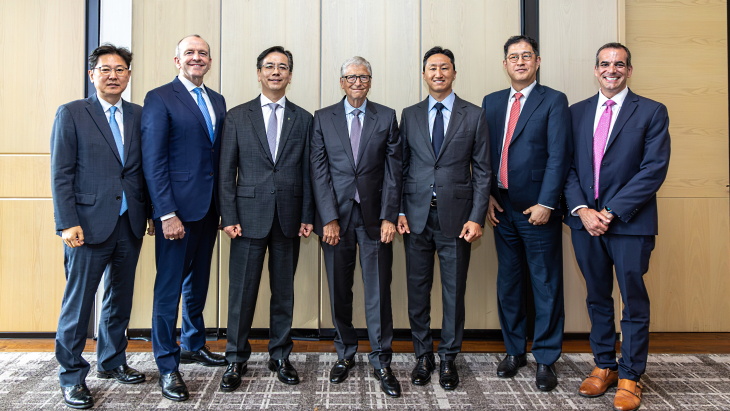
TerraPower founder and Chairman Bill Gates, along with the company's President and CEO Chris Levesque, met with South Korean Prime Minister Han Seong-sook and leaders from the Export-Import Bank of Korea, HD Hyundai, Hyundai Engineering & Construction (HDEC) and SK Innovation in Seoul on Friday to discuss the collaboration. It was the first meeting among the top executives of the three companies since HD Hyundai, TerraPower and HDEC signed a trilateral memorandum of understanding in May to cooperate on next-generation sodium reactor projects.
In May, as well as signing a framework agreement with HD Hyundai Heavy Industries - the shipbuilding subsidiary of HD Hyundai - making it TerraPower's strategic manufacturing partner, a separate memorandum of understanding was agreed between TerraPower, HD Hyundai and HDEC "to collaborate on the design, manufacturing, supply chain, construction, commercial structure and delivery of multiple units of TerraPower's Natrium technology".
TerraPower has now announced the signing of a framework agreement with HDEC to support the commercial deployment of Natrium reactors. Under the agreement, TerraPower selected HDEC as its engineering, procurement and construction (EPC) contractor to build up to eight of its future Natrium reactors with completion, price and performance guarantees, intended to facilitate conventional commercial financing of the Natrium reactor fleet. It said the collaboration will accelerate the commercial deployment of Natrium reactors by streamlining costs, improving design and construction efficiencies and strengthening global supply chains to deploy a fleet of Natrium plants across the USA and in select international markets.
TerraPower and SK Innovation also announced a term sheet agreement to advance their intent to develop Korea's first commercial Natrium plant along with plans to expand internationally. The two companies plan to explore opportunities to collaborate on engineering and digital innovation solutions, including digital twin technology and artificial intelligence, building on TerraPower's existing leadership in these tools to optimise operations and maintenance. The agreement expands SK Innovation's participation in TerraPower's SMR demonstration reactor and subsequent commercial projects under construction in the USA, expanding the use of the domestic SMR supply chain, developing domestic 'sodium SMR' businesses, and jointly identifying global SMR projects. SK Innovation said the two companies plan to "comprehensively review regulatory, industrial, and power grid conditions regarding global business, and based on this, gradually specify the direction for promoting 'K-Sodium', a Korean-style sodium SMR business model".
SK Innovation said it plans to "secure experience in the design, construction, and operation of next-generation nuclear power plants through participation in a US demonstration project, and to utilise this for reviewing the feasibility of future domestic applications and developing global projects. In addition, the company plans to explore expanding its SMR project development and operation business in Asian markets, including Vietnam, Indonesia, and Malaysia, as well as in Korea and the United States."
"This agreement is significant in that SK Innovation and TerraPower are reviewing the domestic applicability of sodium SMR to meet the power demand of AI data centres and cooperating to expand their global business," said Choo Hyung-wook, CEO of SK Innovation. "We will communicate closely with TerraPower to concretise the direction of the K-sodium business model, and expand our entry into the global market by securing business development and operational capabilities through participation in future US projects."
Announcing the two agreements, TerraPower's Levesque said: "Today marks a pivotal moment for TerraPower as we embark on a new chapter of international collaboration with Korea's leading organisations. Combining TerraPower’s innovative advanced nuclear technology with Korea's nuclear construction and operational expertise will strengthen our global cooperation and accelerate the deployment of a Natrium fleet that will transform the world's energy landscape."
TerraPower said it will now begin work under these agreements to accelerate the deployment of next-generation nuclear technologies in the USA, Korea and around the world, "reinforcing a pathway for reliable, scalable and economically competitive advanced nuclear power".
Financial backing
During the day of discussions, the Export-Import Bank of Korea said it plans to support the financial completeness of global nuclear power projects being pursued by TerraPower and Korean companies by proactively designing customised financial packages, such as loans and guarantees. In particular, during the mass deployment phase of SMRs, it plans to strengthen strategic cooperation with global financial institutions such as the US Export-Import Bank to seek an effective joint financial support structure.
"Next-generation SMRs are a key pillar of solving power challenges in the AI era and the strategic nuclear power partnership between Korea and the US," said Hwang Ki-yeon, President of the Export-Import Bank of Korea. "We will actively support Korean companies in securing a leading position in the global SMR market by combining the world-class K-nuclear supply chain with the Export-Import Bank of Korea's financial support capabilities."
TerraPower Chairman Bill Gates said: "The outstanding nuclear power plant manufacturing and construction capabilities of Korean companies and the customised financial support from the Export-Import Bank of Korea are key driving forces that will accelerate the commercialisation of TerraPower's SMRs. I look forward to the cooperation between the two sides serving as a catalyst for the global clean energy transition and entry into third-country markets."
TerraPower's Natrium technology features a 345 MWe sodium-cooled fast reactor with a molten salt-based energy storage system. The storage technology can temporarily boost the system's output to 500 MWe when needed, enabling the plant to follow daily electric load changes and integrate seamlessly with fluctuating renewable resources. TerraPower began non-nuclear construction for its first Natrium plant, in Kemmerer, Wyoming, in June 2024, and expects construction of the plant - which it says will be the first commercial-scale, advanced nuclear project in the USA - to be complete in 2030. The first Natrium project is being developed through the US Department of Energy's Advanced Reactor Demonstration Program. The Natrium reactor is a TerraPower and GE Vernova Hitachi Nuclear Energy technology.
In addition to the first Natrium plant under construction, TerraPower has an agreement with Facebook and Instagram owner Meta for up to eight Natrium plants by 2035.
Romanian plant taken offline as Hungary moves to keep Paks operating
_37830.jpg)
Nuclearelectrica had shut down Cernavoda unit 1 and disconnected it from the National Energy System on 28 July "due to the unprecedentedly low level of the Danube, caused by severe drought".
To redirect water flows, last week the energy ministry used explosives to remove a rock obstruction, dredged the river bed and sank four rock-filled barges, reporting that this raised water levels around unit 2 of the plant by 4 centimetres. "Based on forecasts available at the moment this development allows for the necessary conditions for the reactor to function for at least the next nine days," the ministry said on 9 August after sinking the rock-filled barges.
However, on the morning of 12 August, the water level in the Danube had reportedly reached 182 centimetres - below the 185-centimetre mark required for the normal operation of the Cernavoda plant. Nuclearelectrica announced it would begin the controlled shutdown of unit 2 at 7.00am on 13 August.
"The controlled shutdown of unit 2 is being carried out in accordance with procedures for such situations, based on strict monitoring of safety margins, equipment, and the INHGA [the National Institute of Hydrology and Water Management] forecast for the coming days," Nuclearelectrica CEO Cosmin Ghita said in a letter to the Bucharest Stock Exchange. "Depending on how the forecasts for the Danube's water level evolve, CNE Cernavoda specialists will decide when to restart the nuclear units, prioritising all nuclear safety margins. Keeping both units in a safe shutdown state has no impact on nuclear safety parameters, and therefore on personnel, the environment, or the population."
The Ministry of Energy noted that the shutdown and disconnection of Cernavoda 2 was completed at 10.53am.
Cernavoda is the only nuclear power plant in Romania and consists of two 650 MWe Candu reactors, generating about one-fifth of its electricity. Unit 1 went into commercial operation in 1996 and unit 2 in 2007.
The Ministry of Energy said that following the shutdown of unit 2, the National Energy System "is stable and activity is proceeding normally. All estimates available at this time show that there are no risks to the constant supply of electricity at the national level." It added: "By combining available domestic production, imports, hydro and wind resources and reserve capacities, the National Energy System currently has the necessary tools to cover the production deficit caused by the temporary unavailability of the two units at the Cernavoda NPP."
Hungary acts to ensure water supplies to Paks
In neighbouring Hungary, units 1, 3 and 4 of the Paks plant had to be shut down due to the low water level of the Danube, while unit 2 has continued operating at reduced power.
_bc576810.jpg)
Paks (Image: MVM)
On 10 August, operator Magyar Villamos Művek (MVM) said that the slow rise in the water level of the river in recent days had allowed the output of unit 2 - which had operated at 50% capacity for the previous 11 days - to be increased. It gradually started increasing the unit's output at 6.00pm on Monday and it reached its nominal power at just before 10.30pm that evening.
"Our most important goal is for the unit to operate stably and safely after the load is applied, thus supporting the satisfaction of domestic electricity demand - however, the drought and its negative impact on the low water level of the Danube are not over," MVM said. "If the water level starts to decrease again, the nuclear power plant will take the necessary steps in a similar way as before, constantly keeping in mind the control principle of 'safety above all'."
The Hungarian government announced on 12 August that it was taking action to ensure the supply of cooling water to the reactors from the Danube.
"Following the site visit on Wednesday, the government made two decisions based on the unanimous recommendation of water, energy and defence experts to ensure the cooling water supply of the Paks nuclear power plant even when the water level of the Danube is low," it said. "The longer-term measure is to build a bottom sill in the riverbed, but if rapid intervention is required, the water level will be temporarily raised with two barges sunk in appropriate places. Given the conditions known, these two measures, complementing each other, are the most effective and safest option for quickly eliminating the problem, and they enjoy the support of all authorities and experts."
The construction of a weir between the Paks plant and the village of Dunaszentbenedek will begin immediately, it said. "By using 35,000 and then 110,000 cubic metres of stone in the first round, it can be ensured within a few weeks that the water level in the Danube at the cooling channel of the nuclear power plant will not drop below -90 cm, meaning that Hungary's most important power plant can operate at full capacity," the government said.
"The design of the bottom sill was undertaken by Hungary's best engineers, with the involvement of the Budapest University of Technology," it added. "The Prime Minister entrusted General Pál Kádár, head of the Defence Administration Office, with the coordination and management of the construction. The Minister of Defence assigned about a hundred national guardsmen from Budapest and Szentes to support the works. The bottom sill could raise the water level of the Danube by up to one metre, but at the same time it would not pose any danger during a possible later flood."
Due to the expected rapid decline in water levels, the government has also decided to place two 80-metre-long barges on standby at Paks as a temporary solution, in parallel with the construction of the weir. If necessary, the controlled sinking of the two barges could raise the water level of the Danube by up to 20 cm in the short term, it said. This will avoid the complete shutdown of the Paks plant until the final weir is completed. The first barge was due to arrive from Mohács on Wednesday, the second on Thursday near Paks. The government said it will decide on Friday whether the data and forecasts available at that time make it necessary to apply the temporary solution.
The cost of the measures is put at about HUF6 billion (USD10 million).
"The necessary works have been planned in such a way that nuclear safety is not compromised," the government stressed. "Every step of the operation will be carried out based on the plans of water and nuclear experts, with the tightest possible schedule. The necessary licensing procedure will run in parallel with the investment, because according to the water forecast, without external interventions, the water level of the Danube could drop to close to -140 centimetres next week, which threatens to completely shut down the production of the Paks nuclear power plant."
The Paks plant, 100 kilometres south of Budapest, currently comprises four Russian-supplied VVER-440 pressurised water reactors, which started up between 1982 and 1987 and generate about half the country's electricity. Construction work has also begun on the first of two new VVER-1200 reactors planned at the neighbouring Paks II site.
CNNC to procure contract for high-temperature reactor
_75866.jpg)
Xuwei Phase I was among 11 reactors approved by China's State Council in August 2024. CNNC plans to build two 1208 MWe (net) Hualong One (HPR1000) pressurised water reactors (units 1 and 2) and one 660 MWe high-temperature gas-cooled reactor (HTGR) (unit 3) at the site in Lianyungang, Jiangsu province. The project will be equipped with a steam heat exchange station, which will adopt the heat-to-electricity operation mode for the first time. CNNC describes the project as the "world's first dual-coupling demonstration project combining a third-generation nuclear PWR and a fourth-generation nuclear HTGR".
At the plant - very close to CNNC's existing Tianwan plant - demineralised water will be heated by the primary steam of the Hualong One units to produce saturated steam, and the primary steam of the HTGR will be used to heat the saturated steam for the second time.
CNNC has said it plans to procure a contract for the unit 3 HTGR, first concrete for which is which is expected to be poured by the end of 2026. As per the relevant requirements for nuclear power project construction permits, signing an engineering contract is one of the prerequisites for the HTGR unit to achieve first concrete. To ensure the project commences on schedule, the company plans to initiate the procurement of relevant engineering contracting projects. The procuring entity is CNNC Suzhou Nuclear Power Company Ltd.
CNNC said the project is planned to be implemented through direct procurement, with specialised nuclear power engineering subsidiary CNNC Energy Technology Company Ltd entrusted with the high-temperature reactor design, equipment and material procurement and delivery, certification support, construction technical support, commissioning support, equipment training, and related project management.
CNNC Energy Technology Company Ltd has previously undertaken EPC general contracting for the nuclear island and balance of plant for the Shandong Shidaowan High-Temperature Gas-Cooled Reactor Nuclear Power Demonstration Project, as well as nuclear island commissioning services. CNNC holds a 46% stake in the company.
Regarding the cost assessment, the estimated amount for this transaction is RMB10.3 billion (USD1.5 billion), which CNNC says is based on the approved estimate from the National Development and Reform Commission and calculated with reference to the pricing level of similar projects and the price level of equipment and materials during the same period. The final transaction price will be subject to the transaction agreement.
CNNC said the proposed procurement will be reviewed by its shareholders at an extraordinary general meeting on 17 August.
A contract for the construction of the conventional islands of the three units was awarded in September last year to a consortium formed by China Energy Engineering Jiangsu Electric Power Construction No 3 Company and China National Nuclear Huachen Construction Engineering Company. Under the CNY4.2 billion contract, Jiangsu Electric Power Construction No 3 Company will build the three conventional island power plants, their ancillary facilities, and the construction and installation of some 'balance of plant' components.
First concrete was poured in January this year for the nuclear island of unit 1 at Phase I of the Xuwei project.
Once the project is completed and put into operation, it will supply 32.5 million tonnes of industrial steam annually, with a maximum power generation of more than 11.5 billion kilowatt-hours, which can reduce the use of standard coal by 7.26 million tonnes and reduce carbon dioxide emissions by 19.6 million tonnes each year.
Podcast: The intersection of economics and policy - how price reporting informs the fuel cycle
Interrelationships in the nuclear fuel markets are complex, but awareness of the cross-links between those markets, and the transparency that comes from price reporting - as well as past experience - can send the signals industry players need to ensure the fuel cycle can meet the demands of a growing nuclear energy sector.
"My true passions are the complex interrelationships in the nuclear fuel markets. I fear that all too often folks who are involved into one market tend to pay insufficient attention to the other parts of the nuclear fuel cycle," Bryndza says.
As attention shifts to preparing for an expansion of nuclear power in the years to come, the outlook for nuclear fuel supply is naturally a major point of conversation. "We are seeing projected gaps in all the markets, and there's no doubt that new capacity must be brought online in a timely manner in order to meet the projected demand. The markets are sending very clear signals with the prices and the industry is moving rapidly to put this new capacity in place."
Recent announcements of major expansion projects by fuel cycle players including Orano, Urenco and Solstice - as well as new uranium projects - are positive developments. But there is some caution felt on the supply side not to overshoot with expansion, informed, at least in part, by past experiences.
"The impacts of supply growth that was undercut by Fukushima, they lasted a very long time. The memory is still fresh in the minds of the many. These were some dark, dark years for the industry. And the suppliers are careful in pacing their expansion and making sure that they are expanding if there's actual demand - not just demand signals, but actually demand that they can tap into - that would underpin their efforts."
New capacity is needed across all the sectors of the nuclear fuel market, and tightness that is being seen now will not be alleviated overnight, Bryndza says.
"But if I had to pick one aspect of the nuclear fuel cycle, I would say uranium mining may be the toughest segment. We have so many overlapping challenges here. We've got supply disruptions, geopolitical risks. We have trade actions, construction delays, rising production costs, you name it."
_85344.jpg)
(Image: UxC)
Thanks to geopolitical events over recent years, nuclear power - and nuclear fuel - are now viewed as a national security issue. This has translated into government policies aimed at ensuring domestic capabilities, including for materials such as high-assay low-enriched uranium (HALEU) which will be a mainstay of the emerging fuel cycle for small, advanced and micro-reactors.
"We do see emerging demand from these various players and a multitude of them are actively approaching suppliers right now," Bryndza says.
"There is no HALEU market that exists today and there are multiple missing links before a viable supply chain can be established," she adds. As well as enrichment to higher levels, the HALEU fuel cycle will also have different requirements from today's low-enriched uranium (LEU) fuel cycle, including deconversion of enriched uranium hexafluoride into a variety of different forms, fabrication into fuel, and packaging, transport and used fuel management.
All of these are issues yet to be solved, but at the same time, UxC sees a clear demand for HALEU and advanced fuels coming from the global small, advanced and microreactor industry, and it is only a matter of time before a HALEU market is established, Bryndza says. But future HALEU supply must also fit into the existing LEU market.
"All HALEU users will depend on the same starting points in terms of natural uranium mining, UF6 conversion and LEU enrichment for feedstock. And then that LEU will get enriched to the HALEU level. So future SAMRs will be competing, in a sense, with the traditional LWRs for LEU supply … also they will be competing at the time when all front-end fuel cycle markets are extremely tight and have high prices.
"So the needs, so far, from these players have been small in relative volumes, but they are near term. This is not some kind of contracts far out in the future. And so this tightness around the end of this decade and the turn of the decade is really going to make that make that tightness even more pronounced."
The power of prices
UxC - by its own admission - is probably best known for its price reporting services. Dating back over three decades, the Ux U3O8 Price indicator is the longest-running weekly uranium price series. As well as being used by the industry in sales contracts, Ux Price indicators have been referenced by the US Government in the determination of price-tied quotas and for determination of prices in the highly enriched uranium deal between the US and Russian governments. They are also referenced in The Wall Street Journal, Bloomberg, Reuters, and other major media publications.
"Price reporting is something that we live and breathe at UxC," Bryndza says. "And the nuclear fuel markets have always been quite opaque. And at the same time, I find it very interesting to think about the wealth of price information that we have available today that we take for granted."
UxC started publishing spot uranium prices on a daily basis in 2021. Prices at three delivery locations, as well as a moving daily average price, are reported on a daily basis from Monday to Friday.
"It's really astounding to think that we are nearing the 40th anniversary of our UxC U3O8 Price becoming the first spot uranium price indicator to be issued on a weekly basis, which was an event that started to provide a lot greater transparency to the world nuclear fuel markets," Bryndza said. "Prior to March 1987, there was only a monthly spot uranium price. So just to think about this short history, it's quite astounding that we're able to have access to so much data."
As a speaker at the World Nuclear Association Annual Symposium in 2004, UxC owner Jeff Combs voiced his concern that traditional uranium price information at that time was insufficient to capture the future scarcity of uranium, Bryndza says. That year, UxC began publishing a long-term uranium indicator while also pushing for establishment of forward markets. In 2007, along with NYMEX (now CME), the company created the UX Uranium Futures Contract, a first-of-a-kind on- and off-exchange traded uranium futures product which uses the Ux U3O8 Price as its settlement price.
"So we as a company, we at UxC really recognise the power of prices. We do recognise their effect on the markets and we take our responsibility very seriously. So the key is really to continue to evolve together with the market. We constantly evaluate and test new points of price data."
UxC's team approach to price reporting allows the company to reach as many market participants as possible, Bryndza explained, as well as enabling collective decision-making, which in turn makes its price reporting stronger.
"Most of the transactions, especially in the long-term market, they have unique features. And the market expects us to arrive at a single data point. And so arriving at this single number doesn't only involve using reliable, clear, predictable methodology. There's always a certain degree of judgment. So having a collective approach is key to ensuring that we deliver these indicators to the industry that are consistent and that are reliable."
You can listen and subscribe on all major podcast platforms:
World Nuclear News podcast homepage
Apple
Spotify
Amazon Music
Episode credit: Presented by Alex Hunt and Claire Maden. Co-produced and mixed by Pixelkisser Production
Cover Picture Credit: UxC
