Showing posts sorted by date for query SOMALIA. Sort by relevance Show all posts

Friday, August 28, 2026

Is global warming supercharging El Niños? New study may reveal the answer
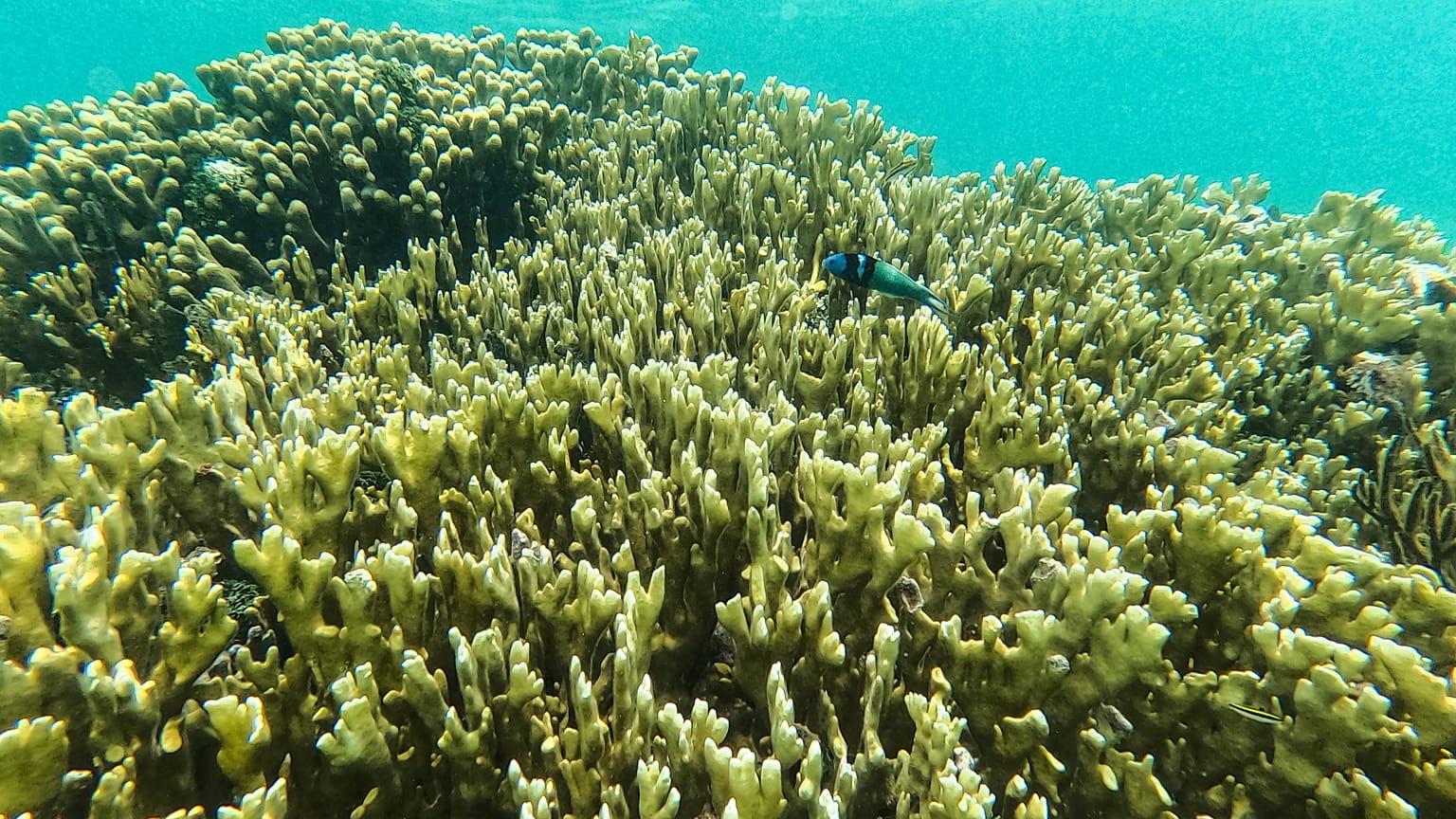
FILE - A fish swims through a coral reef in the Dutch Cays of Guna Yala on Panama's Caribbean coast, Aug. 25, 2026.
Copyright AP Photo/Matias Delacroix, File

By Angela Symons with AP
Published on

El Niño can supercharge the impacts global warming. But burning fossil fuels could also be strengthening the destructive climate phenomenon.

A new study suggests that El Niños – the natural climatic chaos agent that pops up periodically and spikes global temperatures – are getting stronger because of human-caused climate change.

El Niños are more than 36 per cent stronger than they were before the industrial age began in the mid 1800s, with a 16 per cent jump in just the last 40 years showing that the increase is accelerating, according to a study published on 27 August in journal Science.

The findings come as a strong El Niño that formed a couple of months ago is forecast to be the biggest on record in the coming months. El Niños, which are a temporary warming of parts of the equatorial Pacific, warp weather worldwide and increase extreme events, including heatwaves, floods in some places and droughts in others. They can cost trillions in damage.

“That’s important because strong El Niños have much stronger impacts on climate hazards and extremes worldwide," says study lead author Julia Cole, a paleoclimate scientist at the University of Michigan in the US.

"When we set out to answer the question of why this might be happening, we set our data up against a record of global temperature, and we found that the increase in El Niños' strength closely parallels the rise in global temperature that is due to human causes such as the burning of fossil fuels."

Her study looks back at El Niños going back around 900 years.
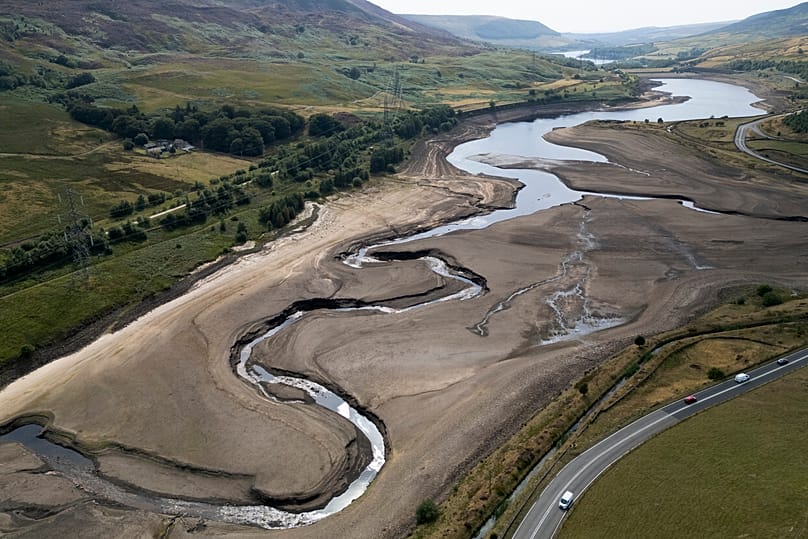
FILE - Woodhead reservoir is visible amid a drought near Manchester, England, Thursday, Aug. 13, 2026.
FILE - Woodhead reservoir is visible amid a drought near Manchester, England, Thursday, Aug. 13, 2026. AP Photo/Jon Super, File

Aggravating already nasty El Niños

“El Niño is the most violent aspect of climate variability worldwide, with effects ranging from local fisheries collapse, to widespread coral die-offs to severe droughts and food shortages around the world,” says Dalhousie University marine scientist Boris Worm, who wasn't part of the study.

Worm quotes the late climate scientist Wallace Broecker who warned “the climate system is an angry beast and we are poking it with sticks.” And then Worm adds: “Human emissions are the stick and El Niño is [one] of the ‘angry’ outbursts that can be so threatening to our collective safety.”

An El Niño's strength is determined by measuring water temperature in a region of the central Pacific around the equator and comparing a three-month average to normal. If it's 0.5 degrees Celsius warmer than normal, it's becomes an El Nino. The top of the scale is 2 degrees Celsius and is called “very strong".

The most recent weekly El Nino figure is at 2.7 degrees and is expected to keep growing for another two to four months, according to Columbia University's El Niño tracker.

Scientists have long theorised that as the world warms, El Niños would get stronger because they are based on ocean temperature differences compared to average. But observational records only go back about 75 years, so scientists have previously said the data is too spotty for a trend.

So scientists have looked for clues that indicate an El Niño without measuring water temperatures directly. Scientists, for example, have looked back at historical records of changes in weather around the world and figured out past El Niños – such as the super-sized one in 1877 – due to the changes they cause across the globe.

FILE - A woman uses a fan to cool off while riding a bus on a hot day in Bucharest, Romania, Aug. 6, 2026.
FILE - A woman uses a fan to cool off while riding a bus on a hot day in Bucharest, Romania, Aug. 6, 2026. AP Photo/Vadim Ghirda

Using coral fossils to study temperature

Cole's team took a novel approach by looking at at what happened to coral over the centuries to act as “a time machine to look into the past”, she says. Cole says measurements of the ratio of calcium and strontium in coral skeletons and of different oxygen isotopes create two independent readings of the seawater in which the coral formed. Another measurement of uranium and thorium tell when those skeletons were formed.

Cole looked at 29 coral fossils in the Galapagos Islands – 14 from before the industrial era, 14 after the modern era began and one more from about the time the industrial era was starting up. The oldest was from around the year 1100.

The temperatures she derived from the fossils over more than 900 years are patchy, with gaps, but when charted, she says it looks like a hockey stick, the same description used for a 1990s landmark study of past global temperatures.

She and other scientists say it's only going to get worse.

“It raises the spectre of a future where larger El Niño and La Niña events are dialling up the pace and severity of weather and climate extremes,” says Kim Cobb, a coral and climate scientist at Brown University, who wasn’t part of the study.
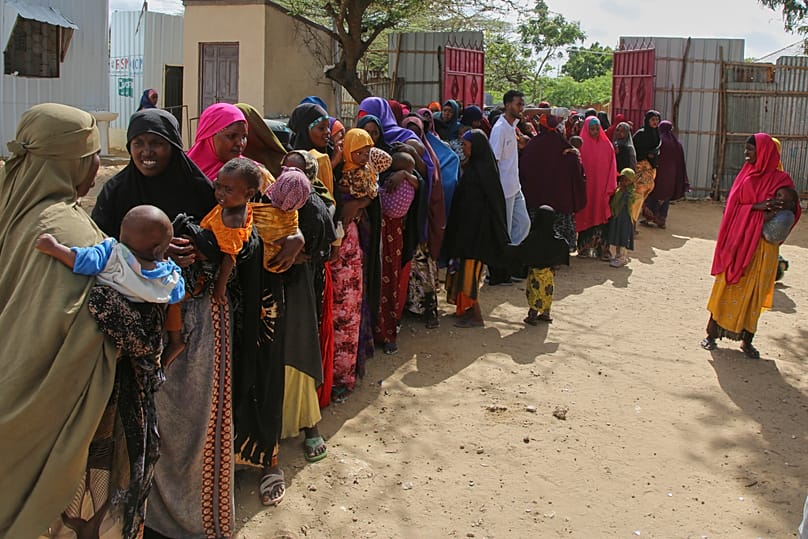
FILE - Somali women displaced by drought line up at Feynuus Nutrition Centre on the outskirts of the capital, Mogadishu, Somalia, Aug. 19, 2026.
FILE - Somali women displaced by drought line up at Feynuus Nutrition Centre on the outskirts of the capital, Mogadishu, Somalia, Aug. 19, 2026. AP Photo/Farah Abdi Warsameh, File

Outside scientists split on the research

Outside scientists are split on the research with some hailing it as important and trustworthy and others saying they don't buy it because it clashes with some recent observations.

“Corals are the gold standard for El Niño reconstruction, and this brings a goldmine of new material to the table,” Cobb says. “We can either wait many many decades for the instrumental record to get long enough to detect a shift in El Niño properties, or we can use centuries of El Niño reconstructions provided by paleoclimate records. Taken together, the paleoclimate data that we have, from across the Pacific, is fairly consistent in pointing to an intensification of El Niños with global warming.”

Both University of Pennsylvania climate scientist Michael Mann – originator of the temperature hockey stick – and University of North Carolina marine scientist John Bruno say that the coral data conflicts with recent observations of water temperature in the Galapagos. Data shows “a substantial decline in recent decades” of El Niño related variations near the Galapagos during the time greenhouse gases increased temperatures the most, Mann says.

What’s being reflected by the coral is not a change in El Niño as much as the warming from greenhouse gases, Bruno says.

Cole says the huge 1997-1998 El Niño and then small ones until 2023-24 created a situation where it seems like El Niños aren't strengthening because measurements are based on a 20-year time period and there were a few years that fell between super El Niños that skewed data. She says El Niño varies in strength so much and that up-and-down nature doesn’t go away just because it is responding to warmer conditions.

But the scientists all agree that climate change is a problem, with or without El Niño worsening.

“It's important to point to this as one more reason why we need to get off fossil fuels,” Cole says. “There isn't a magic bullet that's going to slow El Niños down.”

Monday, August 24, 2026

Six million Somalis face acute hunger as drought and conflict worsen

Six million people in Somalia are facing acute hunger, with nearly two million children at emergency levels, as severe drought, conflict and falling humanitarian funding deepen what the UN describes as one of the world’s worst malnutrition crises. Medical charity MSF tells RFI it's sounding the alarm "before it's too late".


Issued on: 24/08/2026 - RFI

A health worker measures a Somali baby for malnutrition at Feynuus Nutrition Centre on the outskirts of Mogadishu in August, 2026. © Farah Abdi Warsameh / AP Phot

The World Food Programme (WFP), the UN agency providing food assistance, said around one third of Somalia’s population is now facing acute hunger, with nearly two million children expected to suffer from acute malnutrition this year.

"Those are not abstract figures: they are families exhausting every option they have left to survive," the WFP said.

More than 200,000 people were displaced during the second quarter of 2026 as the country faced severe drought. Poor rainfall over several seasons has led to water shortages, crop failures and livestock losses.

Higher fuel and food prices, made worse by the conflict in the Middle East, have added to the pressure.

Somalia is also facing an insurgency by the Islamist al-Shabaab group and localised armed clashes.

'Extreme' food shortages

The situation is particularly difficult in camps for displaced people in Baidoa, in the south-west of the country, where medical charity Doctors Without Borders (MSF) is working.

MSF said one in two children in the camps was suffering from acute malnutrition, while one in four had severe acute malnutrition. One third of families are surviving on just one meal a day, MSF said.

The charity is also concerned about a lack of funding to respond to the crisis.

More than 80 percent of the number of patients admitted to its nutrition programme last year had already been admitted by this point in 2026, said MSF health adviser Mitchell Sangma.

"What is worrying is not only the numbers, but also the severity of these cases. These are very sick children, suffering from many medical complications," he told RFI.

"They arrive at a very advanced stage after having gone hungry for many months, and we are now seeing the consequences of the extreme food shortage."

Many are also suffering from epidemic diseases such as measles and diphtheria, he said.

Long queues for food and water

Children treated in hospital are often readmitted after returning to camps where they have insufficient food and no access to safe drinking water, Sangma noted.

"Many are suffering from epidemic diseases, such as measles or diphtheria, which is very worrying. We receive these children, we treat them in our hospitals, we allow them to leave, but they end up being readmitted because they return to the same environment where they do not have access to enough food or safe drinking water," he said.

"It's very visible when you walk through the camps early in the morning. We see long lines of people with jerry cans waiting to receive water. Long lines of patients are waiting outside mobile clinics for their children to be treated. We are trying to sound the alarm about what we are seeing on the ground before it is too late."

Health workers talk to a woman with her malnourished baby at Bay Hospital in Baidoa, Somalia, 4 August, 2026. © Mohamed Sheikh Nor / AP Photo

Funding shortages


Humanitarian aid is struggling to meet the needs as international funding falls.

The Integrated Food Security Phase Classification (IPC), the global system used to measure hunger, estimated in May that food assistance was reaching just 12 percent of the six million people facing acute food insecurity.

More than 200 health and nutrition centres have closed, the United Nations Children's Fund (Unicef) said, describing the budget cuts as "unprecedented".

At the same time, the El Nino climate pattern, which is expected to be strong, threatens to bring very heavy rainfall to Somalia towards the end of the year, increasing the risk of flooding.

This article was adapted from the original in French and has been lightly edited for clarity.

Sunday, August 23, 2026

The Vietnam War Redux


 August 21, 2026

Image by Annie Spratt.

Honestly, you couldn’t make this world up, could you? Before 2016, in what grim fantasy (or comedy) would Donald Trump ever have appeared as president of the United States? Once upon a time, I couldn’t have imagined such a possibility (and neither, I’m sure, could you!). Once upon a time, it would have been too absurd even to work as a joke.

And if you had told me, at age 24, when I turned in my draft card to protest the then-ongoing war in Vietnam, that, almost 60 years later, my country, led by — yes, indeed! — President Donald J. Trump, would be fighting yet another ludicrous war, thousands of miles away, that no one, not even the president of the United States, could explain, I would have thought you balmy. Honestly, I can’t believe that my country is now making war on and threatening further war against — of all places on Earth — Iran. On this planet at this moment, it just makes no sense. Or perhaps what I really mean is: no more sense than having Donald Trump as president of the United States for a second time.

Back in the 1960s and early 1970s, we were already experiencing a totally mad and brutal set of conflicts, including, of course — or do I mean, of coarse? — those underway against Vietnam’s neighbors, Cambodia and Laos, in which — can you even believe it today? — hundreds of thousands of people would die. And all of those countries were indeed thousands of miles (and lame-brained justifications) away from the United States. Just try to imagine that this country’s military dropped at least two million tons of cluster bombs on Laos alone in those years, more than all the bombs dropped during World War II combined.

And now, having evidently learned no lessons whatsoever from such disastrous wars, somehow the United States — and yes, it’s too weird not to be put in italics! — under the leadership of Donald J. Trump is at it again.

Of course, even well before that Vietnam moment, my country had already become a distinctly “great” global imperial power — there had never truly been one quite like it — that was garrisoning its military (as it still is) on literally hundreds and hundreds of bases in scores of countries globally and would end up using that military all too often in the post-World War II era. After all, when I was just six years old, the U.S. started fighting a war thousands of miles away in — yes, Korea! That, of course, was in 1950, and like the conflicts that would follow into our own era — and here I’m thinking, for instance, of Donald Trump’s ongoing, if little written about, bombing campaign against Somalia (yes, Somalia!) — success was never in the cards. So, in some eerie sense, there’s really nothing new (and something all too predictable) about a war with Iran today, don’t you think?

Oh, except, of course, that this country now has a unique version of a madman for its president and his present war, like all wars, has been pouring fossil fuels (whose climate-warming harm he’s labelled a “scam” and “the greatest con job ever perpetuated”) into the atmosphere of a planet that, unlike in my youth, has started to broil in a big-time fashion. (If you don’t believe me, ask Europeans nearing the end of a wildly overheated summer there.) And that, in turn, ensures that Donald Trump can make war not just (like so many presidents before him) on specific countries like Iran, but on all of us and on Planet Earth itself.

And of course, to ensure that this piece doesn’t become too ludicrously long, as I explore the history of American military bases and wars to the present moment, I’m going to have to leave out all too many all-American conflicts in the decades since Vietnam (Laos and Cambodia) ended, including in Afghanistan, Iraq, Libya, Somalia (where US Africa Command had just launched its 78th airstrike of the year as I was writing this), and Yemen, among other places. (And that’s not even to mention such passing moments as the relatively recent Trumpian bombings in — yes! — Nigeria.)

The world, it seems, is now the president’s target-practice range and his set of killings globally, as Nick Turse recently pointed out, with their asymmetrical body counts in which almost no Americans die but stunning numbers of the Other go down, distinctly harken back to the slaughters of people of color in the colonial age. As he put it, “our” president has “made disproportionate slaughter his signature accomplishment from Latin America to the Middle East to Africa.” And this, mind you, is the guy who bragged in 2023 between his two terms in office that “I was the only president in modern history who did not have any new wars… I had the personality type that kept us out of wars because people knew that they weren’t going to mess around here. That’s why I rebuilt our military. We were strong. We were safe.”

Going to War Against Planet Earth

Of course, as has been true from the Korean War on, you just never quite know what country or countries the United States will be at war with next. And while such decisions were all too often surprises in the post-Korean War years, with Donald Trump they should be considered more than surprising. After all, he’s the president who swore that he would never go to war while in the White House. That, of course, was before he started clobbering one place after another.

In Iran, however, he may have truly met his match. That country’s leadership now seems eerily intent on enduring what’s happening to them, while ensuring that the American president’s latest war of choice doesn’t truly end until he and the Republican Party have been clobbered in the November elections. And hey, with oil prices still rising and the cost of crucial goods generally going up in the United States, while jobs are, for the first time in a long while, shrinking, the Iranians clearly know just what they’re doing — enduring a hell on earth themselves in order to take down the world of Donald J. Trump in a potentially big-time fashion.

As Iran’s Mehr News put it recently about You Know Who: “Continuing the war could increase political and economic pressure on the [U.S.] government and exacerbate the decline in his popularity. On the other hand, backing down, or moving towards reducing tensions, could also be interpreted by some of Trump’s supporters as a retreat from his campaign slogans.”

And honestly, what a world we now find ourselves in! Forget that I’m sweating in soaring summer temperatures and humidity right here on the East Coast of the United States, since the temperatures have been far more severe recently in the Midwest and West. Of course, parts of our planet are distinctly starting to heat to the boiling point — and if you don’t believe me, just talk to any of the French or Spanish people who, this summer, endured fierce wildfires and temperatures that hit 110-112 degrees or to Canadians in whose country, as I was writing this, hundreds of wildfires were still burning, which “our” president blames on mismanagement. (”If they managed their forests, they wouldn’t have the fires.”)

And keep in mind that all of this, grim as it might seem, is no more than the beginning of what could indeed prove to be an all too literal hell on Earth, given that (among so many other things) “our” president for the next nearly two and a half years remains intent on pouring fossil fuels into the atmosphere in a distinctly historic fashion. This planet has, in short, become the president’s target-practice range.

If this were a fairy tale (even if the fairy tale from hell), you could at least close the book, put it back on your bookshelf, and go about your business. Unfortunately, heat and everything that goes with it is now our business and, barring genuine surprises, will be so in an ever fiercer fashion for us, our children, and our grandchildren, since our president isn’t just at war with Iran but distinctly at war with planet Earth and, as in any war, sooner or later we will all indeed have to pay the price in some fashion or other.

This piece first appeared on Tom’s Substack.

Tom Engelhardt is a co-founder of the American Empire Project and the author of The United States of Fear as well as a history of the Cold War, The End of Victory Culture. He is a fellow of the Nation Institute and runs TomDispatch.com. His latest book is Shadow Government: Surveillance, Secret Wars, and a Global Security State in a Single-Superpower World.