Wednesday, June 03, 2026


Asia’s EV race speeds up as China’s champions challenge Tesla

Asia’s EV race speeds up as China’s champions challenge Tesla
/ IntelliNewsFacebook
By Mark Buckton in Taipei June 2, 2026

Electric vehicle adoption across South, East and South-East Asia is accelerating, but the region’s transition is increasingly being shaped by domestic industrial policy, Chinese manufacturers and the slow build-out of charging infrastructure rather than by Tesla (NASDAQ:TSLA) alone – the efforts of Elon Musk notwithstanding.

As of mid-2026, China remains the centre of gravity in the EV world.

The country accounts for the overwhelming majority of Asia’s EV sales and continues to set the pace for manufacturing, battery development and charging networks. Yet even within China, the market is changing rapidly. Reporting by Caixin noted that sales momentum weakened after subsidy reductions and changes to tax incentives, exposing how dependent parts of the industry remain on government support. The same reports point to domestic vehicle sales in China falling sharply in early 2026 as consumers adjusted to the new policy environment.

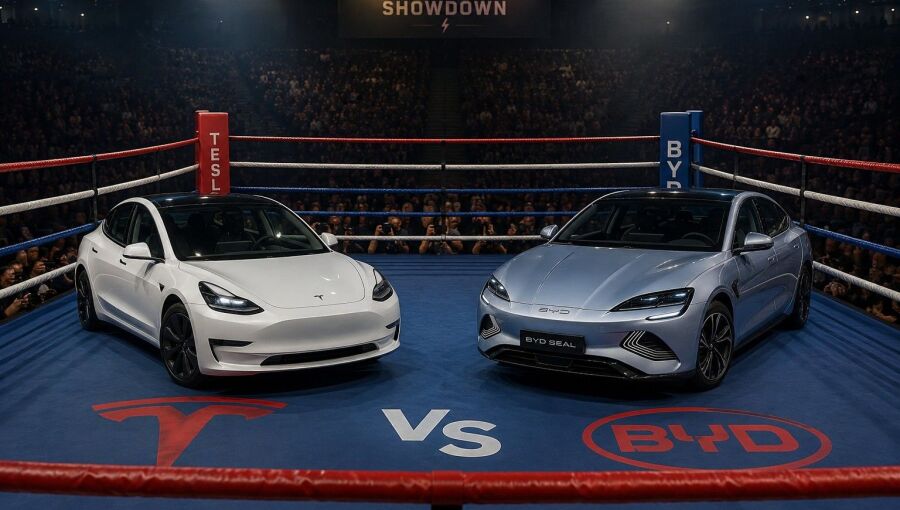
This is, in part, down to Tesla remaining a significant force in China but even the world’s most iconic EV maker is facing intensifying pressure from domestic Chinese rivals.

BYD (SHE: 002594) has overtaken the US group as the world’s largest EV seller in terms of volume of sales, while manufacturers such as Geely, Wuling (HKG: 0305), Nio, Xpeng, Li Auto and Xiaomi (HKG: 1810) continue to gain market share. The South China Morning Post reported recently that low-cost models from Geely and Wuling have of late become some of China’s best-selling EVs, reflecting growing demand for affordable vehicles rather than premium – read: Tesla – imports.

BYD’s strategy to expand its footprint increasingly extends beyond vehicle sales. Reuters reported that the firm is expanding deployment of its assisted-driving technology while investing heavily in autonomous-driving chips and software. Tesla, meanwhile, continues to wait for broader regulatory approvals for some advanced driver-assistance functions in China and it is likely only a matter of time before claims of protectionism arise.

South Korea meanwhile presents a much different picture. The country already possesses extensive charging infrastructure coupled in large part to a mature automotive sector led by Hyundai and Kia – global motoring brands. Tesla in Korea remains one of the strongest-selling imported brands, but Chinese-made EVs are rapidly establishing a solid foothold. Because of this, industry discussions reported by Korean market observers have suggested that Chinese-built vehicles - including Teslas manufactured in China - and models from BYD, are capturing a growing share of imports.

In comparison, neighbouring Japan remains a relative laggard in EV adoption. Consumer demand has been slower than in China or South Korea, while domestic manufacturers have continued to focus heavily on hybrids and there has been some pushback against all-out EVs. However, charging networks are expanding gradually, but battery-electric vehicles still represent a comparatively small share of overall sales.

Chinese brands, for political reasons even if this is denied, have made limited inroads, although competition is expected to intensify as lower-cost imports arrive.

On the subcontinent, India represents one of Asia’s most important long-term growth opportunities. New Delhi has introduced manufacturing incentives, tax breaks and support schemes designed to create a domestic EV ecosystem. This has seen local manufacturers including Tata Motors and Mahindra & Mahindra ( a firm also making headway across Asia with its petrol-powered vehicles) establish strong positions, while global and Chinese brands seek entry into the market although politics again is likely to play a role in keeping them out for a while at least.

The challenge in India though remains infrastructure. Analysis shared through India’s automotive community highlights the reality that public charging availability remains well behind vehicle sales growth, and while demand is expanding quickly in some of India’s biggest cities, charger deployment is struggling to keep pace.

Elsewhere in South Asia, adoption remains uneven. Pakistan is pursuing EV policies and assembly projects but faces infrastructure constraints and electricity supply challenges. Bangladesh meanwhile is witnessing growth in electric two-wheelers and three-wheelers rather than passenger cars. Sri Lanka and Nepal are seeing increasing EV imports, supported by lower fuel-import costs and a raft of government incentives, although, like India and other nations on the subcontinent, charging networks remain few and far between.

Southeast Asia on the other hand has emerged as one of the most competitive EV battlegrounds on the continent. Thailand has become a regional manufacturing hub, attracting major investment from BYD, Great Wall Motor and other Chinese groups. As a result, Bangkok has backed adoption through tax incentives and support for local production. Because of this, Chinese brands now dominate much of Thailand’s EV market.

Vietnam is pursuing a more nationally focused strategy through domestic champion VinFast – a brand now seen increasingly across Asia. The company has rapidly expanded charging infrastructure and established a nationwide presence, making Vietnam one of the few countries in the region where a local brand is leading the transition – for now.

To the south, Indonesia with the largest population in Southeast Asia, is perhaps the most strategically important market. The government has recently sought to leverage the country’s vast nickel reserves to build a complete EV supply chain, from mining through battery production and vehicle assembly. Reporting by The Jakarta Post on this has highlighted how Jakarta’s industrial strategy is increasingly tied to battery manufacturing and downstream nickel processing.

In turn, the country is also investing heavily in its own charging infrastructure and analysts cited by Indonesia’s state-owned news agency Antara claim that government incentives tied to nickel-based batteries are intended to deepen domestic industrial integration while at the same time strengthening the broader EV ecosystem.

Malaysia, Singapore and the Philippines are all making progress but are moving at different speeds. Singapore has developed one of the region’s most ambitious charging roll-outs, backed by strong government policy and urban planning. Malaysia to the north is expanding public charging corridors while attracting manufacturing investment, and the Philippines is playing catch-up, but is seeing rising interest in electrification, particularly in the form of public transportation fleets. Displacement of the nation’s roughly 250,000 jeepneys will take some doing though.

Mixed into all of this across the region is the position of Tesla which can be summarised as ‘mixed’ at best. The company retains considerable brand value thanks to the ever present PR surrounding its CEO – and to some extent remains influential in some areas, notably Taiwan.

However, Tesla is increasingly confronting rivals that combine lower prices, local manufacturing and extensive state support – and losing.

BYD’s scale, Geely’s budget offerings and the emergence of new Chinese technology-focused manufacturers have fundamentally altered the competitive landscape of Asia vis-a-vis EV sales. Reports from Reuters, Caixin and regional media to this end thus suggest the centre of gravity in Asia’s EV market is shifting away from Tesla and decisively towards Chinese brands – the result being an Asian EV transition that looks markedly different from the one envisioned a decade ago.
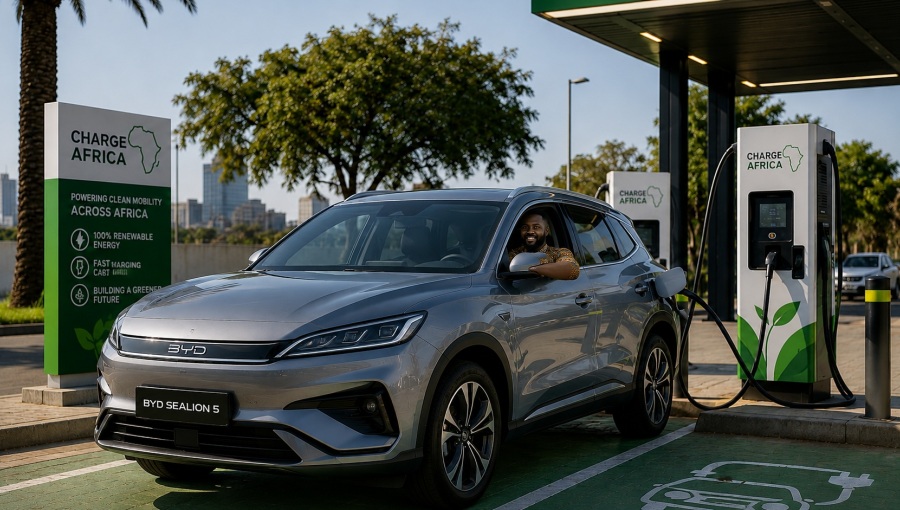

China’s BYD captures 35% of Africa EV market, as latecomer rival Tesla bets on Morocco

China’s BYD captures 35% of Africa EV market, as latecomer rival Tesla bets on Morocco
/ bne IntelliNewsFacebook
By Brian Kenety June 3, 2026

Chinese automaker BYD Company Ltd (SZSE:002594; HKEX:1211) has significantly strengthened its presence in Africa’s emerging electric vehicle (EV) market, increasing its market share to 35% in 2025 from just 4% two years prior, according to the Global EV Outlook 2026 report, published by the International Energy Agency (IEA), which predicts a continental bump in sales owing to the prolonged closure of the Strait of Hormuz.

China’s biggest carmaker, pure-play EV manufacturer – and now the world’s biggest EV maker by unit sales – aims to sell 1.3mn cars outside of its home market in 2026, which would represent an increase of nearly 25% from its 2025 overseas sales. While Asian and Latin American markets are the main focus on its expansion drive, BYD is targeting sales several African countries, including by building charging station infrastructure.

In major electric car markets, such as Europe and the United States, the share of Chinese imports in sales is still relatively limited due to trade measures, consumer preferences and large domestic electric car manufacturing capacity. But “outside these two major markets, Chinese imports accounted for 55% of electric car sales in 2025, up from about 10% in 2021”, the report says, and many countries in Africa now “import more than 80% of their electric cars from China”.

A prolonged high oil price environment is likely to boost the outlook for EV sales in Africa. In emerging market and developing economies (EMDEs), increased gasoline and diesel prices have a larger impact on household incomes since average incomes are lower compared to advanced economies. And so “oil-importing EMDEs across the world have some of the strongest incentives to implement policies to further speed up electric car adoption,” the report notes.

Electric vehicle adoption across Africa remains concentrated in a small number of markets despite rapid recent growth, with regional electric car sales rising from about 4,000 units in 2023 to roughly 25,000 in 2025.

Last year, Egypt led the continent in total EV sales with around 7,900 units sold, followed by Morocco with 5,500 and South Africa with 3,800. Together, the three countries accounted for nearly 70% of Africa’s total electric vehicle sales during the year.

Buying a brand new EV is not cheap, even for many African markets with slightly better disposable income,” Nigeria-based outlet TechCabal commented on the report’s finding. “BYD has intentionally targeted that group by shipping cheaper EV models in markets like Egypt and South Africa, undercutting competitors like Maxus and Toyota, which recently introduced an EV in the market.”

Morocco emerges as Africa’s EV manufacturing hub, focus of BYD’s main rival, Tesla

US electric vehicle maker Tesla (NASDAQ: TSLA) officially entered the Moroccan market in February, with a launch event in AnfaPlace Mall in Casablanca, showcasing two of its best-selling models, the Tesla Model 3 and Tesla Model Y, alongside home charging solutions.

Morocco has consolidated its position as Africa’s largest automotive manufacturing hub, producing 559,645 vehicles in 2024 (up 5% year on year) and projected to exceed 600,000 units in 2025, according to industry estimates. Output growth contrasts with a 5% y/y decline in South Africa last year (599,755 vehicles), historically the region’s dominant producer.

The North African country also hosts early electric vehicle assembly activity through Chinese and European manufacturers, providing a modest but established EV-production base. By comparison, South Africa – birthplace of Telsa’s chief executive Elon Musk – reports no local production of fully electric vehicles; the auto sector is still oriented towards internal-combustion and hybrid models.

Morocco’s logistics advantages include short shipping routes to European markets and lower transport costs. Policymakers have pursued an expansive EV-sector strategy that includes tax exemptions, reduced import duties, and broad public-charging deployment, with close to 1,000 charging points nationwide.

“Its proximity to Europe — South Africa’s largest target market for exported vehicles — gives Morocco a geographical advantage in terms of supply chains and shipping fees. The country is also ahead of South Africa in EV production, producing 40,000 to 50,000 units in 2024, with plans to increase this. South Africa has not yet produced a single fully electric car,” writes south Africa-based MyBroadband.

Meanwhile, BYD has announced plans to expand its dealership network in South Africa to 35 locations by the first quarter of 2026, having initially set an end of year target. The Chinese company also plans to deploy between 200 and 300 fast-charging stations in Africa’s most industrialised country by the end of 2026. Meanwhile, Chinese OEM Sany is planning to expand production in South Africa.

In December, Eskom Holdings SOC Ltd, South Africa’s state-owned electricity utility responsible for power generation, transmission and distribution, formalised a partnership with BYD Auto South Africa, to expand the country’s public EV charging network.

The cooperation is anchored in a Memorandum of Cooperation signed earlier in 2025, setting out joint objectives to support EV infrastructure development and broaden market uptake. BYD reaffirmed its commitment to the agreement during the launch in Johannesburg of its Sealion 5 Super Plug-in Hybrid SUV, priced from ZAR499,900 (about $26,700), positioning it below many plug-in hybrid electric vehicles currently on sale, which are often priced above ZAR600,000 (around $32,000).

Uganda and Kenya lead Africa’s electric motorcycle growth

Globally, two- and three-wheelers (2/3Ws) remained the most electrified road transport segment in 2025, with about 10% of the global fleet now electric, according to the Global EV Outlook 2026. Sales of electric 2/3Ws increased almost 15% to reach 11mn globally in 2025, representing around 15% of total 2/3W sales. Swapping systems for 2/3Ws are deployed in several African countries, including Kenya, Rwanda and Uganda.

“Sales of electric 2Ws have grown markedly in Africa, from less than 1 000 in 2020 to around 70 000 in 2025,”the report says. “The use of 2Ws for ride-hailing, delivery and other commercial applications – where purchase decisions are especially cost-sensitive – has helped drive up the sales of electric 2Ws, especially in countries such as Uganda and Kenya. Battery-swapping is also being deployed to support the uptake of electric 2Ws used for commercial services in some markets in Africa.”

Uganda has become one of Africa’s fastest-growing markets for electric 2Ws, with sales exceeding 30,000 in 2025, having risen sharply from a low base in 2024. “Key to growth was the rapid scale-up of financing programmes for 2W purchases, led by Kenya-headquartered Spiro, which reported a large rollout in 2025, supported by an expanding battery-swapping network,” the report said.

“Zembo Motorcycles, a company focused on electric 2Ws, which provides battery swaps, secured $1mn in funding from the Dutch entrepreneurial development bank FMO in order to acquire batteries and chargers. Policy measures have complemented private-sector scaling. Uganda’s national e‑mobility agenda includes fiscal incentives intended to attract investment in domestic assembly and manufacturing, including income tax holidays and VAT exemptions for eligible domestically manufactured electric vehicles (EVs) and charging-related equipment.”

In Kenya, high gasoline prices relative to electricity prices, combined with the large share of the population with reliable access to electricity, make a strong economic case for electric 2Ws, the report said. “As a result, year-on-year electric 2W sales more than tripled in 2025, reaching over 25 000 and representing around 15% of new 2W registrations. This rapid growth occurred even despite relatively limited policy support, although in 2025 the government confirmed that domestically assembled electric models would continue to be VAT exempt.”

In South Africa, however, fully electric vehicle sales still represented less than 1% of total new-car sales in 2025. Plug-in hybrid electric vehicles (PHEVs) recorded stronger momentum, accounting for more than 70% of total electric vehicle sales in the country.

Smaller but growing EV markets are also emerging in Ethiopia, Mauritius, Rwanda and Nigeria, reflecting increasing government support, fuel-import pressures and expanding interest in lower-cost electric mobility solutions.

Africa’s used-car market complicates EV transition

At the same time, Africa’s automotive market remains heavily dependent on used vehicle imports from major producing economies including Germany, Japan and the United States. Industry estimates suggest around 60% of annual additions to Africa’s vehicle stock consist of imported used cars, complicating efforts to accurately measure EV adoption across the continent.

Analysts say official registration and sales data often fail to distinguish between new electric vehicles, used imports and so-called zero-mileage exports, making comparisons across African markets difficult.

Ethiopia illustrates the data challenge. Estimates suggest cumulative retail sales of new EVs between 2021 and 2025 totalled only slightly above 2,000 units. However, Ethiopia’s vehicle licensing authority has reported cumulative electric-car sales of around 15,000 units between 2022 and 2024, claiming roughly half of all new cars sold in 2024 were electric.

Domestic manufacturing initiatives are also beginning to emerge. Neo Motors, Morocco’s domestic automaker, launched sales of its first electric model at the start of 2026 as the country seeks to position itself as a regional EV production hub alongside its expanding automotive export industry.


 

Hungary’s battery boom is causing a water crisis

Hungary’s battery boom is causing a water crisis
Former Prime Minister Orban promised Chinese battery manufacturers unlimited water for their factories. Now Hungary is running out of water. / bne IntelliNewsFacebook
By Ben Aris in Berlin June 2, 2026

Hungary’s ambition to become Europe’s electric vehicle battery hub is colliding with a growing environmental reality: the country is running short of water, Center for European Policy Analysis (CEPA) said in a report.

After years of courting Chinese manufacturers with generous incentives and streamlined approvals, Budapest is being forced to reconsider the balance between industrial growth and resource security as severe drought grips large parts of the country. The shift has become one of the first major tests for the newly installed Prime Minister Peter Magyar following his recent election victory in April.

Hungary faces what officials describe as an “unprecedented water crisis.” Years of below-average rainfall, falling groundwater levels and growing industrial demand have combined to place increasing pressure on water supplies. The problem has been magnified by the rapid expansion of battery manufacturing, one of the most water-intensive industrial processes.

During Viktor Orban’s 16 years in power, Hungary actively positioned itself as a European centre for electric vehicle production, attracting some of China’s largest battery manufacturers. The government said Chinese investment commitments reached $16bn, helping transform the country into a critical link in Europe’s EV supply chain. However, climate pressures are starting to get in the way of that vision.

April brought exceptionally dry conditions across the country, with rainfall during a recent 90-day period running 20mm-70mm below average, CEPA reports. The agricultural consequences have been severe. Last year, drought destroyed 550,000 hectares of farmland, while more than 90% of Hungary’s territory is now considered vulnerable to severe drought damage. Farmers warn that crop yields are becoming increasingly difficult to sustain without major intervention.

At the centre of the debate are the large battery factories built or planned by Chinese manufacturers. Battery production requires substantial quantities of fresh water for refining, cooling and manufacturing processes. Critics argue that industrial consumption is increasingly competing with agricultural irrigation and household needs.

The most prominent project is the giant Debrecen battery complex being developed by Contemporary Amperex Technology Co. Limited (CATL), which has become a symbol of Hungary’s industrial transformation. The company began battery cell production at its factory near Debrecen on May 6 after securing the necessary permits and has said it complies with existing regulations and will adapt to any future legislative changes.

The new government is signalling that the regulatory environment is about to become significantly tougher.

Under Orban, environmental approvals for battery projects were frequently accelerated. Magyar’s governing Tisza Party has pledged to subject future projects to standard regulatory reviews and to conduct a comprehensive reassessment of existing developments, including CATL’s 546-acre Debrecen site.

The government has also indicated that drinking water supplies and agricultural irrigation will take priority over industrial consumption. Battery producers may be required to fund their own grey-water recycling systems and face tighter monitoring of pollution and environmental compliance.

Officials are considering the creation of an independent regulator focused on heavily polluting industries, particularly battery manufacturers. The government has also warned that repeated violations involving water contamination, air pollution or hazardous industrial chemicals could result in substantial penalties or operational suspensions.

The changing political climate is already being noticed by investors. Chinese electric vehicle manufacturer BYD (1211.HK) has reportedly instructed contractors working on its Hungarian factory to comply fully with local labour regulations, a move widely interpreted as reflecting expectations of stricter oversight under the new administration.

Despite the tougher rhetoric, Magyar has made clear that Hungary will not abandon its battery strategy entirely. The sector remains an important source of investment, exports and employment at a time when Europe’s automotive industry is undergoing a profound transition towards electrification.

Instead, the government appears to be seeking a middle path: preserving foreign investment while imposing greater environmental accountability.

The centrepiece of that approach is a new water management strategy focused on two priorities: greater public involvement in conservation programmes and a broader ecological restructuring aimed at reducing pressure on water resources. Officials are also examining large-scale water retention projects, reversing decades of policy that concentrated on draining excess water from the country through the Danube and Tisza river systems.

For Chinese investors, the implications are clear. The era of automatic approvals and light-touch oversight is ending. Future growth in Hungary’s battery sector will increasingly depend not only on labour costs and market access, but also on the availability of one of the country’s most constrained strategic resources: water.

As Hungary’s drought intensifies, the question facing policymakers is no longer simply how many battery factories the country can attract, but whether its natural resources can support them. In that sense, the country’s water shortage has become a test of a broader issue confronting governments across Europe: how to reconcile industrial policy with environmental limits.


Exclusive: EU Commission to defend Spain in €106 million US energy lawsuit

The Spanish flag flies in Madrid.
Copyright AP Photo / Manu Fernandez

By Marta Pacheco
Published on

When firm Blasket Renewables sought to enforce compensation in a US court, the European Commission argued that Spain could not legally pay it, highlighting a clash between international arbitration and EU law.

The European Commission is seeking permission from the European Council to defend Spain from a €106 million lawsuit brought in a US court under the Energy Charter Treaty (ECT) which could put Madrid in breach of EU state aid rules, according to a document seen by Euronews.

The ECT is a post-Cold War international agreement designed to protect investments in unstable, formerly communist states. It has since become a source of controversy because it allows energy companies to sue countries for measures that could harm their expected profits.

While the legal case is binding and can generally be enforced in courts under international investment treaty rules, the European Union argues that Spain could face conflicting legal obligations – at home and abroad – if a US court orders enforcement.

After Spain rolled back the state aid scheme set up in 2007 to promote electricity generation from clean power sources, the Japanese investor Eurus Energy claimed losses under the ECT and won the right to compensation, with Spain ordered to pay €106 million plus interest in November 2022.

The legal proceedings were initiated by the International Centre for Settlement of Investment Disputes (ICSID), an arbitral tribunal linked to the World Bank, which manages legal disputes between international investors and countries worldwide.

In 2023, Spain challenged the compensation award, but ultimately failed.

Between a rock and a hard place

Eurus then assigned the case to Blasket Renewables, described in the document as a US-based “vulture fund” specialising in difficult-to-enforce arbitration compensation, effectively seeking enforcement through US courts.

"The Kingdom of Spain has informed the Commission that Blasket Renewables has filed a petition seeking recognition and enforcement of the award before the courts of the United States," reads the document.

The Commission argues that if Spain "compensates investors for losses incurred due to the repeal of the 2007 State aid scheme", it amounts to state aid, meaning financial support that a government gives to a company or investor.

But investors seeking compensation disagree, arguing that the payments are not government subsidies but compensation that Spain is legally required to pay after losing an international arbitration case.

Under EU rules, governments are not allowed to give special benefits to particular businesses if doing so would give them an unfair advantage over competitors, unless the support has been approved by the Commission.

The legal case highlights a clash between two legal systems, each asserting that its rules should prevail. International arbitration holds that Spain must pay, while the Commission says that making the payment could breach EU rules.

"Where aid is granted in violation of that provision, the beneficiary cannot have any legitimate expectations in being allowed to keep that aid, and the member state is obliged to recover it ex officio," reads the document, implying that the Spanish government would need to act accordingly.

The Commission considers that foreign courts' recognition and enforcement of such financial compensations is "incompatible with EU law" and would undermine "the primacy of EU law," which the EU executive sees as "unenforceable".

'Vulture funds' versus Spain

The Spanish Energy Ministry said that arbitral proceedings between international investors and Spain over renewables are the result of decisions made by the previous Spanish government, particularly in 2013 under former conservative Prime Minister Mariano Rajoy.

Madrid added that the majority of final arbitrations linked to renewable energy investments are in the hands of litigation funds, which have acquired the rights to the original plaintiffs, the main one being Blasket Renewable Investments.

"They are not the companies affected; they have purchased debts against Spain and try to enforce them abroad, filing the same cases in different countries," reads an Energy Ministry statement.

Paul de Clerck, economic justice coordinator at the NGO Friends of the Earth Europe, said this legal case was the "perfect illustration of the absurdity" of international state dispute settlements (ISDS).

He argued that if an investor doesn’t agree with a Spanish decision, it should go to the normal Spanish courts and not to a "business-friendly tribunal".

"Vulture funds are further misusing the system by buying up claims to make profits at the expense of tax payers," de Clerck told Euronews.

"It is high time that this comes to an end and that the EU and member states take ISDS out of all of their investment treaties."


Spain: Background And U.S. Relations In Complicated Times – Analysis

June 3, 2026 
Congressional Research Service (CRS).
By Derek E. Mix


Summary

Relations between the United States and Spain have experienced tensions during the second Trump Administration. Over the past several decades, the two countries have had extensive cultural ties, shared a mutually beneficial economic relationship, and cooperated closely on numerous diplomatic and security issues. Spain has been a member of NATO since 1982 and a member of the European Union (EU) since 1986. Some Members of Congress may have an interest in Spain’s internal political situation and relations with the United States.
 
Political Situation

Prime Minister Pedro Sánchez of the center-left Socialist Workers’ Party (PSOE) has led the government of Spain since 2018. PSOE formed a minority coalition government with Sumar, an alliance of left-wing parties, following Spain’s 2023 election. The government relies on parliamentary support from smaller regional parties to pass legislation. The center-right Popular Party (PP) and the far-right party Vox are the main opposition parties. The next election is due by August 2027. King Felipe VI is Spain’s head of state.

U.S.-Spain Tensions

Prime Minister Sánchez has been a leading European critic of the Trump Administration’s foreign policy. The Sánchez government has expressed opposition to the U.S. military operation against Iran that began in February 2026 and denied the use of military bases in Spain to U.S. forces involved in strikes against Iran. The Trump Administration has strongly criticized Spain’s position, and President Trump has threatened to “cut off all trade” with Spain in response.


At NATO’s 2025 summit, Spain was the only member of the alliance not to commit to spending 5% of gross domestic product on defense by 2035 (3.5% on core defense requirements, such as equipment and personnel, and 1.5% on defense- and security-related spending, such as critical infrastructure, civil preparedness, and a strong defense industrial base). President Trump strongly criticized Spain’s position.
Security and Defense Relations

Spain has played an important role in U.S. defense strategy for Europe, Africa, and the Middle East. Five U.S. destroyers equipped with the Aegis Ballistic Missile Defense system are based in Spain, and the United States also has access to an air base in Spain. Historically, the United States and Spain have cooperated closely on counterterrorism. Spanish forces participated in the NATO-led missions in Afghanistan for nearly two decades.
 
Economic Relations

Two-way direct investment between the United States and Spain totaled more than $121 billion in 2024, with Spanish investment in the United States accounting for nearly three-quarters of that total. U.S.-Spain trade in goods and services was valued at nearly $75 billion in 2025, and the United States had a trade surplus of almost $3 billion.

Selected Foreign Policy and Security Issues

Spanish armed forces participate in more than a dozen international peacekeeping and security operations, including NATO and EU missions and the United Nations peacekeeping mission in Lebanon.


Following Russia’s 2022 full-scale invasion of Ukraine, Spain has provided Ukraine with military, financial, and humanitarian assistance and supported EU sanctions against Russia. Spain hosts more than a quarter of a million Ukrainian refugees.

Relations between Spain and Israel have been strained over the past several years. Spanish officials criticized Israel’s military operations in Gaza and against Iran. In 2024, Spain formally recognized a Palestinian state based on pre-1967 borders.

The Sánchez government has deepened Spain’s ties with the People’s Republic of China (PRC, or China). Sánchez has traveled to China four times in four years, and the two countries have signed numerous trade and cooperation agreements. Some analysts assert that Sánchez’s approach to China is a strategy to diversify Spain’s economic ties in the context of tensions with the United States over tariffs and foreign policy issues.


Introduction and Issues for Congress

For decades, U.S. policymakers have considered Spain to be an important U.S. ally. Political developments in Spain, U.S.-Spain political relations and security cooperation, and U.S.-Spain economic ties are possible topics of continuing interest to the 119th Congress. Some Members of Congress may have an interest in foreign and defense policy debates that have affected U.S.-Spain relations during the second Trump Administration. Members of Congress may consider current issues in U.S.-Spain relations in the course of oversight or legislative activities or in the context of direct interactions with Spanish legislators and officials.

The Congressional Friends of Spain Caucus is a group of Members of Congress who seek to enhance U.S.-Spain relations and promote political, economic, and social ties between the two countries.1 The U.S.-Spain Council, founded in 1996, brings together U.S. and Spanish leaders to promote economic, educational, and cultural ties. The current honorary chair is Senator Ben Ray Luján. Six of the seven previous chairs were Members of the U.S. Senate or House of Representatives.2

Political Situation

Prime Minister Pedro Sánchez of the center-left Socialist Workers’ Party (PSOE) has led the government of Spain since 2018.3 Sánchez secured a new term in office following an early election in July 2023.4 The government formed by Prime Minister Sánchez after the 2023 election (see Figure 2) is a minority coalition government between PSOE and Sumar, an alliance of left-wing parties, and relies on parliamentary support from smaller regional parties. It is the second coalition government to lead Spain since the restoration of democracy in 1978.5

The center-right Popular Party (or People’s Party, PP), which led the government of Spain from 2011 to 2018, came in first place in the 2023 election, with 33.1% of the vote. The PP won 137 out of the 350 seats in the Congress of Deputies (lower house of parliament) but fell short of a parliamentary majority. PSOE came in second place, with 31.7% of the vote and 121 seats. The far-right party Vox came in third place, with 12.4% and 33 seats, and the Sumar alliance won 12.3% and 31 seats. Seven smaller regional parties won the remaining 28 seats.6

Following the election, Spain’s head of state, King Felipe VI, asked PP leader Alberto Núñez Feijóo to form a government, but Feijóo was unable to secure the votes needed to become prime minister. King Felipe VI subsequently asked Sánchez (who had remained as acting prime minister) to form a government. To do so, Sánchez needed support from regional parties that advocate independence for Spain’s Catalonia region (see “Spain’s Regions” section, below). To secure their support, Sánchez proposed a controversial law that would grant amnesty to hundreds of people charged with crimes related to separatist activities in Catalonia, including organizing an illegal independence referendum and independence declaration in 2017. The proposed amnesty law triggered large public protests and opposition from Spain’s right-wing parties, police, and judiciary.7 The Congress of Deputies approved the law by a vote of 177 to 172 in May 2024.8


Figure 2. Results of 2023 Spanish Election, Congress of Deputies. Source: El País, “Elecciones Generales 2023.”
Note: Vote percentages rounded to the nearest tenth of a percentage point.


Priorities of the Sánchez government have included addressing income inequality and promoting socially progressive and green policies. In addition to the policymaking challenges of managing support from the regional parties, the Sánchez government has come under pressure due to corruption allegations against several government officials as well as the prime minister’s wife and brother.

The Sánchez government has taken a relatively welcoming approach to migration, viewing it as a means to boost Spain’s workforce and offset the country’s aging population. In January 2026, the government announced plans to legalize the status of approximately 500,000 undocumented migrants, provided they had lived in Spain for at least five months prior to the end of 2025 and did not have a criminal record. Successful applicants are expected to receive a one-year, renewable residence permit and would be eligible for citizenship after 10 years. More than half of the migrants in Spain originate from Central or South America; more than a quarter originate from countries in Africa.9

The next election is scheduled to occur by August 2027. In one aggregate of polls dated April 18, 2026, 32% of respondents expressed support for the PP, compared with 28% for PSOE, 17% for Vox, and 6% for Sumar.10

Spain is a parliamentary monarchy. According to the 1978 constitution, the king of Spain is the head of state. King Felipe VI succeeded to the throne in 2014 following the abdication of his father, King Juan Carlos I, who reigned for 39 years. The king is commander in chief of the armed forces and has formal roles in the legislative process and in appointing government officials. The king exercises limited political power, generally acting on the advice of the prime minister and refraining from interference in political matters.

Spain’s Regions

The Spanish state consists of 19 provincial territories referred to as self-governing communities or autonomous communities.11 Two Spanish territories in particular, the Basque region and Catalonia (see Figure 3), maintain distinctive cultural identities. Politics in these regions features the strong presence of nationalist independence movements.
 
Figure 3. Basque Region and Catalonia. Source: Created by CRS using data from the Department of State, Esri, DeLorme, ArcWorld, and the National Geospatial-Intelligence Agency


The Basque region is in north-central Spain, on the Bay of Biscay near the border with France. The separatist terrorist group Basque Fatherland and Liberty (ETA) waged a violent campaign against the central government starting in the 1960s, killing approximately 800 people between 1968 and 2010. In 2008-2009, ETA was weakened by arrests of key leaders and declared a ceasefire in 2011. All Basque nationalist parties subsequently renounced violence in favor of pursuing independence through politics. ETA formally moved to disarm in 2017 and announced its full dissolution in 2018.


Catalonia is in northeast Spain, on the Mediterranean Sea and the border with France, and includes Barcelona, Spain’s second-largest city. It is one of Spain’s wealthiest regions, accounting for nearly one-fifth of the country’s gross domestic product (GDP).12 In 2017, the regional government of Catalonia attempted to hold a unilateral referendum on independence, and the Catalan parliament held a vote for independence. The government of Spain condemned both actions as illegal and unconstitutional. The government subsequently triggered an article of the Spanish Constitution allowing it to dissolve the regional government and assembly of Catalonia and take direct control of the regional police force. Spain lifted the article in 2018 following a new regional election and the formation of a new regional government. In 2019, Spain’s Supreme Court found nine separatist leaders guilty of sedition and abuse of public funds and sentenced them to prison. In 2021, the Spanish government pardoned the nine separatist leaders and released them from prison. More than 300 other individuals stand to benefit from the 2024 amnesty law described above.

Polling indicates that support for independence in Catalonia has decreased since the 2017 separatist crisis. For example, one 2025 poll funded by the Catalan government found 37.6% in favor of independence and 54.1% opposed, compared with 49.4% in favor and 41% opposed in 2017.13 Some observers attribute lower support for independence to factors such as disillusionment with the aftermath of the 2017 crisis, political fatigue in relation to the separatist issue, and more pragmatic or conciliatory approaches by politicians on both sides having reduced tensions surrounding the issue.14
Economy

Spain is the world’s 15th-largest economy and the 4th-largest economy in the 27-member European Union (EU).15 Spain’s economy grew by 2.8% in 2025 and is forecasted to grow by 2.1% in 2026. Unemployment is forecast to be 9.8% in 2026.16 Spain’s economy has fluctuated over the past two decades. The COVID-19 pandemic interrupted what had been a sustained period of economic recovery following a prolonged downturn from 2008 to 2014. Prior to 2008, Spain had experienced more than a decade of strong economic growth. In 1999, Spain was among the first group of EU countries to adopt the euro as its currency.

The tourism sector accounts for more than 15% of Spain’s GDP; Spain is the world’s second-largest tourist destination behind France. Other important sectors of Spain’s economy include construction and real estate (combining for 15% of GDP) and automobile manufacturing (10% of GDP).17 More than 62% of Spain’s exports go to other EU countries, and nearly 57% of imports come from EU countries.18 Spain’s top trading partners are Germany, France, China, Italy, Portugal, the United States, and the United Kingdom.19

Relations with the United States

The United States and Spain have close links in many areas, including extensive cultural and economic ties. The two countries also have a history of partnership on diplomatic and security issues, including strong counterterrorism cooperation.20 Under the terms of a bilateral Agreement on Defense Cooperation originally signed in 1988 and subsequently amended several times, the United States has access to a naval base at Rota and an air base at Morón. According to the International Institute for Strategic Studies’ Military Balance 2026, approximately 3,700 U.S. military personnel were stationed in Spain as of early 2026.21 Since 2014, four U.S. Aegis ballistic missile defense (BMD)-capable ships (Arleigh Burke-class destroyers equipped with the Aegis BMD system) have been based at Rota as part of the European Phased Adaptive Approach for BMD in Europe. In 2023, the United States and Spain signed an agreement to increase the number of U.S. destroyers forward deployed in Rota from four to six. In 2024, a fifth destroyer arrived.22 The ships operate in the Mediterranean Sea to defend Europe against ballistic missiles that could be launched from countries such as Iran. The ships also have undertaken other missions, including patrolling the Black Sea, participating in interoperability drills in the Baltic Sea, and conducting anti-submarine exercises in the North Atlantic Ocean.


U.S.-Spain relations have experienced considerable tensions during the second Trump Administration. Prime Minister Sánchez has been one of the leading European critics of the Trump Administration’s foreign policy.23 The Sánchez government has opposed the U.S. military operation against Iran, arguing that Spain’s “position does not stem from any antipathy towards the American administration, and even less from sympathy for Iran’s brutal regime…. Our position stems from the fact that this war is illegal, a major threat to the rules-based international order, and contrary to the interests of humanity.”24 Spain denied the use of Rota and Morón to U.S. forces involved in strikes on Iran and closed Spanish airspace to flights involved in the operation.25 Spain’s government argued that using the bases for the Iran operation would violate the bilateral basing agreement; Foreign Minister José Manuel Albares reportedly stated that “Spanish military bases will not be used for anything that falls outside the agreement with the United States and the United Nations Charter.”26 President Trump has been critical of Spain’s policy responses, reportedly stating that the Sánchez government is “not cooperating at all, they have been very bad,” and that the United States could “cut off all trade with them.”27 Sánchez also opposed the U.S. operation to capture Nicolás Maduro in Venezuela, reportedly stating that “Spain did not recognize the Maduro regime. But neither will it recognize an intervention that violates international law and pushes the region toward a horizon of uncertainty and belligerence.”28

Defense spending has been another source of tension between the United States and Spain. At NATO’s June 2025 summit, all NATO members except Spain committed to spending 5% of GDP on defense by 2035 (3.5% on core defense requirements, such as equipment and personnel, and 1.5% on defense- and security-related spending, such as critical infrastructure, civil preparedness, and strengthening the defense industrial base). The Spanish government reportedly informed NATO prior to the summit that it could not commit to the 5% target and received an exemption allowing it to set a defense spending target of 2.1% of GDP (see “Defense Spending” section, below).29 President Trump criticized Spain’s position, reportedly stating “We had one laggard—Spain…. They have no excuse to do this…. Maybe you should throw them out of NATO, frankly.”30 In August 2025, the Spanish government announced it would not move ahead with purchasing U.S.-made F-35s (built by Lockheed Martin) to replace its aging fleet of F-18 aircraft, asserting that it would instead seek to acquire a European-made alternative.31

Economic Ties

U.S. exports of goods and services to Spain were valued at $38.6 billion in 2025, and U.S. imports of goods and services from Spain were valued at $35.8 billion.32 Top categories of U.S. goods exports to Spain are energy products, chemicals, transport equipment, and engines. Top categories of U.S. goods imports from Spain are industrial machinery and equipment, semi-manufactured goods and construction material, energy products, and food products.33 In 2024, U.S. direct investment in Spain totaled $33.8 billion and Spain’s direct investment in the United States totaled $87.4 billion.34 According to the U.S. Department of Commerce, leading sectors in Spain for U.S. exporters and investments are the aerospace and defense sector, business investment services, energy, green technologies, information and communication technology, medical equipment and devices, safety and security equipment and services, and the agricultural sector.35 In 2023 (most recent data available), U.S. affiliates employed nearly 195,000 people in Spain and Spanish affiliates accounted for 86,500 jobs in the United States.36 As Spain is a member of the EU, U.S. tariffs on products from the EU apply to products from Spain.37

Selected Foreign Policy and Security Issues

For decades, the main tenets of Spanish foreign policy have been multilateral cooperation through Spain’s membership in institutions such as NATO, the EU, and the United Nations; friendly and cooperative relations with the United States; and strong ties with Central and South America. Spain also views security and stability in the Maghreb, Mediterranean, and Middle East to be foreign policy priorities.38

Defense Spending

Spain increased its defense spending from approximately $12.6 billion in 2019 to approximately $37.9 billion in 2025.39 At an estimated 2% of the country’s GDP, the 2025 figure met the goal that NATO members agreed to in 2014 as a minimum defense spending target. The Sánchez government increased defense spending by approximately $12 billion in 2025 to reach 2% of GDP.40 Over the past decade, Spain has had one of the lowest defense spending percentages in the alliance. Much of the new spending is intended to strengthen Spain’s national defense industry; Spain launched more than 30 military equipment modernization programs in 2025.41 As discussed above, Spain is the only NATO member that has not committed to spending 5% of GDP on defense by 2035. The Sánchez government argued that allies’ inputs to NATO should be measured not solely by spending but also by military capabilities and contributions to NATO operations and initiatives; the government asserted that Spain is a strong contributor to NATO missions and that it already has increased defense spending considerably.42 Some analysts express doubt that Spain can meet its NATO capability requirements without further increases in defense spending.43Some observers suggest that Spain’s reluctance to spend more on defense is largely due to domestic political pressure to maintain or increase spending on social welfare programs.44

Russia’s War Against Ukraine

Spain has supported Ukraine following Russia’s 2022 invasion and backed the EU sanctions adopted against Russia to date. According to the Kiel Institute, a nongovernmental organization that tracks international assistance to Ukraine, Spain committed $1.64 billion in military assistance and $900 million in financial and humanitarian assistance to Ukraine from January 2022 through February 2026.45 Spain’s military assistance to Ukraine has included Leopard tanks, anti-aircraft missiles and systems, anti-tank weapons, small arms, and ammunition. As of December 31, 2025, Spain reported hosting more than 259,000 refugees from Ukraine.46

International Security Missions

Spain is an active participant in international security and peacekeeping operations, with approximately 4,000 soldiers and guardias civiles (one of Spain’s two national police forces) deployed in 15 international security and peacekeeping missions as of January 2026.47 Spain contributes military personnel to the NATO Enhanced Forward Presence battlegroups in Latvia, Romania, and Slovakia. Spanish aircraft and personnel also regularly participate in NATO air policing missions in the Baltic and Black Sea regions. In addition to its contributions to reinforcing NATO’s eastern flank, Spain contributes to NATO’s training mission in Iraq, NATO’s maritime security operation in the Mediterranean Sea, and NATO’s operation to protect Turkey’s border with Syria. In addition, Spain has deployments to the UN peacekeeping mission in Lebanon, the EU anti-piracy mission off the Horn of Africa, and several other EU missions. Spain participated in NATO-led missions in Afghanistan from 2002 until the withdrawal of allied forces in 2021.

Relations with Israel

The Spanish government condemned the October 7, 2023, Hamas attack on Israel. Tensions subsequently emerged between Israel and Spain after some Spanish government ministers criticized Israel’s military campaign in Gaza. In May 2024, Spain (along with Ireland and Norway) formally recognized a Palestinian state based on pre-1967 borders, which includes the West Bank and Gaza, and East Jerusalem as its capital.48 Prime Minister Sánchez reportedly described the move as “the only way of advancing toward what everyone recognizes as the only possible solution to achieve a peaceful future, one of a Palestinian state that lives side by side with the Israeli state in peace and security.”49 In response to Spain recognizing a Palestinian state, the Israeli government recalled its ambassador to Spain and accused the Spanish government of rewarding Hamas’s terrorism. In September 2025, Spain recalled its ambassador to Israel amid diplomatic tensions over Spain blocking the use of its ports and airspace for the transport of weapons to Israel; in March 2026, Spain announced that it had permanently withdrawn its ambassador to Israel in the context of further tensions over Spain’s opposition to Israeli and U.S. strikes on Iran.50

Relations with China

Over the past several years, the Sánchez government has made Spain’s relationship with the People’s Republic of China (PRC, or China) a foreign policy priority.51 Some observers assert that especially during the second Trump Administration, Spain has sought to deepen economic relations and technology cooperation with China and attract more PRC investment and tourism. Such observers argue that Spain’s more favorable position toward China is a strategy to diversify economic ties in the context of tensions with the Trump Administration over trade, tariffs, and other foreign policy issues.52 In April 2025, shortly after the Trump Administration announced tariffs on the EU and other countries, Sánchez visited China to conclude a series of trade and cooperation agreements.53 The two governments signed additional economic and cooperation agreements during a visit by King Felipe VI to China in November 2025. In April 2026, Prime Minister Sánchez made his fourth visit to China in four years.54


About the author: Derek E. Mix, Specialist in European Affairs

Source: This article was published by the Congressional Research Service (CRS).

'El Niño turbocharging climate change', warns Gareth Redmond-King

Issued on: 03/06/2026 - FRANCE24

Oliver Farry is pleased to welcome Gareth Redmond-King, Head of the International Programme at the Energy & Climate Intelligence Unit. As the World Meteorological Organization warns of a powerful El Niño event and its potentially far-reaching consequences, Redmond-King warns that El Niño should not be viewed as an isolated threat, but rather as an accelerant acting upon an already destabilised climate system. El Niño is "pouring fuel on that particular fire" of climate change. He describes the phenomenon as "turbocharging climate change" by adding heat to a planet that has already warmed by approximately 1.4°C. "It's like we're in a very, very hot room and somebody decides to turn on the heating and light the fire," he observes, illustrating how natural climate cycles become more dangerous in an artificially warmed world.

Video by: Oliver FARRY


New El Niño Warning Compounded by Trump’s Attacks on Climate, Disaster Preparedness

“If and when a hurricane unleashes widespread death and destruction... Democrats should make Trump and his Republican accomplices pay a steep political price for deliberately putting people in harm’s way.”


Becky Schroder surveys a severely arid field during the worst drought in Colorado history on May 9, 2026 in Campo, Colorado.
(Photo by Mark Makela/Getty Images)

Brad Reed
Jun 02, 2026
COMMON DREAMS

The World Meteorological Organization on Tuesday issued a warning about an El Niño event forming that is expected to “increase the risk of extreme weather over the coming months.”

El Niño refers to a climate pattern that features warmer than average temperatures in the Pacific Ocean. WMO said its latest forecast estimates an 80% likelihood of an event occurring this summer, with most of its models suggesting “it will be at least moderate—and possibly strong.”

WMO Secretary-General Celeste Saulo warned that a strong El Niño this summer “will exacerbate drought and heavy rainfall and increase the risk of heatwaves both on land and in the ocean,” and said WMO scientists will be “carefully monitoring conditions in the coming months to inform decision-making by governments, humanitarian agencies, and climate-sensitive sectors.”

United Nations Secretary-General António Guterres said the latest WMO projections must spur global action to address the climate crisis.

“The world must treat it as the urgent climate warning it is,” Guterres said. “El Niño conditions will pour fuel on the fire of a warming world. Impacts will hit even harder, travel even farther, and cross borders with devastating speed. The only effective response is climate action equal to the crisis—ending the addiction to fossil fuels, accelerating the shift to renewables, protecting the most vulnerable, and delivering early warning systems for all.”

An El Niño event could pose particular problems in the United States, as critics are warning that President Donald Trump’s attacks on climate research and federal disaster preparedness are leaving Americans particularly vulnerable to extreme weather.

Revolving Door Project senior researcher Kenny Stancil on Tuesday published an analysis breaking down the ways the Trump administration “has relentlessly undermined disaster readiness and response capacity” by taking a hatchet to key institutions such as the Federal Emergency Management Agency (FEMA), the National Oceanic and Atmospheric Administration (NOAA), and the National Weather Service (NWS).

Among other things, Stancil documented how the Trump administration has ousted “thousands of NOAA workers, including hundreds of NWS employees”; gutted FEMA’s staff by “pushing out thousands of rank-and-file workers and dozens of veteran leaders”; and is “thwarting investments in disaster risk reduction, from slashing emissions to pursuing just and sustainable urban development.”

Stancil added that while Homeland Security Secretary Markwayne Mullin has reversed some of the cuts made by former DHS chief Kristi Noem, these “last-minute reversals can’t undo” the “severe damage” caused by the initial actions.

“If and when a hurricane unleashes widespread death and destruction (if not in 2026, it could be in 2027 or 2028),” Stancil wrote, “Democrats should make Trump and his Republican accomplices pay a steep political price for deliberately putting people in harm’s way.”

Stancil’s concerns about US preparedness for extreme weather events were echoed by Shana Udvardy, senior climate resilience policy analyst at the Union of Concerned Scientists, who on Monday published an analysis outlining the current state of FEMA ahead of hurricane season.

Although Udvardy offered some qualified praise for Mullin for undoing some of Noem’s worst policy decisions, she said FEMA still faces potentially catastrophic vacancies at key positions.

“Roughly half of FEMA’s leadership, 18 out of 38 of top-level positions, have yet to be filled as of today, at the start of the Atlantic hurricane season,” she explained, adding that “it can take six months to a year to recruit and onboard a senior executive and a year to hire full-time staff.”

The administration this week also announced plans to dismantle the Ocean Observatories Initiative, a deep-sea monitoring system that can provide crucial storm forecasting data while also tracking the health of coastal habitats.

Chris Robbins, associate director of scientific initiatives at Ocean Conservatory, said on Tuesday that the administration’s effort to dismantle the system heading into a projected El Niño event “doesn’t make any sense.”

“Walking away from a $368 million investment in a state-of-the-art system, a feat of engineering already paid for by the American people, is absolutely myopic,” Robbins said. “This system is a vital scientific asset that quietly protects American lives, communities, and the economy through unfettered access to world-class scientific data. Its loss would create an irreparable blind spot for our country in predicting earthquakes, fishery health, storm forecasting, coastal flooding, and more.”


EU Commission plans to ease debt rules for green energy expenses

03.06.2026, DPA

Photo: Sina Schuldt/dpa

The European Commission plans to give EU countries more budgetary leeway for investments in green energy infrastructure in a bid to ease the economic pressure from rising fuel costs.

Under the plans presented on Wednesday, capitals are to be allowed to take on additional debt to finance green energy projects without risking disciplinary measures for exceeding EU debt and deficit limits.

EU countries which use the euro as a common currency are obliged to keep their annual deficits below 3% of gross domestic product (GDP) and debt below 60% of GDP.

The proposal aims to reduce the European Union's dependence on imported fossil fuels and to make the bloc more resilient in the long term.

The EU's economy was weakened by soaring fuel prices after Russia's full-scale invasion of Ukraine in 2022 and again this year because of the blockade of the Strait of Hormuz.